At 2,640 metres one beer does the work of two, your first throw lands a metre short of the clay, and then somebody two lanes down catches a mecha and the crack goes through the room like a slammed door. Tejo is played all over Colombia, but Bogotá is where it is taken most seriously: a federation club in the north, a world championship in October, and a dozen venues where clay, gunpowder and cold beer cost less than two cocktails. The trick is turning up with the right number of people, on the right night, at a club that wants your group.
How the game works
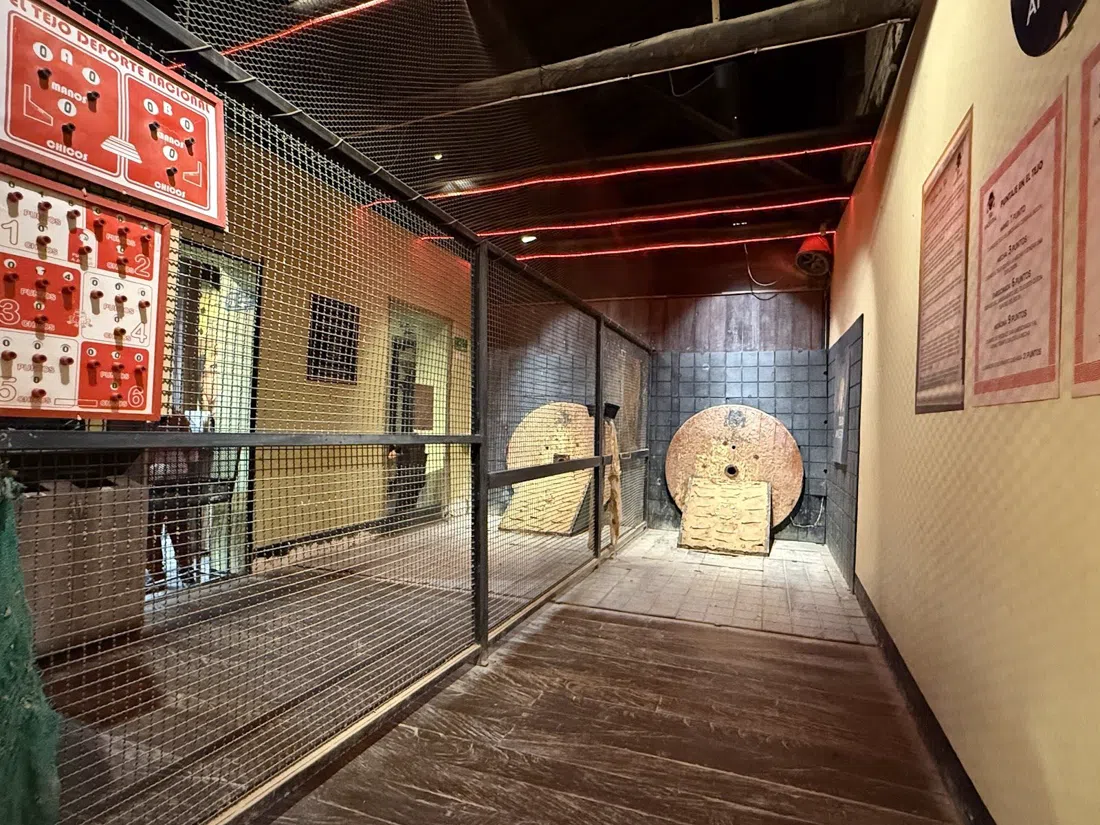
The lane is simple and the physics are not. You stand at one end; at the other sits a bank of wet clay set at an angle, with a metal ring, the bocín, sunk into the middle of it. Around the rim of that ring, staff fold small triangular paper packets of gunpowder called mechas. You throw a heavy metal puck, the tejo, in a high underarm lob, trying to land it flat in the clay as close to the ring as possible. Clip a mecha on the way in and the packet detonates.
Scoring runs in four steps and you will hear all of them shouted. One point for mano, the closest tejo to the ring when nobody has exploded anything. Three for a mecha. Six for an embocinada, the puck landing inside the ring itself. Nine for a moñona, inside the ring and setting off a mecha at the same moment, the shot that ends arguments. Full distance is a little over eighteen metres, which is further than it sounds when the puck weighs about as much as a bag of sugar. Most city clubs also run mini-tejo at roughly half that, which is how a group with one competitive thrower and five beginners stays in the same game.
Two pieces of etiquette matter. Never walk toward the clay while a lane is live: wait until both players have thrown and someone calls it clear. And accept that you will throw badly for the first twenty minutes. The lob is shoulder and release, not force, and every club has somebody who will fix your arm if you ask.
The last rule is economic. Traditionally you never paid for the court at all. You paid for beer, and the lane came free with the crate. That model survives in the older neighbourhood clubs; elsewhere it has given way to straightforward hourly court hire, usually COP 45,000 to 70,000 an hour for up to eight players. Either way the per-head cost of a whole evening is small. What varies enormously is whether a place has a booking system, a card machine, or anyone who speaks English.
Where to throw your first one
If you are based in the historic centre, start at Tejo Ancestral (La Candelaria), the only serious tejo club inside the old town. Courts start at COP 60,000 for up to eight people, it opens seven days, and you book by phone. Before you throw, staff run a short mural-and-history tour and a rules briefing, and those ten minutes are the difference between a confusing night and a good one. It is the gentlest introduction in the city, and it does not commit you to a cross-town taxi on your first evening, which helps if you are still finding your feet at altitude. If you are assembling the rest of the trip around it, our Bogota guide covers the centre in more detail.
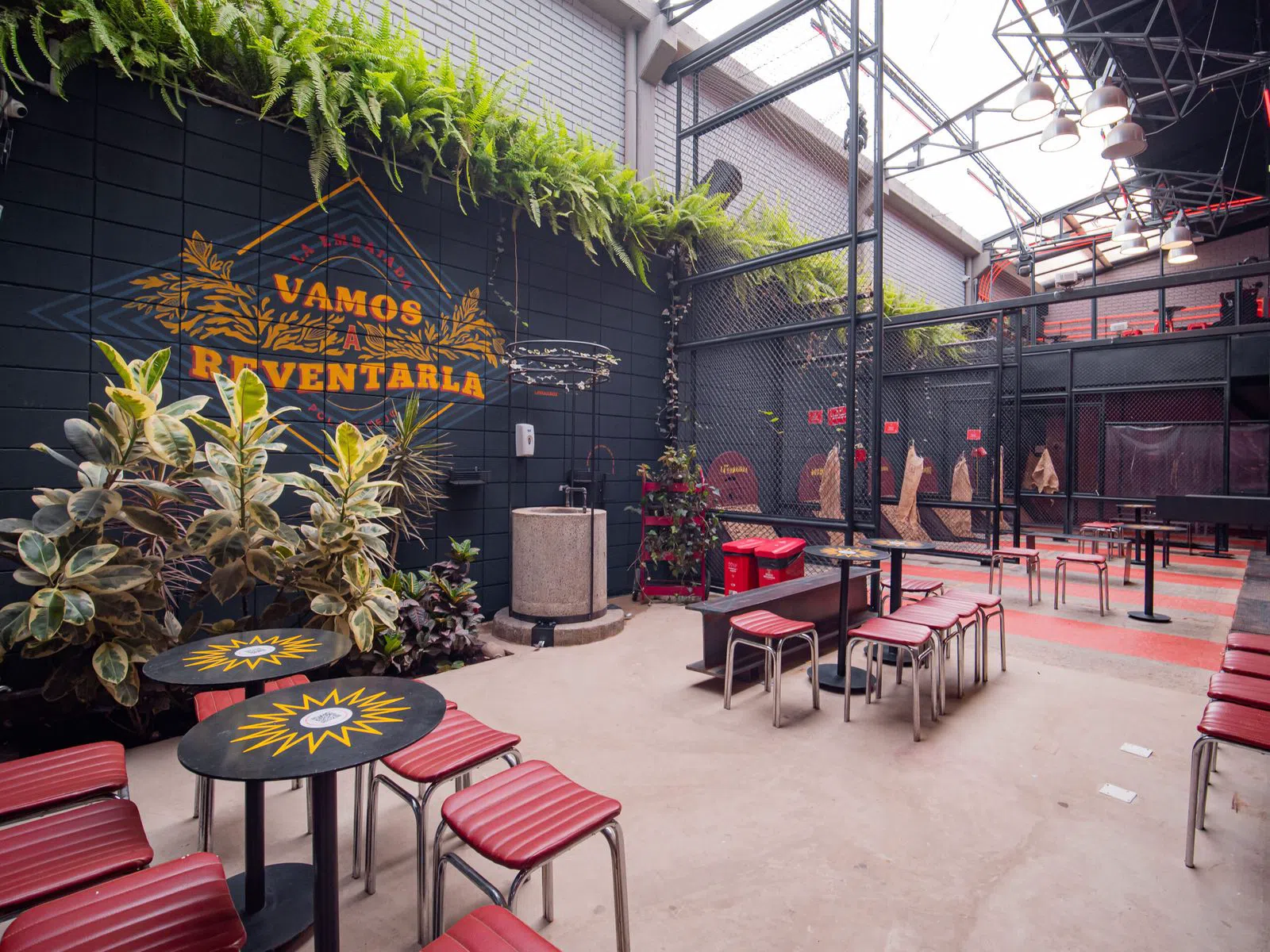
Tejo La Embajada is the flagship, and the one worth crossing the city for. Courts are priced per lane at around COP 60,000 an hour for up to eight players, with food and craft beer on top, and the staff teach first-timers properly rather than handing you a puck and walking away. Mini-tejo distances mean nobody in your group ends up spectating. The rooftop is held for private parties of up to twenty: ten throwing, the rest on bolirana, the board-and-coins game that keeps the other half of a party occupied. Friday and Saturday need booking ahead. It also hosts the fourth Mundial de Tejo from 2 October 2026, with eighteen countries competing, which is the single best chance you will get to watch the throw done by people who know how.
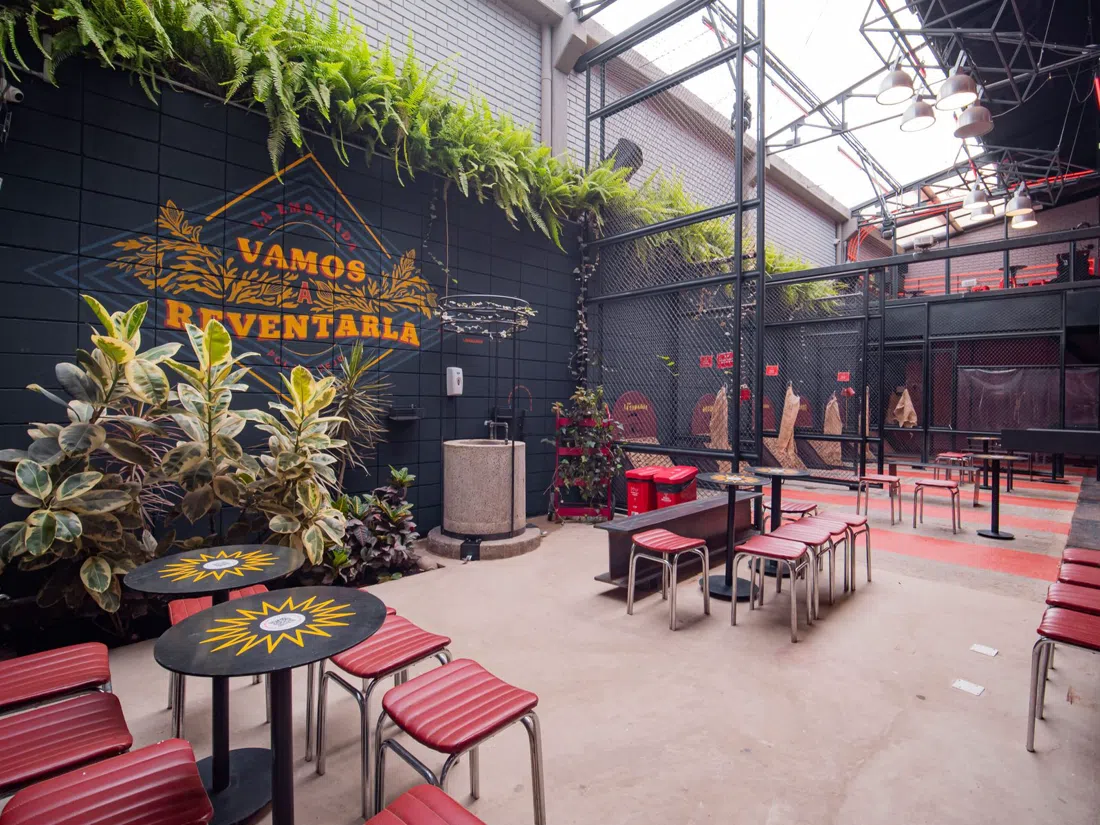
Tejo Turmequé (Chapinero and Santa Bárbara) is the design-led, 'Made in Boyacá' version of the same night. One operator runs both sites, so pick whichever is nearer rather than agonising over the difference. Packages (Pinchado, Chirriado, Turmechela) bundle two hours of tejo with grilled meats and beer at COP 45,000 to 60,000 per person including drinks, and group platters run from COP 447,000 up to COP 1,155,000. There is a maximum of ten per court and, more importantly, a minimum of six for a proper game: parties smaller than that can only book on Tuesday, Wednesday or Sunday. Weekend reservations are effectively mandatory. If you are a couple, read that as a polite no on a Saturday, and come midweek or go elsewhere.
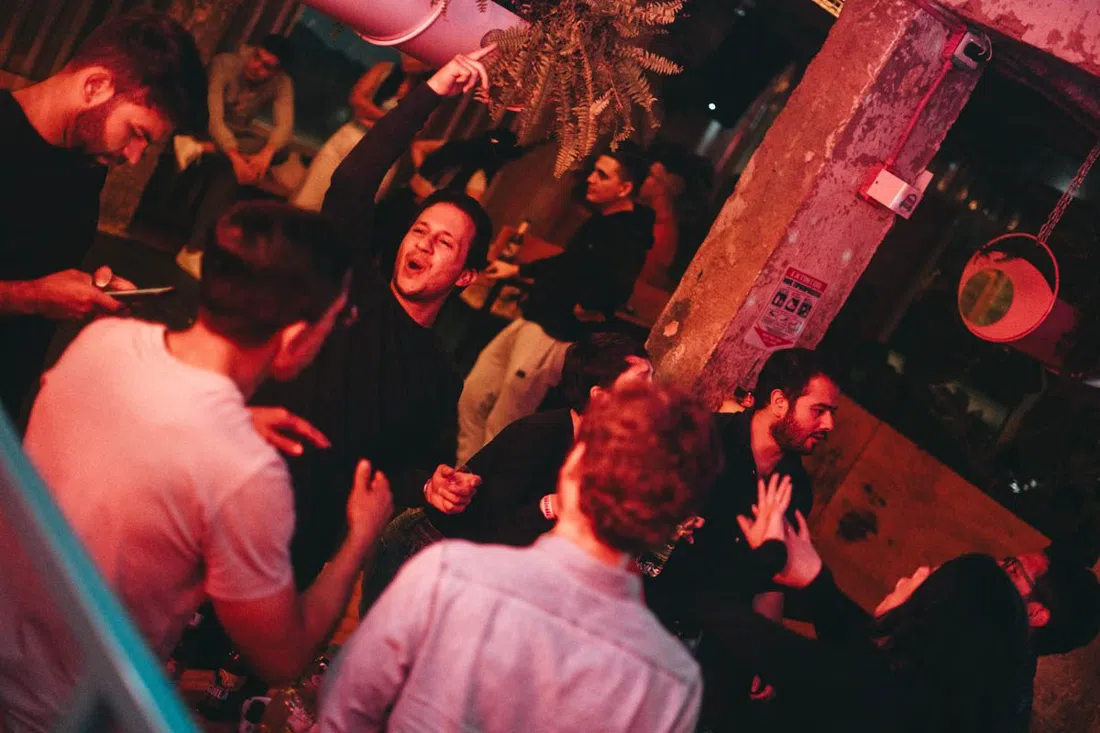
The polished end of Carrera 24
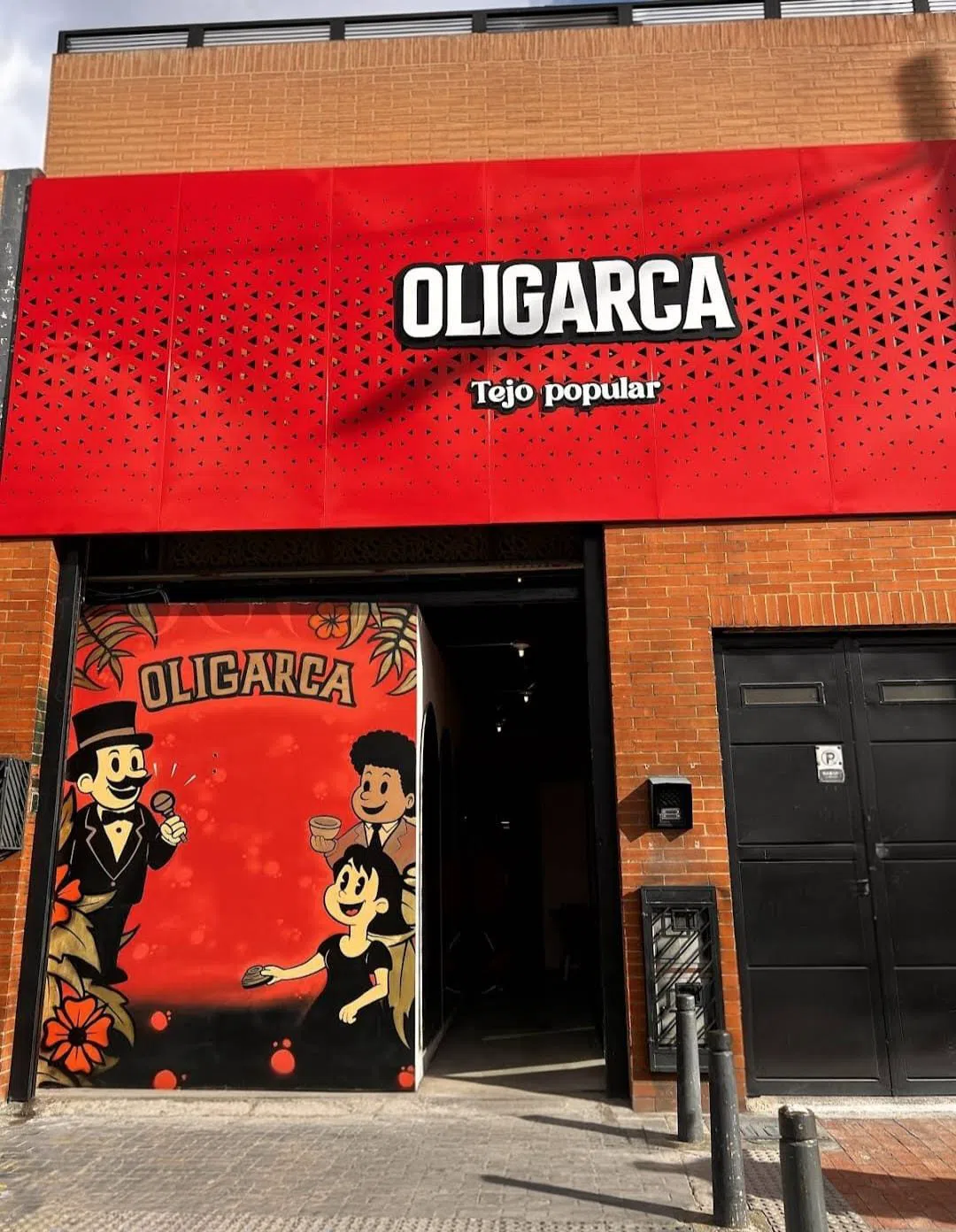
Three tejo clubs share the same block of Carrera 24, and Oligarca Tejo Popular is the slickest of them. Tejo is COP 60,000 an hour and bolirana COP 20,000, with gastrobar food, cocktails and karaoke layered on top, plus the thing that matters more than it should: a card machine. Lanes are held with a COP 30,000 deposit that comes off your bill, there is a fifteen-minute grace period if you are late, and cancelling wants twenty-four hours' notice. It takes anything from two people to twenty-plus, which makes it one of the few clubs that works equally for a couple and for a company night out. If your group's idea of a good evening involves cocktails and a microphone rather than a crate of Poker on the floor, this is the right door.
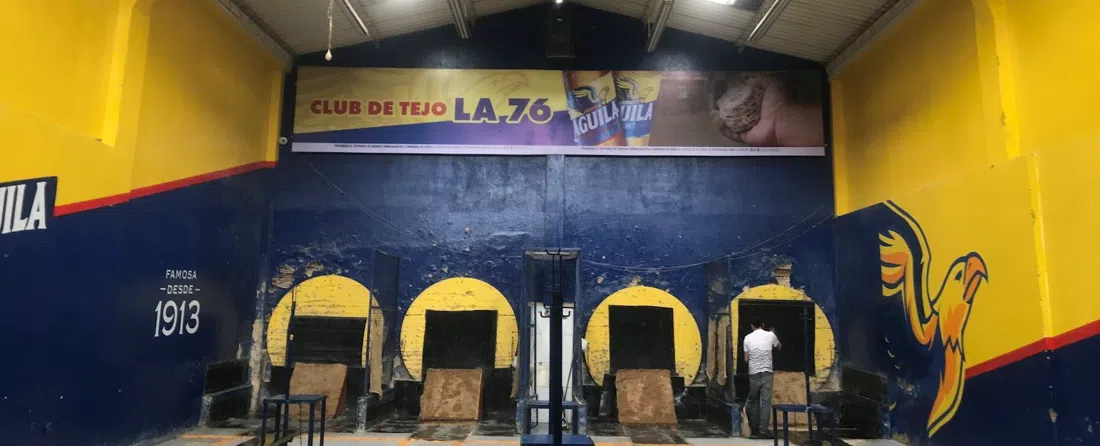
Clay, chorizo and no English menu
Club de Tejo La 76 "El Auténtico" is the benchmark everything else in the city gets measured against, and it makes no concessions. Around COP 70,000 per court per hour, picada platters and beer on top: chorizo, morcilla, yuca, plantain, eaten standing up between throws. No polish, no English menu, and the staff will explain the rules to you in Spanish, patiently. Walk-ins are fine and groups are normal, but call or WhatsApp ahead if you want a lane on a Friday or Saturday.
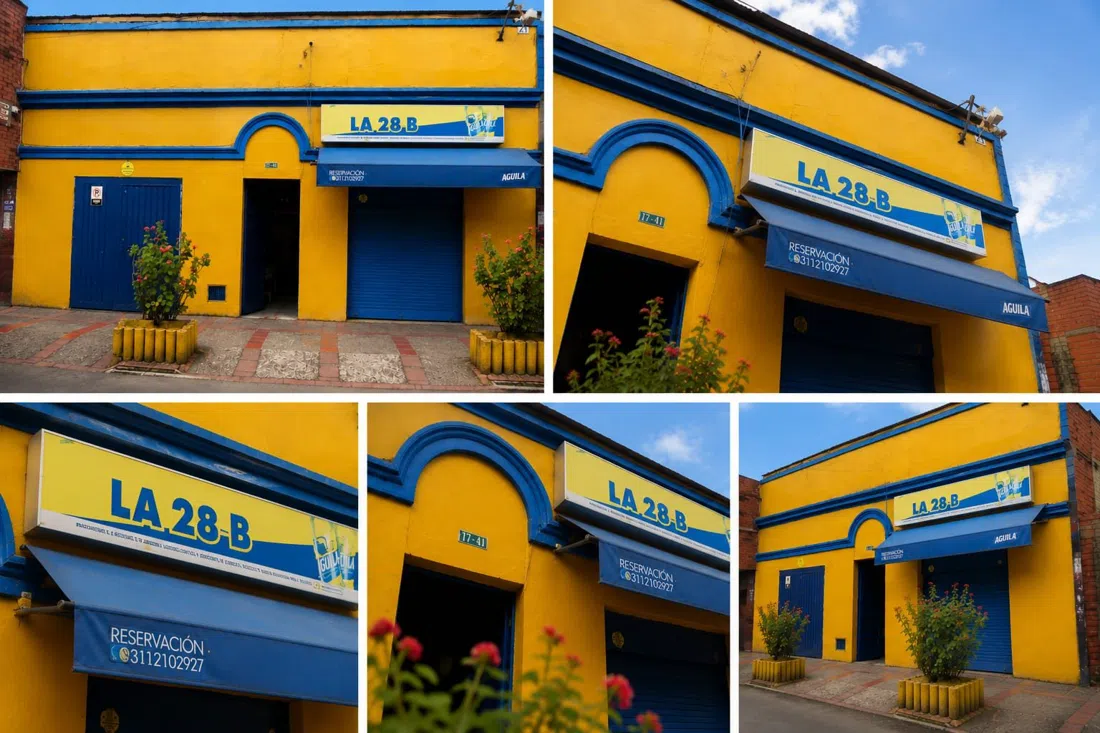
Club de Tejo Piqueteadero La 28B (Barrios Unidos) is the antidote to the polished Carrera 24 clubs: a decade-plus neighbourhood fixture, properly local, and welcoming to visiting groups. Reckon on about COP 40,000 a head (roughly US$10) for drinks and a share of a picada, but those picadas are sized for twelve, so turn up with numbers or you will be eating the same plate for two hours. It runs afternoons and evenings only, from about 1.45pm Monday to Saturday and 3.45pm on Sundays, so it is a late-lunch-into-early-night plan rather than a midnight one.
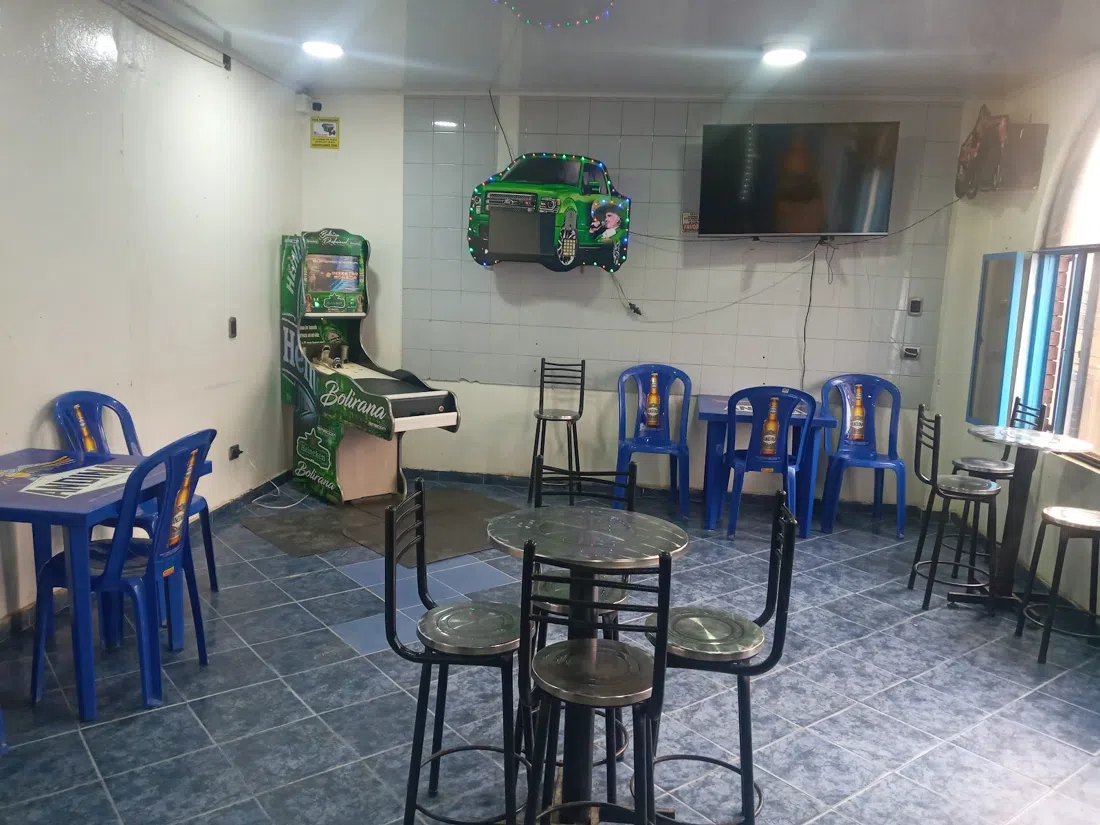
Campo de Tejo y Juegos Recreativos JC (Chapinero) is the scruffy student institution, long known as El Gardeliano and now signed as JC. There is no reservations system, so you turn up. Students book lanes in tens, and it runs into the small hours. At roughly COP 20,000 to 40,000 per person for court hire and beer it is the cheapest night on this list. Go for the atmosphere, not the facilities.
Club de Tejo la 20 sits between Chapinero and Galerías and is open daily from 2pm to 11pm. It is small: fine for six or eight, too tight for a coach party, and worth a call ahead if you are more than a handful. Prices land in the same COP 20,000 to 40,000 band. Keep it in your back pocket for the night everything bigger is booked out.
Club Social y Deportivo de Tejo El Porvenir del Norte is a club in the sporting sense rather than a bar with clay in it: a Federación Colombiana de Tejo and Liga de Cundinamarca venue in the north of the city, where groups and tournaments are the business. Court time plus Boyacense cooking comes to roughly COP 30,000 to 50,000 per person. Ring ahead, because league nights fill the lanes, and go early in your trip. Watching people play the sport properly will improve your own throw more than an hour of guessing.
When your group is bigger than eight
Most clubs cap a lane at eight or ten, which quietly splits a large party into separate games at opposite ends of the room. Three places solve that.
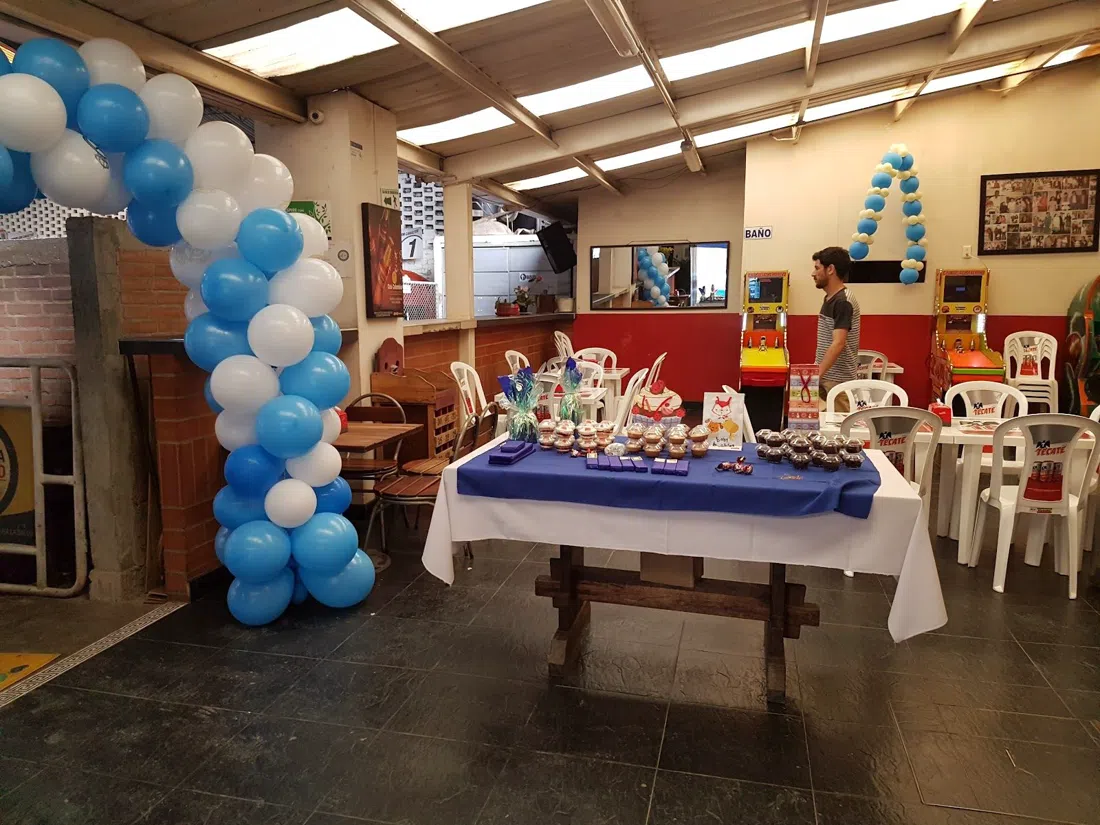
Club de Tejo Pa' las que sea has seven lanes and a billiards floor, and is explicitly built for parties of ten to eighty (birthdays, despedidas, company days out), with packages bundling reserved lanes, Colombian food and drinks. Rates are by enquiry over WhatsApp but sit broadly in the local COP 50,000 to 70,000 per hour band. It opens 10am to 11pm every day, which makes it one of the few options for a daytime group plan.

Bendito Tejo, out in the far north, is the most organised club in the city: a real online booking engine rather than a phone number that may or may not be answered, and opening until 2am on Fridays and Saturdays. It markets itself for integraciones, birthdays and after-office nights, and has handled forty-person corporate days with a guided tournament. Expect mid-range pricing, court hire plus a fast-food kitchen and bar, in the COP 50,000 to 70,000 an hour band.
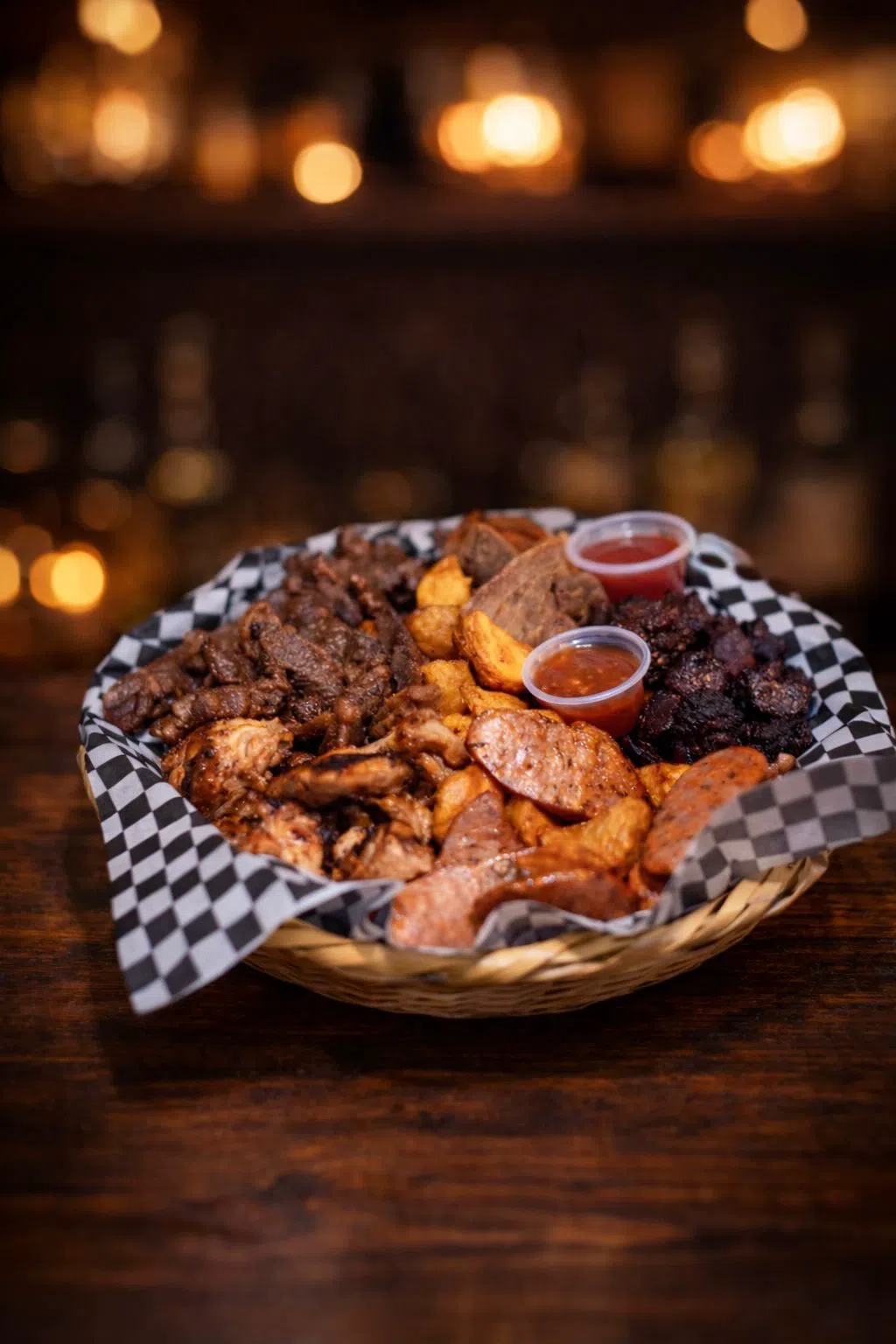
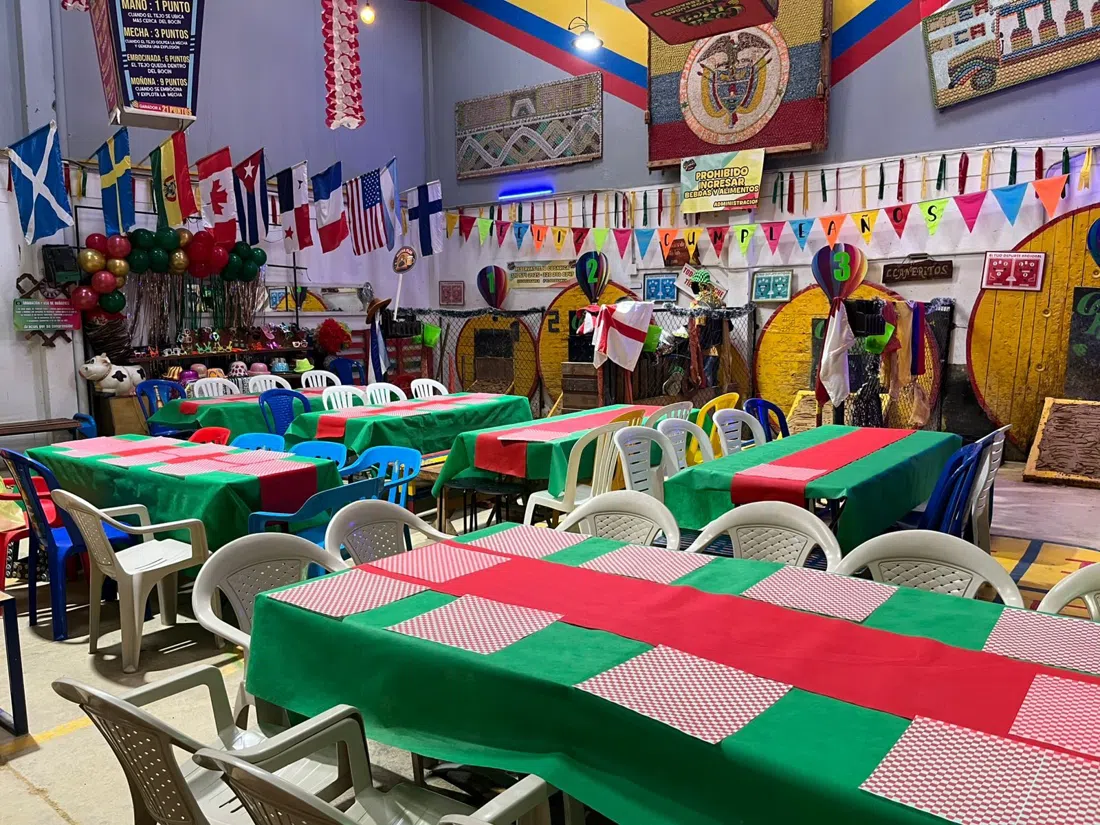
Club de Tejo Cosa Rica is the best value here and the one that still runs on the old model: no lane charge at all if you eat and drink. Food and beer work out at roughly COP 40,000 to 70,000 per person, it holds 4.1 across well over a thousand reviews, and the pay-for-what-you-consume arrangement means a big table can play all afternoon for the price of lunch. It is set up for family parties and corporate events, so arriving twenty-strong is not a problem.
What the doors are actually like
Nobody here is going to turn you away for how you are dressed. The real gatekeeping is numbers and timing. Turmequé wants six minimum at weekends. La 28B's food arrives in portions for twelve. Pa' las que sea starts its packages at ten. If you are two people on a Saturday, the clubs that genuinely work are Oligarca, Ancestral, la 20 and JC, plus La 76 if you are happy to call ahead and manage in Spanish.
Friday and Saturday nights need a reservation almost everywhere, and the clubs with a WhatsApp number answer faster than the ones with a phone line. Assume cash unless you have checked: Oligarca takes cards and Bendito has online booking, but several of the neighbourhood clubs are a cash-and-picada operation and always have been. Very little English is spoken outside the flagship venues, and that is not a problem. The game explains itself in about four throws, and 'mano', 'mecha' and a raised eyebrow will carry you through the evening.
One practical thing about the gunpowder: it is loud, it is meant to be, and staff set the mechas themselves. You are not lighting anything. Keep behind the throwing line, keep children out of the lane, and it is no more dangerous than darts thrown by people who have been drinking, which is to say, pay attention.
Planning the night
Getting there and back: use a ride-hailing app door to door after dark rather than trying to piece together buses, especially for the northern and Barrios Unidos clubs. Journey times across Bogotá are dictated by traffic, not distance, so allow forty minutes in the evening peak for anything that crosses the city, and book the lane for after you expect to arrive.
Cash: bring Colombian pesos in small notes. A night out comes to roughly COP 40,000 to 80,000 per head all in (court share, beer and something off the grill), and only the newer gastrobar-style clubs reliably take cards.
Timing: the traditional clubs open in the early afternoon and are at their best on a Sunday, when the regulars are out and nobody is rushing. The gastrobar clubs fill from about 8pm Thursday to Saturday and a couple of them run past midnight. If you want to see the sport played at its highest level, build the trip around the Mundial de Tejo from 2 October 2026.
Altitude and cold: at 2,640 metres the beer hits harder than it does at sea level, so drink water alongside it and pace the first hour. Many courts are open-sided and unheated, and Bogotá gets properly cold once the sun goes down, so take a jacket you can throw in. Sleeping in the centre puts Ancestral on foot and everything else in a twenty-minute car ride, while Chapinero puts you closest to the largest cluster of clubs; compare both in the Bogota hotel search before you book.
Questions
What is tejo, and is it safe to play after a few beers?
You lob a heavy metal puck at a bank of wet clay with a metal ring set into it, aiming to detonate small paper packets of gunpowder placed around the rim. Staff set the mechas; you never handle the explosives yourself. Stay behind the throwing line, don't walk toward the clay while a lane is live, and it is about as risky as darts. Every club will give you a rules briefing if you ask, and Tejo Ancestral in La Candelaria builds one into the visit.
Do I need to book a tejo court in Bogotá?
On Friday and Saturday, yes, almost everywhere. Tejo Turmequé treats weekend reservations as mandatory, Tejo La Embajada wants notice for Fri/Sat, and Oligarca Tejo Popular holds lanes with a COP 30,000 deposit that comes off your bill. Bendito Tejo is the only one with a proper online booking engine; most others work by phone or WhatsApp. Campo de Tejo JC takes no reservations at all, so you just turn up.
How much does a night of tejo cost?
Budget COP 40,000 to 80,000 per person for the whole evening. Court hire runs about COP 45,000 to 70,000 an hour for up to eight players, with food and beer on top. Turmequé bundles two hours plus meat and beer at COP 45,000 to 60,000 a head. The neighbourhood clubs are cheaper, roughly COP 20,000 to 40,000 at Campo de Tejo JC or Club de Tejo la 20, and Cosa Rica charges nothing for the lane if you eat and drink.
Can two people play tejo, or do you need a group?
Couples and pairs are fine at Oligarca Tejo Popular, which takes anything from two upward, and at Tejo Ancestral, Club de Tejo la 20 and Campo de Tejo JC. Tejo Turmequé needs six for a proper game and only takes smaller bookings on Tuesday, Wednesday and Sunday. For ten or more, go to Pa' las que sea, Bendito Tejo or Cosa Rica, which can seat a large party without splitting it across the room.
Do I need to speak Spanish to play?
It helps but it is not essential. Club de Tejo La 76 has no English menu and explains the rules in Spanish, and the same goes for La 28B and El Porvenir del Norte. The game itself is self-explanatory within a few throws. If you want the whole thing in plain terms first, start at Tejo Ancestral or Tejo La Embajada, where staff teach first-timers as a matter of routine.
First published on bogotatrips.com, the Bogota guide.