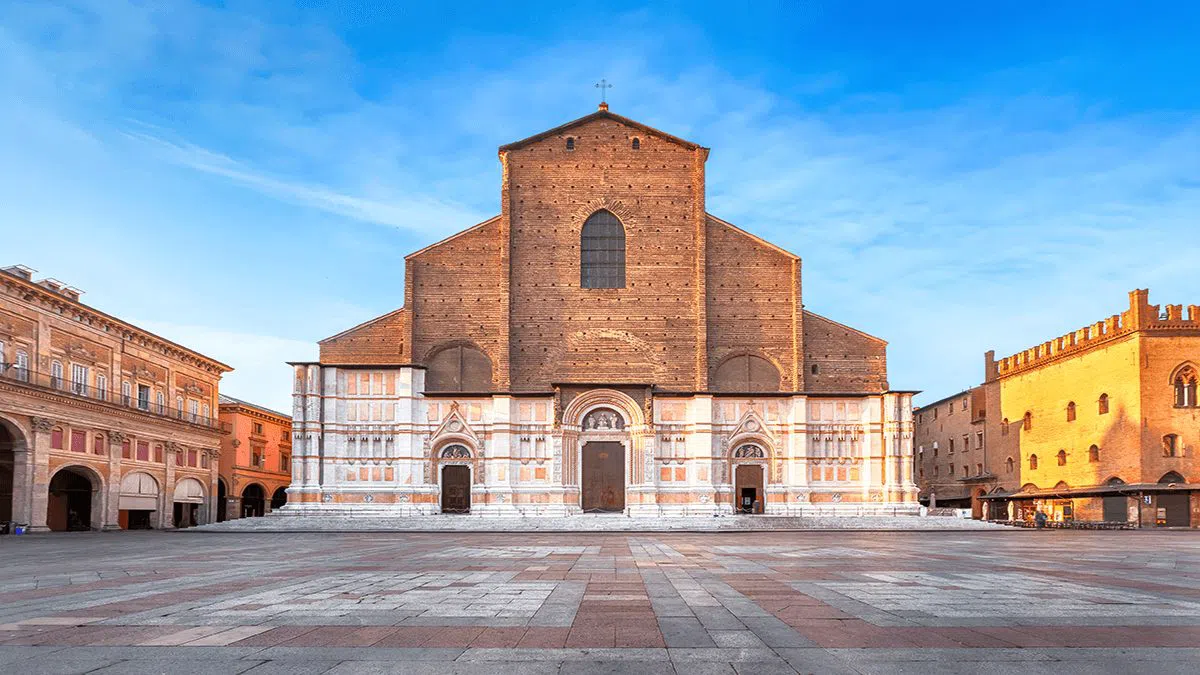
The white marble stops a third of the way up the facade and the wall simply carries on in bare brick, pink and unapologetic, to the roofline. Bolognesi have walked past that seam on Piazza Maggiore for six hundred years without, apparently, minding it. Push through the heavy curtain at the door and you see why nobody ever got round to finishing the outside: the nave runs so far that the far end goes hazy, and a thin bronze line threaded across the floor turns the whole building into a scientific instrument.
The church the city built for itself
Basilica di San Petronio (Piazza Maggiore, the dead centre of town) was commissioned in 1390 by the city council rather than by a bishop, which explains almost everything odd about it. It is not Bologna's cathedral (that is San Pietro, a few minutes north) but a civic monument to the city's patron saint, built by the commune, paid for by the commune, and used for centuries as the room where Bologna did its public business. Charles V was crowned emperor inside it in 1530.
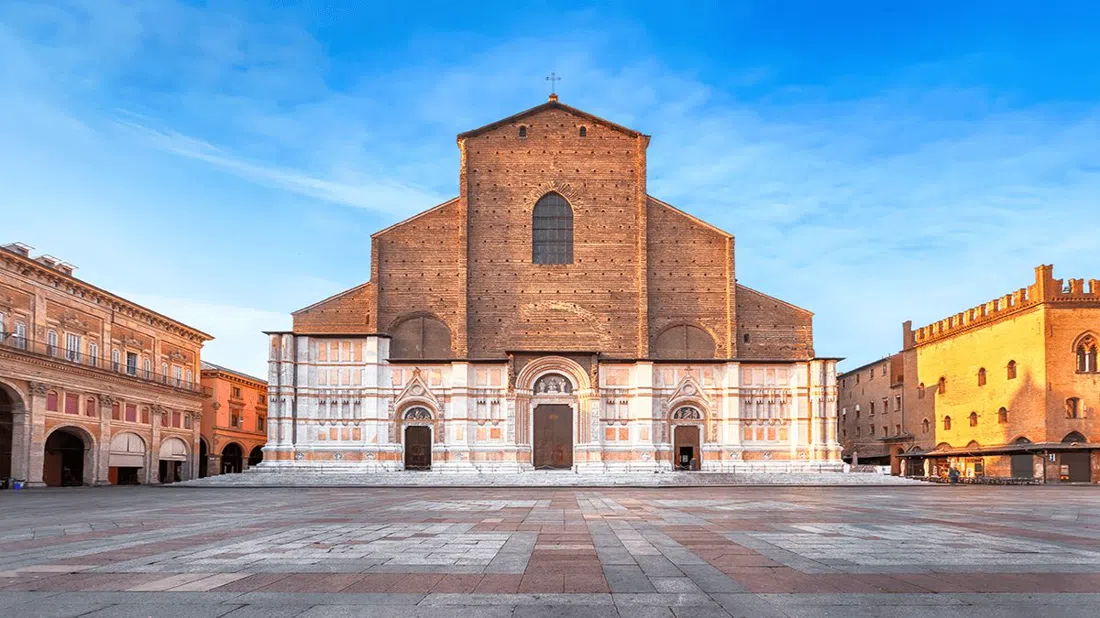
The design, by Antonio di Vincenzo, was laid out on a scale meant to out-measure anything the papacy had raised, and the transepts that would have made it a cross were never built. Money ran out; so did political patience. In 1563 the papal governor planted a large new university building hard against the flank where the church wanted to grow, and the argument was effectively over. Whether that was deliberate sabotage or opportunistic town planning is still debated here. The result on the ground is the same, and it is reason enough to come: a building with its own unresolved argument still visible from the square.
What did get finished deserves five minutes before you go in. The central portal was carved by Jacopo della Quercia from 1425 onwards, with Genesis scenes down the jambs and figures that have real weight in them. It is the finest sculpture in the city, and it is outdoors and free. So is the church. There is no ticket desk for individuals or small groups and no booking of any kind, which for a building of this rank is unusual, and which is why San Petronio belongs in your first hour in Bologna rather than your last.
What you actually see inside
The interior is not a Gothic jewel box. It is vast, grey-brown and startlingly plain, lined with twenty-two chapels down the aisles, each a separate family commission and each a different century's idea of taste. The thing most visitors walk straight over is under their feet. In 1655 the astronomer Gian Domenico Cassini cut a small hole high in the vault of the left aisle and laid a meridian line across the floor below it, sixty-seven metres of bronze and marble that remain the largest indoor sundial in the world. On a clear day an oval of sunlight creeps along the pavement and crosses the line at local solar noon. Cassini used it to measure the length of the year and to settle arguments about the calendar. Stand near it a quarter of an hour before noon and watch the light arrive; it costs nothing, and almost nobody else in the building is looking.
The basilica's small museum, signposted off the aisle, is also free, and its best room holds drawings and wooden models for facades proposed over two centuries and never executed, an archive of an ending that never came. There is also one of the oldest playable organs anywhere in Europe, from the 1470s, still used in services.
The frescoed chapel worth five euros
The only thing you pay for inside is the Cappella dei Re Magi, the Kings' Chapel, frescoed in the 1410s by the painter known as Giovanni da Modena and the single best thing in the church. One wall carries the journey of the Magi. The other carries a Last Judgment whose Hell, a blue, many-headed Lucifer working his way through the damned, is the image people actually remember from Bologna. Entry is €5 full, €3 reduced, €2 for school groups, free for under-10s, and the money goes into the fabric of a church that has never had enough of it.
Individuals and small groups pay on the spot. Parties of 15 or more must book the chapel tour in advance, and school groups are admitted only from 11:40. That second rule cuts both ways and is worth knowing: if you are travelling with a class you cannot turn up at 10:00 and expect the chapel, and if you are not, the hour before 11:40 is the calm one.
How long it takes
Thirty minutes is enough for an honest visit: the portal outside, the nave, the meridian, the chapel. Forty-five to sixty if you add the museum and sit down for a while, which you should, because the benches are free and the acoustics do something strange to footsteps. Ninety minutes if you are timing the visit around solar noon and want the light to come to you. Nobody needs half a day in here.
Tickets at the door and when booking ahead matters
Because the church is free and unticketed there is no queue to beat and nothing to buy in advance. The only crowd pressure comes from Mass, weddings and the occasional civic ceremony, which close off parts of the nave without warning. Paid guided experiences in this corner of Bologna are a separate question; they cluster around the piazza and the food streets behind it rather than the church itself. There are 2,230 traveller reviews across the bookable options here, with the top one rated 5.0 out of 5 from 1,757 reviews. That one is flagged as likely to sell out, and it is confirmed manually by the operator rather than instantly, so allow up to 48 hours. It is not a decision you can make over breakfast on the day. None of it is needed to get into San Petronio. Book a guide if you want the food streets explained by a person who knows them; walk into the basilica for nothing either way.
Access, etiquette and the terrace that no longer exists
This is a working parish church, so dress as you would for one: shoulders and knees covered, bags off the benches, phones down during services. The floor is flat and uncluttered once you are through the door, which makes it one of the easier major sights in the centre to cross with a pushchair or a wheelchair.
The panoramic roof terrace that once operated here is permanently closed now that restoration work has finished, whatever older articles and a great many half-updated listings still promise. It is not coming back, so do not build an afternoon around it.
Where to get the view instead
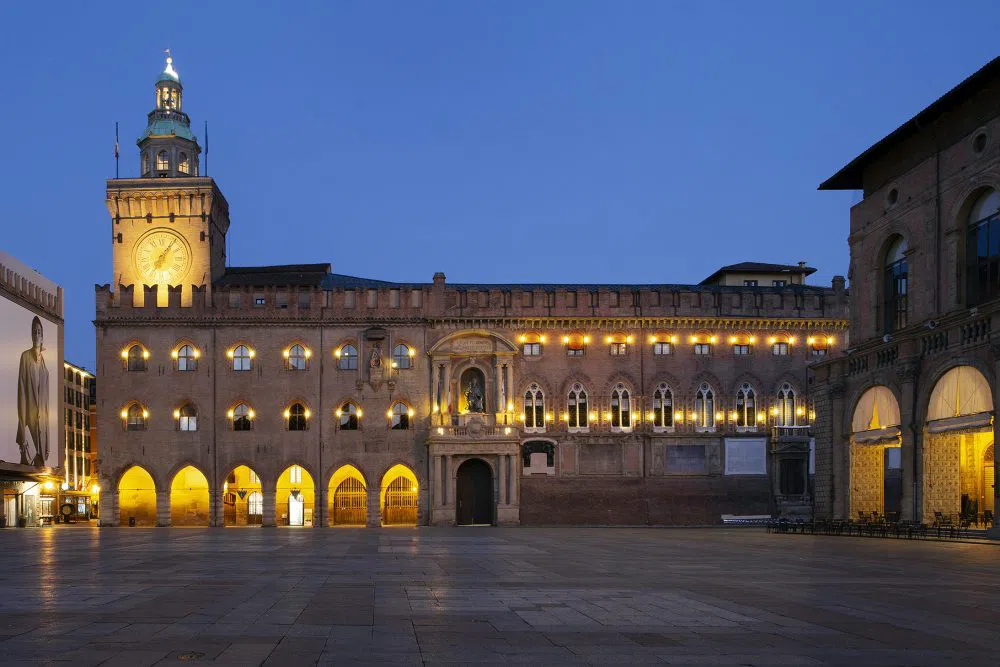
Torre dell'Orologio (Palazzo d'Accursio, the far side of the piazza, ninety seconds away) is the replacement, and in one way an improvement: it is the only ticketed platform that puts San Petronio's facade at eye level, so you can read the unfinished seam, marble then brick, as a single clean line, and it gives the best photograph of Piazza Maggiore there is. Entry is €10 full, €7 reduced. Admission is by timed slot in small batches three times an hour, on the hour and at twenty and forty minutes past, with a hard headcount per slot. A couple can usually walk up and wait for the next gap. A group has to book ahead and accept being split across consecutive slots, because there is no talking your way into a full batch.
Thirty seconds behind the apse
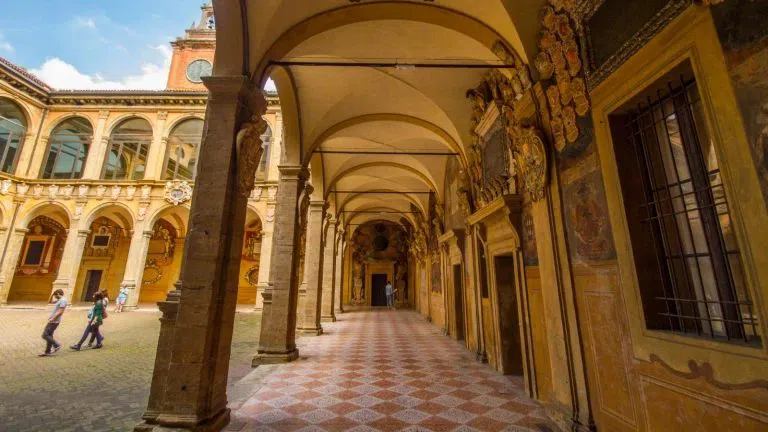
The building that stopped the basilica growing is now the most interesting half-hour in the city. Palazzo dell'Archiginnasio and Teatro Anatomico (Piazza Galvani) went up in 1563 to gather the scattered schools of the medieval university under one roof, and its upper floor holds the Teatro Anatomico, a dissection room panelled entirely in spruce, with tiered benches, a marble slab at the centre and two skinless wooden figures holding up the canopy. This is where a food city also learned to be a science city, and the two are less unrelated than they sound; you will think about it again over a plate of charcuterie. Tickets are €12 full, €10 reduced, €7 for residents and Cultura Card holders, free for under-12s. Booking is mandatory for the anatomical theatre and entry is by scheduled guided slot in Italian or English, which absorbs groups neatly. Closed Sundays.
Two minutes the other way, Biblioteca Salaborsa (Piazza del Nettuno) costs nothing and supplies the deep-time layer under everything else. Its central hall is floored in glass over excavated Roman and earlier remains, visible straight down. It is a working public library rather than an attraction, so keep voices low and don't stand in a clump on the glass; then take the free wifi, the clean toilets and the shelter for what they are, which is the most useful rainy-afternoon address near the basilica.

Eating within sight of the facade
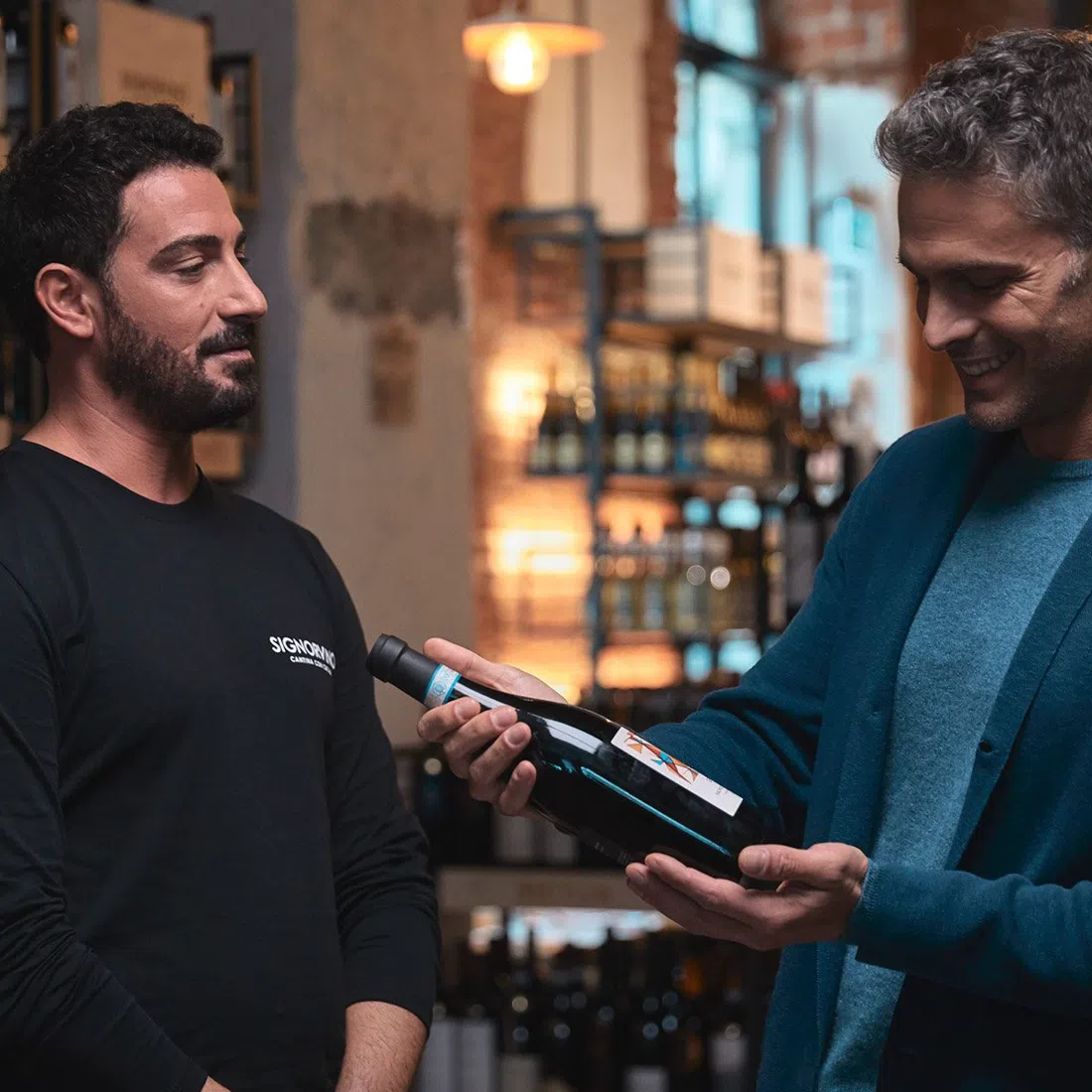
Signorvino Bologna (under the portico on Piazza Maggiore, fifty metres from the church door) is where you sit with a glass of Pignoletto and actually look at the building, which is the whole point of the place. Glasses run roughly €6–12, plates and mains €15–28. It takes bookings and handles larger tables indoors, but the handful of portico tables facing the basilica are small and strictly first-come, so if the view is the point, arrive at 17:00 rather than 19:00.
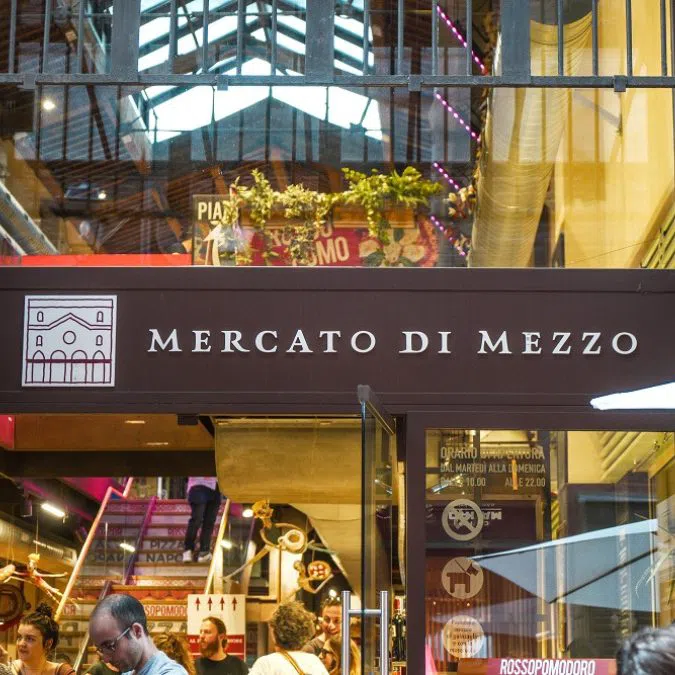
Mercato di Mezzo (Via Clavature, ninety seconds from the basilica door) is the low-commitment feed: an indoor food hall with no booking, no cover charge and no obligation beyond ordering stall by stall. Plates are roughly €5–16, beer and wine by the glass €4–7. It is genuinely chaotic at 13:00 and 20:00. A group that insists on sitting together will struggle; a group content to take whatever communal bench is free will do well.
For tagliatelle rather than snacks, Sfoglia Rina (Via Castiglione, a hundred metres off the basilica's flank) has been rolling pasta since 1963 and charges roughly €9–15 a dish. No reservations, and waits of 15 to 40 minutes are normal at 13:00 and 20:00; go before noon or at 17:30 and the problem evaporates. More than four of you should expect to be split across tables.
The delis behind the church
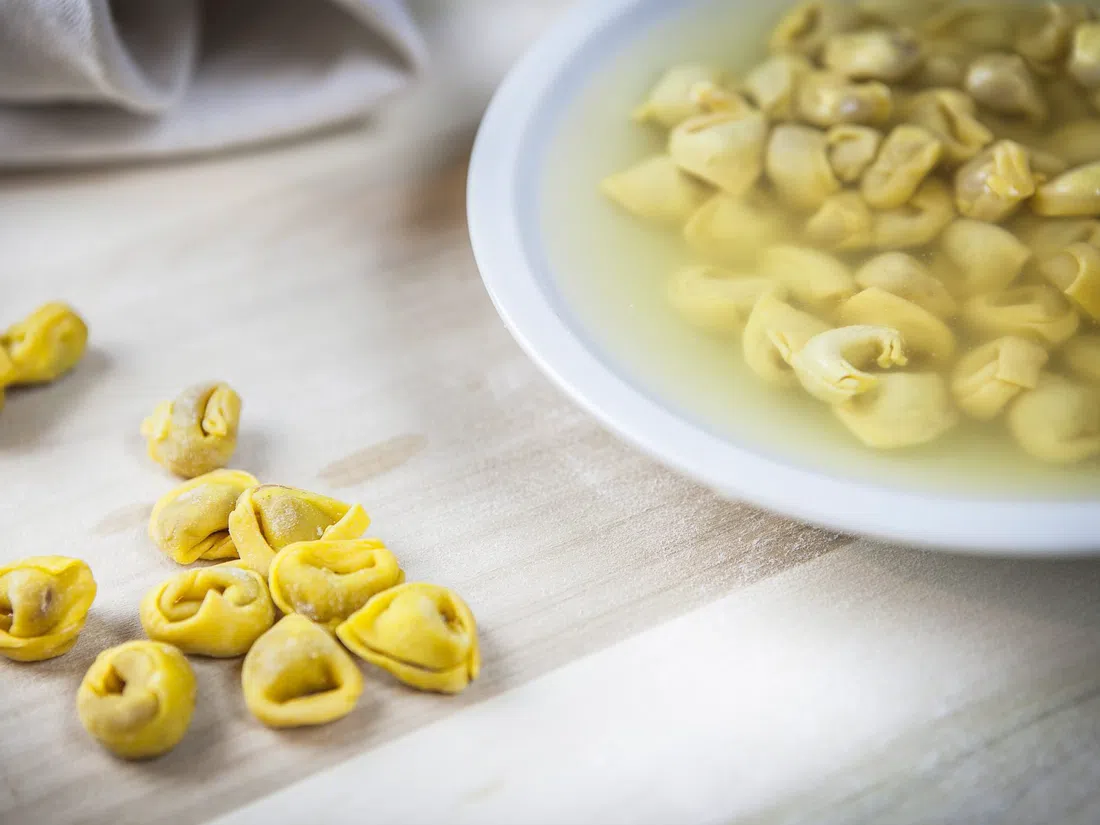
Tamburini (Via Caprarie, in the Quadrilatero) has traded on its corner since 1932 and explains Bolognese charcuterie better than any tour: mortadella cut to order, tasting boards roughly €12–25, glasses €4–8. The shop is open to all comers; the attached wine bar has limited seating, so a larger party should ring ahead rather than arrive hopeful.
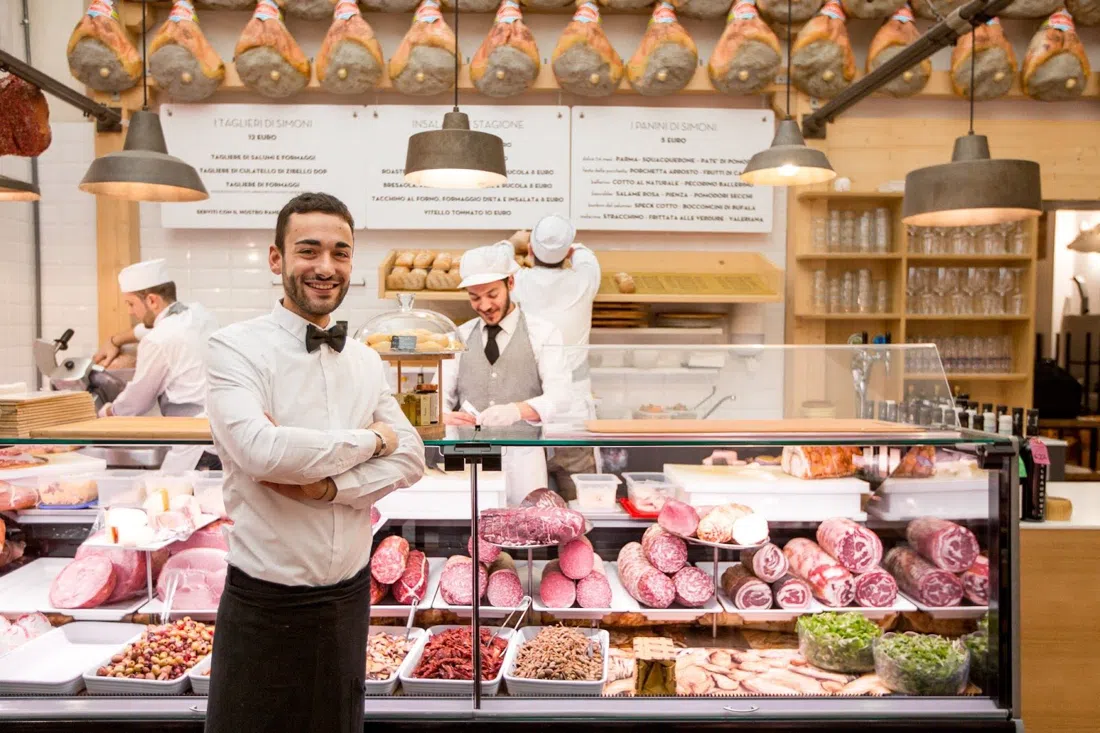
Salumeria Simoni Laboratorio (Via Pescherie Vecchie) assembles the sharper board, same family since 1960, boards roughly €15–28 for two, glasses €4–7, eaten in small rooms or at a couple of alley tables. Six is the practical ceiling; beyond that, split the party or phone first.
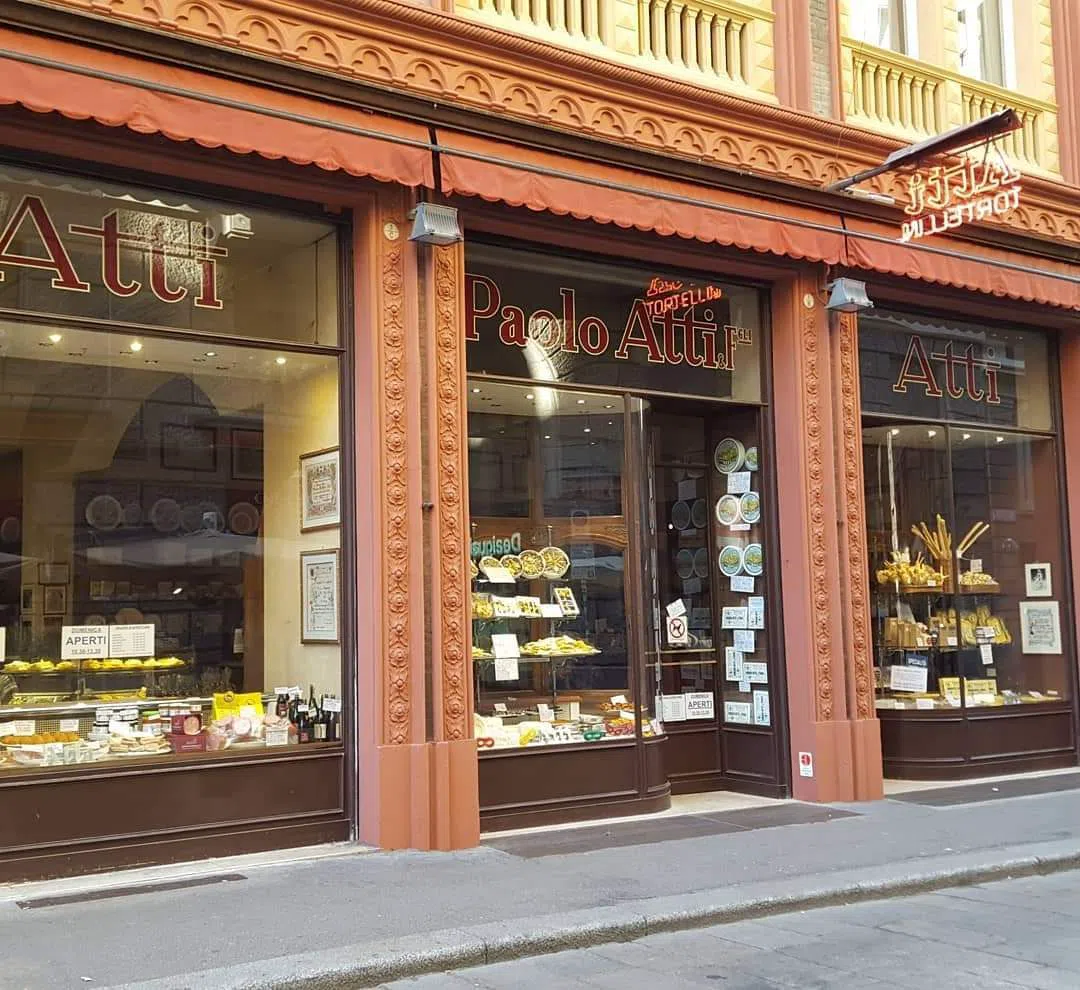
Paolo Atti & Figli (Via Caprarie) is a shop and not a restaurant, open since 1868 and still closing tortellini by hand at the back. Pastries cost a few euros, fresh pasta runs roughly €20–35 a kilo, and there is nowhere to sit. Groups queue, buy and move on, which makes it a perfect three-minute stop between the basilica and Piazza Galvani, and vacuum-packed pasta is the one souvenir from here you can genuinely carry home.
Then Osteria del Sole (Vicolo Ranocchi, two minutes from the piazza), going since 1465 and the most characterful room in the city. It sells wine and nothing else (glasses €2–5, cash only, no bookings) and you are expected to bring your own food in from the delis above. People still arrive here confused and hungry every day of the week. The communal tables swallow a couple or a four without difficulty; a party of ten will not be seated together at peak and should not try.
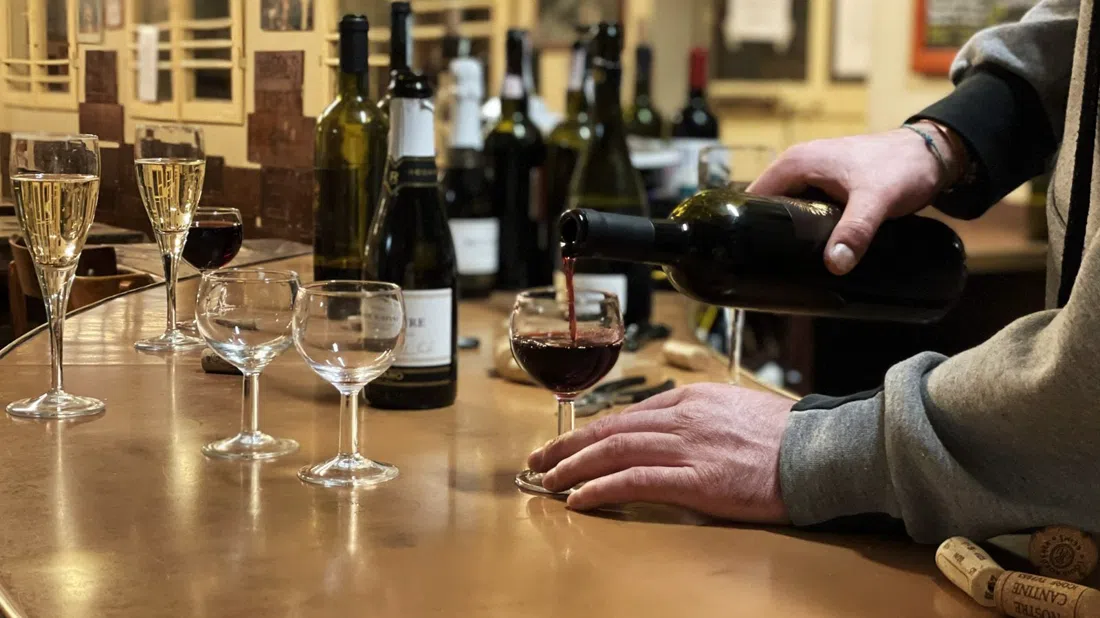
Coffee at the counter, wine after dark
Caffè Zanarini (Piazza Galvani, the square directly behind the basilica) has been the classic morning stop since 1930, and there is news attached to it. The city re-tendered the lease in mid-2026 and it is now run by the Vecchia Malga group with the pastry chef Luigi Biasetto: same name over the door, new kitchen behind it. Coffee and a pastry at the bar is roughly €2–9, aperitivo around €10–14, and table service on the few terrace tables costs noticeably more. Counter service is quick for any number, so a group does better standing at the bar like everyone else.
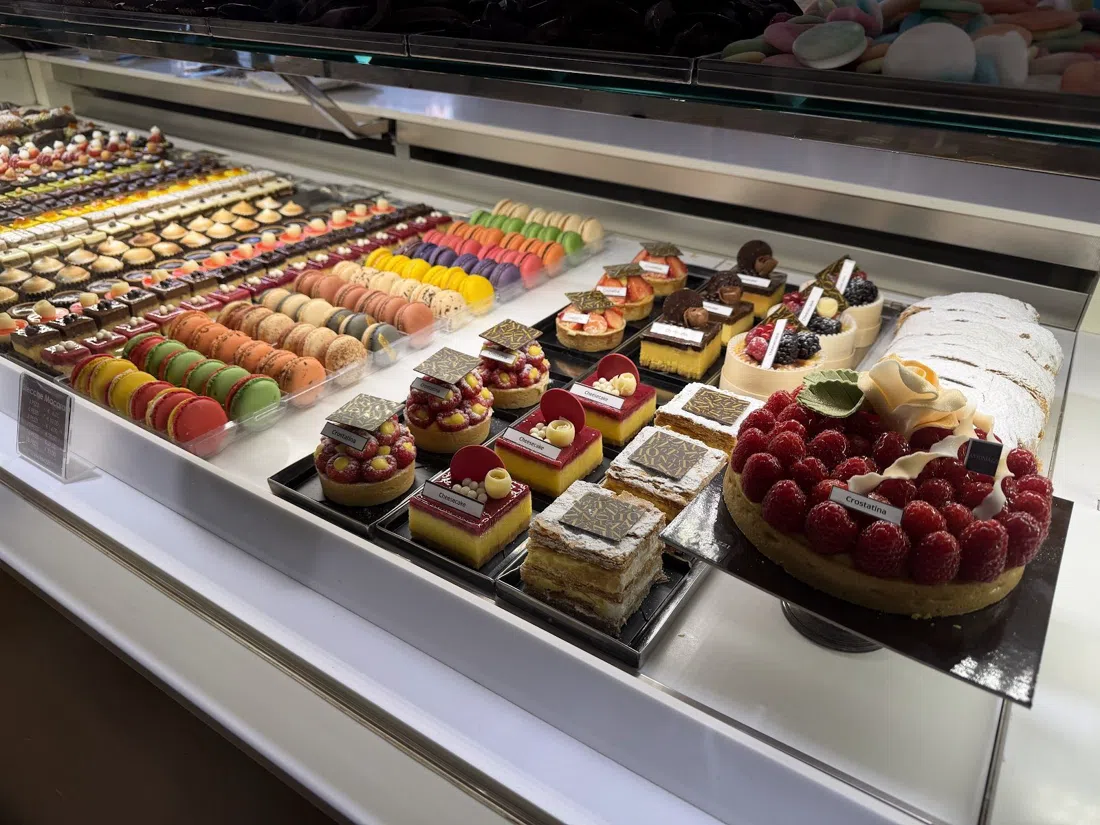
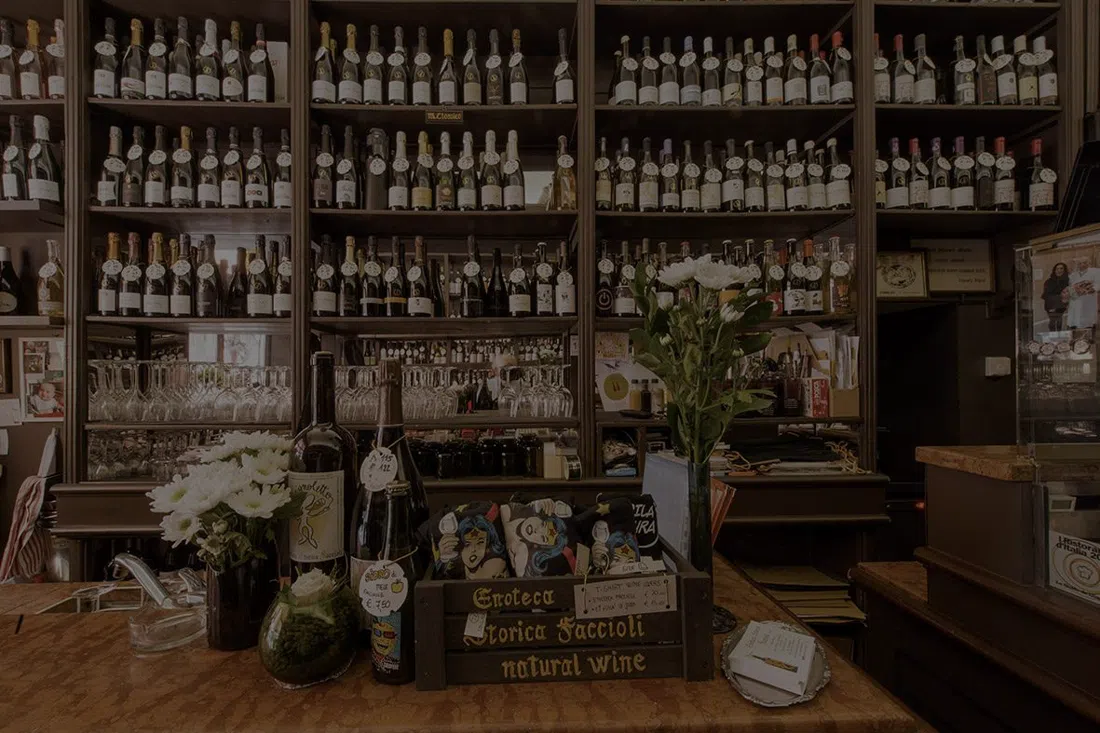
In the evening, Enoteca Storica Faccioli (Via Altabella, north of the piazza) is the grown-up counterweight to the market stalls: open since 1924, around 400 labels, glasses €5–10, small plates €6–14. It is tiny and closed Sundays. Two to four people, fine. Anything larger, call first and accept that it is a wine bar, not a dining room.
Feeding six or more
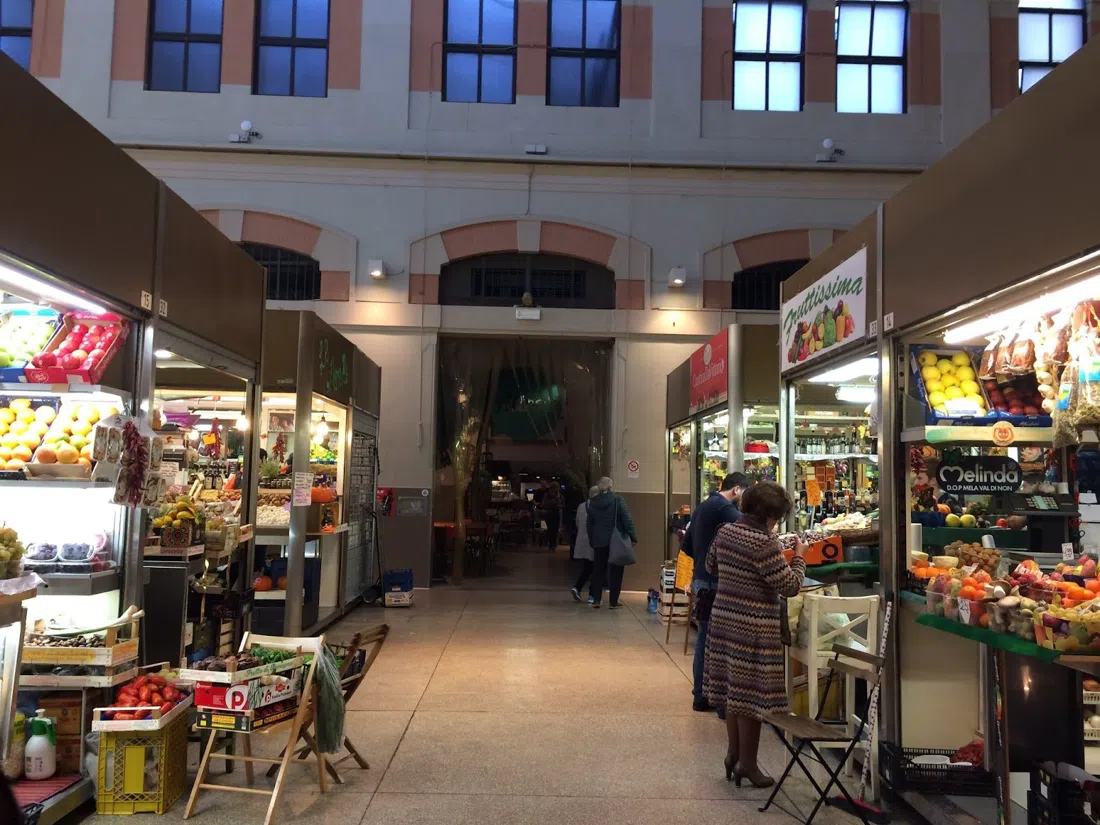
Groups are where this part of Bologna gets awkward, and two addresses solve it. Mercato delle Erbe (Via Ugo Bassi, five minutes from Piazza Maggiore) is a real working market rather than a food-court pastiche, free to walk into, no booking, and with far more seating than the Quadrilatero halls, which makes it the better bet for six or more. Stall food runs roughly €5–20, glasses €4–8. The produce stalls shut by early evening while the eateries run to midnight, so it changes character completely between 17:00 and 21:00.
Osteria Bartolini Bologna (five minutes west of the basilica, with a courtyard garden) has the largest good-dinner capacity nearby, two big rooms with roughly 80 seats downstairs and 160 upstairs, and holds a Michelin Bib Gourmand. It takes no reservations at all, so numbers have to turn up early and wait. It is also the one kitchen on this page that breaks from pork and ragù, doing Romagna-style fried fish; about €20–38 a head covers it.

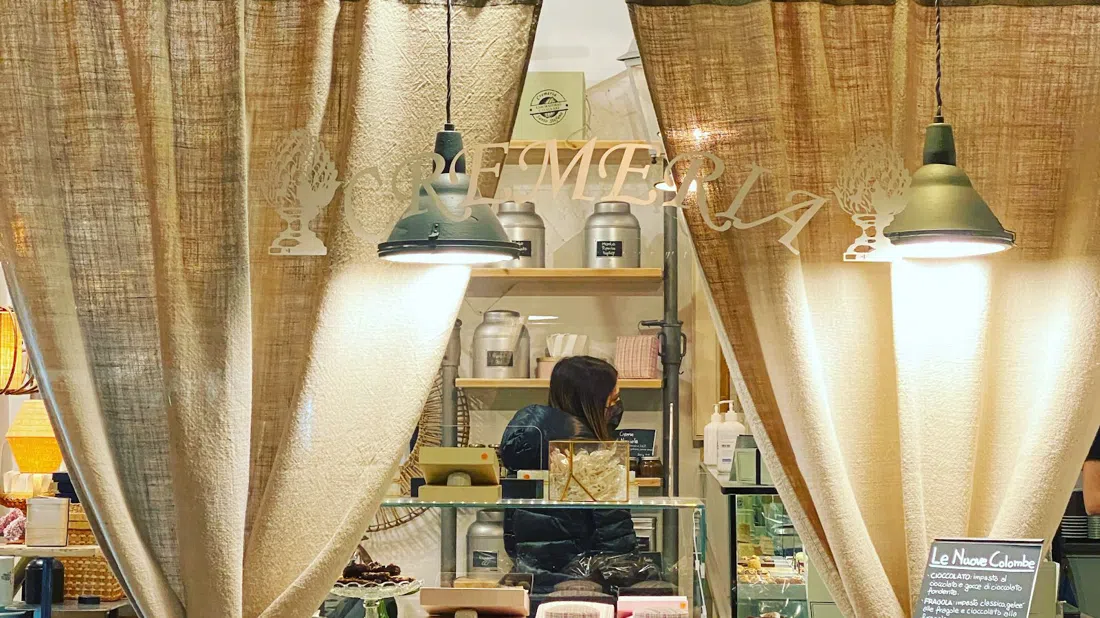
Finish at Cremeria Santo Stefano (Via Santo Stefano, ten minutes down the portico), a Gambero Rosso Tre Coni gelateria with cones and cups at roughly €3–6. Walk-up only, with nowhere to sit, which means any size of group can queue and eat on the move under the arcades. Closed Mondays, busiest at weekends.
Is it worth it
Yes, and the verdict is easy to give honestly because the church costs nothing. Half an hour buys you Europe's largest brick church, the largest indoor sundial in the world, one of the great fresco cycles of its century for €5, and a facade that wears six centuries of civic stubbornness on the outside where anyone can see it.
It suits anyone with a loose half-hour in the centre, people who like buildings with visible arguments in them, photographers, and families: free, flat, quick, and the Hell fresco buys ten minutes of undivided attention from any eight-year-old. It will disappoint visitors expecting stained glass and gilding, because the interior is austere and its best features are a line on the floor and one painted chapel, and it will disappoint anyone whose plan was the roof terrace. If you have one paid ticket to spend on this piazza, spend it on the Clock Tower. If you have two, add the anatomical theatre.
Best time to go
First thing after opening is quietest, and the light coming through the south chapels is at its best then. The other target is local solar noon on a clear day, for the meridian. That is the only time the building does its party trick, and it does it whether or not anyone is watching. Mid-morning on Sundays belongs to the parish, so expect sections of the nave closed and keep your visit short or come later. In term time, remember that school groups arrive from 11:40: before then is calm, and 15:00 onward is calm again.
For anything food-related in the Quadrilatero, avoid 13:00 and 20:00 outright. Winter is underrated here. The porticoes keep rain off almost every walk in this article, Salaborsa is warm and free, and the basilica is colder inside than out, so bring a layer. In high summer the piazza bakes by mid-afternoon: do the church early, the delis late, and bear in mind some family-run shops take a summer break in August, so check before building a day around one.
Practical notes
Everything above sits within a ten-minute walk of the basilica door, most of it under portico, so you need no transport at all once you are in the centre. Driving in is pointless: the core is a restricted-traffic zone and the piazza is pedestrian. From the main station it is about twenty minutes on foot down Via dell'Indipendenza, or a few stops by bus.
Carry some cash. Osteria del Sole takes nothing else, market stalls prefer it, and everywhere else on this page takes cards. A full paid day of the sights here comes to about €27 a head (chapel €5, Clock Tower €10, Archiginnasio €12) with the basilica and the library free on top, and you can eat very well for €15–25. For a bed inside that ten-minute radius, start with the Bologna hotel search, and for the city beyond the piazza the Bologna guide picks up where this leaves off.
Questions
How much does it cost to visit Basilica di San Petronio?
The basilica is free, and so is its small museum. Only the Cappella dei Re Magi, the frescoed Kings' Chapel, charges: €5 full, €3 reduced, €2 for school groups, free for under-10s.
Do I need to book San Petronio in advance?
No. Individuals and small groups walk in without a ticket or a reservation. Only parties of 15 or more have to book the Kings' Chapel tour, and school groups are admitted from 11:40. The guided food-and-history walks around this piazza are a different matter: the most popular one is flagged as likely to sell out and the operator confirms it manually, so allow up to 48 hours rather than booking on the day.
Can you still go up to the San Petronio roof terrace?
No. The panoramic terrace that once ran here is permanently closed now that restoration has finished, whatever some older listings still say. For a view, go to the Torre dell'Orologio on Palazzo d'Accursio instead: €10 full, €7 reduced, timed entry in small batches on the hour and at twenty and forty minutes past, with groups split across slots.
How long do you need inside the basilica?
Thirty minutes covers the portal, the nave, the meridian line on the floor and the Kings' Chapel. Allow forty-five to sixty minutes if you add the free museum and sit for a while, or up to ninety if you are waiting for solar noon to see sunlight cross the sundial.
What is the best time of day to visit?
Go straight after opening for the quietest church and the best light, or shortly before local solar noon on a clear day if you want the meridian line working. Avoid Sunday mid-morning, when the parish has the nave, and the 11:40 school-group window in term time. Keep food plans away from 13:00 and 20:00 in the Quadrilatero.
First published on bolognacitybreaks.com, the Bologna guide.