The Federal Republic governed itself for forty years from a Rhine town of civil servants, and every intelligence service with an interest in Europe came here to listen. Ministries, the chancellery, the embassies and the press corps sat inside roughly two square kilometres of riverbank, which made this the most convenient capital in Europe to work against. Most of that geography is still standing, still walkable, and in one case still serving cake on the same corner.
Start at the museum that explains the rest
Before any of the spy stories mean much, you need the shape of the divided country they were told in. Haus der Geschichte der Bundesrepublik Deutschland (Bundesviertel, on the Museumsmeile) covers 1945 to the present across several floors and costs nothing to enter, which is unusual for a national museum of this size. Give it two hours, more if you read the wall text. The thread that matters for this walk is the one about two German states each running services against the other, and about how much of that competition was conducted inside the polite, low-rise capital you are standing in.
Groups can book a guided accompaniment through the visitor service on 0228 9165-400, and it is worth doing above about eight people, because the museum is busy and an unguided group scatters within ten minutes. The U-Bahn-Galerie section closes from 19 October to 19 November 2026 for station construction, so if you travel in that window, expect part of the route through the building to be shut.
The federal quarter in two hours
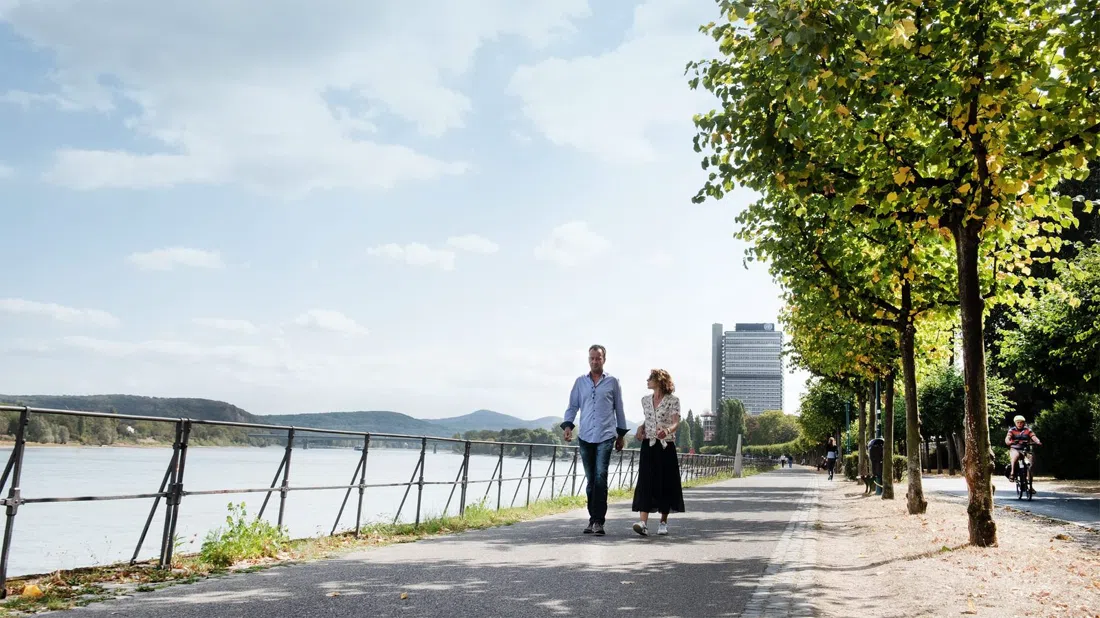
The spine of the whole trip is the Weg der Demokratie (Bundesviertel), a free, self-guided, marked circuit documenting 65 sites of the old capital. From the museum it takes roughly two hours at a reading pace, past the Bundesrat, the tower block known as the Langer Eugen and the Bundespressekonferenz, where the government briefed the correspondents and the correspondents were in turn cultivated by people who were not journalists. Bonn-Information runs guided versions across 2026 for groups and individuals, priced on request; the unguided walk costs nothing and works at any hour.
One stop on it needs honesty. Palais Schaumburg is temporarily closed and can only be seen from outside. That is a real loss, because this is where Günter Guillaume worked his way into Willy Brandt's inner circle as a personal aide while reporting to the East German service. That case brought down a chancellor, and it is the reason this city has a spy map at all. The exterior still tells you something: a modest 19th-century villa a few minutes' walk from the parliament, the press and the presidential residence. That compression explains most of what happened here.
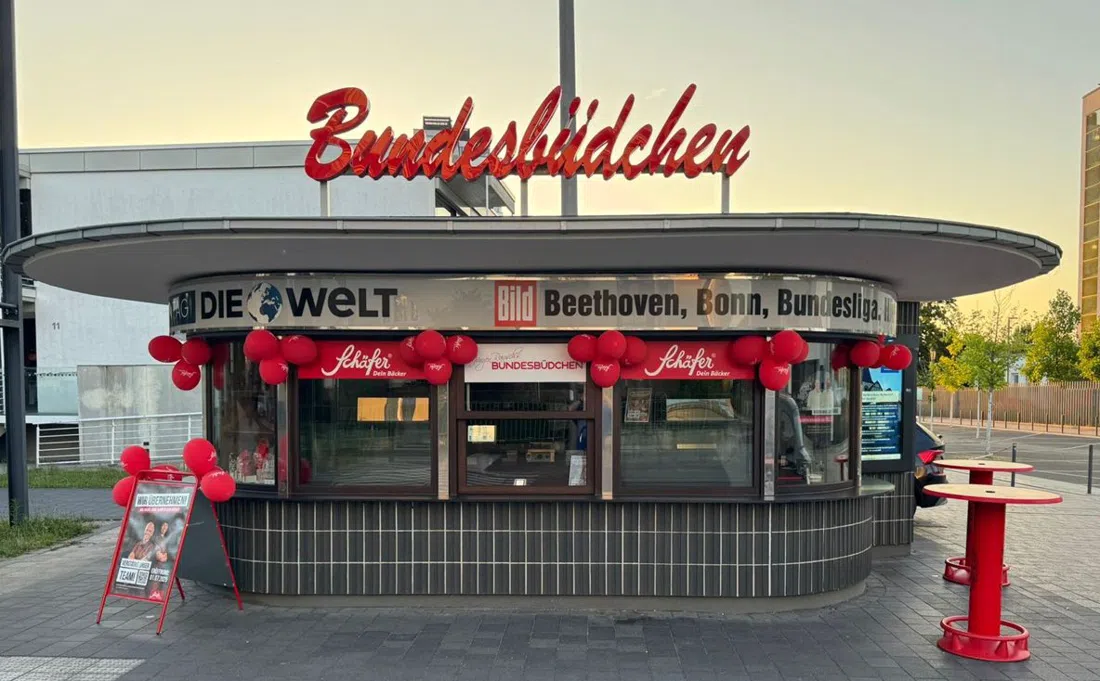
Bundesbüdchen (Bundesviertel), a pavement kiosk of no architectural consequence whatsoever, gives away more than the ministries do. Ministry staff, parliamentary assistants and correspondents all queued at the same hatch for cigarettes and coffee, which made it the quarter's informal exchange for who was moving where and who was unhappy about it. It was dismantled in 2006 and put back into service by a preservation society in 2020. There is no seating and no capacity for a group, but it opens Monday to Friday from 07:00 to 18:00 and a few euros buys the coffee.
The chamber itself is now the World Conference Center Bonn — Plenarsaal des ehemaligen Bundestages (Bundesviertel). This is where the Cold War was legislated, argued over and paid for, and where in 1991 the parliament voted to move itself to the new capital and end the Bonn Republic. Tours cost €15, €10 reduced; groups pay a €120 flat rate plus a €10 service fee and can request dates from four weeks ahead, while individuals get selected Saturdays at 14:00. Confirm before you travel: whenever a conference occupies the building, tours are cancelled, and conferences are the building's day job now.

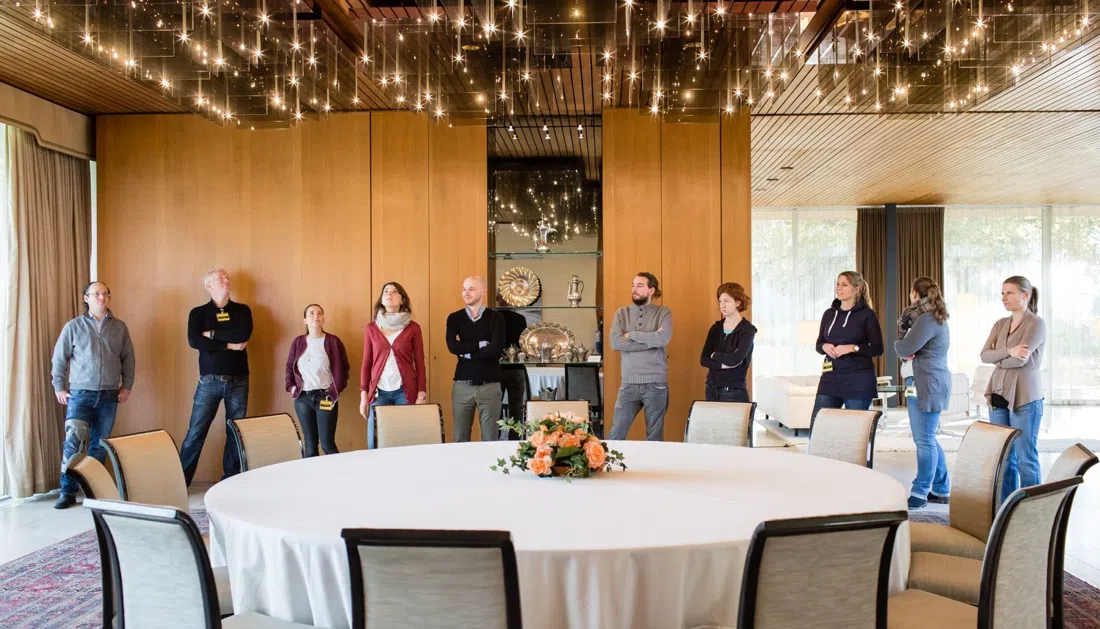
Two residences complete the quarter, and both reward planning rather than luck. Kanzlerbungalow (Bundesviertel, in the Palais Schaumburg grounds) is the glass-walled house where six chancellors from Erhard to Kohl did their off-record entertaining between 1964 and 1999. It was designed so that visitors could be seen through the windows, which in this city was a deliberate choice. Be warned: public individual tours are fully booked to the end of December 2026, and the 2027 dates are released in autumn 2026. Groups of 15 or more, to a maximum of 20, can book Tuesday to Friday between 11:00 and 15:00, and Saturdays or public holidays between 13:00 and 17:00, for a 90-minute visit. That is currently the most reliable way in. Registration is compulsory in advance, entry is free or nominal, and every visitor needs a valid ID document on the day.
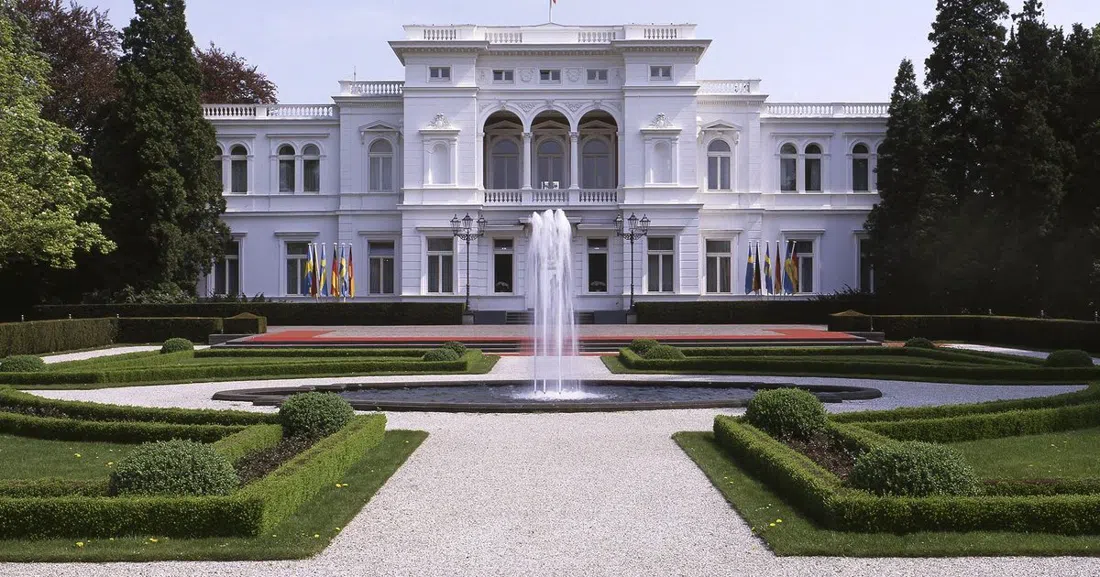
Villa Hammerschmidt (Bundesviertel, on the riverside) was the presidential residence from 1950 to 1994 and is a harder ticket still. It is not a walk-in under any circumstances. Individual guided visits run weekday mornings until about 14:00, arranged through Bonntouren with one form per participant, and registration closes 16 days before the date. Demand forced extra dates in 2026 and several remain in the final quarter of the year. If your trip lands on the September open day and Bürgerfest, that is the easy way in.
Two guided walks on the same casework
Two operators run espionage walks here and they are genuinely different products, so choose on group size. StattReisen Bonn's Spionage in Bonn (city centre) is the deeper one: real casework, a short practical lesson in decipherment and in how agents made contact and passed material, run by the city's long-standing alternative-tours co-op. It costs €26 per person, €22 reduced, and individuals must register in advance. Dates are sparse, roughly monthly, so check the calendar before you fix travel dates rather than after. Private group bookings are taken on request at €520, or €420 reduced.
Bonn und die Spionage, from Stadtführungen im Rheinland (city centre), is the brisker two-hour version, built for groups of 10 to 30 and bookable only on request. It covers the KGB, the Stasi and the Romeo agents, the operation that targeted the unmarried secretaries who typed the ministries' correspondence and which was less glamorous and considerably more productive than the films suggest. From €15 per person, or a €150 flat rate for groups up to 10, it is clearly the better value at ten or more. Two people are better served by the longer walk.
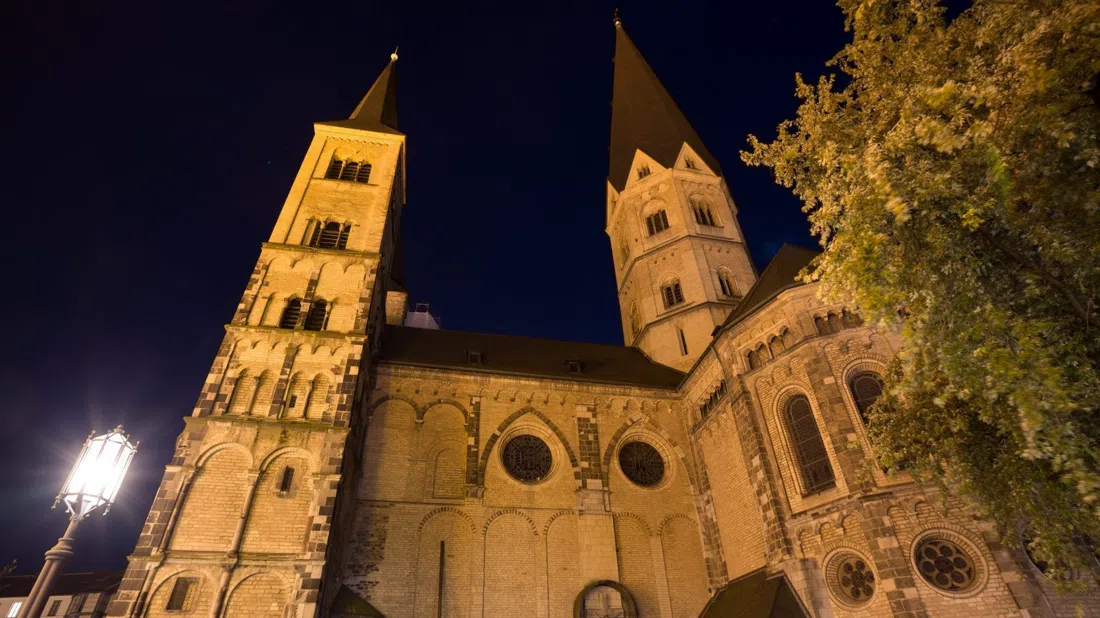
Where the agents actually worked
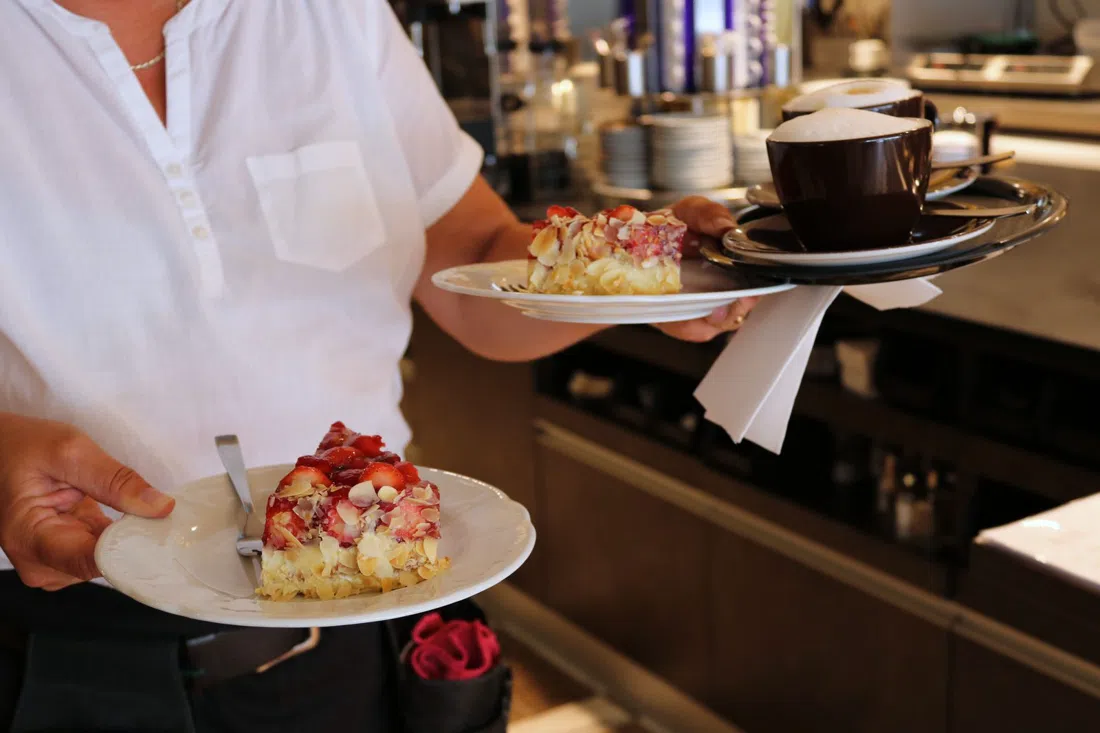
Down the river in Bad Godesberg, the old diplomatic quarter, the map stops being commemorative and turns operational. Café-Konditorei Müller-Langhardt (Bad Godesberg) is the clearest case: German, American, British and French officers all favoured this café for working ministry secretaries for gossip, and it is still a family patisserie on the same corner, still selling cake and coffee for roughly €5 to €15. It takes table reservations and has an adjoining bistro, which makes it comfortable for four or six and awkward for twenty. Sit for half an hour and you can see why it worked: respectable, convenient, unremarkable, and full of people who worked in the ministries.
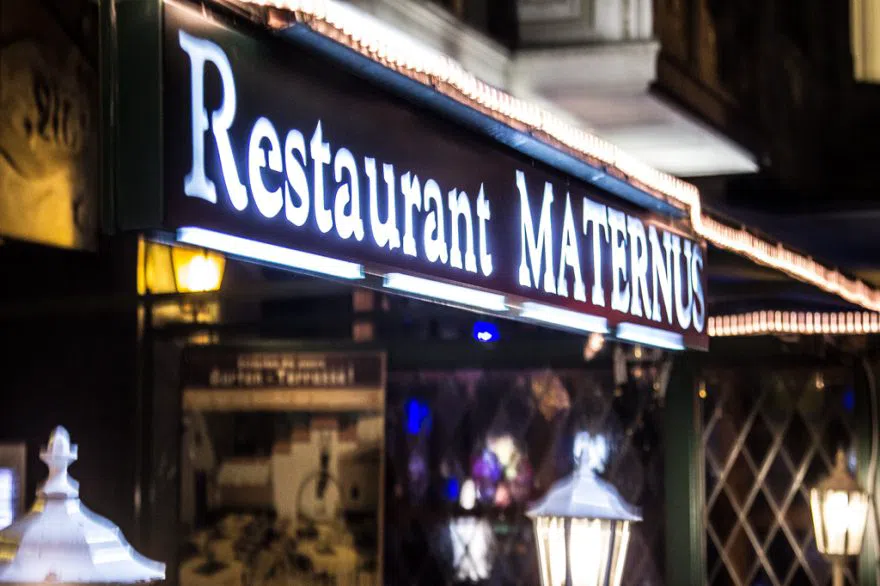
Restaurant Maternus (Bad Godesberg) is the other half of that story, the back room of the Bonn Republic, where members of parliament, ministers and chancellors talked off the record and every US president from Truman to Reagan was entertained. Expect €35 to €70 a head. Written reservation requests need 12 hours or more; phone for the same day. It took a summer break and only reopened on 3 September 2026, so confirm rather than assume. It also handles large parties as a partner for organised functions, which is rarer in this part of the city than you would expect.
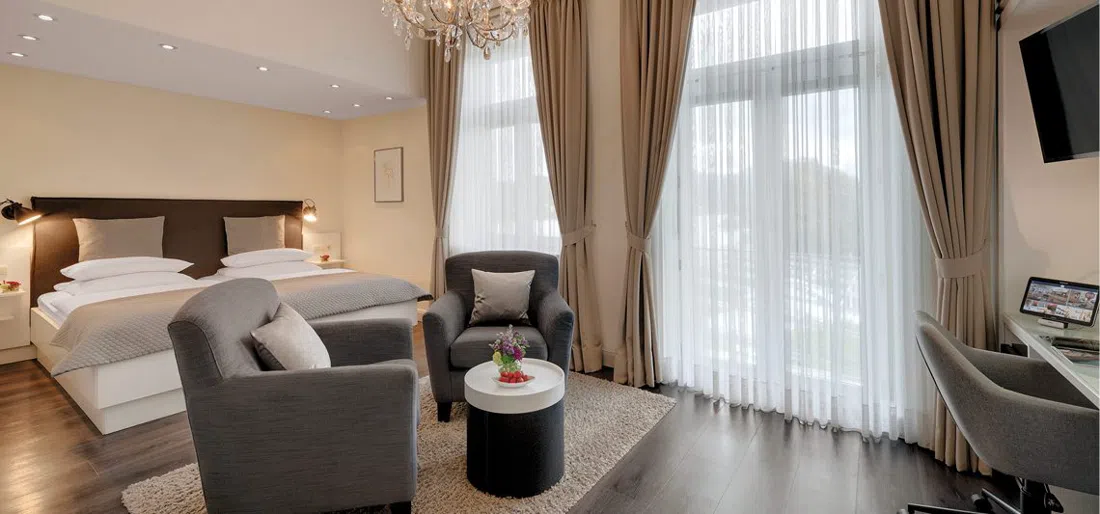
If you want to sleep inside the history, Rheinhotel Dreesen (Bad Godesberg, on the Rhine) is the address. Still run by the founding family after 130 years, it was the headquarters of the Allied High Commissions and the seat of the French High Commissioner. The occupying powers ran West Germany out of this dining room before there was a chancellery to run it from. Seventy-two rooms, roughly €120 to €220 a night, restaurant €30 to €60 a head, reservations advised, with event and banqueting space if you are travelling as a party. If you would rather wake up inside the federal quarter, the Bonn hotel search covers the rest of the city.
Little America in Plittersdorf
Between Bad Godesberg and the government quarter sits the strangest survival on the map. The Amerikanische Siedlung Plittersdorf (Plittersdorf), the HICOG settlement, is a self-contained American town of 458 homes built for around 1,500 staff of the US High Commission, with its own church, school and theatre. The streets are public and free, walkable at any hour by any size of group, with nothing to book and nothing to pay.
What makes it worth forty minutes is the physical fact of it: the deep setbacks, the lawns without fences, an entire housing typology from somewhere else set down in a Rhine suburb and left there. It is the most intact piece of the American presence in the city, and it reads immediately as a community built to function separately from the one around it. The settlement is under monument protection, though a campaign is still fighting for the future of all three HICOG settlements, so see it as it currently stands.
Across the river to the Petersberg
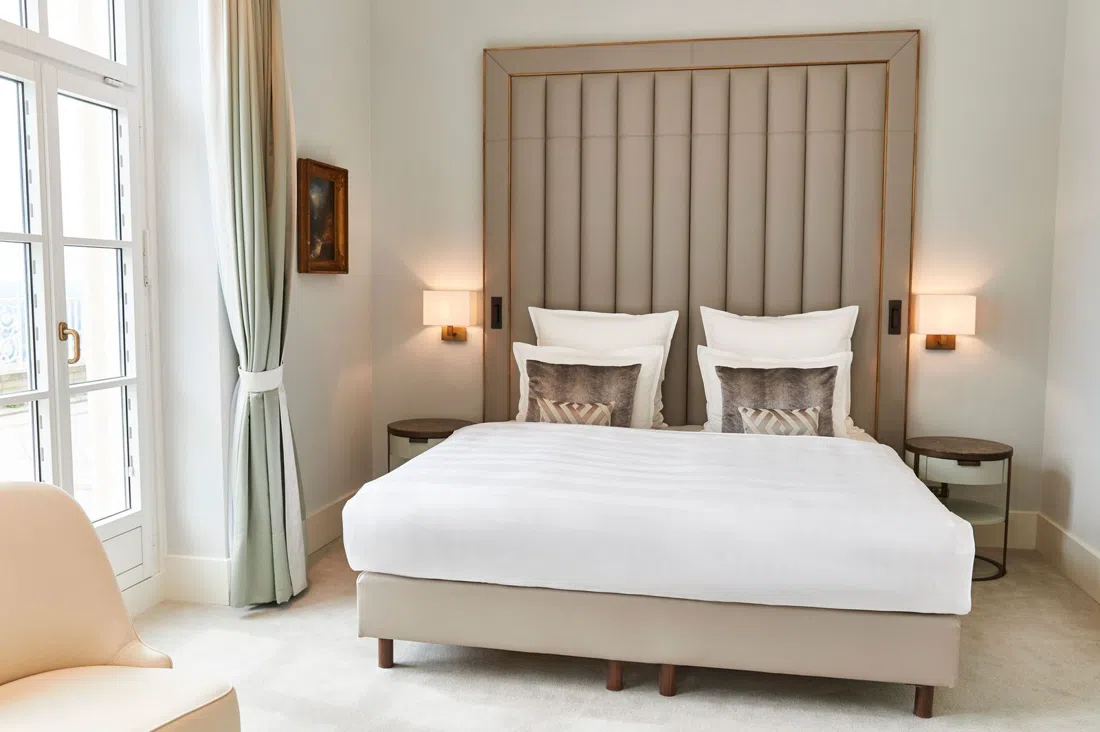
The hill on the opposite bank held the ceremonial end of the same system. Steigenberger Icon Grandhotel & Spa Petersberg (the Petersberg, across the river) was the Federal Republic's official guest house. It has been rebranded, so search the Icon name. The Petersberg Agreement was signed here, and Cold War state visitors including Brezhnev and the Shah were housed on this hill under heavy guard, which is precisely what a hotel on a mountain with a single road up is useful for. Rooms start around €170 and climb from there; there is a full meeting and banqueting operation, and historic group tours can be arranged.
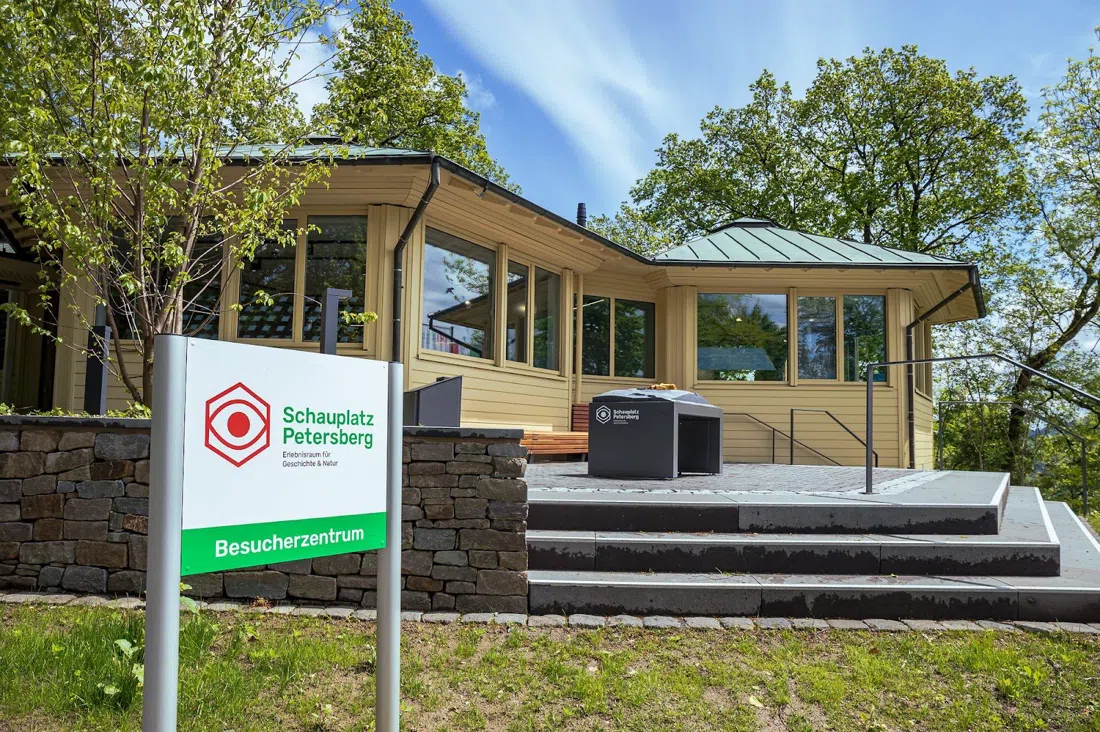
You do not need a room to get the history. Schauplatz Petersberg (the Petersberg) is a separate NRW-Stiftung exhibition in its own building rather than a hotel product, and for €4 adults, €2 reduced, under-18s free, it decodes the decades when this was a state guest house. Groups of 20 or more pay the €2 rate and can request an exclusive guided tour. It closes for winter on 2 November 2026 and reopens on 1 March, so an autumn visit needs deliberate timing.
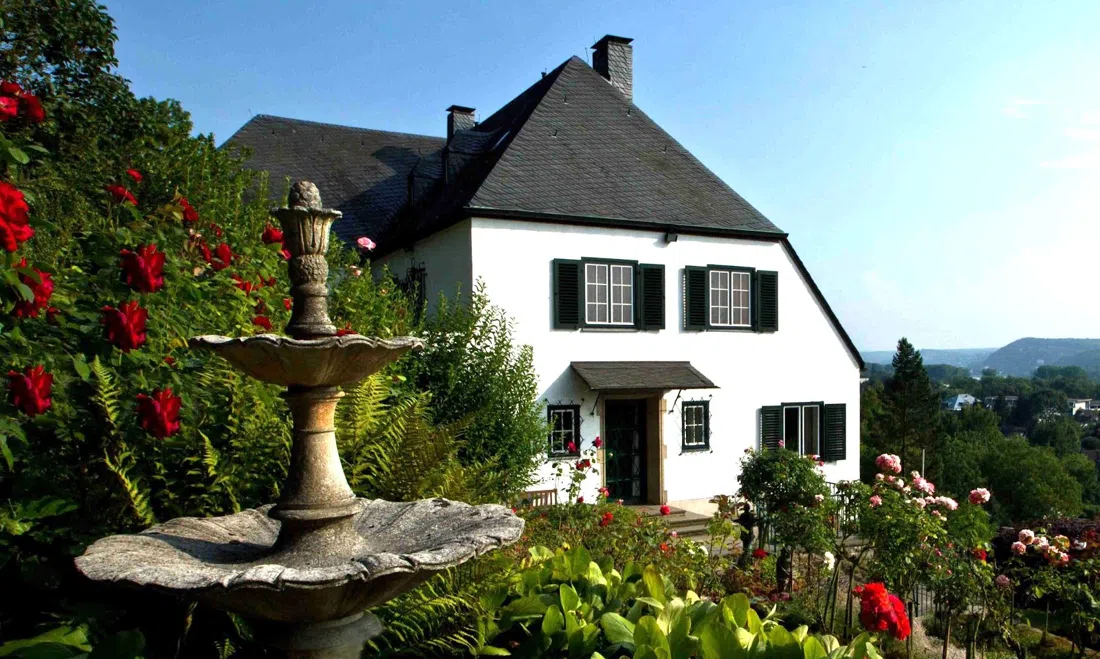
At the foot of the same hill, Stiftung Bundeskanzler-Adenauer-Haus is the origin point of the entire subject. This was the private base of the chancellor who authorised the conversion of the Gehlen Organisation into the Federal Intelligence Service, which means the modern German secret state begins, administratively, in this house. Everything is free: the house, the exhibition and the guided tours. Public tours run at 11:00, 13:00, 14:00 and 15:00, with an extra 17:00 tour from May to September, and the foundation organises its own group tours. Paired with the Petersberg it makes a complete afternoon.
The bunker the government never discussed
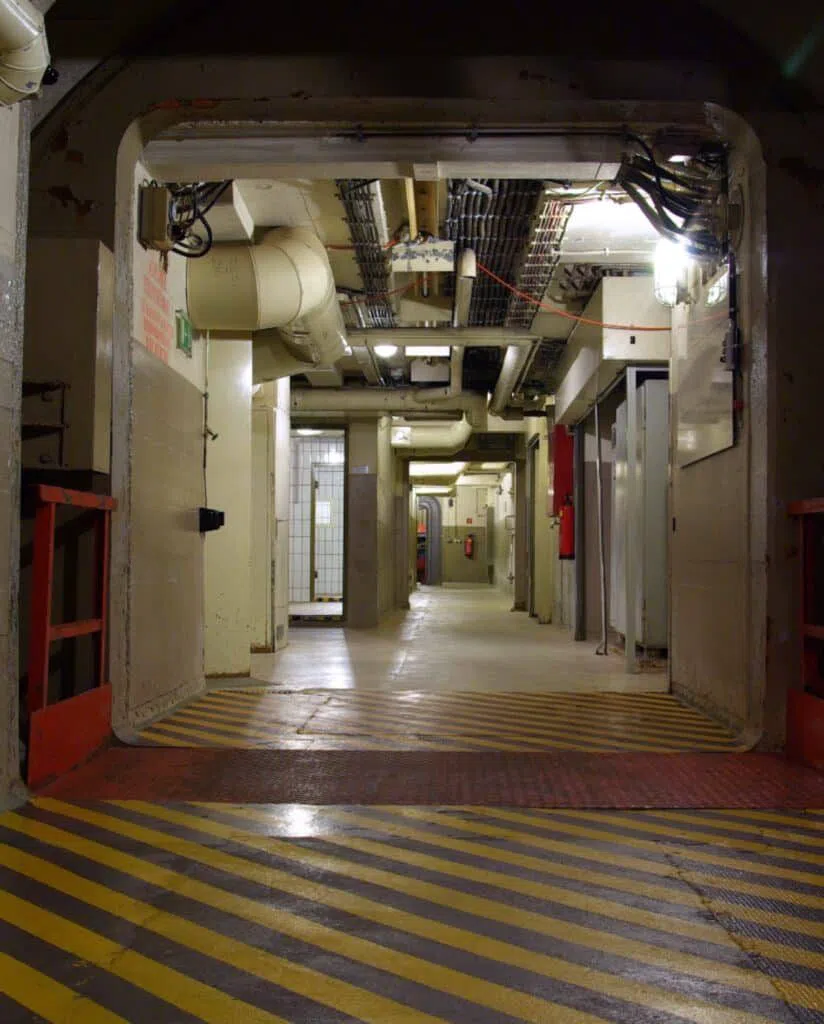
Dokumentationsstätte Regierungsbunker (about thirty minutes south of the city, in the Ahr valley) is the one entry on this map you cannot walk to, and the one that justifies the journey. Cut into a hillside, this was where the federal government intended to sit out a nuclear war: a rehearsed, catalogued, secret continuity of the state, exercised periodically by officials who went home afterwards and said nothing about it. A preserved section is open as a museum. Adults €15, teenagers aged 13 to 16 €8, children 8 to 12 €6.
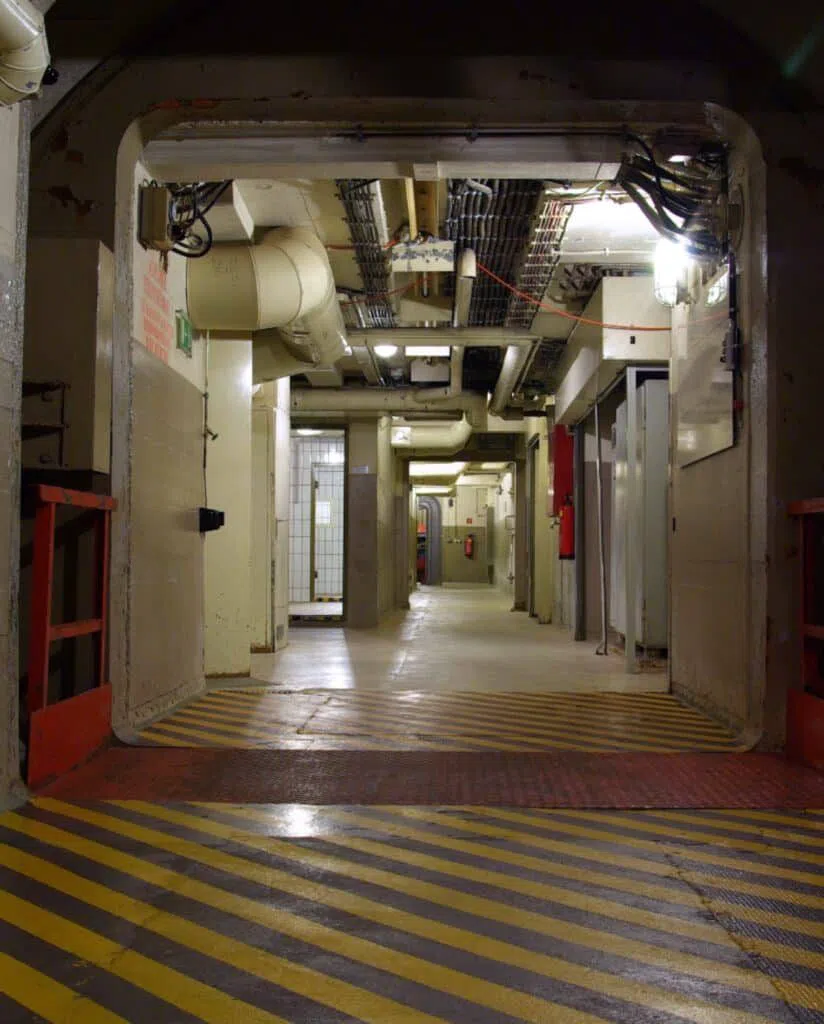
The access rules are what you plan around. Groups are welcome daily except Mondays, 10:00 to 16:30, by advance booking, and that is the only way to visit outside the individual season days; individual visitors are limited to Wednesdays, Saturdays and Sundays in season. Two people travelling midweek in winter will not get in on spec. Allow a half-day including travel, check the regional connections at the time you book, and dress for a constant cool temperature underground regardless of the weather above it.
Practical notes
The federal quarter walks end to end comfortably, and the Stadtbahn running south along the left bank links the centre, the museum quarter, Plittersdorf and Bad Godesberg in minutes, which is what makes a two-day itinerary possible without a car. The Petersberg is the exception: one road up, so it means a taxi, a lift arranged with the hotel, or the walk up through the woods from the riverside if you have the legs and an hour.
Carry cash. The kiosk, the café and the smaller admissions are all happier with it than a foreign card, and some will not take a card at all. Avoid building your Cold War day around a Monday, because the national museum closes then and the bunker takes no groups. Watch the lead times; they constrain this trip more than anything else: 16 days for the presidential residence, four weeks for a group booking in the parliamentary chamber, individual bungalow tours gone until 2027, and the Petersberg exhibition shut from 2 November 2026 to 1 March.
On budget, the spine of this walk is free. The democracy trail, the national museum, the chancellor's house museum, the American settlement, and both official residences if you register in time cost nothing at all, which is a serious two days for the price of transport. The paid layer is modest: a guided espionage walk at €15 to €26, the plenary chamber at €15, the Petersberg exhibition at €4 and the bunker at €15 comes to under €70 a head. Add one dinner at the political restaurant and a night on the river and you have the full version. For everything else in the city, see the Bonn guide.
Questions
Can I still visit the Kanzlerbungalow in 2026?
In practice, only as part of a group. Individual tours are fully booked to the end of December 2026, and the 2027 dates come out in autumn 2026. Groups of 15 to 20 can book 90-minute visits Tuesday to Friday between 11:00 and 15:00, or on Saturdays and public holidays between 13:00 and 17:00. You must register in advance, and every visitor needs a valid ID document.
Which of the two espionage walking tours should I book?
For a couple or a small party, take StattReisen Bonn's Spionage in Bonn at €26 per person (€22 reduced). It goes furthest into real casework and includes a short lesson in decipherment, but it runs only about monthly, so book well ahead. For ten or more people, Stadtführungen im Rheinland costs less: a brisker two hours from €15 per person, or a €150 flat rate for groups up to ten, bookable on request only.
How do I get into the Regierungsbunker, and is it worth the trip out of the city?
The strongest single site on the map, and worth a half-day. Groups can book any day except Monday, 10:00 to 16:30, in advance, which is the only way in outside the individual season days; individuals are restricted to Wednesdays, Saturdays and Sundays in season. Tickets are €15 for adults, €8 for teenagers 13 to 16 and €6 for children 8 to 12. It sits about thirty minutes south of the city, and you cannot walk to it.
How many days do I need for Bonn's Cold War sites?
Two full days covers the city comfortably: one for the national museum and the federal quarter trail, one for Bad Godesberg, Plittersdorf and the Petersberg. Add a third if you want the government bunker, which needs a half-day including travel, or if you are timing your visit around a guided espionage walk that only runs on certain dates.
How much does this cost if I am travelling on a budget?
Less than most capitals. The democracy trail, the national history museum, the Adenauer house museum with its guided tours, and the American settlement streets are all free, and both official residences are free with advance registration. The paid extras (a guided spy walk, the former parliamentary chamber at €15, the Petersberg exhibition at €4 and the bunker at €15) total under €70 per person.
First published on bonnguide.com, the Bonn guide.