The Citadel on top of Gellért Hill reopened on 28 March 2026, after 11 years behind a fence. The summit is walkable again for the first time in more than a decade, and the park inside the ramparts costs nothing. Only the exhibition and its Roof Garden 360 terrace are ticketed.
Crossing from Pest at Gellért tér
Szabadság híd (Liberty Bridge) is the way in from Pest. The lattice steel is painted apple green, and Turul birds with gilded Hungarian crests perch on the tower tops. Trams 47, 48 and 49 run across the deck, and the walkway narrows in places.

The bridge lands at Gellért tér, at the foot of the hill. From there, Szent Gellért rakpart runs north along the embankment under the cliff, toward the Cave Church. The promenade is public and free, and it is the flat approach to the sights; the climbing comes later, from the stepped paths above it.
If you want to stock up first, the Great Market Hall is five minutes away, just over the bridge on the Pest side. Buda Castle is one bridge north.
The Cave Church and the north slope
Begin at Gellért Hill Cave Church (Sziklatemplom), on the embankment, at 09:30, when it opens. The entrance is a natural cave mouth bored into a raw grey dolomite cliff, fronted by a small white neo-Romanesque facade and a slim turret built flush against the rock. The chambers inside are bare stone and candlelit.
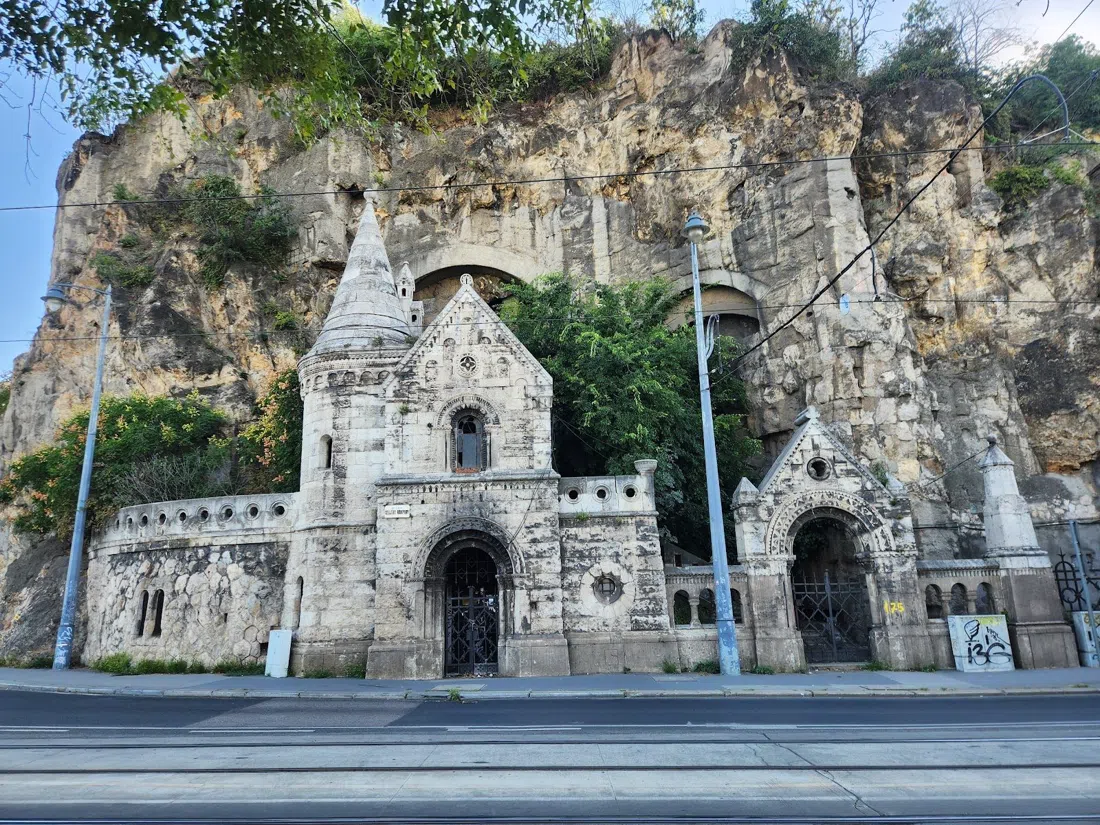
This is a working Pauline monastery. The communist regime sealed the church with concrete in 1951, and it was reconsecrated in 1989. Entry is free, with a donation box, and the audio guide carries a small charge.
Hours are 09:30 to 19:30, Monday to Saturday, and the church takes visitors outside mass times only. On Sundays it is closed to visitors. Cover your shoulders and keep your voice down inside.
From the embankment the stepped paths climb to the St Gellért Monument & waterfall (Szent Gellért-emlékmű) on the north slope. A bronze bishop in robes thrusts a cross skyward inside a tall curved neoclassical colonnade, and an artificial waterfall drops down the bare rock face beneath him. By legend, pagan Magyars rolled the martyred bishop off this cliff in 1046, which is how the hill took his name. Elisabeth Bridge sweeps across the Danube directly ahead, the best head-on view of it in the city. The terrace is free and open air, and the approach steps are steep and unsuitable for wheelchairs.

The summit, the Citadel and the Liberty Statue
Citadella crowns the limestone hill, a horseshoe-shaped Habsburg fortress of thick curved rampart walls. Behind them lie 6,000 sqm of clipped park laid out with gravel paths, and the glass-railed panorama terraces look down on the Danube bridges and Parliament. The park and the ramparts are free to walk.

The Bastion of Freedom exhibition costs 4,990 Ft for an adult and 2,450 Ft for a student, senior or child, and children under 6 go free. That ticket also covers the Roof Garden 360 terrace. Entry runs on timed slots, and coaches and school parties should book ahead through the For Groups enquiry form or the group line, +36 30 126 0121.
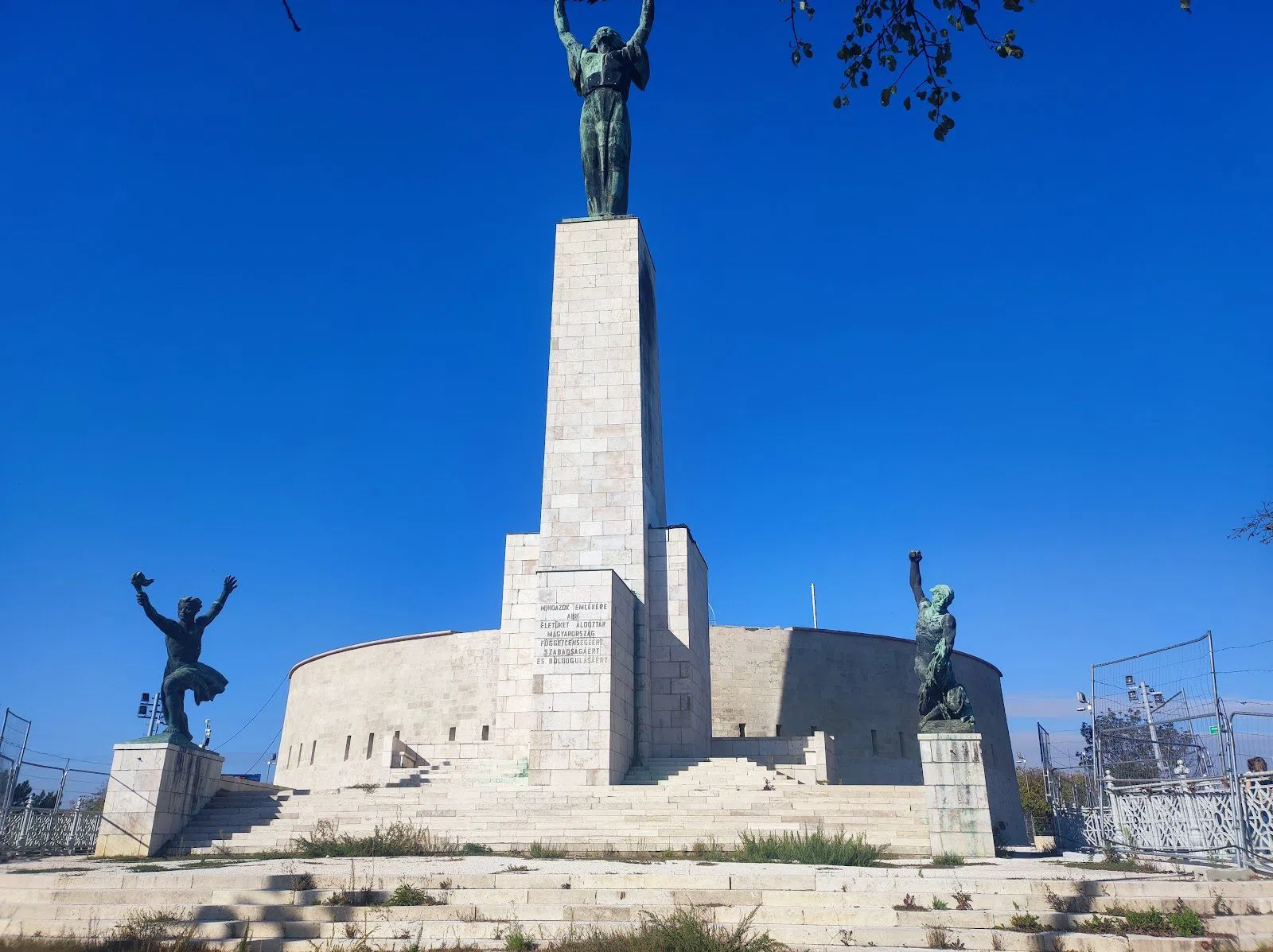
The Liberty Statue (Szabadság-szobor) stands on the open hilltop plaza, a 14-metre bronze woman on a tall pale stone plinth, both arms raised to hold a palm frond horizontally above her head. She was restored alongside the fortress and the fencing is gone, so you can walk right up to the base. The silhouette is the most recognisable in Budapest and reads from across the whole city. The plaza is free, with no door policy and nothing to book, and it fills up at sunset. Come up during the afternoon if you want the ramparts quiet.
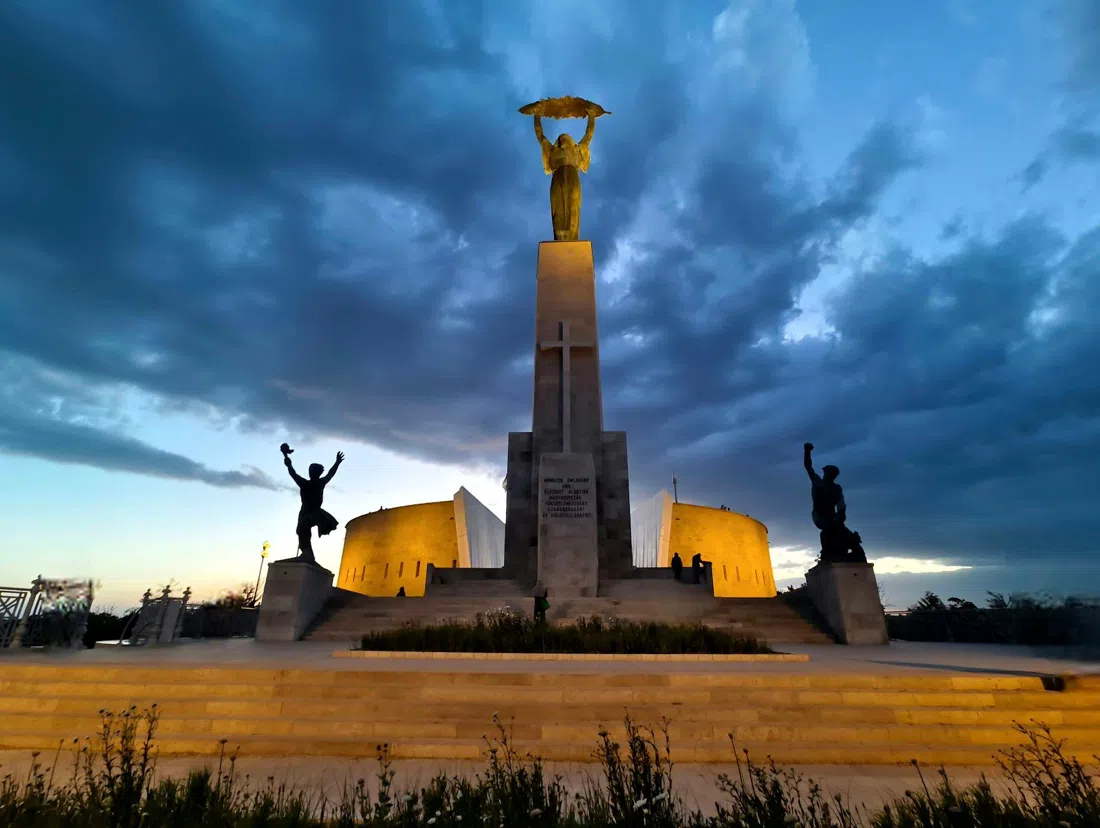
Garden of Philosophy on the western slope
Garden of Philosophy (Filozófusok kertje) lies on the western slope, below the summit and off the direct climb. Nándor Wagner made the work in 1997 and it was installed here in 2001, a circle of religious founders: five slim bronze figures of Abraham, Akhenaten, Jesus, Buddha and Laozi facing a polished metal sphere, with three more figures set apart from them. The terrace is flat stone among scrubby trees, and the rooftops of Buda drop away behind it.
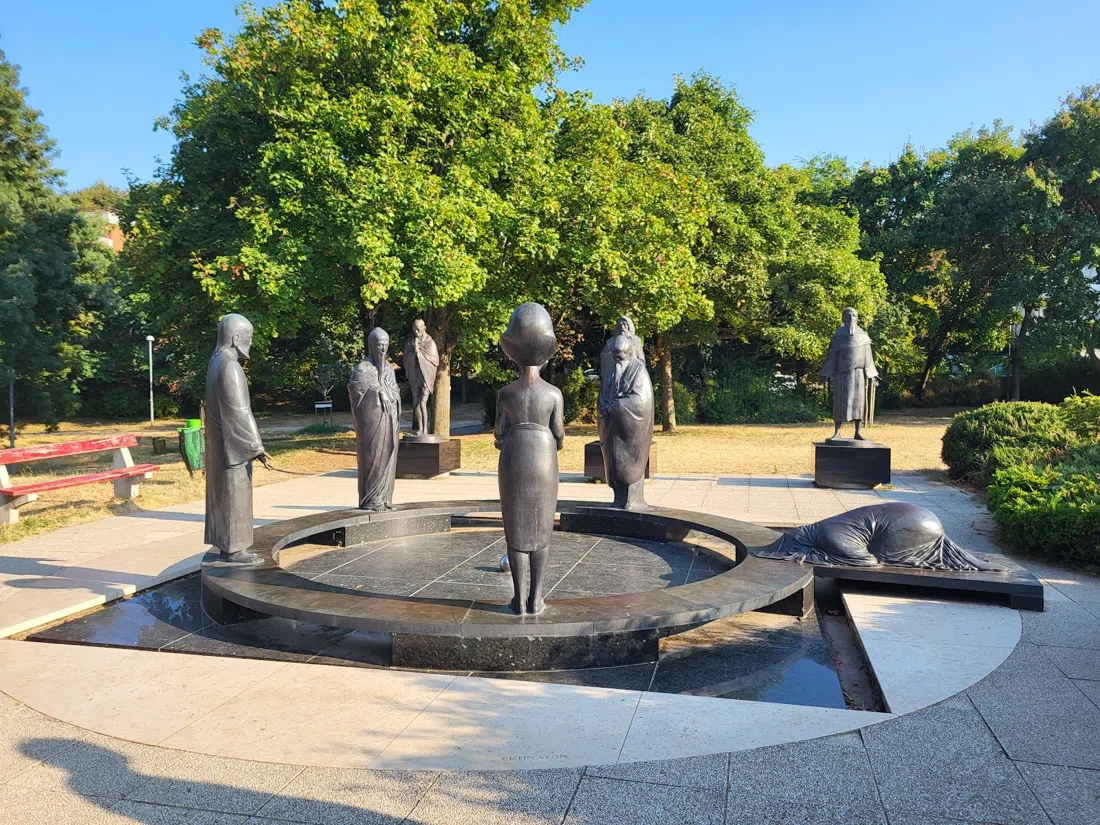
The garden is unenclosed, free and unstaffed. It is also small, and a large party swamps it. Most people walking the hill go straight up to the Citadel and never see it, which is reason enough to make the detour.
Jubilee Park on the southern slopes
Jubilee Park (Jubileumi park) covers the quiet southern slopes and was laid out in 1965. Terraced switchback paths climb between dry-stone retaining walls across a sun-baked hillside. The rose and perennial beds were replanted in rainbow bands for the city's 150th anniversary, and the wooden benches are angled toward the Danube and the Buda rooftops. Locals sit here.
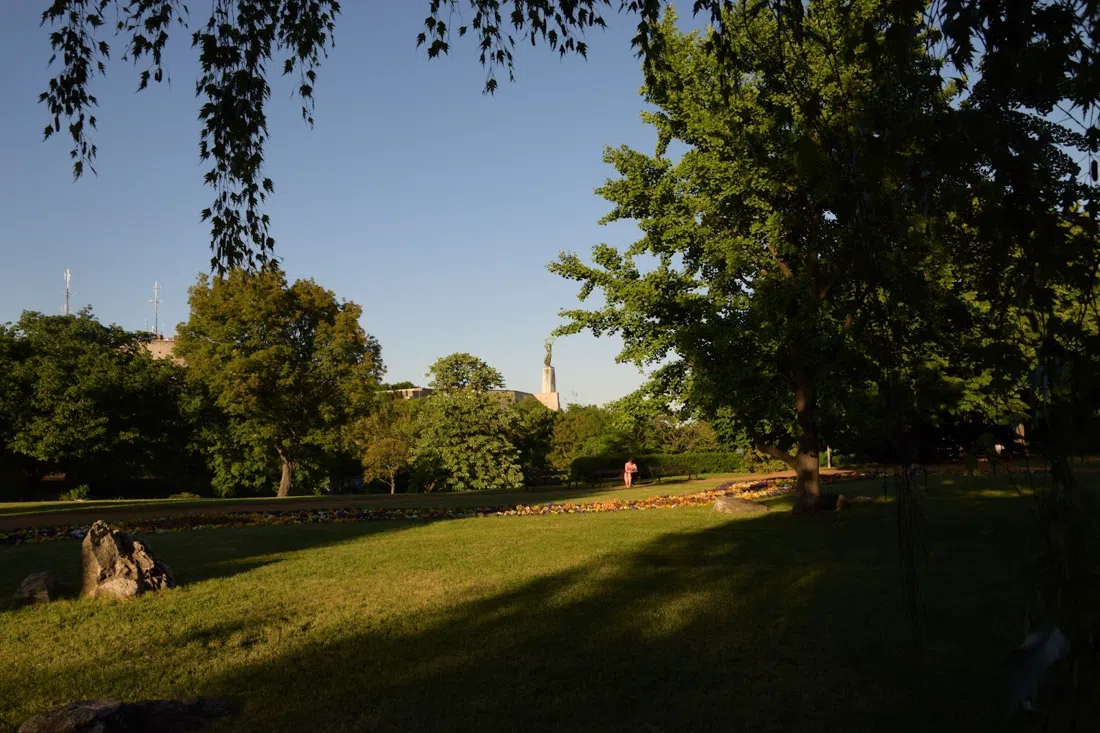
Picnics are fine, and a children's playground and a long slide park sit on the slope below. The city's phased renovation of the hill reaches these southern slopes around 2030. Until then the park stays as it is.
Rudas Baths at the foot of the hill
Rudas Baths is the bath to use at the foot of Gellért Hill while the Gellért Baths stay shut until 2028. The Turkish bath dates from the 1560s, an octagonal Ottoman stone pool under a low dome pierced with star-shaped coloured glass skylights that throw shafts of light onto the steaming water. On the roof, a separate modern circular tub sits at 36°C, with the Danube, Elisabeth Bridge and Buda Castle all round.
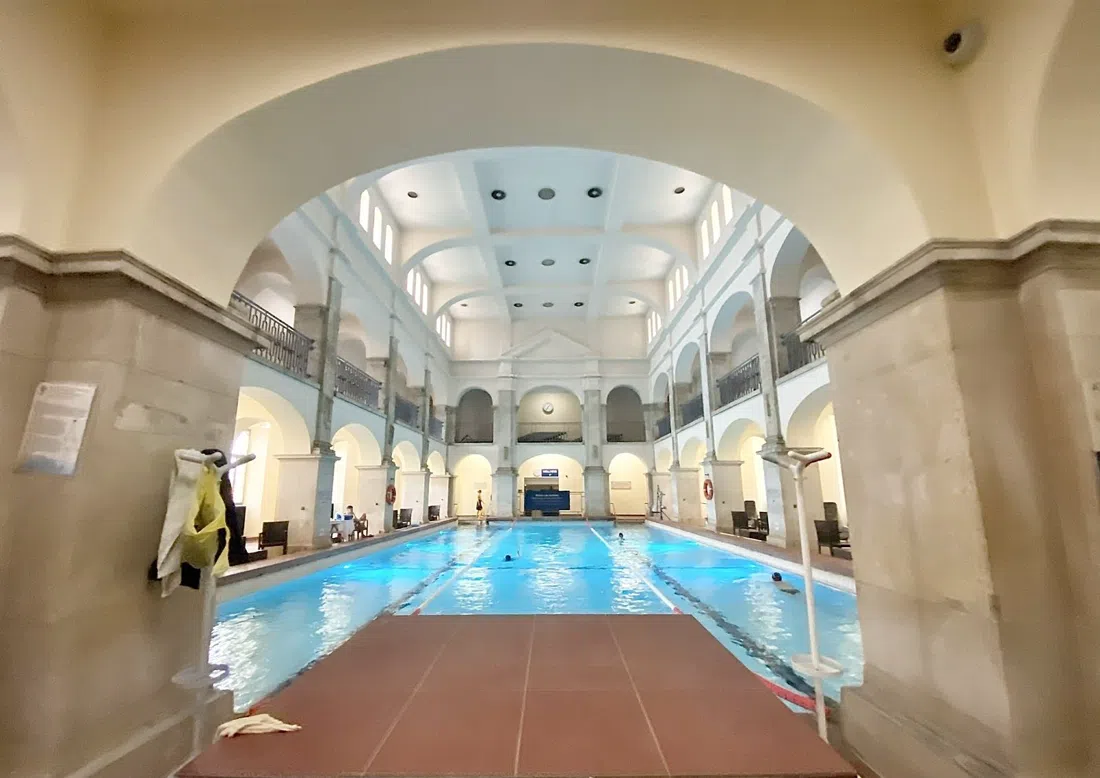
An all-zone day ticket is 12,000 Ft on weekdays and 15,000 Ft at weekends and nights. Book online, per person. The rooftop panorama pool and the fast-track lockers sell out days ahead in season. Friday and Saturday night bathing, 22:00 to 03:00, is sold online only.
Check the single-sex Turkish-bath days before you turn up: women bathe on Tuesday, men on Wednesday.
The Semmelweis museum in Tabán
MNM Semmelweis Medical History Museum occupies a pale 18th-century Baroque townhouse on a narrow Tabán lane under the hill's north end. Ignác Semmelweis, the man who worked out that doctors should wash their hands, was born in the house in 1818.
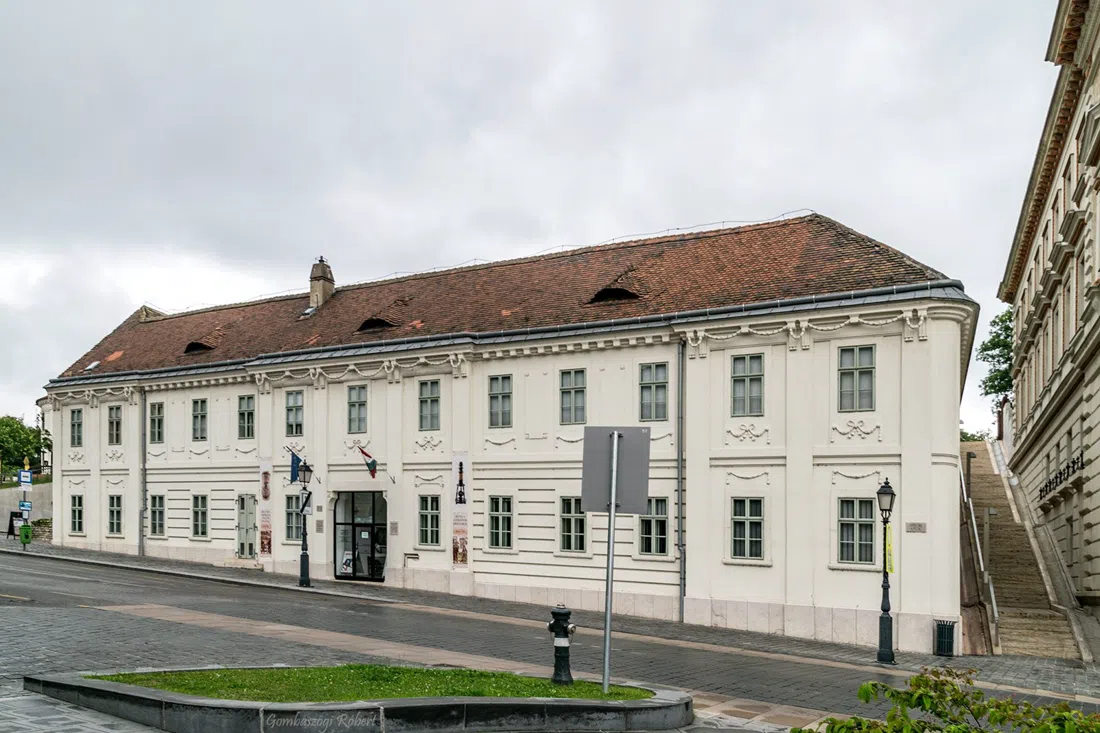
The reconstructed Holy Spirit pharmacy takes up most of the interior, with dark carved wood cabinets and rows of labelled ceramic apothecary jars, and the cases beyond hold antique surgical steel. Admission is 700 Ft for an adult and 350 Ft for a student or senior, and a Budapest Card takes 20% off. Guided tours in Hungarian, English and German are bookable at 1,000 Ft to 2,000 Ft per tour on top of admission.
The museum closes on Mondays and keeps shorter hours from November to February.
Coffee and bread on Bartók Béla út
Bartók Béla út runs along the hill's western foot, and the eating and drinking is concentrated along it.
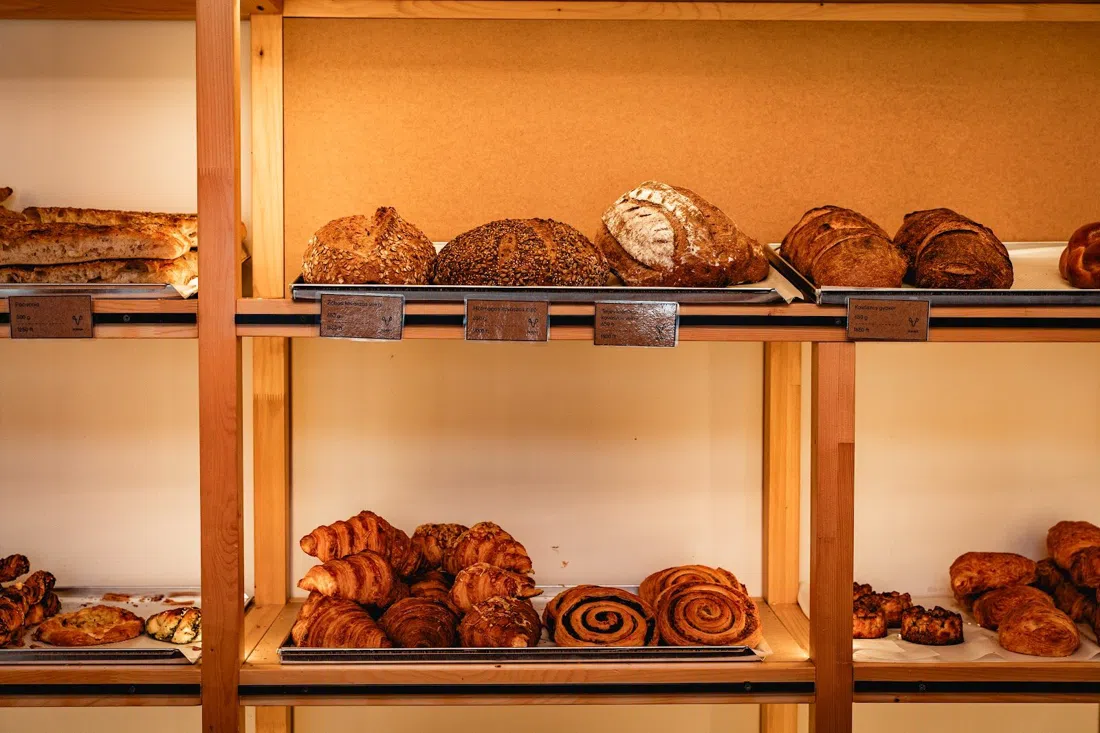
nor/ma Bartók (Bartók Béla út 32) opened in February 2026 and is the breakfast stop before the climb. The shop is pared-back Nordic, pale timber and white tile, with open shelving of long-fermented sourdough loaves, trays of cardamom bullar and laminated pastries, and deli jars of blood-orange marmalade and croissant praline. This branch carries the widest deli range of any of them. Seating at the counter is limited, so buy provisions and walk.
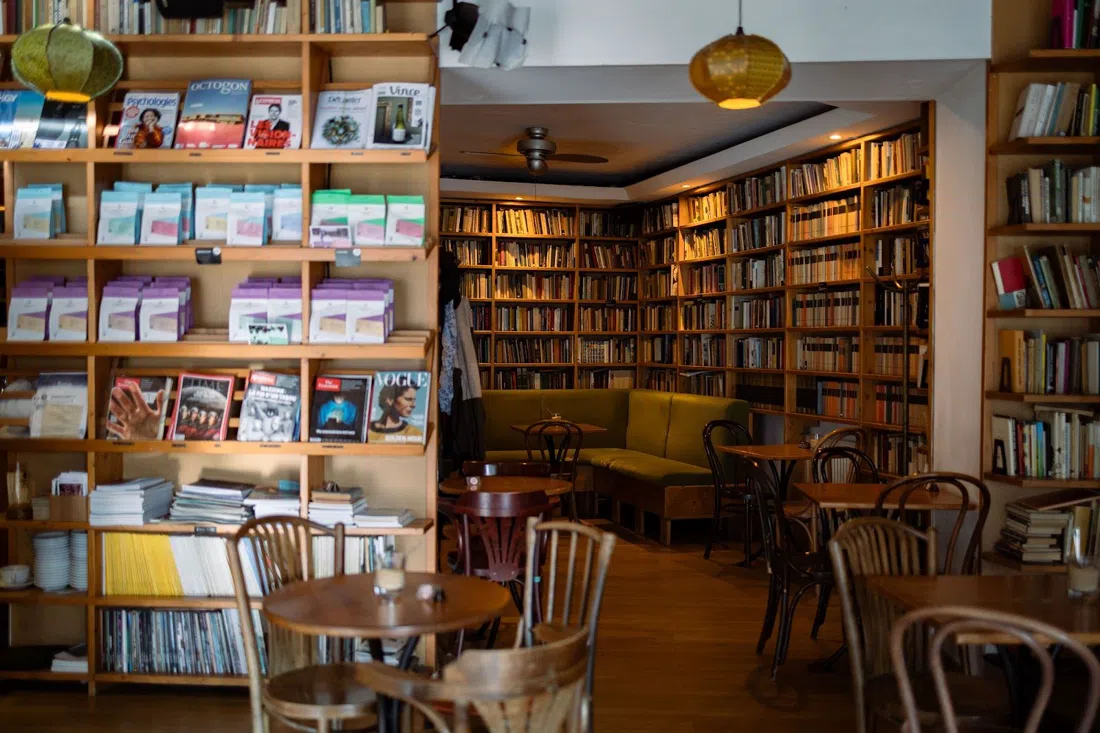
Kelet Café & Gallery is a café, a self-service library and a gallery at once. Walls of second-hand books run floor to ceiling, some 5,000 volumes, and you may swap one for a book of your own. The armchairs are mismatched, the espresso gear on the counter is Casino Mocca, and the terrace sits out on the pavement. Doors open at 07:30 on weekdays, and the hours flex in high summer, so check before a long detour. Nobody here takes reservations. Indoors is small; the terrace holds more.
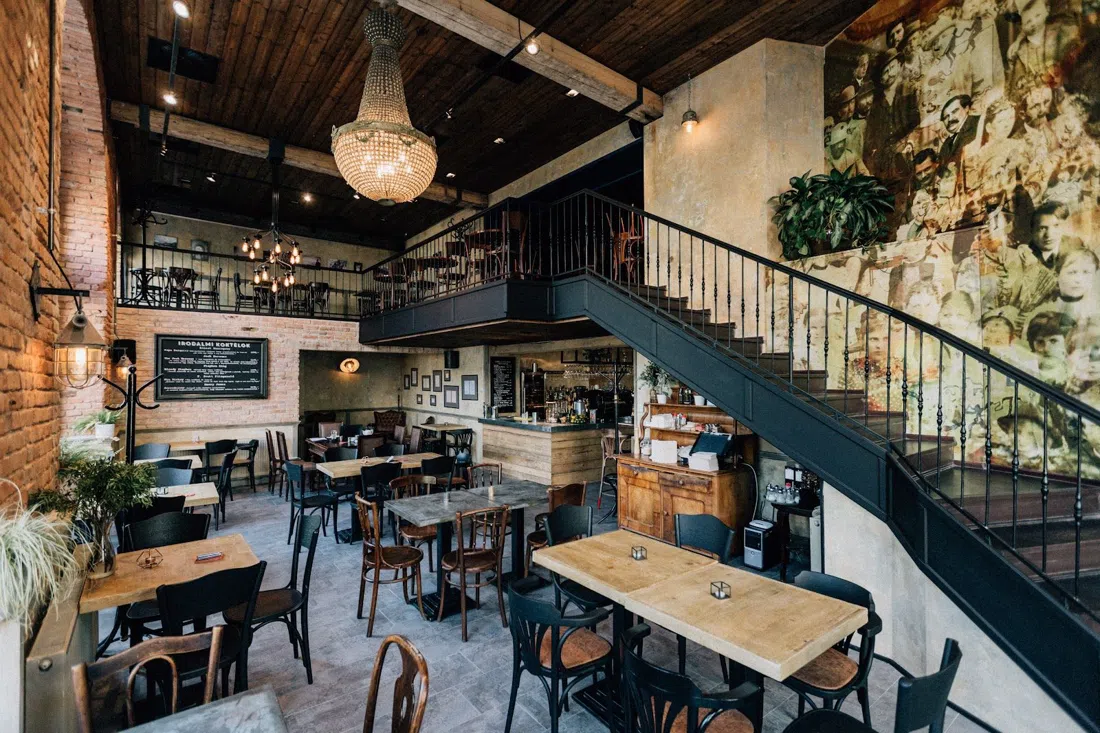
Hadik Kávéház & Szatyor Bár (Bartók Béla út 36) holds two knocked-through rooms under one operator. One is a restored 1900s literary coffee house with bentwood chairs, marble tables and brass, where Karinthy and Kosztolányi held court; the other is a scruffier art bar hung with contemporary work, with a murky painted mural behind the counter. The café was revived in 2010. Online booking takes tables of up to 15 people, and larger parties go through [email protected]. Prices run Ft Ft.
Dinner on Kelenhegyi út
Búsuló Juhász Étterem (Kelenhegyi út 58) is the one proper sit-down restaurant on the hillside, halfway up. The dining room is villa-like, with huge plate-glass windows framing the treetops and the city dropping away below, and a small terrace sits beside a large covered street terrace. The cooking is traditional Hungarian with a modern hand, and you pay for the view: Ft Ft Ft.
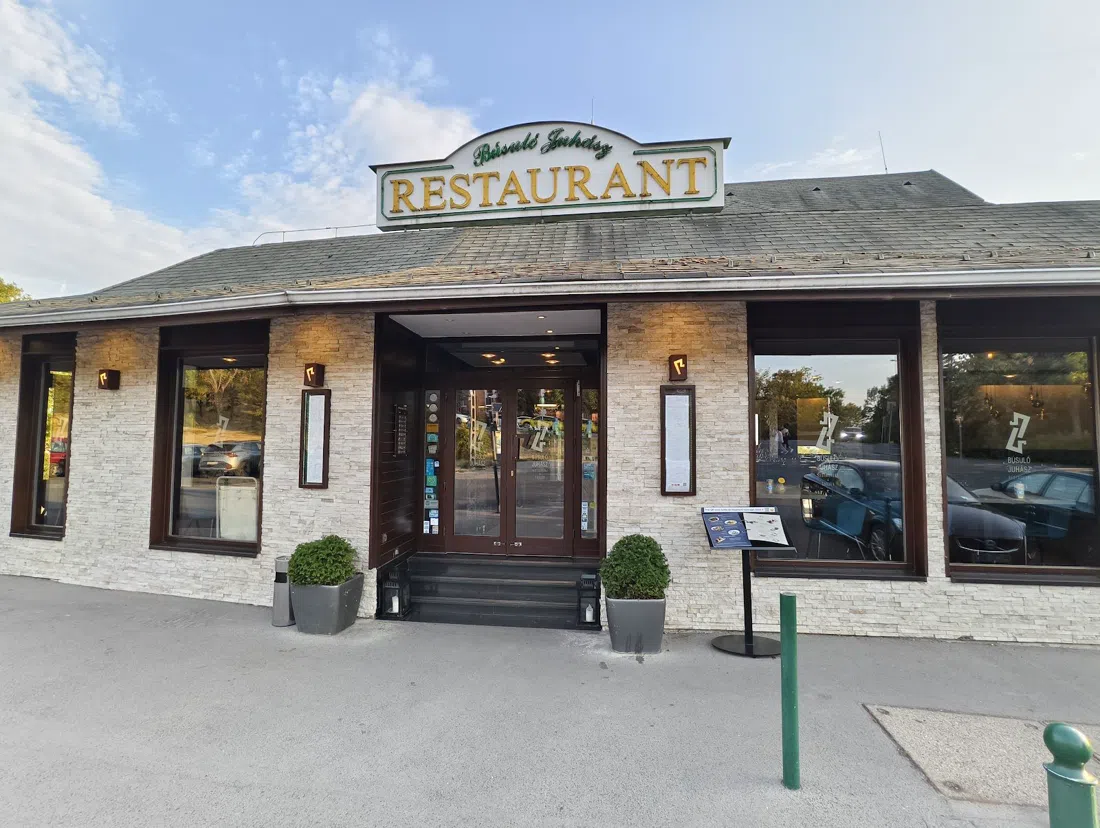
It closes on Mondays and the kitchen stops at 22:00. Book by phone, within 24 hours, on +36 1 209 1649. The restaurant also runs private events.
Late hours on the A38 Ship
A38 Ship is moored to the Buda bank beside Petőfi Bridge, five minutes' walk south from Gellért tér. The hull is a converted Ukrainian stone carrier, black and industrial on deck, with a glass-walled bistro looking at the river on both sides, a rooftop terrace over the water, and a concert hall down in the hold.
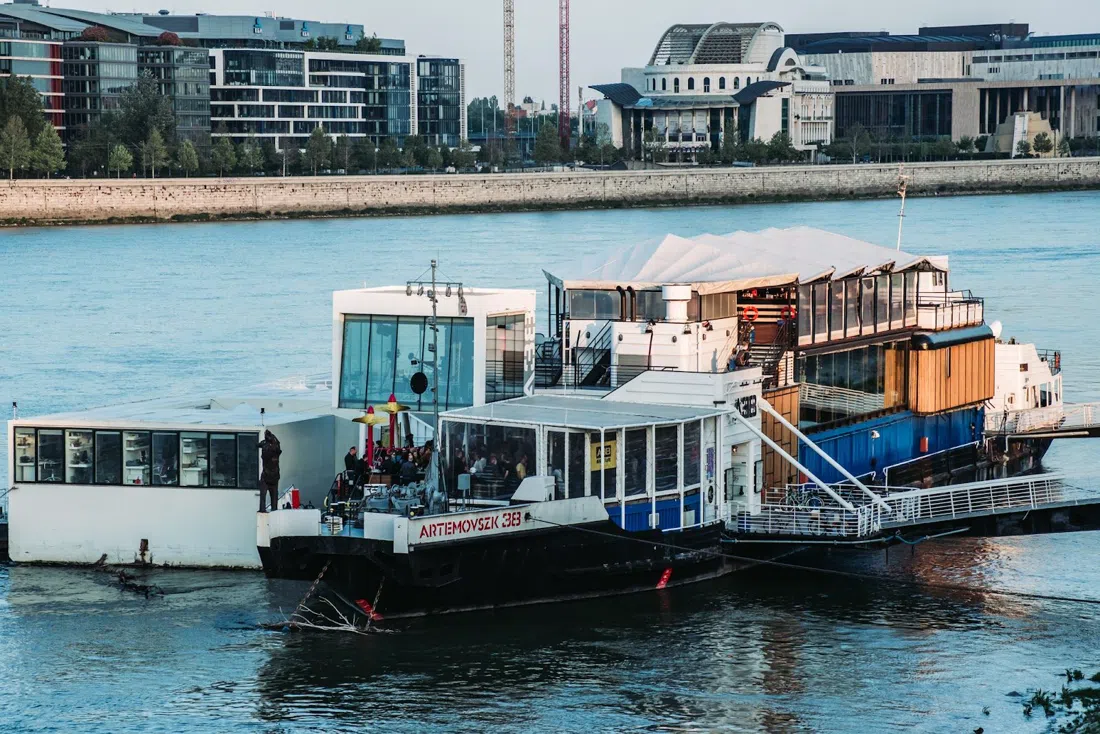
The 2026 programme is busy and gigs run late below deck. Tickets are per person and per event, and the whole ship can be hired for a private event. Bistro mains are mid-range (Ft Ft), and the bistro closes on Sundays.
Where to stay on the hill
The Hotel Gellért is shut until it reopens as a Mandarin Oriental in 2028, and the hill's best beds in the meantime are its villa pensions. Kalmár Panzió (Kelenhegyi út 7-9) is a small family-run pension in an 1898 villa on the south-eastern slope, once the house of prime minister Teleki. Rooms have antique furniture, oak floors, high ceilings and granite bathrooms, and the garden is enclosed among trees. Rooms, studios and apartments run 20,000 Ft to 30,000 Ft a night, and a family can take several of them.
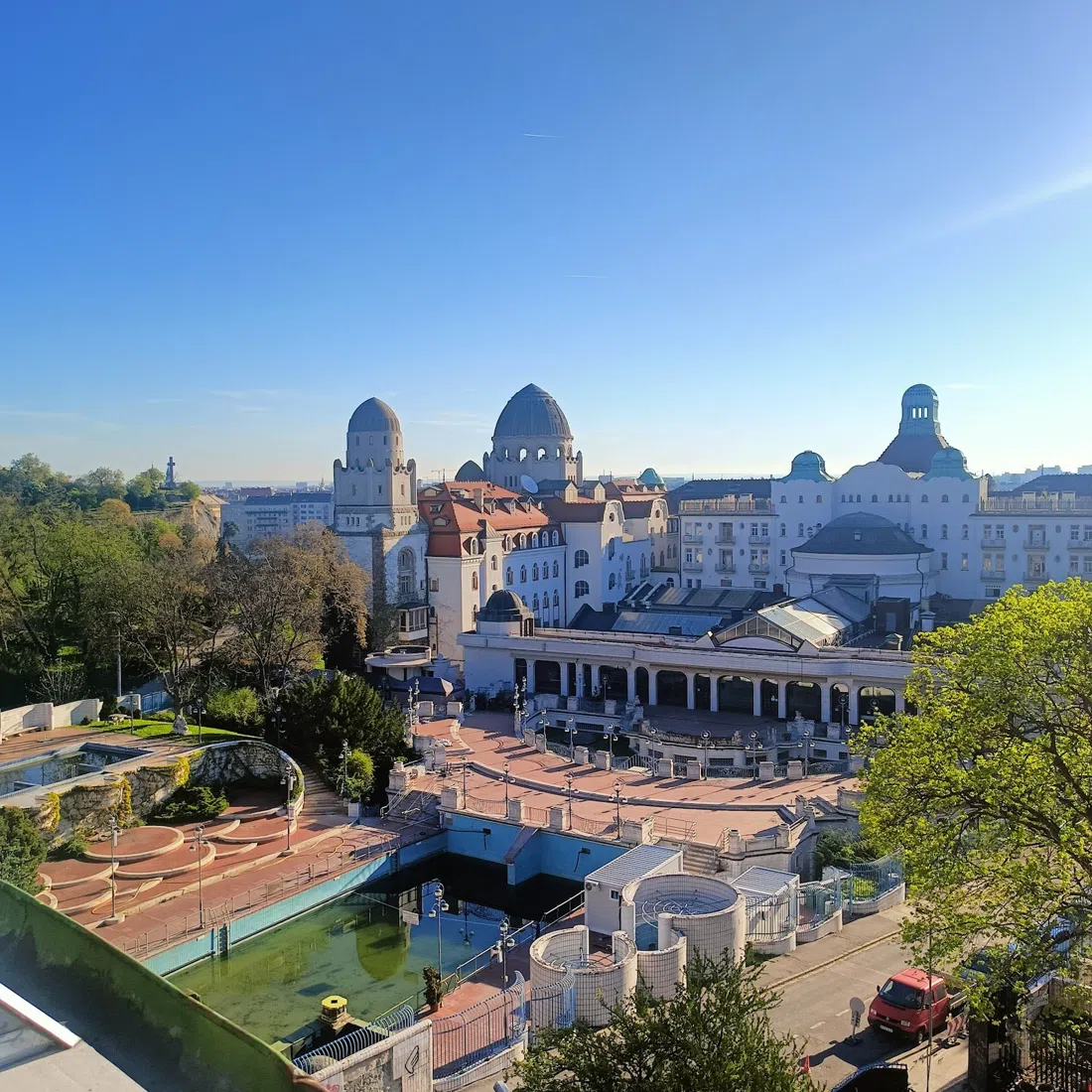
The Danube is 300 m away, and the walk up to the Citadel is steep and short.
Opening days and booking
Four closures shape the week: the Cave Church is shut to visitors on Sundays, the Semmelweis museum and Búsuló Juhász on Mondays, and the A38 bistro on Sundays. Book the Citadel exhibition slot and the Rudas rooftop online before you arrive, and the restaurant table by phone.
See the Budapest guide and the Budapest hotel search.
Questions
Is the Citadel on Gellért Hill open in 2026?
Yes. It reopened on 28 March 2026 after 11 years behind a fence. The inner park and the ramparts are free to walk. The Bastion of Freedom exhibition and its Roof Garden 360 terrace charge 4,990 Ft for an adult and 2,450 Ft for a student, senior or child, free for under-6s, and both run on timed-entry slots.
Can you visit the Cave Church on a Sunday?
No. The Gellért Hill Cave Church closes to visitors on Sundays. It is open Monday to Saturday, 09:30 to 19:30, and you can only go in outside mass times. Entry is free, with a donation box, and the audio guide costs a little extra. Cover your shoulders inside.
How much are the Rudas Baths and do you need to book?
An all-zone day ticket is 12,000 Ft on weekdays and 15,000 Ft at weekends and nights. Book online, and per person, because the rooftop panorama pool and the fast-track lockers sell out days ahead in season. Friday and Saturday night bathing, 22:00 to 03:00, is sold online only. The Turkish bath is single-sex on Tuesday for women and Wednesday for men.
Where do you stay on Gellért Hill while the Hotel Gellért is closed?
The Hotel Gellért is shut until it reopens as a Mandarin Oriental in 2028, which leaves the villa pensions as the places to sleep on the hill. Kalmár Panzió, at Kelenhegyi út 7-9 on the south-eastern slope, has rooms, studios and apartments from 20,000 Ft to 30,000 Ft a night, 300 m from the Danube.
What is the best route up the hill from Pest?
Cross Szabadság híd, which ends at Gellért tér at the foot of the hill, then follow Szent Gellért rakpart north under the cliff to the Cave Church. Stepped paths leave the embankment and climb past the St Gellért Monument to the summit, the Citadel and the Liberty Statue.
First published on budapestcitybreaks.com, the Budapest guide.