Cairo does not explain itself at street level. Down there you get awnings, horns and a wall of people moving in every direction. Sixty metres up you get the logic of the place: the Nile running north between two banks of towers, the medieval city packed tight under the Mokattam ridge, and the desert starting so abruptly on the western edge that the pyramids look pasted onto the horizon. A dozen or so places in this city sell that view, at prices running from nothing to a serious dinner, and they are not interchangeable.
The two high points worth building a day around
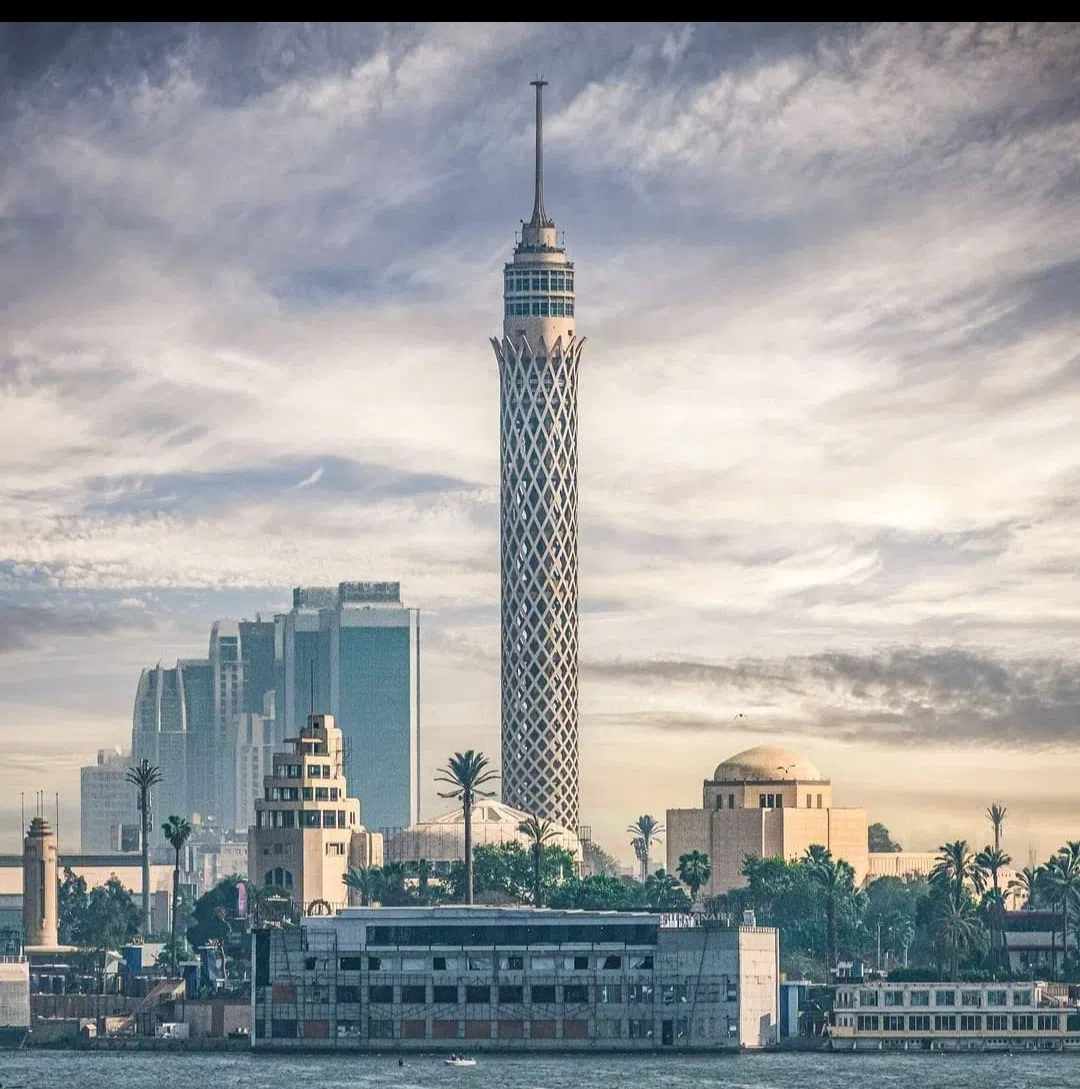
Cairo Tower (Gezira island, Zamalek) is the standard answer to where you see all of Cairo at once, and it earns that. The concrete lattice shaft opened in 1961 and is still the tallest thing on the island. The observation deck on floor 14 gives an unobstructed 360 degrees, with a revolving restaurant one level below that completes a turn roughly every hour. Tickets are walk-up only, around EGP 350 for the standard foreigner ticket, and an express or skip-the-line voucher adds roughly EGP 250 to 500, which includes a credit at the cafe or the restaurant. There is no reservation system, so on a busy afternoon the queue decides how long the visit takes.
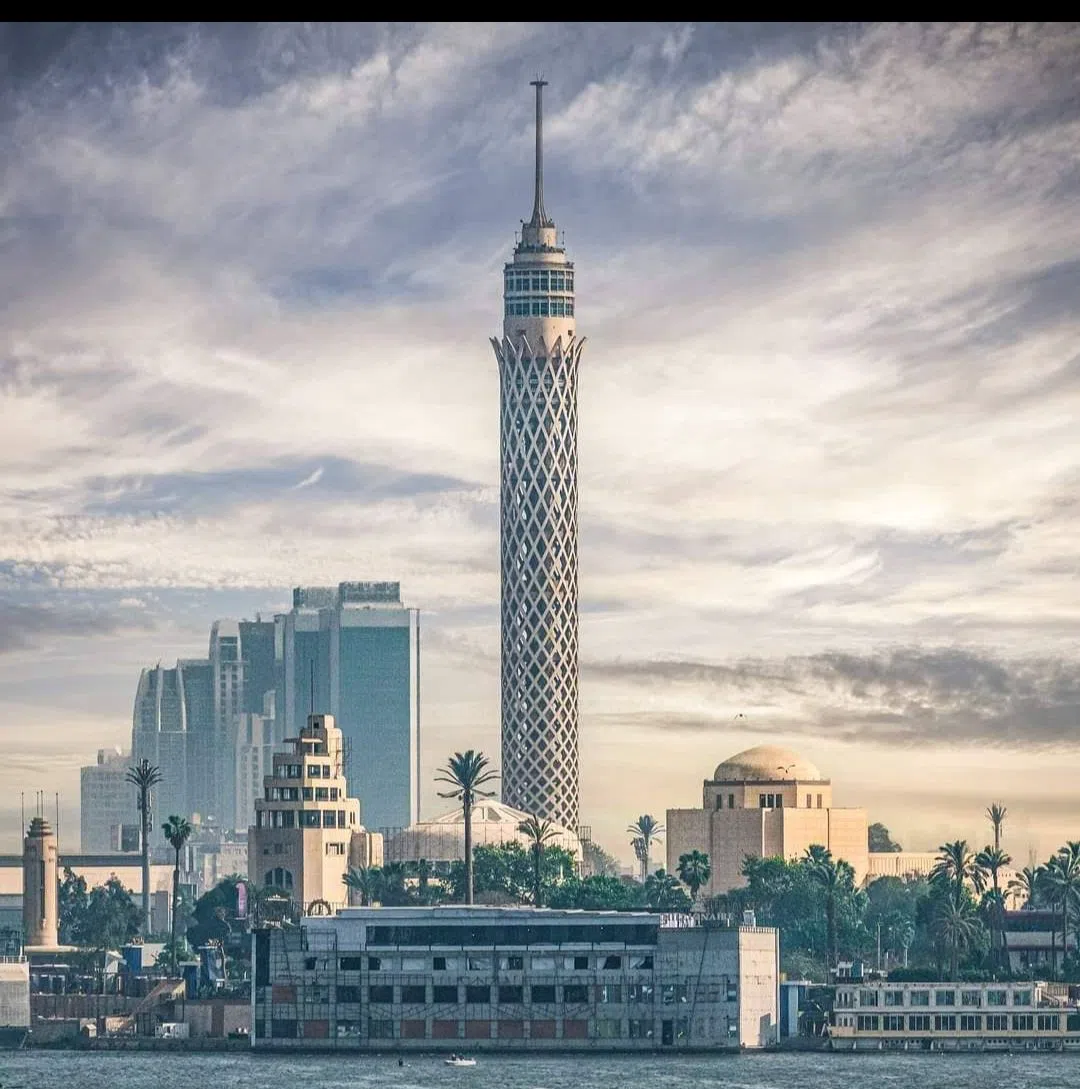
The lifts run in small batches, so any group larger than about eight gets split across several trips. That works for a tour party, but agree a regrouping point on the deck before the first pair steps into the lift. Then there is the haze. For most of the year the western horizon is a soft grey band and the pyramids are more of a rumour than a sight; winter mornings are the only reliable window for picking them out cleanly. Opening runs from 9am until around 1am, so if you have come for the city rather than the pyramids, go after dark and let the bridges and the river do the work.
Citadel of Salah al-Din (al-Qal'a, above the old city) is the higher of the two and the more interesting building. The fortress was begun in 1176 on a spur of the Mokattam hills, and everything since has been layered on top of it, most visibly the Ottoman-style Alabaster Mosque of Muhammad Ali, finished in the 1840s, which sits at the front edge of the compound. Walk behind it to the parapet and the ground drops straight onto medieval Cairo: minarets, domes, water tanks, washing lines, and on a clear morning the pyramids surfacing on the far horizon. Entry is around EGP 550 for a foreign adult and about EGP 275 for a student, though reported prices vary, and payment at the gate is card only. Bring a card that works abroad, and if you are travelling as a group, have one person settle the whole transaction rather than queueing individually.
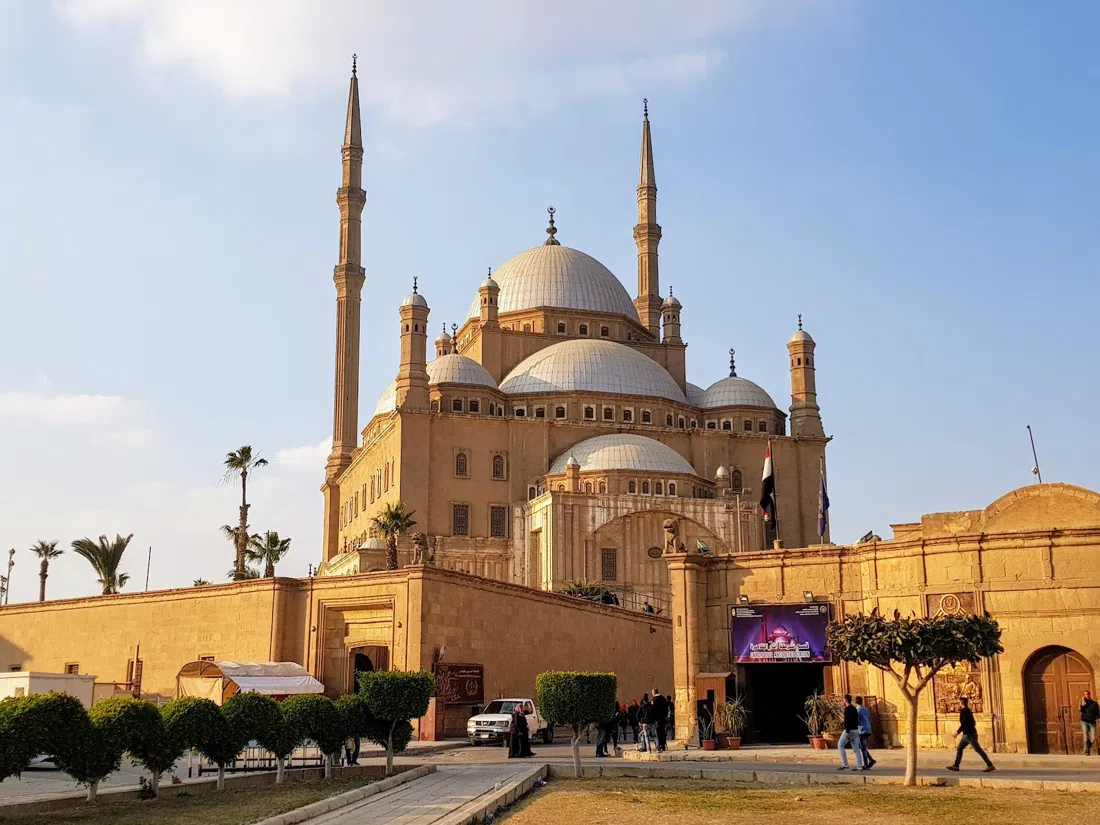
Watch the hours. The Citadel closes at 5pm, which makes it a morning viewpoint and never a sunset one, and people who get that wrong lose an entire afternoon to it. Give it two hours minimum. The terraces were built for coach traffic and absorb crowds easily, so this is one of the few places in the old city where a party of thirty causes nobody any difficulty.
Climbing into the medieval roofline
Height is not the same as usefulness. The two minaret climbs below put you only thirty or forty metres up, but they put you inside the view rather than looking down on it from a distance.
Bab Zuweila and the minarets of the al-Mu'ayyad Mosque (al-Darb al-Ahmar) is the southern gate of the Fatimid walled city, built in 1092. The two minarets you climb belong to the mosque of Sultan al-Mu'ayyad Shaykh, raised in the early fifteenth century and planted directly on top of the gate's stone towers. The ticket is about EGP 150 for an adult and EGP 75 for a child, and it buys the best low-altitude view in Egypt, close enough to the rooftops that you can watch the tentmakers' market work below you and hear it at the same time.
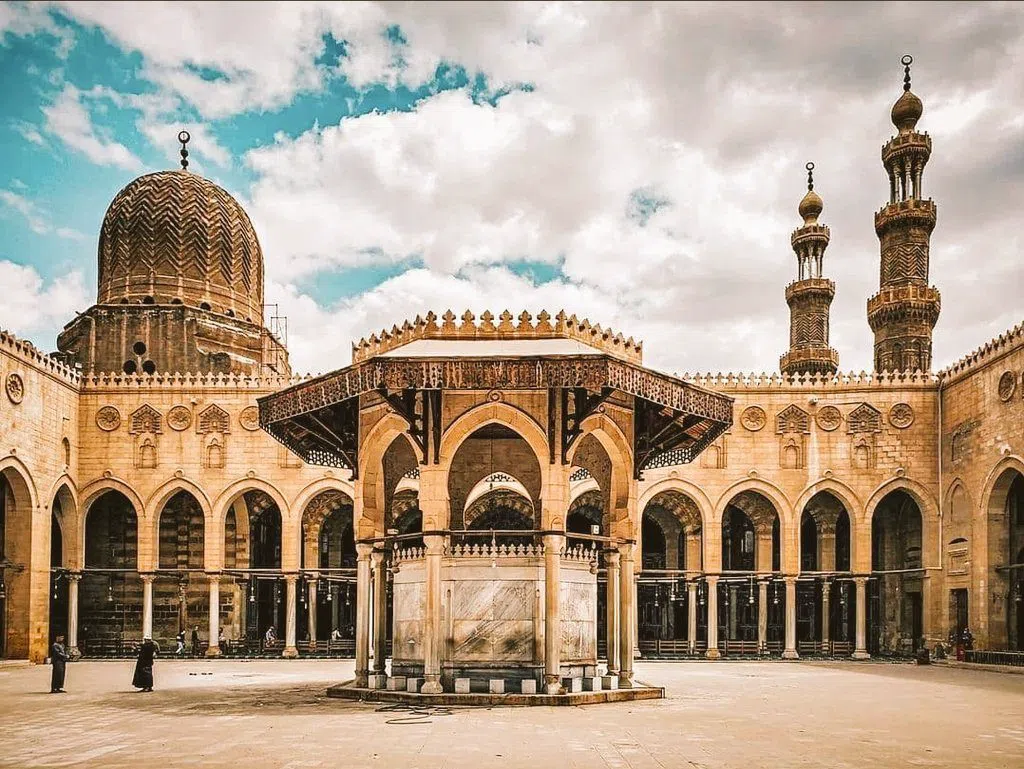
It is a poor fit for a large group and there is no polite way around that. The spiral stair is single-file, tight, dark and steep, and the platform at the top holds only a handful of people. Split into pairs, or send three or four up while the rest wait in the street; the ticket is cheap enough that nobody loses much by sitting it out. Anyone with vertigo or a bad knee should not attempt it.
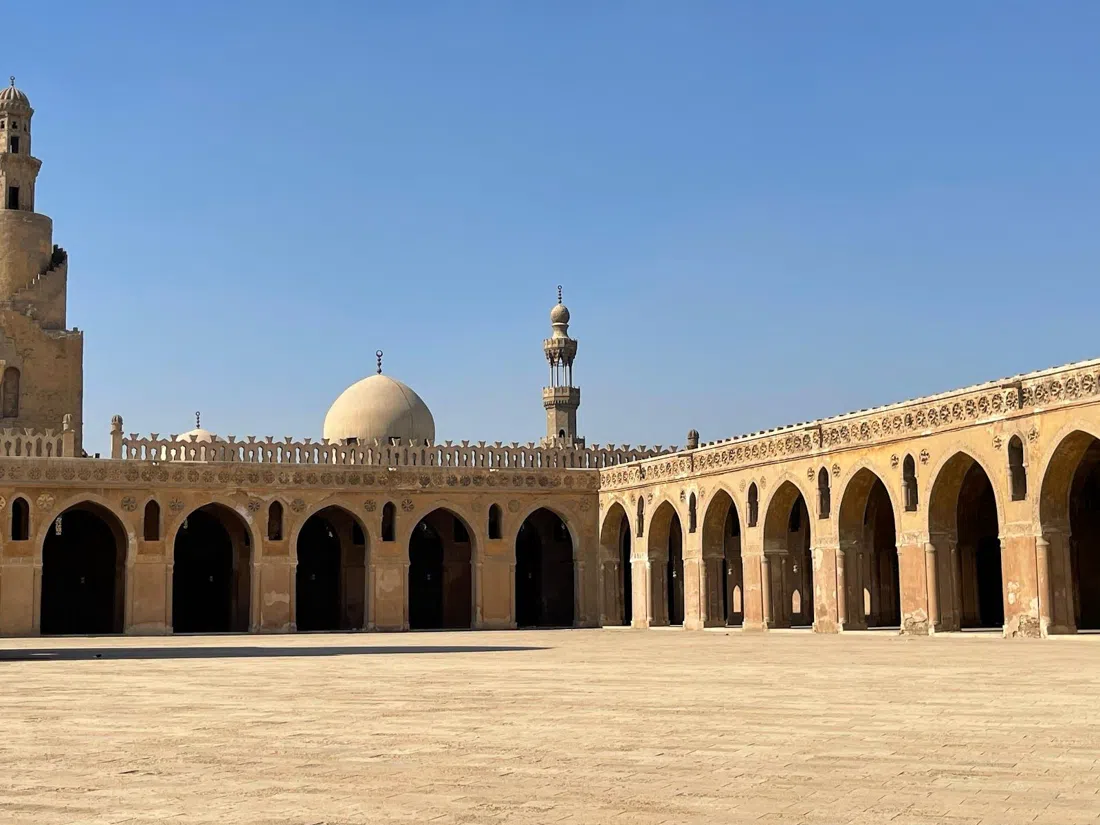
Mosque of Ibn Tulun (al-Saliba, Sayyida Zeinab) was completed in 879 and is the oldest intact mosque in Cairo, an enormous, almost empty courtyard of brick and plaster arcades that feels nothing like the crowded lanes outside. Its spiral minaret is the only one in the city you climb from the outside, on an external stair that winds round the shaft. Entry is free and a small tip is expected for the keeper who controls access to the stair. That access is his to give or refuse, and the minaret has closed for restoration in the past, so check on arrival rather than building the morning around it. Dress modestly, and expect to remove your shoes or wear the slippers provided. The courtyard swallows any group size; the stair takes a few people at a time. It sits about twenty minutes downhill on foot from the Citadel, which makes the two an obvious pairing.
The hill above the old city
Al-Azhar Park (al-Darb al-Ahmar) was built by the Aga Khan Trust for Culture on a five-hundred-year-old rubbish mound, which is why it sits above everything around it, and why clearing the site uncovered a long buried stretch of the Ayyubid city wall along its western edge. Entry is EGP 25 to 30, trivial for any size of group, and the lawns look straight across at the Citadel.
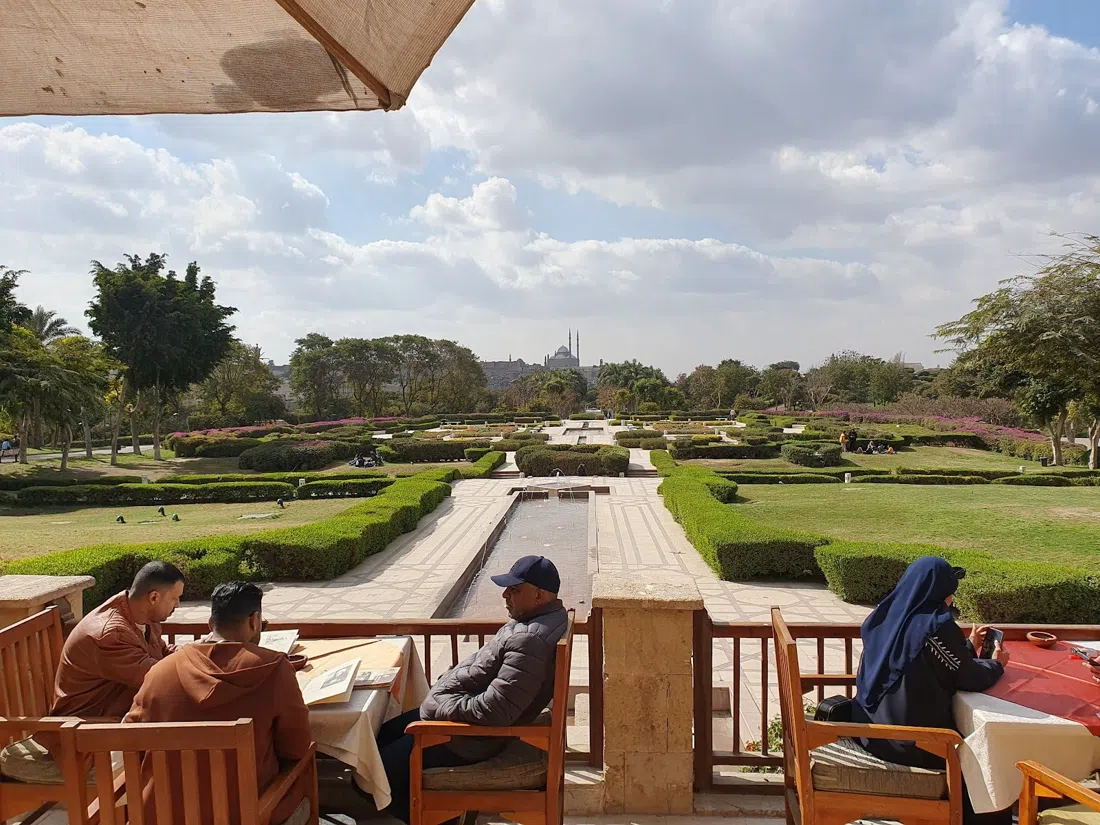
The Citadel View Restaurant terrace is the highest point in the park and the single best sunset seat in Cairo, with the fortress and a forest of minarets lined up against the light. Mains run roughly EGP 250 to 500. The terrace takes group bookings, but sunset tables need reserving well ahead, and turning up at 6pm will not get you one. The park itself closes at 10pm, so there is no rush to leave once the sun has gone. From Bab Zuweila it is a twenty-five minute walk uphill through Darb al-Ahmar, or five minutes in a cab.
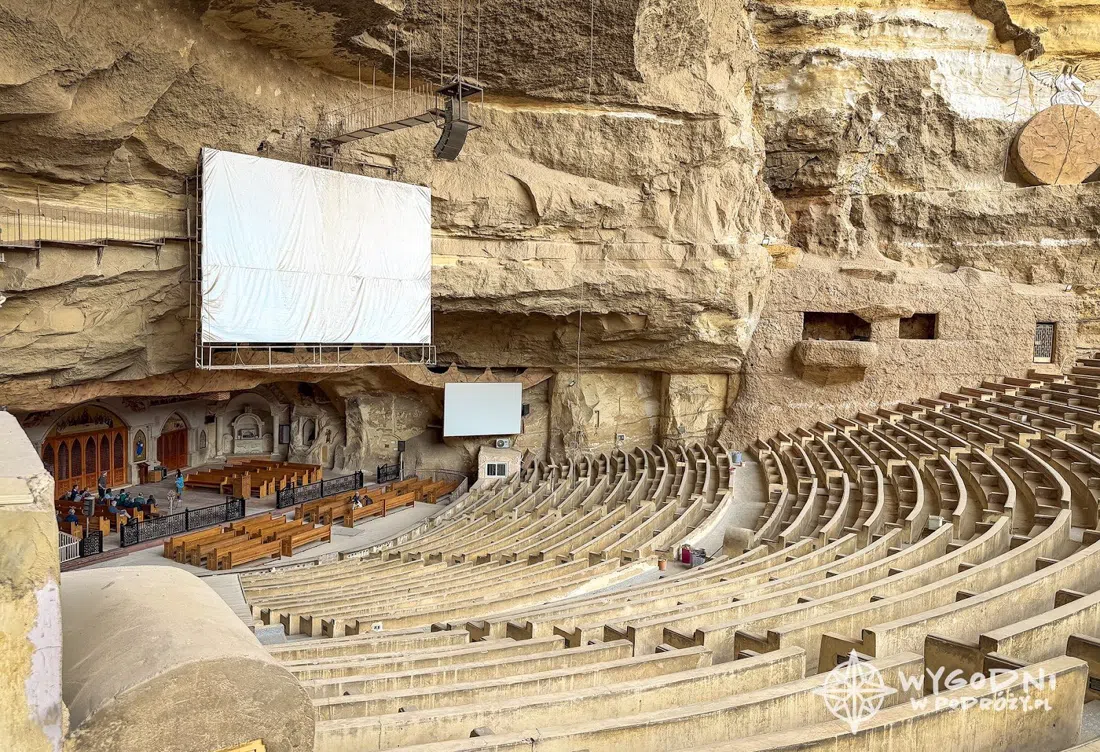
Monastery of St Simon the Tanner (the Cave Church, Mokattam) is the largest church in the Middle East, cut into the Mokattam escarpment, with terraces that read the city from east to west. Entry is free and donations are the norm, and the main amphitheatre seats up to twenty thousand, so it is set up for pilgrim coaches and no group is too large. The approach is the difficult part: the road up runs through the Zabbaleen quarter, the rubbish-collectors' district where much of Cairo's waste is sorted by hand. It is confronting, and it deserves a briefing beforehand and a guide who can explain what you are looking at rather than driving past it in silence.
Rooftops on the river
Cairo's hotel rooftops sell the Nile, not the pyramids. Only one of them, the Fairmont, gives you both.
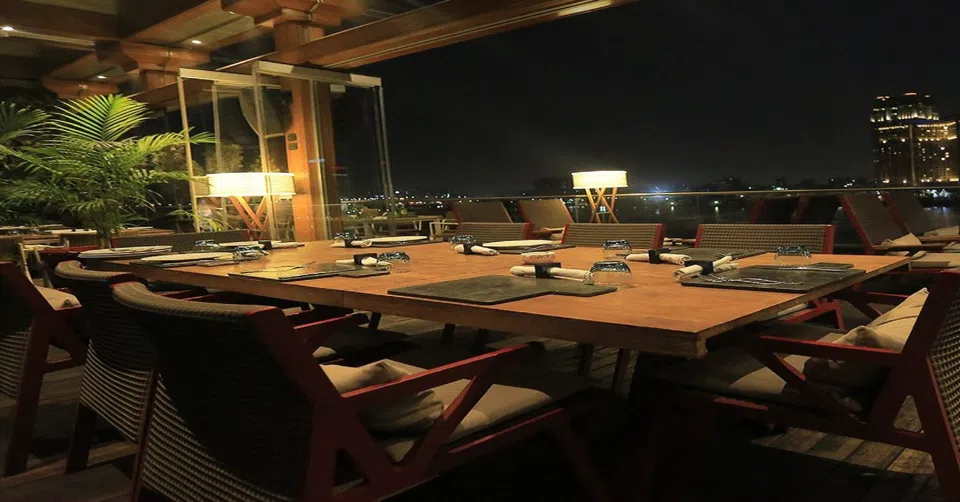
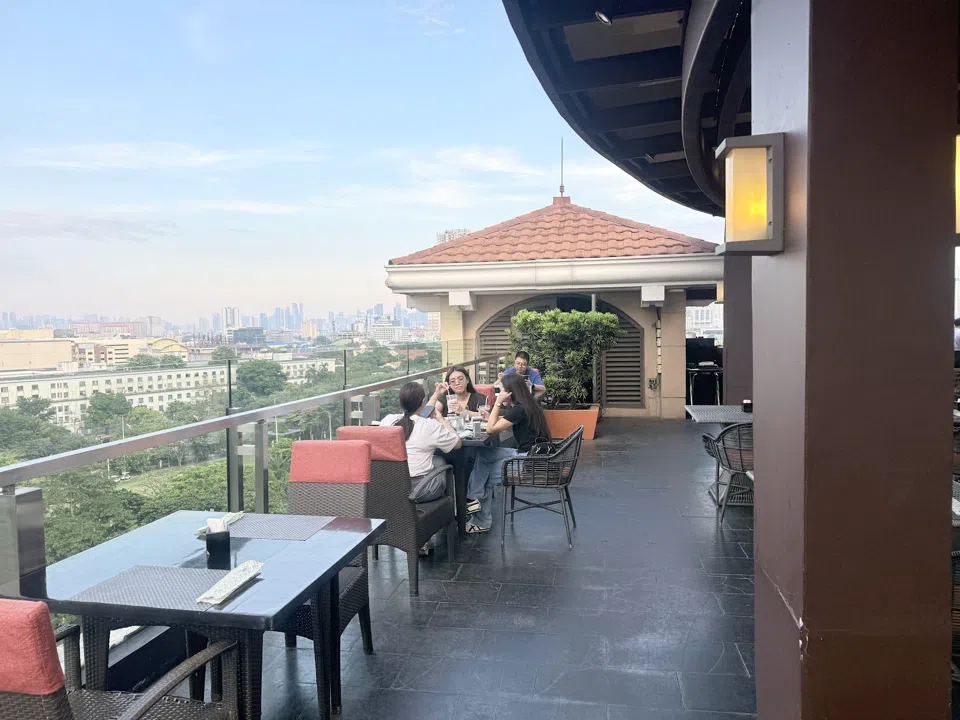
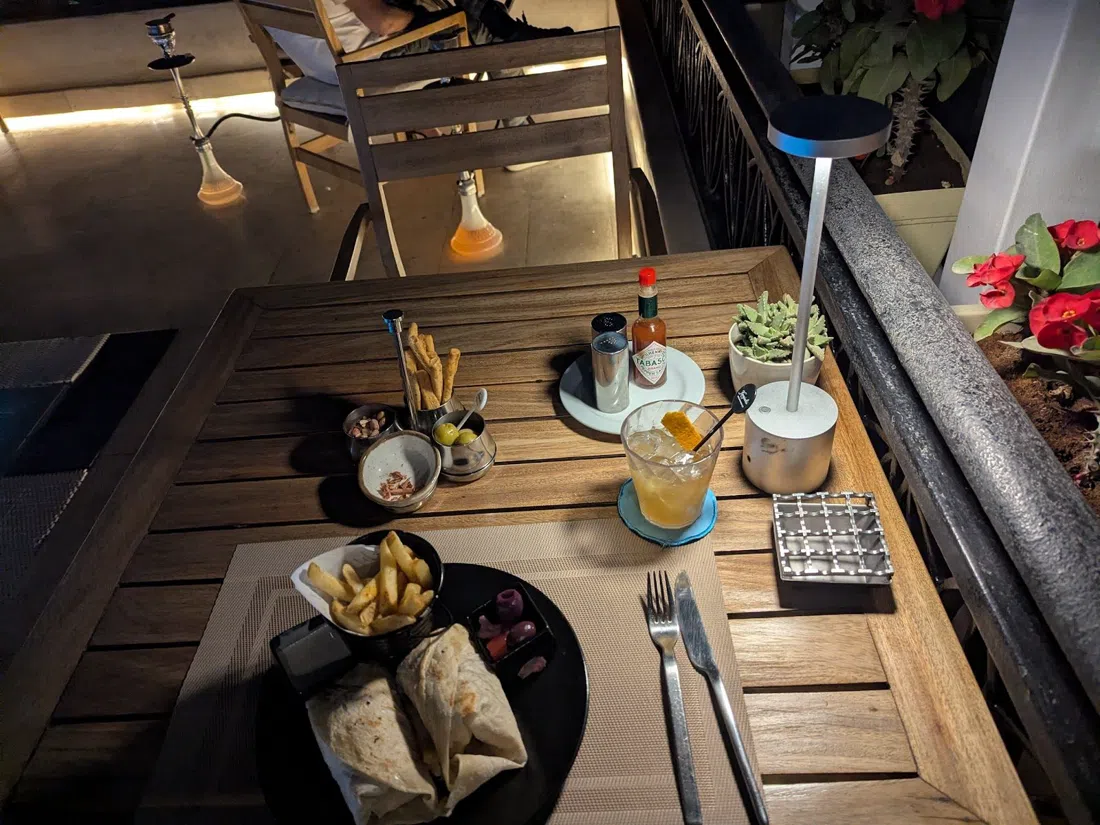
The Rooftop, Kempinski Nile Hotel (Garden City, Corniche el-Nil) runs 9am to 2am every day and is open to non-residents for the bar and the restaurant, smart casual. The rooftop pool is for hotel guests only, so do not arrive in swimwear expecting to use it. This is the most reliable open-late option in central Cairo, which means it works as both an afternoon river view and a night one. Order mezze rather than committing to the full à la carte. Groups should book ahead.
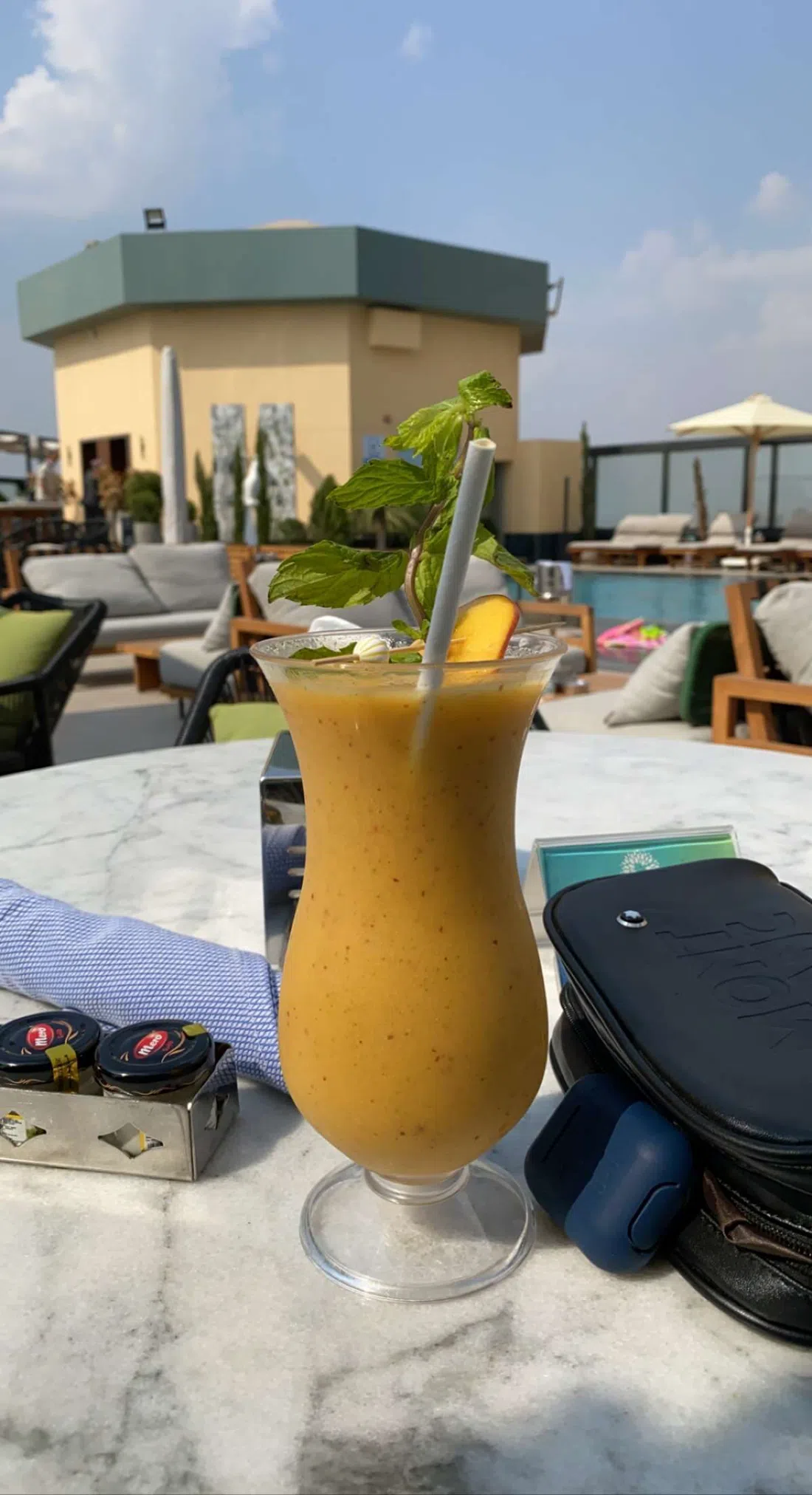
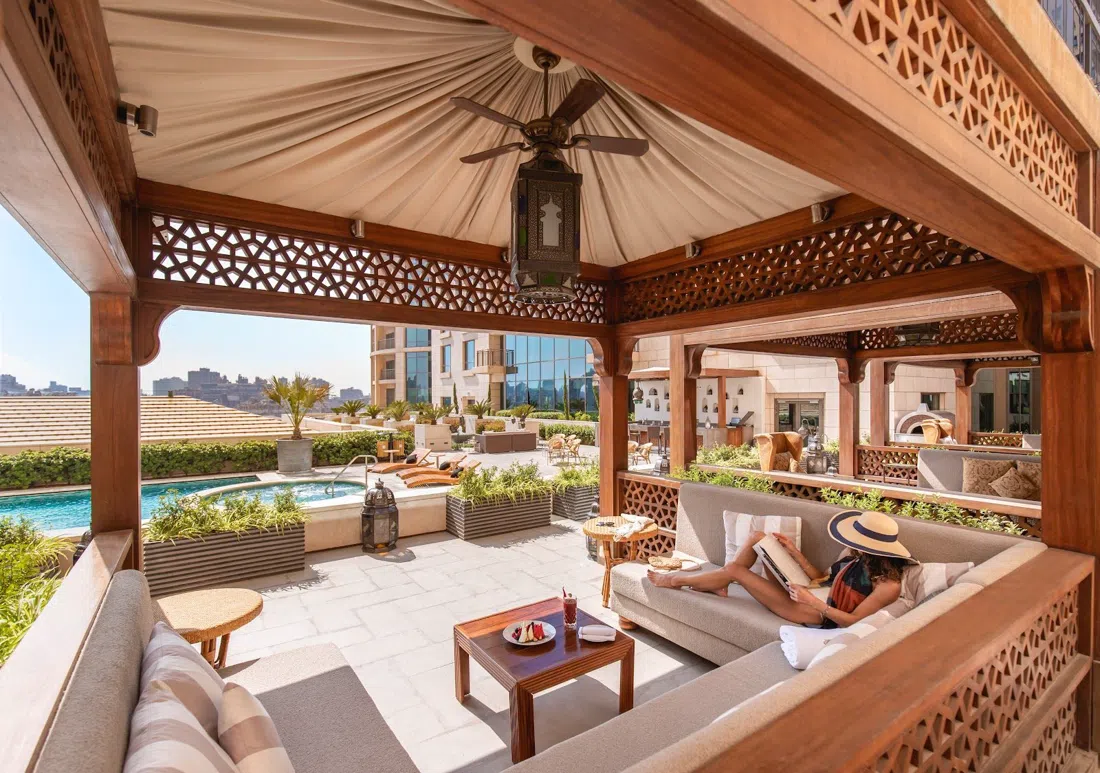
Sky Pool & Lounge, Fairmont Nile City (Ramlet Boulaq) is the highest hotel terrace here and the only one where you can see the pyramids from a sunlounger. Reservations are required, which incidentally makes group booking straightforward. It is primarily a daytime venue and family-friendly, at upper-end prices with a minimum spend on pool days, and it runs from early morning to sunset rather than late. Treat it as an afternoon, not a nightcap.
Sirocco, The St. Regis Cairo (Corniche el-Nil, Boulaq) opens 8am to midnight daily and serves Mediterranean plates and cocktails on the pool deck, from breakfast straight through to late. It is the smoothest all-day option of any elevated venue in the city and priced accordingly. Reservations are taken, and there are private dining rooms downstairs if a group would rather sit indoors. Ask specifically for the outer edge of the terrace. Sit further in and half your view is wall.
Café Frais, Novotel Cairo El Borg (Gezira island, Zamalek) is the cheapest genuinely good Nile view in Cairo. You reach it by walking through the hotel gym, which is exactly as odd as it sounds. Casual, walk-in, no dress code, and it takes a group without a booking. Come for the vantage and the coffee, not the food. It is five minutes from Cairo Tower, so the two pair neatly.
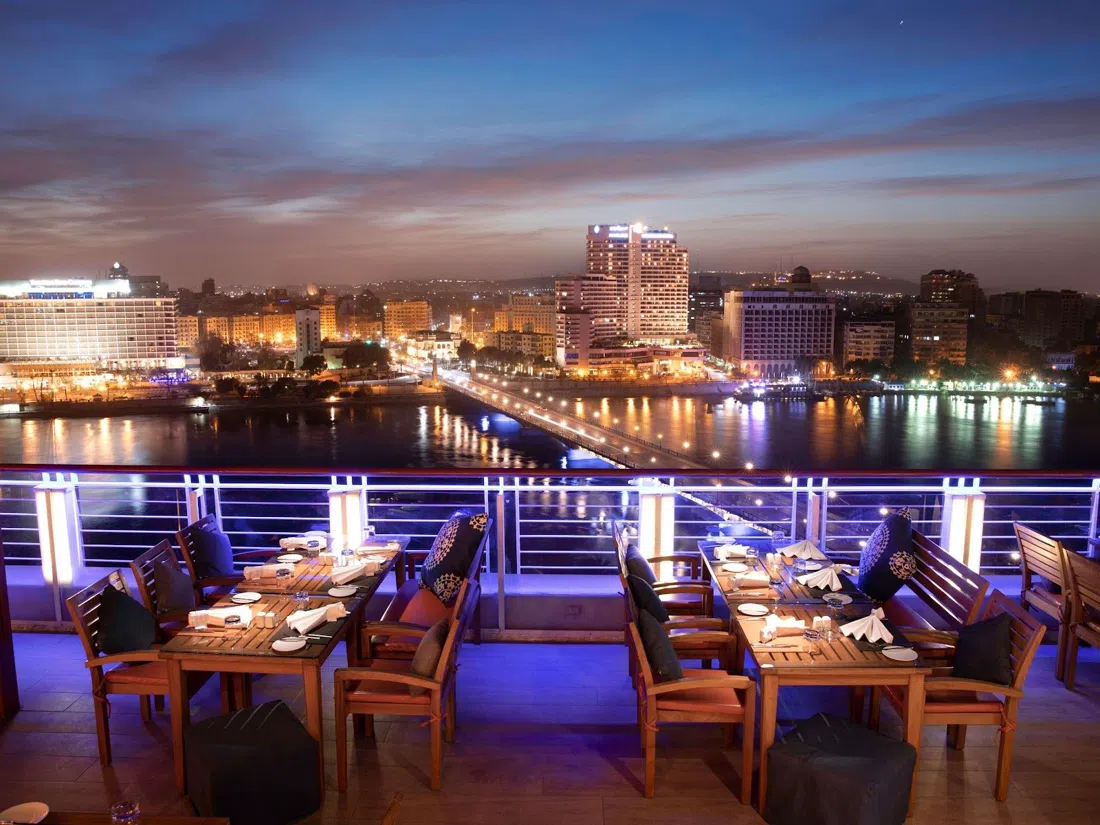
Zamalek Rooftop, Nile Zamalek Hotel (Zamalek) gives nothing away from the street, and the panorama is disproportionate to the building: one of the broadest river views on the island. Noon to 1am daily, casual dress, no reservation culture, and explicitly good for groups. Beer and shisha at local prices, and that is the entire offer. There is no kitchen, so eat first.
Where the pyramids are the view
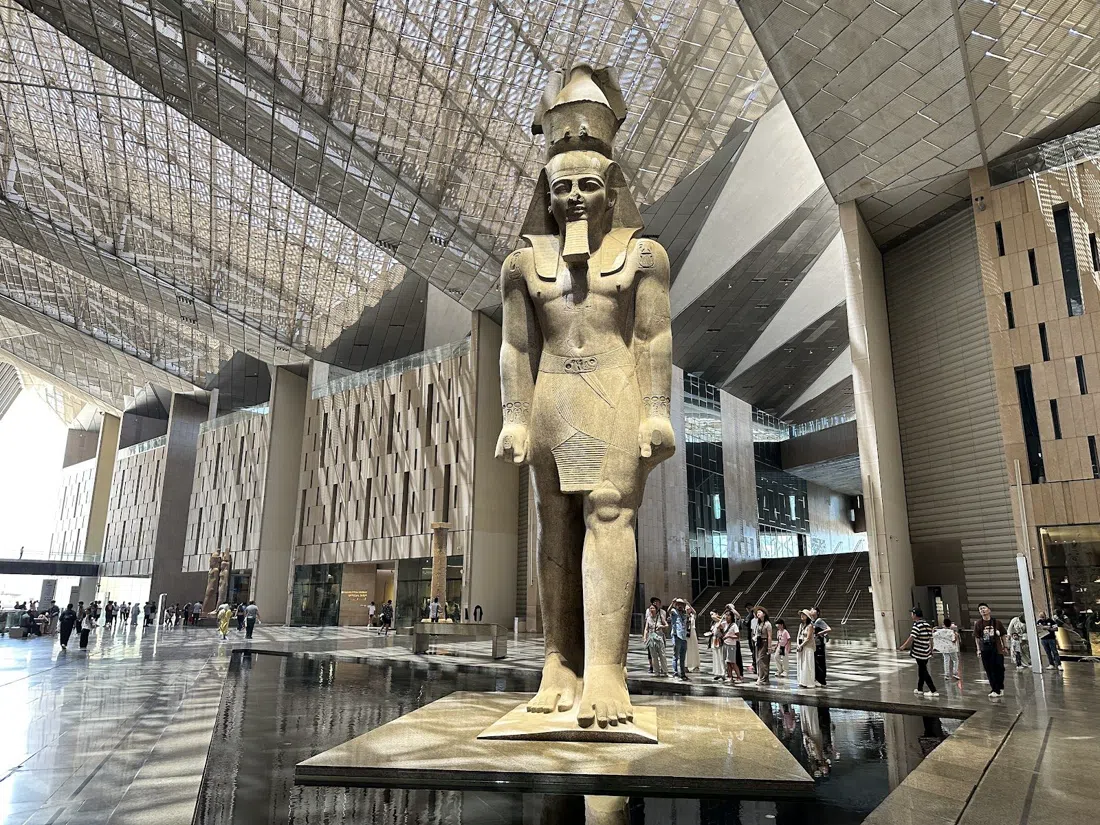
Grand Egyptian Museum — the Grand Staircase (at the edge of the plateau) turns the climb itself into the exhibit. Statues of Senwosret III, Hatshepsut and Seti I flank the ascent, and the pyramids arrive all at once through the window at the top. Tickets are timed, there is an escalator running alongside for anyone who cannot manage the stair, and groups are routine here. Museum entry covers the staircase; the Tutankhamun galleries sit in a premium tier. The museum has been fully open since November 2025, but the fine-dining terraces inside the complex are still being phased in, so do not plan a meal around them.
Khufu's (on the plateau) was named the best restaurant in the Middle East and North Africa for 2026, with chef Mostafa Seif cooking rural Egyptian food, and it is the only table this close to the Great Pyramid. Reservations are required, up to a week ahead in peak season, and private groups need considerably more notice. It serves breakfast and lunch only and closes at 5pm. That is worth repeating, because people book flights around a dinner that does not exist.
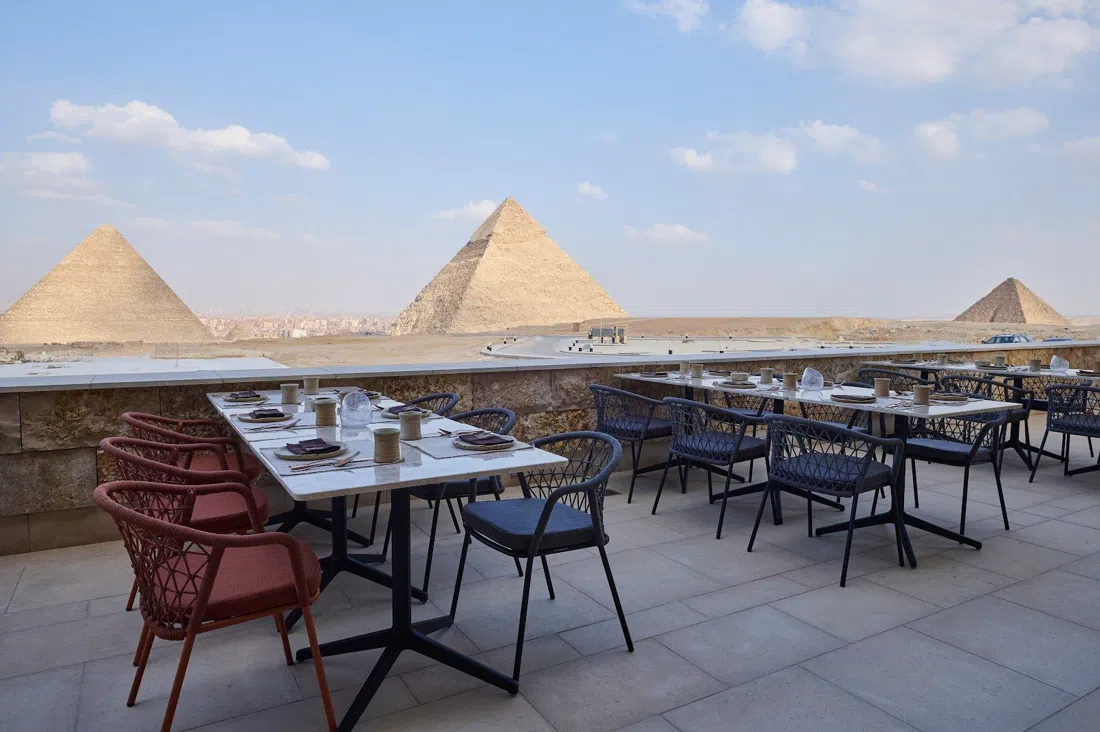
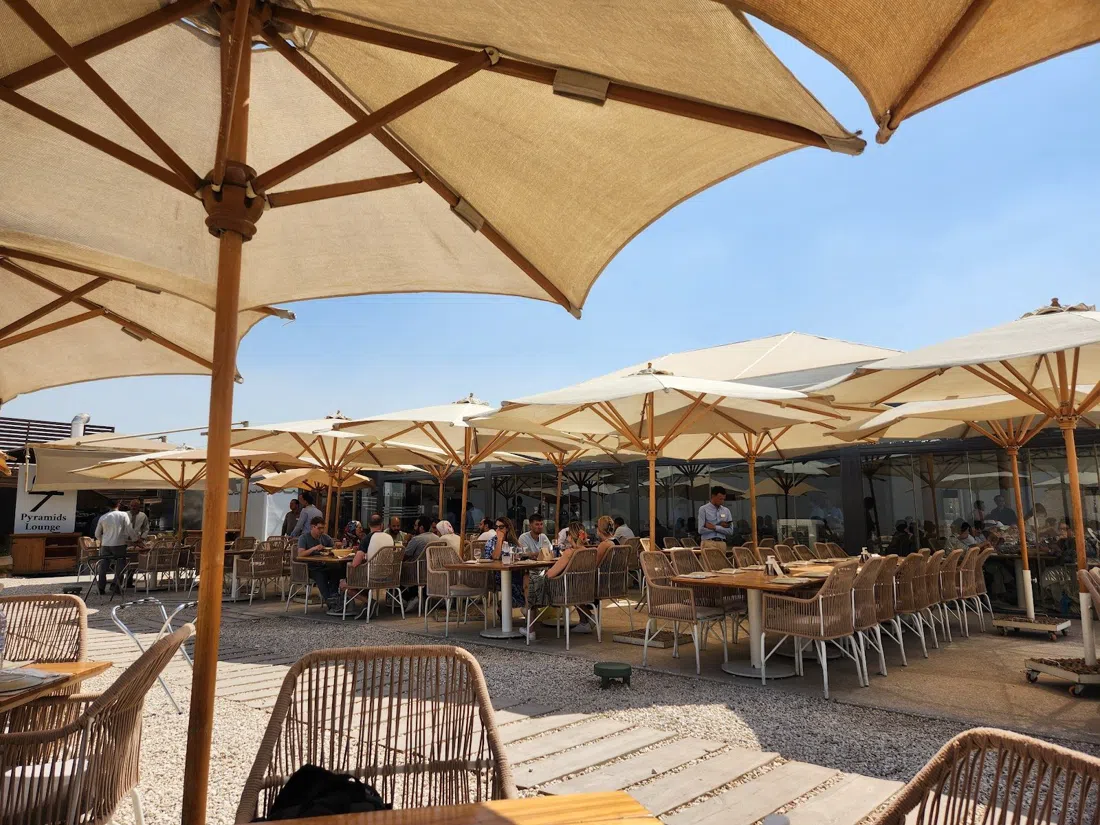
9 Pyramids Lounge (inside the plateau) was the first restaurant permitted within the archaeological site, and it is the one spot where all nine pyramids line up in a single frame. Mid-range prices, daytime only from 9am to 5pm, reservations necessary and taken by phone within those same hours. It is built for tour groups and works with half-day operators, and it makes far more sense folded into a ticketed plateau visit than as a separate trip.
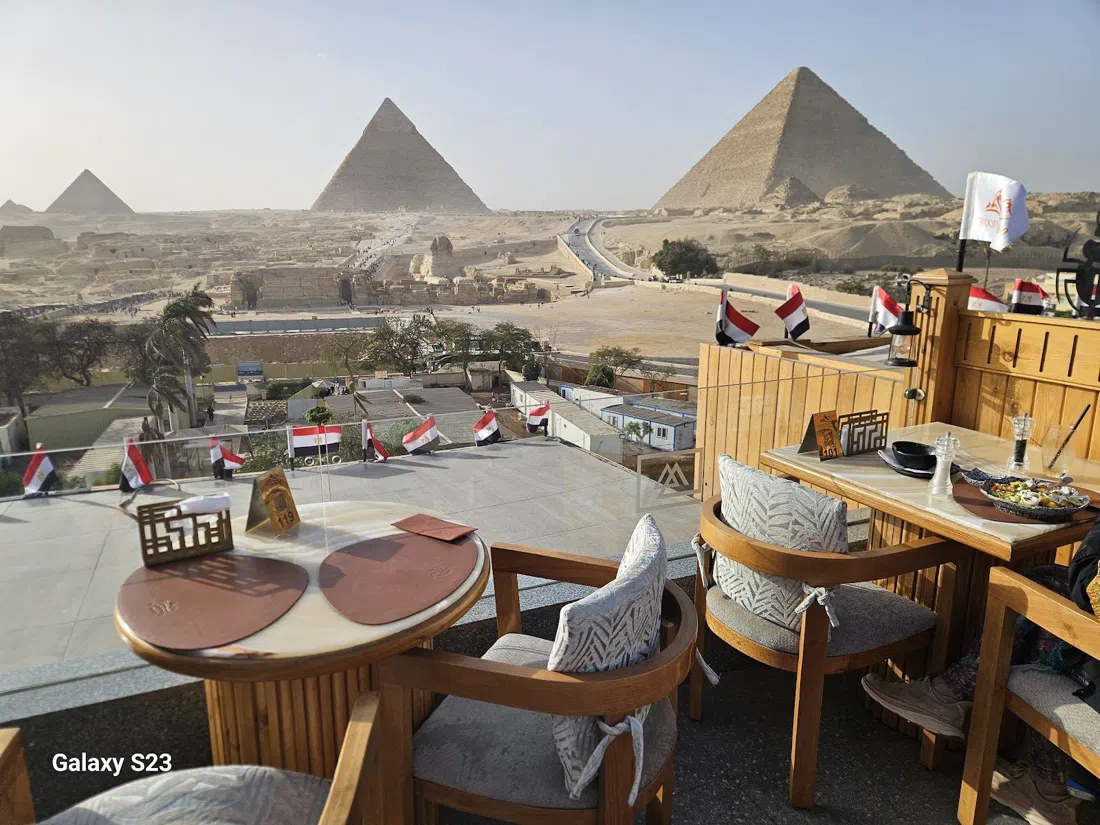
Rooftop 7000, Great Pyramid Inn (the village below the plateau) gets the Sphinx and the pyramids into the same view, with live music at sunset. The terrace is small, so it suits parties up to about a dozen, and you should book ahead, particularly for sunset and the evening sound-and-light window. This is a guesthouse roof rather than a hotel restaurant. Go for the sightline and keep expectations of the kitchen modest.
Fitting it into two or three days
One workable shape: start day one at the Citadel at opening, walk down to Ibn Tulun, continue to Bab Zuweila in the afternoon and finish on the Citadel View terrace for sunset. Day two belongs to the river, with coffee at Café Frais, an afternoon at the Fairmont or Sirocco, Cairo Tower after dark, and a late shisha in Zamalek. Day three runs west: the Grand Staircase first thing, lunch inside the plateau, and the roof at sunset.
Where you sleep decides how much of this you walk to. Zamalek and Garden City put you within reach of half the list; start a Cairo hotel search with those two in mind, and read the Cairo guide for how the districts fit together.
Money, transport and timing
Ride-hailing apps are the simplest and cheapest way between all of these, and they remove any argument about fares. Metro Line 3 has a stop on Zamalek, which is useful for the tower and the island rooftops. The old-city cluster of Citadel, Ibn Tulun, Bab Zuweila and Al-Azhar Park is best done on foot in that rough order, since it runs downhill and then back up. Allow 45 to 75 minutes each way to the plateau and the museum depending on traffic, and leave early.
Carry both cash and a card. The Citadel gate is card only. Everything else at the cheap end wants small Egyptian notes: park entry, the minaret ticket, the tip for the keeper at Ibn Tulun. Hotel rooftops take cards without issue.
Winter mornings are the only dependable window for seeing the pyramids from the tower or the Citadel. Most sites open at 9am and the two great fortress-and-museum stops close by 5pm, so sunset belongs to Al-Azhar Park, the river rooftops or the plateau roof.
A full day of views can cost under EGP 500 a head: Ibn Tulun free, Bab Zuweila EGP 150, the park EGP 30, coffee at Café Frais, shisha in Zamalek. Add the Citadel, the tower and a table at Khufu's and the same day runs past EGP 2,000 before drinks.
Keep shoulders and knees covered at the mosques, take your shoes off, and carry a scarf. Smart casual at the Kempinski and the St. Regis; everywhere else takes you as you are.
Questions
Can you actually see the pyramids from Cairo Tower?
Sometimes. For most of the year haze turns the western horizon into a grey band and the pyramids are barely distinguishable. Winter mornings are the only reliable window. If you are visiting in warmer months, treat Cairo Tower as a city view (go after dark, when the bridges and the river carry it) and get your pyramid sightline from the Fairmont's Sky Pool, the Grand Egyptian Museum staircase or a table on the plateau.
Which Cairo viewpoint is best for sunset?
The Citadel View Restaurant terrace at Al-Azhar Park, which is the highest point in the park and looks straight at the Citadel and its minarets. Reserve a sunset table well ahead. The Citadel itself closes at 5pm, so it can never be a sunset stop; on the river, the Kempinski rooftop runs to 2am and the Zamalek Rooftop to 1am.
Do I need to book these viewpoints in advance?
Cairo Tower, the Citadel, Al-Azhar Park itself, Café Frais, the Zamalek Rooftop, Ibn Tulun and Bab Zuweila are all walk-up. Reservations are required at Khufu's (up to a week ahead in peak season), 9 Pyramids Lounge (phone, 9am to 5pm) and the Fairmont Sky Pool, strongly advised at Rooftop 7000 and for sunset at Citadel View, and sensible for groups at the Kempinski and Sirocco. The Grand Egyptian Museum uses timed tickets.
How much does it cost to go up Cairo Tower?
Around EGP 350 for the standard foreigner ticket, bought at the walk-up desk. An express or skip-the-line voucher adds roughly EGP 250 to 500 and includes a credit at the cafe or the revolving restaurant, which is worth it on a busy afternoon since there is no reservation system and the queue is the only variable.
Which of these work with a large group, and which do not?
The Citadel, Al-Azhar Park, the Cave Church, the Ibn Tulun courtyard, 9 Pyramids Lounge, the Grand Egyptian Museum and the Zamalek Rooftop all absorb big numbers comfortably. Cairo Tower works but splits groups across small lift batches, so agree a meeting point on the deck. Bab Zuweila's minaret is a genuinely poor fit: the stair is single-file and the platform holds a handful. Rooftop 7000 tops out at about a dozen.
First published on thecairoguide.com, the Cairo guide.