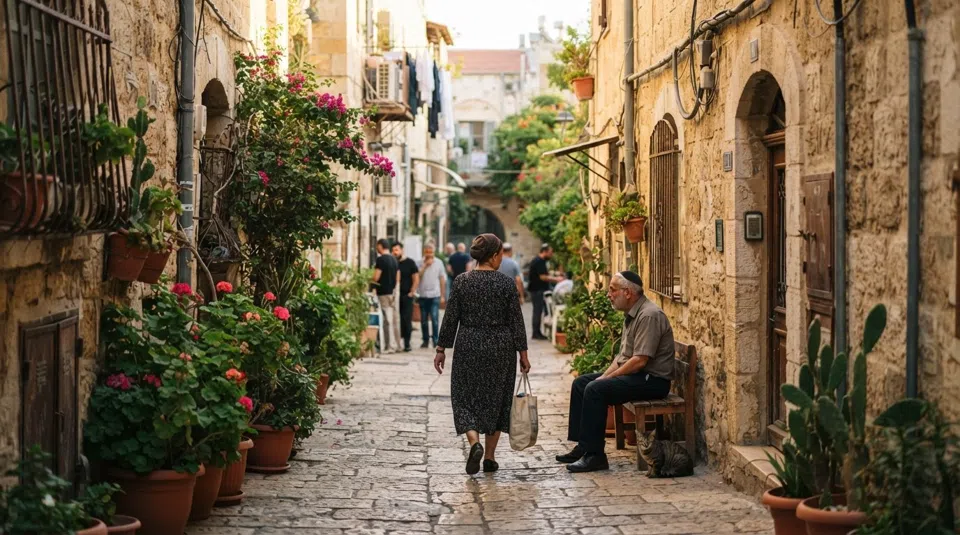
On a weekday morning the lanes behind Bab Marrakech smell of sawdust, mint and frying oil, and nothing in them announces that this was the Jewish quarter of a city that once held one of the largest Jewish populations in the Arab world. The evidence is quieter than a plaque: a sealed niche beside a doorframe, a Spanish surname cut into a headstone ten minutes' walk away, a stall still selling kosher pickles to a clientele of a few hundred. The thread has not been cut in Casablanca, only worn thin, and following it takes phone calls and a diary rather than luck.
A quarter that was young when it vanished
Some history first, because without it the walk reads as an anticlimax. Casablanca's mellah is not a medieval institution. It was laid out in the first decade of the twentieth century, when Jewish families from the interior and the south moved toward the Atlantic port that was about to become Morocco's commercial capital. By the standards of Moroccan Jewish quarters, that makes it almost brand new. After the protectorate was imposed in 1912, the architect-planner Henri Prost drew a new city of boulevards, roundabouts and reinforced-concrete façades to the south and west of the walls, and the old medina, mellah included, became the dense remainder that modernisation stepped around rather than through.
The community inside it was large and institutionally serious. By the late 1940s Morocco's Jewish population is usually estimated at roughly a quarter of a million, with Casablanca holding something in the order of 70,000 to 80,000: schools of the Alliance Israélite Universelle, which had been operating in Morocco since the 1860s, a rabbinical court, printers, charitable societies, sports clubs, a whole civic apparatus. Then came the departures, after 1948, after independence in 1956, in the organised emigration of the early 1960s, and again after 1967, mostly to Israel, France and Canada. Estimates for today's community in Casablanca sit between one and two thousand people, the large majority of the Jews remaining in the country.
The buildings went separately from the people. Municipal clearance through the 1960s removed most of the mellah's fabric after its population had already left. So what you are walking is not a preserved quarter. It is a scatter of surviving institutions across several districts, held together by a community small enough to fit in one large room and stubborn enough to keep every one of those institutions open.
Build the day around Oasis
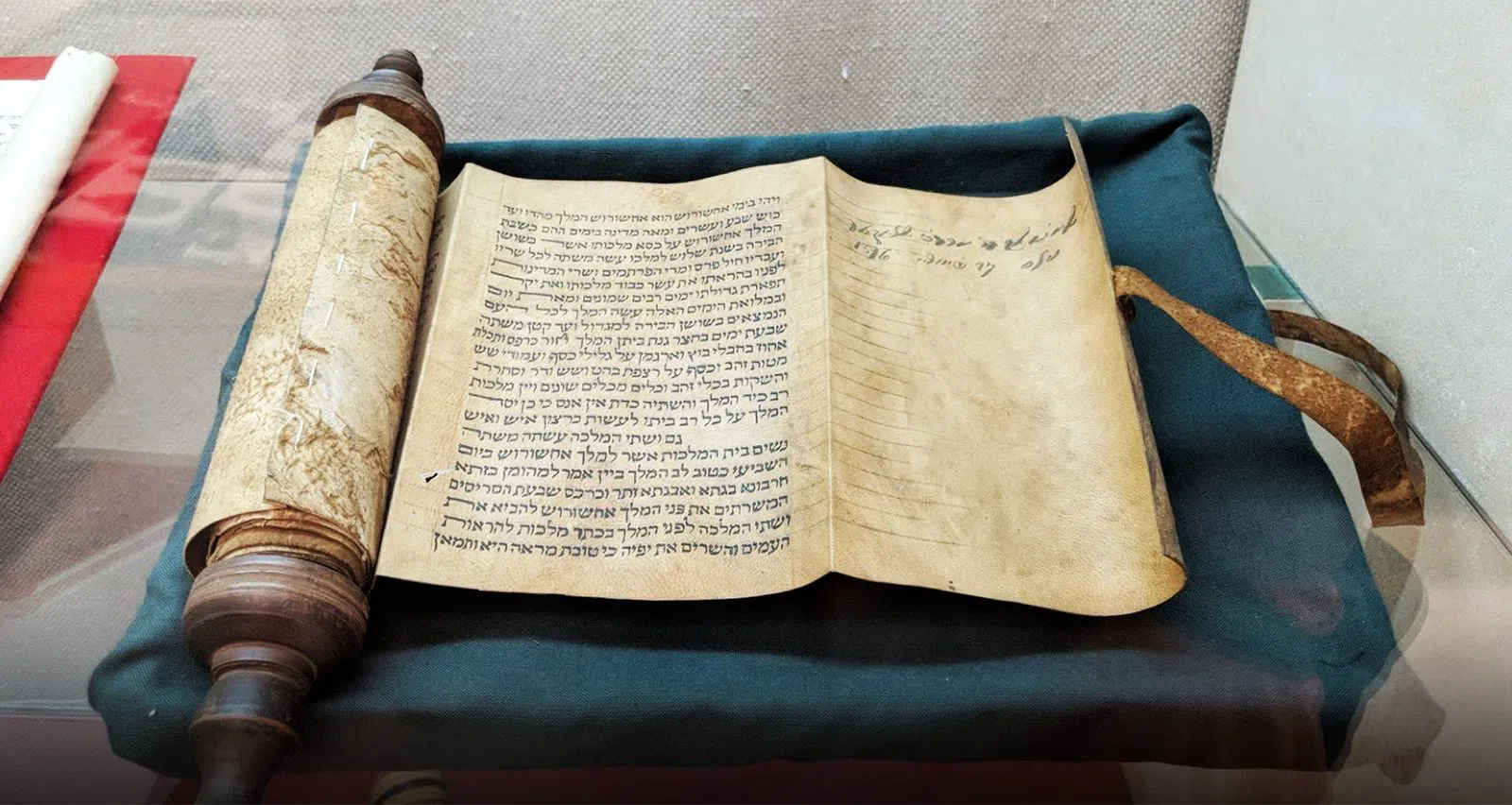
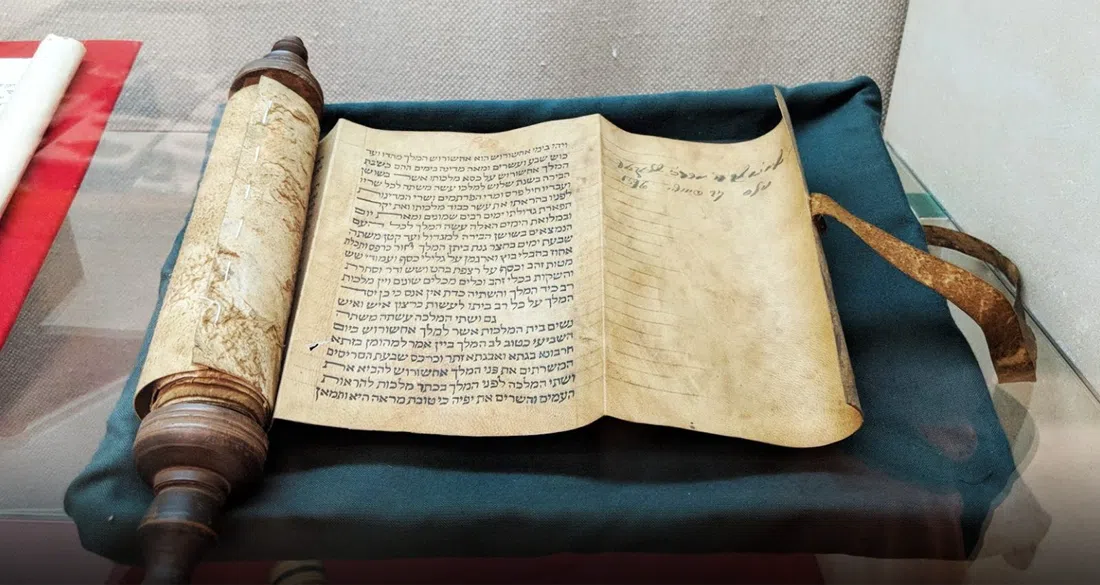
Musée du Judaïsme Marocain (Oasis, a quiet residential district south of the centre) is the only museum anywhere in the Arab world devoted to Judaism, and it is the correct first stop for the simple reason that everything afterwards makes more sense once you have seen it. Opened in 1997 and set in a garden villa built as a Jewish orphanage in the 1940s, it is small (an hour and a half is honest) and organised around reassembled synagogue interiors, Torah cases, embroidered ceremonial dress, silverwork and photographic documentation of Jewish life in villages that no longer have a Jewish resident. The captioning is French-forward; the staff will fill gaps in English if asked.
Entry is around 50 MAD (roughly £4/$5). The critical detail is the calendar: it closes Saturdays and keeps short hours, broadly Monday to Friday, 10:00 to 17:00. Parties of five or more should phone ahead on +212 522 99 49 40 to arrange a guided visit in French or English, which is worth doing, because the collection rewards someone talking you through it. Couples and solo travellers can simply turn up within those hours. Do not plan to "drop in later"; the museum is the axis the rest of the day turns on, and it will be shut by the time you finish lunch.
What actually survives in the medina
The Old Mellah (old medina, the streets running behind and around Bab Marrakech) needs its expectations managed before you arrive, and any guide who does not manage them is selling you something. There is no intact quarter here. What remains is street pattern, a handful of names, doorways whose mezuzah niches have been plastered over, and the one genuinely living remnant, the kosher stalls near Bab Marrakech, where pickles, olives and cured meats are still sold to the community. It costs nothing, it is open street, and it is best walked mid-morning when the trade is busy and the light reaches down into the lanes.
Guided walking groups come through routinely, but the lanes are tight; parties above about a dozen become a blockage and stop being welcome. Couples and pairs get by far the better experience. Expect the usual medina friction, men offering to lead you somewhere (a firm and cheerful no works fine), and carry your bag in front of you in the crowded stretches, as you would in any dense market.
Ettedgui Synagogue & Musée du Mellah (at the medina's edge, near Place des Nations Unies) is the one building on this route that states the official position out loud. It was wrecked by bombing during the Allied landings of November 1942 and then left as a ruin for half a century, which tells you something about how the community's priorities ran in the emigration decades. It was rebuilt with a state grant and rededicated by King Mohammed VI in December 2016, and the attached Musée du Mellah covers the quarter's history in the place the quarter used to be. Entry is free or a small donation. It is sometimes locked outside prayer times, so it is far easier to reach with a local guide or by arrangement than by hopeful knocking.
Old Jewish Cemetery (Cimetière Israélite de l'Ancienne Médina, inside the old medina walls) is, quietly, the most affecting site in the city. You ring the bell at the gate or call the number posted on the door; a caretaker lets you in. The enclosure is large, white, immaculate, and kept that way by a small number of Muslim caretaker families who have done the job across generations. Read the stones: the Spanish and French inscriptions, alongside the Hebrew, map the whole Mediterranean origin story of this community in one walled rectangle, Iberian exile, Atlantic trade and colonial French schooling, all legible in a surname and a date. Men should cover their heads. Entry is free; tip the caretaker properly. Small groups are fine with a guide, but this is a place that suits two people and a slow hour.
The synagogues that are still working buildings
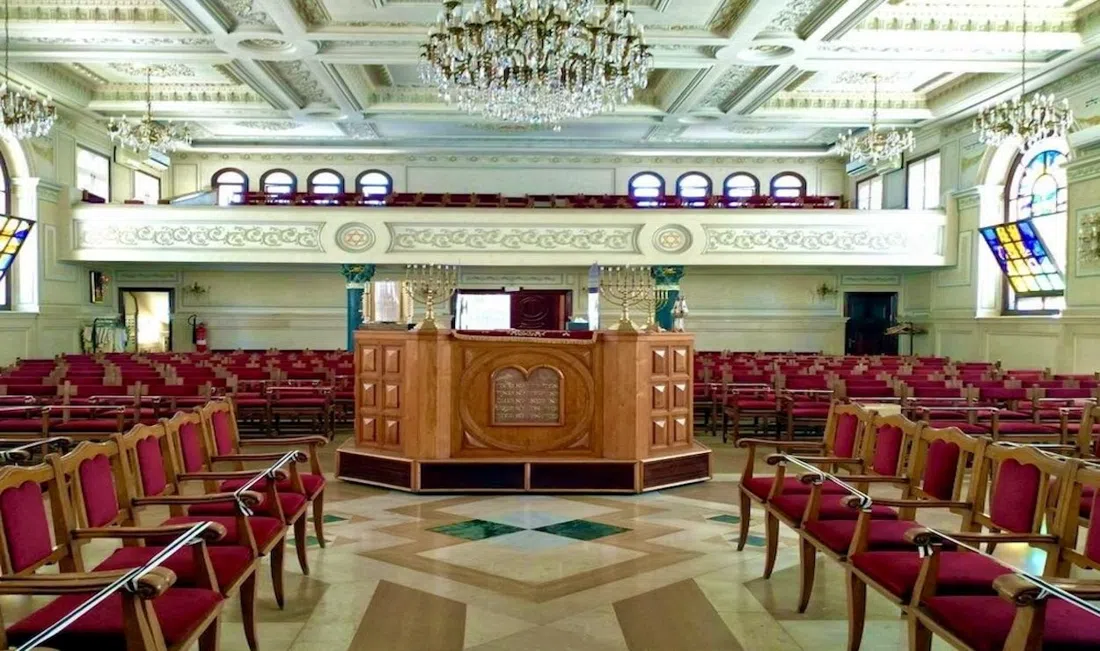
Temple Beth-El (Gauthier, in the leafy grid of apartment blocks north-west of the centre) is the working heart of what remains and has the most beautiful interior on this list, stained glass and joinery that reward standing still for ten minutes. It is also the door most often closed to people who arrive unannounced. Casual walk-ins are sometimes turned away and visitors have been questioned on the step; this is security practice at an active synagogue, not rudeness, and the fix is simple. Go through a heritage guide or phone the office in advance on +212 5222 67192. Entry is free, tip the caretaker, and dress and behave exactly as you would in any house of worship in use.
Em Habanim Synagogue (central Casablanca, a short taxi ride from Gauthier) is the necessary counterweight to Beth-El's grandeur. It was founded as a combined synagogue and school for poorer Jewish boys and it still does both jobs, which makes it the place on this route where you see an institution rather than a monument. Small groups only, by prior arrangement through a guide or the community; it is not set up for drop-in tourism. Free, with a donation expected and deserved.
Neve Shalom Synagogue & Day School (Gauthier side of the centre) houses the last Moroccan Jewish day school still operating. Include it precisely for what that sentence means about the community's present tense rather than its past. Visits must be arranged well in advance through the community or a heritage guide; school security means unannounced visits do not happen, and should not. There are children inside, so behave accordingly, and do not photograph them.
Synagogue David Hamelech (west of the centre, within reach of the Corniche) is the newest link in the chain and makes a good closing stop for that reason: a community of this size that is still building is doing more than preserving itself. Contact ahead through the community or Chabad; groups are most feasible around service times. Free, donation expected. Finish here and you are ten minutes from the seafront and a change of register for the evening.
Ben M'sik and a calendar still being kept
Ben M'sik Jewish Cemetery (Cimetière Israélite de Ben M'sik, in the Ben M'sik district south-east of the centre) is the city's working Jewish cemetery, and it is where the thread stops being historical. It holds the tomb of Rabbi Eliyahu HaCohen, whose remains were moved here from the old medina, and it is the site of an annual hiloula, a pilgrimage gathering at the saint's grave, a practice Moroccan Jews carried with them and still return for from abroad. The gate is manned by a resident caretaker; groups are admitted on request and it is much easier arranged through a guide or the community office. Free, tip the caretaker, men cover their heads. It is a twenty-minute taxi from the centre and worth the detour on any itinerary that has the full day.
Kosher tables, and the rooms behind them
Chabad Lubavitch au Maroc (Gauthier) is the single most practical contact in the city for kosher-observant travellers. It runs glatt kosher group catering and Shabbat meals for visitors, and it is the realistic route to a Shabbat table in Casablanca. Book well before you arrive on +212 5 22 26 90 37, not on the day, and not on the Friday. Meals are by donation or a set group rate.
Cercle de l'Union (centre ville) is less a restaurant than a surviving Jewish social club that happens to serve excellent brisket and Sephardic desserts. There is no sign outside and the door is genuinely hard to identify, so phone ahead on +212 5 22 27 97 29 and, if you can, arrive with someone local. Budget roughly 150 to 300 MAD a head. For understanding the community as it actually lives, cards, arguments, three generations at one table, this is the best room in the city.
Cercle de l'Alliance (centre ville, run out of the old Alliance Israélite club) is the everyday counterpart: Moroccan-kosher grills at fair prices, informal, group-friendly, takeaway available, roughly 100 to 200 MAD a head. Call +212 615 904771. It is the easier of the two to walk into with a party of eight, and the better bet for a late lunch between the medina and the synagogues.
Whether you need a guide
It depends on how much of the list you want. The museum, the mellah lanes and the old medina cemetery are all doable alone, and a couple with a morning and a taxi will manage them comfortably. Beth-El, Em Habanim, Neve Shalom and Ben M'sik are a different proposition. They need a phone call, a known face, or both, and the difference between a booked visit and an optimistic one is the difference between standing under Beth-El's stained glass and photographing its locked gate.
Travel Exploration — Casablanca Jewish Heritage Tour is built for exactly this: a private, full-day 09:00 to 17:00 itinerary with a multilingual guide, Hebrew included, and pickup from hotels or the cruise port. It sits in the premium private-tour band and is quoted per party, which makes it expensive for two and reasonable for six. If you are a family group, a synagogue delegation or a cruise passenger with one day ashore, it is the obvious answer. If you are two people on a slow week, do the self-guided half and arrange one synagogue visit by phone.
Putting the day together
A workable self-guided version: museum in Oasis at opening, taxi to the medina by noon, the mellah lanes and the Bab Marrakech stalls, Ettedgui, then the old cemetery, then a late lunch at Cercle de l'Alliance. That is a full and unhurried day for around 400 to 700 MAD a head all in.
The guided version adds Beth-El and one of Em Habanim or Neve Shalom in the late morning, pushes the medina to the afternoon, takes in Ben M'sik, and finishes at David Hamelech near the Corniche. Base yourself in Gauthier or the central art deco grid to keep taxi rides short (the Casablanca hotel search covers both), and read the wider Casablanca guide for what to do with the rest of your stay, because this route is one day, not three.
Getting around, paying and timing
Red petit taxis are metered and cheap: 20 to 40 MAD for most hops within the centre, 30 to 50 MAD out to Ben M'sik. Insist on the meter. The tram is useful along the main axes but will not take you door to door on this itinerary. The medina stretch is walking, and the streets are uneven, so wear real shoes.
The dirham is a closed currency, so draw money on arrival rather than bringing it. Everything here runs on cash: museum entry, donations, tips. Carry a stack of 20, 50 and 100 MAD notes. Budget 20 to 50 MAD per caretaker at each cemetery and synagogue. It is expected and it is modest, and those families are the reason these sites are in the condition they are in.
Monday to Thursday is the only window in which the whole route is possible. The museum shuts Saturdays and does not keep weekend hours; the community is occupied before Shabbat on Friday afternoon and unavailable to visitors on Saturday; Jewish holidays close things for days at a time and do not follow the Gregorian calendar, so check dates before booking flights around this itinerary.
On etiquette, men cover their heads at the cemeteries and in synagogues. Expect to be asked for ID at a synagogue door and expect to be asked not to photograph in some interiors; agree without negotiating. Dress as you would for a service anywhere: shoulders and knees covered, quiet phone.
For the budget, count museum entry at 50 MAD, donations and tips of 150 to 250 MAD across the day, lunch of 100 to 300 MAD and taxis of around 100 MAD. A private guide for the full day sits well above that and is quoted per party, so it makes financial sense from about four people upward.
This is not a monument trail. It is a short list of buildings kept open by a very small number of people, several of them not Jewish, in a city that erased the quarter and kept the institutions. That arrangement is unusual, and it is worth seeing while the people who maintain it are still there to open the gate.
Questions
Is the Museum of Moroccan Judaism open at weekends?
No. The Musée du Judaïsme Marocain in Oasis closes on Saturdays and keeps short weekday hours, broadly 10:00 to 17:00 Monday to Friday. Entry is around 50 MAD. Groups of five or more should phone +212 522 99 49 40 in advance to arrange a French- or English-speaking guided visit. Plan the rest of your day around those hours rather than hoping to fit the museum in afterwards.
Can I visit Casablanca's synagogues without a guide?
Mostly not. Temple Beth-El, Em Habanim, Neve Shalom and Synagogue David Hamelech are all active buildings with real security concerns, and casual walk-ins are often turned away or questioned at the door. Phone ahead (Beth-El's office is +212 5222 67192) or go through a heritage guide. Neve Shalom houses a working day school, so unannounced visits there are never possible.
How much of the old mellah is actually left?
Fragments. Casablanca's mellah was barely a century old and municipal planners cleared most of it through the 1960s, after the community had already emigrated. What survives is the street pattern behind Bab Marrakech, a handful of names, plastered-over mezuzah niches and the kosher stalls still trading near the gate. It rewards an atmospheric walk with some context behind you, but the quarter itself is no longer intact.
Where can I eat kosher in Casablanca?
Two clubs and one community centre. Cercle de l'Alliance does Moroccan-kosher grills for roughly 100 to 200 MAD a head and is the easier one to walk into; call +212 615 904771. Cercle de l'Union is the older social club, 150 to 300 MAD, with no sign outside, so phone +212 5 22 27 97 29. For Shabbat meals and glatt kosher group catering, book Chabad Lubavitch au Maroc on +212 5 22 26 90 37 well before you travel.
Is it appropriate to visit the Jewish cemeteries as a non-Jewish traveller?
Yes, and visitors are received courteously at both. At the Old Jewish Cemetery in the medina you ring the bell or call the number on the door; Ben M'sik has a resident caretaker and is best arranged through a guide or the community office. Men should cover their heads, and you should keep your voice down and tip the caretakers 20 to 50 MAD each, since those families maintain the grounds.
First published on casablancaholidays.com, the Casablanca guide.