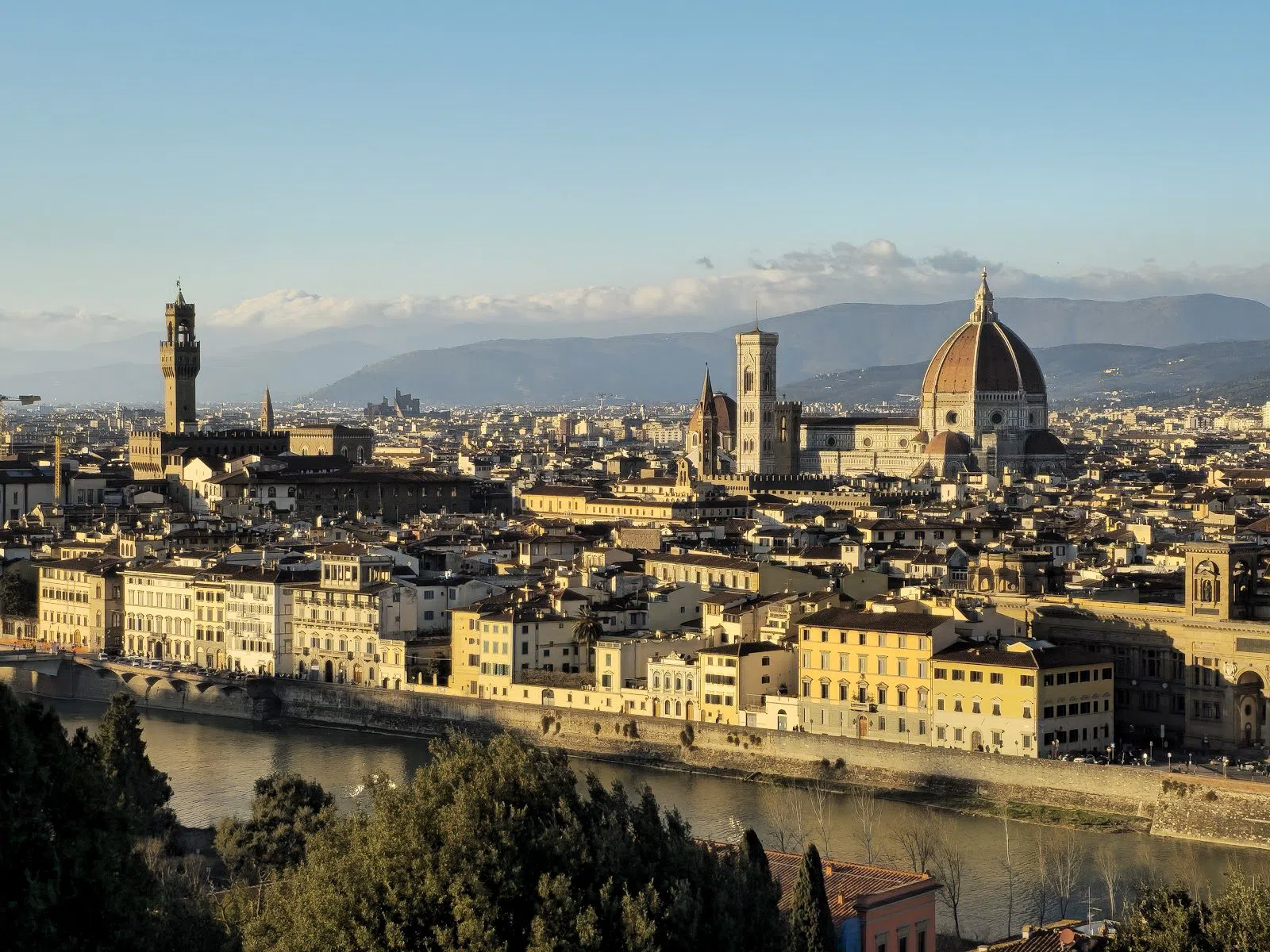
By half past eight on a June evening the balustrade at Piazzale Michelangelo is three deep and the talking has mostly stopped, because the light is doing its twenty-minute trick: roof tiles going from dust-pink to copper, the river flattening into hammered metal, the dome losing its detail until it is only a shape against the hills. Ten minutes above that railing, in a church most of the crowd never climbs to, monks are singing vespers. And at the bottom of the hill a class is sliding its first round of dough into a wood oven, three and a half hours in, finishing at the hour when the walk up pays best.
What the terrace actually gives you
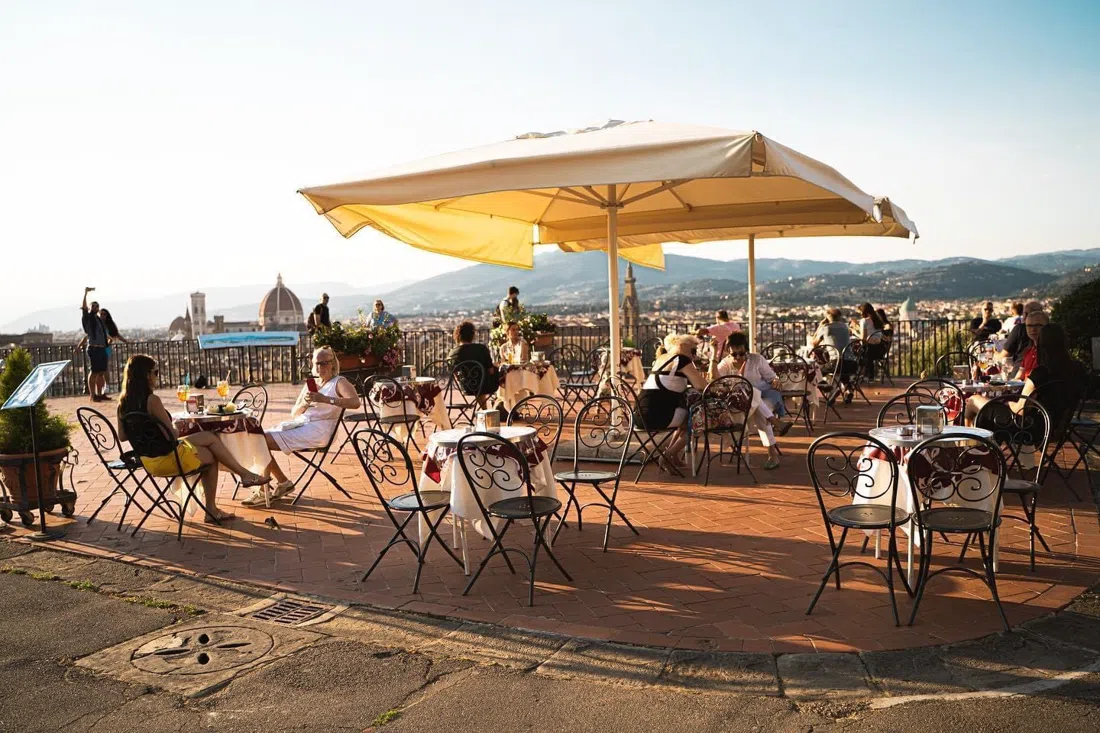
Piazzale Michelangelo (the San Niccolò hillside, above the Oltrarno) is a public square with no door, no ticket and no closing hour. It is free, it is open twenty-four hours a day all year, and it exists for one reason: Giuseppe Poggi cut it into the hill in the 1860s as a belvedere, and the whole historic centre still fits into a single frame from its edge. You get the dome and the campanile slightly left of centre, the river threading west under its bridges, the long ochre spine of the old walls, and behind it all the hills going blue as the sun drops. There is nothing to tour. You look, you walk the length of the railing, you look again from the other end.
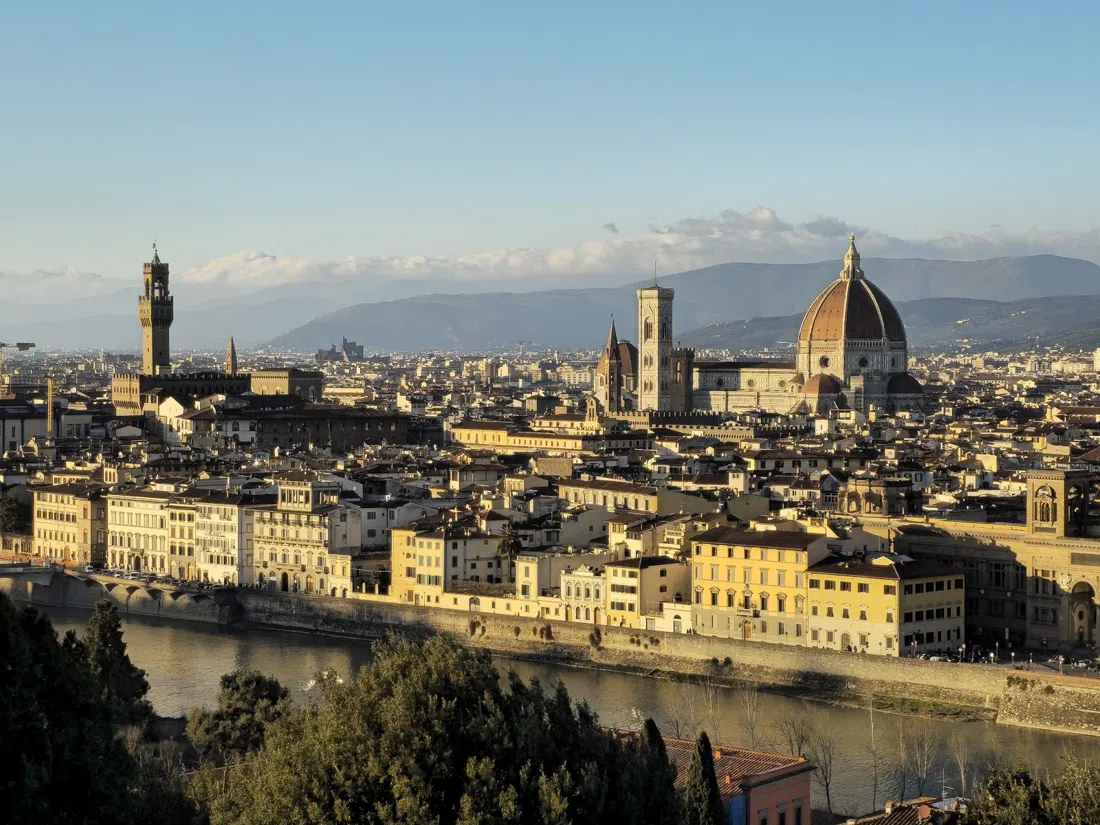
All that freedom means the square absorbs any number of people (coach parties, school groups and walking tours arrive more or less continuously), but the railing does not. The railing is the bottleneck, and at sunset it is the only thing anyone wants. Forty-five minutes to an hour before sunset is the honest arrival time for a front-row spot; twenty minutes before, you will be standing on the second row with your arms up. The alternative is dawn, when the terrace is empty, the light comes over your shoulder onto the city rather than behind it, and you can hear the swifts. Fewer people do this than talk about doing it. If you are still building the shape of your days, the Florence guide covers what sits at the bottom of this hill.
The walk up, and the ramps
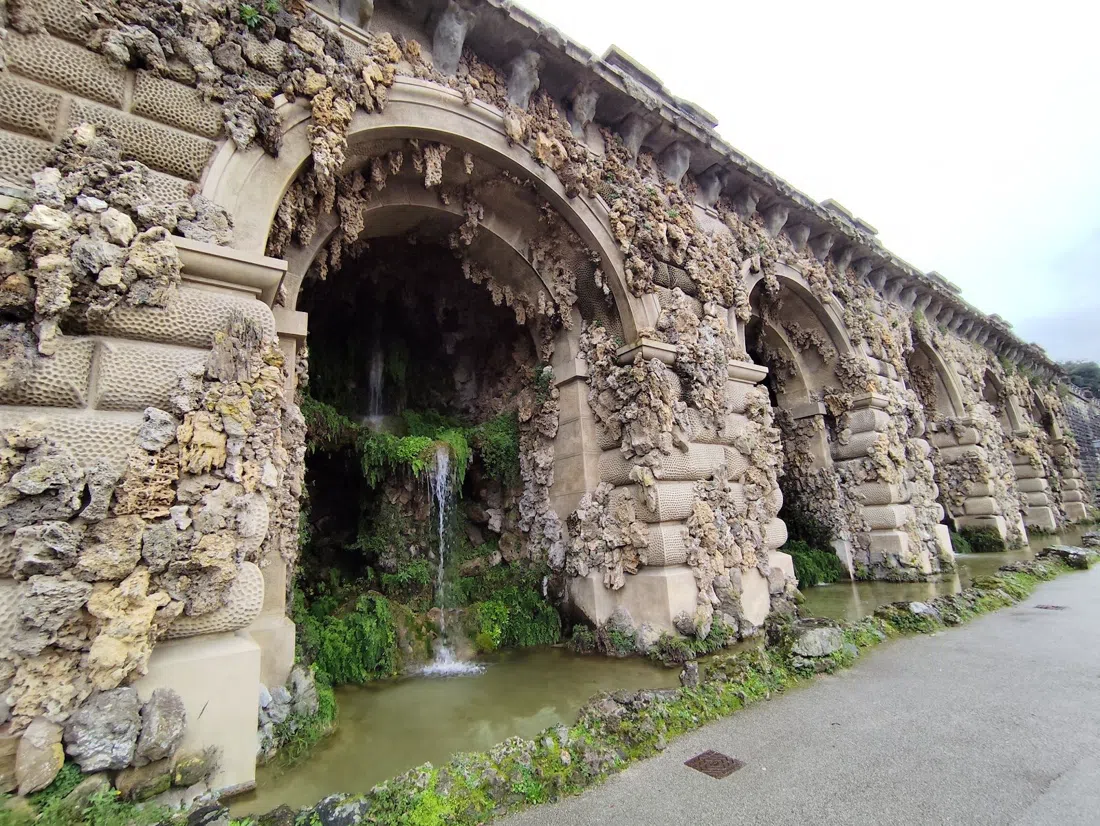
Le Rampe del Poggi (San Niccolò, at the river end of the hill) is the proper way up and worth choosing deliberately. The restored ramps zigzag through a set of artificial grottoes and waterfalls that were dry and derelict for decades and now run again; the climb is steady rather than brutal, about fifteen to twenty minutes at a normal pace. It is free and open, with no control of any kind, but it narrows in places, so a group on foot strings out into single file and stays that way. The sensible pattern is ramps up in cool light, early morning or late afternoon before the heat leaves the stone, and the bus back down when your legs have had enough.
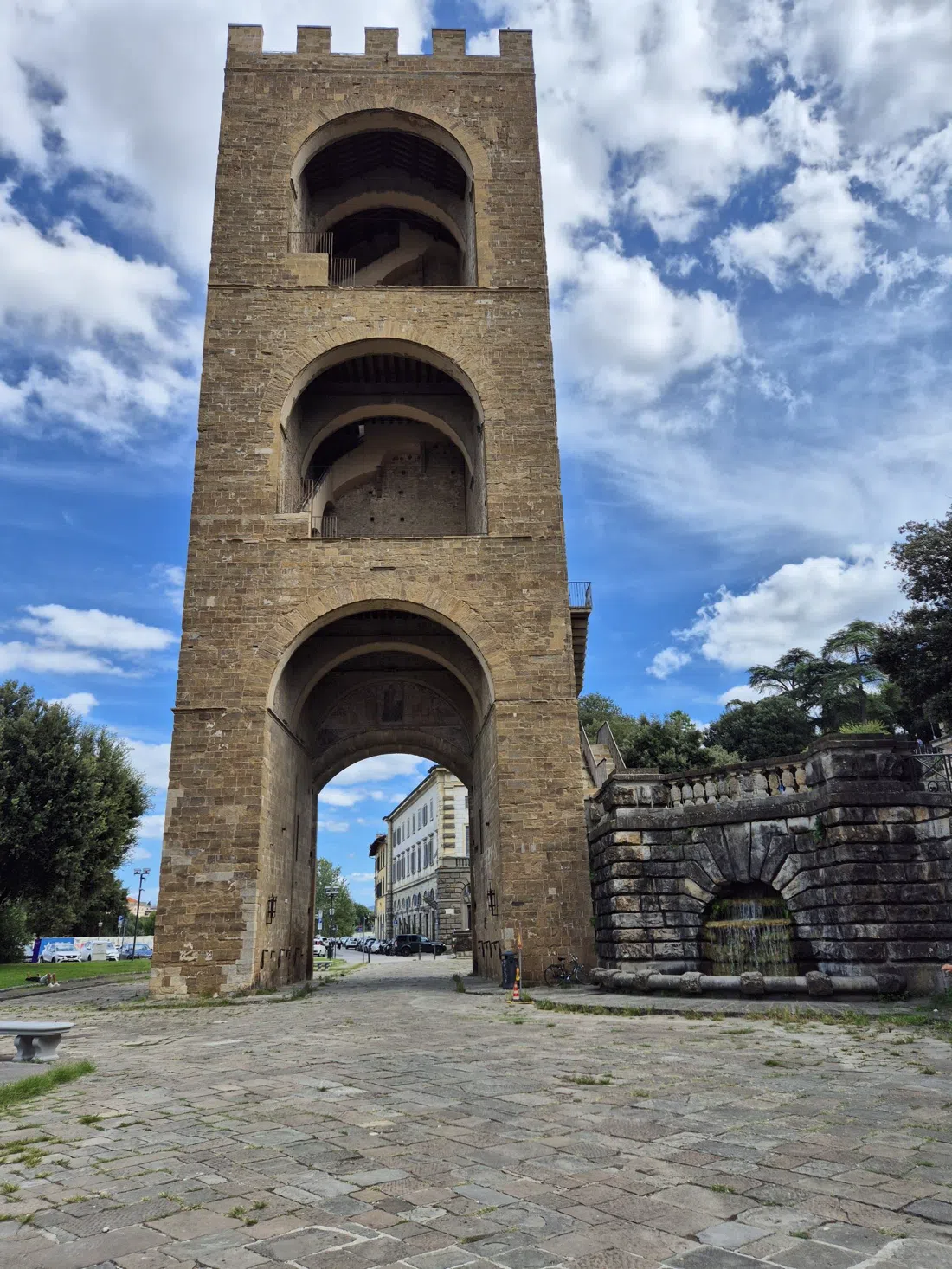
At the foot of the ramps, Torre San Niccolò (San Niccolò, on the riverside) gives you the other half of the same view, from underneath. It is the one gate tower left at its full original height, and the visit is 160 steps to a rooftop that looks straight up the hill to the piazzale. Entry is €6, cash at the door, and it is guided-only, with departures roughly every forty-five minutes and small groups because of the stair. Reservation in advance by phone or email is required and the opening is seasonal, so ring ahead rather than turning up.
Ten minutes higher, where the hill goes quiet
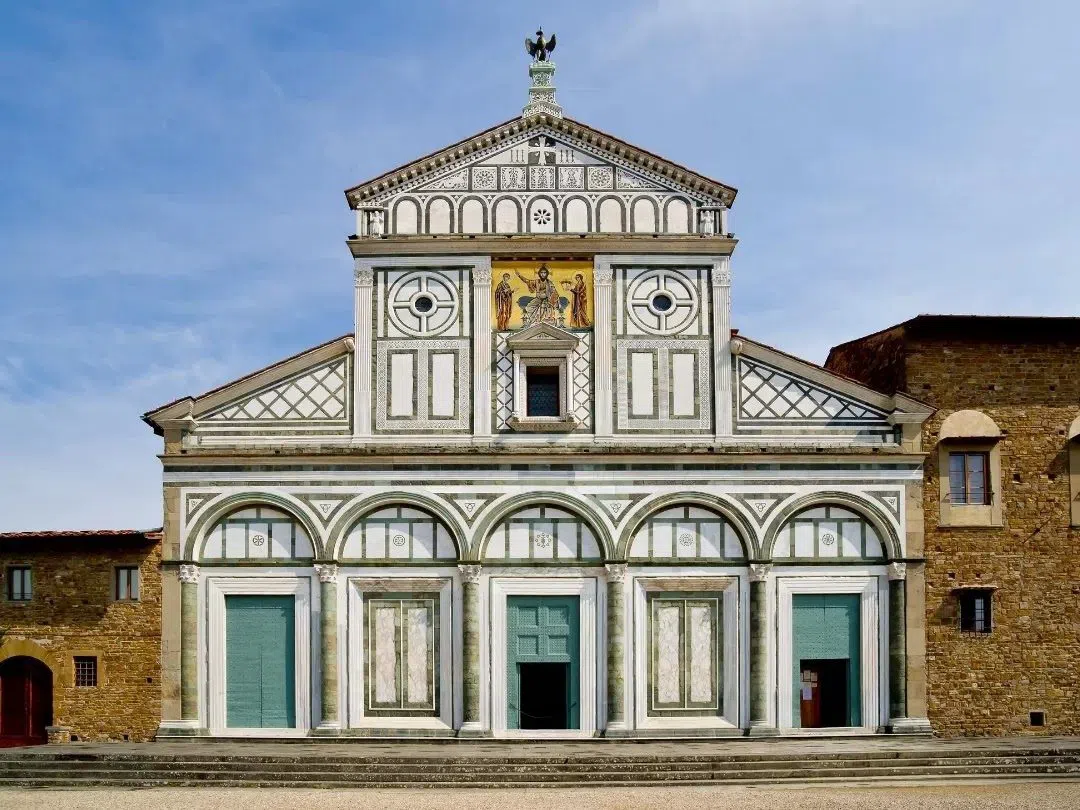
Basilica di San Miniato al Monte (Monte alle Croci, ten minutes above the piazzale) is the best thing on this hill and most of the sunset crowd never sees it. It is a working monastery church, free to enter, with a green-and-white marble front that catches the last direct sun while the square below is already in shade. The reason to time your evening around it is the 18:30 Gregorian vespers sung by the Olivetan monks, short, unamplified and not a performance. Silence is expected, groups are asked to stay at the back during services, and liturgy can close the church without notice, so check the abbey's own site before you plan a day around it.
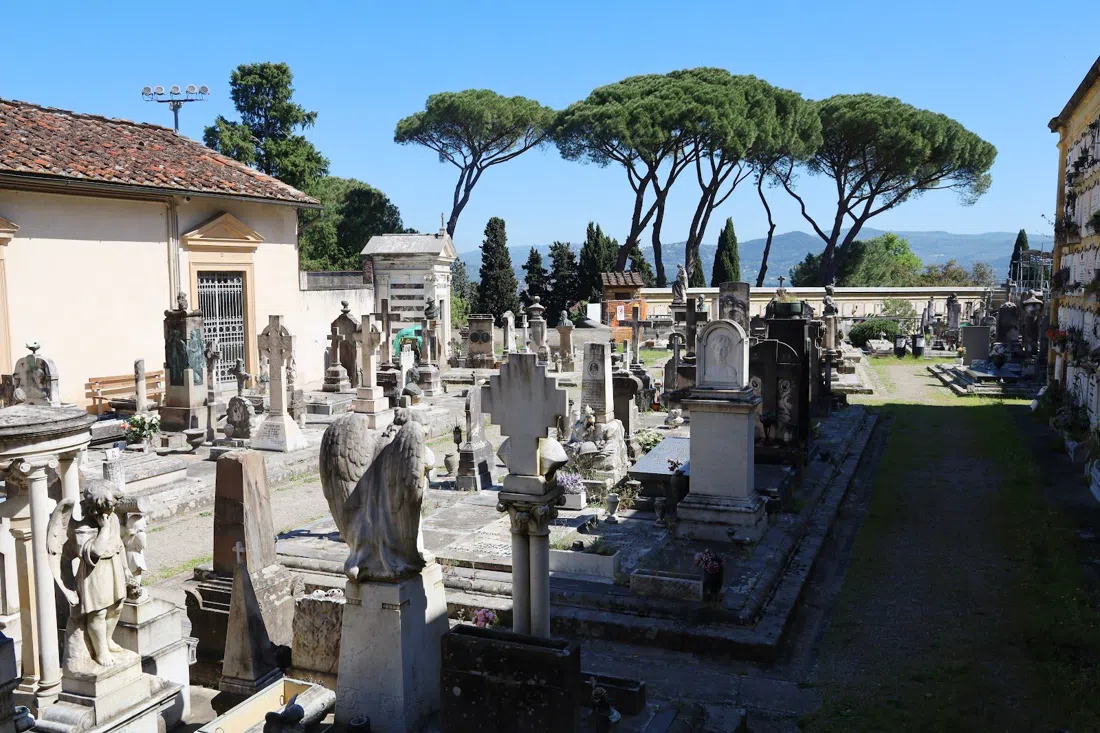
Cimitero delle Porte Sante (wrapped around the basilica, same hill) is the quietest viewpoint in this whole guide. It is free and unticketed but it is an active monumental cemetery, which means small quiet groups only and no loud guiding. If you are with a party of twenty, this is not your stop. Carlo Collodi, Pietro Annigoni and Franco Zeffirelli are buried here among the chapels and cypresses, and the hours are the basilica's, so the two pair naturally: church, then cemetery, then down to the square as the light goes.
When the railing is three deep
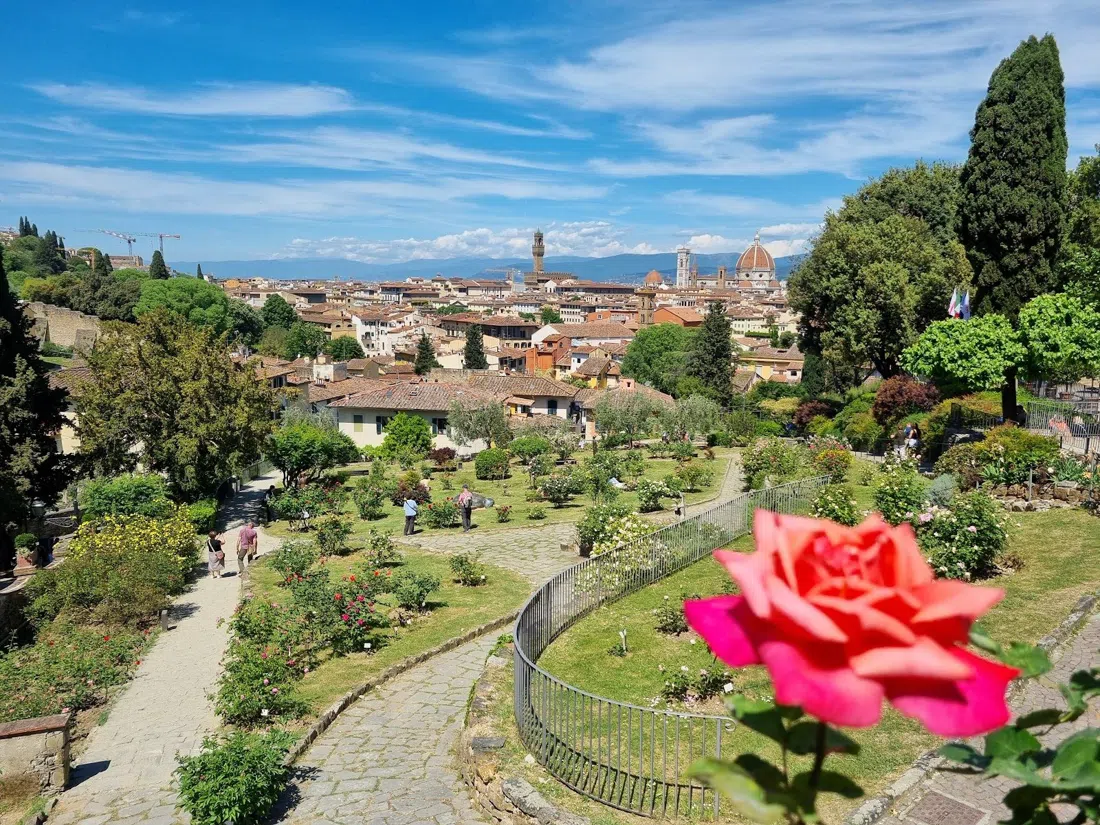
Giardino delle Rose (on the slope directly below the piazzale, San Niccolò) is the obvious escape and the answer to most crowding complaints. Entry is free, the gate is simply open, and the view is the same city from thirty metres lower with a fraction of the people. Jean-Michel Folon's bronze figures are scattered through the beds, sitting and standing among the roses as if they had wandered in. Hours are seasonal, roughly 9:00 to 20:00 from May to September and earlier in winter, and peak bloom is May. The lawns take a group easily; the upper terrace path does not.
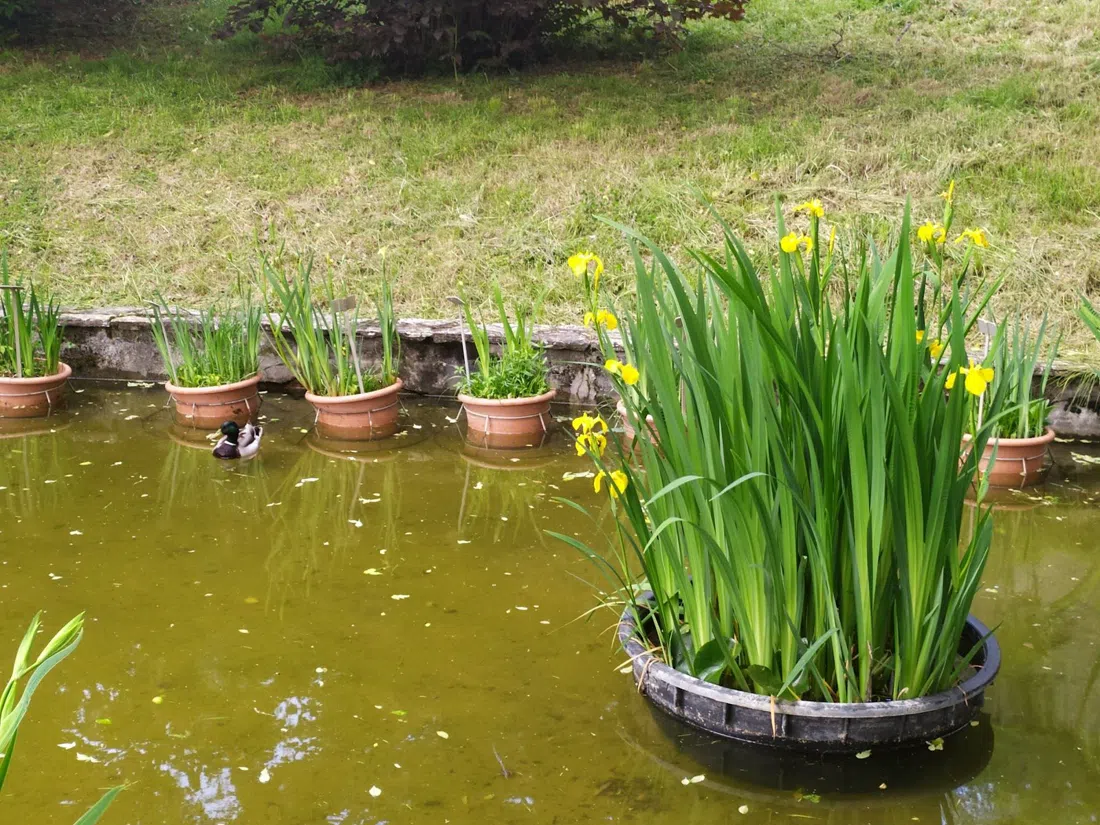
Giardino dell'Iris (on the eastern flank of the square) only earns a mention if your dates line up. In 2026 it opened on 25 April and closed on 20 May, 10:00 to 18:00, free, with guided visits on Sundays and holidays at 11:00 and 16:00 for a €5 contribution. The rest of the year the gate is locked and there is nothing to see through it, so never build an autumn evening around it.
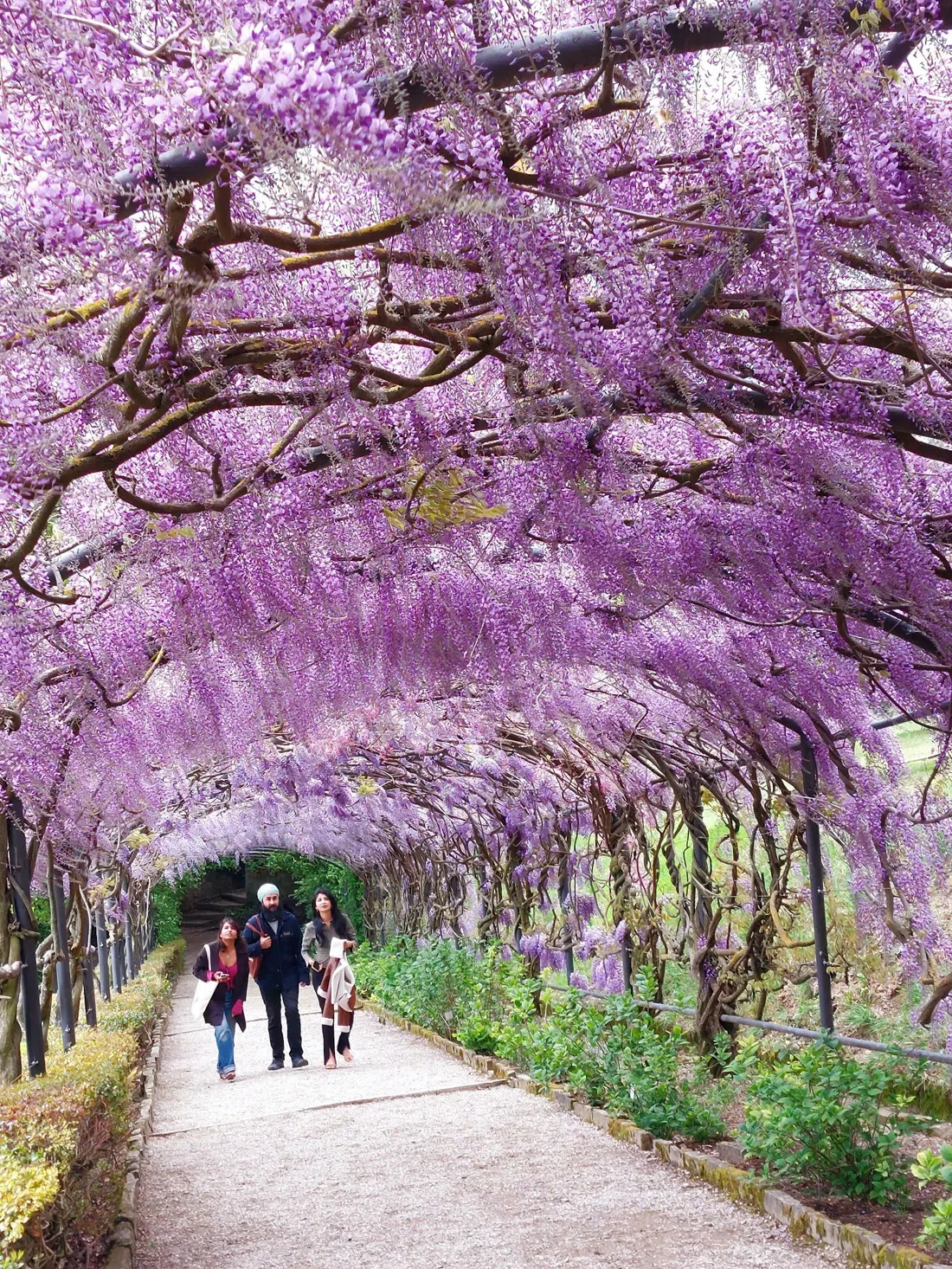
Villa e Giardino Bardini (Costa San Giorgio, on the slope between the river and the hill) is the halfway house: a ticketed garden and villa with a terrace view that rivals the square, minus the coaches. It is €10 for the garden, €15 including the exhibition, with reduced rates of €5 and €8, and it closes on the first and last Monday of each month. The wisteria tunnel peaks in late April and is the single most photographed thing on the property. Budget an hour; it takes groups without trouble.
Coffee, aperitivo and the view tax
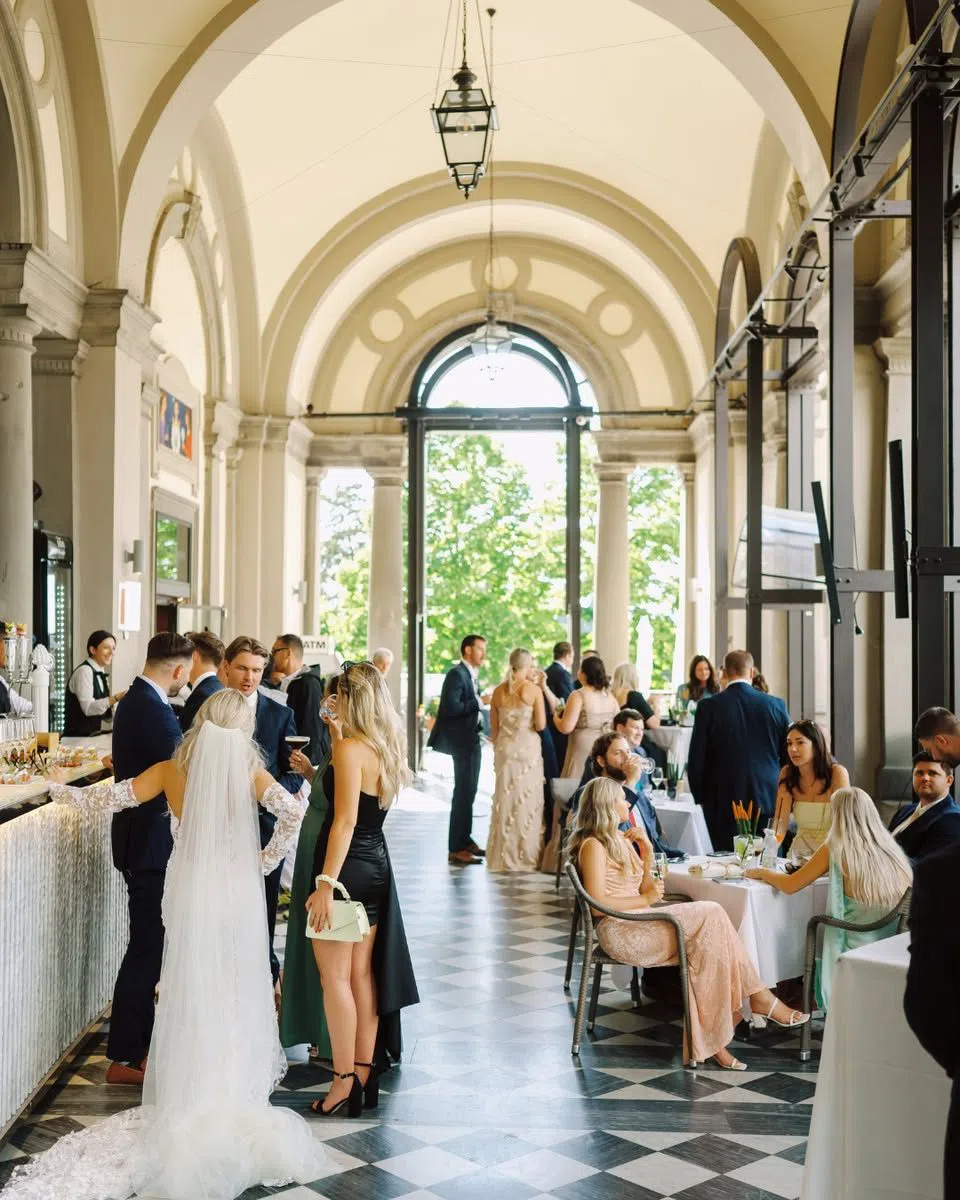
La Loggia del Piazzale Michelangelo (on the square itself) is Poggi's original loggia and the only proper sit-down on the terrace. It runs as three things at once (coffee bar, restaurant, event space) and the distinction matters to your wallet. The coffee bar side charges ordinary city prices and is the one to choose. The restaurant is a view-tax dinner, with a clear premium on every dish, and a sunset table needs booking days out. Anything over four people at that hour should be arranged in advance rather than negotiated at the door.
Vip's Bar (on the square, a few steps along) is where you go when La Loggia's menu lands. Same panorama, walk-in, no reservation, and coffee, pastries, beer and gelato at normal bar prices, with cocktails a step up. The terrace is small and most tour groups walk straight past it. It opens early enough to serve pastries at eight in the morning, which makes it the natural partner to a dawn visit.
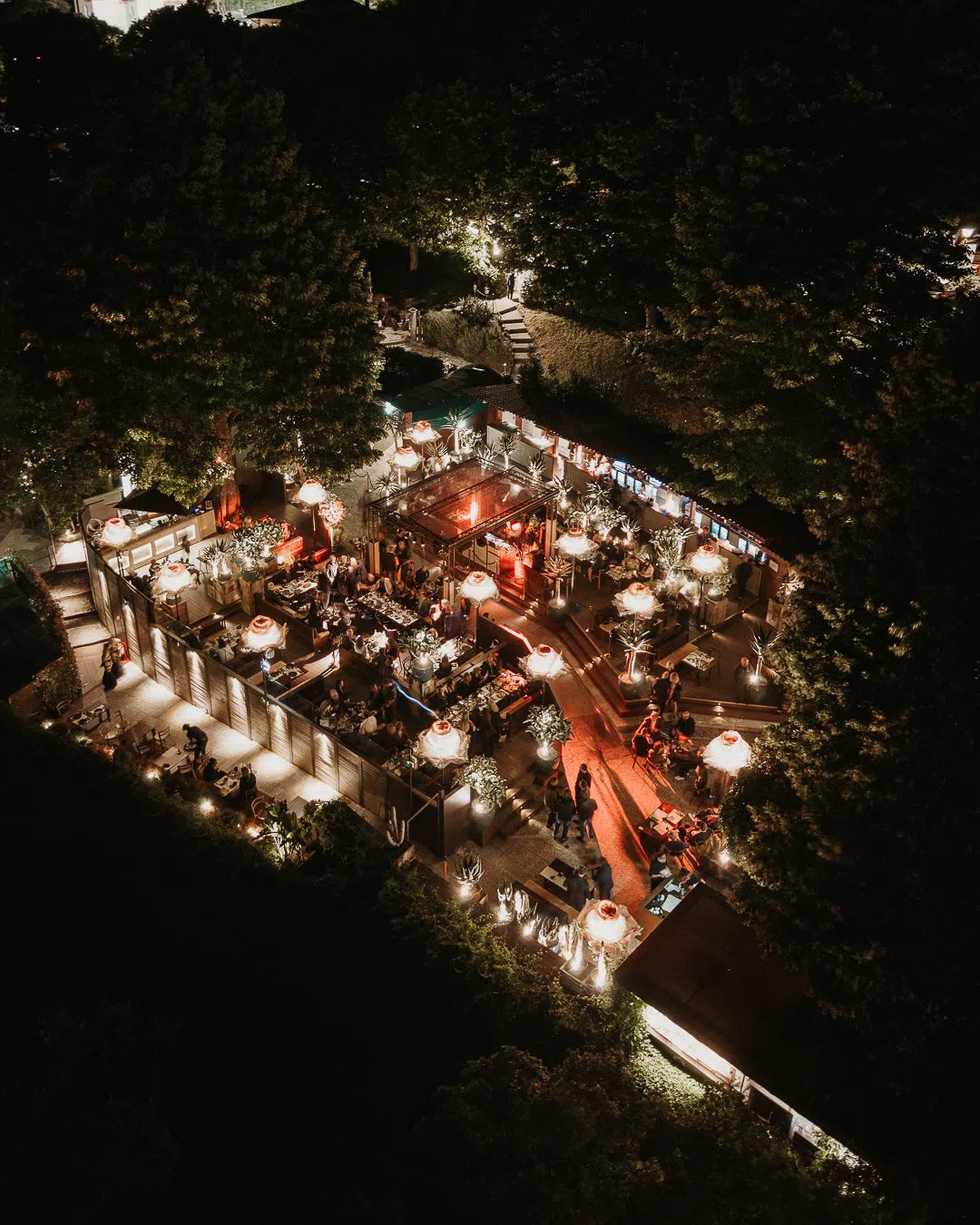
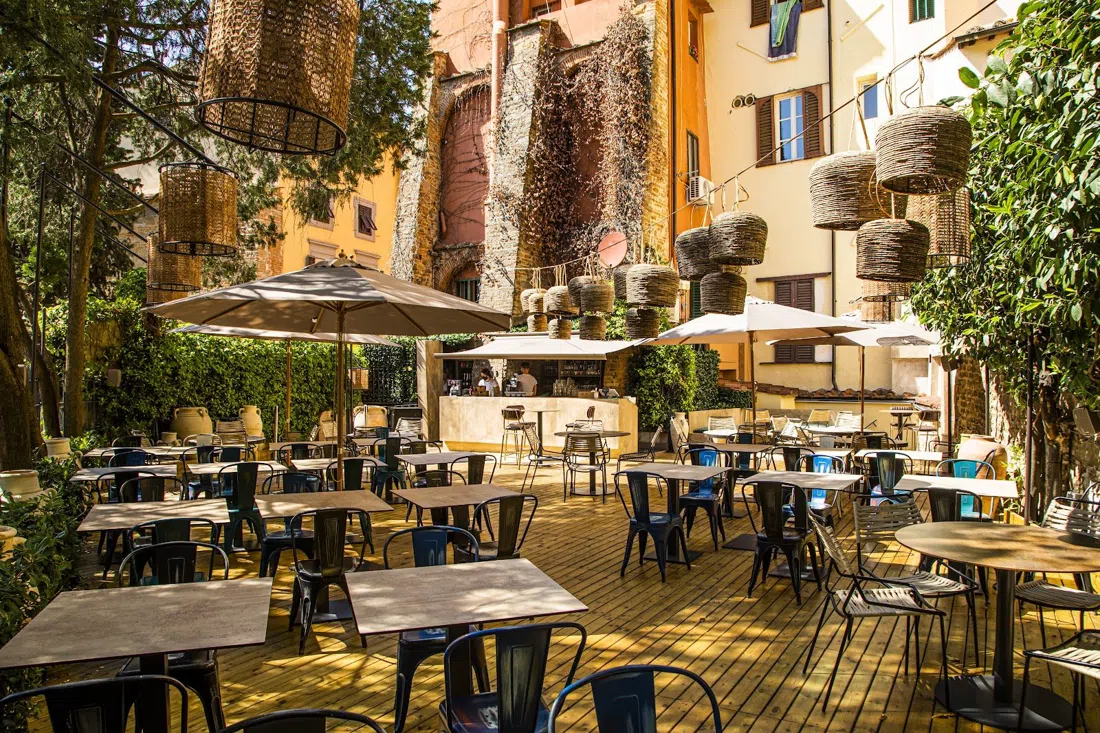
Flò Lounge Bar (just below the piazzale) is strictly a summer proposition. It runs from roughly May to September and is shut the rest of the year. Drinks work on a token system at about €10 for a cocktail or a beer, and there is a real door policy: smart dress, not optional. Groups are fine and large parties should contact the venue for table service. If an evening class finishes at nine and nobody wants to go back down yet, this is the answer for those months only.
Where the dough happens
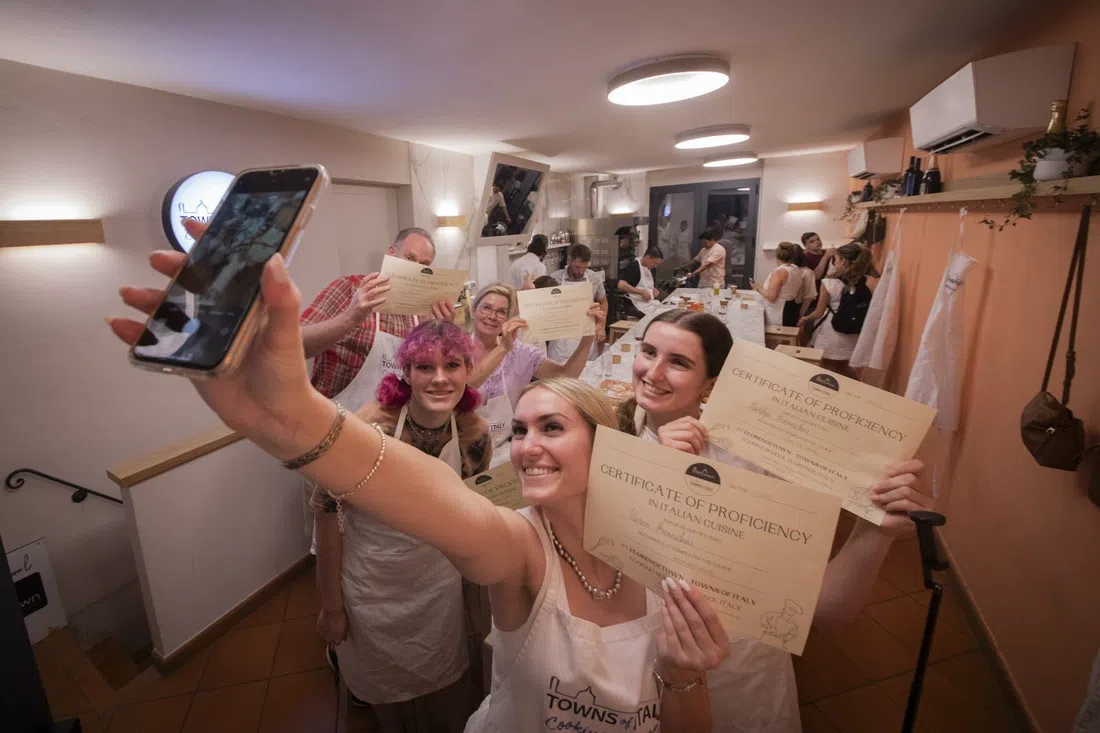
No one makes pizza on the piazzale. The classes sit at the bottom of the hill and in the centre, and they are built so the eating ends in time for the climb. Towns of Italy Cooking School (central Florence) is the volume operator and the best-value entry point: from €69 per person for three hours, hands-on dough, your own pizza baked and cut, a gelato demonstration, apron and recipe booklet included, and a seated meal with unlimited wine. It runs small-group format up to twenty people, seven days a week, rain or shine. It also trades as Florencetown and florencecookingclasses.com; that is one company and one booking, not three options.
In Tavola (Oltrarno, ten minutes on foot from Ponte Vecchio) is the closest class to the hill and the one with the tightest calendar. About €73 per person, taught by the chef in English, Spanish or Italian, working the soft, blistered southern style of dough, but the pizza and gelato lesson runs on Tuesdays only, starting late afternoon. Plan around that or you will not get in. It runs as a group lesson with private bookings available separately.
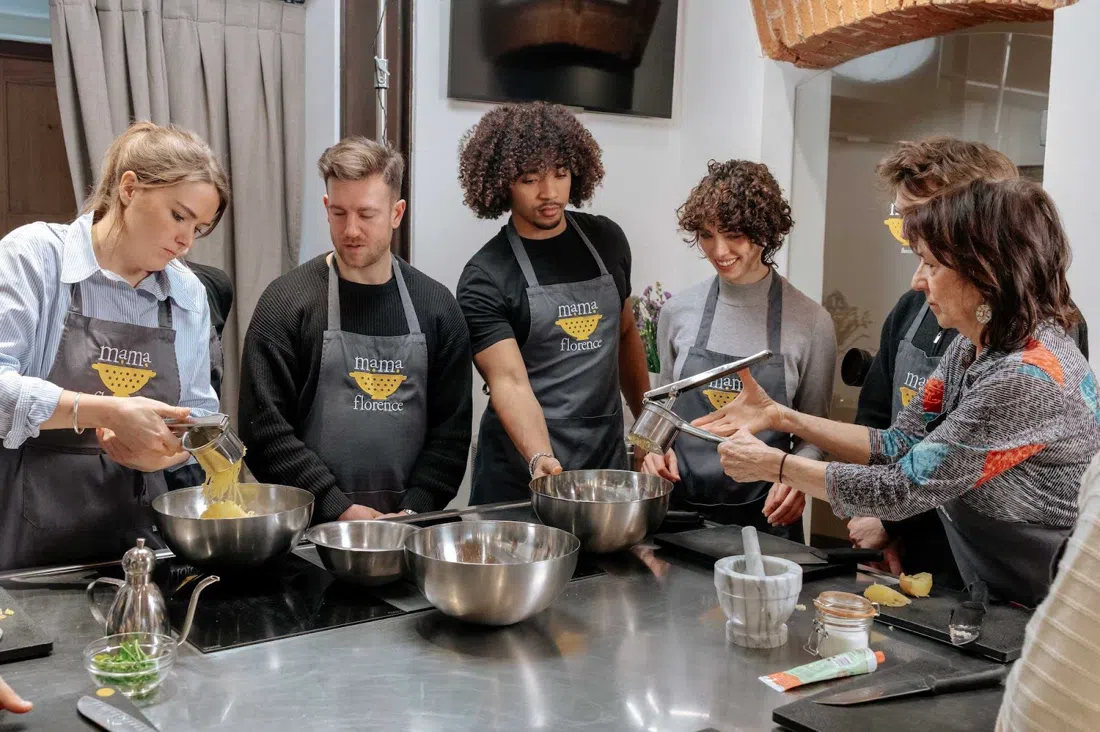
Mama Florence Cooking School (viale Petrarca) is the real wood-oven option rather than a domestic one, and the only place on this list that can swallow a large private party: bookings from one person up to forty-plus adults, children taken from six, transport laid on from the school. Three and a half hours, morning or evening slots, dough through to fired pizza plus gelato and wine. It is priced per booking rather than per head and it is expensive: the site showed €1,620 for a two-adult private booking on sampled 2026 dates. For two people that is hard to justify; for a family group or a work party it is the one that works.
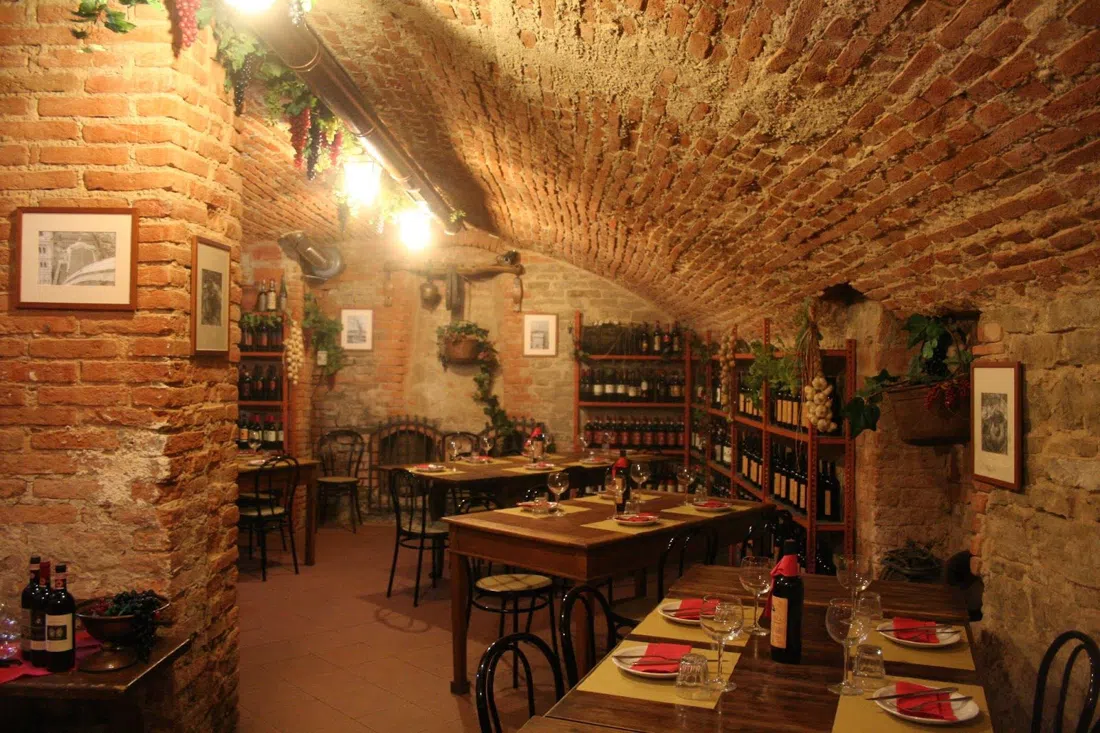
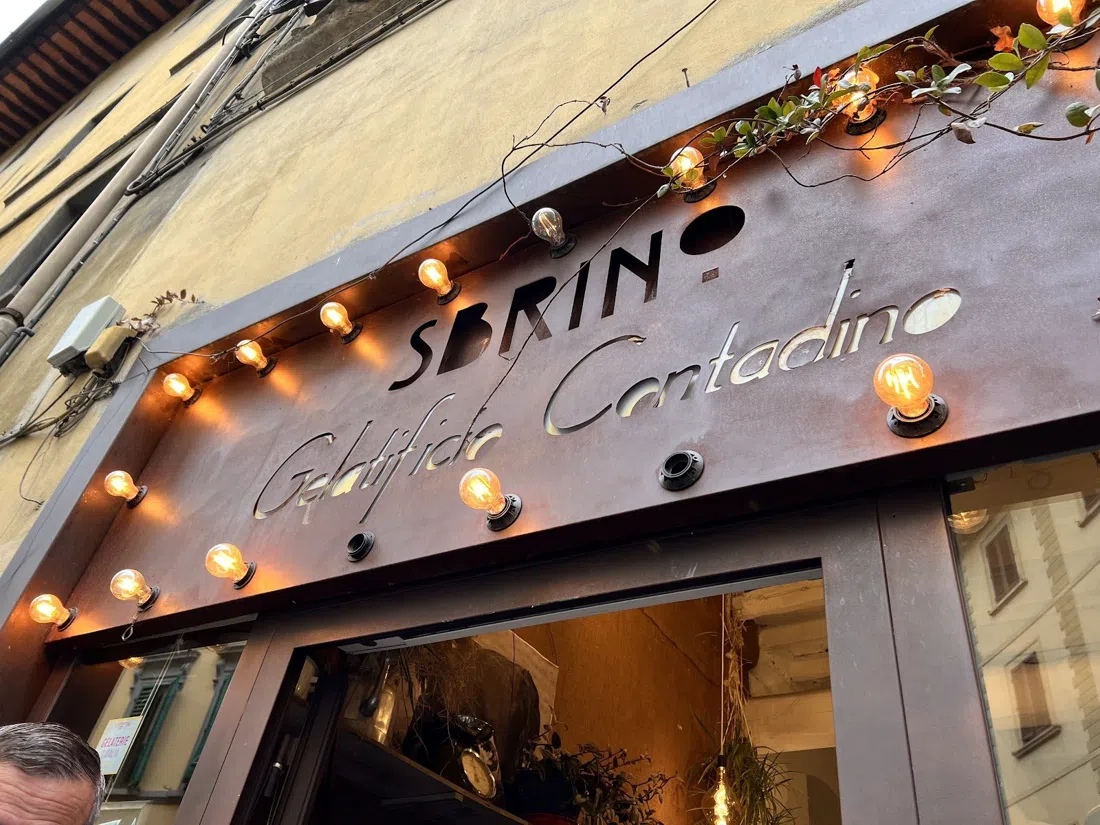
Two more at the bottom of the hill, both useful. Sbrino Gelatificio Contadino (Oltrarno) makes gelato with milk from the family's own cows, served from covered pozzetti and changing with the season, at about €3 to €6 a cone, the honest benchmark to taste before any class promises to teach you gelato. It is tiny, the queue spills onto the pavement, and it is hopeless for a coach party. Rifrullo Firenze (San Niccolò, at the foot of the hill) is open 8:30 to 1:00 daily and is the reliable base: breakfast before the ramps, or the aperitivo you actually want afterwards, buffet with a cocktail around €10. Book ahead for Sunday brunch and for any sizeable table.
Turning up versus booking ahead
The square costs nothing and needs nothing. Everything with a kitchen or a stair attached needs planning. The guided pizza-and-gelato classes here run seven days a week and start from 75 USD per person, which removes the day-of-the-week problem but not the slot problem: evening sessions and the Tuesday-only lesson fill first, and reviews for the most-booked class are landing at about 7.2 a day, so it is being booked steadily rather than waiting for you. A week's notice in high season is sensible; a day or two will often still work in February. Torre San Niccolò is the other one that punishes spontaneity, since it is guided-only with advance reservation required.
Is it worth it
The terrace on its own is worth exactly what it costs, which is nothing, and about twenty minutes of your attention, an hour if you include the walk up. Treated as a single item on a list it is underwhelming, because you have already seen the photograph. Treated as the top of a two-hour sequence (ramps, church, vespers, cemetery, garden, railing) it is one of the better evenings in the city, and the part people remember is usually the singing, not the view.
The pizza class is a separate decision and stands on its own. It suits people who want three hours of doing something with their hands rather than looking at things, families with children old enough to shape dough, and groups who need one fixed anchor in a day that otherwise fragments. It does not suit anyone hoping for a serious technical education in baking, since these are convivial classes with wine rather than apprenticeships. Couples on a tight budget should do the €69-tier class and spend the difference at the bottom of the hill; a larger private party is the only case where the premium wood-oven option makes arithmetic sense.
Best time to go
For the light, arrive forty-five to sixty minutes before sunset, which means very different clock times across the year: around half past four in December, close to nine in late June. Sunset is also the only hour when crowding is a genuine problem, so if you dislike crowds, come at dawn instead and take the whole railing for yourself. Midday is the weakest visit: flat light, full car park, no shade.
By day of the week, weekends are heavier and Sunday afternoons heaviest. By season, May gives you roses at peak bloom and the iris garden's short window; late April gives you the wisteria at Bardini; July and August give you long light, heat on the ramps and the summer-only lounge below the square; November through February give you cold, early sunsets, thin crowds and the clearest air of the year over the hills. Vespers at the abbey is an evening fixture rather than a seasonal one, but check the abbey's site before travelling, because liturgy can close the church at short notice.
Practical notes
Getting up: the ramps on foot take fifteen to twenty minutes from the river and are the better direction for a climb; city buses serve the square if you would rather ride one way, and riding down after dark is the usual compromise. Taxis will take you to the square but traffic on the approach road is slow at sunset.
Money: the square, the ramps, the abbey, the cemetery, the rose garden and the iris garden are all free. Carry cash for the tower, which is €6 at the door and does not take cards, and for the €5 guided-visit contribution at the iris garden. Bardini is €10 or €15. A class is €69 to €73 per person at the group-lesson tier, considerably more for a private wood-oven booking.
What to bring: proper shoes for the ramps and the 160-step tower, a layer for after dark (the hill is noticeably cooler than the river) and something smart if the summer lounge is in your plan, because that door policy is enforced. There are no lockers anywhere on the hill, so do the climb after you have dropped your bags rather than before; if you are still choosing where to stay, the Florence hotel search will show you what sits within walking distance of the ramps.
A workable evening, end to end: aperitivo at the foot of the hill around six, ramps up at half past, vespers at the abbey at 18:30 in winter or a slow circuit of the cemetery in summer, down to the rose garden or the railing for the last of the light, then a cheap drink on the square rather than a view-tax dinner. Add the pizza class in the morning slot and the day has a shape without ever feeling scheduled.
Questions
How early should I arrive at Piazzale Michelangelo for sunset?
Forty-five to sixty minutes before sunset if you want a spot at the railing itself. Twenty minutes before and you will be on the second row with your arms raised. Sunset times swing wildly across the year here, from around half past four in December to close to nine in late June, so check the day's time rather than picking a fixed hour. If crowds bother you more than the light does, come at dawn instead: the terrace is genuinely empty and the sun is behind you, lighting the city rather than silhouetting it.
Is Piazzale Michelangelo free, and do I need a ticket?
It is free, open twenty-four hours a day, all year, with no door and no booking. Most of what surrounds it is free too: the Poggi ramps, the abbey church above it, the cemetery beside the abbey, the rose garden below it and the iris garden during its short spring window. The only paid things on the hill are the gate tower at the bottom of the ramps at €6 cash, the Bardini garden at €10 or €15, and whatever you order at the bars on the square.
Should I walk up or take the bus?
Walk up, ride down. The restored Poggi ramps from the river are fifteen to twenty minutes of steady climbing past waterfalls and grottoes, and they are much more pleasant in cool light than in the middle of a summer afternoon. City buses serve the square, which makes the descent easy after dark when your legs have had enough. A group on foot should expect the ramps to narrow in places and the party to string out single file.
Do pizza classes in Florence need booking ahead, and what do they cost?
Yes, book ahead. The group classes start from about €69 to €73 per person for a three-hour, hands-on session including a seated meal, and guided options run seven days a week, but evening slots fill first and one of the pizza-and-gelato lessons on the Oltrarno side runs on Tuesdays only, late afternoon. Reviews for the most-booked class are landing at roughly 7.2 a day, so it is being booked steadily. A week's notice in high season is sensible; in winter a couple of days will usually do.
Can children join a pizza-making class?
Some of them, yes. The wood-oven school on viale Petrarca takes children from six years old and books privately from a single person up to forty-plus adults, with transport laid on from the school, which makes it the practical choice for families and larger parties. It is priced per booking rather than per head and is expensive: the site showed €1,620 for a two-adult private booking on sampled 2026 dates, so it makes far more sense for a group than for a couple.
First published on florencecitybreaks.com, the Florence guide.