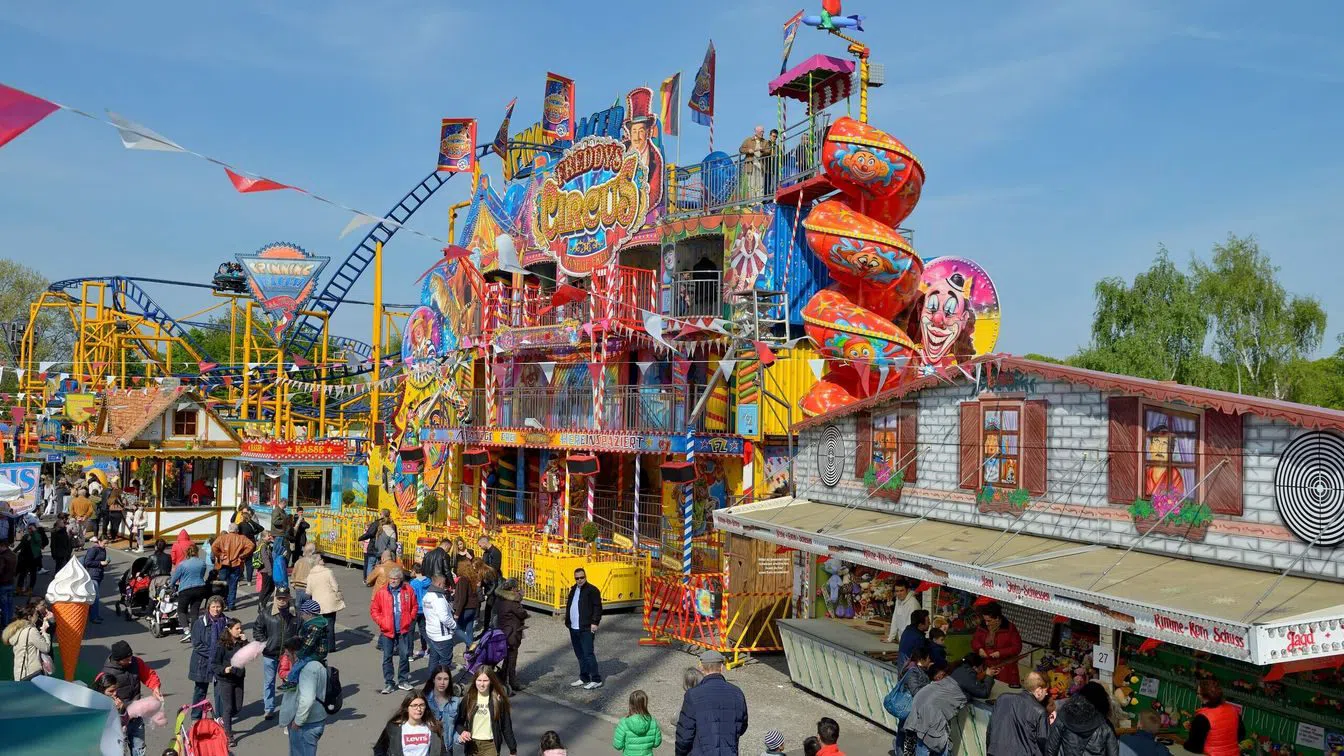
Walk east towards the Ratsweg on a Saturday afternoon and you hear the fair before you see it: the flat crack of an air rifle, ride music bouncing off the tram wires, and a few hundred people singing in a tent that has nothing to do with Bavaria. This ground has a paper trail running back to the 14th century, when Wetterau potters brought their stoneware down to the Main and sold it by the riverbank. Frankfurt rarely bothers arguing the point with anyone. It just keeps holding the fair.
The fair that started with potters and pots
The fair is Frankfurter Dippemess (Festplatz am Ratsweg, Ostend). The name is Hessian shorthand (a Dippe is a cooking pot), and the event was documented from the 14th century as the Maamess, a market where potters sold their wares alongside everything else a river city needed. It survived guild collapse, war and half a dozen relocations, finally settling on the Ratsweg fairground in 1968. What you walk into now is a full Volksfest: waltzers, a ferris wheel, sausage stands, lottery booths staffed by people who have clearly been doing it since the 1980s, and beer and wine tents at the far end.
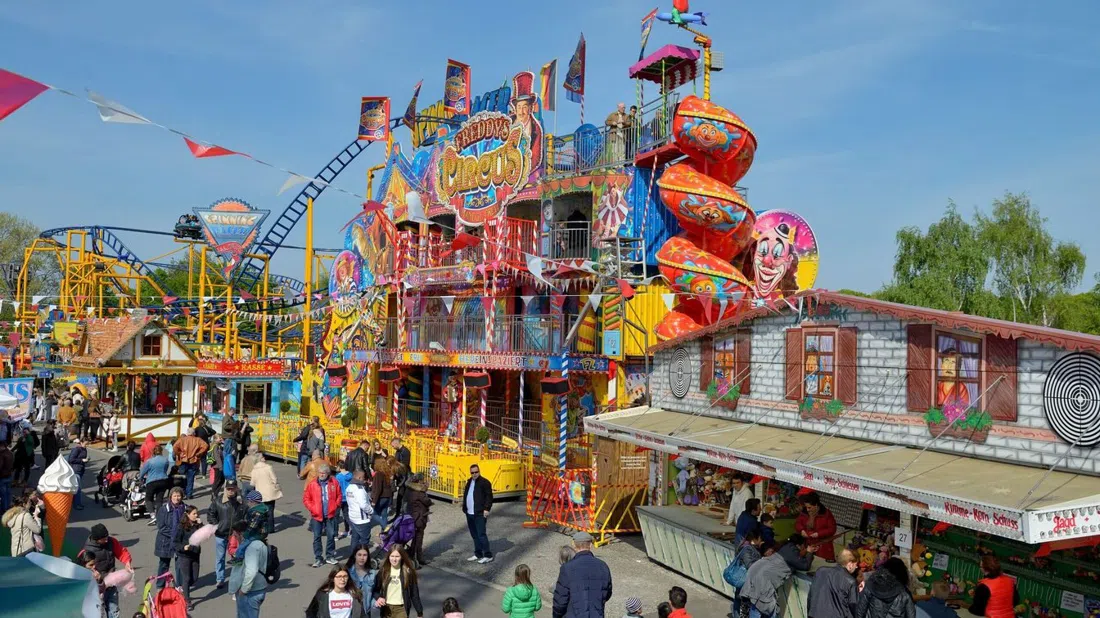
Entry is free and there is no door policy. Groups of any size walk straight on, which makes it one of the easiest things in the city to organise for a mixed party of teenagers, grandparents and people who don't drink. Budget roughly €3 to €8 per ride, and around €9 to €12 for a Bembel of cider, the grey-blue stoneware jug that is the local serving unit. Large parties should pre-book a table in one of the tents. Standing space at the edge of a tent on a Friday night is not a seat, and everyone learns that the hard way once.
There are two editions and they are not equivalent. The spring edition is the original, and in 2026 it ran 27 March to 19 April. The autumn run, 11 to 27 September 2026, is the later add-on. The pattern is stable enough to plan against: three weeks or so in spring, a shorter stretch in September. If you want the fair as it has historically existed, you want spring.
The other old fair is on the water. Mainfest (the Main quay and the square beside it, Altstadt) traces to 1340 and to the Fishermen's and Boatmen's Guild, which puts it 53 years ahead of the city's Christmas market and comfortably ahead of anything Bavarian. It ran 31 July to 3 August 2026: four days of stalls along the quay, free to enter, no restrictions on group size, food and drink in the €5 to €15 band. It is short and unpretentious. Frankfurt was already running organised public fairs on a fixed calendar when the beer-tent tradition elsewhere had not yet been invented.
What the museum will actually confirm
If you want the history checked rather than asserted, go and check it. The Historisches Museum Frankfurt (Altstadt, beside the Römer) holds the guild, market and Messe material in its 'Frankfurt Once?' and 'Frankfurt Now!' galleries, and it is candid about what the record does and doesn't show. Guild charters, trade-fair privileges, the mechanics of a medieval market city: it is all there in primary form rather than in a tourist-board paragraph.
A day ticket is €12 for all exhibitions, €8 for the permanent galleries alone, and under-18s go free. Groups of 20 or more get reduced admission. A guided tour is admission plus €3 per person and must be requested at least 14 days ahead, by phone or email on a weekday between 10:00 and 16:00. You cannot arrange it at the desk on the morning. The museum is closed Mondays, which happens often enough in this city to be worth writing on the back of your hand now.
An hour and a half here before you go anywhere near a fairground changes how the rest of the trip reads. You stop seeing a funfair and start seeing a trade institution that happens to have rides attached.
The beer tents are the newcomer
Frankfurter Oktoberfest runs 9 September to 11 October 2026 on the Ratsweg fairground and is, in 2026, in its sixteenth edition. Sixteen. This is a modern Bavarian import bolted onto a much older local fair calendar, dirndls and brass and litre glasses, and it is genuinely enjoyable on its own terms. It is also the one beer-tent experience a visitor to this city can actually book this autumn, which matters if your dates are fixed.

It is built for groups. Table reservations for parties go through the ticket hotline on +49 69 80 92 03 28, staffed Monday to Saturday 8:00 to 20:00, or through advance sale. Entry itself is modest; the cost is the table-and-consumption package, typically €40 to €80 per head depending on what food and drink is bundled in. Walk-ins are possible, but at peak hours you get standing room only, and standing room in a packed tent with a full litre glass is a different evening from the one you pictured.
Couples and pairs do better here on a weeknight, early. Groups of eight or more should book and stop improvising.
Where the drink in every tavern comes from
The drink that belongs to this city is Apfelwein, not beer, and it has a supply chain you can visit.
MainÄppelHaus Lohrberg (Lohrberg, Seckbach) is a non-profit orchard centre on the hillside above the city, with a farm shop and a small bistro. It exists to keep Streuobstwiesen (scattered-fruit meadows, old standard trees in grazed grassland) economically viable against industrial monoculture. That is the whole reason the local cider tastes the way it does: dozens of apple varieties, high acidity, no sweetening. It is open Tuesday to Sunday, 11:00 to 18:00, closed Mondays, with advice sessions on Thursday afternoons from 14:00 to 18:00 and group visits or environmental-education sessions arranged in advance. The view over the city from the orchard is the incidental bonus; the explanation is the reason to come.
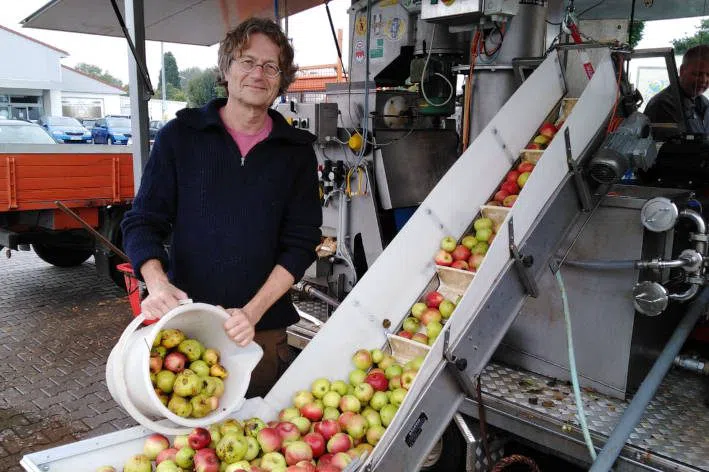
Then see it pressed. Kelterei Possmann (Rödelheim) has been in the trade since Philip Possmann registered as a cider maker in 1881. Tours operate weekly from March to mid-December, not on Sundays or public holidays, and they require a minimum of 15 people, so a couple cannot simply turn up and join. Book by email to [email protected]. The tasting of award-winning ciders is included. The storage barrels, repurposed from submarine tanks, are the single most photographable thing on this itinerary and nobody expects them.
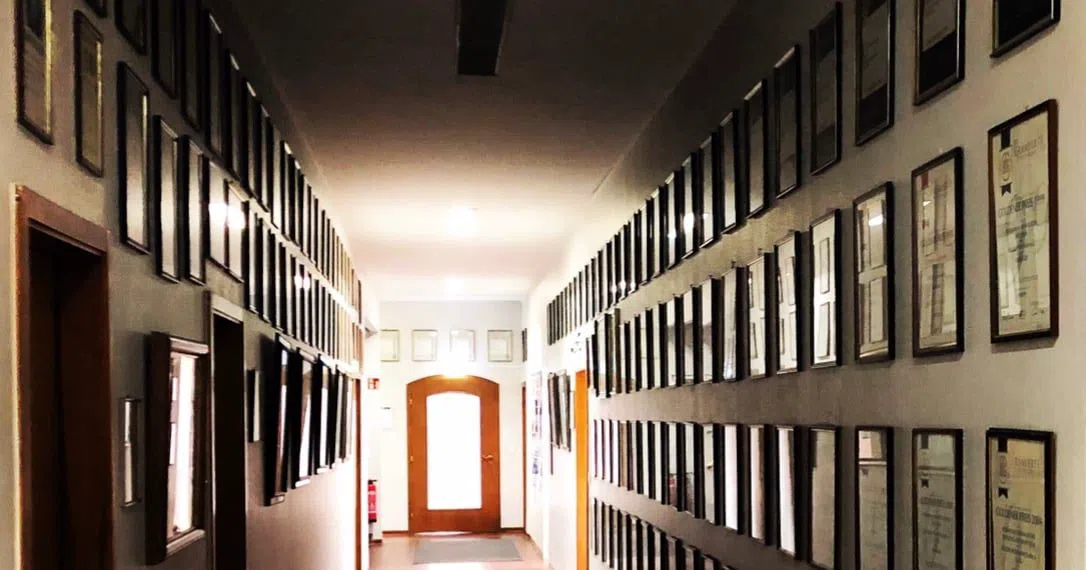
If you are two people rather than fifteen, the shop still works as a visit: Monday to Thursday 7:30 to 16:30, Friday 7:30 to 15:30.
Two taverns that predate every beer festival in Germany
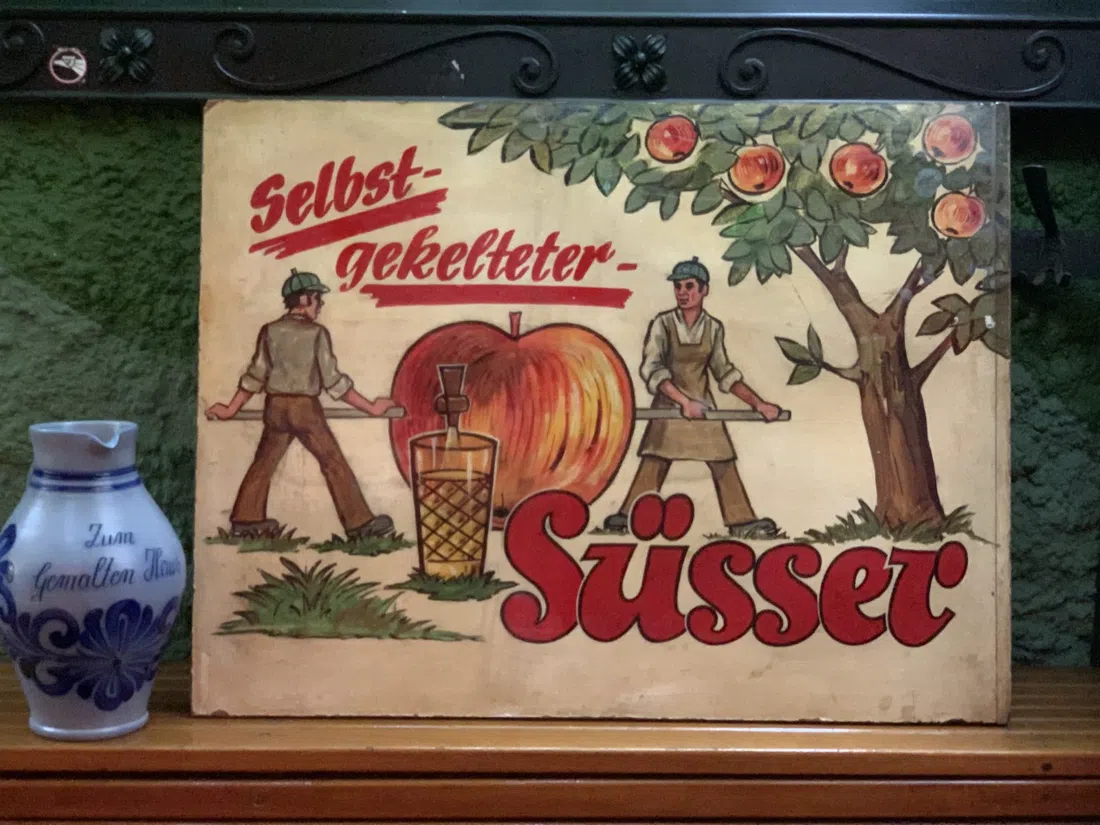
Zum Gemalten Haus (Sachsenhausen) is one of the most traditional cider houses in the district, family-run across three generations, long benches, Hessian plates, no concessions to anybody's expectations. Reservations are required for four or more; one or two people can walk in and usually will find room. Read the cancellation terms before you commit a group: cancelling inside 24 hours is charged at 90% of the menu cost, so confirm your numbers hard and early. It is closed Mondays and Tuesdays, and it takes annual closures from 5 to 13 January and 13 to 28 July. Check the calendar rather than the map.
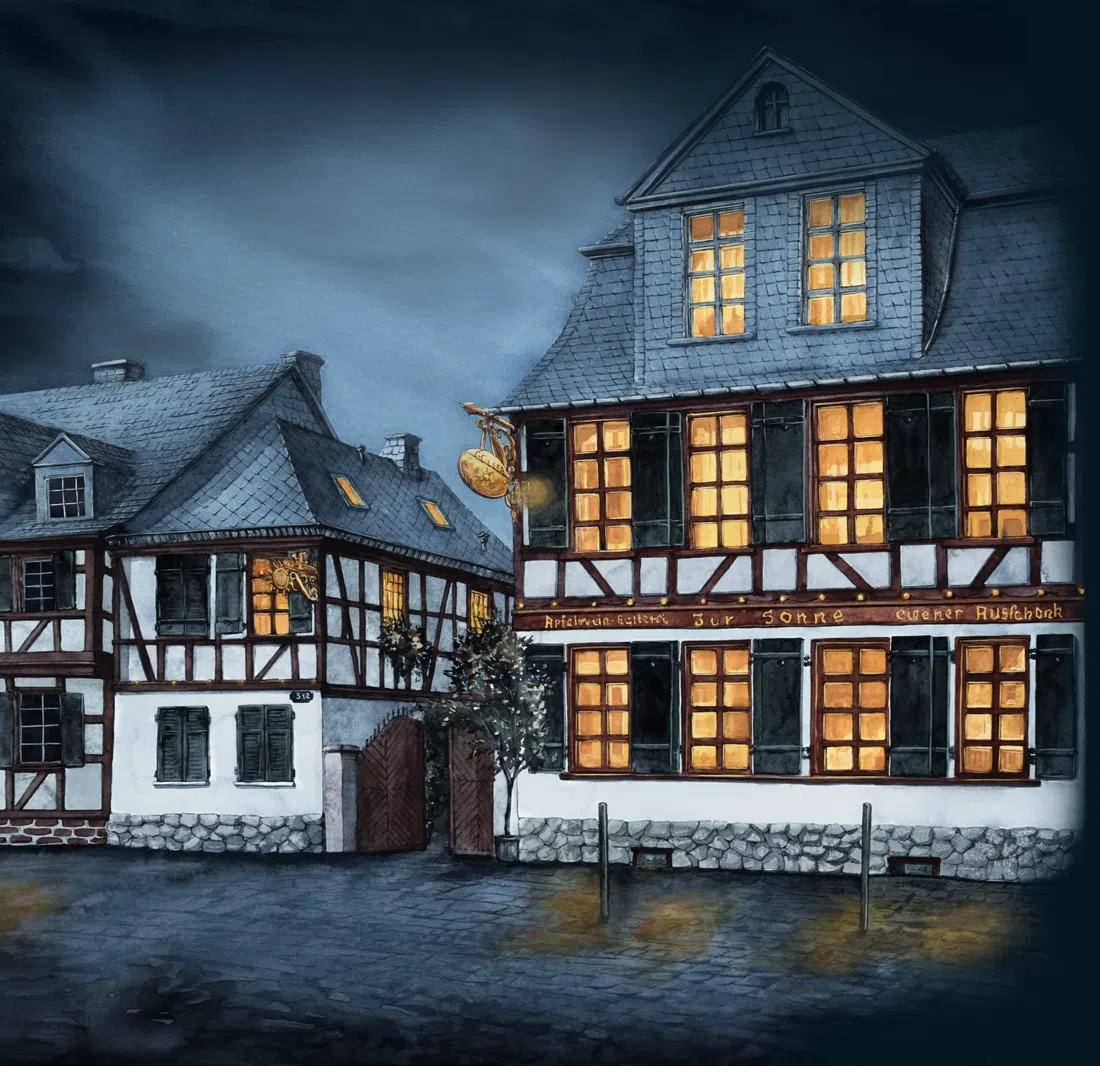
Gasthaus Zur Sonne (Bornheim) is the older of the two and the one that makes the argument cleanly. Established in 1750, it has been pouring for more than 250 years, sixty years before the first Bavarian beer festival was ever held. Handkäs, schnitzel with herb sauce, apple strudel, and a garden and barn that comfortably absorb a sizeable party. There is an online reservation system plus phone booking on 069 459 396. It opens Tuesday to Saturday, 17:00 to 23:00 only, which will kill a Sunday or Monday plan, and street parking around it is scarce, so come by bike or U-Bahn.
Both are cheap by any international standard. Both suit couples and groups equally, provided the group booked.
An hour on the cider tram
Ebbelwei-Expreß (heritage tram, city loop) is the cheapest good hour in Frankfurt. A painted 1950s tram rolls a circuit through the city as a mobile cider bar: €8 for an adult, €3.50 reduced, and that fare includes a bottle of cider, apple juice or water plus a bag of pretzels. It runs Saturdays, Sundays and most public holidays, every 35 minutes between 13:30 and 17:30. There is no service on Good Friday, Corpus Christi, Remembrance Day or Totensonntag, which catches people out in November.
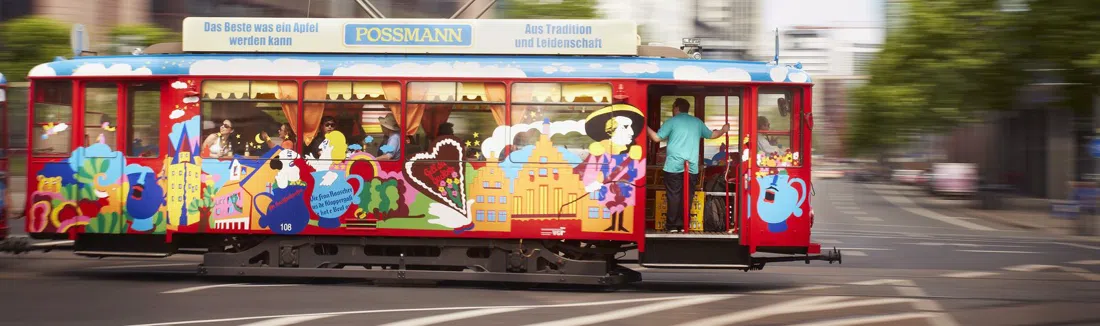
For a group it is the easiest booking on this list. Charter the whole tram for €77 plus VAT per hour with a two-hour minimum (22 seats plus standing room for eight), and you can request a route other than the standard one. For a birthday or a work party that would otherwise end up in a tent paying €60 a head, it is a serious alternative and a far better story.
Building a weekend around the dates
The calendar does most of the planning for you. Late March into April gives you the original spring fair and the best claim to the actual tradition. September into early October puts the autumn fair alongside the beer tents, the loudest and most crowded version of the city. Late July is the riverside festival and long evenings on the quay.
A clean two-day shape: day one, the museum in the morning, the Lohrberg orchard centre in the afternoon, then Bornheim for dinner at 17:00 when the tavern opens. Day two, the cider tram after lunch, then the fairground in the evening once the lights are on and the ride operators have found their rhythm. If you are fifteen or more, slot the cidery tour into day two's morning and skip the tram.
Stay central or in the eastern districts rather than out by the airport. Both fairground evenings end late, and the ride home on the tram or U-Bahn should be ten minutes, not forty. Compare rates on the Frankfurt hotel search, and the wider Frankfurt guide covers the districts if you are deciding between the old town and Sachsenhausen.
Practical notes
U-Bahn and tram cover everything here. The fairground, Bornheim, Sachsenhausen and Rödelheim are all on the network, and the orchard hill above Seckbach needs a bus plus a short uphill walk. A day ticket beats single fares the moment you make three journeys. Driving is the wrong call: parking near the taverns is genuinely scarce and you will be drinking cider.
Carry cash. Fairground stalls, ride booths and several traditional cider houses are cash-first or cash-only, and the card terminal that exists may not be switched on. €50 to €80 in notes per person covers a fair evening comfortably.
Closed Mondays is the rule, not the exception: the museum, the orchard centre and one of the two taverns all shut. The other tavern is closed Mondays and Tuesdays and takes fixed annual breaks in January and July. Evening-only opening at 17:00 rules out lunch plans at one of the best tables in the city.
The money, in order: free entry at the two Volksfeste, €8 to €12 at the museum, €8 on the tram, €3 to €8 per ride, €9 to €12 for a Bembel, €5 to €15 for fairground food, and €40 to €80 per head if you take a booked table in the beer tents. Everything except that last figure is inexpensive by Western European standards, which is a large part of why the old fair outlasted so much.
Questions
Is Frankfurt's Dippemess really older than Oktoberfest?
Yes. The Dippemess is documented from the 14th century as the Maamess, a market where Wetterau potters sold stoneware by the Main, and Mainfest traces to 1340. Both predate the first Bavarian beer festival of 1810 by centuries. Frankfurter Oktoberfest itself is only in its 16th edition in 2026.
When does the Dippemess run in 2026, and which edition is the original?
The spring edition ran 27 March to 19 April 2026 and the autumn edition 11 to 27 September 2026. The spring fair is the original; the September run is a later addition. Entry is free at both and there is no door policy, so any size of group can walk on.
Can I still go to Frankfurter Oktoberfest in 2026?
It runs 9 September to 11 October 2026 at the Ratsweg fairground. Entry is cheap, but a table with a food and drink package typically costs €40 to €80 per head. Book tables on the ticket hotline, +49 69 80 92 03 28, Monday to Saturday 8:00 to 20:00. At peak times walk-ins get standing room only.
Can two people do a cidery tour, or is it groups only?
Kelterei Possmann's tours need a minimum of 15 people, so they only work for groups. Book a weekly slot by email to [email protected], between March and mid-December, Sundays and holidays excluded. Couples can still visit the shop on weekday mornings, or take the Ebbelwei-Expreß tram for €8, which includes a bottle and pretzels.
Which places close on Mondays?
The Historisches Museum Frankfurt, MainÄppelHaus Lohrberg and Zum Gemalten Haus all close Mondays, and Zum Gemalten Haus also closes Tuesdays plus 5 to 13 January and 13 to 28 July. Gasthaus Zur Sonne opens Tuesday to Saturday, 17:00 to 23:00 only. Plan a Monday around the fairground or the city itself.
First published on frankfurtholidays.com, the Frankfurt guide.