
The Malecón is eight kilometres of sea wall with no railing, and on a short visit it is the line everything else hangs off. North of it the water comes over the road in winter; south of it, all within a fifteen-minute drive, sit the paladares, the jazz cellar, the rumba alley and the fortress cannon that make two nights worth taking at all. Havana rewards a compressed trip better than most capitals, provided you build the plan so that a blackout, a dry tap or a taxi that never turns up costs you an hour instead of an evening.
Three districts do nearly all the work. Habana Vieja is the restored colonial grid east of the Paseo del Prado, walkable end to end in about twenty minutes. Centro Habana, immediately west, is the unrestored middle: louder, poorer, and the setting for two of the best things in this piece. Vedado, further west again, is the 1950s city of wide streets, modernist towers and the hotels that kept their generators. Everything below sits in those three except one cabaret and one fortress, and the wider Havana guide covers what a two-night route has to leave out.
The first evening belongs to the sea wall
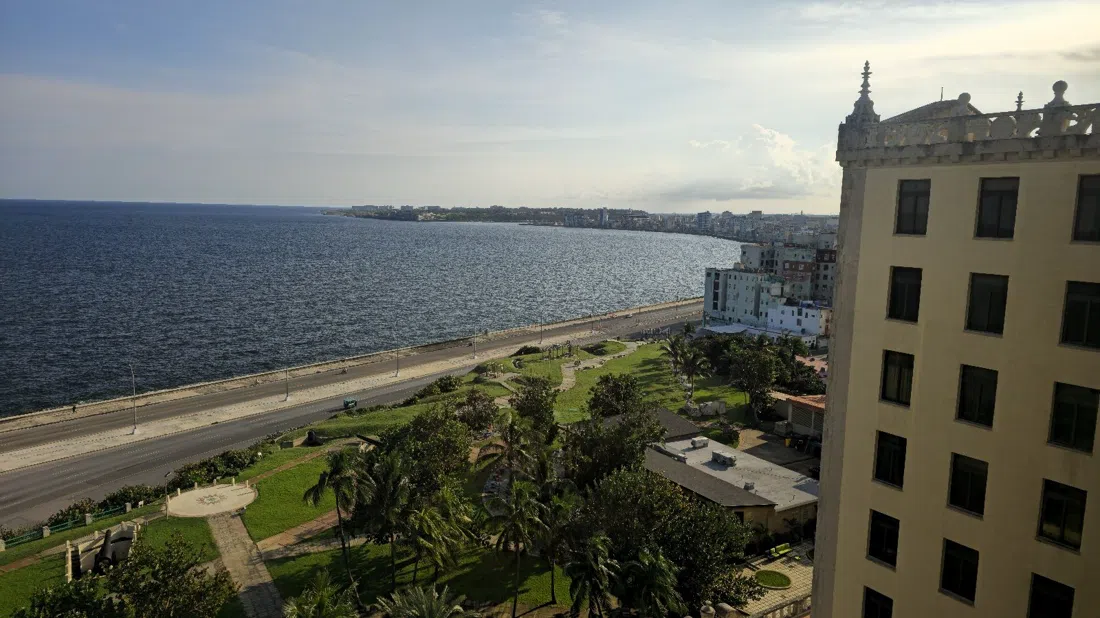
Land in the afternoon and the instinct is to plunge straight into the old town. Resist it for a few hours. The Hotel Nacional de Cuba (Vedado) stands on the Taganana headland above nineteenth-century coastal gun batteries, and its rear terrace, two rows of wicker chairs under palms facing the water, is open to non-guests with no booking and no minimum. Cocktails run about US$8-12, which is Havana's top end for a drink, and what you are paying for is the view, the shade and the fact that the building has generator backup when the grid drops. On a first evening, when you do not yet know how the city is behaving, that reliability is worth more than novelty. Inside, the Salón 1930 puts Buena Vista Social Club veterans on stage on Tuesday, Thursday and Saturday at 9.30pm; tickets are extra, and the room takes booked groups, which the terrace has no need for.
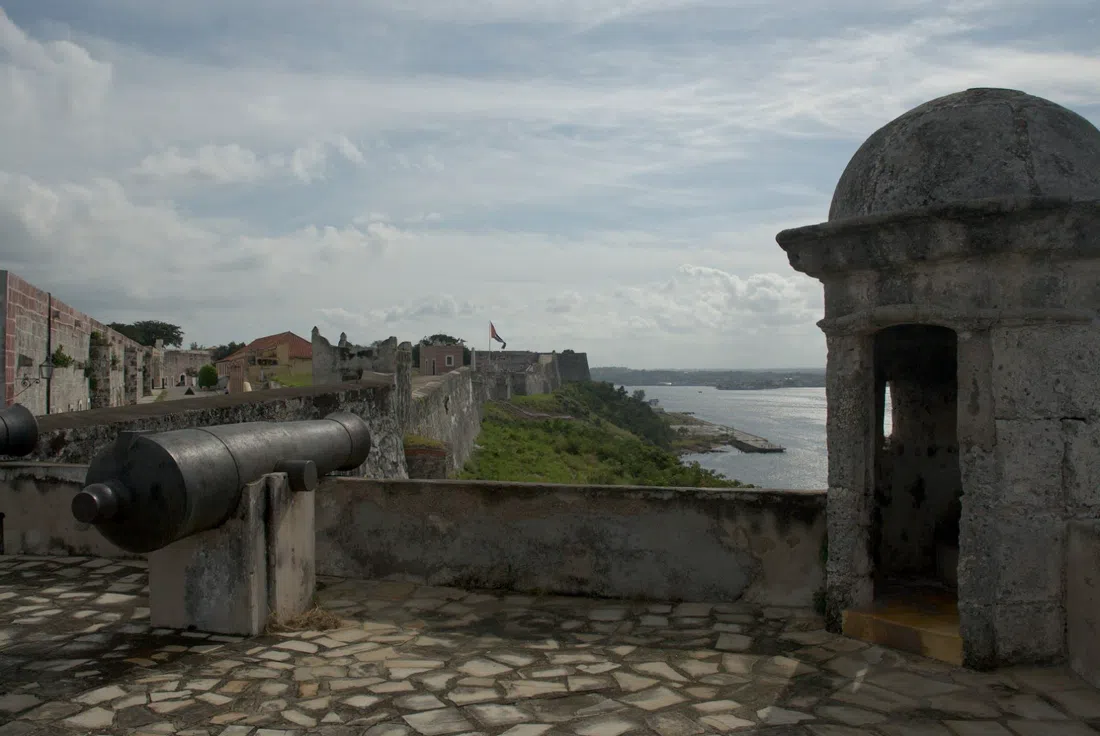
The alternative for that same slot is across the harbour. Fortaleza de San Carlos de la Cabaña (Casablanca side, reached by tunnel) fires El Cañonazo at nine o'clock every night, a ceremony inherited from the era when the shot told the city its walls were being closed. Soldiers in eighteenth-century uniform, a long slow march along the ramparts, and then a bang that you feel through the stone. Entry is roughly US$8-10 at the gate, more if a transfer is included, and a transfer is the sensible way to do it. Get there by 8pm if you want a place on the wall rather than a view of other people's phones. Arrange the ride back before you go. Taxis thin out within minutes of the crowd dispersing and the tunnel is not something you walk.
Those two events collide at 9.30pm, so pick one. The cannon is the better story; the Salón is the better music.
Dinner and the rooftops worth the stairs
La Guarida (Centro Habana) is the paladar every other paladar is measured against, and the climb up its ruined marble staircase, the one from Strawberry and Chocolate, is half the point. Book through the restaurant's own site, which charges a small handling fee per reservation, and do it well before you fly. It is reservation-only in practice; walk-ins get turned away at the door. The kitchen is serious about lobster and ceviche, mains land at roughly US$20-35, and dinner with drinks works out around US$50-70 a head. Several small salons plus a roof terrace mean a party of six to ten can be seated, though not necessarily in one room, and nothing larger should try.

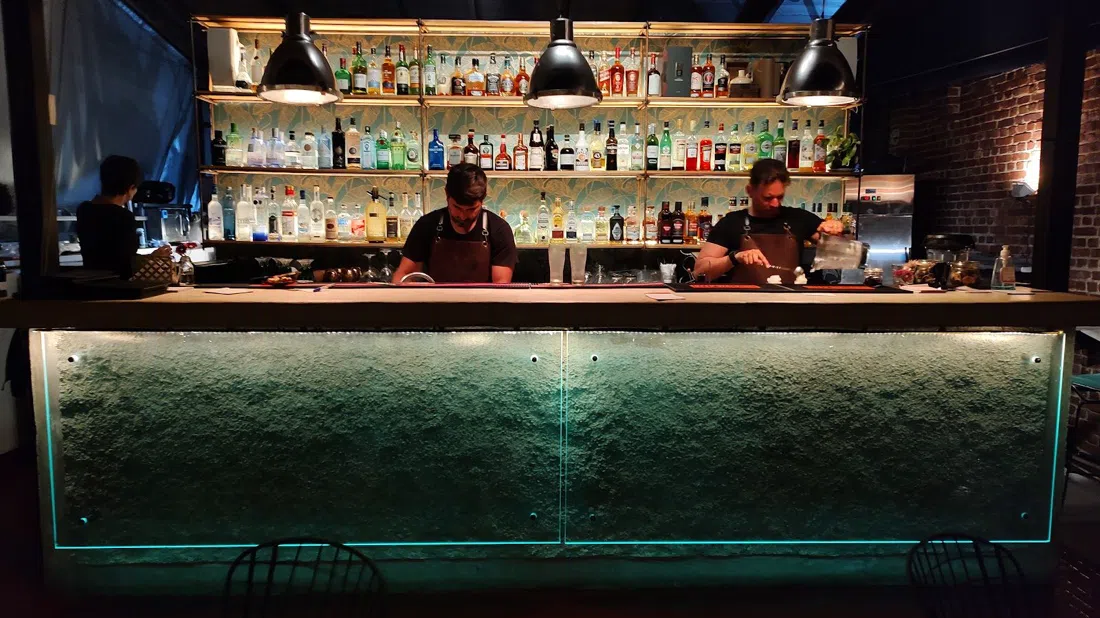
For sunset, El Cocinero (Vedado) occupies the roof of an old peanut-oil factory with its brick chimney still standing beside the tables. Cocktails around US$5-8, mains US$12-25, and the rooftop absorbs groups comfortably. Reserve anyway for more than four, and note it is closed on Sundays. Older advice is out of date on one point: the Fábrica de Arte Cubano in the same compound next door has been shut since June 2026 and now opens only for announced one-off events. Go for the dinner on its own merits and do not build the night around the gallery being there.
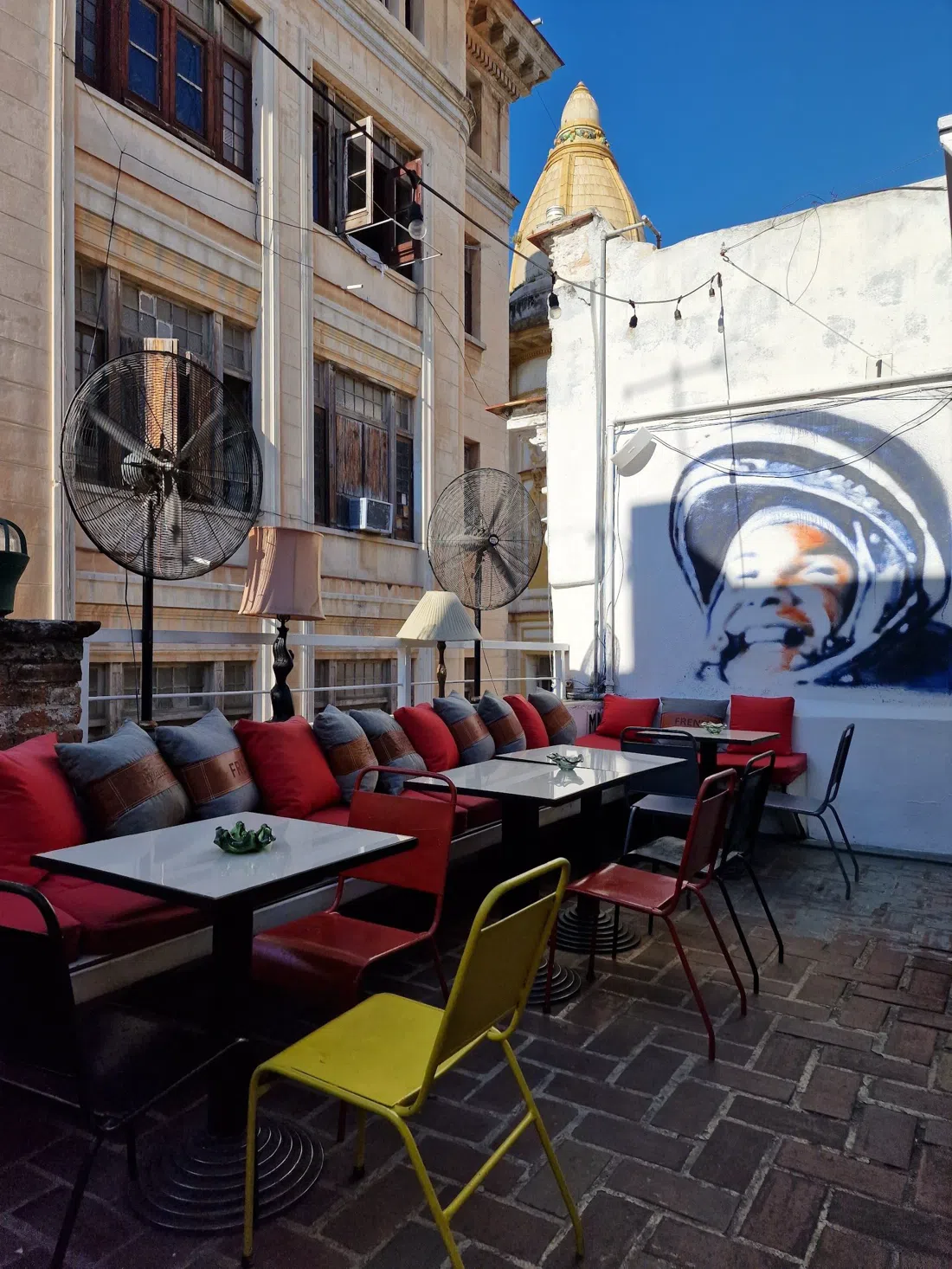
El del Frente (Habana Vieja) is where the city's own bartenders drink, which is the strongest recommendation a bar can carry. Fresh-fruit daiquiris, shrimp tacos and small plates at about US$6-12, cocktails US$4-7, and a roof that catches the last of the light off the harbour. It is a small room and the staircase is steep. Four to six people is right, eight is awkward, and when the power is down there is no lift, only the climb. Evening reservations are worth making between December and March.
Rum, beer and a bar south of the crowds
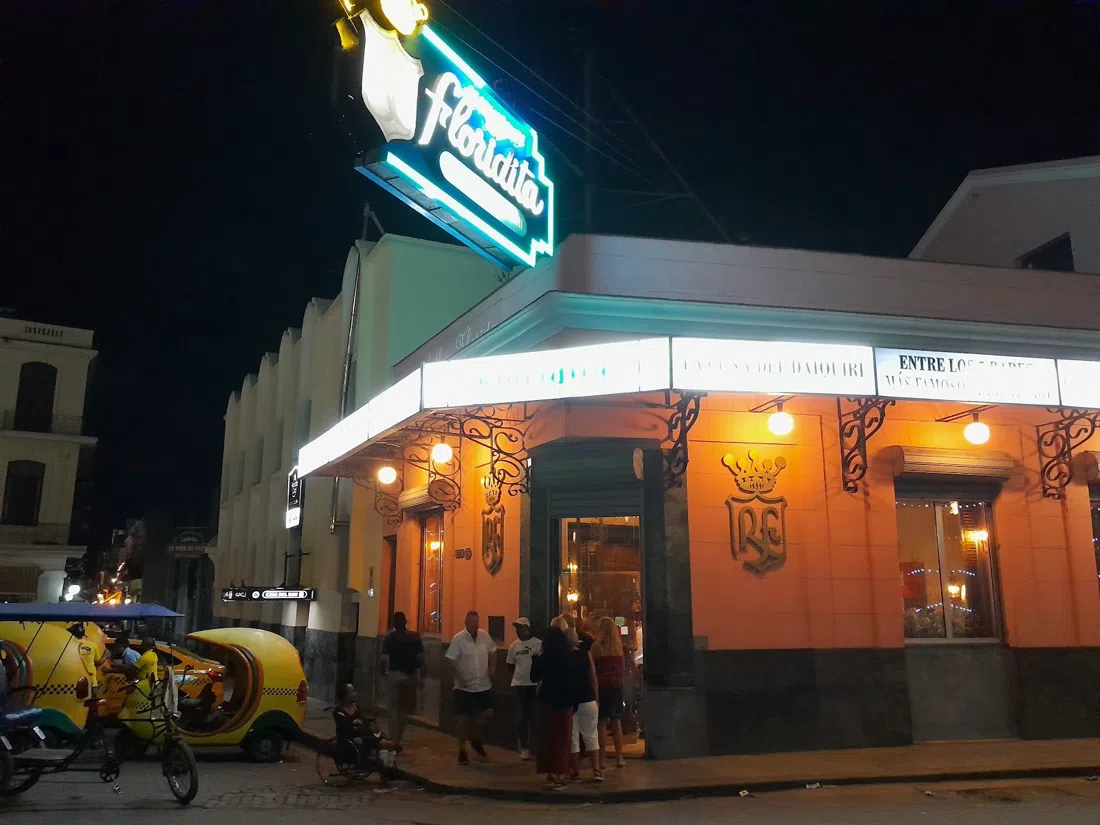
El Floridita (Habana Vieja, at the foot of Obispo) is touristy and entirely unapologetic about it. The bar takes no reservations and fills fast; the adjoining dining room does take booked groups. A frozen daiquiri costs about US$7.50 and is made properly, crushed ice and no syrup shortcut, which is not true of every bar trading on the same legend. Open daily 11am to midnight, it is the single stop that works when you have one spare hour and nothing else will fit.
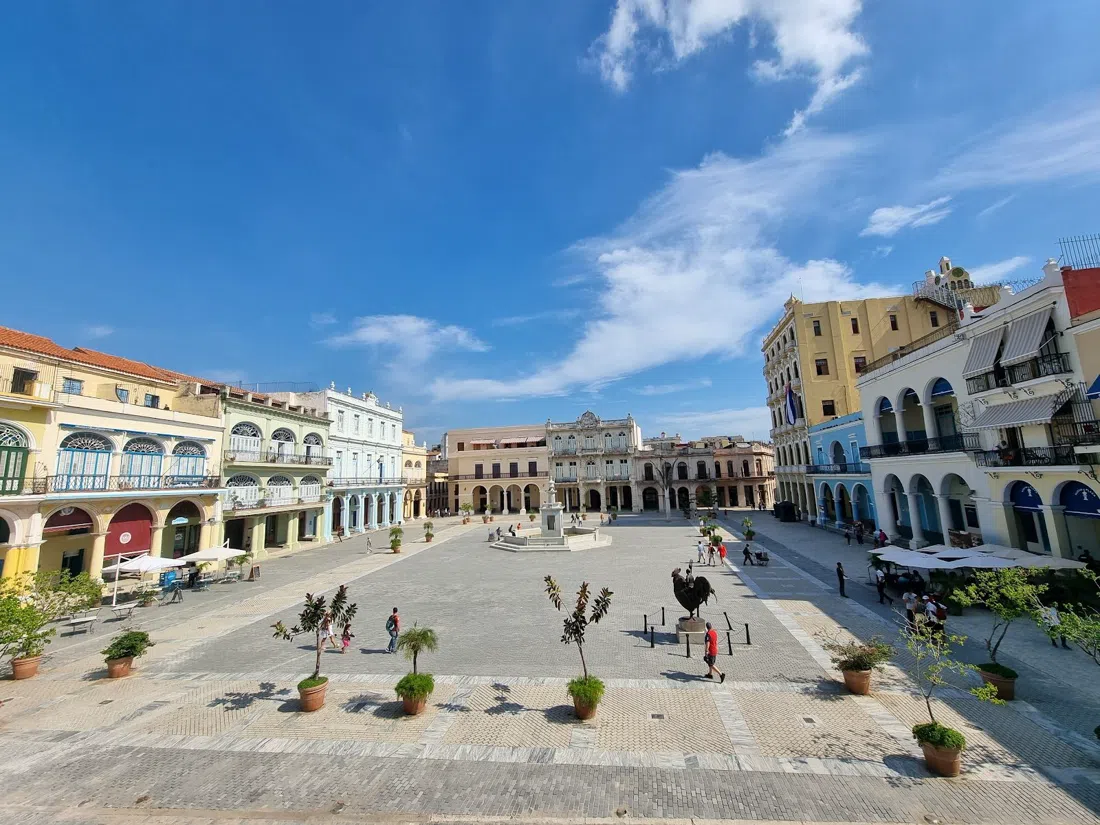
Factoría Plaza Vieja (Plaza Vieja, Habana Vieja) is Cuba's only brewpub of any note and comfortably the best large-group venue in the old town. Shared tables, no door policy, no booking, self-pour towers built for six or more. Beers run US$3-5 and a tower roughly US$12-18; there is light, dark and black on tap, plus a malta served with condensed milk that is closer to dessert than beer. One standing complaint is worth taking seriously: check the bill line by line before you pay.
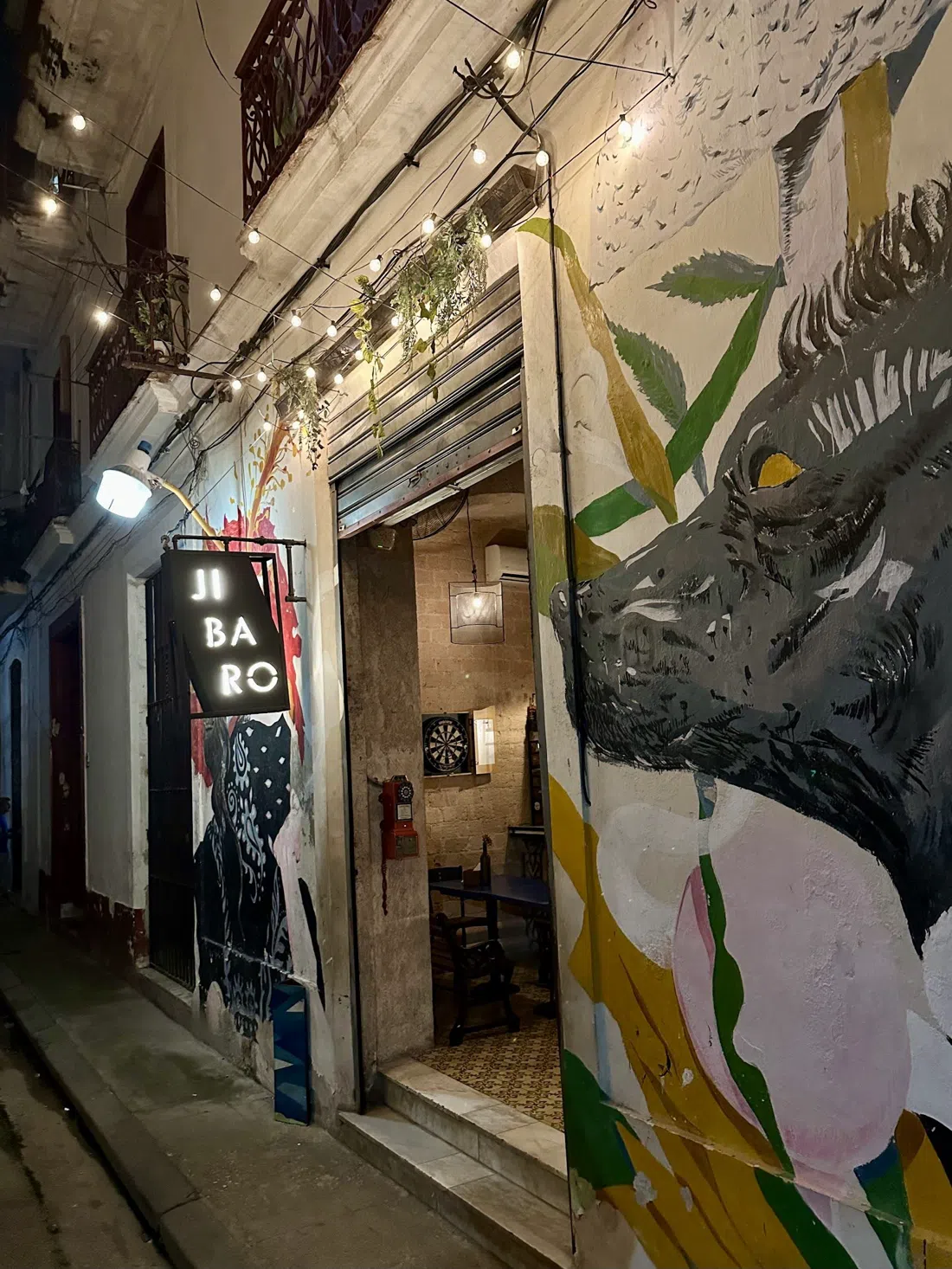
Jíbaro (southern Habana Vieja) has the most inventive drinks list in the city and, unusually, the best non-alcoholic menu in Cuba, a proper parallel list rather than a couple of juices. Cocktails are about US$5-8. It is small, so two to six is the realistic size; larger parties should book the bar's own hands-on cocktail session instead of trying to crowd the room. It sits well south of the Obispo foot traffic, so treat the walk down through the unrestored streets as part of the outing rather than a transfer to be minimised.
Where the music actually is
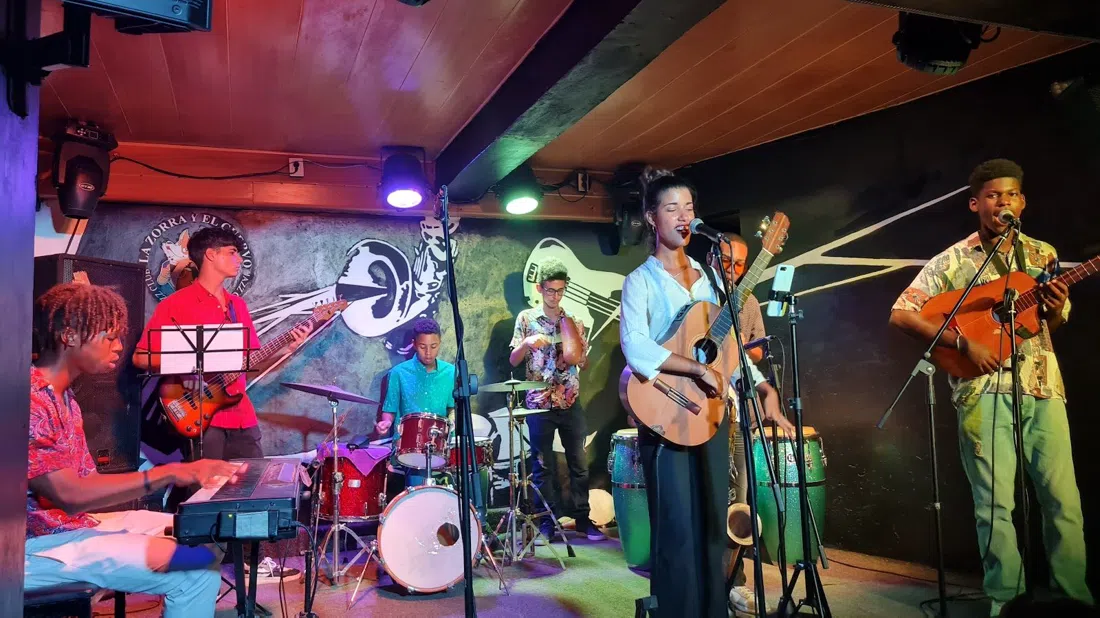
La Zorra y el Cuervo (Vedado, on La Rampa) is entered through a red British phone box on the pavement, which is the only way in. Down the stairs is a low cellar where the city's best young players work through modern fusion and traditional Cuban jazz, sets from about 10pm, cover around US$10 usually including two drinks. There are no reservations, so arrive by 9.30pm if you want a table. Four to six people fits; a large group will end up standing at the back, if it gets in at all.
Casa de la Música Habana (Galiano, Centro Habana) is the opposite: a big remodelled hall, two sessions a night at roughly 5 to 9pm and 10pm to 3am, entry anywhere from US$5 to US$30 depending on who is playing. Pay at the door. The big timba orchestras take the late slot; the afternoon session is far easier for a mixed group, and nobody minds if half of you only watch. Check which band is billed before you commit an evening, because the gap between the top orchestras and a filler act is wide.
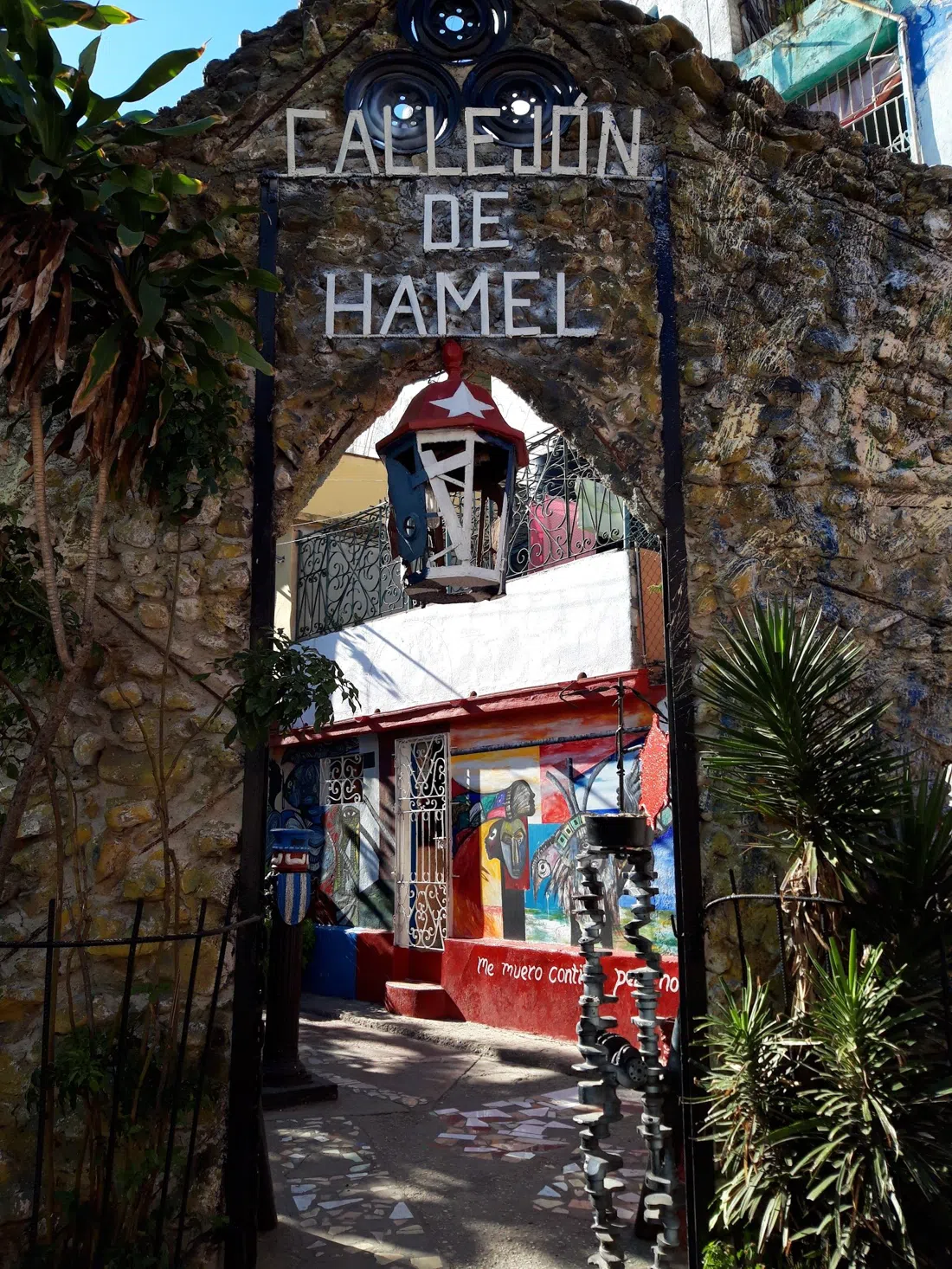
Callejón de Hamel (Cayo Hueso, Centro Habana) is Salvador González's painted alley, every surface covered in Afro-Cuban murals and salvaged-iron sculpture. It is worth walking through on any day, but the reason to come is the Sunday rumba from midday, which is over by about four. The alley is narrow, so arrive before noon if you want to be anywhere near the drums. Entry is free. Tip the musicians, and expect persistent offers of guiding. A polite no is enough and is always accepted.
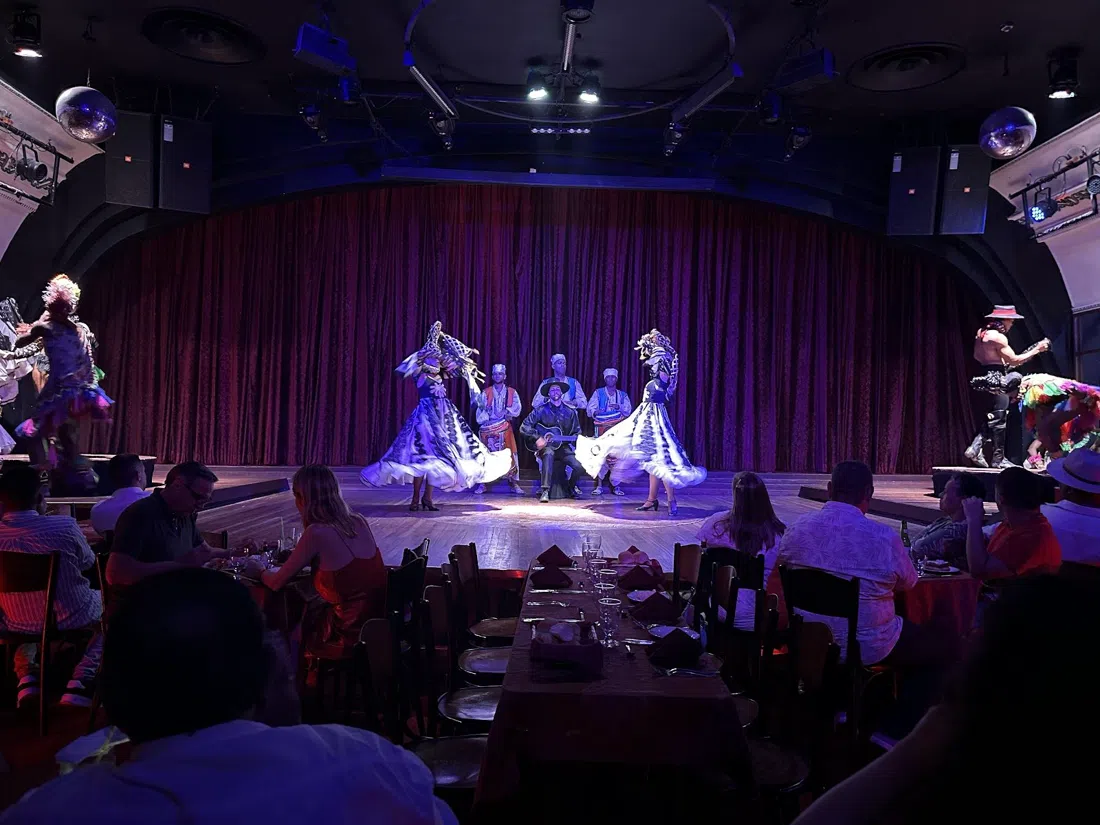
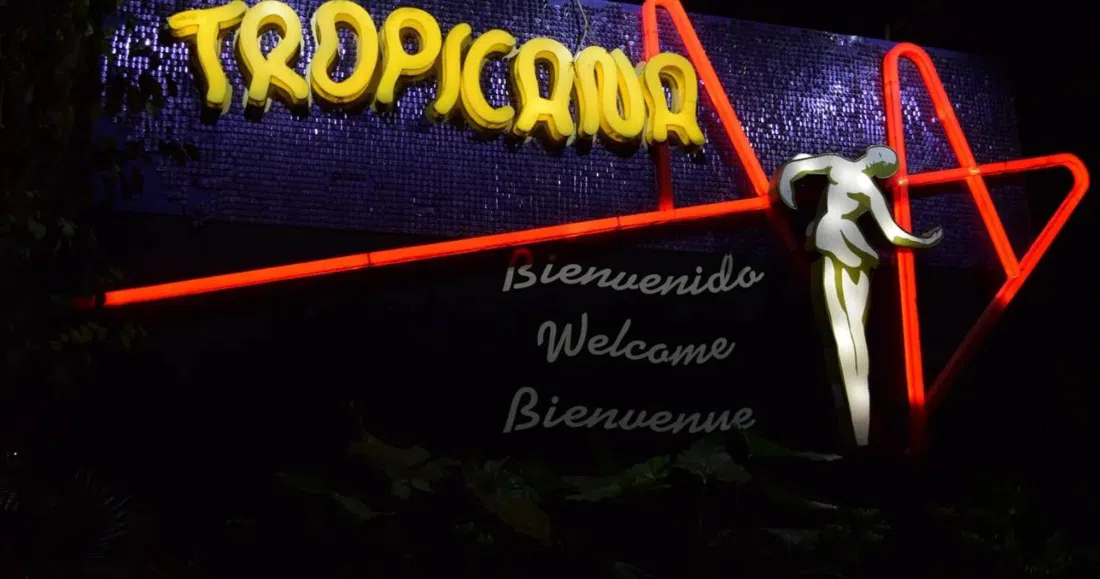
Cabaret Tropicana (Marianao, out towards the airport side) has been running since 1939 and still performs under real trees, with the 1950s staging essentially unchanged. Tickets go through its own site in tiered seating categories, roughly €75-125 and more with dinner, and it is built for groups: table seating, coach arrivals, the lot. Be clear what it costs you in time. Doors from about 8.30pm, show at 10pm, and the whole evening is gone. On a two-night trip that is a real trade. Reconfirm the date once you arrive, since power problems have forced other Havana stages to postpone.
The hours between
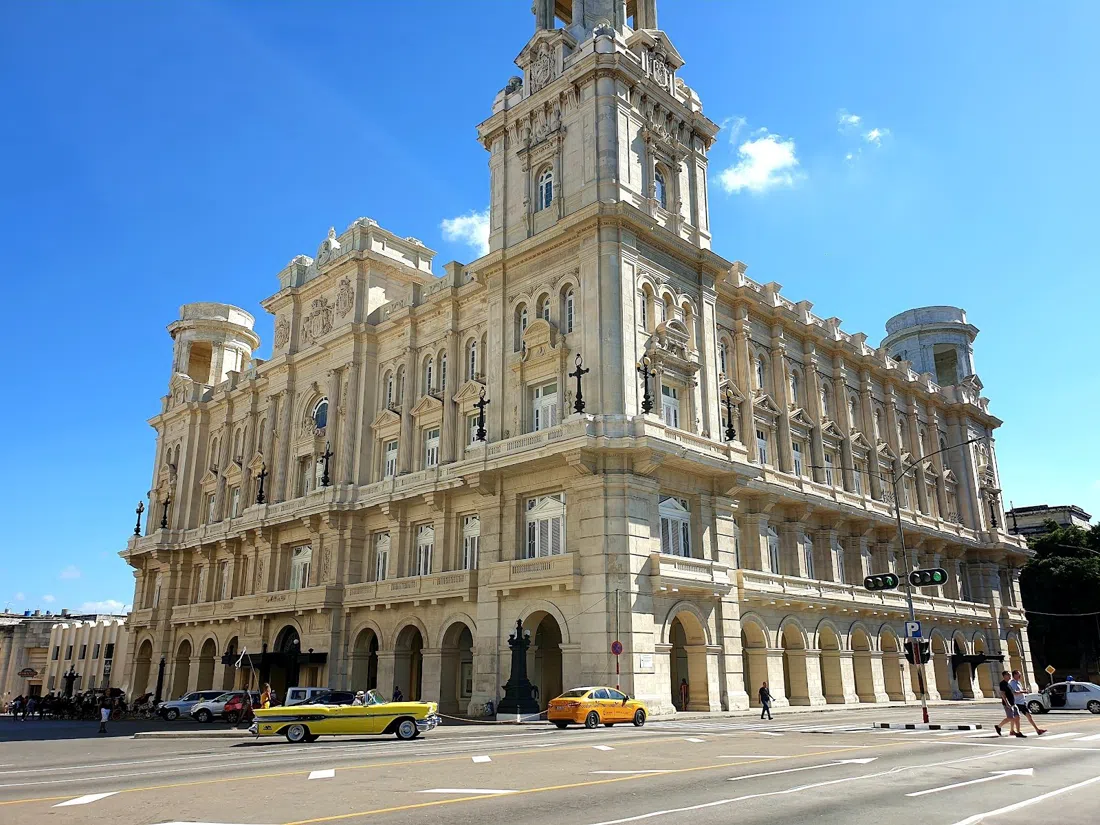
Heat and blackouts both land in the afternoon, and the fix for both is the same: be indoors somewhere good. The Museo Nacional de Bellas Artes — Arte Cubano (Habana Vieja, off the Prado) holds the deepest collection of Cuban art anywhere, and it is the single best use of a hot afternoon in this city. Entry is a few dollars, tickets at the door, guided visits available and groups are straightforward. Open Tuesday to Saturday 10am-6pm and Sunday 10am-2pm, closed Mondays. There are two separate buildings a few blocks apart. This is the Cuban one; buy the combined ticket if you also want the universal collection on Parque Central.
Museo del Ron Havana Club (Habana Vieja, on the harbour walk between Plaza Vieja and the ferry terminal) runs guided tours every fifteen minutes in several languages, thirty to sixty minutes end to end, roughly US$10-15 including a tasting of the seven-year-old. It is briskly commercial and makes no secret of it, but the working sugar-mill model and the tasting earn their keep. Book ahead in season. Keep it in your back pocket for the day the weather or the grid kills a plan.
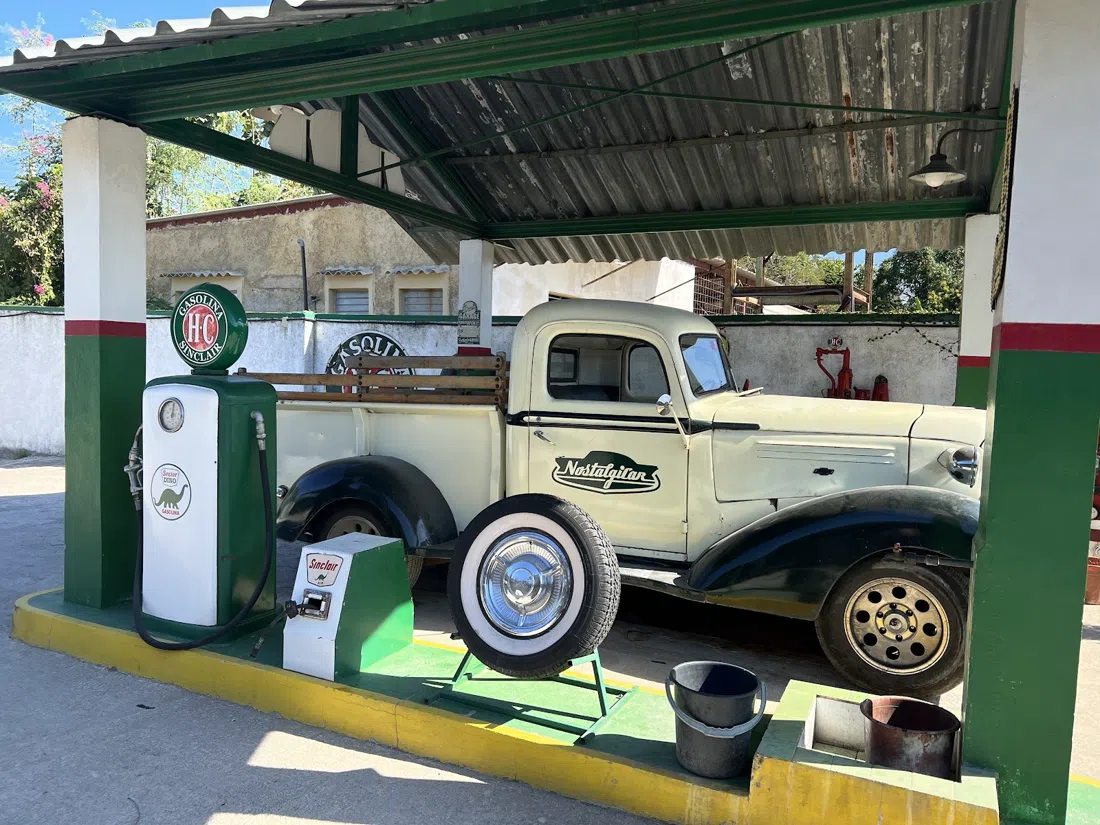
If you want the city explained while moving through it, NostalgiCar run their own restoration garage rather than sub-hiring from the rank at Parque Central, and their drivers actually guide rather than just drive. Cars seat four to five at roughly US$90-150 for a one- to three-hour run; bigger parties arrange multiple cars by WhatsApp and travel as a convoy, which is how groups normally do it here. The one- or two-hour panoramic route takes in the Malecón, Vedado and the Plaza de la Revolución, which is about as much ground as a short stay can honestly cover.
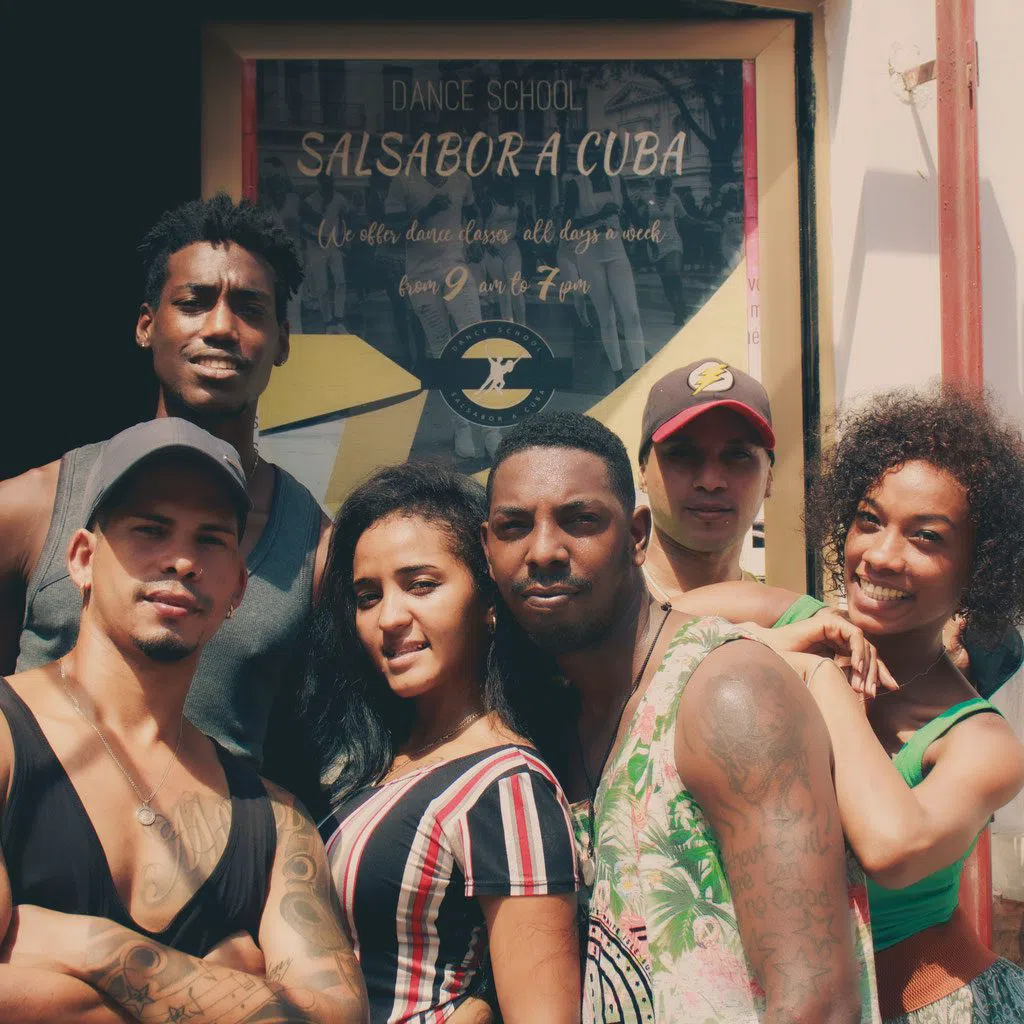
The hour that repays you most, though, may be at Salsabor a Cuba (eight minutes' walk from Parque Central). Private classes are about US$18 an hour, group lessons about US$16 from five people upward, seven days a week, 9am to 7pm on their own schedule. One lesson changes the rest of the trip: you can follow the floor at Casa de la Música that night instead of standing at the edge of it. The school runs whether the grid is up or not.
Two nights, in order
Day one, arrive and go west. Terrace drinks at the Hotel Nacional, then either the Cañonazo or the Salón 1930, then dinner at El Cocinero if you stayed in Vedado. Finish in the jazz cellar.
Day two, walk Habana Vieja in the morning, take the rum museum or Bellas Artes through the worst of the heat, a salsa class late afternoon, then the climb to El del Frente for the light and small plates, and Factoría or Jíbaro afterwards depending on how many of you there are. If it is a Sunday, move the morning to Callejón de Hamel and be there before noon.
Day three, if you have a late flight, that is when La Guarida or the classic-car drive fits. Both are bookable in advance and neither depends on the evening surviving.
Doors, groups and honest expectations
The splits are clean here. Couples and pairs get the better end of Jíbaro, El del Frente and La Zorra y el Cuervo, all of which are small rooms that fill. Groups of six and up are properly served by Factoría Plaza Vieja, Casa de la Música, the Tropicana and a NostalgiCar convoy, none of which will flinch at the numbers. La Guarida sits in between: six to ten, split across salons, booked weeks out. Nowhere in this piece runs a dress-code door, and nowhere will turn you away for how you look. The two things that will turn you away are La Guarida without a reservation, and any small room that is already full.
The practical part
Bring cash and bring more than you think. Card acceptance is patchy to non-existent at the places in this article, US-issued cards do not work at all, and most prices are quoted to visitors in dollars or euros. Split your money across two places and carry small notes. Change is a real problem, and a large note at a bar often becomes a rounding error in the venue's favour.
Transport is classic taxis and private cars, none of them metered. Agree the fare before you get in, in the currency you will pay in, and agree the return leg in advance for anything outside the three central districts, La Cabaña and the Tropicana in particular. Within Habana Vieja, walk; Vedado to the old town is a ten to fifteen minute drive.
On timing, December to March is the dry season and the only period when evening reservations are genuinely competitive. Plan around blackouts rather than hoping: carry a torch, choose at least one venue each night that has its own generator, and keep the rum museum and Bellas Artes as swaps when an afternoon collapses. If you want a base with backup power and a short walk to the Prado, start with a Havana hotel search and filter for the Vedado and Habana Vieja edges rather than the far suburbs.
On budget, two nights done properly without the cabaret comes to roughly US$180-260 a head for food, drinks, covers, a class, a museum and the cannon, excluding accommodation and airport transfers. Add the Tropicana and that figure moves by €75-125 in one step. It is the single biggest line item on a short stay, and the only one you can drop without losing anything essential.
Questions
Is two nights actually enough for Havana?
It is enough for one city, not for the country. Two nights covers Habana Vieja on foot, one long evening in Vedado, a classic-car run past the Plaza de la Revolución and either the Cañonazo or a cabaret. It will not cover Viñales, Trinidad or the beaches, and adding them turns the short stay into a day spent in a car.
Which places do I have to book in advance?
La Guarida is reservation-only in practice through its own booking site, with a small handling fee per booking, and walk-ins are turned away. Cabaret Tropicana sells tiered seating online in advance. El Cocinero and El del Frente want a reservation for parties over four, particularly December to March. Everything else in this article (El Floridita, Factoría Plaza Vieja, La Zorra y el Cuervo, Casa de la Música, Callejón de Hamel) takes you at the door.
What do I do when the power goes out?
Assume it will happen and have swaps ready rather than treating it as an emergency. The Hotel Nacional terrace has generator backup, Salsabor a Cuba runs regardless, and Museo del Ron Havana Club and the Bellas Artes Cuban building are indoor, ticketed and reliable. Avoid a rooftop with no lift, such as El del Frente, when the grid is already unstable: the climb back down in the dark is steep.
Do I need cash, or will a card work?
Bring cash. Card acceptance at paladares, bars and clubs is patchy at best, cards issued by US banks do not function in Cuba at all, and prices for visitors are generally quoted in dollars or euros. Carry small notes as well, because change is scarce and a big note handed over at a busy bar often comes back short.
Tropicana or the Cañonazo if I only have room for one?
The Cañonazo, unless a 1950s floorshow is specifically why you came. The nine o'clock cannon at La Cabaña costs roughly US$8 to 10 at the gate and takes about ninety minutes including the walk along the ramparts, which leaves the rest of the evening intact. The Tropicana runs €75 to 125, and more with dinner, with doors from 8.30pm for a 10pm show, so it consumes the whole night, a heavy trade when you only have two.
First published on thehavanaguide.com, the Havana guide.