By the middle of September the fig trees inland from Sant Rafel look as though they are being held up by hand. Each canopy spreads wide and low, barely above head height, and beneath it a ring of forked wooden props takes the weight of branches gone heavy with fruit. Stand in that shade at nine in the morning, before the heat has properly arrived, and you are standing in the oldest working part of Ibiza.
The shape of an Ibizan fig tree
Wherever this island was farmed, more or less the same handful of trees did the work: figs, almonds, carob and olives, with vines and a cereal patch worked in between them. The fig is the one you can read at a glance. Ibizan farmers train the canopy outwards rather than upwards and then prop it with cut forked branches, so the tree ends up as a low green dome resting on a circle of wooden legs. The reasons are practical. Fruit stays within reach of someone standing on the ground, the shade falls on the soil and on whatever livestock is sheltering under it, and the branches do not snap when the crop comes in all at once.
There are two harvests. An early, sparse crop appears on last year's wood in the first part of summer; the main one arrives from late August and runs through September, sometimes into the first week or two of October. That second wave is the one worth planning around. What a farming household did not eat fresh was dried in the sun on cane racks and boxed for winter, and what the family did not keep went to the animals. This is simply what a tree crop looks like in a place that has depended on it for a very long time.
September is also when the island changes gear. The sea is still warm, the inland lanes are quiet again, and the produce that has been ripening all summer finally turns up on tables. The season is short and specific, and it works best if you organise a few days around mornings rather than evenings.
Where the figs actually change hands
Almost every fig tree you will see from the road belongs to somebody. They stand in fenced fields, behind dry-stone walls, in the yards of houses that have been farmed by the same families for generations. Helping yourself is theft, and it is read as theft. Real access to the crop comes two ways: you buy it, or you walk with someone who has permission. Both are easy.
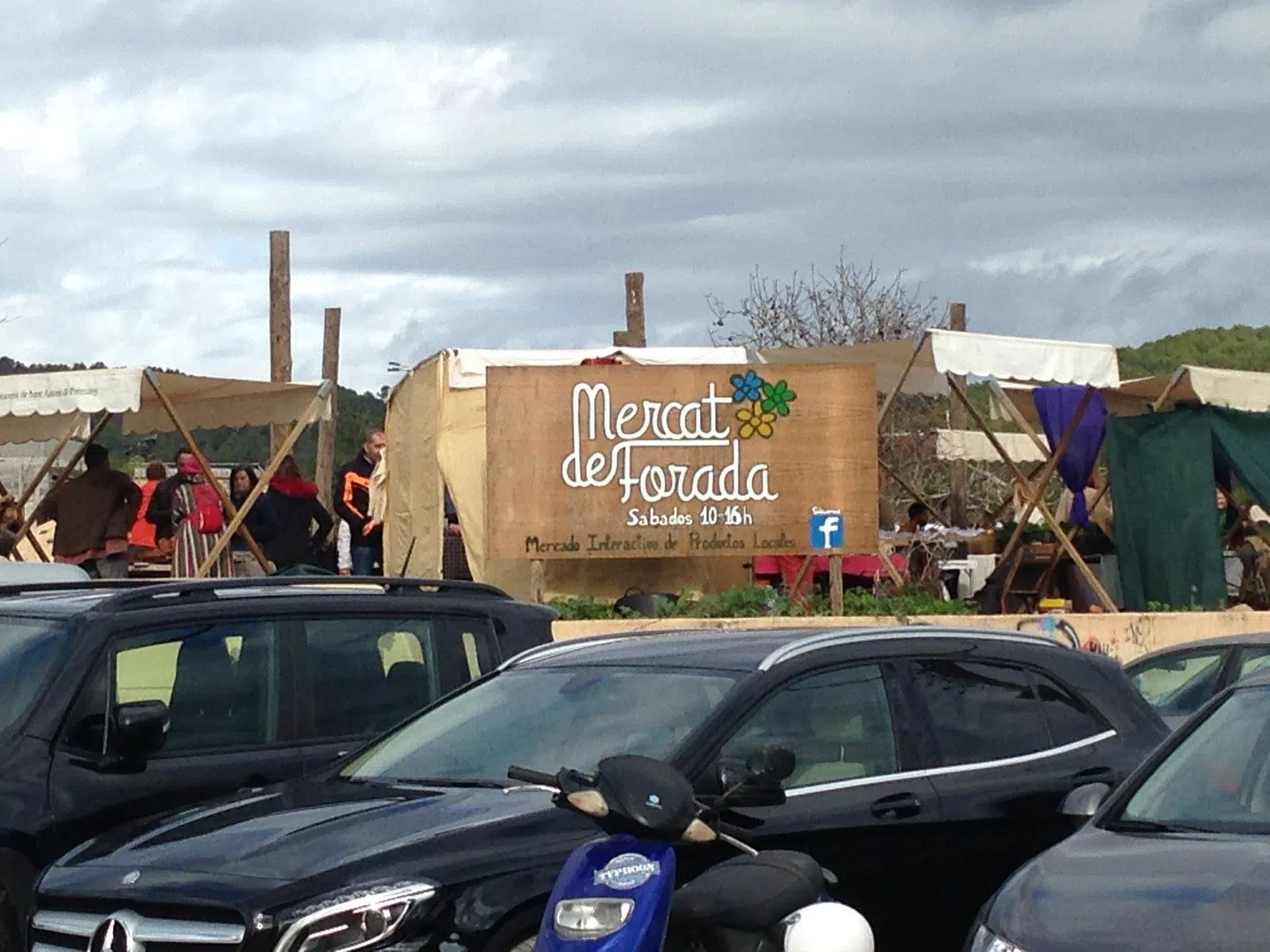
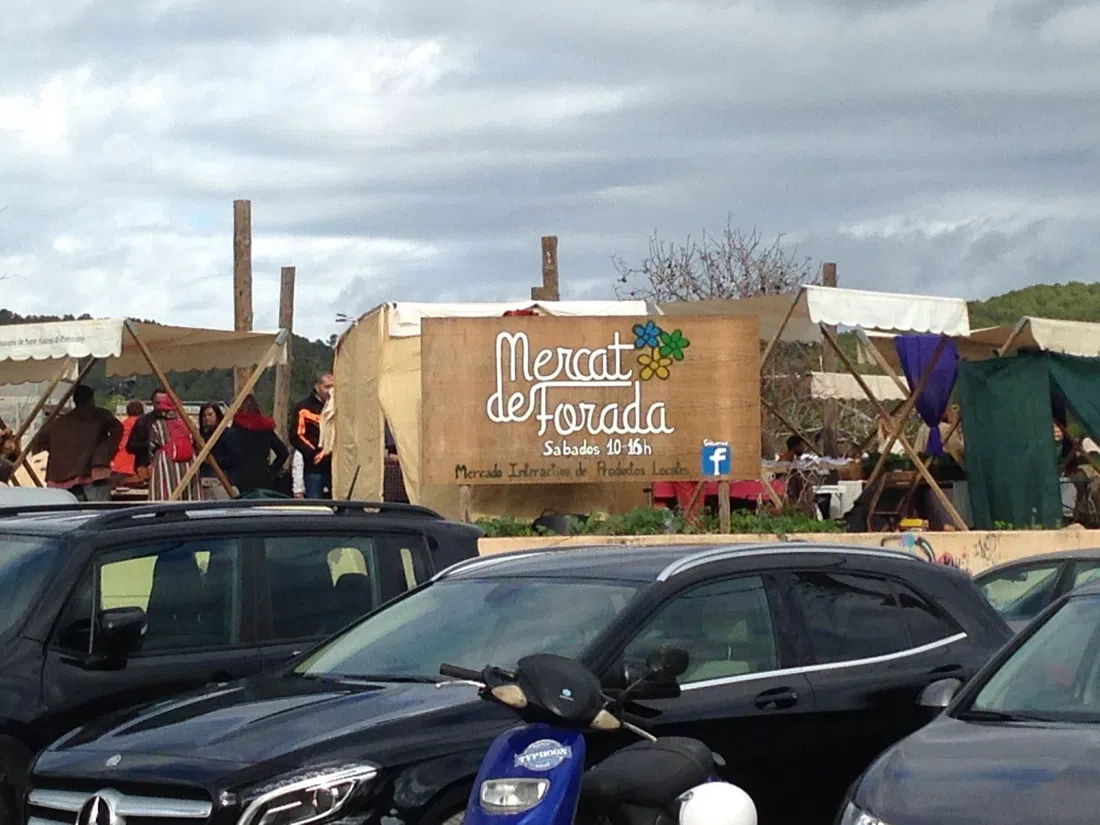
Mercat de Forada (Forada, inland between Sant Rafel and Buscastell) is the one to build a Saturday around. It runs every Saturday from 10:00 to 15:00 across 2026, from 3 January to 19 December, and entry is free. Of all the island's markets this is the most agricultural: the late-summer figues negres appear here on the tables by the kilo, at a few euros, rather than as three slices arranged on somebody's brunch. Groups of any size can simply turn up; the only constraint is parking, which means the verges of a narrow lane. Arrive before eleven, leave the car further out than feels necessary, and walk the last few hundred metres.
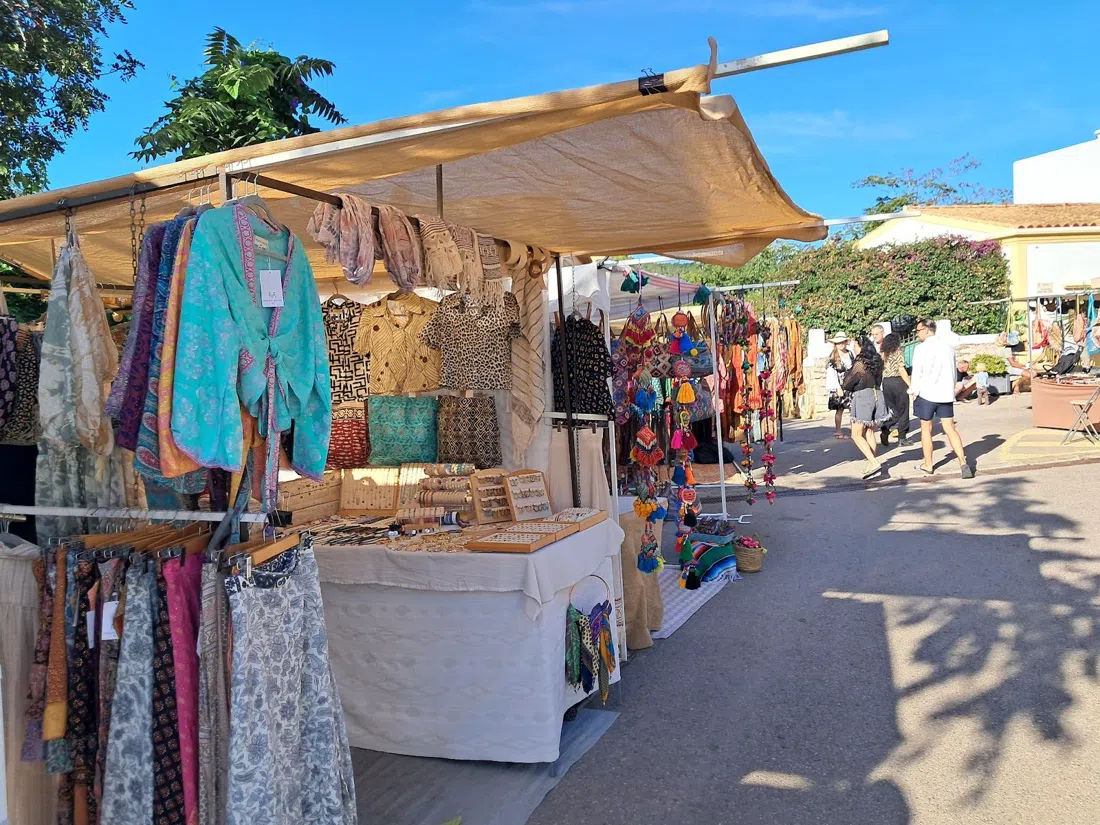
Mercadillo de Sant Joan (Sant Joan de Labritja, in the north of the island) takes the Sunday slot, roughly 10:00 to 16:00 year-round, though the market's own Instagram lists 09:30 to 15:30 and the stallholders behave more like the second timing. It is free, street-based, family-friendly and wheelchair accessible. Organic smallholders from the northern valleys set up alongside the craft stalls, and September is when their fig, almond and carob crop surfaces. Groups are fine, but go early: the market occupies one village street and that street jams solid by noon.
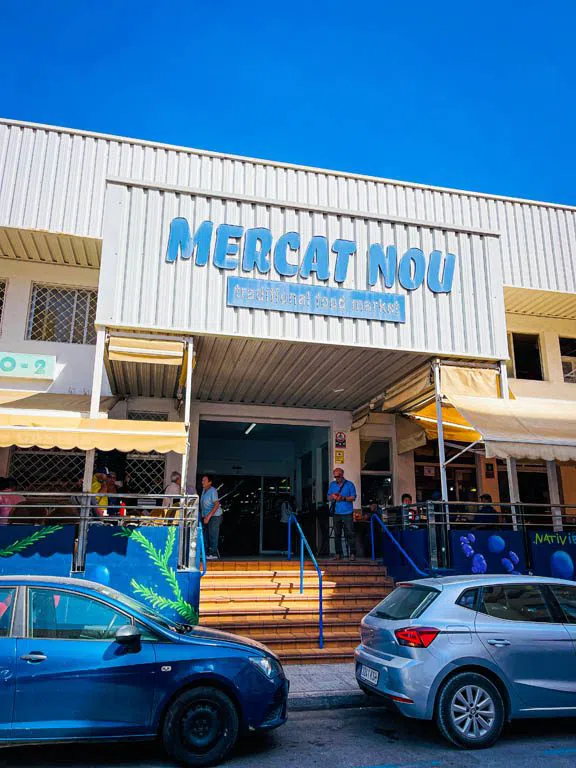
Mercat Nou d'Eivissa (Ibiza Town, in the new town rather than the old walled quarter) is the weekday answer, the working covered produce market, open Monday to Saturday mornings until about 14:00, no door policy, free to enter. If you are self-catering, this is where to buy fruit for the week. The picturesque Mercat Vell on Plaça de la Constitució is still closed for its €3.8m rebuild, with its traders decanted to Plaça Sota Vila, so do not walk down there expecting a market.
Walking into the fig country
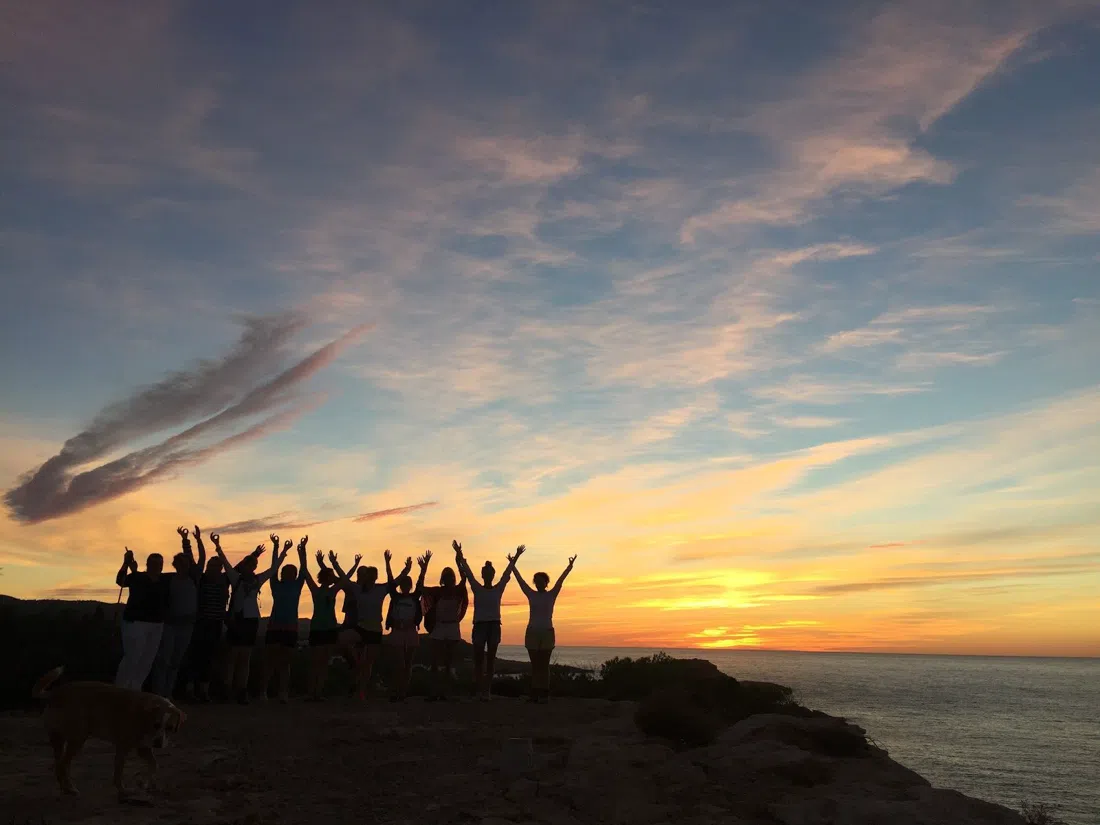
If you want to be among the trees rather than in front of a stall, go with a guide. Ibiza Outdoors (island-wide, formerly trading as Walking Ibiza) is Toby Clarke's operation, and the current name is the one to use when you contact them. They run open community walks that anyone can join on a donation basis (€15, €20 or €25) and private walks from around €320 for one to ten people, plus €30 for each extra head, with a team of about fifteen guides working in season. Their most popular outing is the hierbas ibicencas walk and workshop, where you forage the wild herbs and bottle your own liqueur at the end of it. The same guides know the fig country intimately, so ask, when you book, for a September route that goes through the tree crops.
On your own, the inland lanes between the northern villages make good slow cycling in the last hour of morning light: low traffic, high walls, long views over terraces. They are also narrow, unlit and hillier than the coast suggests, so ride early, carry more water than you think you need, and do not plan on covering distance.
Eating under the tree
Es Ventall (Sant Antoni, with entrances on Calle Soledad and Calle Cervantes) is the single most on-theme table on the island. José Miguel Bonet has been cooking Pitiusan food here for more than thirty-five years, much of the produce comes from the restaurant's own garden, and you eat under a fig tree rather than under a photograph of one. It is in the Michelin Guide and runs at roughly €50 to €80 a head. Two street entrances make it unusually easy for a party to arrive at once, and groups are taken by reservation. It closes on Wednesdays, so check the day before you build an evening around it.
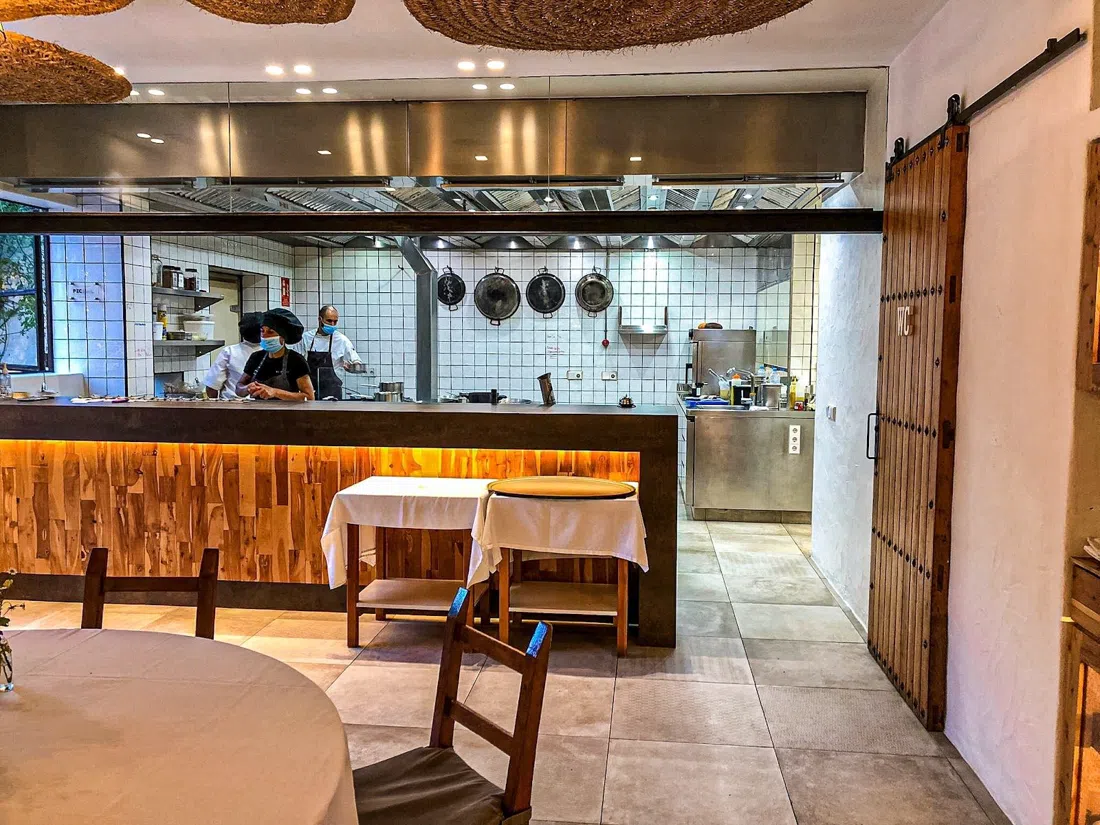
Casa Maca (Can Suldat, ten minutes inland from Ibiza Town) is the other place where the fig trees are part of the grounds you are sitting in. It opened for the 2026 season on 23 April and works as an open-air grill attached to a small rural hotel, at about €50 to €80 a head. It runs as two different places on the same site: evenings bring DJs, live music and a louder room, while lunch is quieter, slower and much closer to the agricultural visit you came for. Groups are welcome, but book a long table well ahead.
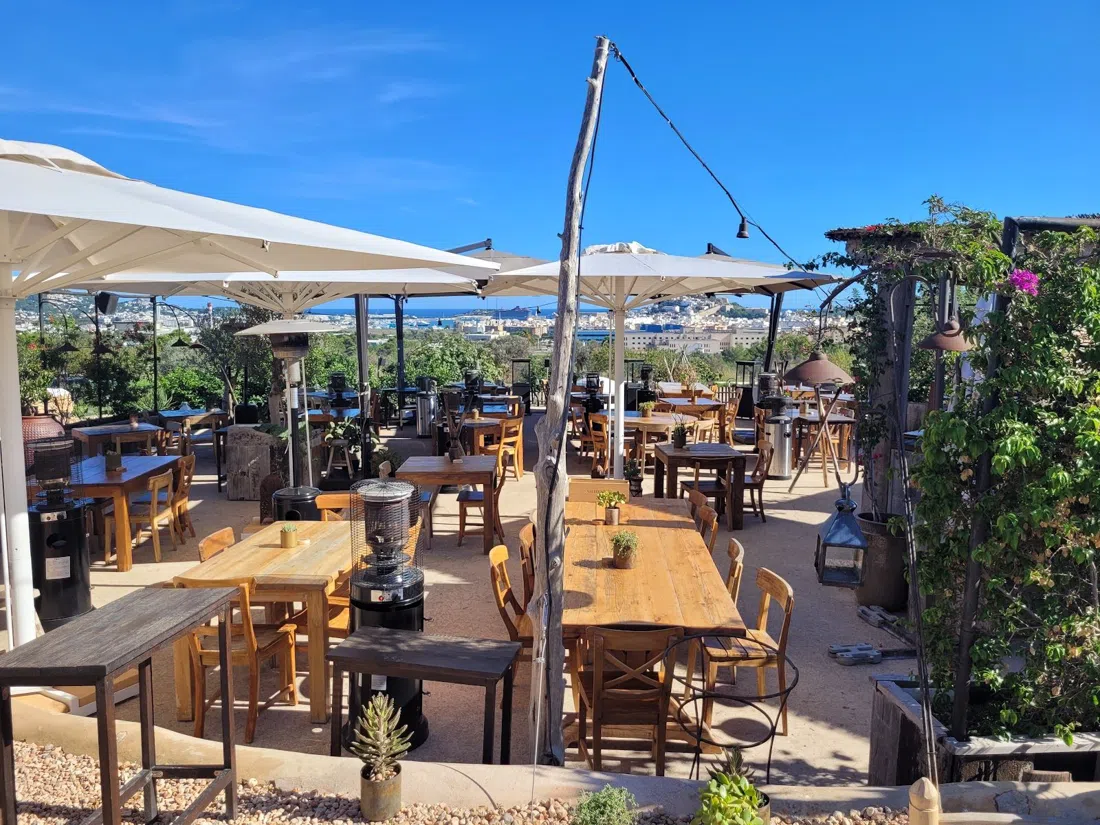
Atzaró Agroturismo Hotel (Sant Llorenç, on the Sant Joan road) reopened for the 2026 season on 14 March and is running now. Its orchards and kitchen garden feed the kitchen directly, which in practice means late-summer fruit reaching a plate the day it comes off the tree. The restaurant is open to non-residents for breakfast, lunch and dinner by booking, at roughly €50 to €90 a head; rooms are priced as a luxury rural hotel. It is the best set up of any of these for a group or a private event.
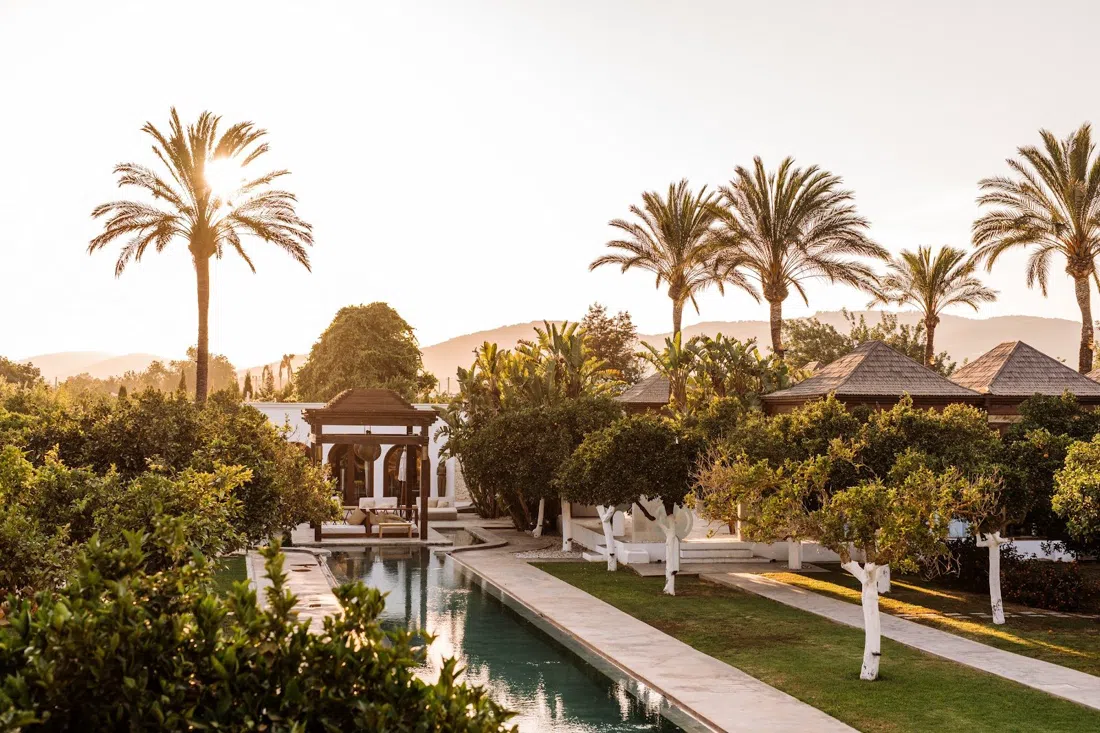
The farm kitchens worth a reservation
Can Domo (in the countryside near Santa Eulària des Riu) is the quality anchor. It is a Michelin Guide room overseen by Javier Sanz and Juan Sahuquillo, sitting on a fifteen-hectare estate with its own organic garden and olive oil, and it treats native Balearic produce with the seriousness usually reserved for expensive protein. It is reservation-led fine dining in tasting-menu territory, so prices are high, small groups are straightforward, larger parties need arranging in advance, and a walk-in will not get a table.
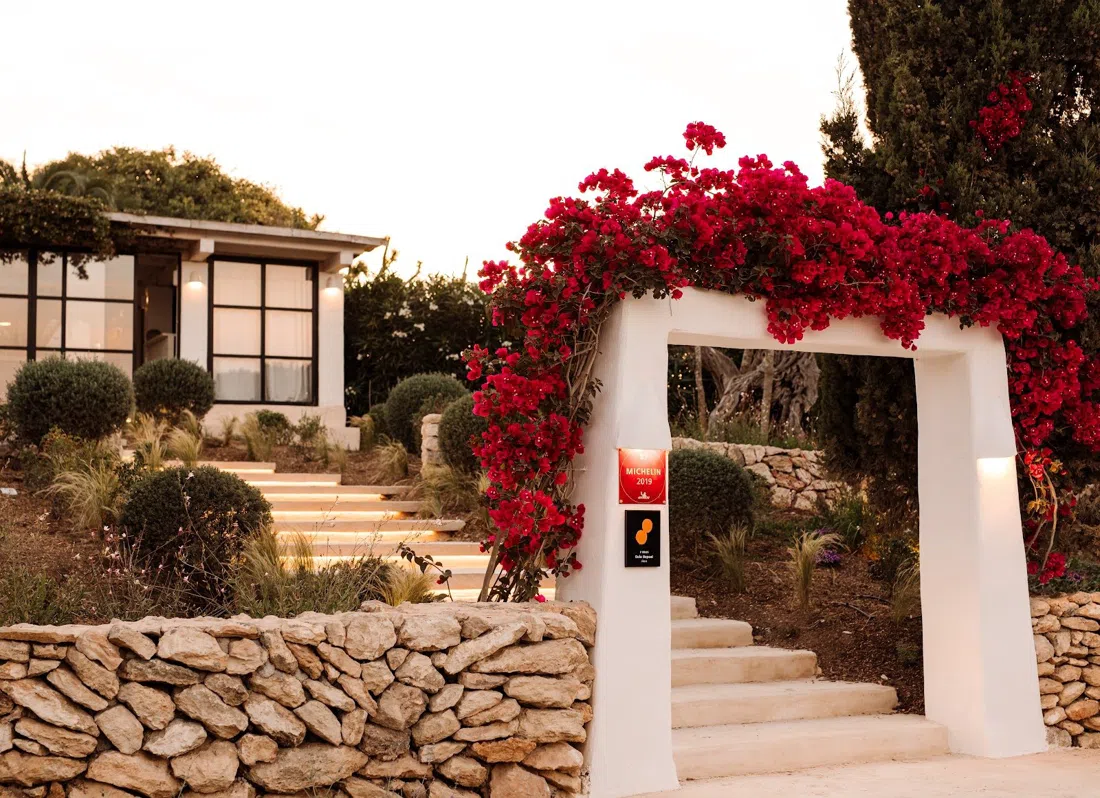
Es Cucons (Santa Agnès de Corona) sits in the valley that more or less defines the island's tree-crop country. Sisters Maria and Barbara have run it since 2000: fifteen rooms only, local organic seasonal cooking, and retreats hosted in a Bedouin-style tent. The restaurant does take non-resident diners, but capacity is small and dining is not guaranteed to outside guests on every date, so phone ahead on +34 971 80 55 01 rather than turning up hopeful. Upper-mid to high.
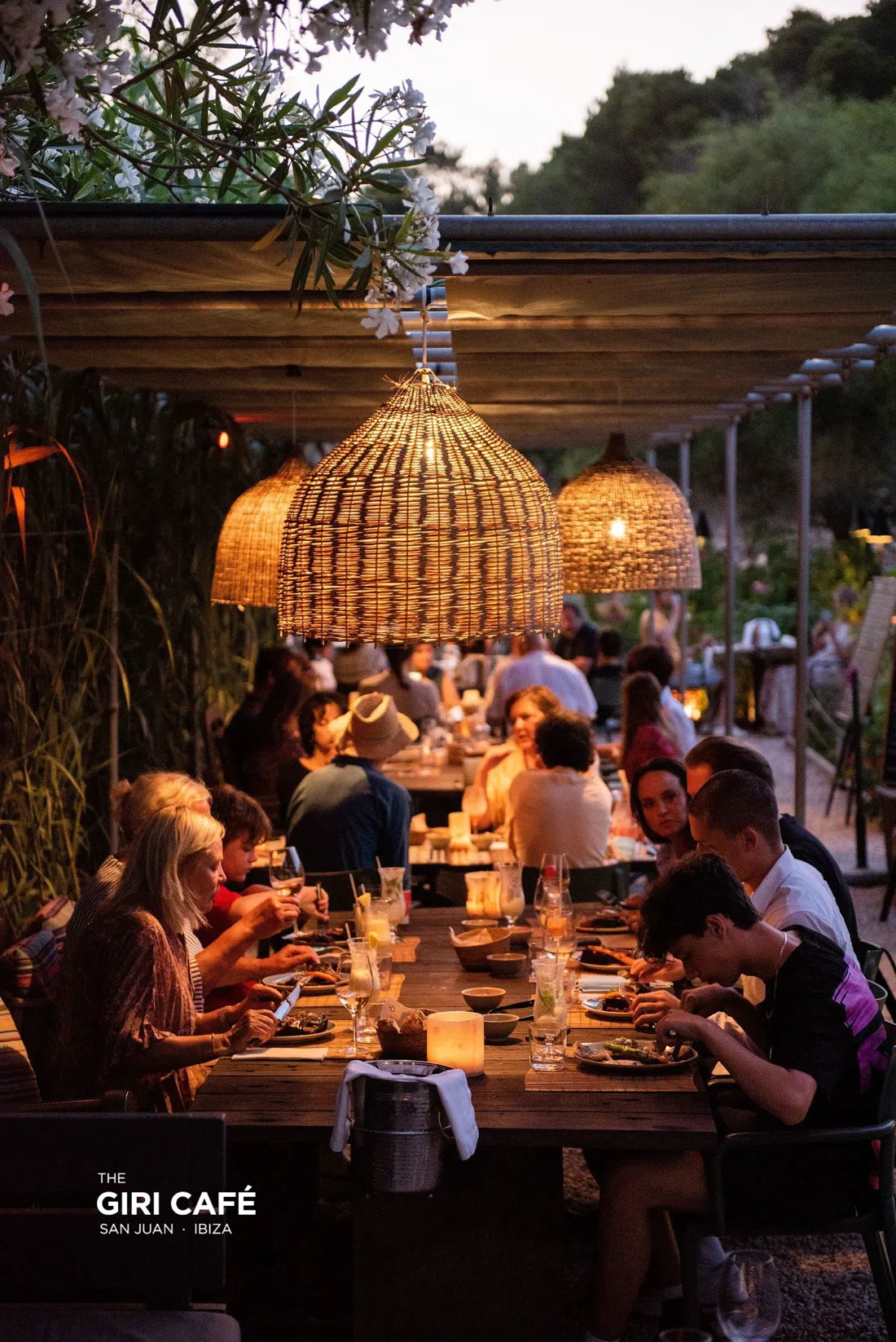
The Giri Café (Sant Joan de Labritja, on the village square) reopened on 1 April 2026 with a new menu, drawing on its own kitchen garden and the nearby Giri Farm. It is the natural lunch after a Sunday morning of fig-buying, because it sits on the same square as the market. Sharing plates suit groups well and it runs at roughly €35 to €60 a head; book if you want the garden rather than a pavement table.
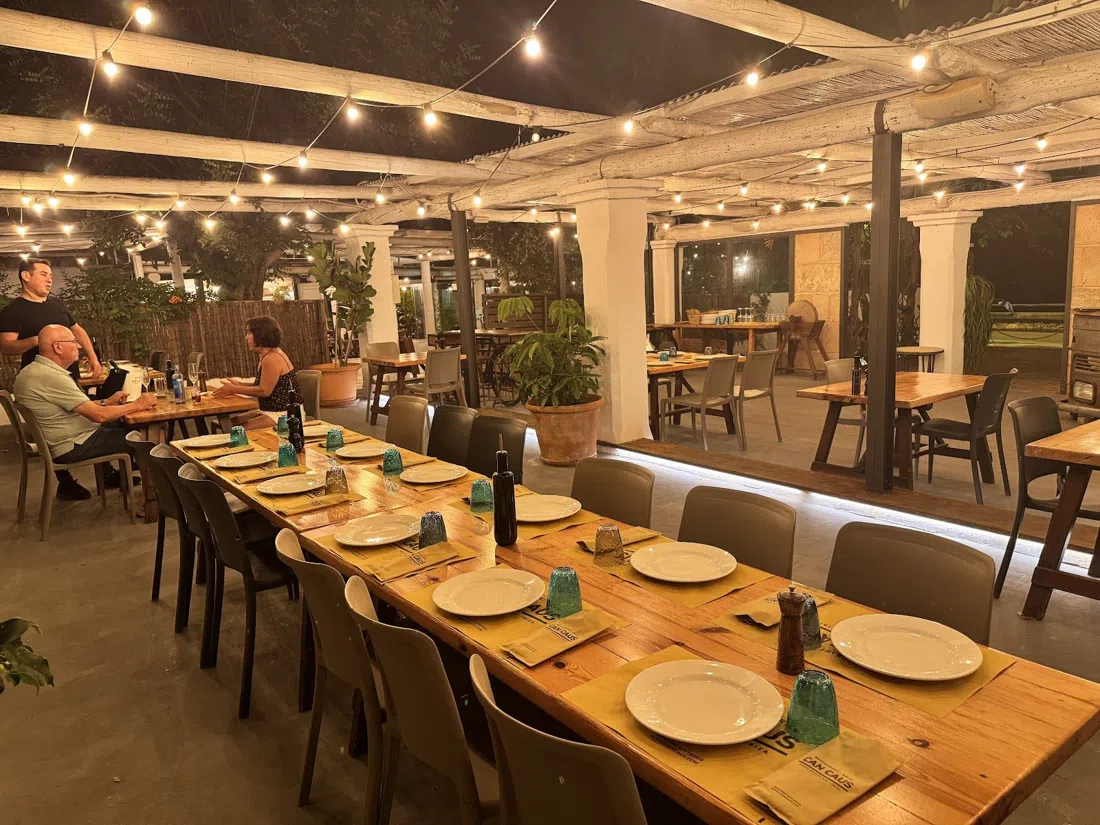
Can Caus (Santa Gertrudis, on the Sant Miquel road) is the value pick and open all year, 13:00 to 16:00 and 19:30 to 23:30 daily. It is a working recovery project for traditional Ibizan products rather than a restaurant with a rustic theme: island-raised kid and lamb, its own dairy, garden salads, and a shop selling the preserved and dried half of the harvest. Group-friendly, and one of the better-value proper meals on the island. The shop is where to buy something dried to take home.
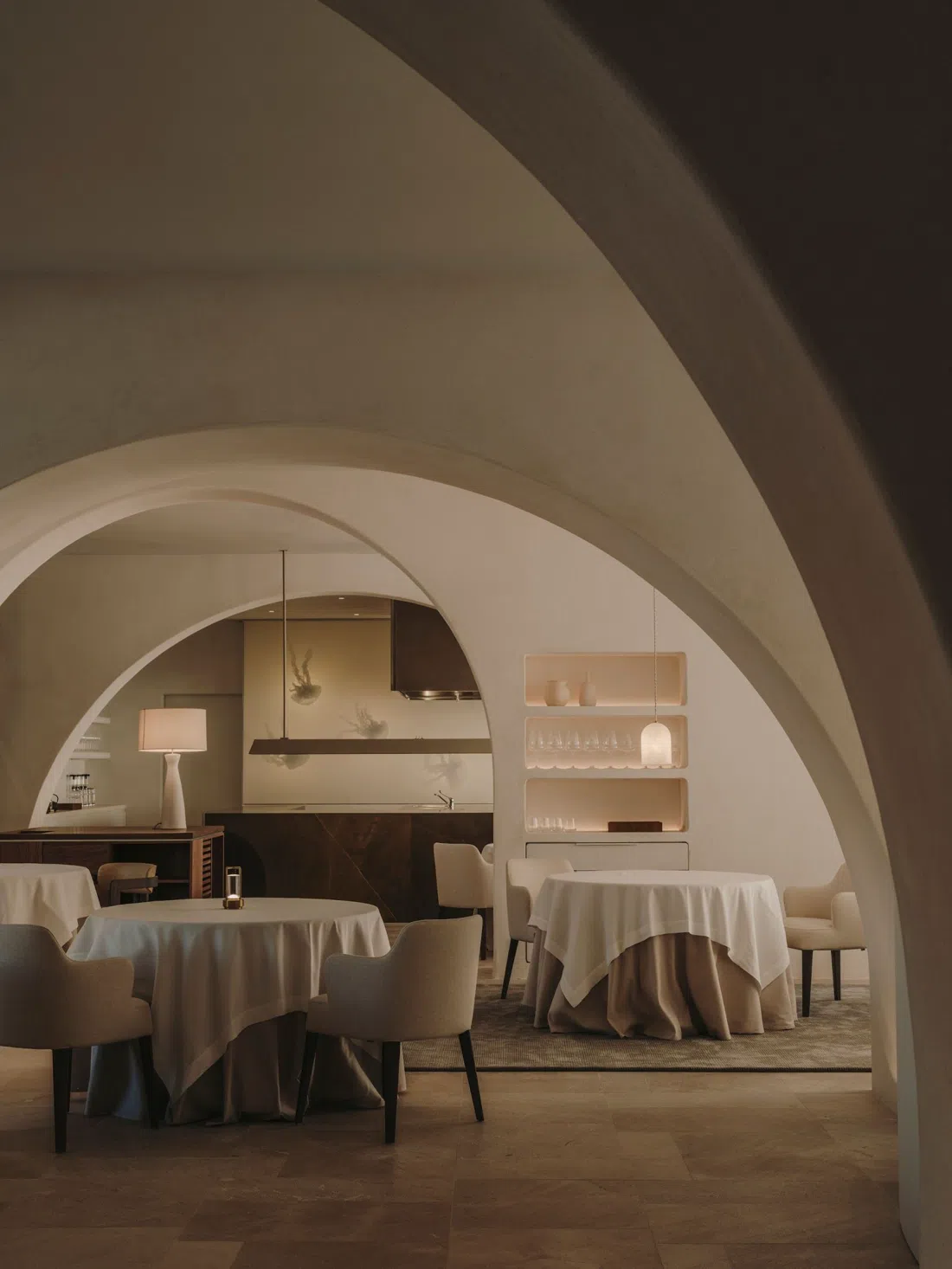
La Gaia by Óscar Molina (Ibiza Town, at the marina end) is the top of the range. It holds its Michelin star in the 2026 guide, one of only three left on the island after Es Tragón and Etxeko ceased operating, and builds its cooking explicitly on Ibizan sea and orchard produce. Two tasting menus, Illa and Horitzó, plus à la carte; small groups are accommodated on the menus, large parties by arrangement with the hotel. It is the same harvest, cooked at full stretch.
The other crops that kept a farm alive
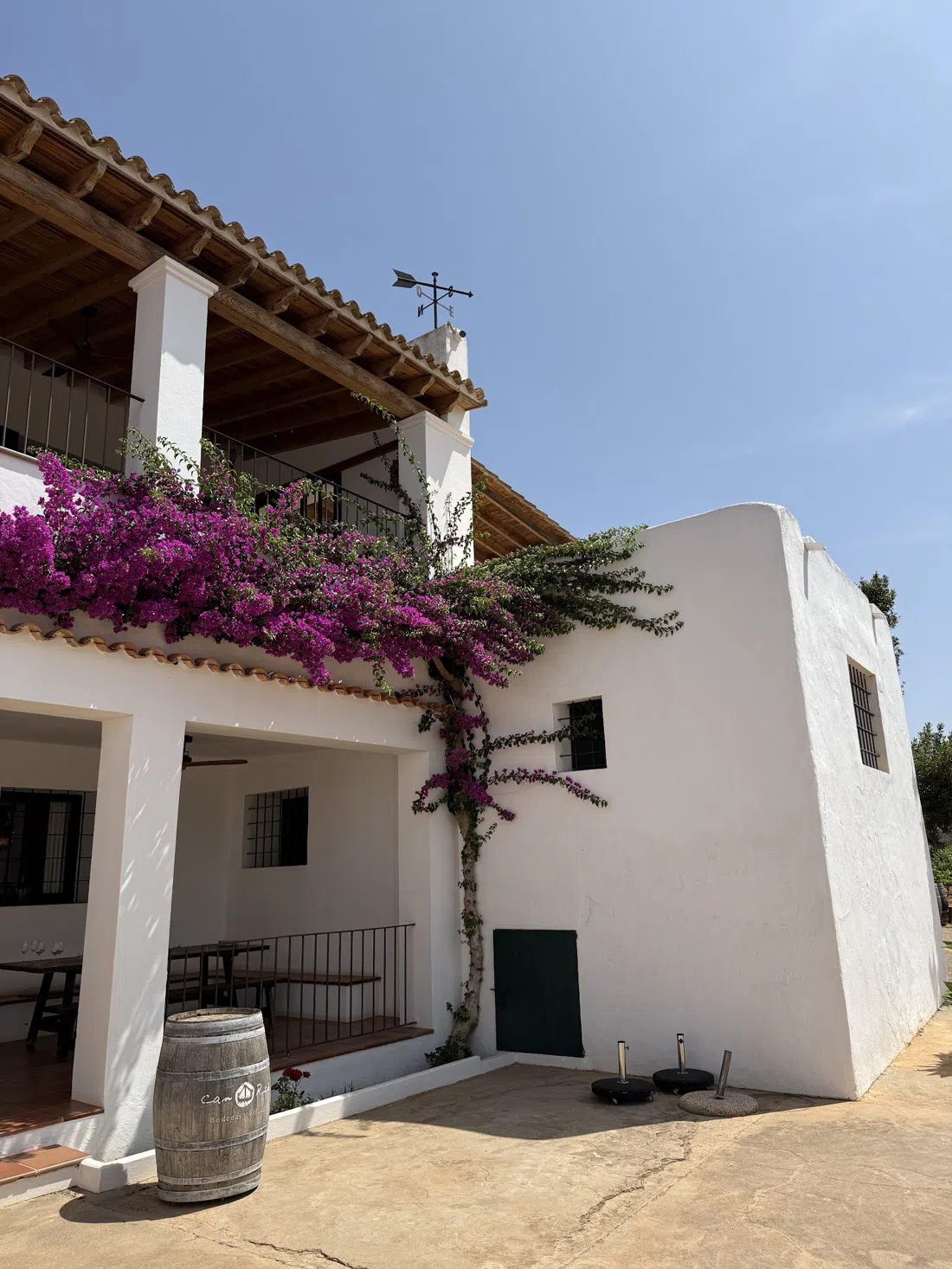
Figs never stood alone, and Bodegas Can Rich de Buscastell (Buscastell, inland from Sant Antoni) is the best working demonstration of the rest. Organic since 1997, it runs guided tours and tastings year-round, Monday to Friday from 10:00 to 14:00, at roughly €20 to €30 a head, and takes group bookings. The tasting is three wines plus hierbas ibicencas distilled on site with seventeen wild herbs, served with local cured meat, cheese and the estate's own olive oil. Note the weekday-only, morning-only window: it does not combine with the Saturday Forada market or the Sunday one in Sant Joan, so give it its own morning.
What the harvest looked like before there was a market
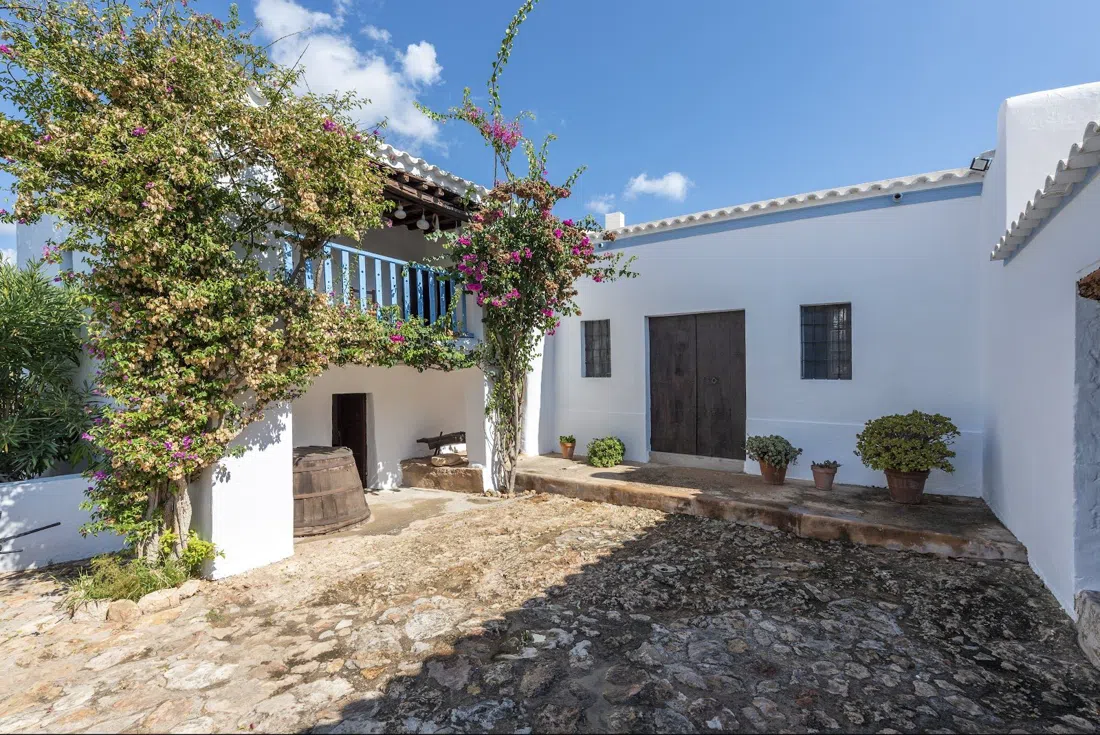
Ca n'Andreu des Trull (Sant Carles de Peralta) makes the older half of the story physical: ploughs, grain mills, winemaking equipment and the press itself, in a farmhouse still laid out the way a farming family actually used it. Entry is a few euros, hours are Tuesday to Saturday, 10:00 to 13:00 and 17:00 to 20:00, and it suits couples and small groups rather than coach parties. It is a small private house with small-house hours, so confirm by phone before driving across the island for it.
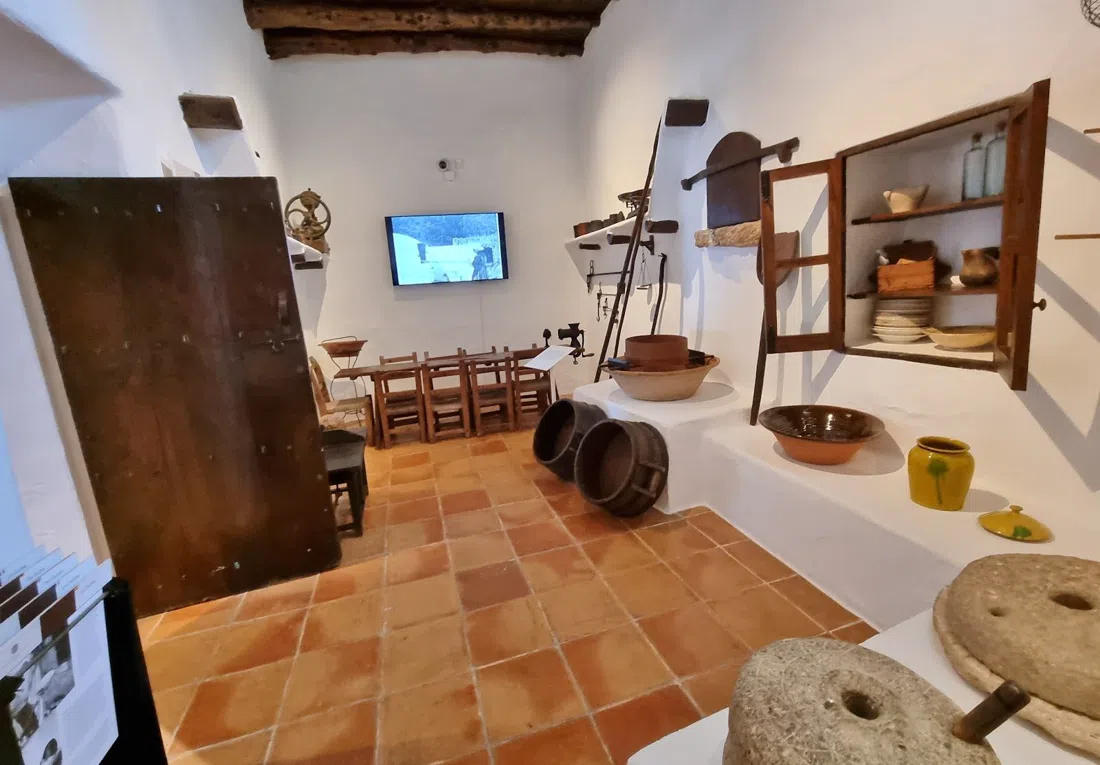
Museu Etnogràfic d'Eivissa – Can Ros (Santa Eulària des Riu, up on the church hill) holds the permanent collection of farming and fishing implements, carts and domestic objects, and adds three temporary exhibitions for 2026, on courtship customs, pre-metric measuring systems and esparto grass, all open to the public until 19 December 2026. Entry is a few euros. Small groups are straightforward; larger parties should call ahead on 971 332 845. Half an hour here before the markets makes the stalls read differently.
Getting around, paying and timing it right
The main fig crop runs from the last days of August through September, tailing off in early October. Markets and fields are morning work: be at Forada by 10:30 and at Sant Joan not much later. Midday inland is hot and shadeless well into September.
A hire car is effectively required. Every agroturismo, winery and farmhouse museum in this piece sits on an inland lane, buses between villages are sparse and finish early, and taxis are thin on the ground in high season, so book one in advance rather than hoping. Parking at the village markets means a verge and a walk; at the restaurants it is usually on-site.
Market stalls are cash, in small euro notes. Figs go for a few euros a kilo, so nobody wants a fifty. Restaurants, the winery and the museums all take cards.
A realistic figure for a harvest-focused day: €10 to €20 at the market, a few euros for a museum, €20 to €30 for the winery tour and tasting, then €35 to €60 a head at a village kitchen, €50 to €90 at an agroturismo table, or tasting-menu prices at the two Michelin Guide rooms and the starred one. A guided community walk is €15 to €25 by donation; a private walk starts around €320 per group.
Santa Eulària or one of the inland villages puts you inside the tree country and within thirty minutes of everything here. Ibiza Town works if you want the covered market and the starred kitchen on your doorstep and do not mind driving out each morning. Compare rates and rural stays through Ibiza hotel search, and read the rest of the island in the Ibiza guide.
One courtesy. If a farmer is working under a propped tree as you pass, a nod is welcome and a camera in their face is not. For them the crop is a job before it is a scene.
Questions
When is fig season in Ibiza?
The main crop runs from the last days of August through September and usually tails off in the first week or two of October. A smaller, earlier crop appears on last year's wood in the first part of summer, but late summer is when figs turn up by the kilo on market tables and on agroturismo menus.
Can I pick figs myself in Ibiza?
Not from the trees you see from the road: almost all of them stand on private farmland and taking the fruit is theft. Buy instead at a market, Mercat de Forada on Saturdays or Mercadillo de Sant Joan on Sundays, or join a guided walk with Ibiza Outdoors, whose guides have access and know where the trees are.
Which Ibiza market is best for figs and local produce?
Mercat de Forada, every Saturday from 10:00 to 15:00 through 2026, is the most genuinely agricultural and the most reliable for figues negres. Mercadillo de Sant Joan on Sundays brings northern organic smallholders, and Mercat Nou d'Eivissa in Ibiza Town covers weekday mornings until about 14:00. Skip the Mercat Vell on Plaça de la Constitució, which is closed for a €3.8m rebuild.
Do I need a car to follow the fig harvest?
Effectively yes. The markets, wineries, farmhouse museums and agroturismo restaurants are all on inland lanes; village bus services are sparse and finish early, and taxis are scarce in high season unless booked ahead. Parking at the village markets means a verge and a short walk, so arrive before 11:00.
Where can I actually eat under a fig tree?
Es Ventall in Sant Antoni is the clearest case: thirty-five years of Pitiusan cooking, a kitchen garden, and tables set under the tree, at roughly €50 to €80 a head, closed Wednesdays. Casa Maca near Ibiza Town also has fig trees in its grounds and is quieter and more agricultural at lunch than in the evening.
First published on ibizacitybreaks.com, the Ibiza guide.