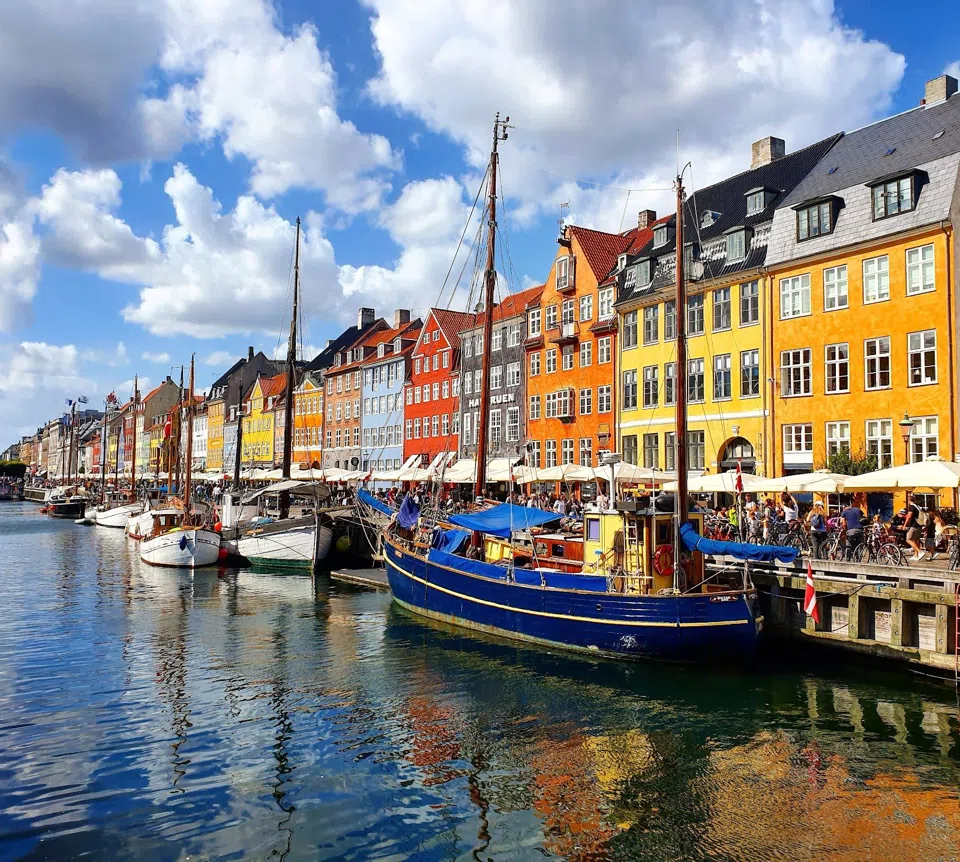
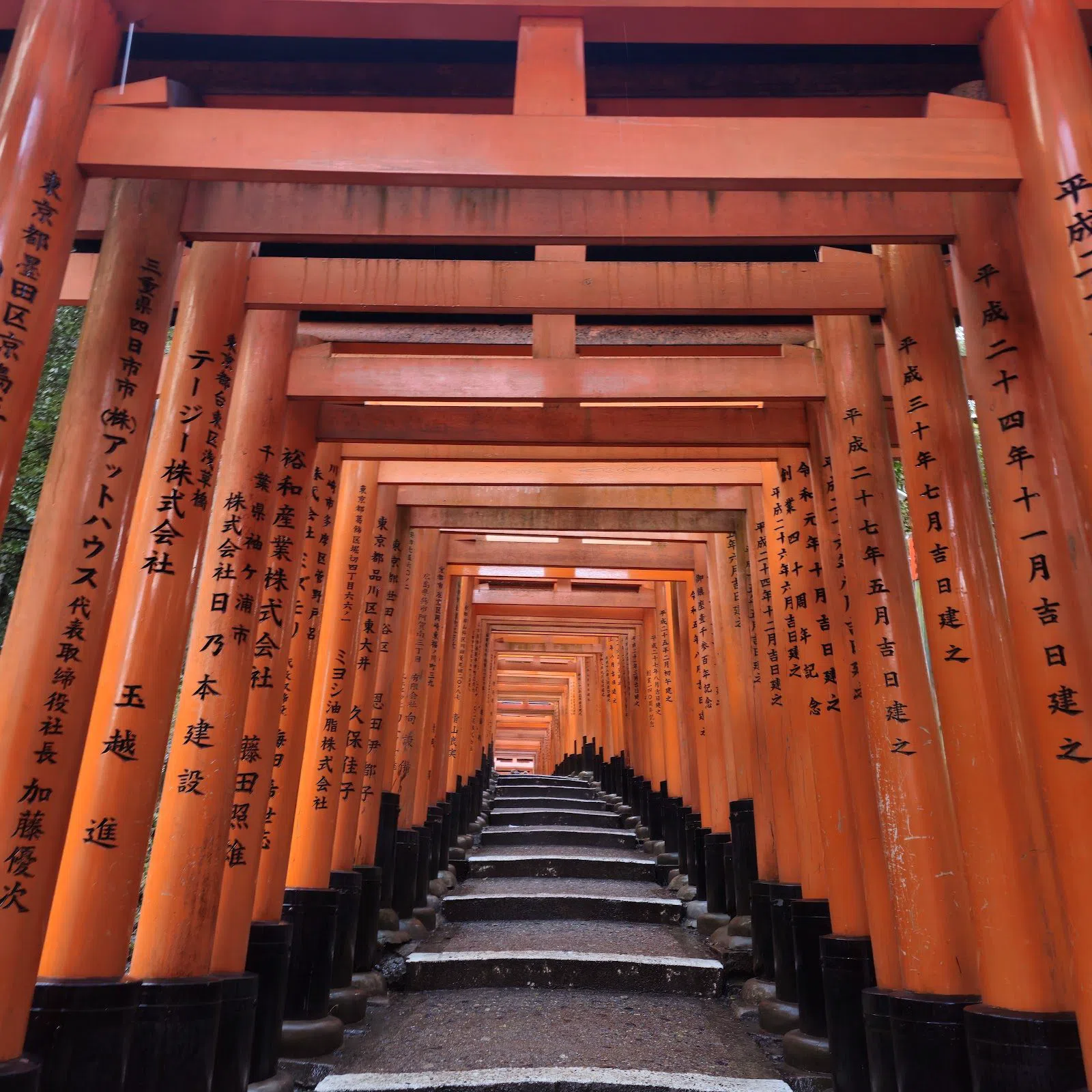
The first torii at Fushimi Inari stand tall enough to swallow the noise of the approach road, and in October the early light comes through them sideways, turning the vermilion closer to orange than red. By mid-morning the same tunnel is a slow shuffle of raised phones and stalled shoulders. The mountain is identical in both hours. Only the number of people on the path differs, and that is the fact to plan around.
What you are actually walking into
Fushimi Inari Taisha (Fukakusa, in Fushimi ward at the southern edge of the city) is the head shrine of the Inari faith, and it is not a building you queue to enter. The grounds are open, there is no ticket gate, and the paths up the mountain behind the main hall never close. Entry is free, around the clock, for coach parties, walking groups and solo arrivals at four in the morning alike. Only the staffed parts keep hours: the shrine office, the charm counters and the goshuin desk work roughly 09:00 to 17:00, so a pre-dawn visit and a hand-written seal in your stamp book are mutually exclusive unless you come back down for it.
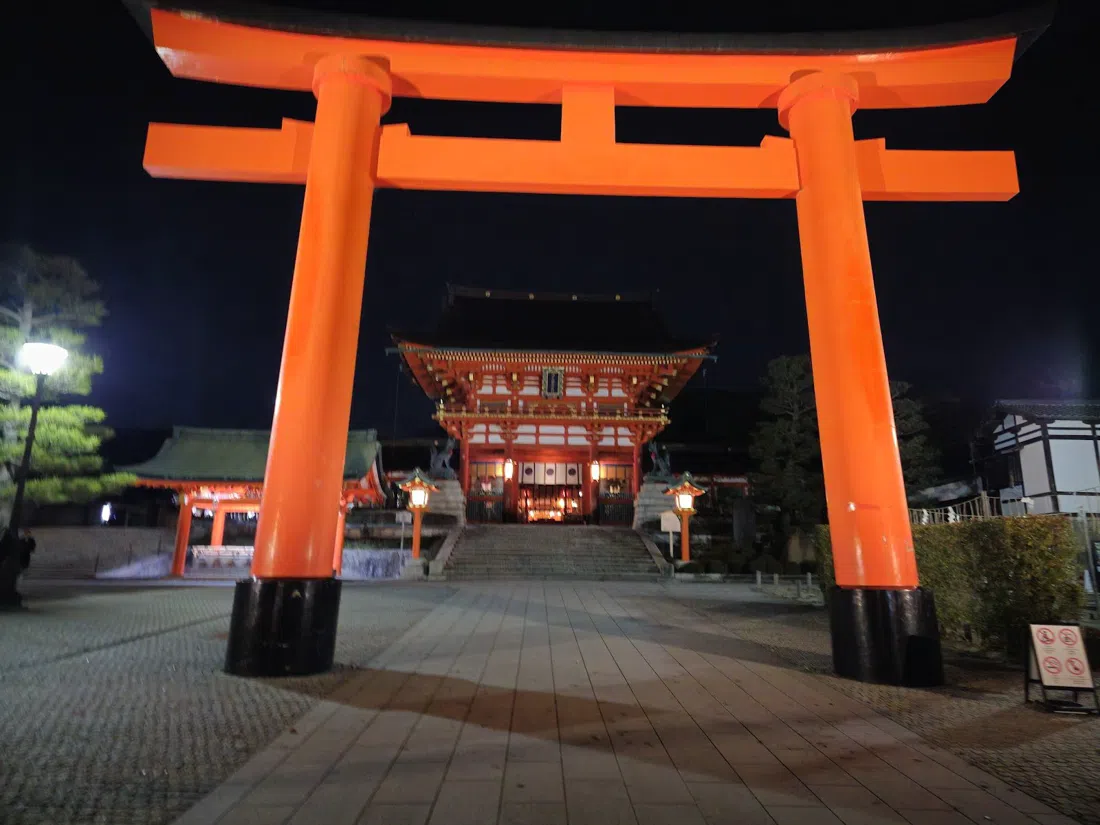
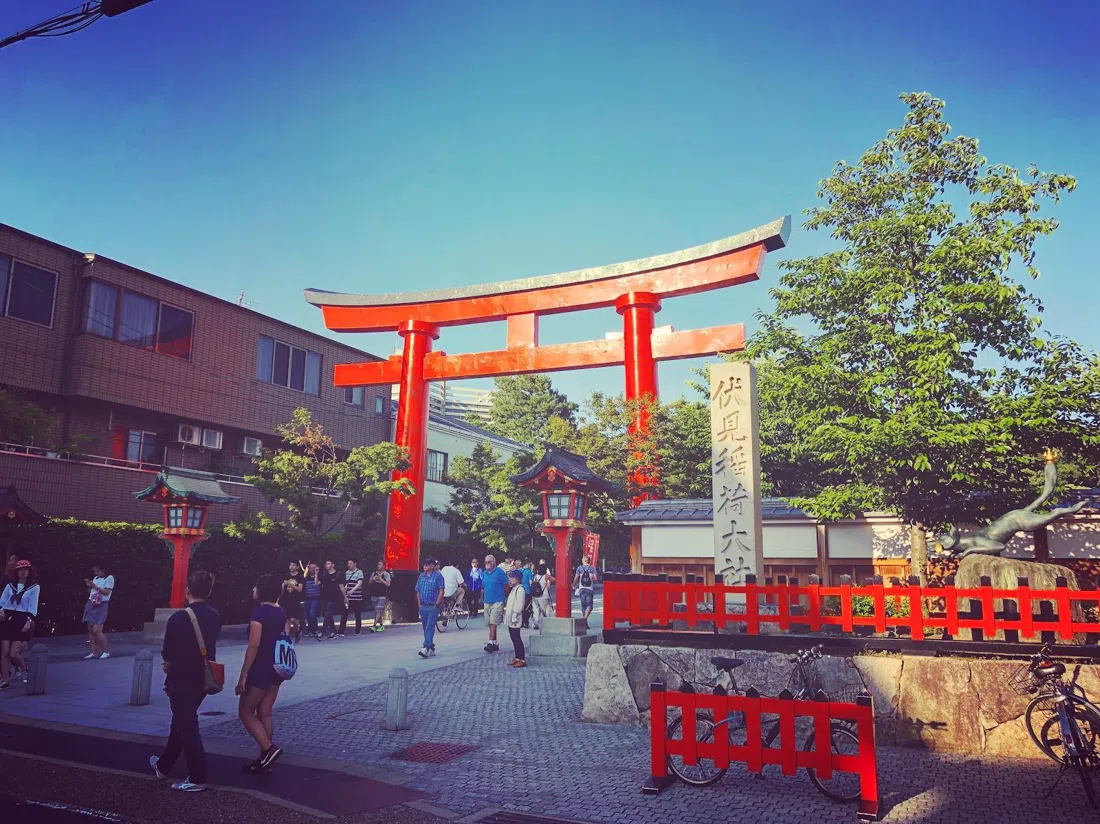
At the bottom you get a conventional shrine complex: a huge gate, a main hall, fox figures holding keys and sheaves of rice in their mouths, because the fox is Inari's messenger and rice was what people originally prayed here for. What people come for begins behind all that. Senbon Torii and Okusha Hohaisho (mid-mountain, a few minutes above the main hall) is the famous split tunnel, two parallel single-file corridors of gates, each one paid for by a company or a family, the donor's name and the date painted on the back of the uprights. Walk uphill and you see the clean red faces; turn around on the way down and you are reading the names of Japanese small businesses going back generations. It is the best free history lesson in the city, and almost nobody reads it.
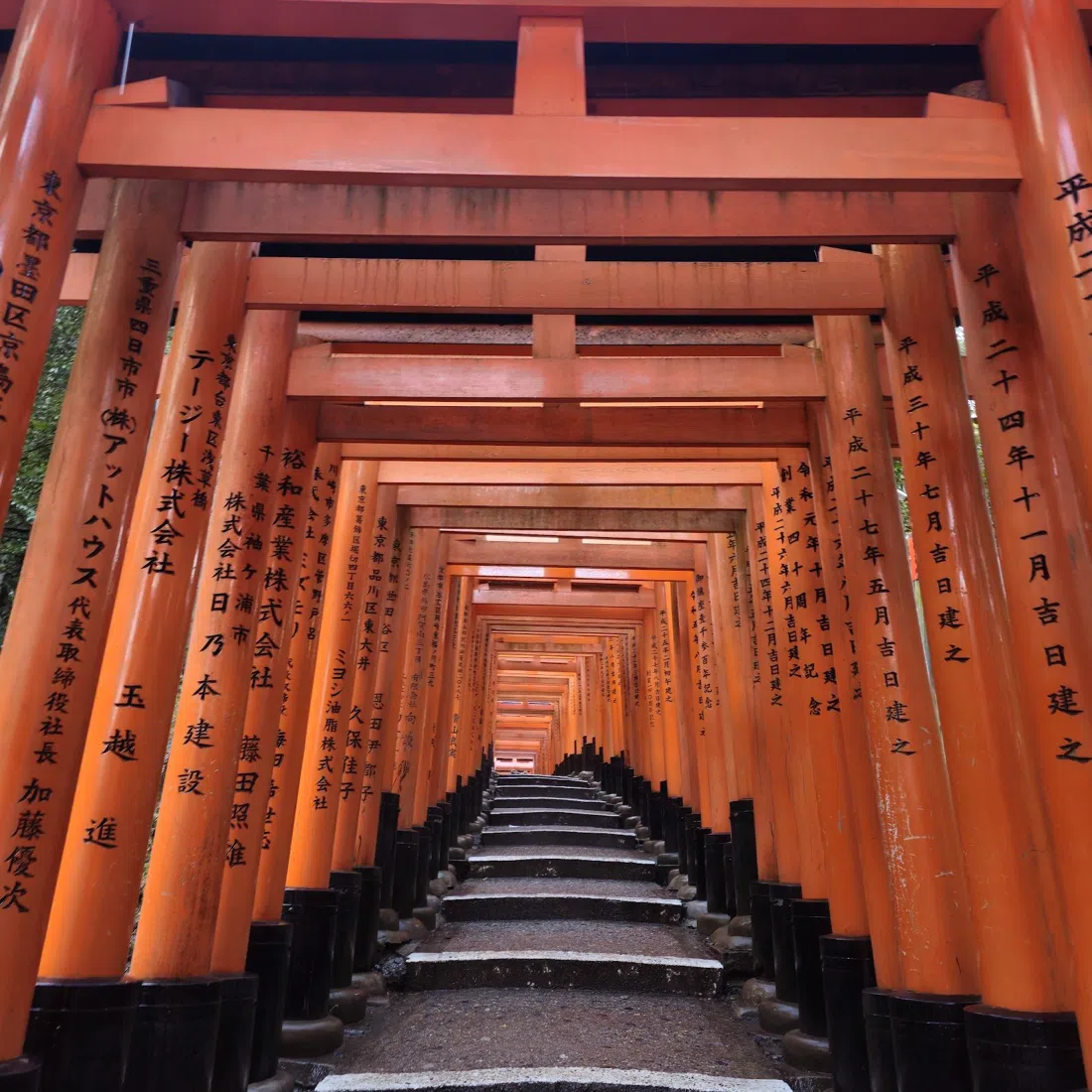
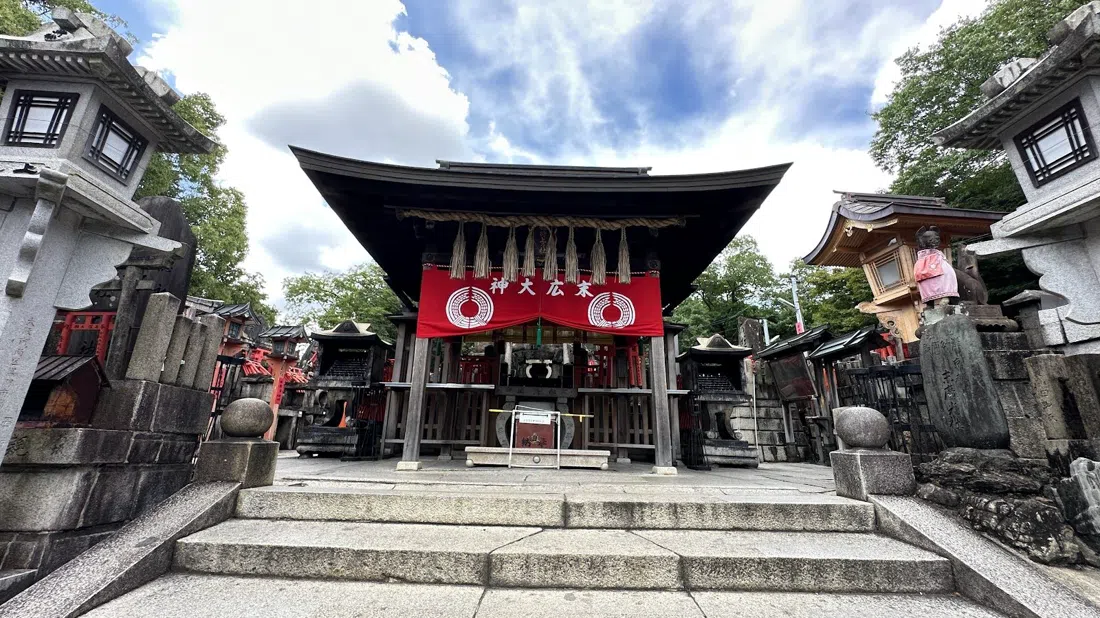
Where the tunnel ends, most visitors take their photograph and turn back, missing the ritual that belongs to this spot. At Okusha, the rear worship hall, sit the two Omokaru-ishi stones. Make a wish, lift one, and judge the weight: lighter than you expected means the wish comes easily, heavier means work. Lift them one at a time and step away afterwards. The paths here are single-file by design, and a twenty-person group clustered around the stones stops the whole mountain behind it.
How high to climb and where to stop
The climb that matters is short. Yotsutsuji junction viewpoint (roughly halfway up the mountain) is about 30 to 45 minutes of steady steps from the gate, and it buys the only real view of the city on the whole walk. It also has standing room and benches, which makes it the one place on the trail where a guide can gather a group without blocking anyone. For most people this is the turnaround, and the terrain backs that up.
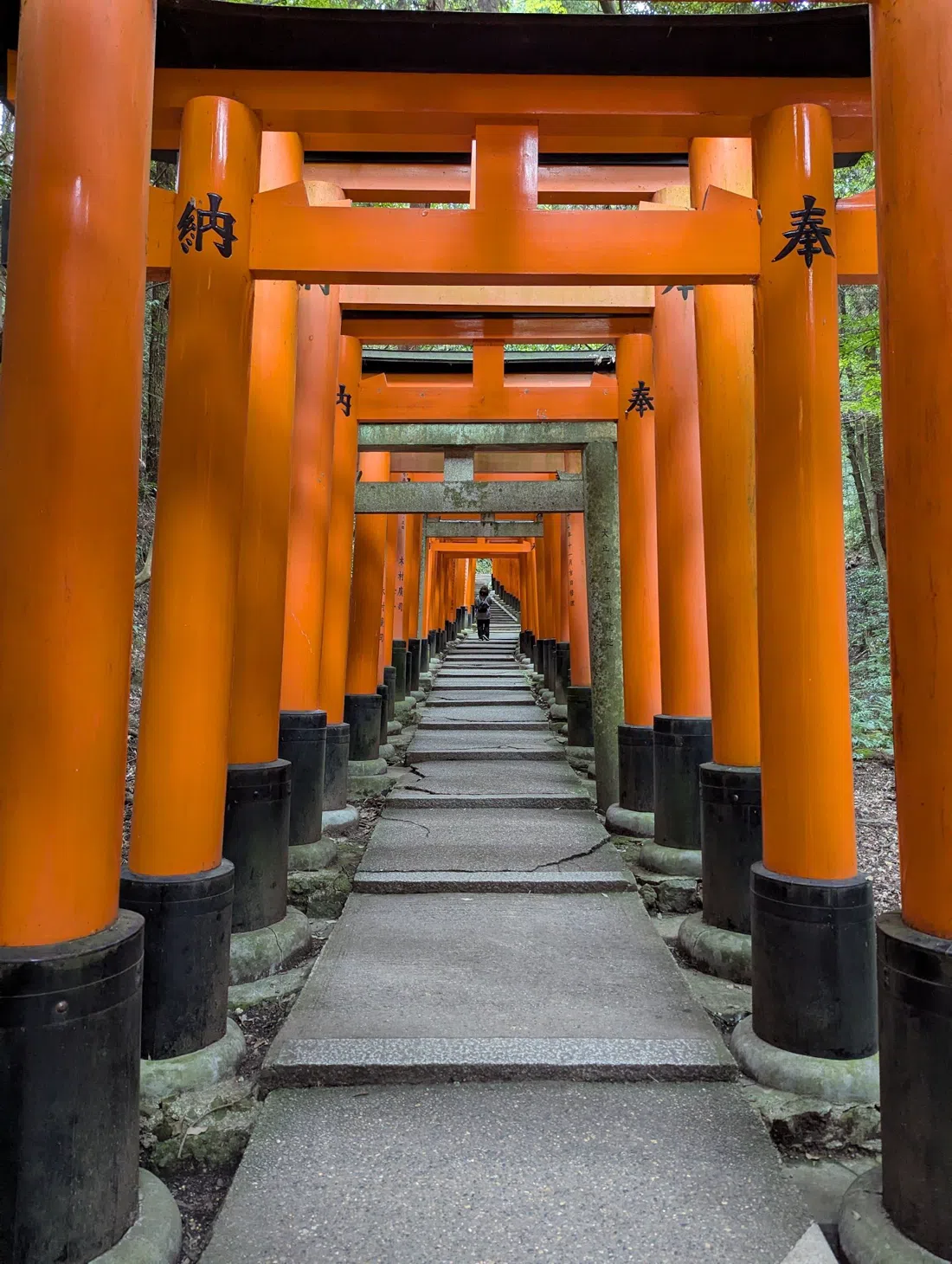
Above it, the loop to Mount Inari summit — Ichinomine and Mitsurugisha keeps climbing through forest for another half hour or more, and it gives atmosphere rather than panorama. The upper slopes are thick with thousands of small private votive shrines, stone after stone bearing a family or a company name, and in the quiet of early morning that is genuinely moving. There is no view at the top. People who climb expecting one come down disappointed, so know that before your legs commit. The loop is steep, uneven stone steps with no step-free alternative and very little shelter if the weather turns, which makes it a poor choice for large parties or any group with mixed mobility.
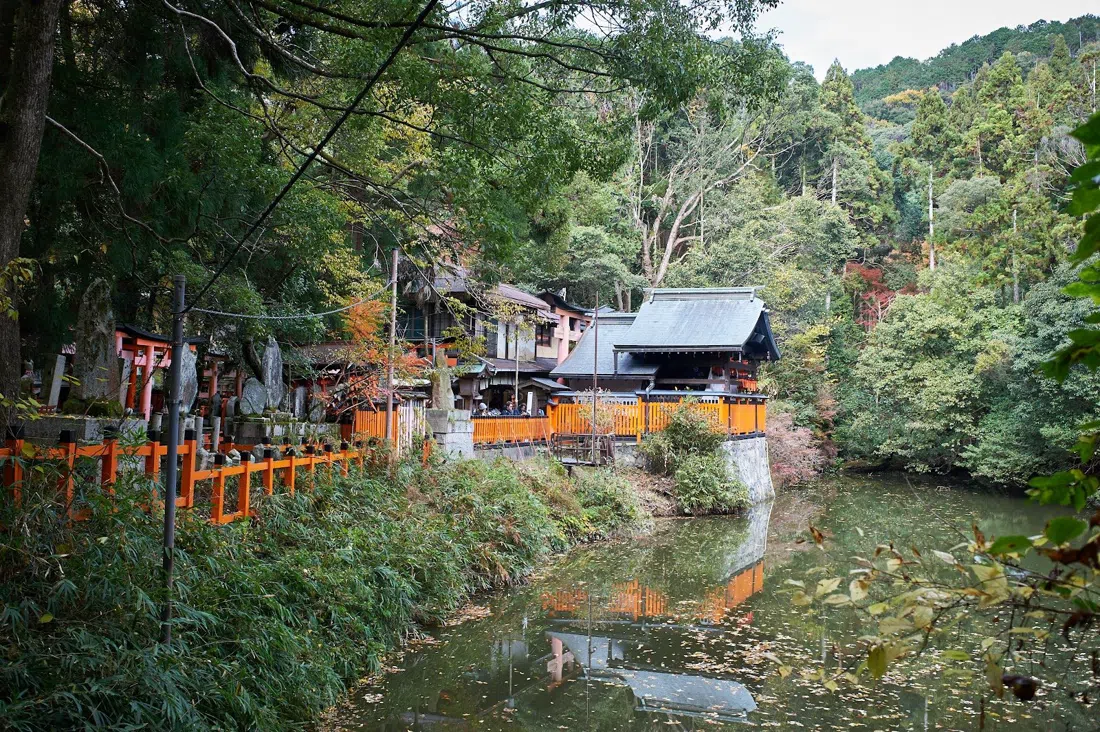
If you want the opposite of the queue, take the short detour behind Okusha to Shin-ike Pond (Kodama-ga-ike) and Kumataka-sha (just off the main trail, mid-mountain). You clap towards the water and listen for the direction the echo comes back from; tradition says it points towards news of someone missing. It is narrow, small and quiet, fine for a handful of people and hopeless for a coach group. It also shows how the crowding here works: the queues sit on the path rather than on the mountain. Step twenty metres sideways and they vanish.
The hours that decide your October visit
The tunnel at Senbon Torii is at its worst roughly between 10:00 and 15:00. Outside that window the same walk is a different experience. In October, first light arrives a little after six and the sun is gone by around half past five, which leaves two genuine options: be on the lower path by seven, or start up after four and accept that the upper trail has long unlit stretches where you will be descending by phone torch.
The early plan works because of JR Inari Station (Inari, right at the foot of the approach). It is two local stops from Kyoto Station, about five minutes, ¥150, and it puts you at the torii the moment you step off the platform. The station opened in 1879 and is still the fastest door-to-gate approach in the city. One catch: rapid services skip it outside New Year, so take a local train and don't be talked onto an express.
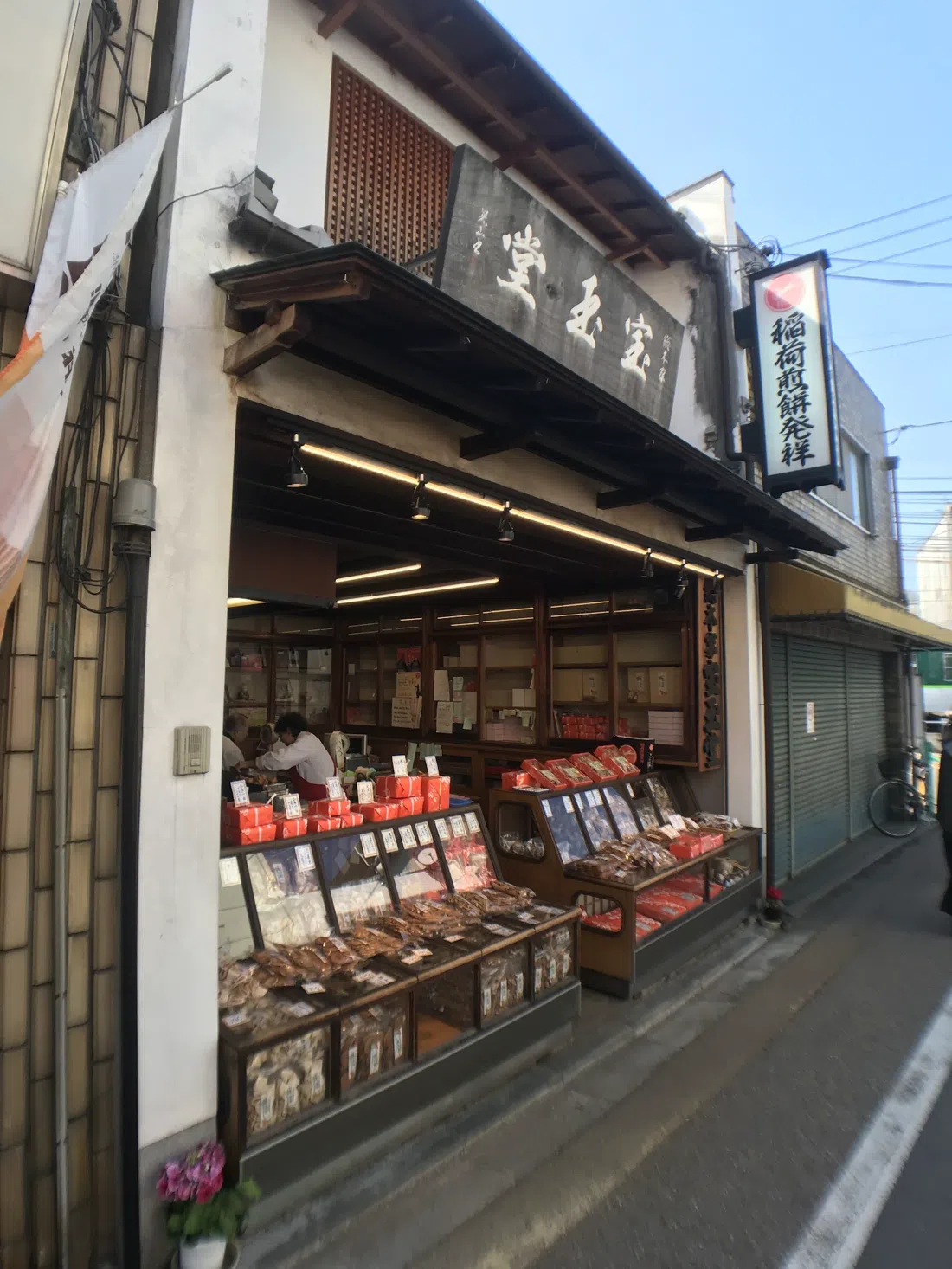
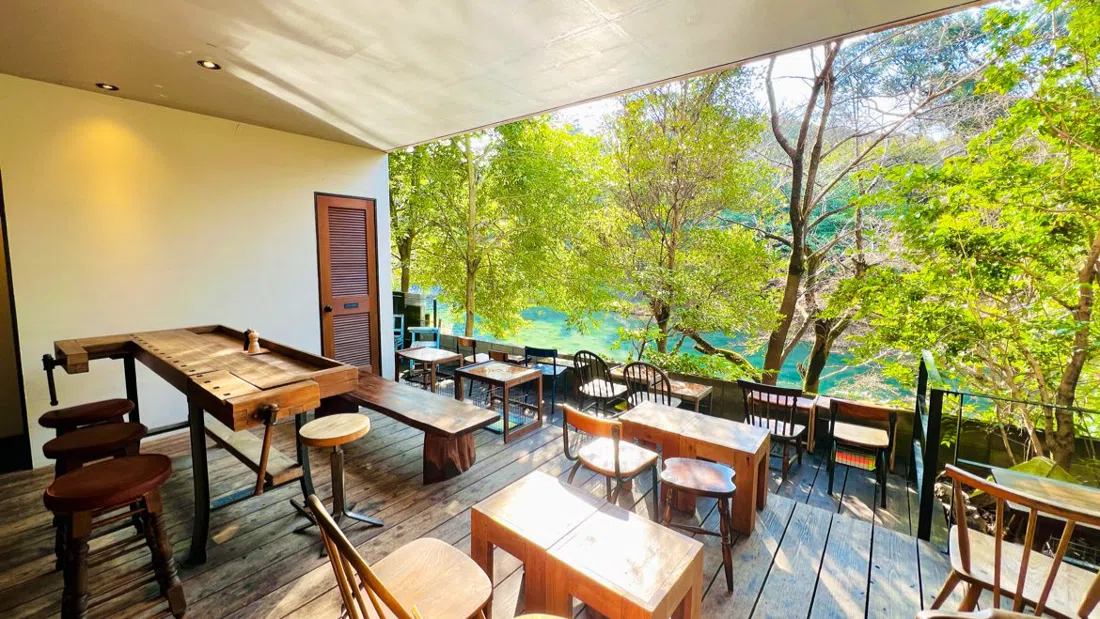
For the pre-dawn version you want coffee, and Vermillion (a few minutes' walk into the Fukakusa backstreets) opens from around 07:30 with bilingual staff who are happy to point you at the right trailhead. Coffee runs ¥500-700 and plates ¥1,000-1,800. It is a counter and one small room, ideal for a couple and physically incapable of seating a group, and it closes in the early afternoon, so treat it as a start-of-day stop rather than a reward at the end. If you are up before anything else is open, Sohonke Hogyokudo (on the approach road) trades 07:30 to 19:00 every day of the year, and about ¥350-500 buys three of their grilled rice crackers, warm, in your hand before the first coaches arrive.
Eating on the approach road and on the mountain
Food here splits between the approach road at the bottom and one proper stop halfway up. On the mountain, Nishimura-tei (at the Yotsutsiji rest point) is the only real sit-down kitchen, with mains around ¥700-1,200. Hours are roughly 10:00 to 17:00 on weekdays and from 09:00 at weekends, with last orders about 15:00, so a late-afternoon climber counting on noodles at the viewpoint will find the kitchen shut. It is a small walk-in place: a group should split across tables or send one person to order for everyone.
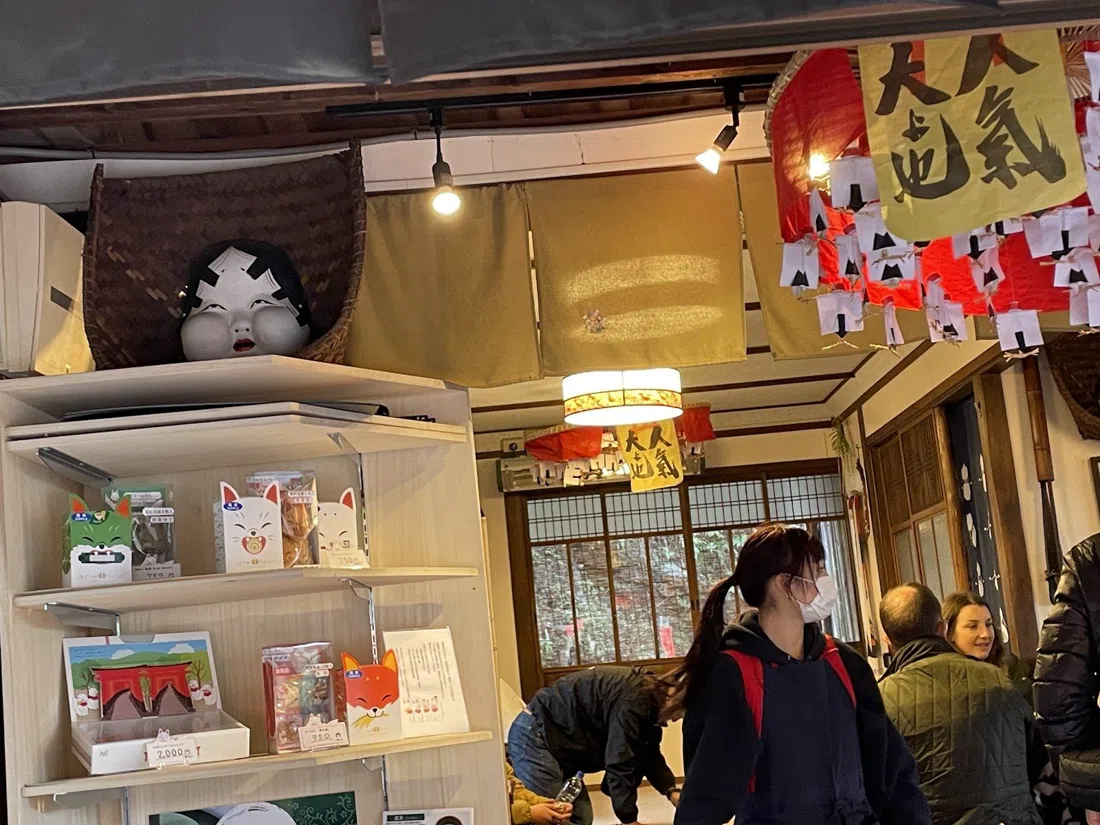
At the bottom, Nezameya (beside the torii on the shrine approach) has been serving at this spot since 1540, and its sesame-studded inari-zushi, sweet fried tofu pouches packed with rice, is the one dish that belongs to this shrine rather than to Kyoto generally. Sets run roughly ¥1,000-2,500, it opens about 10:00 to 16:30 with last orders at 16:00, and the traditional dining room handles a dozen or so comfortably; phone ahead for anything bigger.
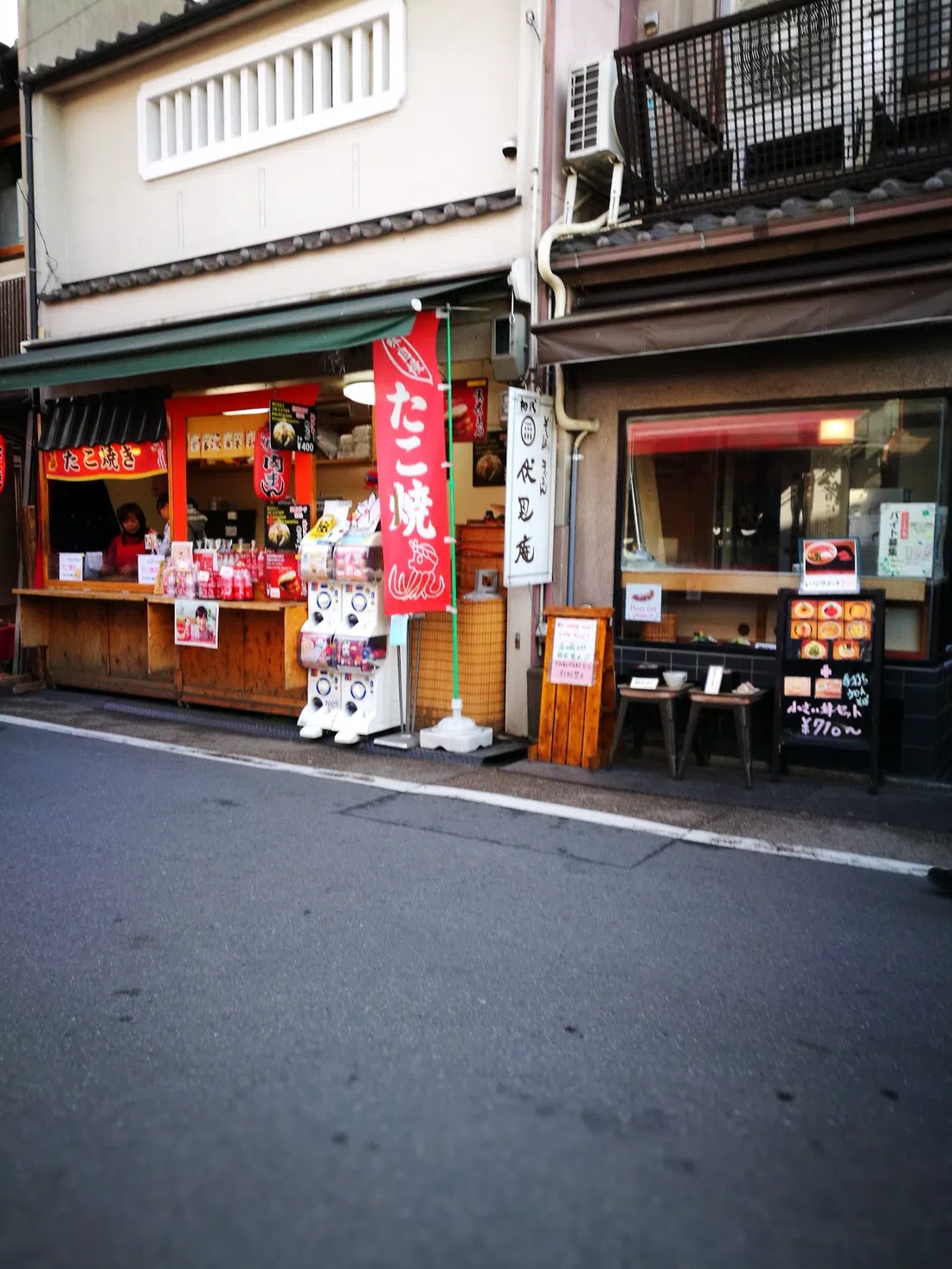
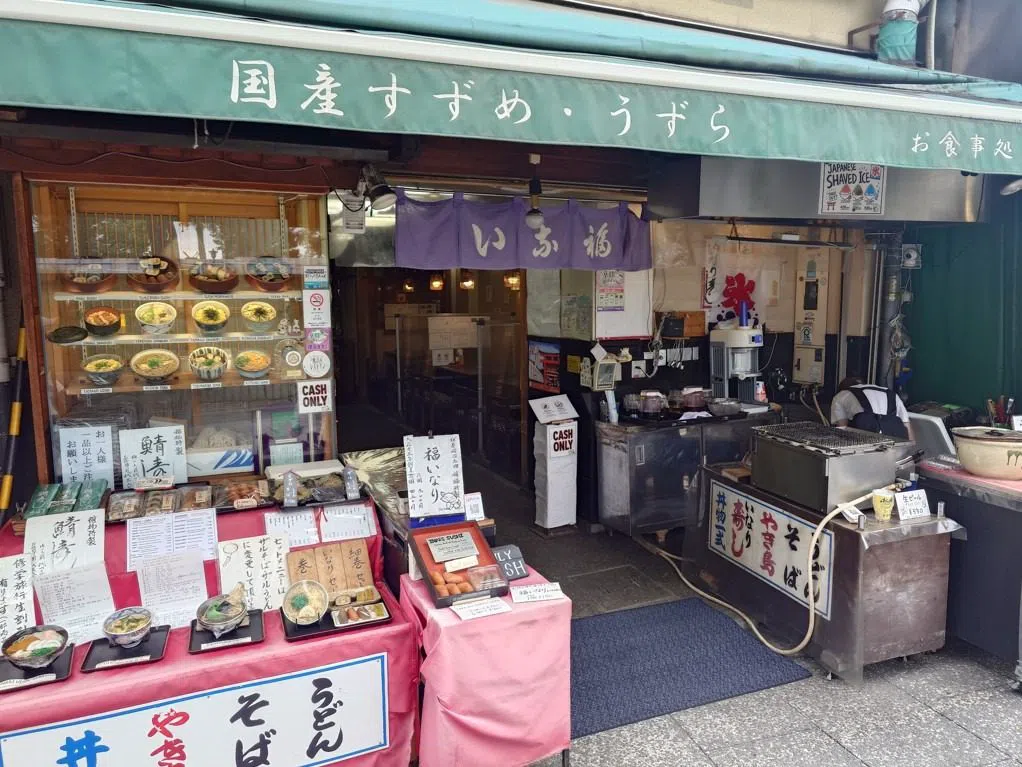
A few doors along, Oshokujidokoro Inafuku (approach road, three minutes from the station) grills suzume-yakitori over coals at a street-facing counter, a local tradition going back some four hundred years. That is whole small sparrow on a skewer, head and all, historically eaten here because the birds ate the shrine's rice. Skewers are roughly ¥600-1,000 and noodle bowls ¥700-1,000. Plenty of visitors will want nothing to do with it, which is a reasonable position; the quail skewers and noodles come out of the same kitchen. It shuts one or two weekdays a week, so check the shutter before you build a plan around it. Groups queue on the street rather than sit together.
Kimono, luggage and the photographs you have seen
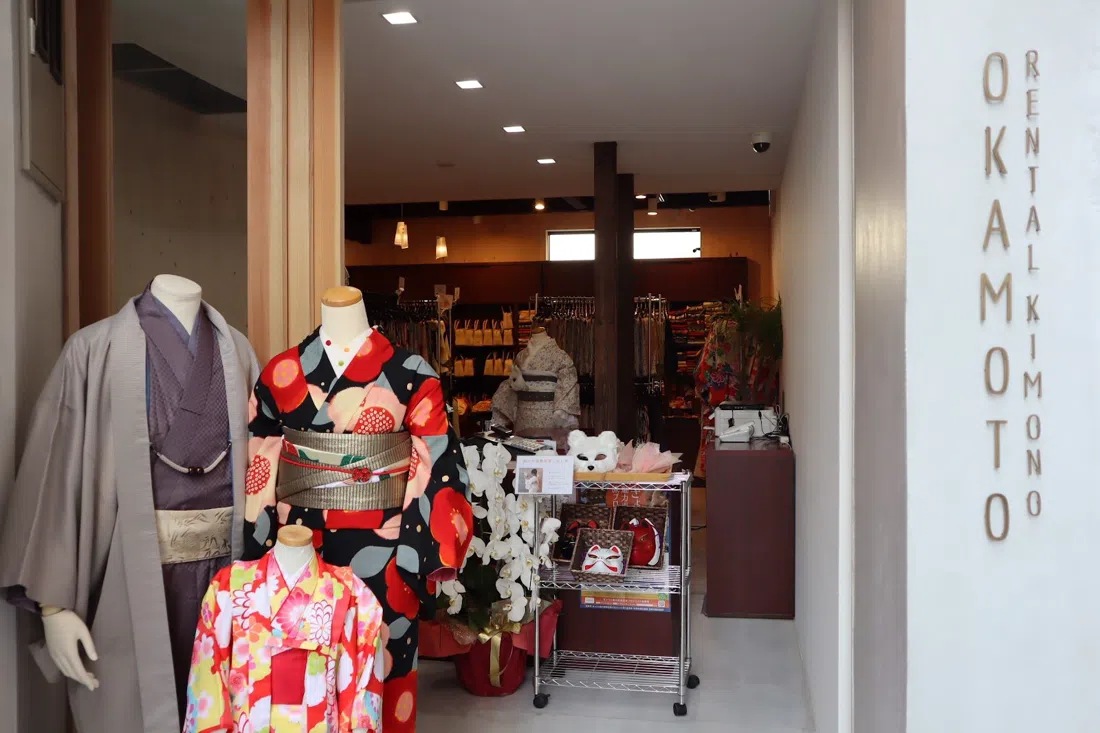
The answer to how people get those photographs is usually Rental Kimono Okamoto — Fushimi Inari store (steps from the gate), where packages start at roughly ¥3,000-5,000 and hair styling from ¥500. They are set up for groups and multilingual bookings, and in autumn the dressing slots stack up, so book ahead rather than walking in at nine on a Saturday. The free luggage storage is the useful part, because it solves the real problem of arriving with a suitcase from the station and then being asked to climb a mountain. Be realistic about the clothes, though: kimono and rental sandals are fine for the lower torii and the main precinct, and miserable above Yotsutsuji.
Where to go when the tunnel is full
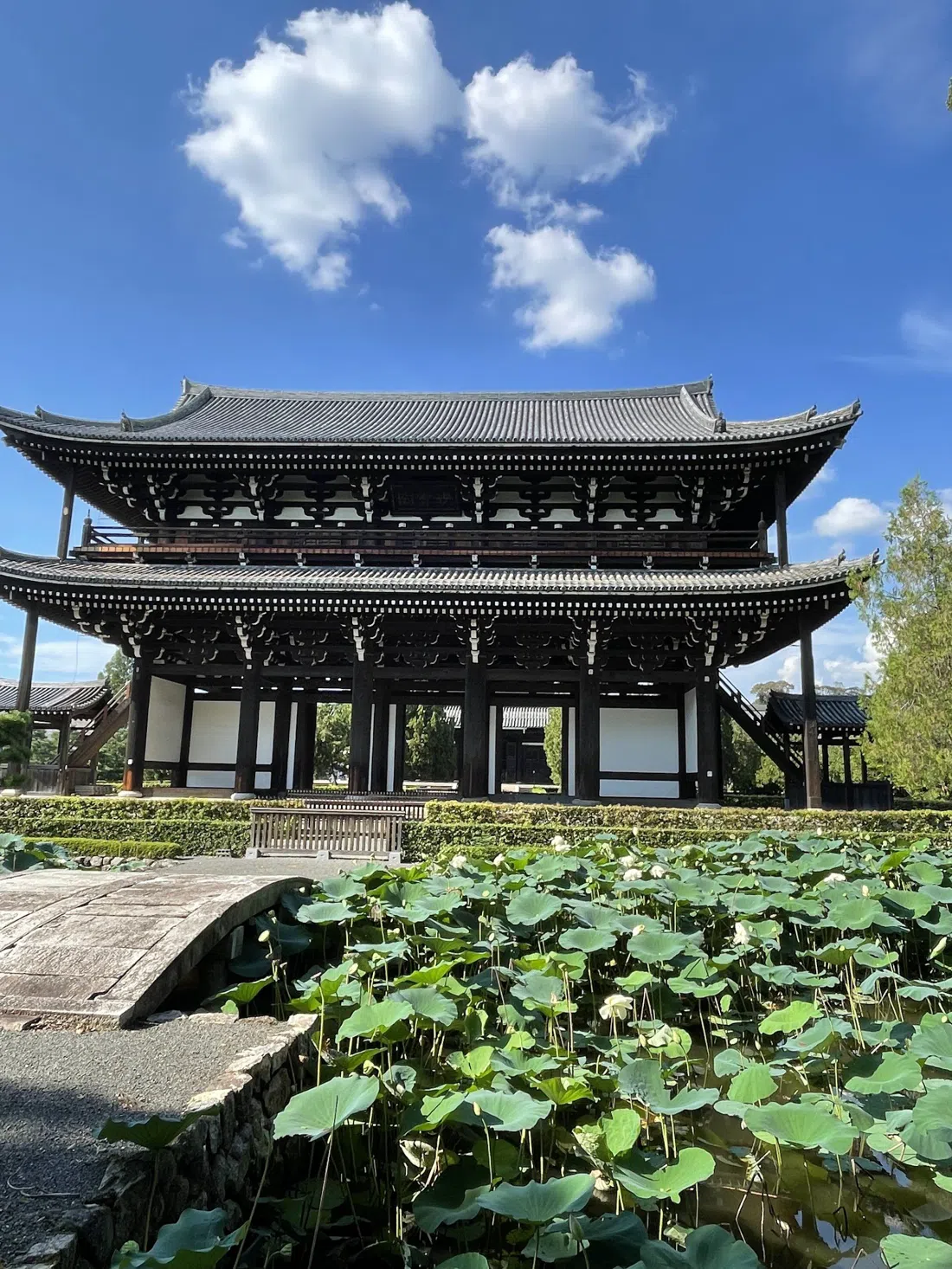
If you arrive mid-morning and the queue has already set like concrete, walk away and come back at four. One stop north, Tofuku-ji (Honmachi) is the obvious October pairing, a large Zen complex with a famous covered bridge over a maple ravine. Right now the Hojo garden is ¥500, the Tsutenkyo bridge and Kaisando ¥600, or ¥1,000 combined for adults, open 09:00 to 16:00 with the gate closing at 16:30. The timing argument is simple: from 14 November those two areas are sold separately at ¥1,000 each and the maple crush begins, so an October visit buys you the combined ticket and thin paths. House rules are firmly enforced, with no eating, no tripods, no sketching and no pets inside the grounds, and commercial photography needs permission arranged in advance. It takes groups without trouble.
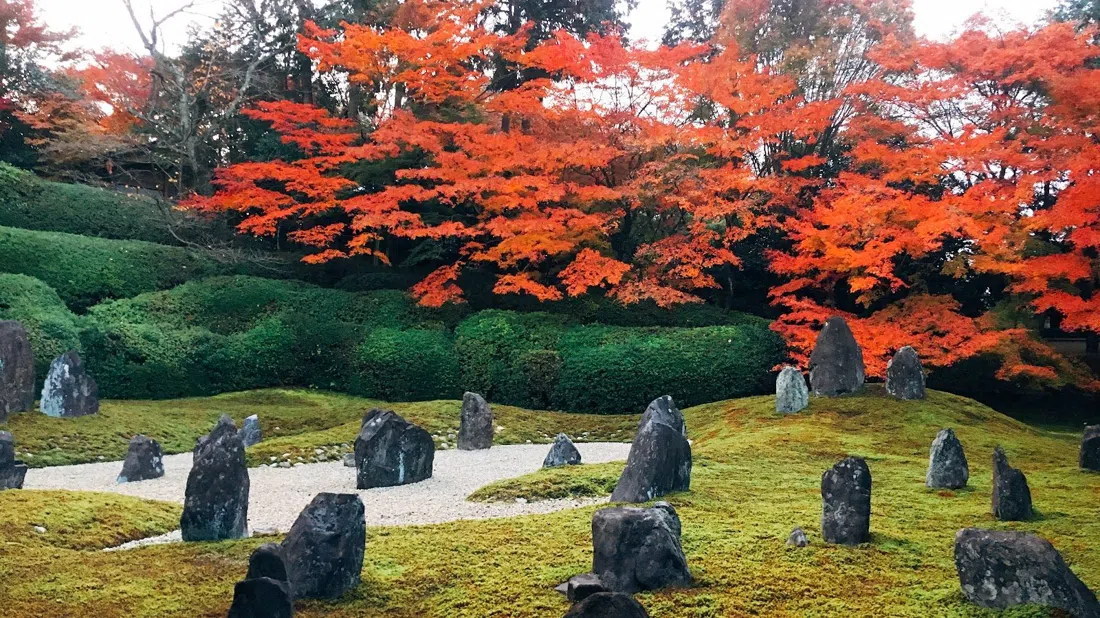
Ten minutes' walk away, Komyo-in (within the Tofuku-ji precinct) is the best antidote in this article to the Senbon Torii queue: a tiny sub-temple with a dry garden of stones set in raked gravel, ¥500 dropped into an honour-system bamboo tube when nobody is on the desk, open roughly 07:00 to 18:00. It is reliably near-empty even in peak season, which is also the reason to send pairs rather than parties.
The sake half of Fushimi, for legs that are finished
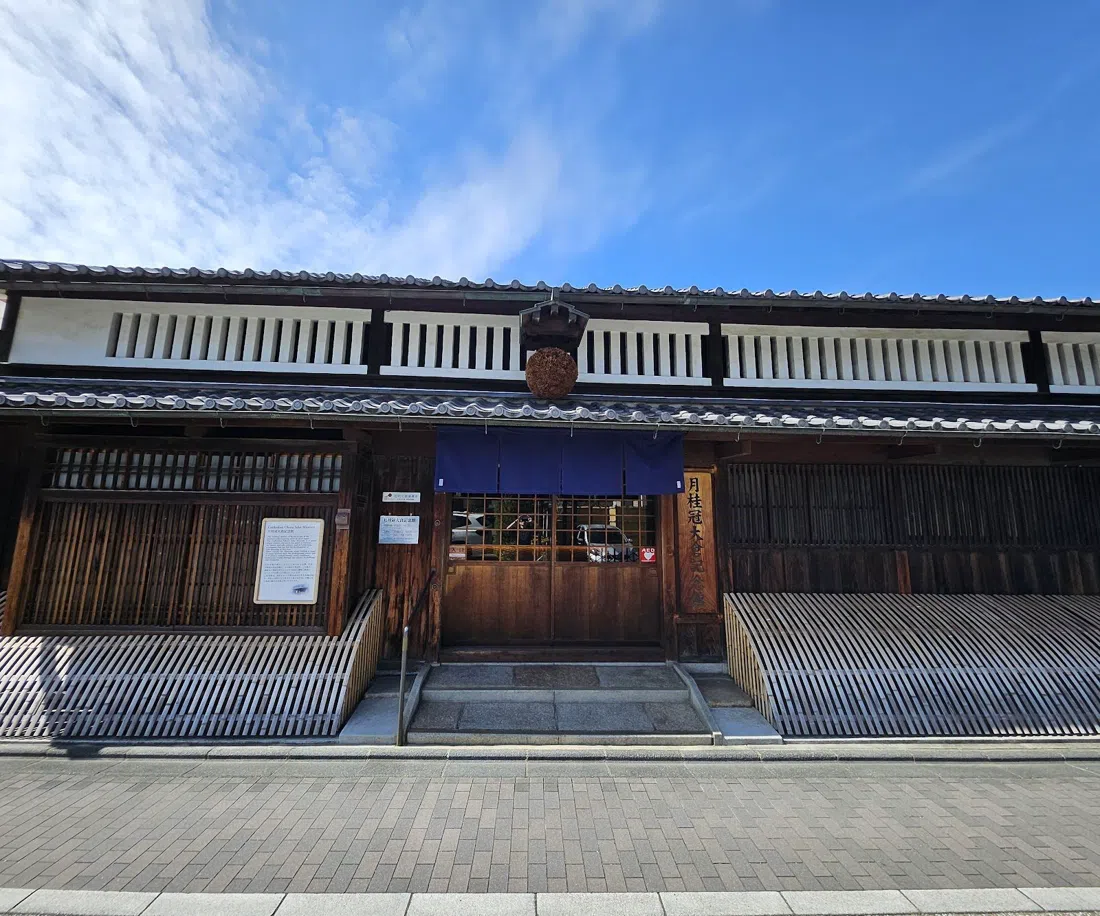
The same spring water that made this a sacred site also built the local sake trade, and the two halves of Fushimi make a better day together than the shrine does alone. Gekkeikan Okura Sake Museum (Minamihama, in the brewery district) tells that story in about thirty focused minutes for ¥600 for anyone 20 or over, ¥100 for 13-19 and free under 13, open 09:30 to 16:30 with last entry at 16:00. Walk-ins are taken on the hour and half-hour, with reservable slots at quarter past and quarter to; groups should reserve, and bookings open two weeks before the visit. Two warnings: it has been cashless only since July 2026, and it posts occasional closures across October and November, so check your specific date.
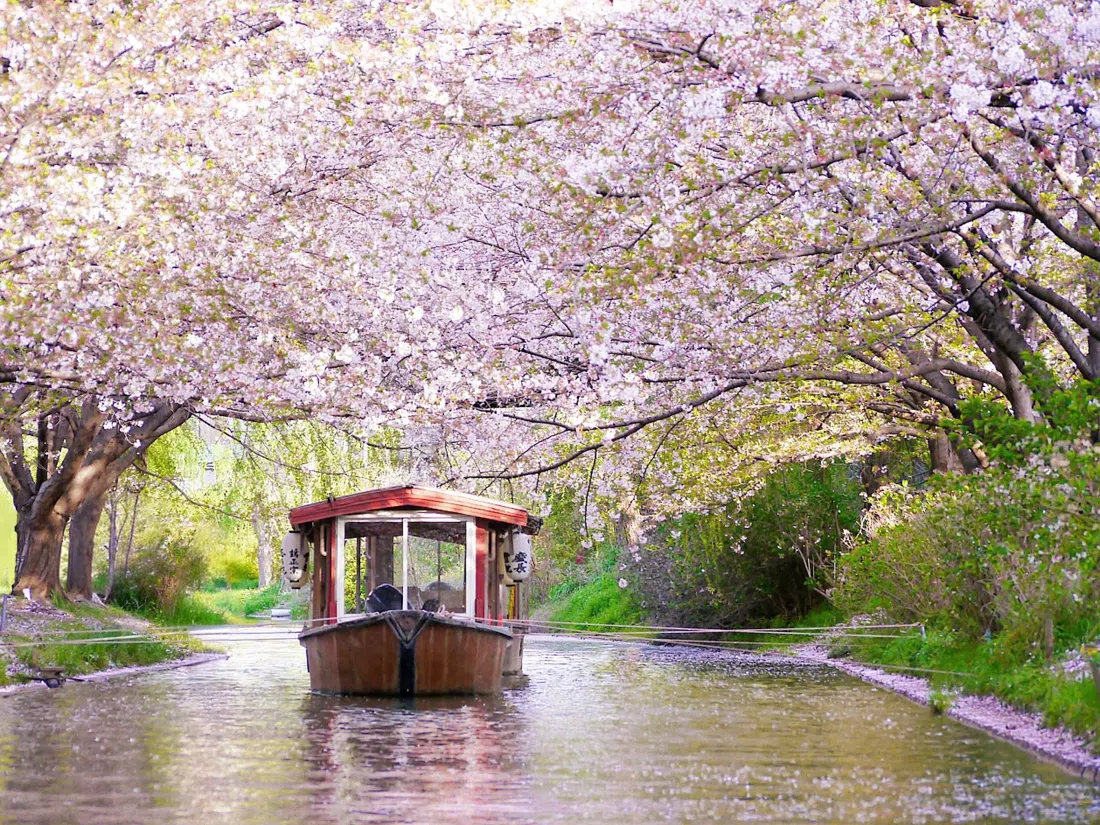
Behind the museum, Fushimi Jikkokubune (the Fushimi canal) runs a flat-bottomed boat along the old brewery waterway, ¥1,900 for adults, ¥900 for children 6-12, free under 6, departing every twenty minutes from 10:00. It runs daily through October, closes Mondays outside the busy months, and finishes for the year on 6 December. Each boat seats twenty and booking is online only, with no phone or email option, so a group either books several departures or splits up. It is the easy, seated half of a day that otherwise involves climbing a mountain, and in October the willows along the canal are still green while the maples a few stops north are only thinking about turning.
Best time to go this month
October is the strongest month of the year here, and what makes it strong is what is missing. The summer humidity has broken, the stone steps are walkable without soaking your shirt, and the maple crowds that make late November a scrum have not arrived. Early in the month the weather can still turn wet quickly; treat a rainy morning as a reason to swap the summit loop for the lower tunnel and the sake district, because wet stone on those upper steps is genuinely slippery.
For the hour, pick in this order: a weekday before 08:00, a weekend before 07:30, or any day after 16:00 with a torch in your pocket. Avoid late morning on a Saturday or Sunday entirely if the photograph matters to you. And if your schedule only allows the middle of the day, come anyway. Go straight up to Yotsutsuji, then take the pond detour and the votive shrines, and you will spend most of your time away from the bottleneck.
Door price against a guided walk, and whether it is worth it
At the door this costs nothing, which makes the comparison unusually clear. Guided options exist and are attached to this page, starting from 126 USD per person; they run seven days a week, and the most popular one is confirmed manually by the operator, so allow up to 48 hours and do not expect to book it the night before. You are not paying for access, since there is no line to skip at a shrine with no gate. You are paying for someone to read the torii inscriptions to you, handle the trains, and get you onto the mountain at the right hour. If you are confident with a local train, a map and an alarm clock, keep the money. If you want the history explained properly, or you are travelling with people who will not enjoy navigating, a guide earns its fee.
The verdict is yes, with a condition: Fushimi Inari is worth it at seven in the morning and merely tolerable at eleven. It suits early risers, anyone who likes walking, photographers, and visitors who want one piece of living religious practice rather than another museum. It suits mixed-mobility groups only as far as the main precinct and the first stretch of torii, which is still a genuinely good visit. It does not suit anyone who wants a summit view, or a large group hoping to move through the tunnels together.
Hotels near Fushimi Inari Shrine
Fukakusa is a quiet residential pocket, so the choice of hotels near Fushimi Inari Shrine itself is thin: a handful of small guesthouses and machiya stays rather than full-service hotels. There is no need to compromise on your base, though. Staying near Kyoto Station puts you two local stops and roughly five minutes from the torii, which is close enough for a sunrise start and keeps the rest of the city in reach; compare rates and areas with a Kyoto hotel search, and read the wider Kyoto guide if you are still deciding which district to sleep in.
Practical notes
Transport is a local train from Kyoto Station to Inari, ¥150 and about five minutes; rapid services do not stop there outside New Year. The station handles festival-scale crowds, so even a packed Sunday moves.
Carry coins and small notes. Offering boxes, Komyo-in's honour tube and the mountain stalls all want cash, and ATMs are scarce on the approach. The exception is the sake museum, which has been cashless only since July 2026.
For timing, allow 75-90 minutes return to Yotsutsuji at a comfortable pace, or 2.5 to 3 hours for the full summit loop with stops. Add an hour for Tofuku-ji and Komyo-in, and another two if you add the brewery district and the canal boat.
A full, unhurried day here is cheap: ¥300 in train fares, nothing at the shrine, ¥1,000-2,500 for lunch at the approach road, ¥1,000 for the combined Tofuku-ji ticket, ¥500 at Komyo-in, ¥600 at the sake museum and ¥1,900 for the boat. That is a complete day for well under ¥7,000 a head, and the best part of it, standing alone under a thousand gates in early light, is free.
Wear proper shoes with grip, bring a layer for the shaded upper forest, and carry water. There is no step-free route above the main precinct, and no reliable shelter on the summit loop.
Questions
How long does it take to walk the Fushimi Inari torii gates?
Allow 75 to 90 minutes return from the main gate to the Yotsutsuji junction viewpoint, which has the only real city view and is where most people should turn around. The full loop to the summit at Ichinomine and Mitsurugisha takes 2.5 to 3 hours with stops. There is no panorama at the top; what you get up there is thousands of small private votive shrines.
What time should I arrive in October to avoid the crowds?
The Senbon Torii tunnel is worst roughly between 10:00 and 15:00. Aim to be on the path before 08:00 on a weekday or before 07:30 at a weekend. After 16:00 also works in October, but the sun is gone by around half past five and the upper trail has long unlit stretches, so carry a torch. If you can only come mid-day, climb straight to Yotsutsuji and take the Shin-ike Pond detour, which almost nobody uses.
Is there an entrance fee or do I need a ticket?
No. The grounds have no ticket gate, the mountain paths never close, and entry is free 24 hours a day. Only the staffed counters keep hours: the shrine office, charm counters and goshuin desk run roughly 09:00 to 17:00. Guided walks start from 126 USD per person, which pays for explanation and logistics rather than access, and the most popular one is confirmed manually by the operator, so allow up to 48 hours.
Are there hotels near Fushimi Inari Shrine, or should I stay central?
Fukakusa is residential, so it is mostly small guesthouses and machiya stays rather than hotels. Staying near Kyoto Station is the practical choice: two local stops and about five minutes, ¥150 each way, which is close enough for a sunrise start. If you arrive with luggage, the kimono rental shop by the gate holds bags free.
Can I visit with limited mobility, a pushchair or a suitcase?
The main precinct and the first stretch of torii are flat and manageable, and a visit that goes no further is still worth making. Above Yotsutsuji the summit loop is steep, uneven stone steps with no step-free option and little shelter, so it does not suit mixed-mobility parties. For luggage, use the free storage at the kimono rental shop near the gate rather than hauling a case up the mountain.
First published on kyotogetaways.com, the Kyoto guide.