The path into El Cedro leaves the road at El Contadero at 1,250 m and ends among red-roofed stone cottages at 750 m. It runs 6 km, downhill the whole way, through moss-hung laurel and tree heath. One restaurant, one campsite and a handful of rooms make up the hamlet.
The forest the hamlet sits in
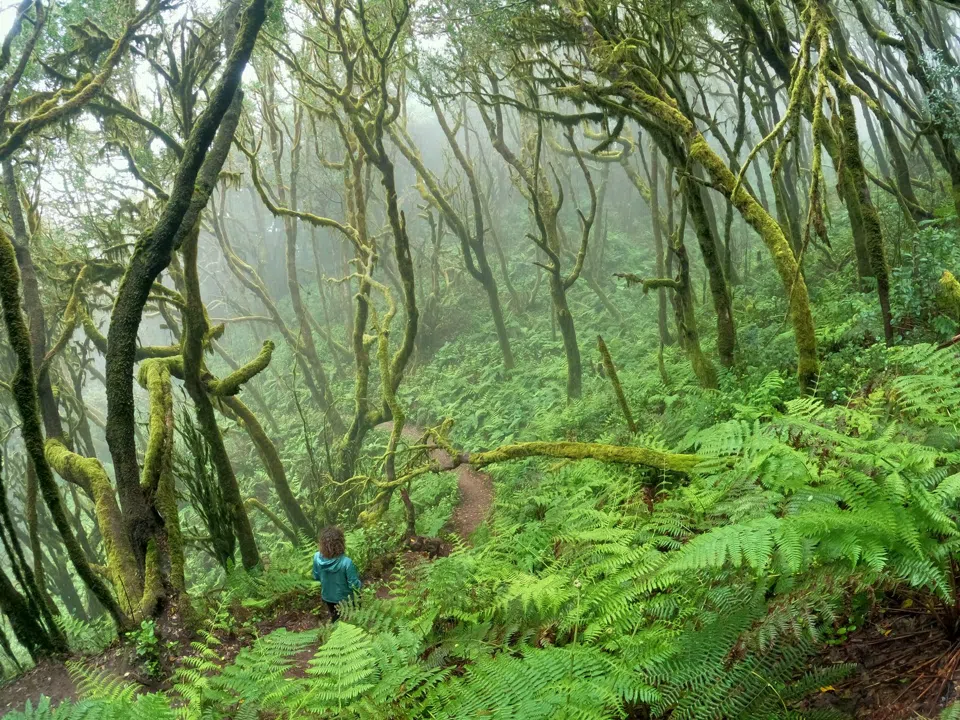
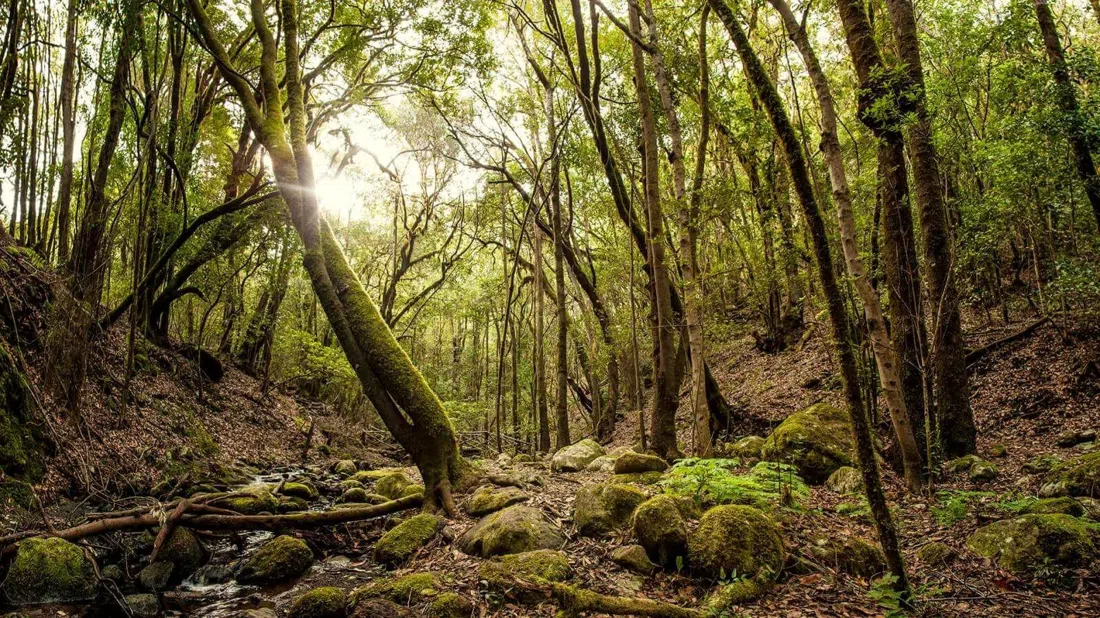
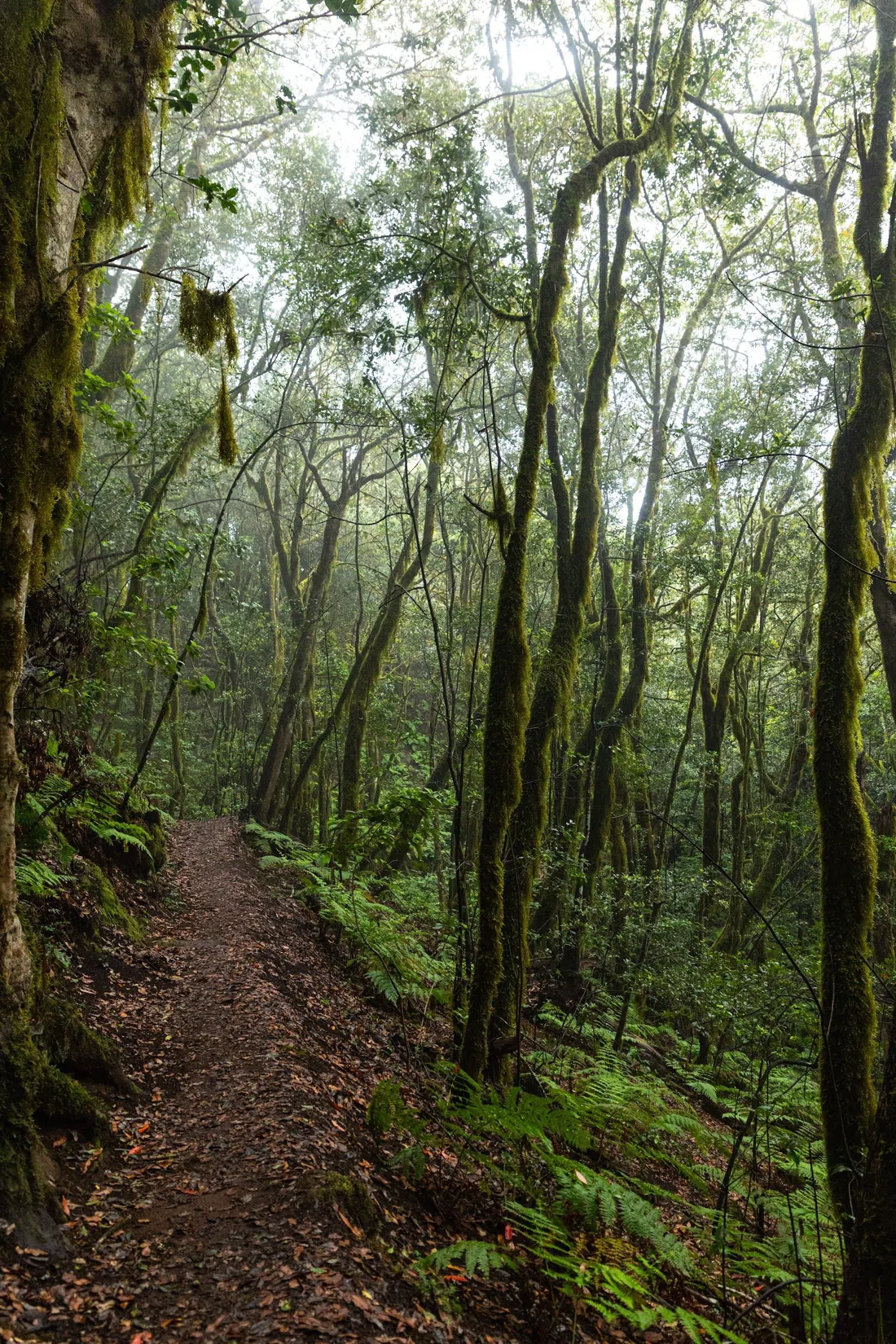
Ferns stand shoulder high beside the earth path through the Bosque de El Cedro (Garajonay National Park), laurel and tree-heath trunks arch over it, and cloud drifts between the branches. A shallow stream runs alongside the trail for long stretches. This is the densest and wettest block of Tertiary-relict laurisilva in the Canaries, and the core of the park's 1986 UNESCO listing. El Cedro sits inside it.
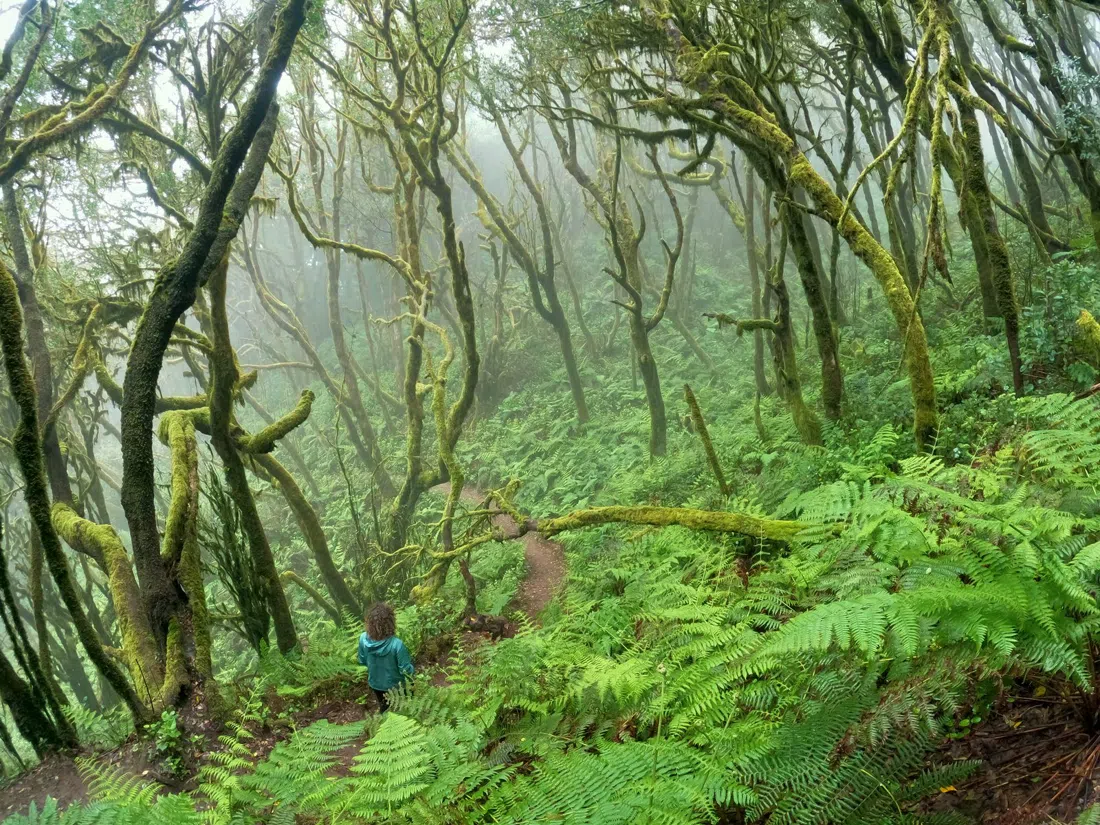
You need no ticket and no booking. Walking groups are normal here. The park asks larger parties to keep to the waymarked paths and to split up on the narrow stretches, and the trail is narrow for much of its length.
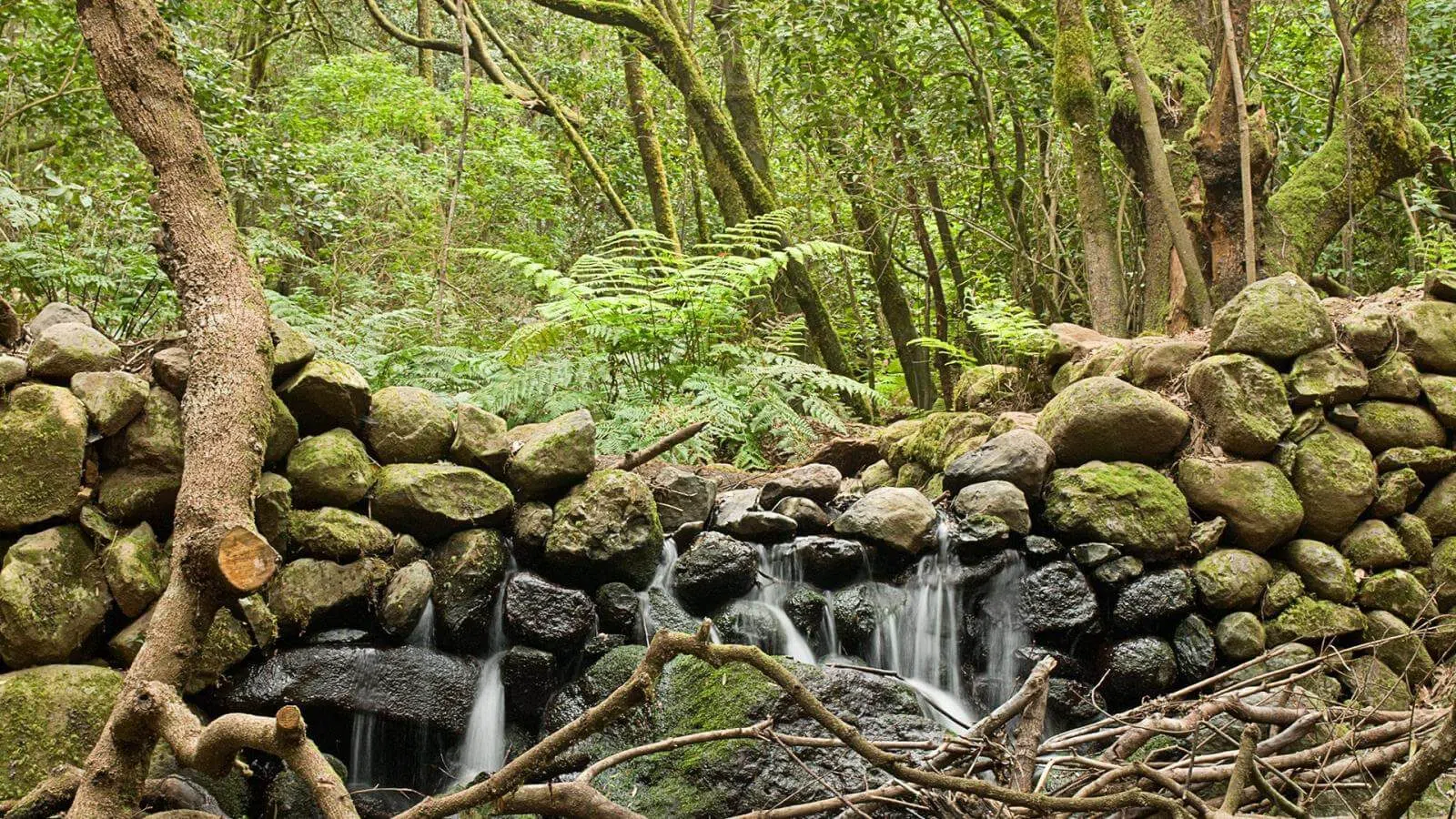
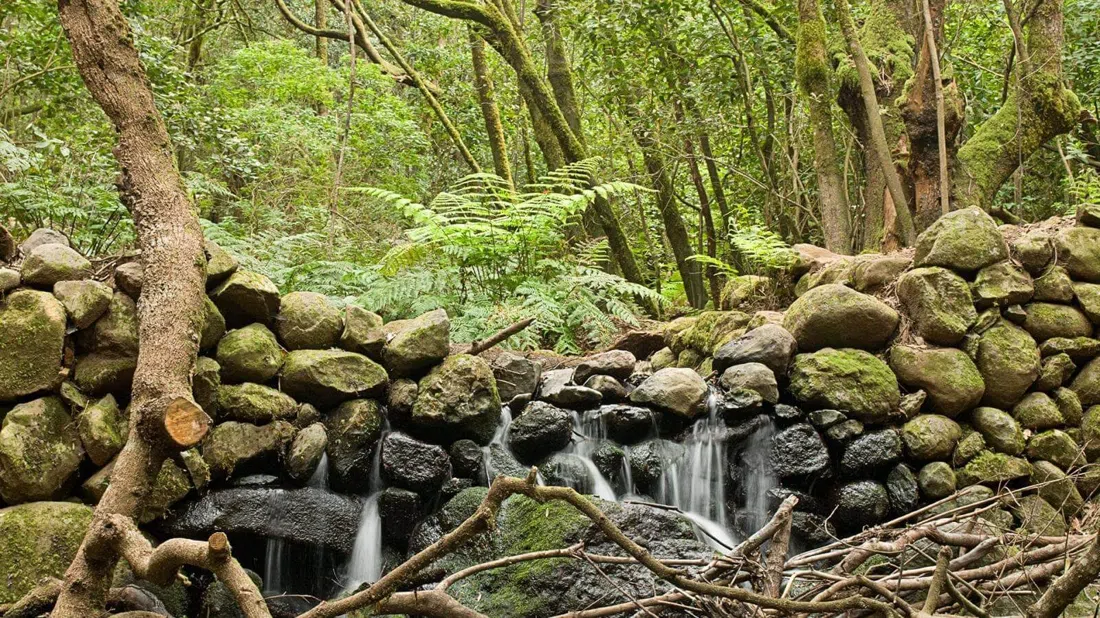
Partway along, the stream slows into the flat, stone-lined pools of Las Mimbreras (El Cedro stream), with willow thickets crowding the water. Islanders soaked wicker in these pools and wove it into the baskets that carried everything on the island before the roads came. The ground is flat and shaded. Eat here.
Walking down from El Contadero
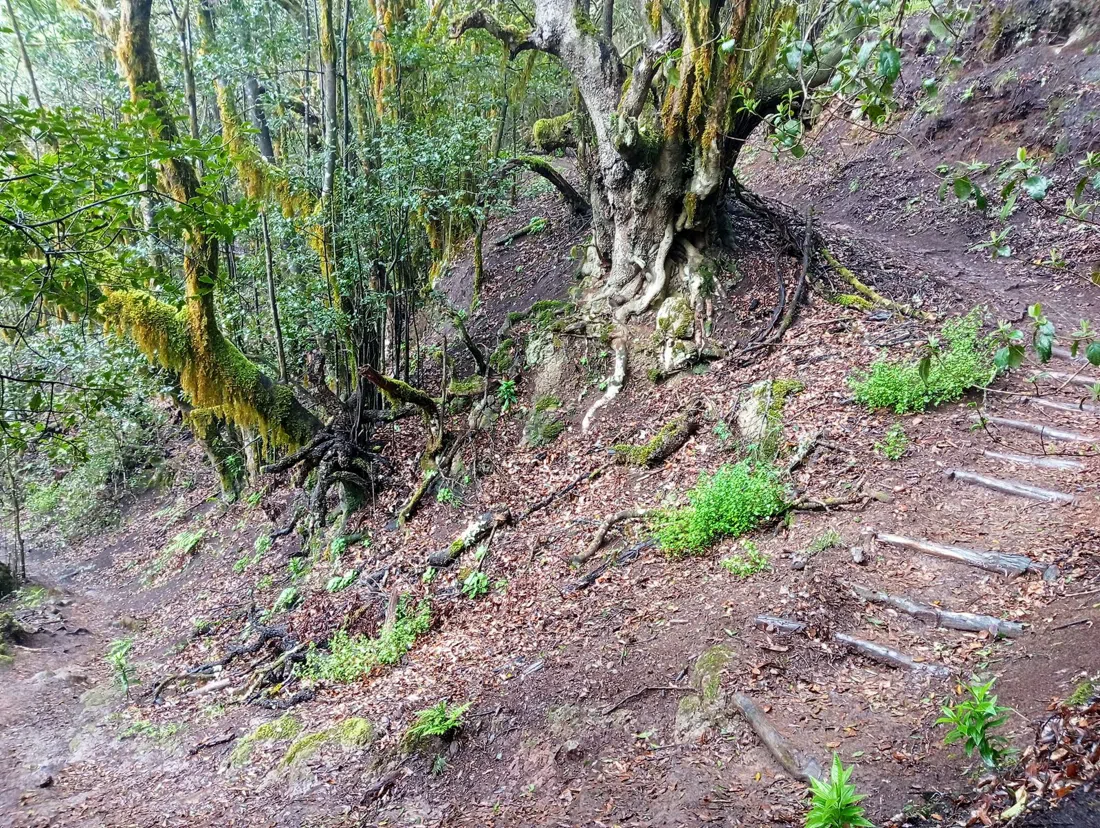
Sendero 9 / PR-LG 3 (El Contadero to El Cedro) starts from a waymarked roadside clearing and takes 3 to 3.5 hours one way. The surface alternates between cobbled steps and rooty earth, wet underfoot, and it gives up its height steadily. You pass old charcoal-burners' clearings before the roofs appear below you.
It is free, self-guided and needs no permit. The park's advice is closed walking shoes and warm layers, and in a forest holding this much water I would take both seriously. Local operators run the same route as a guided day walk.
The return is the same path, climbing. If you intend to walk back up, start early enough to eat in the hamlet first. Alto de Garajonay, the park summit at 1,487 m, is a short add-on from the same trailhead; do it before you drop into the forest, while you are still at road height.
El Chorro and the viewpoint above it
El Chorro de El Cedro (Salto de Agua) comes off a sheer dark basalt headwall as one thin ribbon of white water, into the top of the Hermigua valley, with ferns and moss streaking the wet rock and banana terraces far below. Sources put the drop at anywhere from 100 to 175 m. It is the tallest permanent fall in the Canaries, fed by the island's only year-round stream, and it runs hard after winter rain.
The fall costs nothing. You can only reach it on foot.
Mirador de El Chorro (Contadero to El Cedro trail) is the one spot where the fall reads whole, a pale line across the gorge with the terraced valley floor running away to the sea behind it. The national park's own route description for Contadero to El Cedro includes it. The platform is a small trailside ledge. Rotate through it and let the people behind you take their turn.
Driving up the CV-14
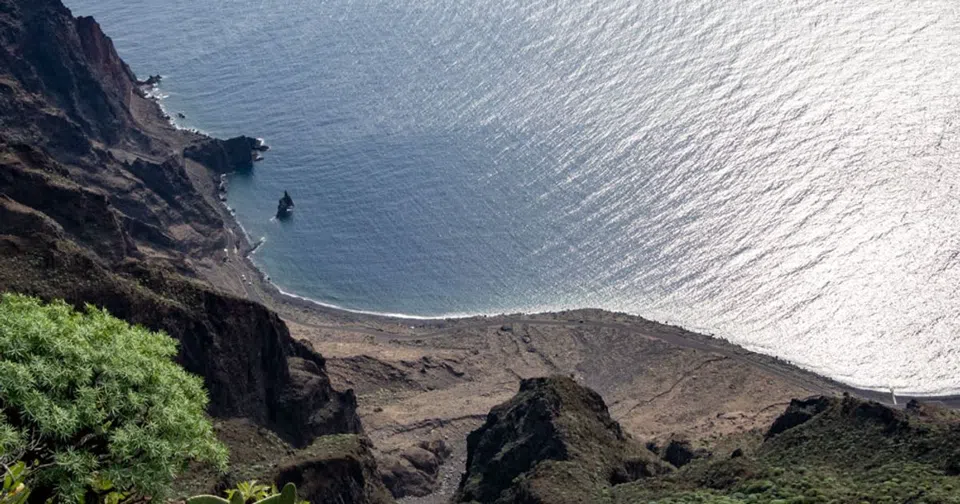
Mirador del Rejo (CV-14, the El Cedro access road) is a gravel pull-in at 1,000 m with a low wall at the lip of a vertical rock face. The whole Hermigua valley opens below it, and Teide stands above the cloud on Tenerife. From the wall you can see how the hamlet is wedged between the summit cloud and the ravine dropping to the sea.
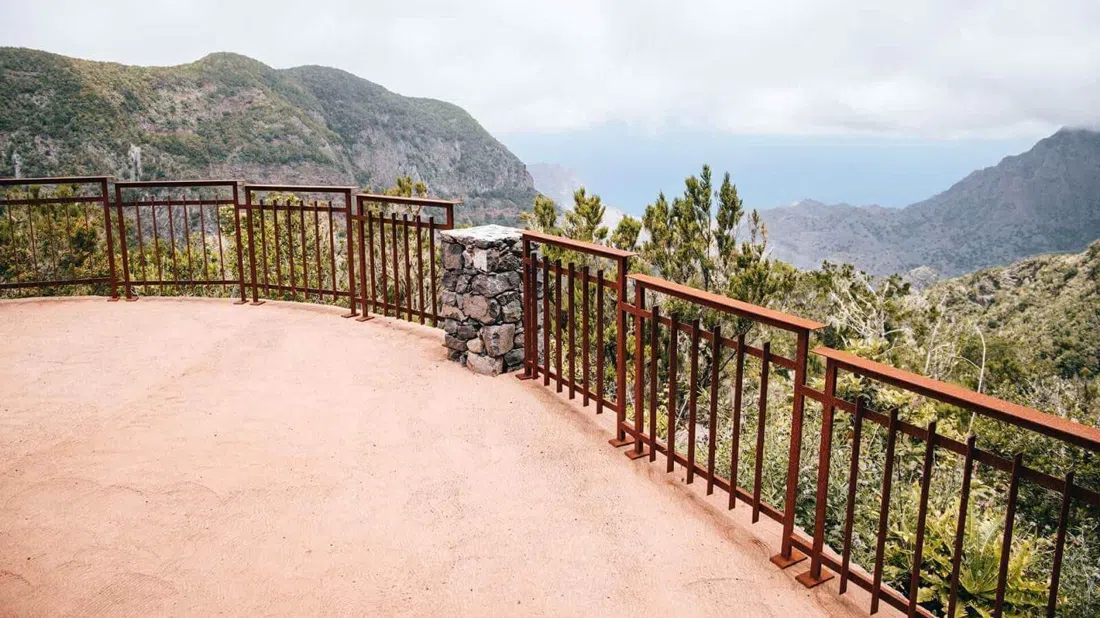
Cloud blanks the view often. If I had one clear hour on the access road, I would spend it here, because the next pass may show you nothing at all. Parking is tight. A minibus fits; a coach does not.
Walking the water tunnel
Túnel de El Rejo (El Cedro water tunnel) is 500 m of dead-straight, unlit, hand-cut rock, its mouth a low opening in a fern-covered slope. Water lies on the floor, ankle to knee deep. Headroom runs 1.7 to 1.8 m, so you go single file with your head down, headtorch beams picking chisel marks out of wet black rock ribs.
It was driven to carry El Cedro's permanent water across to the dry Rejo valley, for the banana terraces of Hermigua. It is unlit and unsupervised, and rockfall has been reported inside. Everyone needs their own headtorch. Wear shoes you don't mind soaking, and skip the tunnel entirely after heavy rain. Realistically this is for a small, confident group.
The reservoir track from Hermigua
Embalse de Los Tiles (Hermigua-side approach to El Cedro) is a small concrete dam wall holding a still green pool in a steep ravine walled with laurel, the forest reflected in the surface. A flat stony track runs along the waterside. It is free and unstaffed.
Every other stretch of this ravine is steps. This track is wide and level, the easiest walking up here, and the water beside it is the calmest in the ravine.
The chapel in the clearing
Ermita de Nuestra Señora de Lourdes (El Cedro) stands alone in a forest clearing: whitewashed walls, a red-tiled roof, one small open bell-arch and a wooden door, with picnic tables under the laurel trees behind it. Florence Stephen, an Englishwoman who came to La Gomera as a governess, paid for the chapel in 1935 and for the Virgin inside it.
The outside is approachable at any hour, and free. The interior opens for services and for the late-August fiesta, when the clearing fills; that pilgrimage is still one of the island's big dates. Come at any other time of year if you want the clearing quiet.
Eating and camping at La Vista
Bar Restaurante Camping La Vista (El Cedro, at 800 m) serves potaje de berros in a hollowed wooden mortar bowl, thick and green, at trestle tables in a wooden-beamed dining room. The terrace outside looks straight down the Hermigua valley to the sea, with Punta de Teno on Tenerife across the water. A full plate costs €15 per head. That watercress stew is an island staple.

This is the one place to eat or drink in El Cedro. It opens daily, the kitchen running 09:00 to 18:00 and the bar later in season. Walking parties arrive here as a matter of course; ring 922 88 09 49 before you bring one, and time your walk to land inside kitchen hours.
The campsite behind the restaurant is the island's only official campsite, and it holds 78 people in tents. Tents are the only option: you cannot sleep in a vehicle, and pets are not allowed. Fires are gas or charcoal.
Rooms in the hamlet
Casa Rural Los Patos (El Cedro) is a traditional Canarian stone-and-whitewash house with dark wooden doors and window frames, a terrace and a garden, the forested ravine wall rising directly behind it. It lets as a whole house, three bedrooms and two bathrooms, sleeping six. Rates start at €130 per night, with a three-night minimum. The owners will cook breakfast, lunch and dinner on request. The park paths start five minutes' walk from the door. Book early.
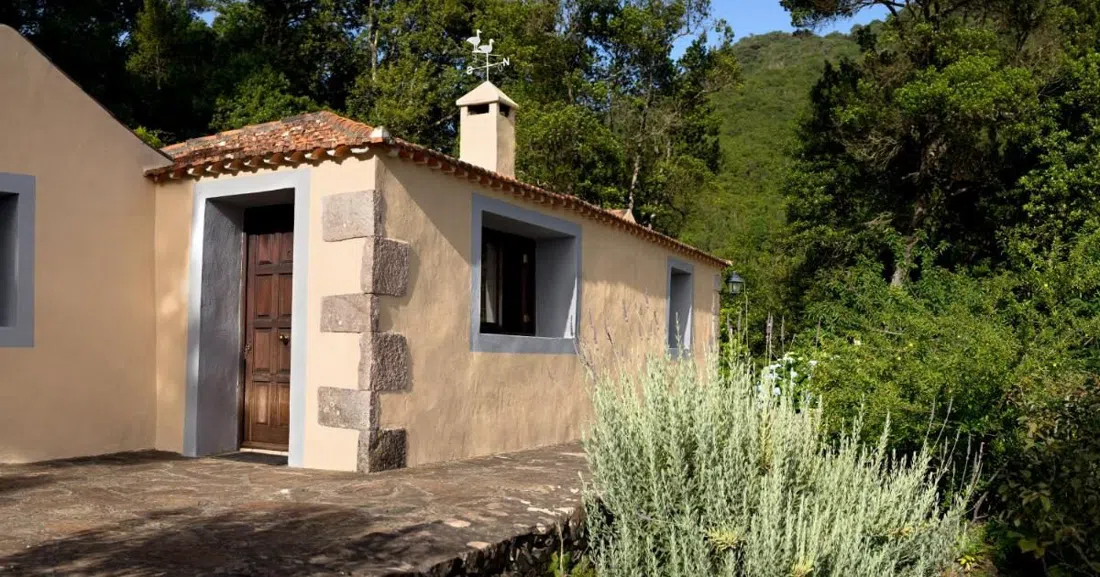
Casa La Montaña (El Cedro) is a single whitewashed cottage with a patio and a garden barbecue, terraced plots in front and the laurel-forested mountainside filling the view behind. You get a kitchen, a terrace, free private parking, and the forest path 500 m away. The rate is €€ for the whole cottage and is not published year-round, so confirm it with the owner. Nobody is on site to check you in, so arrange your arrival time directly. Take the WiFi and mobile signal claims lightly, because coverage in this ravine is patchy.
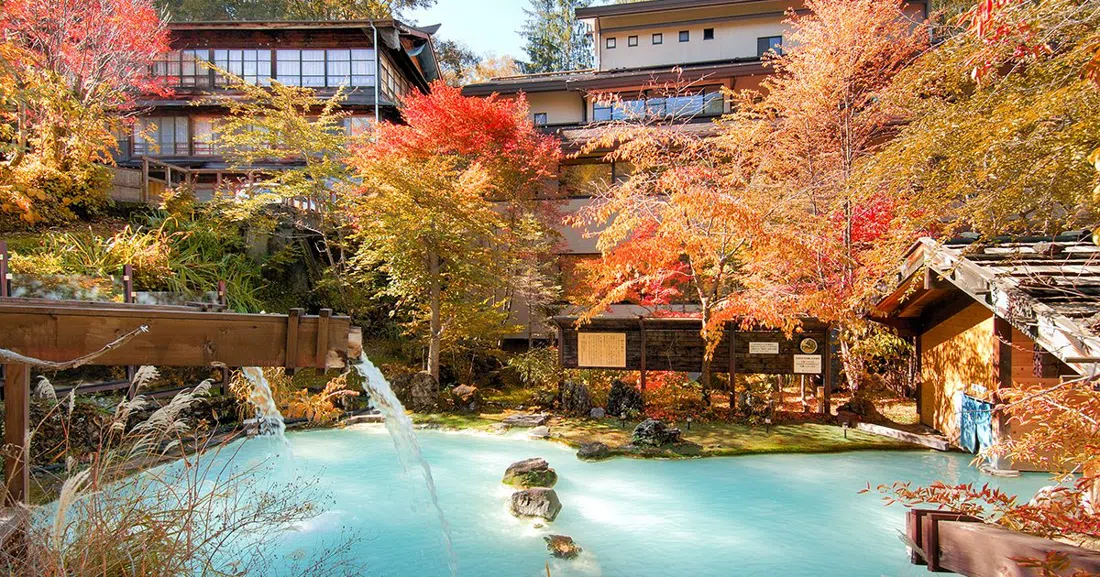
Casa Rural La Era (El Cedro) is an old stone hamlet house with a garden terrace and an outdoor barbecue, hand-built dry-stone terraces stepping down around it and the forest edge a few metres off. Book the whole property by phone on 922 880 781, since it sits on no booking engine, and the rate is €€ on request. It is the only El Cedro address carried on the island tourist board's rural-houses register, which is the best proof of licence you get up here.
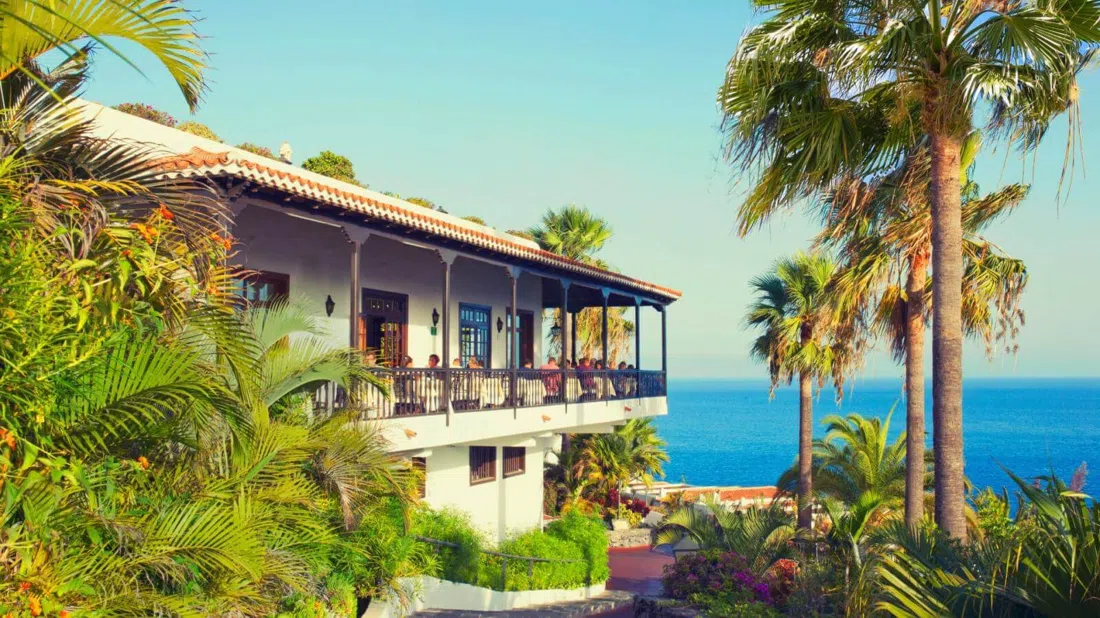
The house stands 0 km from the national park boundary and 12 km from Hermigua village. The nearest supermarket and bank are that whole 12 km of hairpins away, along with the restaurants of Hermigua, Los Telares among them. The Juego de Bolas visitor centre at Las Rosas is a further 20-minute drive. Shop before you climb.
Groups at the Aula de la Naturaleza
Aula de la Naturaleza de El Cedro (El Cedro) is a cluster of stone-and-timber rural buildings on a terraced slope, with plant nursery beds and a demonstration garden alongside and solar panels on the roofs. The Cabildo de La Gomera runs it for booked educational and environmental groups, and it is not open to walk-in visitors.
Term-time use runs mid-October to late June. Enquire ahead of any date. The rate is € by prior arrangement with the Cabildo. The park's own environmental workshop and gardens are next door, and the Cabildo installed self-consumption solar here in late 2025.
Practical notes
Nothing in El Cedro is ticketed, and everything with a door is arranged in advance: the restaurant and Casa Rural La Era by phone, the Aula de la Naturaleza by arrangement with the Cabildo, the cottages with their owners. Carry warm layers for the forest, a headtorch each if the tunnel is in the plan, and your food from Hermigua.
See the La Gomera guide and the La Gomera hotel search.
Questions
How long does the walk from El Contadero to El Cedro take?
Sendero 9 / PR-LG 3 is 6 km each way and takes 3 to 3.5 hours one way. It starts at the roadside trailhead at 1,250 m and drops to the cottages at 750 m. It is free and signposted, and there is no permit. The park advises closed walking shoes and warm layers. Coming back, you walk the same path uphill.
Do I need a ticket for the forest or the waterfall?
No. The Bosque de El Cedro, El Chorro de El Cedro, both miradores, Embalse de Los Tiles, Las Mimbreras and the chapel are all free and open. You can only reach El Chorro on foot, and the park asks larger walking parties to keep to the waymarked paths and to split up on narrow stretches.
Where can I eat in El Cedro?
Bar Restaurante Camping La Vista, at 800 m, is the only place in the hamlet to eat or drink. It opens daily, the kitchen runs 09:00 to 18:00, the bar stays open later in season, and a full plate costs €15 a head. Ring 922 88 09 49 before you arrive with a walking party.
Can I walk through the Túnel de El Rejo?
Yes, if you have the kit. The tunnel is 500 m of unlit, hand-cut rock with ankle- to knee-deep water underfoot and headroom of 1.7 to 1.8 m, so you walk it single file and everyone carries their own headtorch. Nobody supervises it, there have been reports of rockfall inside, and I would skip it after heavy rain.
Is there a shop in El Cedro?
No. The nearest supermarket, bank and restaurants are 12 km of hairpins away in Hermigua village, and the Juego de Bolas visitor centre at Las Rosas is another 20 minutes beyond that by car. Buy food before you drive up, or book Casa Rural Los Patos, where the owners cook breakfast, lunch and dinner on request.