The market hall on Rua Coelho da Rocha smells of fish guts at nine in the morning and of grilled pork at nine at night, and the same families pass through it twice a day. Campo de Ourique sits on a flat grid up above the rest of the city, with a cemetery at one end, a garden in the middle and a bigger garden downhill, and nothing in it is arranged for visitors. I eat here most weeks. Below is what I order, what it costs, and which doors will actually take your group.
The market hall is the living room
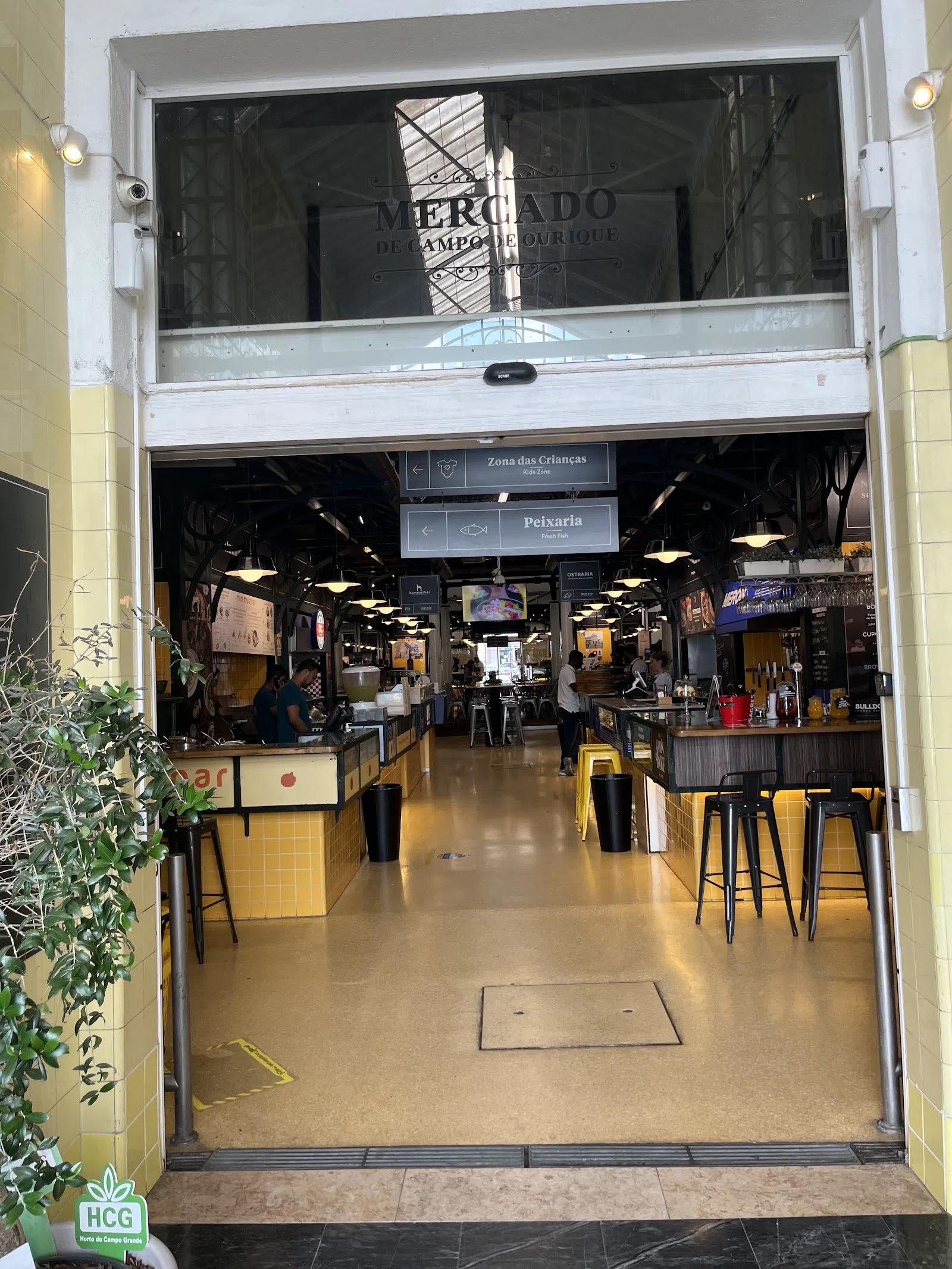
A plate at Mercado de Campo de Ourique (Rua Coelho da Rocha, dead centre of the grid) runs €8 to €15, and the pricing is the whole point: every stall bills separately, so six people can order six different dinners and still sit at one table. It is a working produce market in the morning (fruit, fish, a butcher) and a food hall from lunch until 23:00, or 01:00 on Friday and Saturday. There are no reservations and no door policy, which makes it the easiest place in the neighbourhood to seat eight people who decided to eat together forty minutes ago.
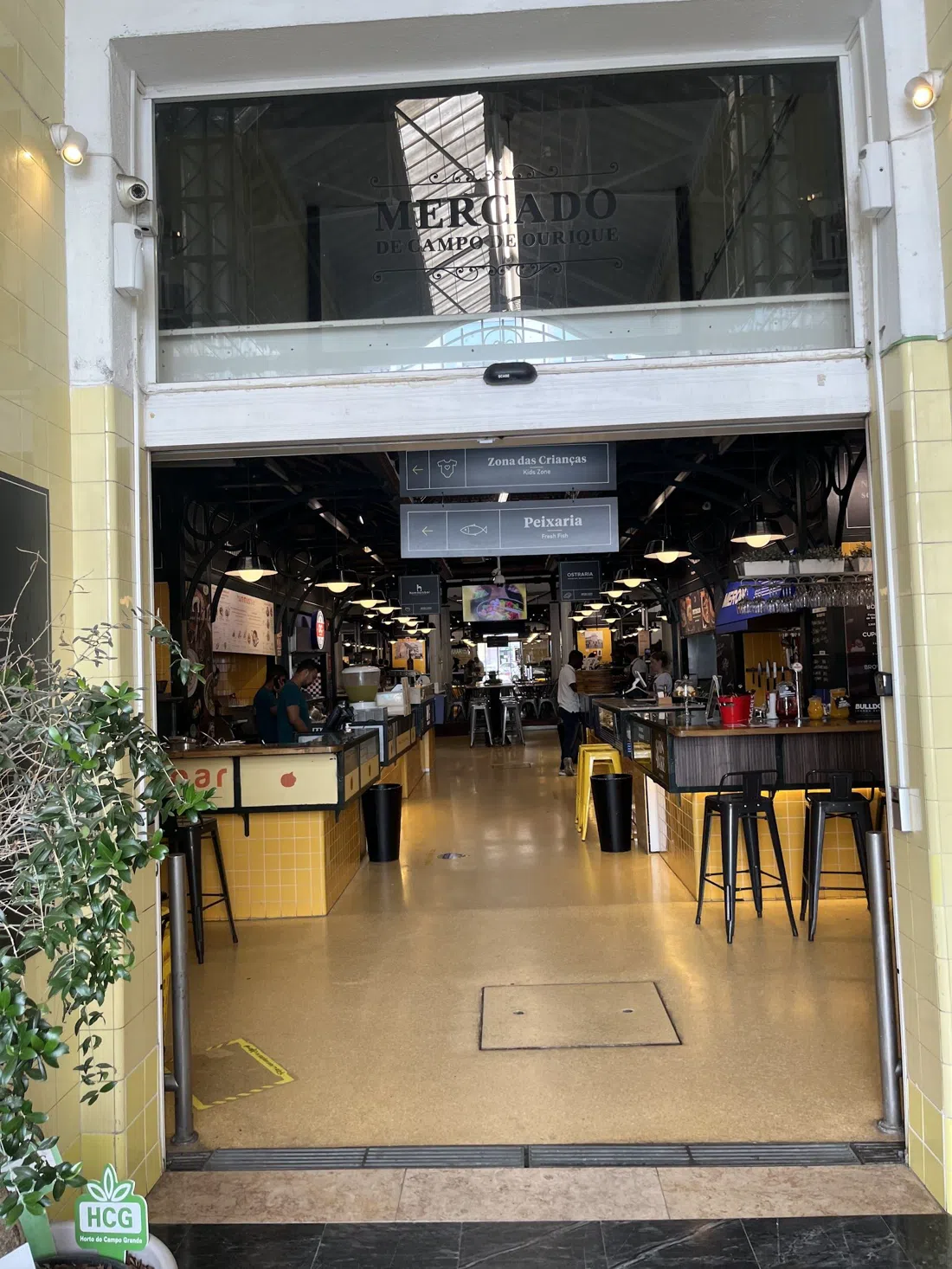
That ease has a cost. Friday and Saturday evenings the long tables fill and you will be standing with a plate looking for a gap. My habit is to arrive at 12:30 for lunch or after 21:30 for dinner, and if there are more than four of us, one person sits down and holds bench space while the rest queue at the stalls. Bring the plates back in waves; nobody minds, everyone does it.
It is also the answer to Sunday, when most of the neighbourhood's kitchens are shut. If your one free evening in the city is a Sunday, this is where you come.
Lunch in the tascas, at tasca prices
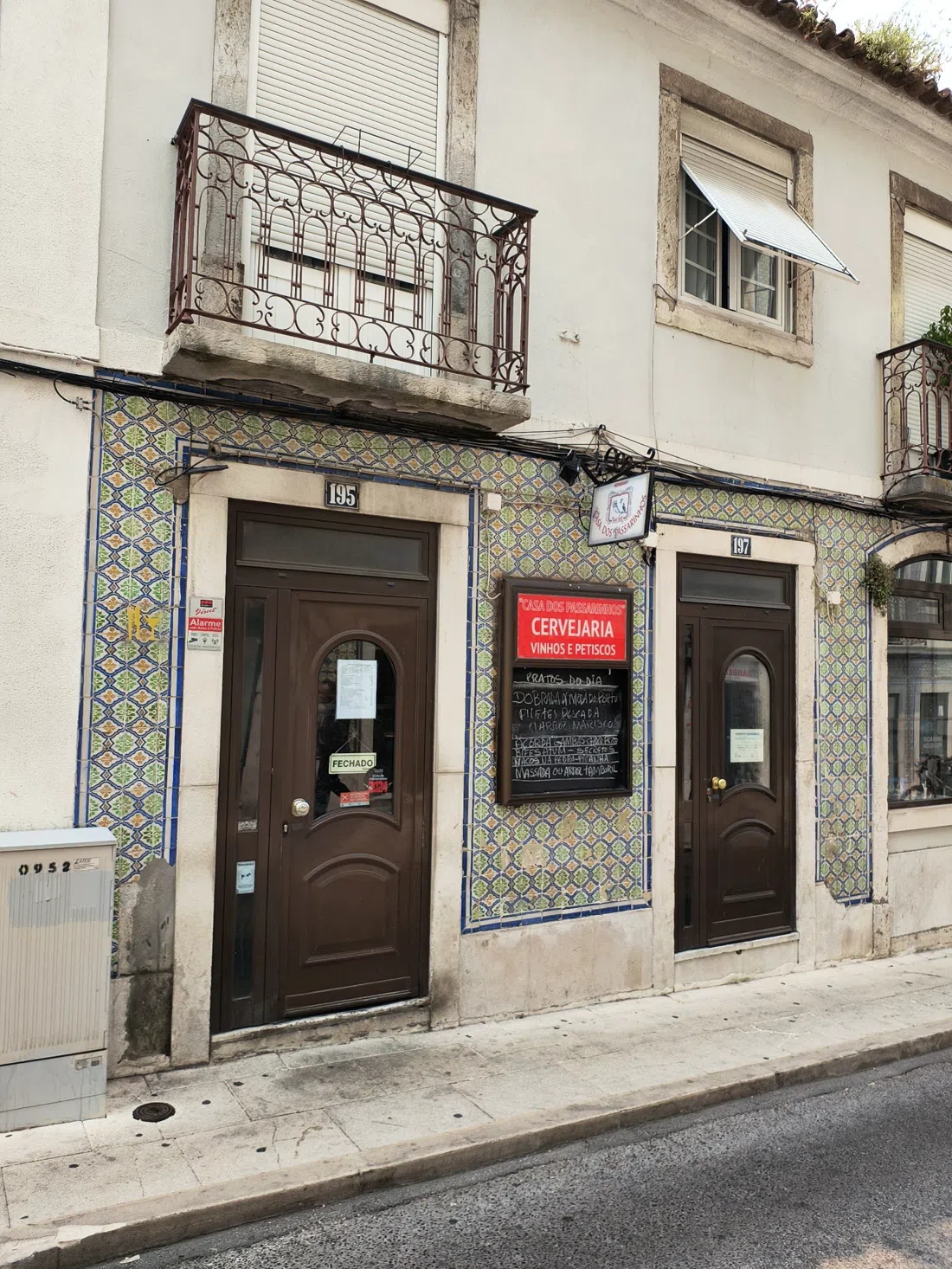
Choco frito, cuttlefish in batter fried hard, is €10 to €16 at Casa dos Passarinhos (corner of Rua Silva Carvalho), along with whatever whole fish is on the grill that day. There has been a tasca on that corner since at least 1923 and it behaves like it: long tables, loud rooms, plates arriving without ceremony. It is the rare place that absorbs a big noisy group, though phone ahead for more than six and expect a queue if you turn up at the peak of lunch. Closed Sundays.
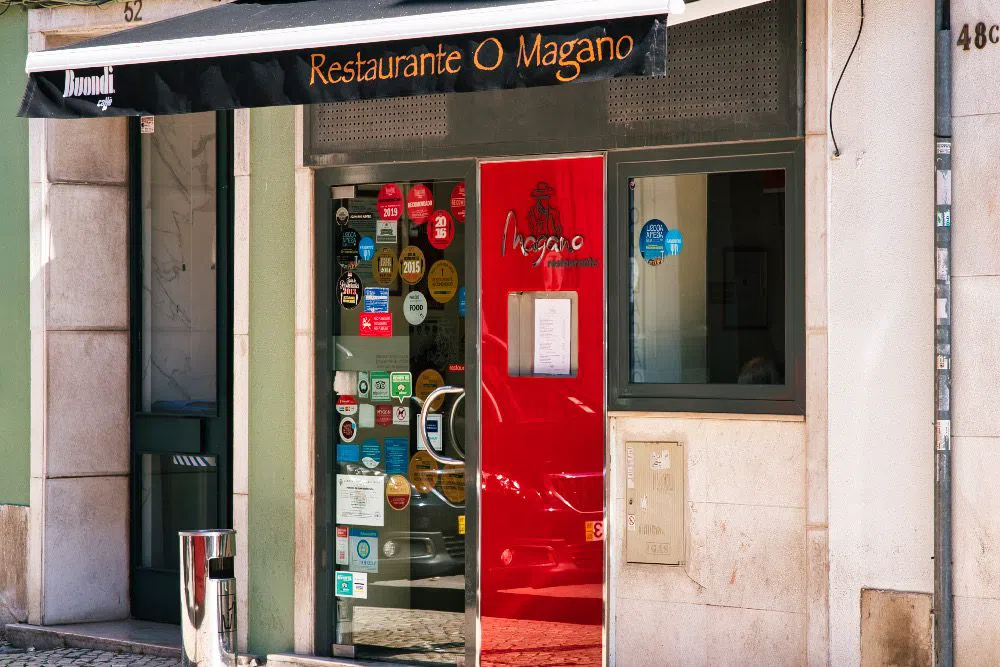
Black pork and lamb, €14 to €22, is the reason to book O Magano (a short walk into the grid from the market). This is Alentejo cooking, slow and fatty, and the kitchen has held its ground for over two decades while international openings crowded in around it. The room is small and popular, so reserve. More than six is a real squeeze and I would not inflict it on them. Closed Sundays.
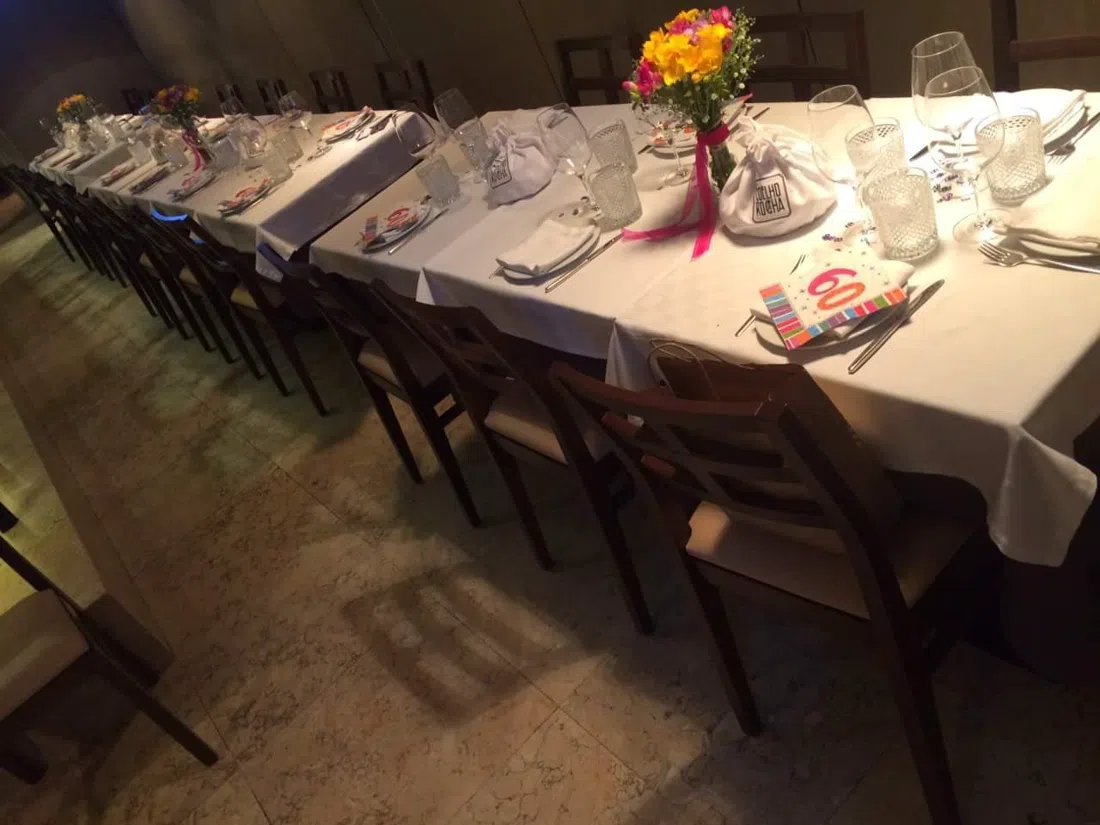
Coelho da Rocha (on the street of the same name) runs mains at €15 to €22 in a more polished register, with the same Alentejo roots underneath. What makes it unusual is the counter: solo diners are seated properly, fed properly and not parked by the toilets, which is not a given anywhere. Eat at the counter in ones and twos; book a table if you are four or more. Closed Sundays and public holidays.
Three of the neighbourhood's best kitchens shut on Sunday, and a fourth shuts Sunday and Monday. Plan your week around that before you plan anything else. There is more on the city's rhythms in our Lisbon guide.
Two rooms worth planning your evening around
Mains at Pigmeu (Rua Coelho da Rocha) are roughly €16 to €24, and the menu is one organic pig a week, bought whole by chef-owner Miguel Azevedo Peres and served almost entirely: the prized cuts and the ones most kitchens quietly discard. It has held a Michelin Bib Gourmand and it has been doing this since 2014, long before nose-to-tail became a phrase people used in marketing. I have eaten here often enough to say the offal is not a dare; it is the best thing on the table.
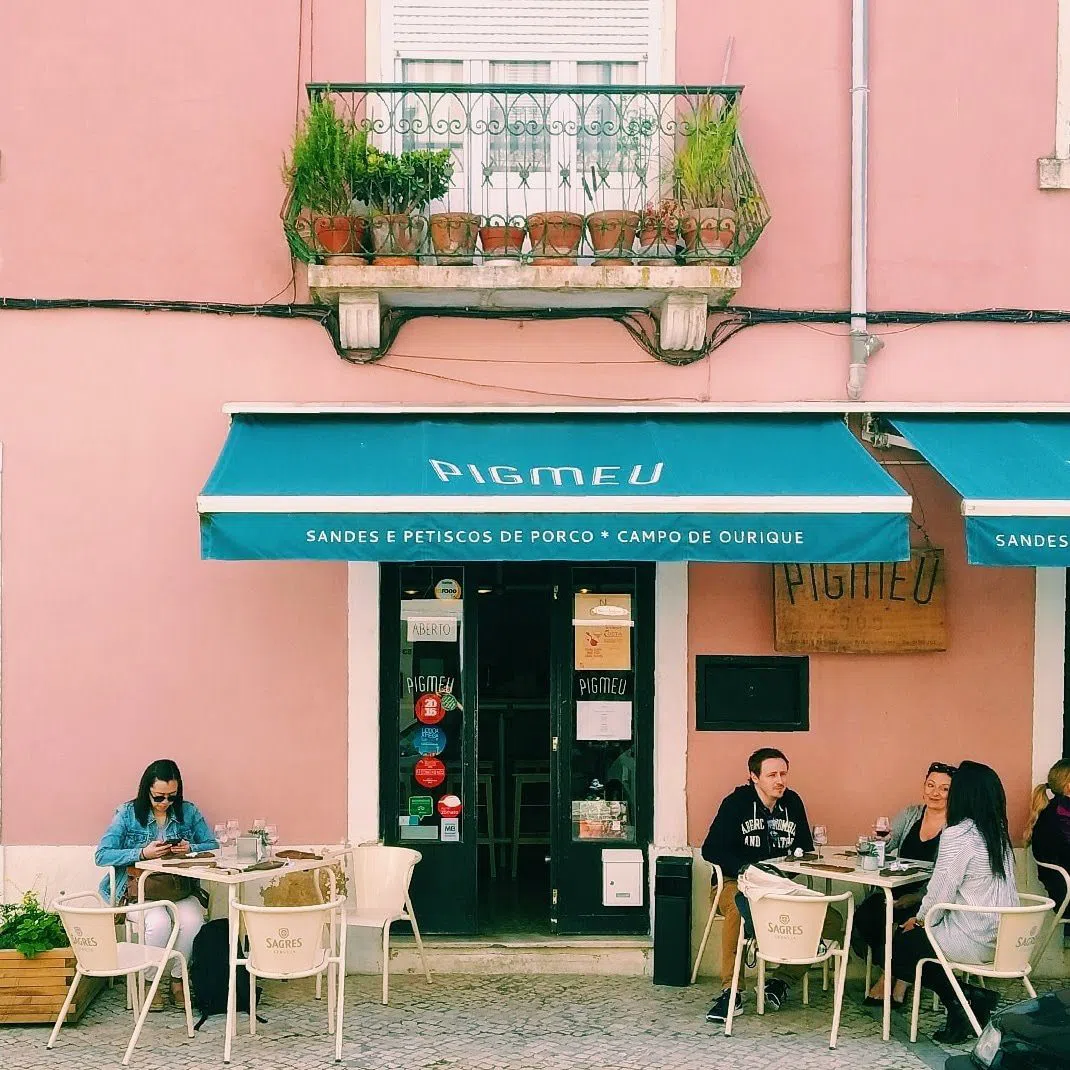
The room is small, so book ahead. If you are more than four, call rather than wrestling with the online form. The form does not understand a group and the phone does.
Tasca da Esquina (Rua Domingos Sequeira) is the step up: expect €40 or more a head for chef Vítor Sobral's reworked corner-tavern cooking, the restaurant that first pulled serious diners up the hill to Campo de Ourique. Forty seats, closed Sunday and Monday. The booking terms are formal and worth knowing before you are annoyed by them: parties of four or more have to leave card details to hold the table, and six or more must arrange it by email. Forty seats cannot absorb a no-show.
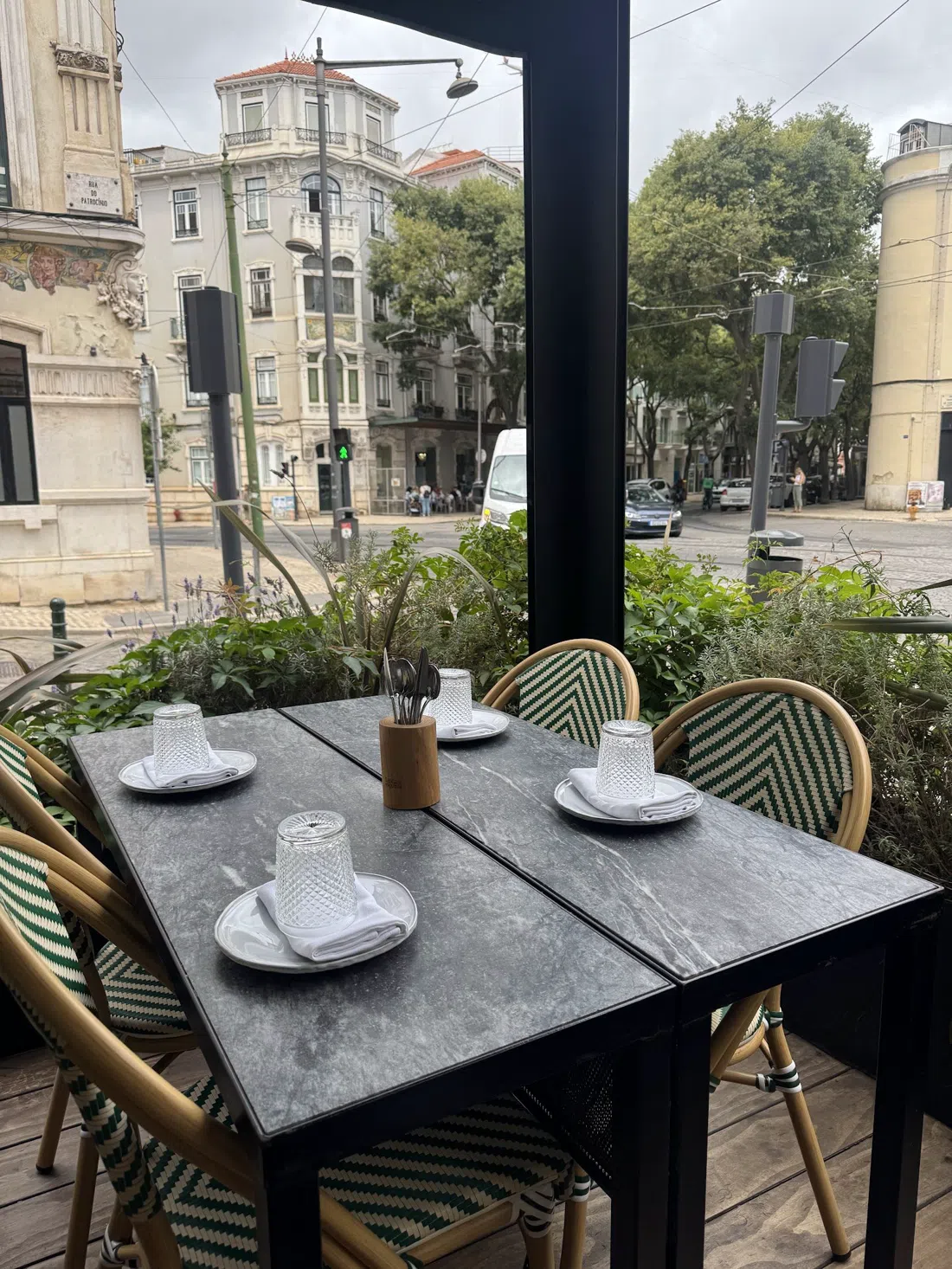
If you want one properly dressed dinner in this neighbourhood and one honest one, make it Tasca da Esquina and Casa dos Passarinhos, in that order of formality and the opposite order of price.
Pastry first, coffee second, and the nata question
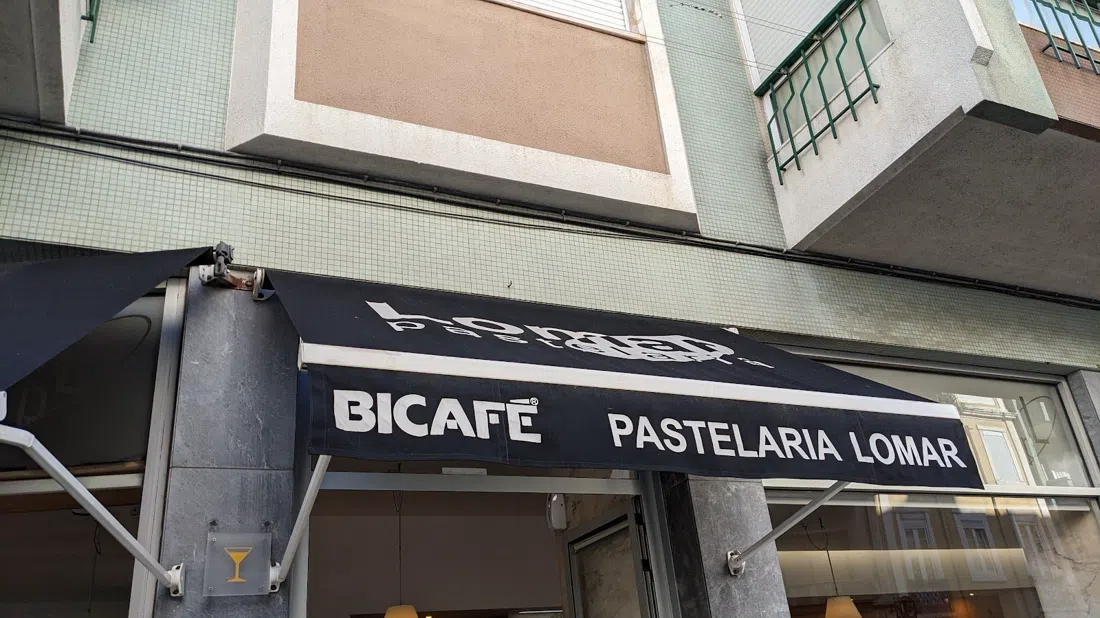
A croissant brioche and a coffee at Pastelaria Lomar (Campo de Ourique, on the way into the grid) comes in under €4, and the croissant brioche is the order: soft and sweet, closer to bread than to pastry. The family has run it since 1976 and still bakes on site. It opens at 07:30, which makes it the honest first stop of the day rather than a mid-morning treat.
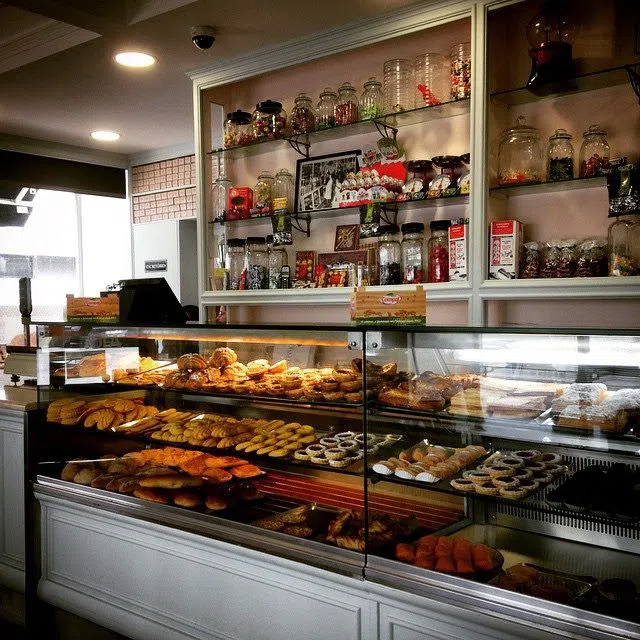
A pastel de nata at Pastelaria Aloma (Rua Francisco Metrass) is €1.30 to €1.60, and this is the original 1943 shop, not one of the later branches. Five wins at Lisbon's Best Pastel de Nata, including 2025, and the pastry is still rolled by hand with no industrial machinery, which you can taste in how unevenly the layers shatter. Counter service, standing room, a few tables. A group can pass through happily but cannot sit down together, so do not plan a birthday here.
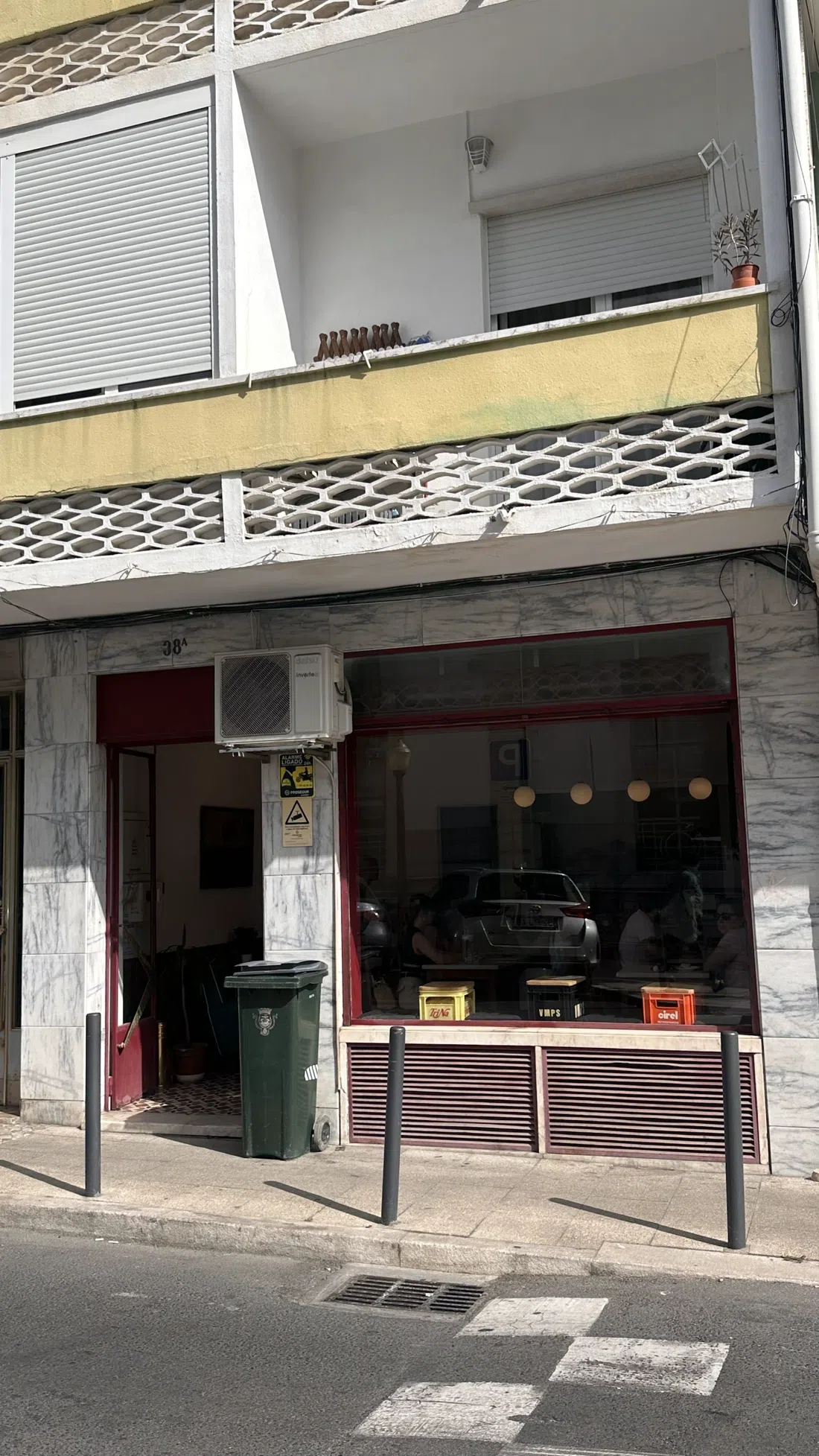
A flat white at Double Trouble Specialty Coffee (in the grid, a couple of blocks off the market) is around €3, and the coconut cake soaked in condensed milk is the thing I come back for, that and the tamago sando, which I did not expect to like and now order every time. Three Brazilian friends founded it, the coffee is properly made, dogs are welcome, and there are vinyl listening sessions and pop-up tastings. There are sixteen seats in total. More than four of you will not fit, and nobody is turning you away; there is simply nowhere to put you.
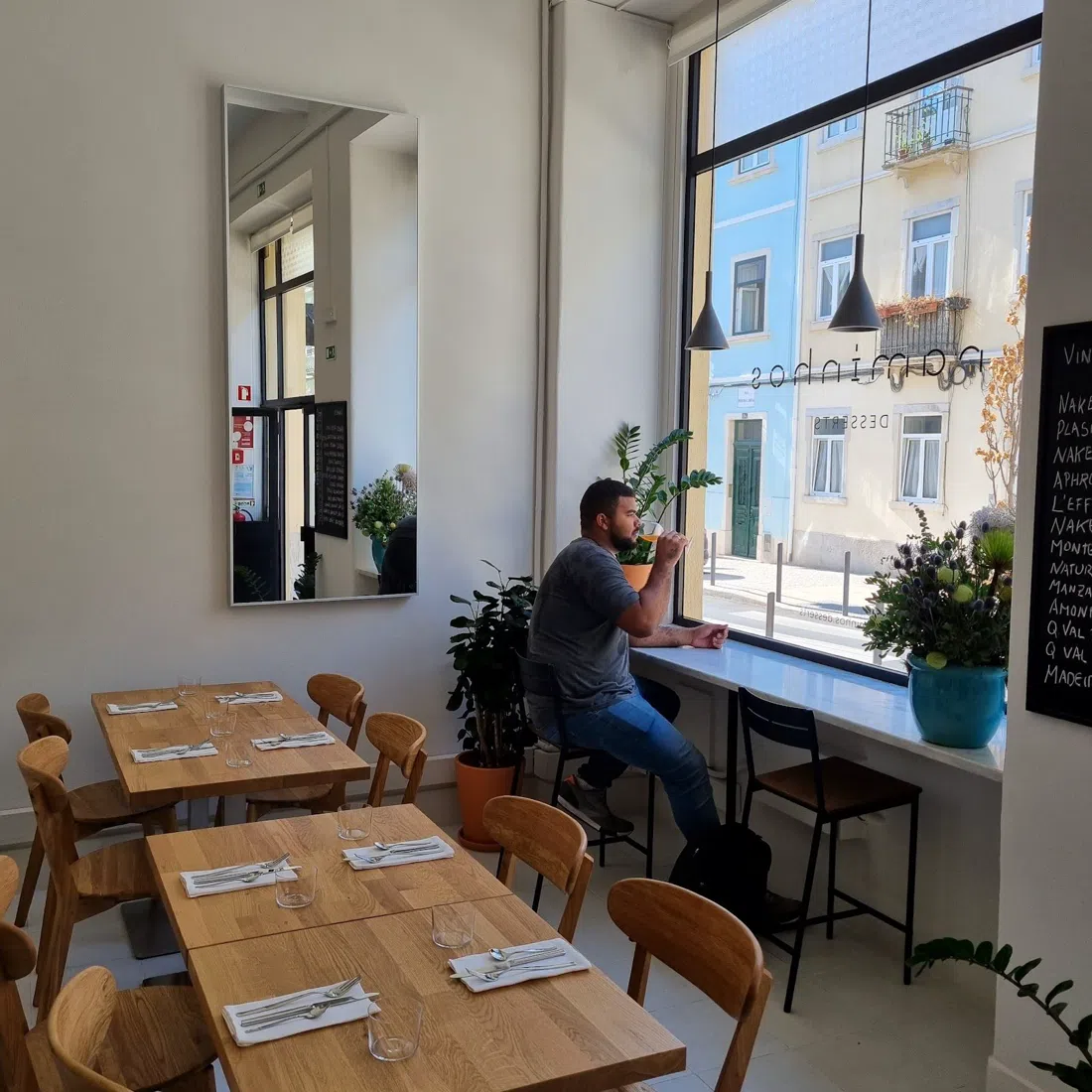
Desserts at Raminhos Desserts (a very small room in the grid) run €8 to €14 and are the work of Ana Raminhos, one of the country's best pastry chefs, cooking for herself on a short menu that turns over with the season. It opens Tuesday to Saturday, 15:00 to 22:00, and nothing else. Treat it as a destination in the late afternoon or as pudding after a dinner eaten somewhere that does not bother much with pudding. Call for anything above four people.
Bottles, pours and one very old cocktail bar
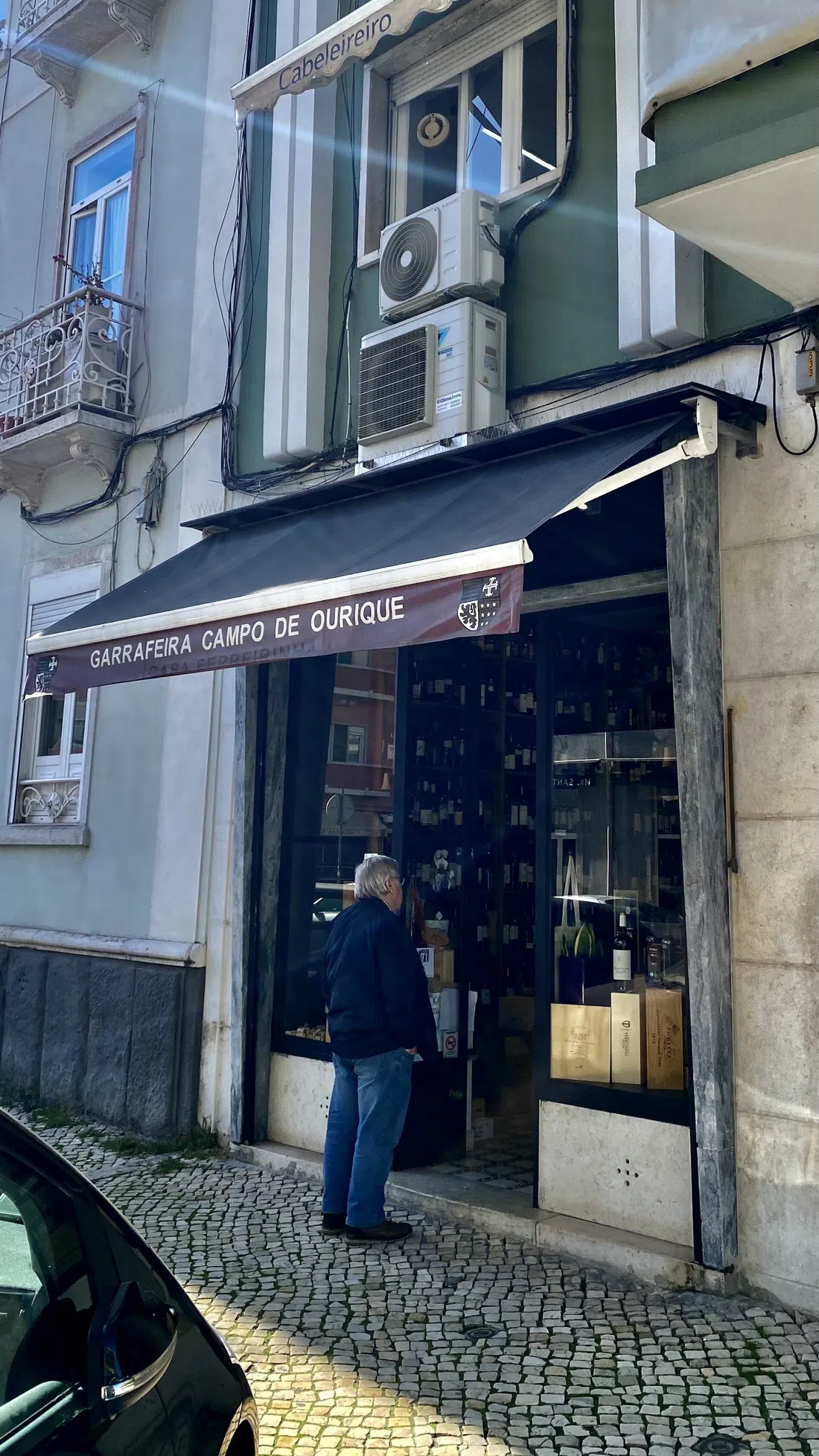
Bottles at Garrafeira Campo de Ourique (on the main shopping run) start around €8 and climb to collector prices for old vintages, and this is a shop first with a tasting counter second. The family who run it are deep in Portuguese wine and will routinely open something so you can taste before you commit, which is the opposite of every hotel wine list you will meet on this trip. Go in twos and threes and ask what is open. Do not arrive with ten people and expect a tasting.
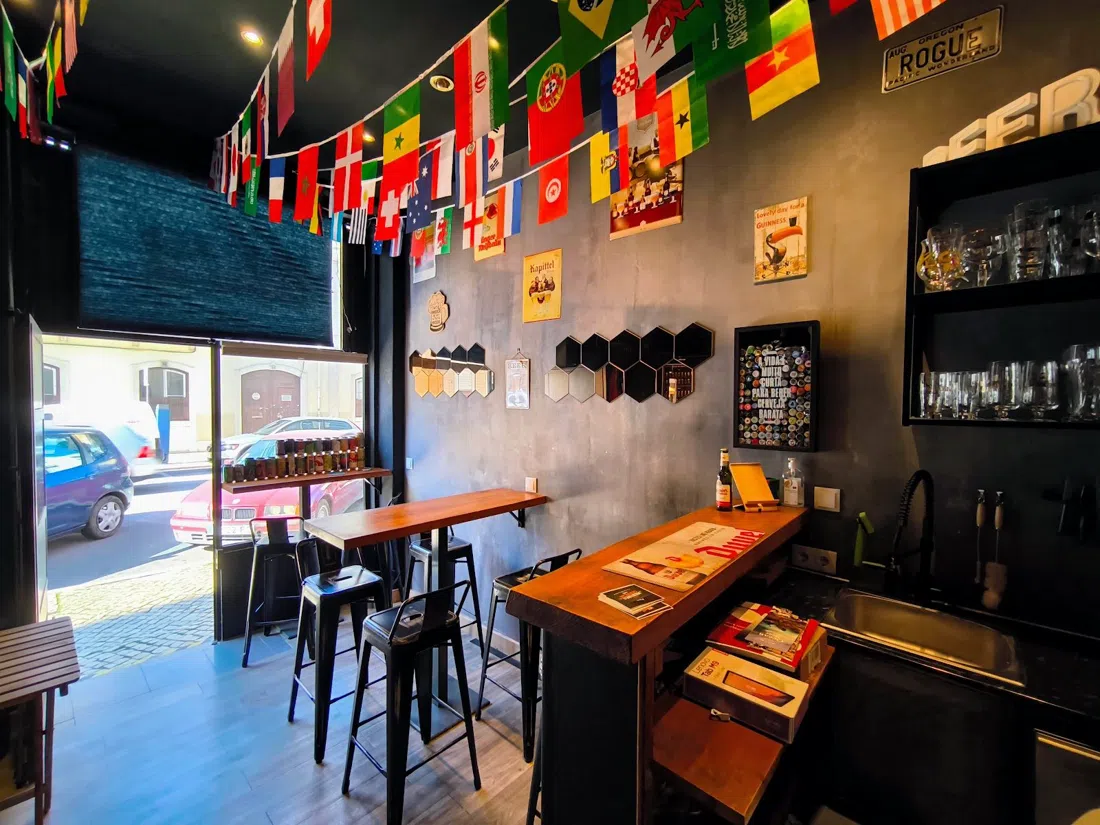
Pours and bottles at Mestre da Cerveja (a few doors along, half shop and half bar) are roughly €4 to €8, served with petiscos plates, and it is the neighbourhood's craft beer specialist with a strong import selection. It is small, fine for a few, not a room to book out. One warning: delivery platforms list it as closed. The bar is open daily from 15:00. Walk past and look in rather than trusting an app.
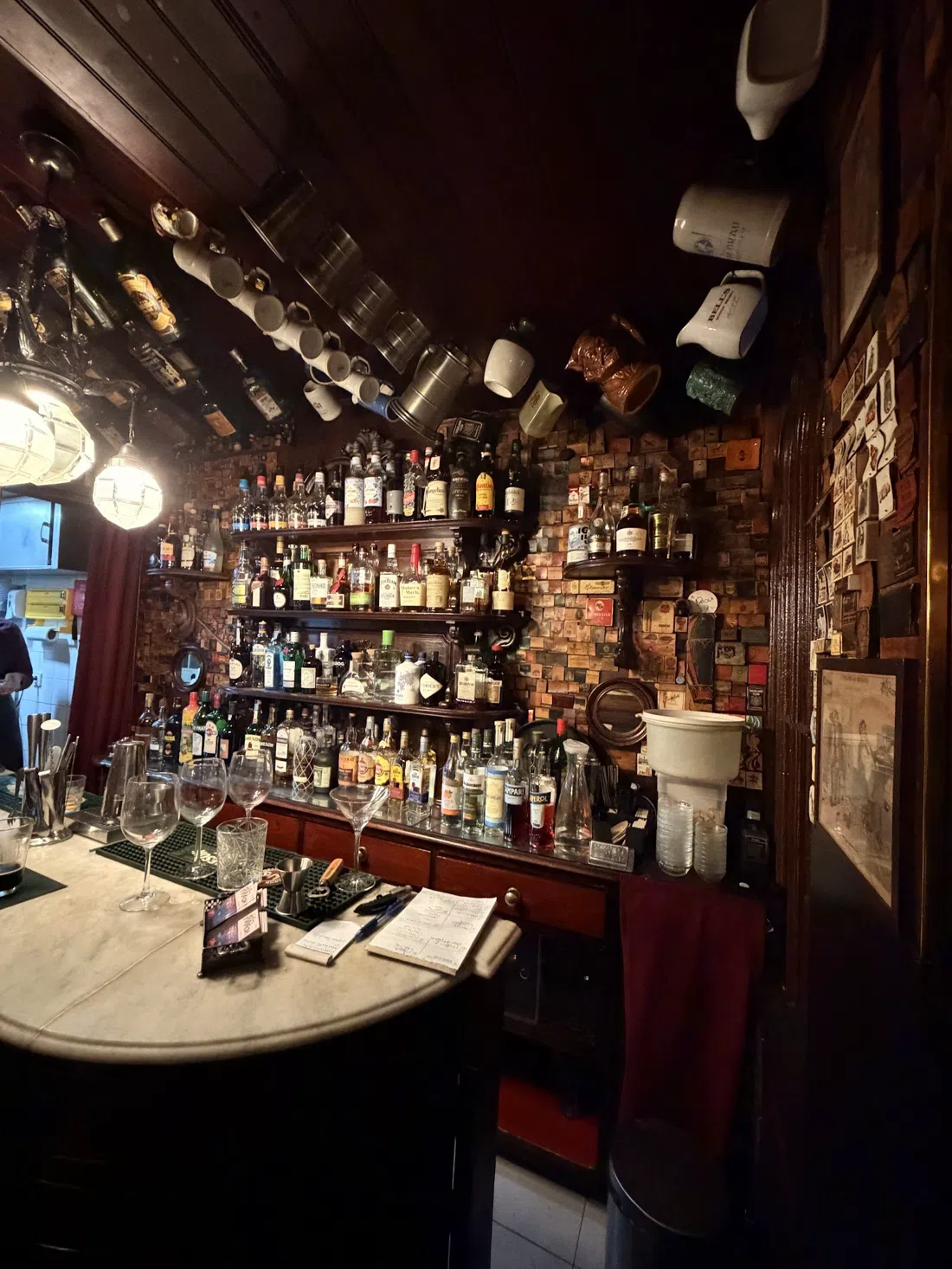
Cocktails at A Paródia (Rua do Patrocínio, at the edge of the neighbourhood) are €10 to €14, and the ginger margarita is the house signature out of a list of more than eighty. It has been open since 1974 and the room is intimate and built for conversation: right for four or six, wrong for a loud dozen who want to shout over each other. Evenings only, Monday to Saturday, 20:00 to 02:00.
Two gardens and the view at the end of the tram line
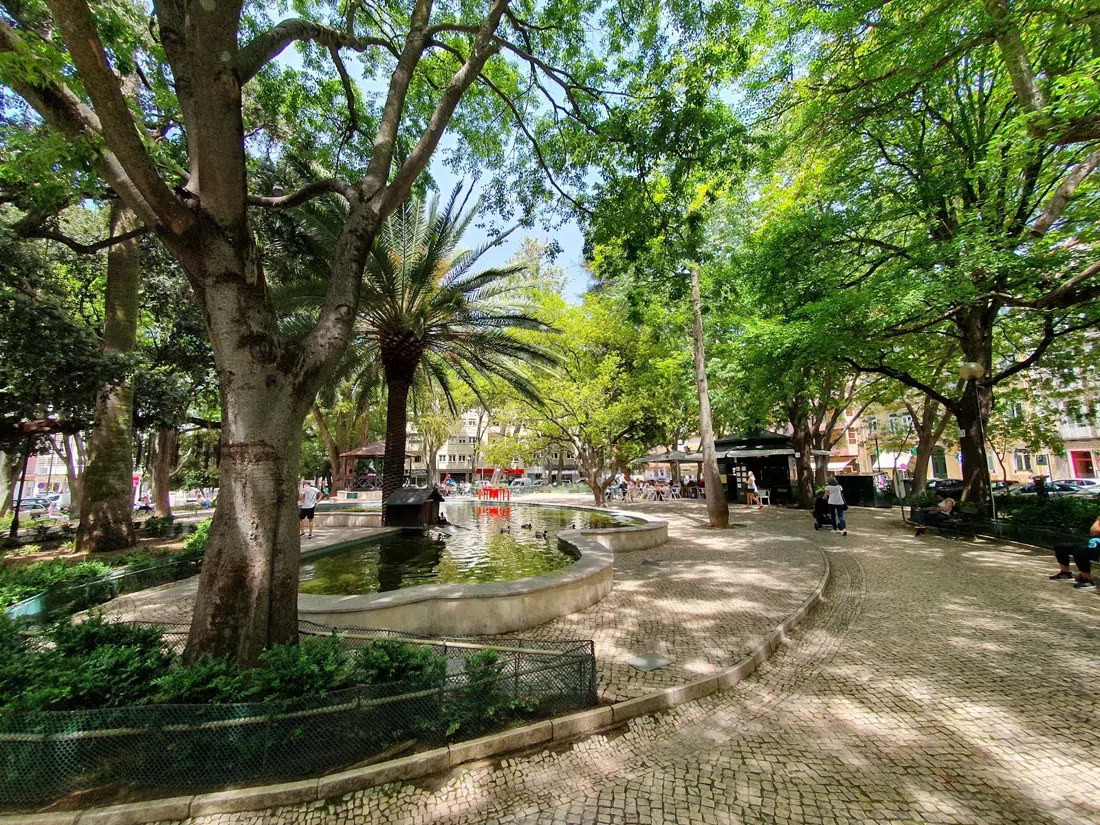
Jardim da Parada (formally Jardim Teófilo Braga, in the middle of the grid) is free, and the Hamburgueria da Parada kiosk does food and drink for €3 to €12. Everyone calls it Jardim da Parada because it was the parade ground of the old barracks. In practice it is where the neighbourhood sits: parents at the kiosk terrace while children run themselves into the ground, old men holding the benches, and a terrace that absorbs a group without anyone having to book anything.
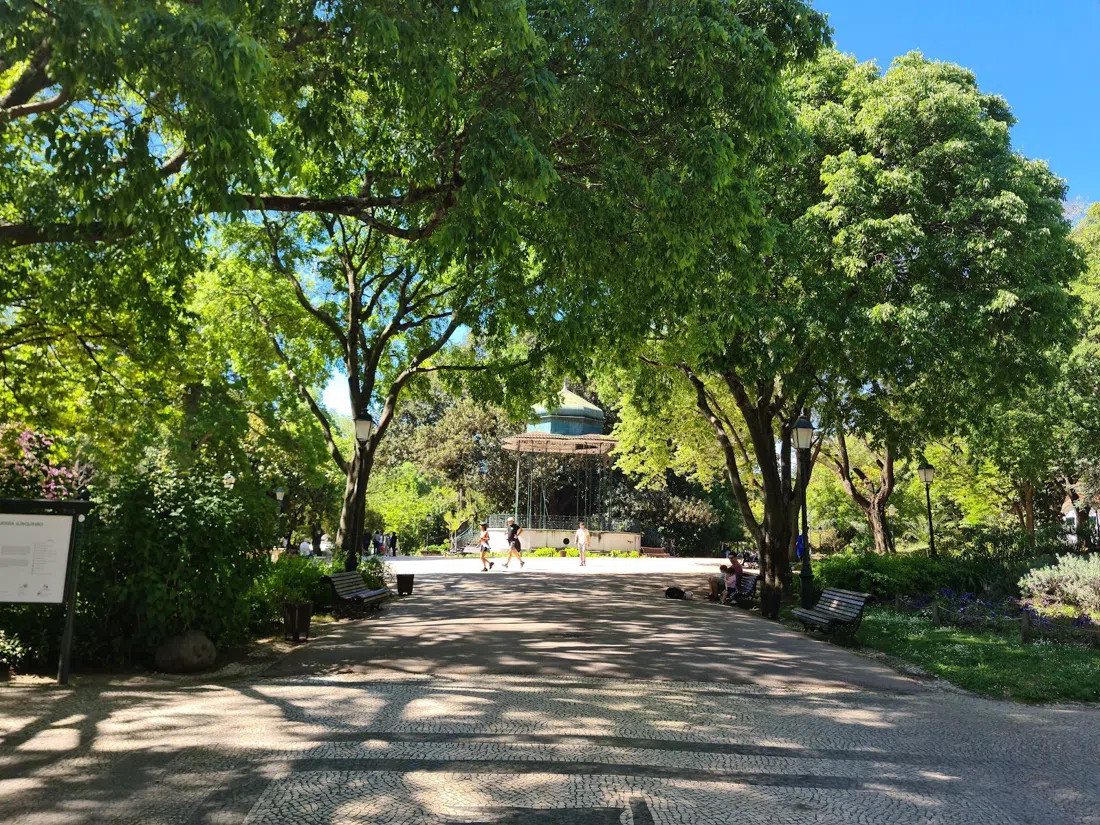
Jardim da Estrela (downhill, a short walk from the grid) is free and open from 07:00 to midnight, the bigger of the two, with a radical playground and a community library kiosk. The renovated kiosk now trades as Estrela by Olivier, with dishes roughly €5 to €15, and the terrace seats around 150. It is the one place outdoors that will take a large group on a warm evening without a phone call.
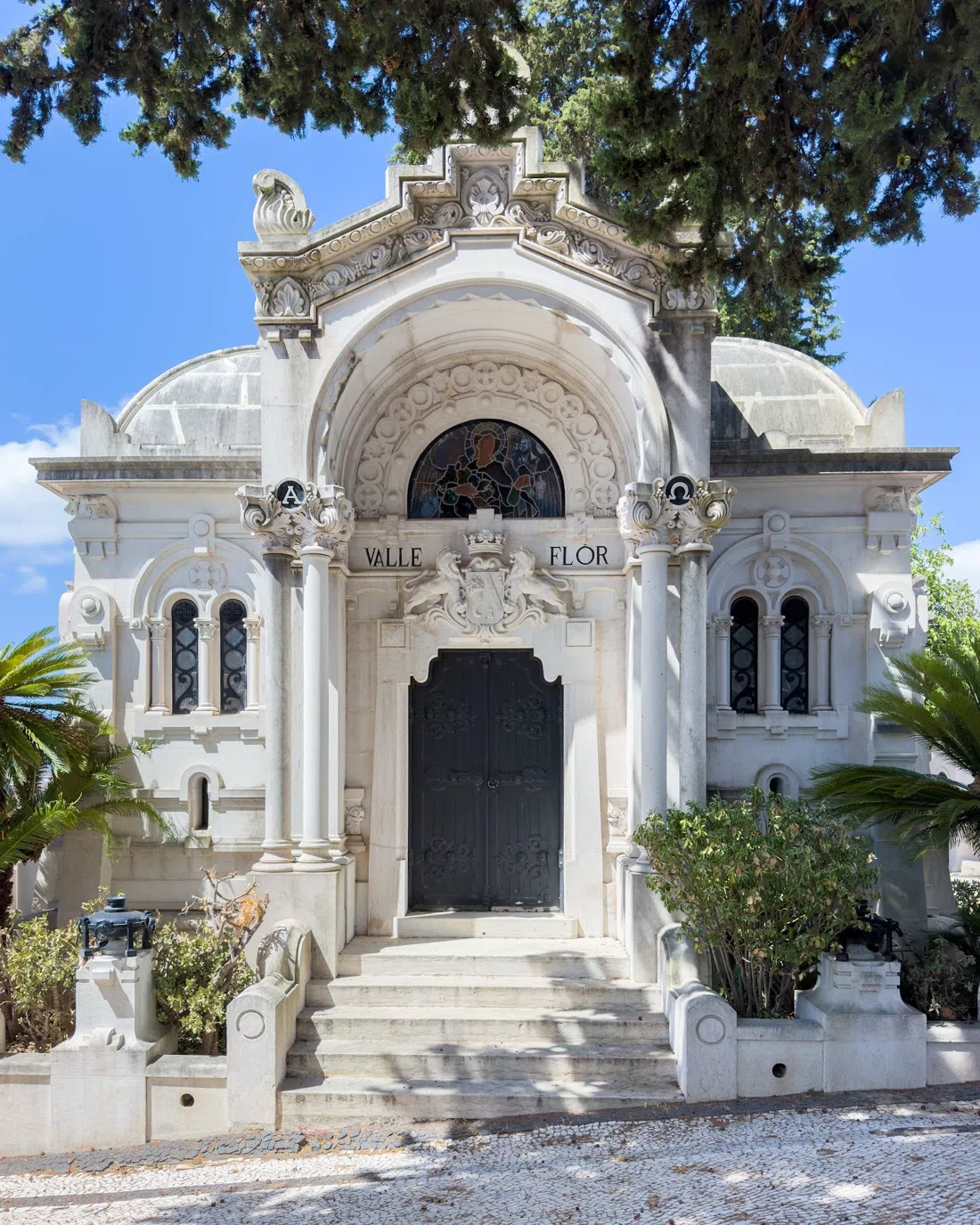
Cemitério dos Prazeres (at the western end, where tram 28 stops) is free to enter, open 09:00 to 18:00 from May to September and to 17:00 from October to April, last entry half an hour before closing. The tram terminus is directly outside the gate, which is why most visitors ride all the way up, photograph the tram and turn straight back around without going in. Go in. It is a city of small stone houses on a grid of its own, with a view over the river at the far wall, and Amália Rodrigues and Mário Soares are both here. The municipality runs free guided tours, which is the sensible option for a group and the only way I have learned anything about the place beyond what is written on the doors.
Practical notes
Getting here. Tram 28 ends at Cemitério dos Prazeres, so the classic move is to ride it to the terminus and walk east into the grid. Aloma, the market and Jardim da Parada are all within ten flat minutes of each other. The plateau really is flat, which is rare in this city and a relief on the third day. Walking downhill to Jardim da Estrela takes about ten minutes; walking back up takes longer than you think.
Money. Plates run €8 to €15 at the market, €10 to €16 at the old tascas, €16 to €24 at Pigmeu and €40-plus a head at Tasca da Esquina. A realistic day (pastry and coffee at 08:00, a tasca lunch, a garden kiosk beer, dinner at the market) lands around €45 to €55 a person. Carry some cash for the small counters and the kiosks; the restaurants all take cards.
Timing. Casa dos Passarinhos, O Magano and Coelho da Rocha are closed Sundays; Tasca da Esquina is closed Sunday and Monday; Raminhos opens only Tuesday to Saturday afternoons; A Paródia is evenings only. Lunch service in the tascas peaks hard between 13:00 and 14:00 with local office trade, so eat at 12:30 or 14:30 and you will walk in. The market is the reliable fallback every single day.
Staying nearby. There is no metro station in the grid itself, so if you want to be able to walk home from dinner, look at rooms in Campo de Ourique or just downhill towards Estrela rather than in the centre. Start with a Lisbon hotel search and filter on that stretch. Sleeping up here changes the trip: you buy fruit where the neighbours buy it, and you stop commuting to your own dinner.
Questions
Is Campo de Ourique worth visiting if I only have a few days in Lisbon?
Yes, if you want a meal rather than a monument. It is a flat residential grid with a market hall, a handful of long-running tascas and two gardens. It sits at the end of the tram 28 line, so you can pair it with a ride out to Cemitério dos Prazeres and be back in the centre inside half an hour. Give it a lunch and an afternoon, or an early evening and dinner.
How do I get to Campo de Ourique and is it hilly?
Tram 28 terminates at Cemitério dos Prazeres, right at the western edge, and from there the whole neighbourhood is a ten-minute flat walk, unusually flat for this city. There is no metro station in the grid itself. Jardim da Estrela is about ten minutes downhill, and the return climb is steeper than it looks.
Where can I eat in Campo de Ourique with a group of six or more?
Mercado de Campo de Ourique is the easiest: communal long tables, no reservations, everyone orders from a different stall, though Friday and Saturday nights fill up. Casa dos Passarinhos handles big noisy groups if you phone ahead for more than six. Tasca da Esquina takes six-plus only by email arrangement, and Pigmeu wants a phone call for anything above four. Double Trouble and Raminhos are too small for a group full stop.
What is open on a Sunday in Campo de Ourique?
Casa dos Passarinhos, O Magano and Coelho da Rocha all close on Sundays, and Tasca da Esquina closes Sunday and Monday. The market hall is the reliable Sunday answer, along with the two gardens and their kiosks, and the cemetery is open daily until 18:00 from May to September and 17:00 the rest of the year.
How much should I budget for a day of eating in Campo de Ourique?
Around €45 to €55 a person for a full day: coffee and a pastry under €4, a tasca lunch at €10 to €16 a main, a kiosk drink in the garden, and a market dinner at €8 to €15 a plate. A dinner at Tasca da Esquina pushes that to €80-plus on its own. Carry some cash for counters and kiosks; the restaurants take cards.
First published on lisbongetaways.com, the Lisbon guide.