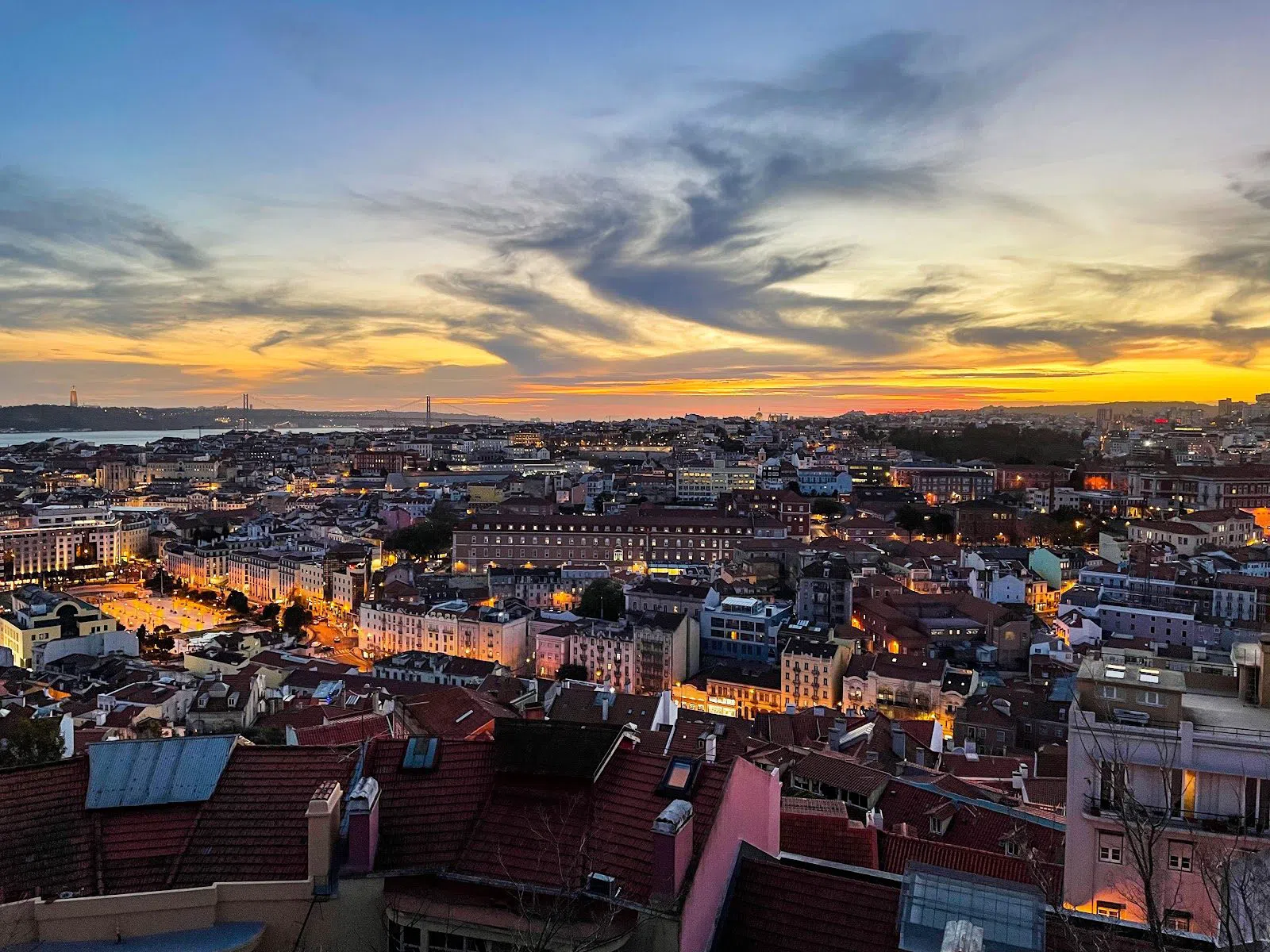
Lisbon's highest viewpoint is in Graça, 100 m up: a long stone balustrade beside a small whitewashed chapel, under umbrella pines. Tram 28 reaches the neighbourhood at the top of its climb. The flea market lays its blankets out across a sloping square on Tuesdays and Saturdays only.
The two free terraces
Miradouro da Senhora do Monte (Graça) is that 100 m terrace. The chapel of Nossa Senhora do Monte closes one end, and the balustrade gives you 270 degrees of city: Castelo de São Jorge on the left, the red Ponte 25 de Abril far to the right. Come at sunrise or early morning and you will have it almost to yourself. Entry is free and the terrace is public ground with nobody on the door. Space at the parapet is narrow and large tour parties fill it at sunset, so get there before 18:30.
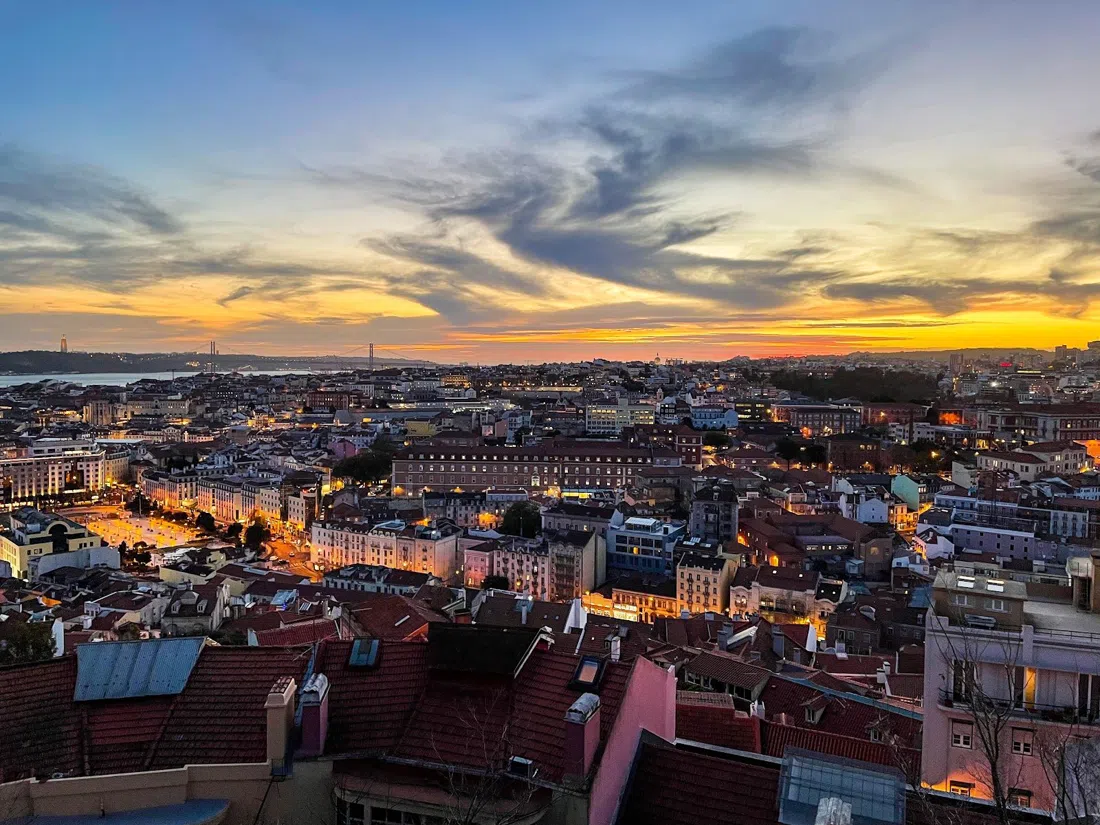
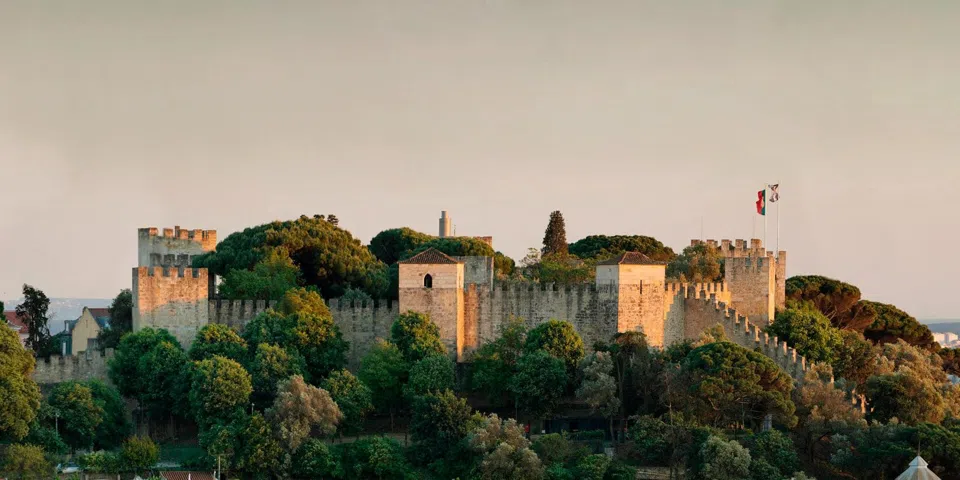
Miradouro da Graça, signed as Miradouro Sophia de Mello Breyner Andresen, is where you go for a drink at sunset. The Esplanada da Graça kiosk has been pouring on this gravel terrace since 1992, beer and wine at €3 to €6 a glass, with metal café tables under the big umbrella pines beside the Graça church. The terrace itself is free. Castle hill fills the skyline across the valley. Kiosk tables are first-come and go an hour before sunset. The Largo da Graça requalification works that tore the square up are finished.

The convent terrace on Largo da Graça
Igreja e Convento da Graça (Largo da Graça) turns a vast pale-ochre baroque façade on the square. The house was founded in 1291 and rebuilt after the 1755 earthquake. Entry to the church is free.
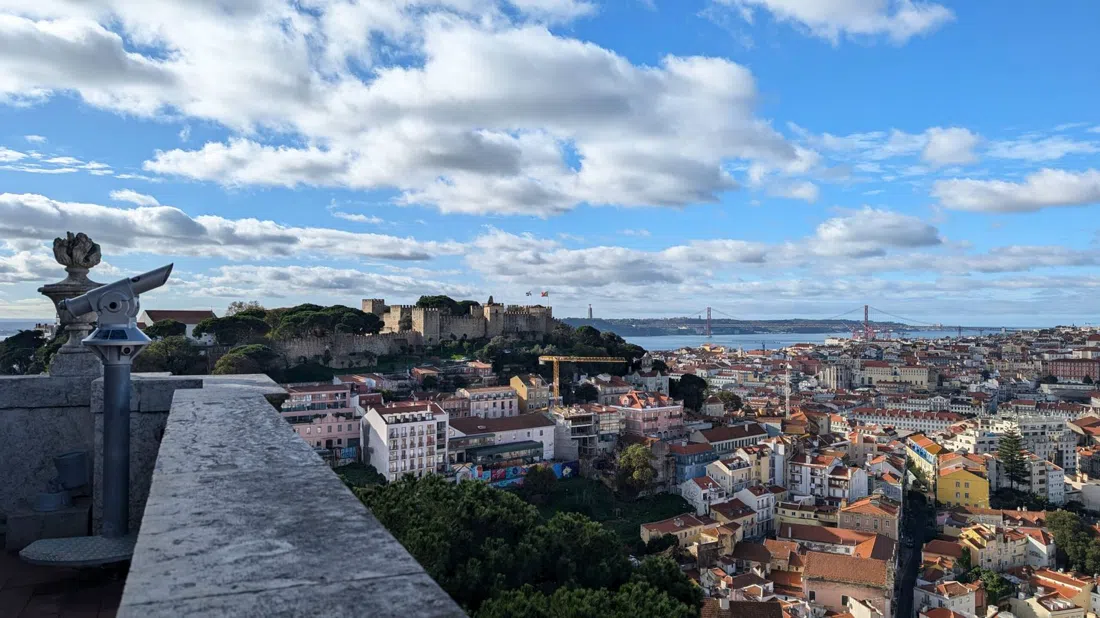
Pay and you also get the cloisters, where blue-and-white azulejo panels line the upper walk, and the rooftop terrace, which looks over terracotta roofs to the castle. Convent, terrace and cloisters together cost €6. Children aged 7 to 12 pay €4, and the digital tour adds €3. A Golden Hour sunset slot runs on the terrace nightly. The terrace is sheltered and stays quiet while the miradouro outside the door fills up.
São Vicente de Fora and the market square
Mosteiro de São Vicente de Fora sits downhill on Graça's southern edge and is the area's biggest monument. Twin white bell towers rise over a severe Mannerist limestone façade. The cloister walls carry 18th-century blue-and-white panels of La Fontaine's fables, and the flat rooftop terrace looks over Alfama and the Tagus. Inside is the Braganza royal pantheon.
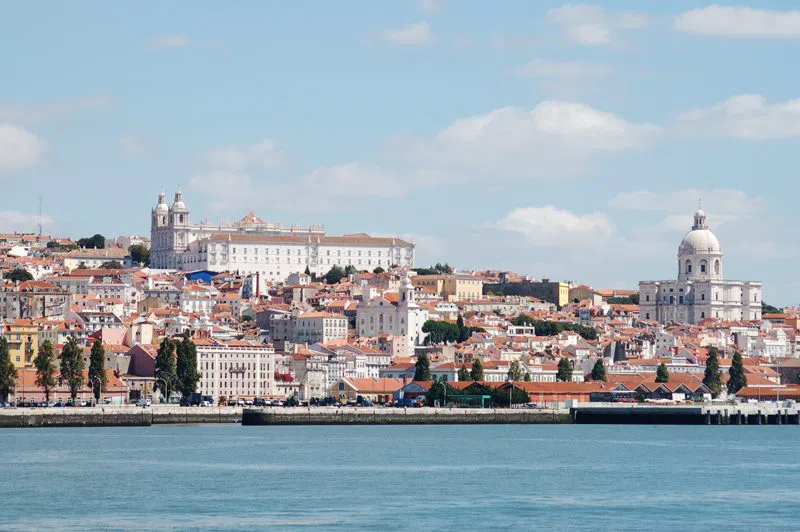
Entry is €5. Students and visitors aged 65 and above pay €2.50, and children under 12 go free. You have to pre-book a guided tour with the administration at [email protected] or through an agency. From here, the National Pantheon's white dome is a further 400 m walk.
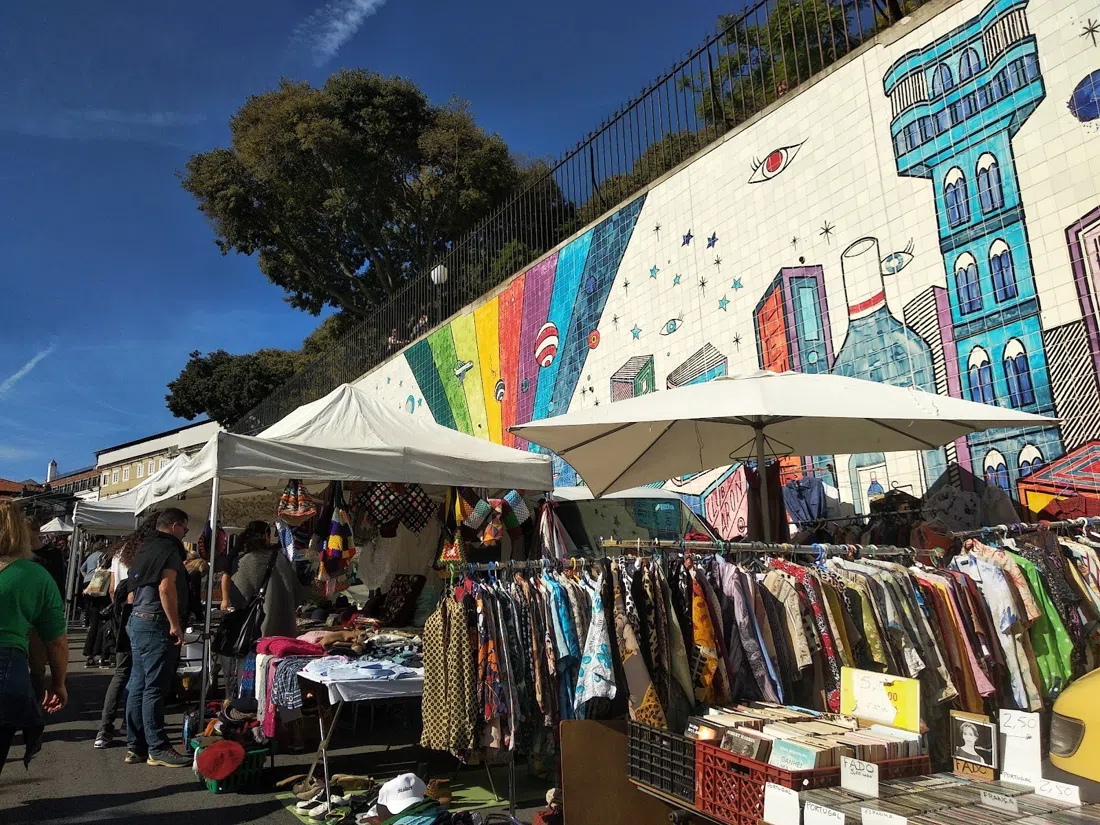
Feira da Ladra spreads across the sloping Campo de Santa Clara, blankets and trestle tables of old tiles, LPs and brass laid out under the trees with the Pantheon dome rising behind the stalls. Lisbon's oldest market has roots in the 13th century. It trades Tuesdays and Saturdays, 09:00 to 18:00; turn up on any other day and the square is empty. Browsing is free. The aisles between the blankets are tight, so keep your bags in front of you.
Jardim da Cerca da Graça, the one patch of grass
Jardim da Cerca da Graça covers 1.7 hectares inside the old convent wall, the biggest green space in the old city. A terraced lawn runs down through an orchard of olive and orange trees. There are three small belvederes, a children's playground, and a low kiosk esplanade with the castle framed dead ahead. It is the one place in Graça where you can sit on grass.

The park is free and open daily, 07:30 to 21:00. You can get in beside the Convento da Graça, off the Calçada do Monte, or at Olarias down in Mouraria. The Cozinha Popular da Mouraria runs the kiosk, with coffee and beer at €1 to €4. Picnics are fine.
Vila Berta, two minutes of walking
You reach Vila Berta (off Rua do Sol à Graça) through an arched tunnel, which keeps it out of sight from the street. Joaquim Tojal built the lane between 1902 and 1908 and named it after his daughter. Two facing rows of houses carry wrought-iron balconies, flowerpots and Art Nouveau tilework.
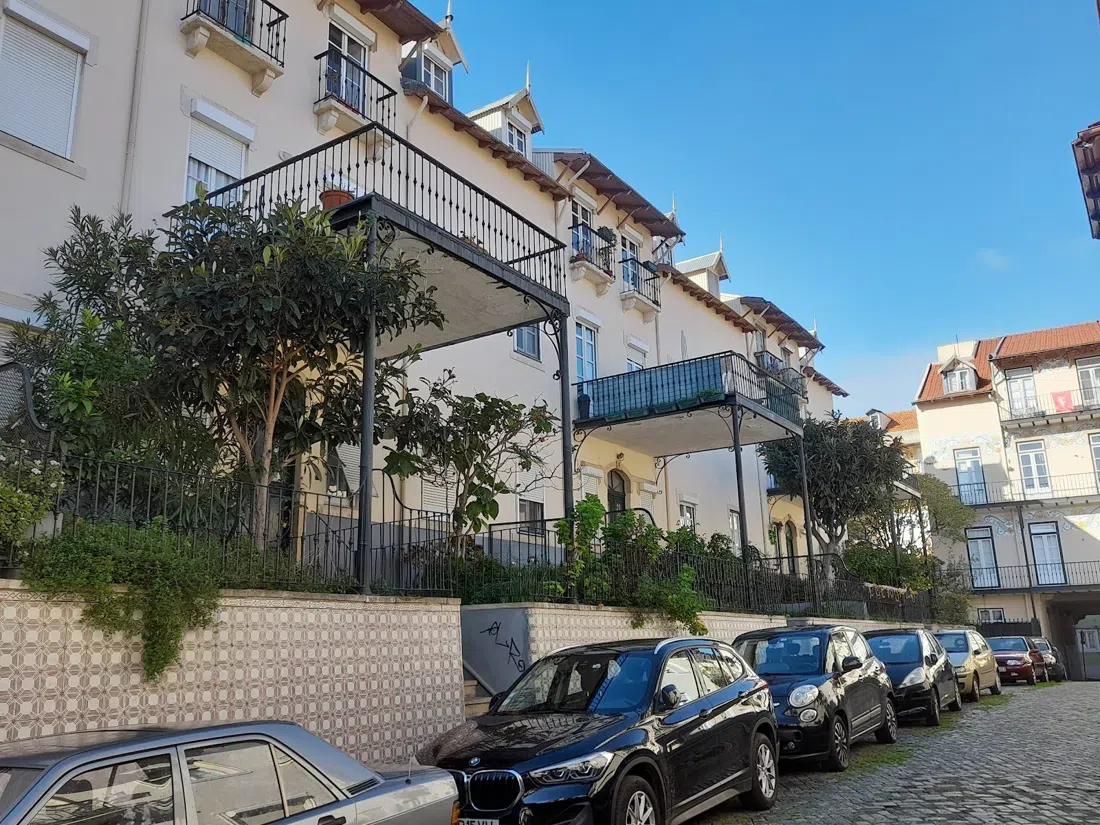
There is no gate and nothing to pay, and you can walk it end to end in two minutes. People live here, so keep your voice down. In June the lane becomes the neighbourhood's Santo António fair.
Tram 28 and the funicular
Tram 28 (Elétrico 28E, Carris) comes round the curve at Largo da Graça in Carris yellow, a varnished wooden Remodelado with brass fittings and sash windows, washing-strung façades inches from the roof. Graça is the top of the climb. Board here heading downhill towards Prazeres and you get a seat and a view; the queues at Martim Moniz run long and pickpockets work the packed uphill runs. Carriages hold 20 seated, so a party is better off splitting up and boarding mid-route.

A single bought onboard is €3.30. A 60-minute ticket is €1.90 and a 24-hour pass €7.25. With Navegante zapping the fare is €1.72.
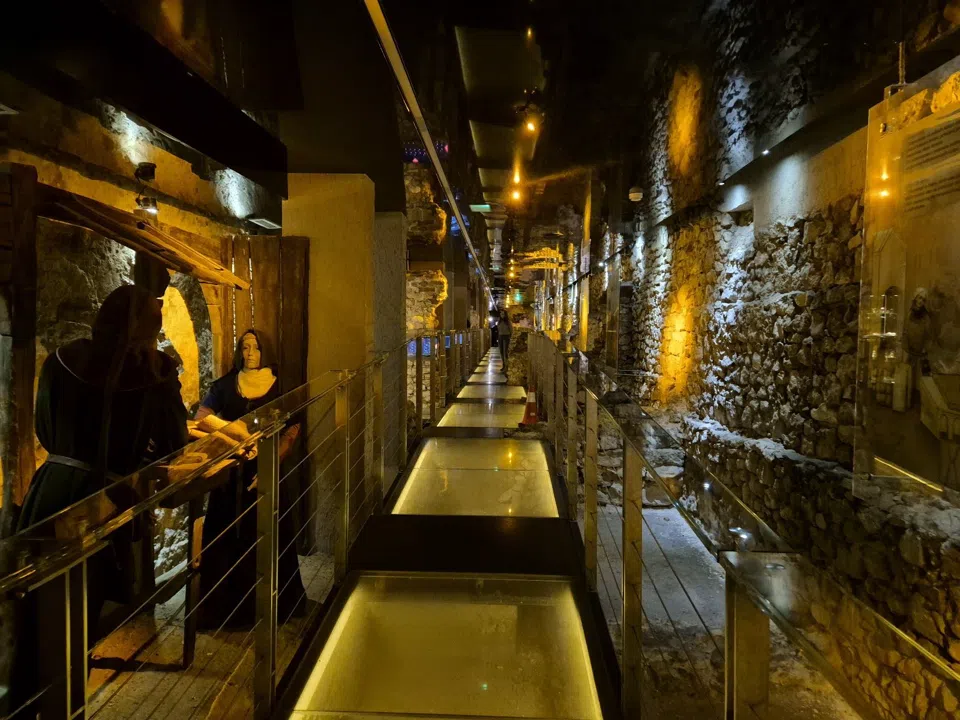
Funicular da Graça (Ascensor da Graça, Carris) climbs out of Rua dos Lagares in Mouraria, a small glass-sided cabin on a steep concrete incline, with exposed remains of the Cerca Fernandina wall alongside the track. It takes 14 passengers on a 90-second trip, and Navegante pass holders board first. It reopened on 30 April 2026 after the post-Glória safety shutdown and runs daily on reduced hours, 09:00 to 17:00, with extensions promised. The onboard ticket is €4.30 and covers two journeys; a Navegante pass rides free. It saves you the Caracol da Graça stairs. Check it is running before you plan around it.
Lunch and dinner
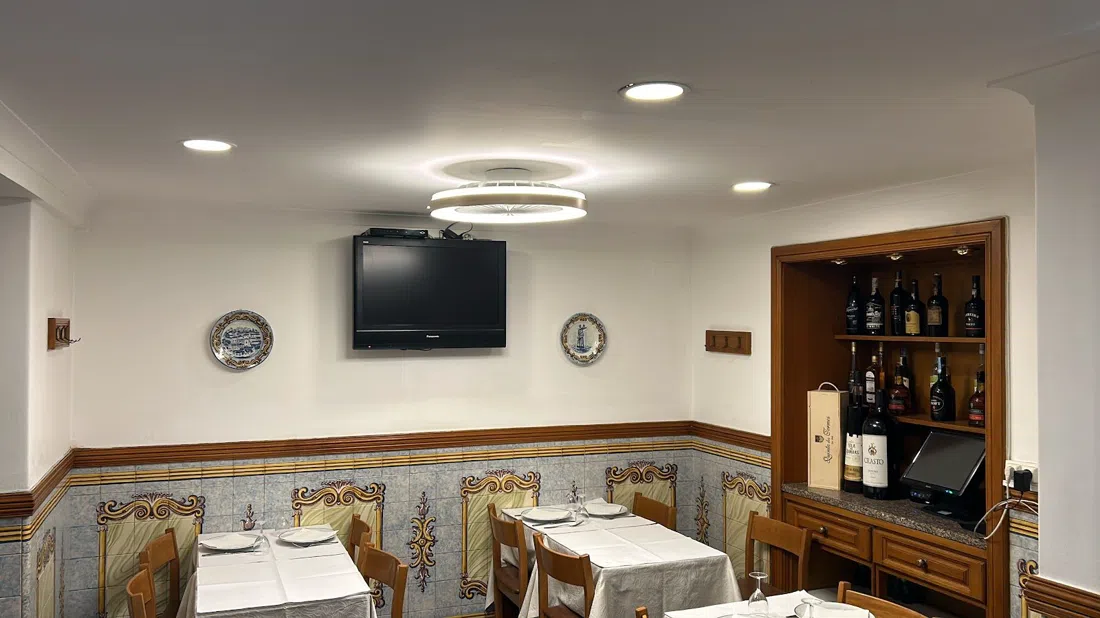
O Pitéu da Graça (off Largo da Graça) is the neighbourhood institution, a tiled dining room with paper-topped tables, waiters in waistcoats, and whole grilled sardines and bacalhau arriving on battered metal platters. Order the grilled fish, the summer sardines or the bacalhau à Pitéu. Expect €15 to €25 a head. Locals still fill the room at lunch. It is cramped, and you will not get a dinner table without booking. It closes Sundays.
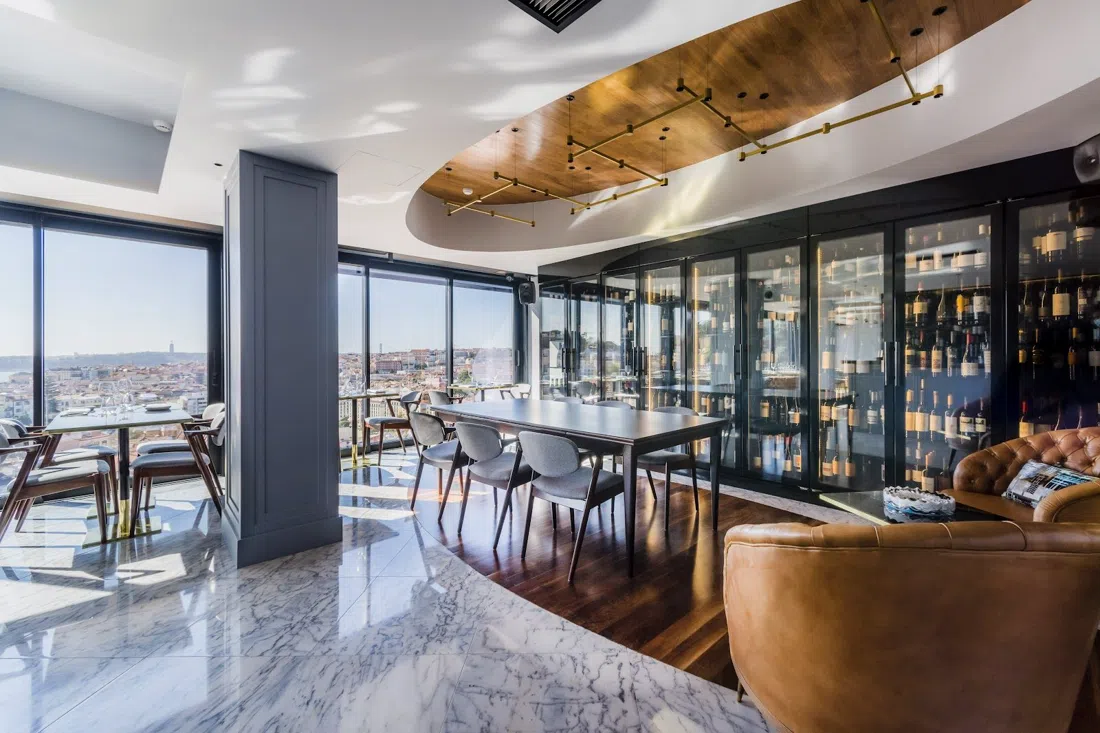
Via Graça (Rua Damasceno Monteiro) is the proper special-occasion table in Graça, a glass-walled modernist dining room clinging to the hillside. Full-height windows lay out the floodlit castle and the whole lower city below. The cooking is Portuguese and precise, €40 to €70 a head. Dress is smart casual. Window tables go to whoever books earliest, so ask for one when you book.
Drinks, fado and late music
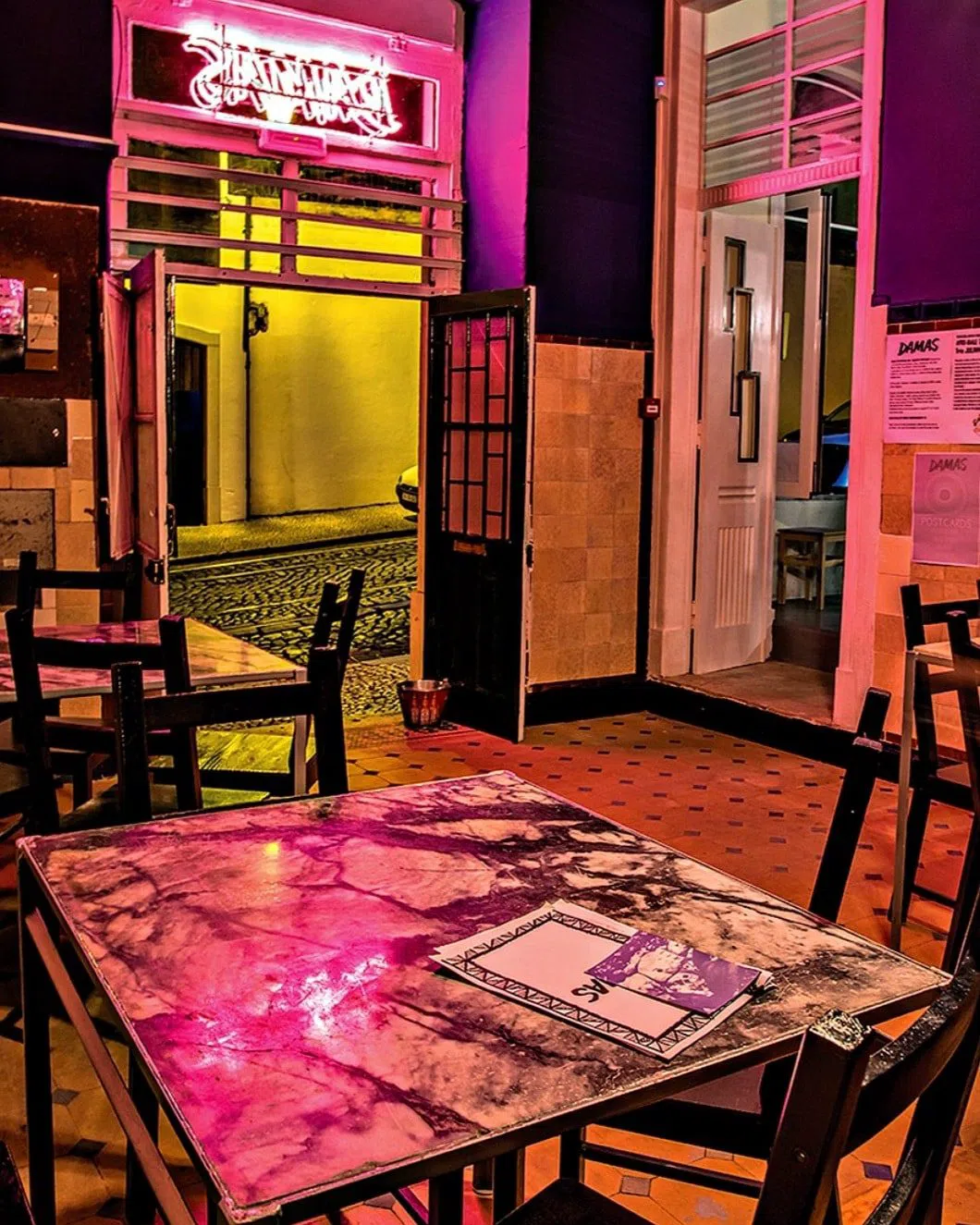
Damas (Rua da Voz do Operário) is a converted bakery with stripped walls and the old brick oven still in place. The daily menu is chalked by hand, €15 to €25 a head, and long shared tables run through to late petiscos. Concerts and DJ sets go to 04:00 from a cramped stage at the back, usually free or with a small door charge, and the gig list runs year round. The bar end takes no reservations.
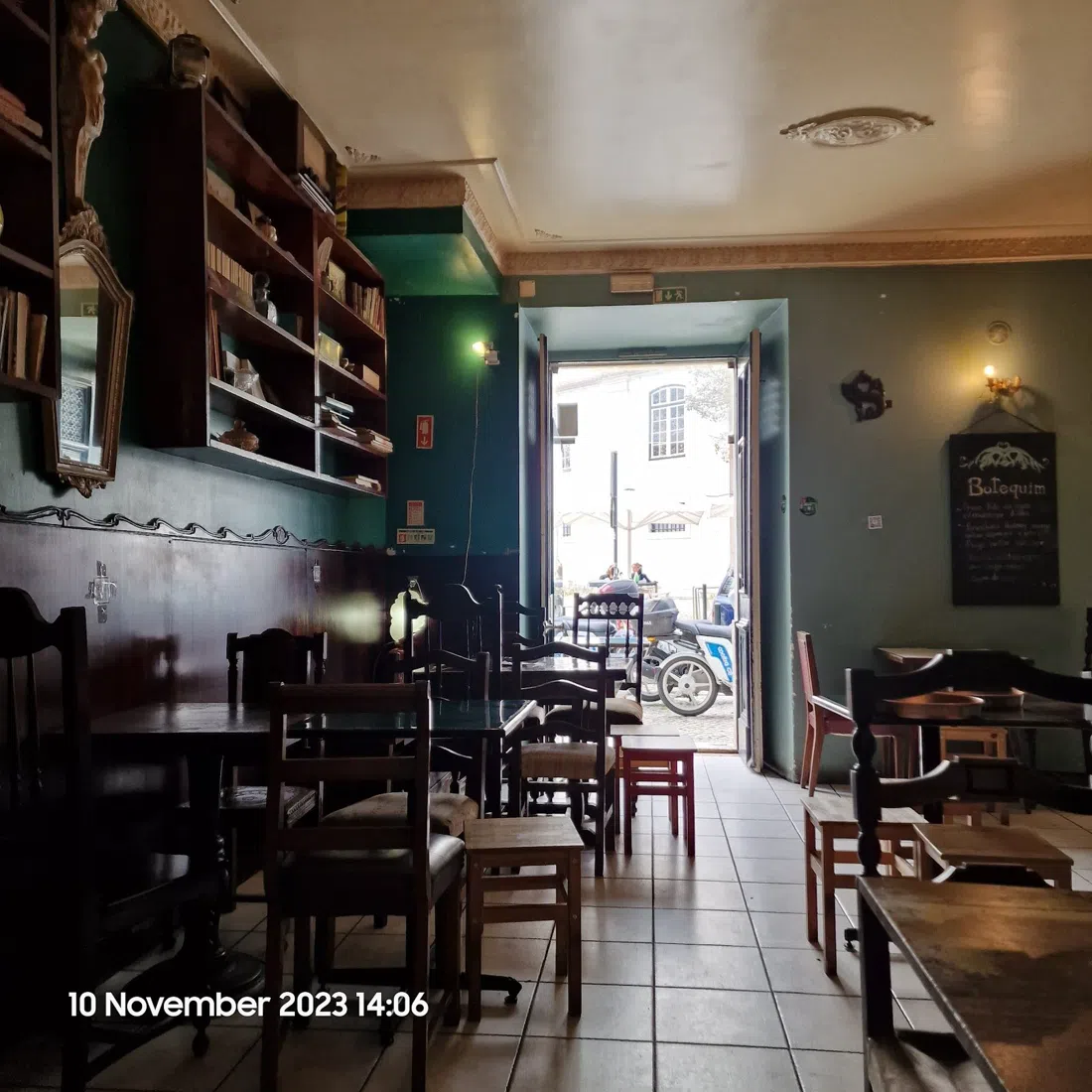
Botequim (Largo da Graça 79) keeps a dark polished wood counter and mirrors, bottles of Portuguese liqueurs, and framed photographs of 1970s poets on the walls. The poet Natália Correia opened it in 1971 as a meeting place for intellectuals under the dictatorship. It shut for 15 years and reopened in 2010 with the counter and the attitude intact. Drinks run €3 to €8 and petiscos €5 to €12. It stays open to 02:00 and starts late on Wednesday and Thursday.
Tasca do Jaime (Rua da Graça 91) has 24 seats, bare tiled walls crowded with fado photographs and football memorabilia, and singers who perform standing at the counter with a single guitarist. Fado vadio runs Saturdays and Sundays from 16:00, sung by whoever turns up. There is no cover charge and nothing staged for visitors. Locals get the seats and everyone else stands, so do not arrive as a group. Wine starts at €1.50 a glass and petiscos run €4 to €10. Treat the place as someone's living room: order drinks and stay quiet while anyone is singing. It closes Mondays.

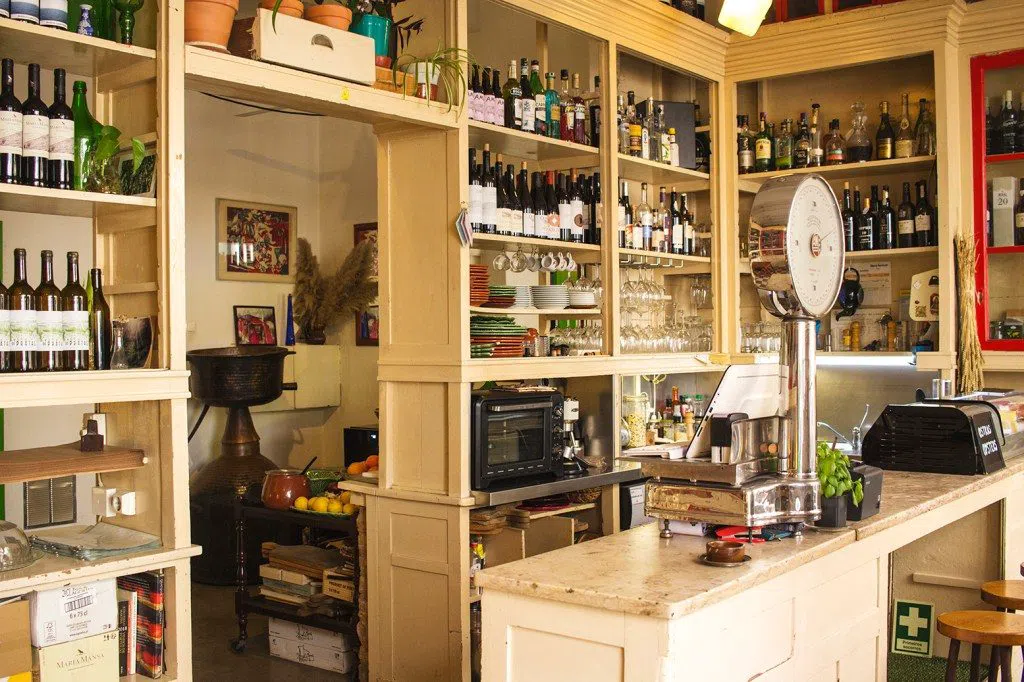
Graça do Vinho (Calçada da Graça) is a narrow bottle-lined room on a steep calçada, with a chalkboard of open wines and two or three small tables out on the sloping pavement. The pours come from small-batch Portuguese producers you will not see on a restaurant list, served with cheese, cured meats and codfish toasts. A board and wine comes to €15 to €30 a head. It opens at 17:00, 16:00 on Saturdays, and closes Sundays. Six people is the practical ceiling and it takes walk-ins only, so message ahead if there are more of you.
Staying on the hill
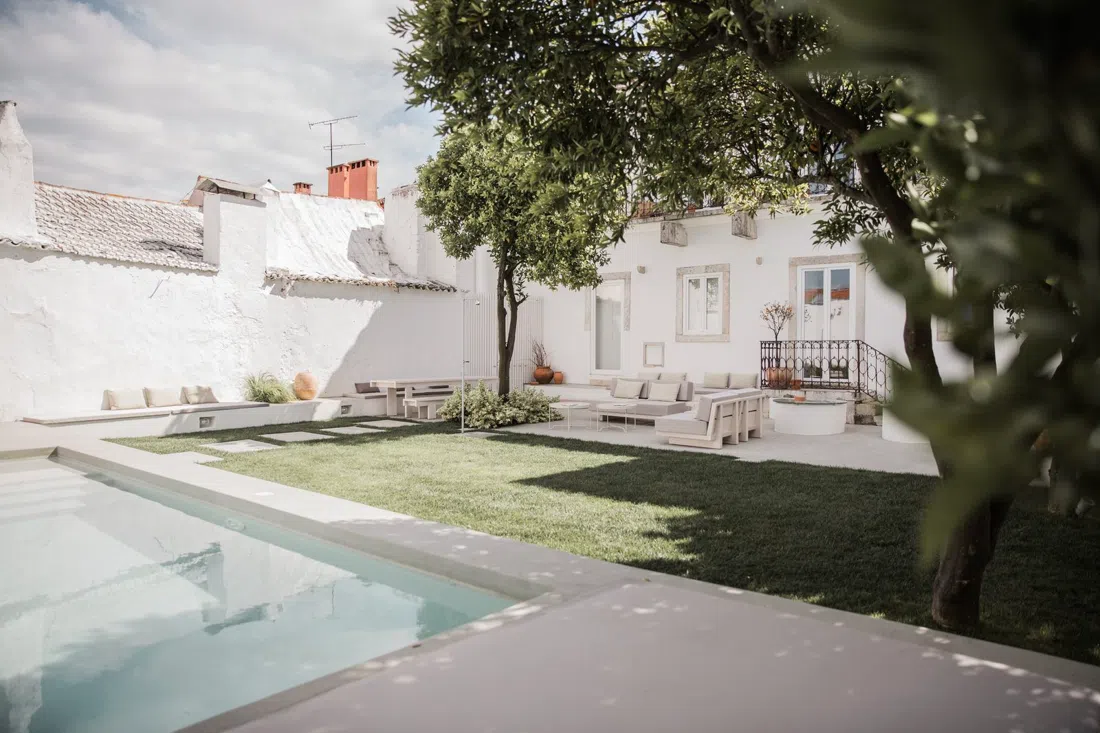
Dona Graça is a 19th-century townhouse in Graça with eight self-contained one- and two-bedroom apartments over two floors, at €€€. Below it on the hillside sit a walled garden of orange trees and a small rectangular pool, rare in the old city at this size. Every apartment has a kitchen. There is no reception desk, and you can take all eight units as a whole house. Sleeping up here means walking down to the rest of the city and riding back up.
Opening days and booking
The market trades only on Tuesdays and Saturdays, O Pitéu da Graça and Graça do Vinho close Sundays, and Tasca do Jaime closes Mondays. Book Via Graça and dinner at O Pitéu ahead, pre-book any guided tour of São Vicente by email, and check the funicular is running before you count on it.
See the Lisbon guide and the Lisbon hotel search.
Questions
When is the best time to go up to Miradouro da Senhora do Monte?
Come at sunrise or in the early morning and you will have the balustrade almost to yourself. At sunset the space along it is narrow and big tour parties fill it, so arrive before 18:30. Entry is free and there is no door policy.
Is the Funicular da Graça running in 2026?
It reopened on 30 April 2026 after the post-Glória safety shutdown and runs daily on reduced hours, 09:00 to 17:00, which are meant to be extended. You buy the ticket onboard for €4.30 and it covers two journeys; with a Navegante pass you ride free and board first. Check it is running before you count on it.
What days does Feira da Ladra open?
Tuesdays and Saturdays only, 09:00 to 18:00, on the Campo de Santa Clara. The square is empty on any other day. You pay nothing to browse, and the aisles between the blankets are tight, so keep your bags in front of you.
Where can I hear fado in Graça without paying a cover charge?
Tasca do Jaime at Rua da Graça 91 runs amateur fado vadio on Saturdays and Sundays from 16:00, and there is no cover charge. There are 24 seats, the locals have them, so expect to stand. Closed Mondays.
Is the paid convent terrace worth it when the miradouro next door is free?
Entry to the convent, terrace and cloisters is €6, or €4 for children aged 7 to 12, and the digital tour adds €3. The terrace is sheltered and rarely crowded, and there is a Golden Hour sunset slot every night. Blue-and-white azulejo panels line the upper cloister.
First published on lisbongetaways.com, the Lisbon guide.