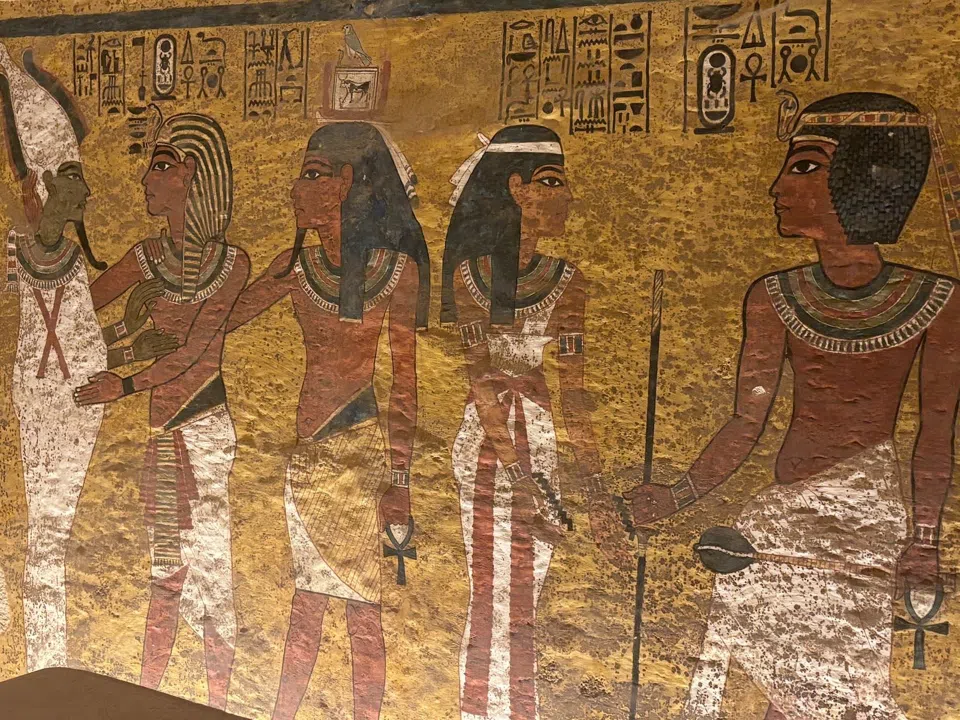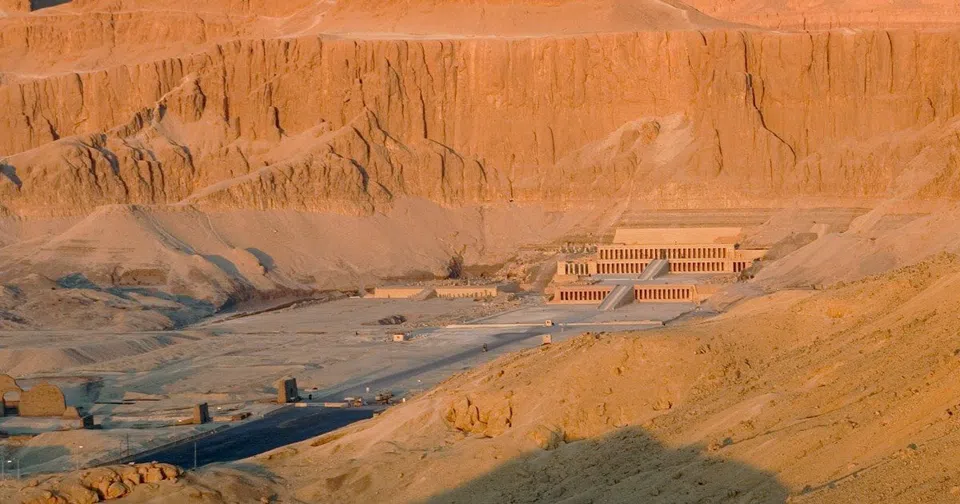
Luxor sells stone that stopped moving three thousand years ago. Fifteen minutes off the temple circuit, on dirt lanes behind the Colossi and in village yards up and down the river, the material is still soft: clay lifted out of the Nile, alabaster sawn by hand, cotton coming off a loom at the speed of somebody's arm. Several of these places will put you at the wheel rather than behind a rope.
What to expect if you came for glass
Hand-blown glass has a way of attaching itself to the idea of Egyptian craft, and plenty of visitors arrive in Luxor hoping to find a furnace. The perfume bottles stacked in the corniche shop windows are largely bought in rather than made here, and the workshops that do open their doors to visitors in and around Luxor work three other materials: clay, alabaster and thread. That is not a downgrade. Clay in this valley has an unbroken run of roughly six thousand years, the alabaster trade on the West Bank is a working industry rather than a heritage display, and both will let you stand close enough to get dust on your shoes. What follows is the honest version of the circuit: who lets you make something, who only lets you watch, and who is quietly selling resin.
Two studios that will put you at the wheel
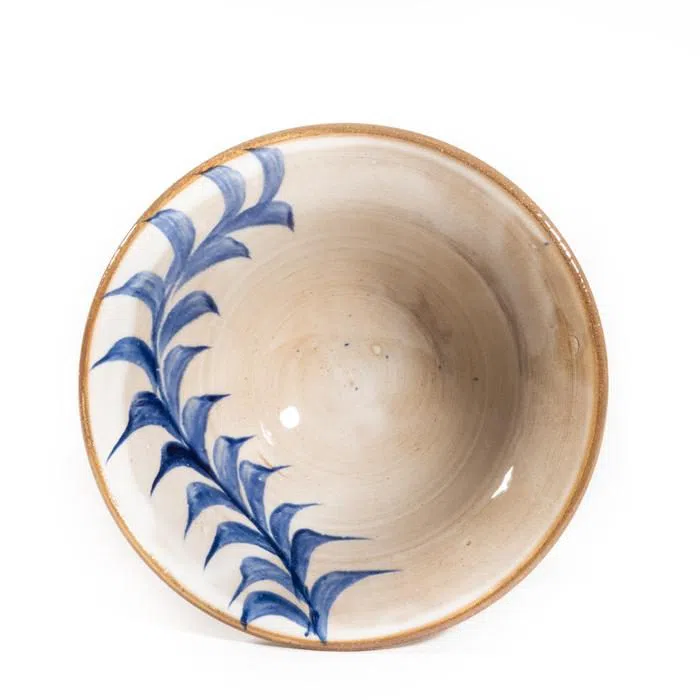
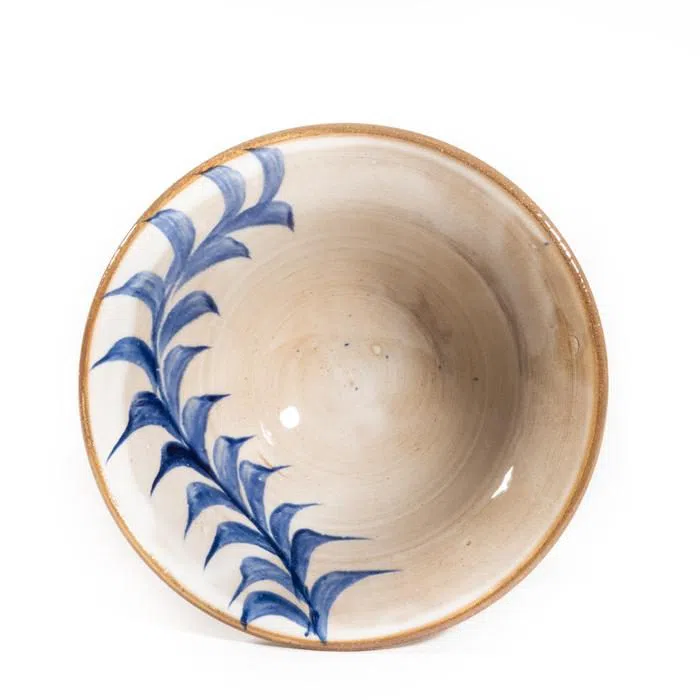
Ramesseum Pottery Centre (Qurna, West Bank, beside the Ramesseum itself) is the single best fit if you want clay under your fingernails within the hour. It is a working Franco-Egyptian pottery run by Komsan, and the output is not generic souvenir ware: reproductions of predynastic foot bowls, and decoration copied from the painted tombs at Deir el-Medina a short drive away. Lessons run next to the shop, so you can watch first and decide. Throwing or decorating sessions are cheap by international standards and finished pieces in the shop start at a few dollars; this is not a place where the workshop is a pretext for a hard sell. It is walk-in friendly for a couple or a pair of friends, and it happily takes families and small private groups, but message ahead if there are more than a handful of you so somebody is free to teach rather than serve. Ask whether you can go up on the roof at sunset. The view over the cultivation towards the hills is the best thing in the price.
Luxor Pottery School (West Bank, opposite Carter House) is the more structured option, and the better one if you want to leave having actually learned something. It was founded by two brothers, Barakat and Saleh, who brought a village potting tradition with them and set up here; they teach complete beginners and experienced potters in the same room without patronising either. Courses are capped at around twelve participants and run in three daily time slots, which makes this the most group-capable studio here: a family of six or a small tour can book a slot outright. Reckon on roughly 200 to 500 EGP per person for a class, with finished pieces running from about $3 for coasters to $100 and up for large plates. Book ahead between November and April; the slots fill. The website footer carries an address from another part of the country, which sends people to entirely the wrong place. The school is on the West Bank, opposite Carter House, and nowhere else.
Village kilns, and the manners they require
The two places below are not attractions. They are workplaces that tolerate visitors, which changes how you should behave at the gate.
Garagos Pottery (Garagos village, 27km north of Luxor, over the governorate line) is architecturally the most remarkable stop here and the most logistically awkward. It is a craft cooperative founded by Jesuits in the 1950s, housed in a mud-brick complex by Hassan Fathy, and the ware it is known for is unusually light and smooth because the clay is filtered three times before it is thrown. Functional glazed vessels sell at village prices. Hands-on sessions are possible and groups can be accommodated, but you must phone ahead, get precise directions, and confirm that somebody will actually be there. Tourist traffic to Garagos has thinned badly and nobody is sitting waiting for a minibus. Going out there on spec and finding a locked door is a wasted morning, and it happens.
Al-Hella village potters (Esna district, south of Luxor) are the unvarnished end of the spectrum. Young potters here still throw everyday zir water coolers from Nile silt, the same shapes their grandfathers made, for local buyers rather than visitors. Pieces cost a few dollars. But these are homes and working yards, not a workshop with a shopfront, and turning up unannounced with a coach is genuinely not on. Go with a local guide or a driver who can make the introduction, keep the group to a few people, ask before photographing anyone, and pay properly rather than haggling a potter down over the equivalent of a coffee. Handled right it is the most memorable stop on this list; handled badly it is an intrusion.
Telling alabaster from resin
The West Bank alabaster trade has a credibility problem, and it is worth understanding before you spend anything. A large share of the carved 'alabaster' sold roadside and in tourist stalls is cast resin, light in the hand, suspiciously uniform, and priced to look like a bargain. Real Egyptian alabaster is stone: heavier than it looks, translucent when you hold a lamp behind it, and slightly variable in its banding. Every workshop below is free to enter, and every one of them is also a shop. Decide your ceiling before you sit down, because the tea and the demonstration are part of the selling.
Hapi for Alabaster (Elhofni family workshop, Qurna, West Bank) is the most credible stop of the four. It is an eighth-generation family business and what you see is the full sequence rather than a staged two-minute performance: rough shaping, hollowing with linen reinforcement, polishing against sandstone, then firing with wax. Prices run from about $5 for small pieces up to monumental work representing months of labour. Groups are welcome and entry is free.
Imhotep Alabaster Luxor (West Bank) has the strongest reputation for authenticity, and it is where I would send anyone nervous about being sold resin. It issues certificates of authenticity and works basalt and granite as well as alabaster, which is unusual here and worth seeing in itself. Hardstone takes a different set of tools and a great deal more patience. Prices sit above the roadside fakes, as they should. Both independent visitors and tour groups are handled without fuss.
Hassany for Alabaster (West Bank) is the comfortable choice for a coach party or a family with restless children. Entry is free, there is ample parking, and the demonstration of the carving stages is delivered with genuinely funny, well-practised patter. Children pay attention, which is not nothing at the end of a long temple morning. Just be clear-eyed: the polish of the presentation is a sales pitch. Agree your budget in the car park.
Luxfour Alabaster Factory (Qurna circuit, West Bank) is a solid, long-established workshop and a reasonable stop if you are already doing the Qurna loop, but it sits squarely on the commission-heavy tour route. Opening prices are high and expected to be countered hard. If the piece is small and generic, you will usually do better buying the equivalent in the East Bank souk.
Following cloth from fibre to finished piece
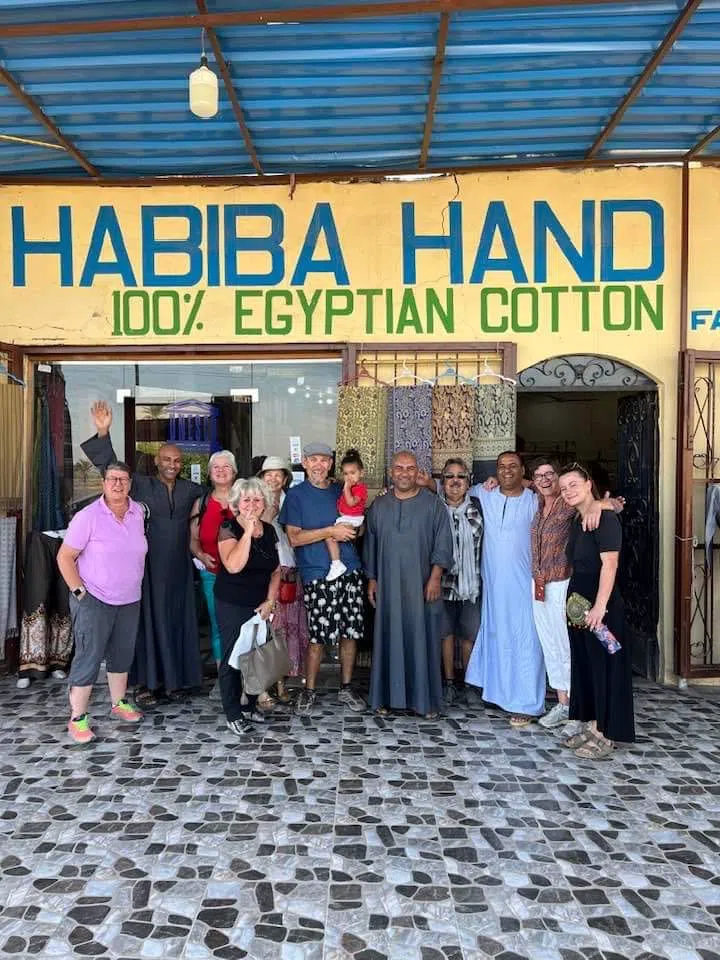
Habiba Hand Weaving (West Bank, minutes from the Colossi of Memnon) is not clay or stone, but it is the clearest demonstration in Luxor of a craft you can follow from raw fibre to finished cloth in one room. Small groups are welcome to watch the weavers working at the looms, and most visitors spend about an hour. Pieces run roughly $10 to $149, which is visibly above the city market rate. The quality is higher and so is what the weavers are paid, and the shop is upfront about both. Couples and pairs get the most out of it; a large group crowds the loom room.
One shop that saves you the drive
Not everyone has a spare half-day for a village cooperative, and Fair Trade Center Luxor (in town, open daily, roughly 9am to 9pm) is the sensible answer. It is an NGO retail outlet rather than a workshop, so there is nothing to watch, but it carries Garagos ware and handwoven village textiles at fixed fair prices with no haggling and no pressure, a relief if the alabaster circuit has worn you down. Scarves run about 45 to 80 EGP, wood carvings about 20 to 60 EGP, small silver about 25 to 60 EGP. It is comfortable for groups precisely because nobody works the room.
An hour south, a market that came back
Al-Qisariyya Heritage Street Market, Esna (Esna old town, 60km south of Luxor) is the centrepiece of a restoration that won a 2025 Aga Khan Award for Architecture, and it earns the attention: 144 restored shops trading again beneath a rebuilt canopy, on a street that had been half-derelict. It is a public market, freely walkable by any size of group, prices are ordinary, and the atmosphere is the point, with craft stalls, daily trade and shade. Pair it with the Temple of Khnum a few minutes away so the drive carries two things rather than one.
A short walk from it, Wekalet al-Geddawi, Esna (Esna old town) is the most atmospheric interior on this list. The building is a merchants' caravanserai that had been shut to the public since 1951; after a two-year restoration it reopened as a crafts and cultural centre, and weaving and embroidery workshops now occupy the rooms where traders once stored goods. Entry is nominal or free and groups are fine. Between the two, half a day in Esna is a better use of time than a fourth alabaster workshop.
A base with paint on the walls
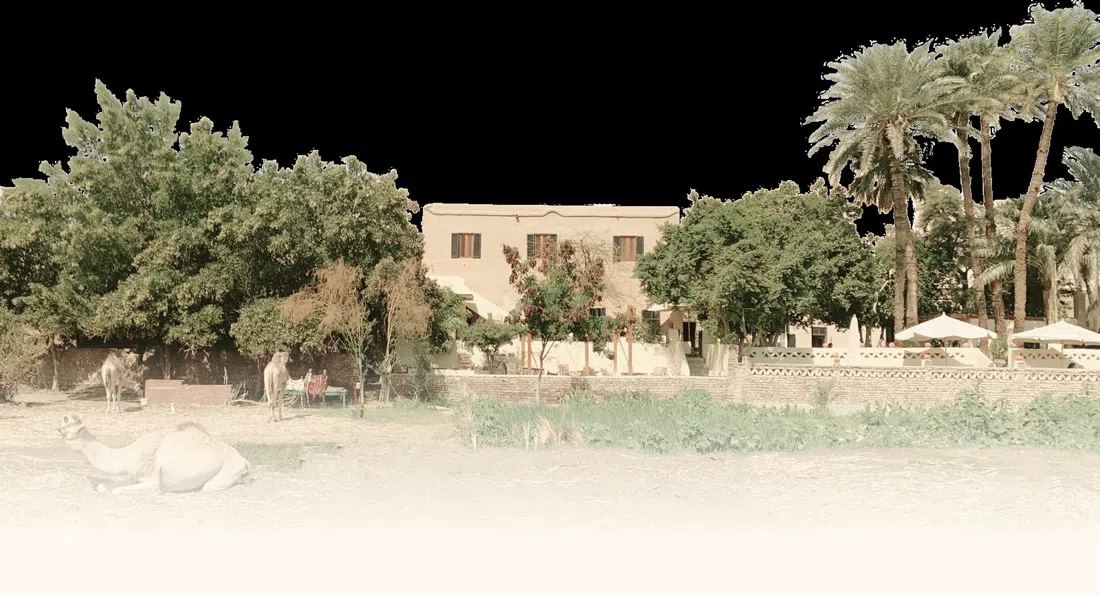
Marsam Hotel (Qurna, West Bank) is the natural base for all of this and has the right history for it: the oldest guesthouse on the West Bank, once an excavation house for an American archaeological mission, later an art school whose 1960s murals still cover the dining room walls. The Abdel Rassoul family has owned it since 1939, with German management since 2012. There are 34 rooms and a garden restaurant, and rates run roughly €35 to €160 per room per night including breakfast. It takes groups, but it is frequently full from November to April, so book early or look at the wider Luxor hotel search for East Bank alternatives with a ferry crossing built into your morning.
Getting around, paying and timing
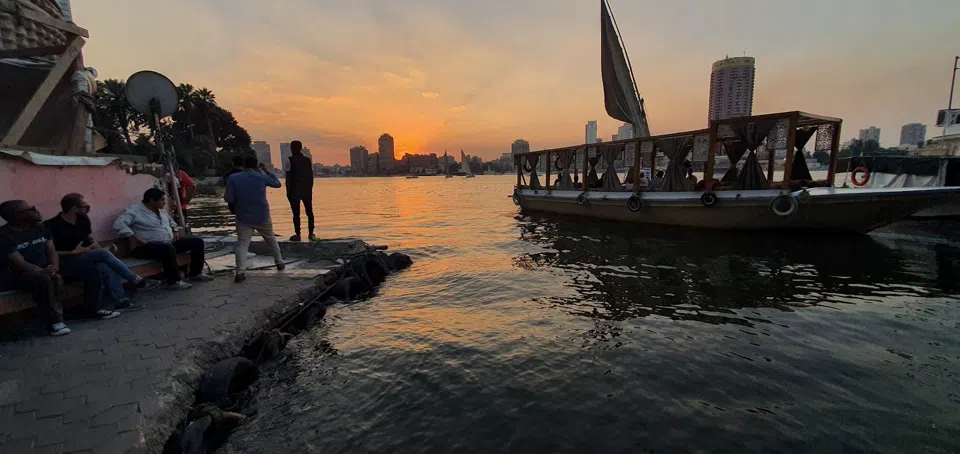
Almost everything here except the Fair Trade Center is on the West Bank, so the practical question is how you cross. The local ferry from the East Bank corniche is cheap and frequent; on the far side, taxis and drivers wait at the landing. For a proper craft day, hire a driver for a half or full day and agree the price and the stop list before you set off. Specify your workshops by name, because unbriefed drivers default to the commission route and you will end up at the same two shops as everyone else. Garagos and Esna are separate excursions, an hour or so each way; do not try to bolt either onto a Valley of the Kings morning.
Bring cash in Egyptian pounds, in small notes. Village potteries and most workshops do not take cards, and nobody can change a large note at nine in the morning. Budget roughly 200 to 500 EGP for a pottery class, a few dollars for village ware, $5 upwards for small alabaster, and considerably more if a carved piece genuinely holds your attention. The honest workshops will tell you how many days went into it.
On timing, October to April is the workable window; from May the West Bank at midday is punishing and the studios themselves are hot. Start early, take the alabaster demonstrations before lunch, keep the late afternoon for the wheel and a rooftop. Most workshops keep long days and are open through the afternoon, but village cooperatives keep their own hours, which is why the phone call ahead matters. For the temples, timings and the rest of the city, see the Luxor guide.
Questions
Can I actually make something, or do I just watch?
Two places will put you at the wheel. Ramesseum Pottery Centre runs throwing and decorating sessions next to its shop and takes walk-ins in small numbers. Luxor Pottery School is the more structured option, with courses capped at around twelve people in three daily time slots, roughly 200 to 500 EGP per person. The alabaster workshops are demonstration and shop only: you watch the carving, you do not carve.
Is there a hand-blown glass studio in Luxor?
Not one that opens to visitors. The perfume bottles sold along the corniche are mostly bought in rather than blown locally. The crafts you can genuinely watch or learn in and around Luxor are pottery, alabaster carving and handloom weaving, which is what this article covers.
How do I avoid buying resin sold as alabaster?
Weigh it in your hand: real stone is heavier and cooler than cast resin, translucent when backlit, and slightly irregular in its banding. Buy from Imhotep Alabaster Luxor if you want certificates and the strongest authenticity record, or from Hapi for Alabaster, an eighth-generation family workshop where you can watch the shaping, hollowing, polishing and waxing before you commit.
Which of these places work for a larger group?
Luxor Pottery School, Hassany for Alabaster, Al-Qisariyya Heritage Street Market and Wekalet al-Geddawi all handle groups comfortably. Garagos Pottery takes groups but needs a phone call and confirmation someone will be there. Habiba Hand Weaving and the Al-Hella village potters suit couples or a few people only. A coach load in a working yard is intrusive, and at Al-Hella you should go with a guide who can introduce you.
How much should I budget for a craft day?
A pottery class runs roughly 200 to 500 EGP per person. Village ceramics cost a few dollars a piece; finished studio pieces run from about $3 for coasters to $100 or more for large plates. Small alabaster starts around $5. Add a half-day driver and entry to anything else on your route. Carry Egyptian pounds in small notes, since cards are rarely accepted.
First published on theluxorguide.com, the Luxor guide.