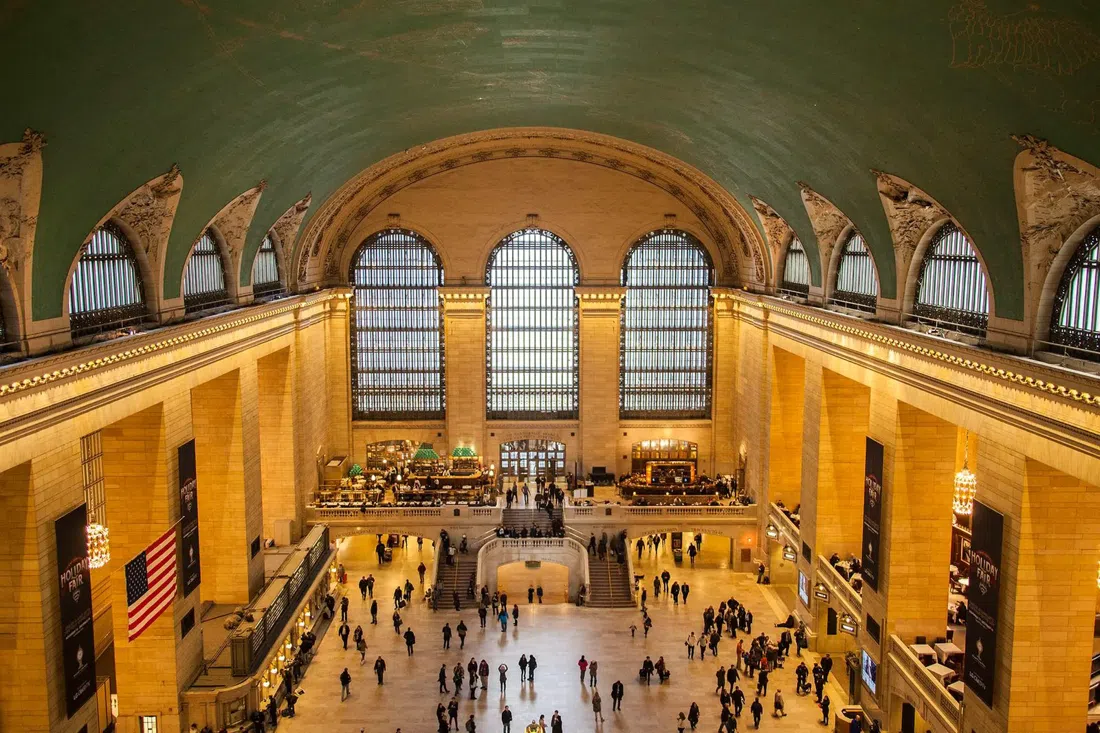
The ceiling above the Main Concourse is 125 feet up, painted a strange greenish blue, and the zodiac on it runs backwards. Nobody planned that as a party trick. It is the residue of a 1913 building that was rebuilt, botched, sooted over for decades and then scrubbed clean in the 1990s, with one small dark patch left unwashed on purpose so you can see what sixty years of cigarette smoke did. Most September visitors give the room four minutes and a photograph from the west staircase. It deserves an hour, and the hour costs almost nothing.
How the terminal built the district around it
Grand Central Terminal (Midtown East, at 42nd Street and Park Avenue) is a working commuter terminal first and a monument second, and that order explains everything about how to visit it. It opened in February 1913, the product of a long argument between the architects Reed & Stem and Warren & Wetmore, and of a much bigger engineering decision: electrify the trains, bury the tracks on two levels, and sell the air rights above them. The blocks around you (the hotels, the office towers, the Park Avenue viaduct that carries traffic around the building rather than into it) exist because the railway roofed over its own rail yard and built a district on the lid. The terminal feels less like a shed than like the lobby of a small city.
It is free. There is no ticket, no door policy, no bag check at the entrances, and a group of any size can walk in off the street. The one caveat: organised groups running commentary inside need permission from the MTA, so twenty people and a leader with a raised voice puts you in tour-operator territory rather than visitor territory. Doors are open daily from roughly 05:15 to 02:00, which means you can have the concourse nearly to yourself at six in the morning or at midnight, and you can have it at full roar between 08:00 and 09:30 and again between 17:00 and 18:30.
See it at least once during a rush hour. An empty Grand Central is a handsome room. A full one, forty thousand people an hour crossing a floor without collision, the departure board flicking over, the ramps pulling commuters down to the lower level like water finding a drain, is the thing itself. Photographers prefer it empty. I would take the noise.
Marble, the backwards zodiac and the whispering arch
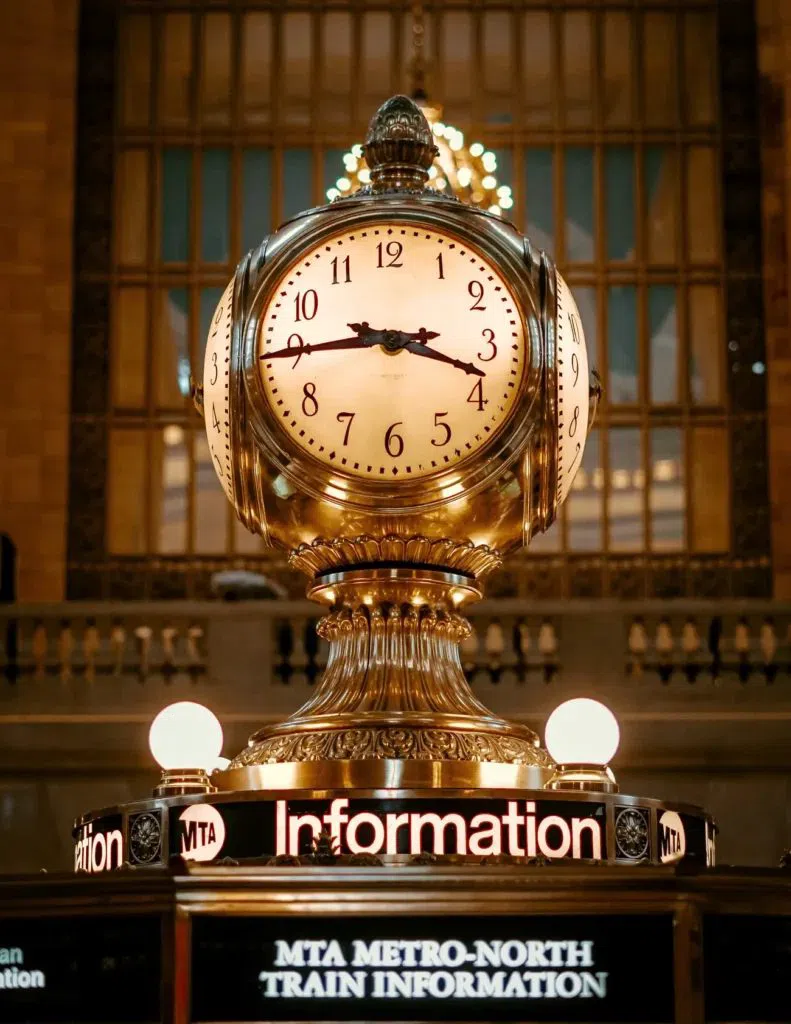
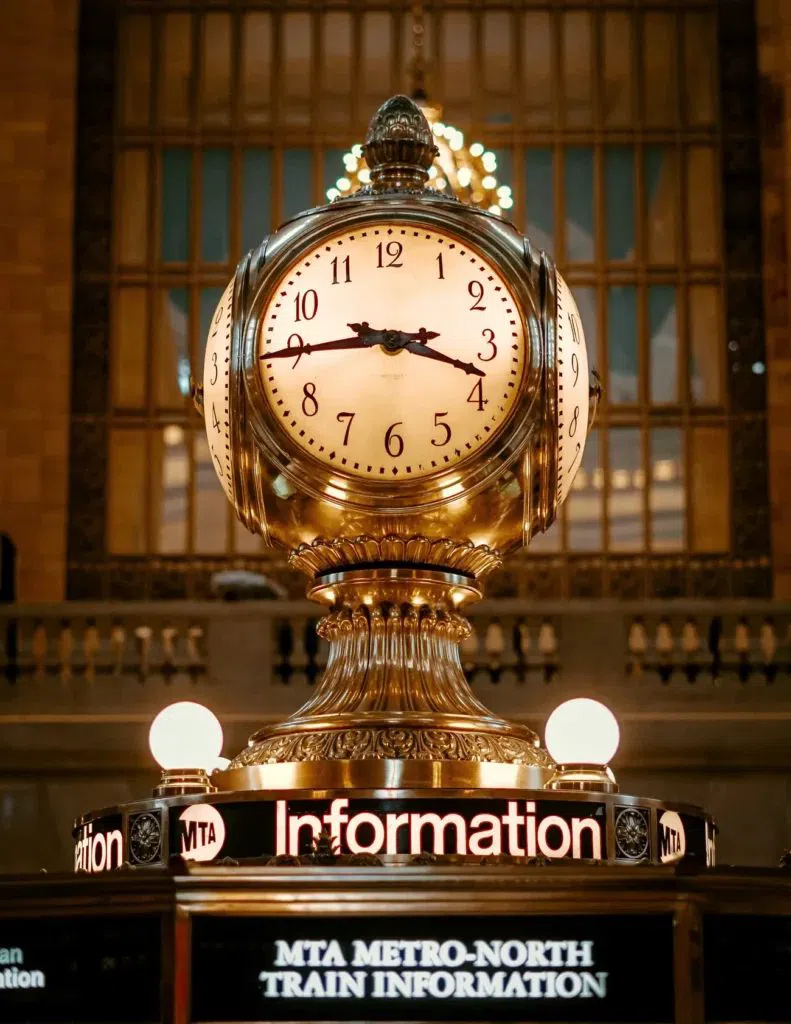
The stone under your feet and around you is Tennessee marble, pinkish and veined, worn into shallow dips at the foot of the staircases by more than a century of shoes. At the centre of the concourse stands the information booth with its four-faced brass clock, the single most photographed object in the building and the default meeting point for everyone in New York who has ever said under the clock. Above it, the sky ceiling is based on a design by the French artist Paul César Helleu, and you can work out the reversal for yourself: the constellations are drawn as if seen from outside the celestial sphere, which is either a medieval convention or a mistake depending on which guide you ask. Near the crab of Cancer, find the small unrestored rectangle, left filthy on purpose during the restoration as a control sample.
The other trick in the building costs nothing and sits on the lower level, on the tiled cross-vault at the entrance to the Oyster Bar. Two people stand facing into diagonally opposite corners of the arch, a foot from the tile, and speak normally; the sound travels up one curve and down the other and arrives as clearly as a phone call. It works because of Guastavino tile vaulting, it works better when the lower level is quiet, and it fails completely at 18:00 on a Thursday. Go mid-afternoon if you want it to work. You will usually find a small, patient queue of couples doing the same thing, and nobody minds waiting.
The things people miss are the ones that need a change of floor: the east and west balconies, the Vanderbilt Hall ticket concourse that now holds events, and the ramps. Those ramps are a piece of design history in themselves, because running no stairs at all between the concourse and the lower level was a deliberate choice made for passengers with trunks.
What a guided visit actually adds, and what it costs
Because the building is free, everything you pay for is interpretation, and interpretation here is priced very differently from one seller to the next.
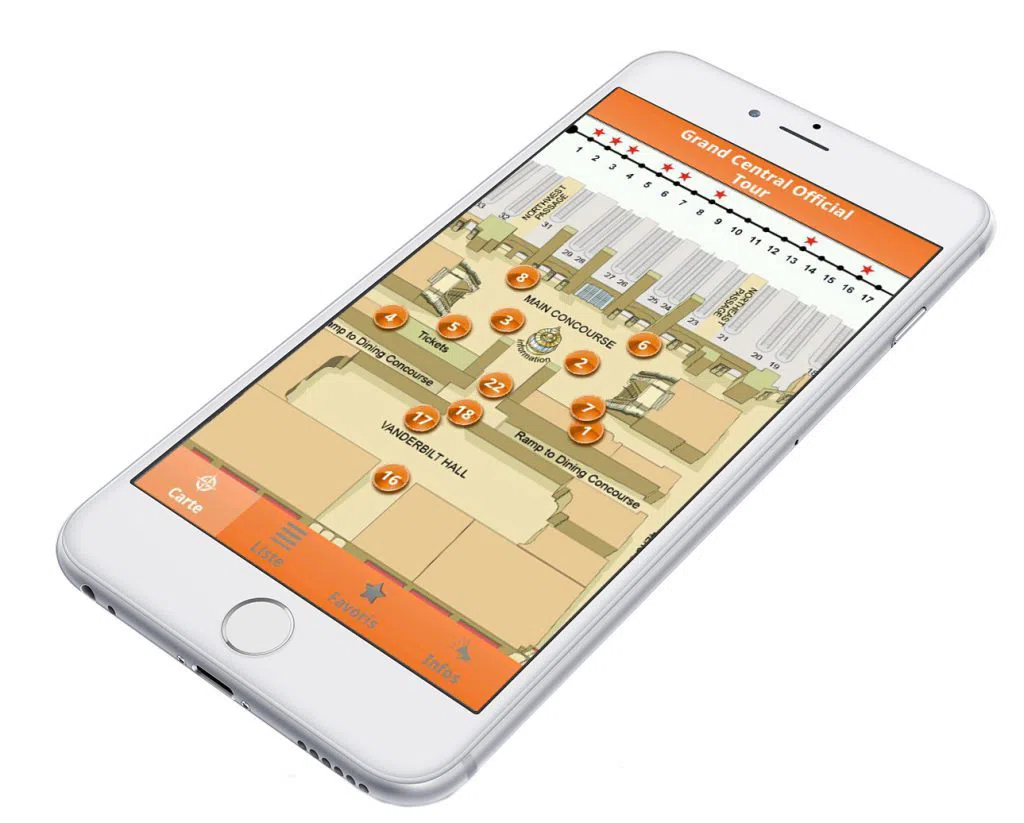
The cheapest useful one is the Grand Central Terminal Official Audio Tour (Midtown East, hired inside the terminal), at $9 for adults and $7 for seniors, students and children. It runs about an hour, comes in six languages, and the last hire is 17:00 on weekdays and 18:00 at weekends, so miss that and your evening visit is self-guided. It is the right choice for families and for any self-paced group, because everyone moves at their own speed and nobody is waiting for a straggler. If you do one paid thing here, do this.
For a human guide, Untapped New York Tours (Midtown East, meeting in front of Track 29 in the Main Concourse) runs 90 minutes at $42 per person with a hard maximum of 15 people per departure, is ADA accessible, and takes private bookings. The content is the good stuff: the hidden tennis court upstairs, the reversed ceiling, and the preservation fight that followed the demolition of the old Pennsylvania Station. Small caps mean you can hear the guide, which is not a given in a room this loud.
The most serious architectural read comes from The Municipal Art Society of New York (Midtown East, public departures from inside the terminal), at $35 general and $25 for members, with seasonal $10-off offers appearing from time to time. It runs 60 to 75 minutes and you can register online up to an hour before, which makes it a viable same-day decision. MAS is the civic body that fought to save the terminal from demolition, a campaign that ran all the way to the Supreme Court in 1978, so the tour is told by the winning side. Note the group policy carefully: public departures book by the head, but private Grand Central tours are capped at eight people, other MAS tours take twenty, and private bookings go through the Director of Tours by email.
There is also a free option that most visitors never hear about. Grand Central Partnership — The Grand Tour (Midtown East, meeting at 120 Park Avenue) leaves at 12:30 on Fridays, takes no reservations and states no cap, and runs 90 minutes to well over two hours across the terminal, Pershing Square and the Chrysler Building. For a budget group, or for anyone who wants the district rather than just the building, it is the best value in Midtown East. The trade-off: Friday only, turn-up-and-hope numbers, and a guide who may be addressing forty people outdoors on 42nd Street.
The open-top bus stop outside, and how to use it properly
Grand Central sits on the 42nd Street corridor, which is why every hop-on hop-off route in the city passes it and why the terminal is a natural start or finish to a bus day. Three operators matter here.
Big Bus Tours New York (Midtown, nearest stop Times Square East) runs red downtown and blue uptown loops along 42nd Street past the terminal and the Chrysler Building, with one-day classic tickets roughly $55 to $80. Check the operator's own site for current fares, which move. Buses roll roughly 09:30 to 16:30. The stop is a short walk west rather than outside the terminal doors, which matters if you have a pram or a bad knee. Open-deck seats are first-come, so a party of eight will be split across decks and should accept that in advance.
TopView Sightseeing (Midtown East, ticket office at 2 E 42nd Street) is the closest bus-tour base to the terminal, five minutes on foot along 42nd, with 24-hour passes roughly $50 to $75, cheaper night tours, and more than forty stops, which in practice is the easiest network for a group that wants to split up and regroup. Gray Line CitySightseeing New York (Midtown, boarding point to be confirmed) is the long-standing coach operator, roughly $55 to $90 depending on whether you take a 24, 48 or 72-hour pass and whether you bundle attractions, with recorded narration in eleven languages, live guides on many departures, and uptown, downtown, Brooklyn and night loops. One warning that has caught people out: its old 8th Avenue storefront has gone, so confirm the current boarding point on the day rather than walking to an address from an old page.
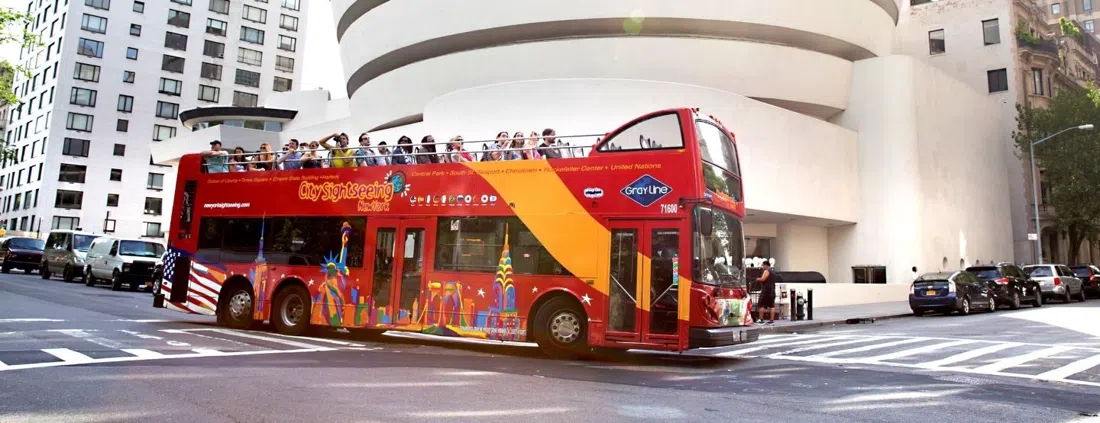
The bookable tours attached to this page run seven days a week, Monday through Sunday, with prices from 62 USD per person, and the top-selling open-top tour is rated 3.5 out of 5 from 4,958 traveller reviews. That middling score is worth sitting with. These buses are transport with commentary sold as an attraction: the narration is decent, the views from an open deck along 42nd Street are good, and the frequency in heavy Midtown traffic is the thing people complain about. Book ahead if you want a fixed price and free cancellation; buy at a kerbside office if you would rather look at the weather first. In September, that second argument has some force.
Eating and drinking in the building without wasting the room
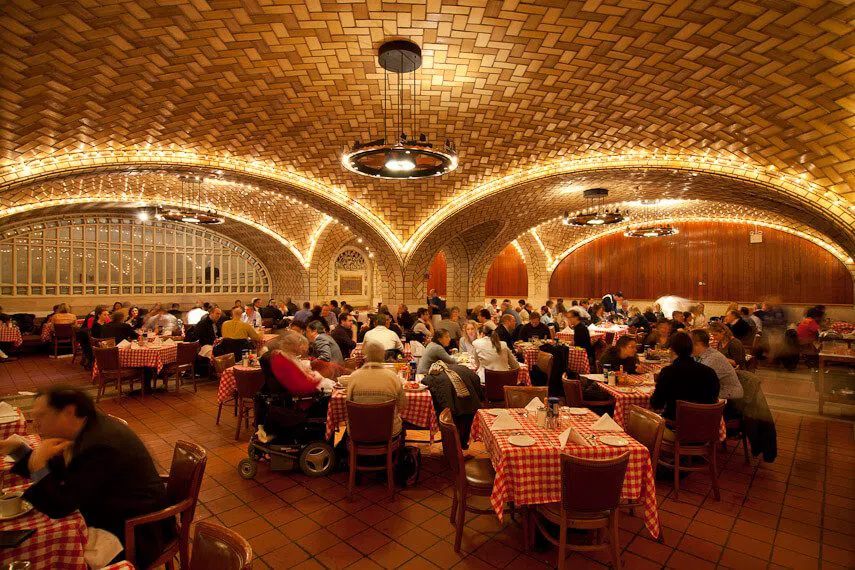
The Grand Central Oyster Bar & Restaurant (Midtown East, lower level) has been open since 1913 and is the most atmospheric room in the terminal, all Guastavino tile vaults and a long counter where the oysters are shucked in front of you. Expect $$$: oysters roughly $3 to $5 each, mains around $30 to $50. Check the hours before you build a day around it, because this is the single most common trap for weekend visitors. It currently runs Monday to Friday, 11:30 to 21:30, and shuts at weekends. The counter suits pairs and solo diners far better than parties; group bookings and private rooms exist, but the counter experience does not scale.
The Campbell (Midtown East, off the Vanderbilt Avenue corner) is the 1920s private office of the financier John W. Campbell, restored and reopened by the Gerber Group, open daily 12:00 to 02:00, cocktails around $22 to $26. Reservations are advised and the door is smart-casual, which means not a suit, but not a day pack and shorts either. The Palm Court and Terrace absorb larger parties comfortably. It is the civilised alternative to queuing for a photo on the concourse.
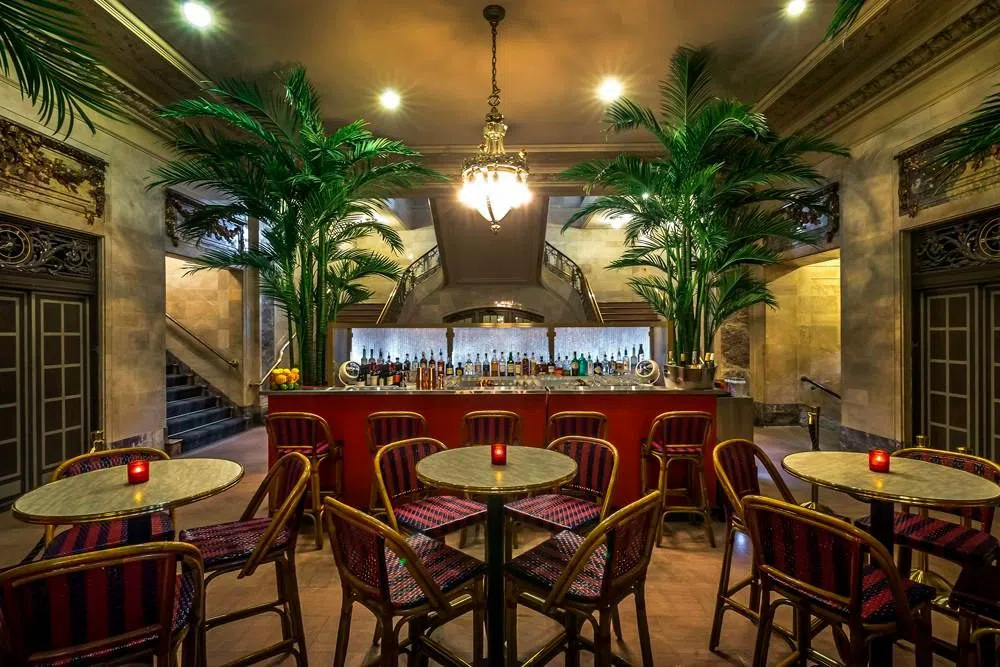
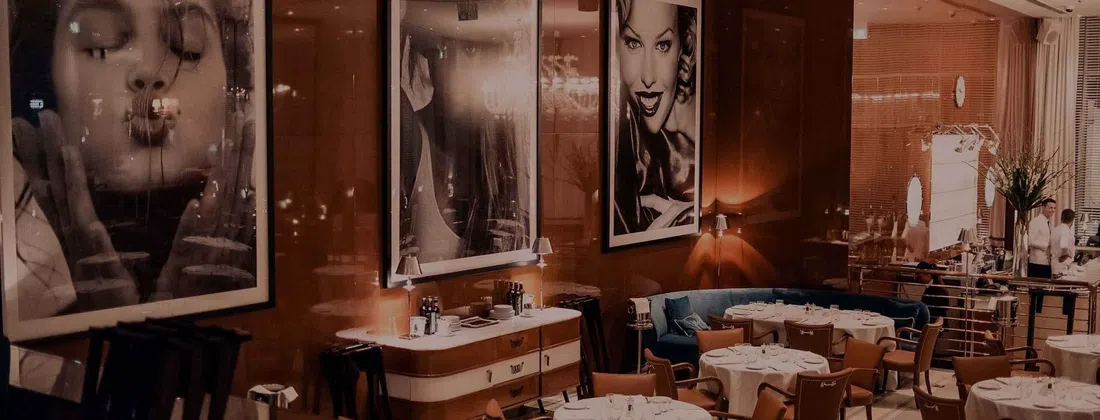
Cipriani Dolci (Midtown East, west balcony) is the best paid seat above the concourse. A Bellini and a pastry is the cheap way in, the full bill is $$$$, booking is essential at peak, and semi-private balcony dining is available for groups. Order one drink and you get, at eye level, the view every photographer on the floor below is trying to fake. Hours are Monday to Saturday 11:30 to 22:00, Sunday from 12:00.
For a bus-tour day, assemble lunch at Grand Central Market (Midtown East, the Lexington Avenue passage) instead, at $ to $$, open Monday to Friday 07:00 to 20:00, Saturday 10:00 to 19:00, Sunday 11:00 to 18:00. It is a thoroughfare as well as a market, so a group of twelve at 18:00 is an obstruction; go before noon.
Two floors down, ten minutes east, and one lift up
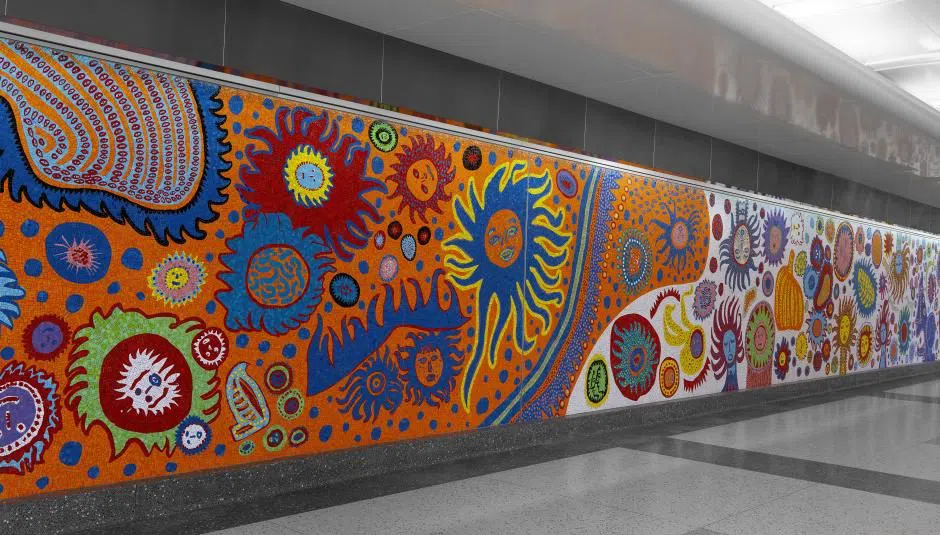
Grand Central Madison (Midtown East, beneath the terminal) is the Long Island Rail Road terminal that opened in 2023, more than a hundred feet down, and it is free public transit space with permanent mosaics by Kiki Smith and Yayoi Kusama. Almost no bus-tour visitor knows to ride the escalators down. They are long, so groups arrive in waves at the bottom; that is fine, it is not a room you rush.
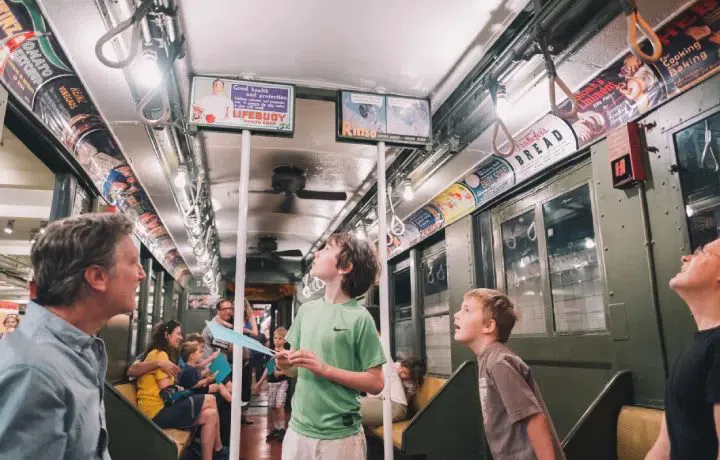
New York Transit Museum Gallery Annex & Store (Midtown East, just off the Main Concourse beside the Station Master's Office) is a free walk-in, ten focused minutes of transit history, and the best non-tat souvenirs in the building. The space is small, so split any party above about ten. Open 10:00 to 19:30 on weekdays and 10:00 to 18:00 at weekends.
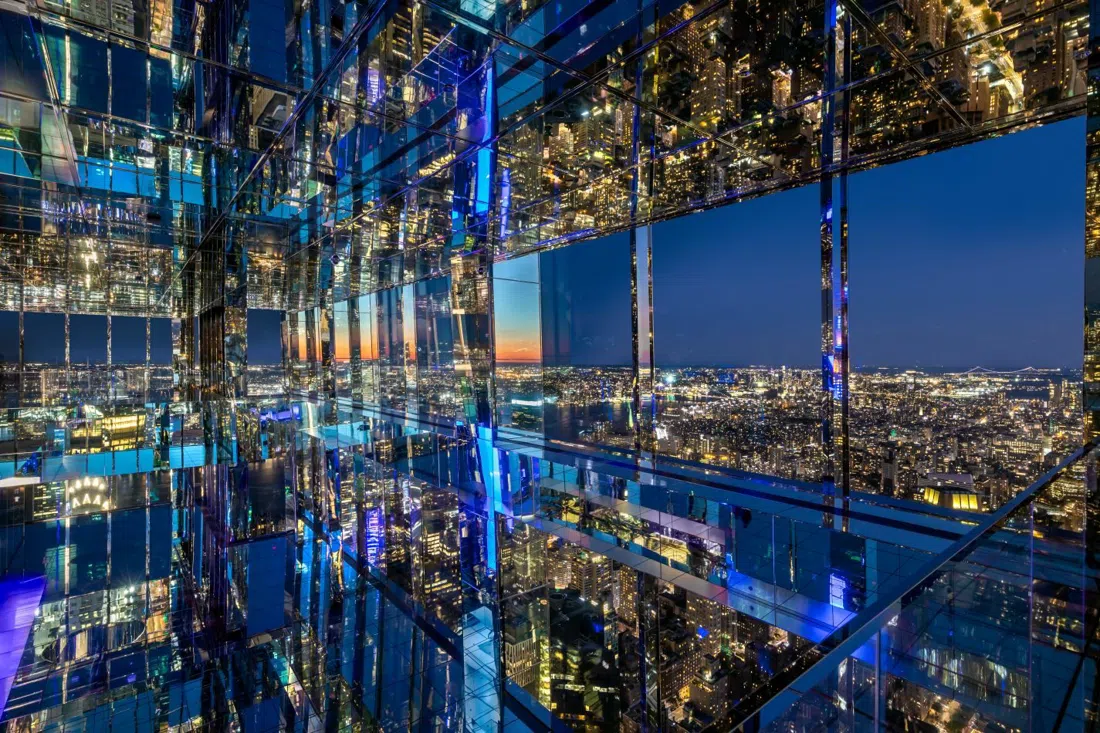
SUMMIT One Vanderbilt (Midtown East, connected straight through the terminal's transit hall) is the one place you can look down on the terminal's roof, on timed-entry tickets from about $44 to $79 by slot and package, with discounted entries from around $33 and group rates available. Open 08:00 to midnight, last entry 22:30. Practical warning: the mirrored floors make skirts and heels awkward, and shoe covers are issued at the door.
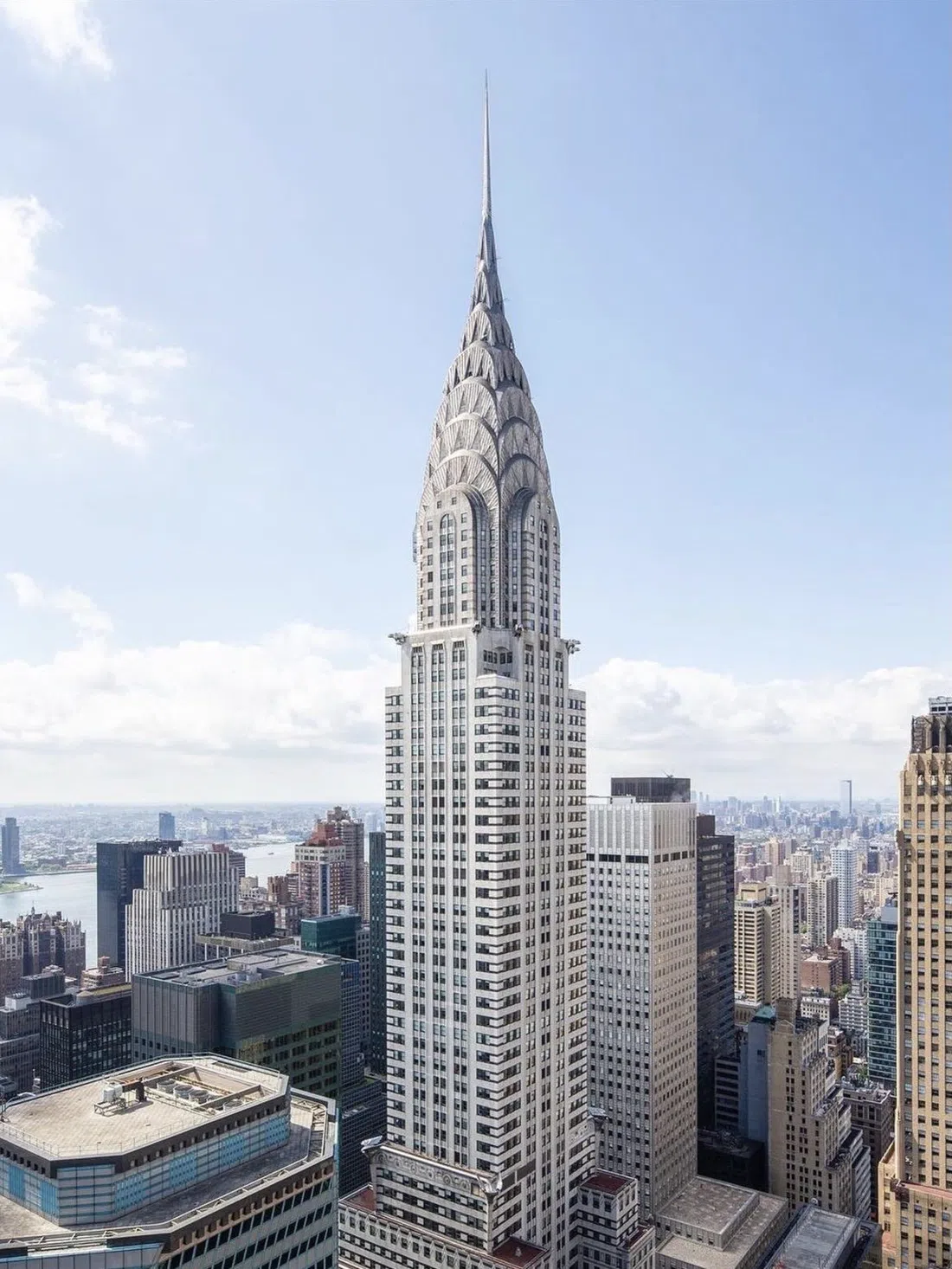
Finally, the Chrysler Building lobby (Midtown East, two minutes east on 42nd Street) is free to walk into and is the finest Art Deco interior in the city, with red marble, inlaid wood, and Edward Trumbull's painted ceiling of aeroplanes and machinery. It is also a working office lobby, roughly 08:00 to 18:00 on weekdays, closed at weekends and on holidays. Security will move a crowd along, so go in small clusters. Stills are allowed, video is not, and there is no observation deck, whatever a guide tells you.
Best time to go in September
This is the best month of the year to do it, with one caveat.
Early September is still humid and can hit the high twenties Celsius, which on an open top deck in direct sun is more punishing than people expect, so take sunscreen, water and a hat. By the last week the air turns dry and clear and the light down 42nd Street in the late afternoon is the best it gets. It is also the tail of the Atlantic storm season, so a warm bright morning can become a hard hour of rain. The terminal is entirely weatherproof, which makes it the right thing to do on the afternoon your bus plan collapses.
The caveat is the United Nations General Assembly, whose high-level week falls in the second half of September and sits a few blocks east of Grand Central. Expect frozen motorcades, closed cross-streets and Midtown East traffic that can turn a loop bus into a slow-moving grandstand. If your dates fall in that window, do the terminal itself on foot and ride the buses early in the day or on the night loop.
Within a day, the pattern is simple. Arrive 08:00 to 09:30 for the terminal at full commuter volume. Come back mid-afternoon, roughly 14:00 to 16:00, for the whispering arch, the Transit Museum annex and the escalators down to Madison, when the lower level is quiet enough for all three. Hire the audio tour before 17:00 on a weekday or 18:00 at a weekend. If the Oyster Bar is on your list, you need a weekday. If a bus loop is on your list, you need to start it well before the roughly 16:30 last rolls. And if you want the roof view, take a late SUMMIT slot and let the terminal be your daylight and the tower your dusk.
Is it worth it
The building, yes, without qualification, and it is free, so the question is about the paid layers.
For almost everyone, the $9 audio tour. An hour, six languages, self-paced, and it turns a pretty room into a story about electrification, air rights and a preservation fight. If you care about architecture, take the MAS docent tour at $35, or Untapped at $42 with its 15-person cap if you want the tennis court and the oddities. For a group on a budget, the free Friday district walk at 12:30 needs no booking, provided you can live with Friday.
The open-top bus is the one to think about. It is worth it if you are here for three days, want an overview of a very large city, and treat the ticket as transport with commentary. It is not worth it if you have one afternoon in Midtown East, because the same money buys the audio tour, a Bellini on the balcony and a SUMMIT slot, and you will see more. The 3.5-out-of-5 rating across 4,958 reviews for the top-selling loop is a fair reflection of that gap between expectation and traffic.
Who it suits least: anyone who needs quiet. This is a terminal. It is loud, it is crowded, it has commuters with a train to catch, and the concourse at 08:30 is not a museum.
Practical notes for a September visit
Grand Central-42nd Street is served by the 4, 5, 6, 7 and S subway lines directly beneath the terminal, Metro-North from the upper and lower levels, and the Long Island Rail Road from Grand Central Madison below. Pay by tapping a contactless card or phone at the turnstile; a single ride is $2.90 and fares cap weekly, so you never need to queue at a machine. Walking beats any bus across Midtown in the second half of September.
You will barely need cash. Cards and phones work everywhere in the terminal, including the market stalls. Carry a small amount for tips on a guided walk, since the free tours run on them.
Allow 45 minutes for a walk-through, 90 minutes to two hours to do the concourse, the whispering arch, the Transit Museum annex and Grand Central Madison properly, and half a day if you are adding SUMMIT or a meal.
The terminal, a browse of the market, the Transit Museum annex, Grand Central Madison and the Chrysler Building lobby cost nothing. The audio tour is $9. A guided walk is free on a Friday, $35 to $42 otherwise. A hop-on hop-off day pass runs roughly $50 to $90 depending on operator and duration, with the attached tours running seven days a week from 62 USD per person. SUMMIT is about $44 to $79, or from around $33 discounted. A Bellini on the balcony costs less than you fear, and buys the best view in the building.
The blocks north and east of the terminal are business-district quiet at weekends and very well connected on weekdays, which is an unusual combination in this city; start with a New York hotel search and compare it against the wider picture in our New York guide before you book a September room, because the second half of the month is the tightest stretch of the autumn.
Questions
Is it free to go inside Grand Central Terminal?
Yes. It is a free public building with no ticket and no door policy, open daily from roughly 05:15 to 02:00, and a group of any size can walk in. The only restriction is that organised groups running their own commentary inside need MTA permission. Everything you pay for, the $9 official audio tour, a guided walk, the observation deck, is optional, and the building itself costs nothing to walk into.
Where is the whispering gallery and does it really work?
It is the tiled cross-vault on the lower level at the entrance to the Oyster Bar. Two people face into diagonally opposite corners, a foot from the tile, and speak normally; the curved Guastavino vaulting carries the sound across. It works well when the lower level is quiet, so aim for mid-afternoon rather than the 17:00 to 18:30 rush, when the ambient noise drowns it.
Is the Grand Central Oyster Bar open at weekends?
No, and it catches out more weekend visitors than anything else in the building. The Grand Central Oyster Bar & Restaurant currently runs Monday to Friday, 11:30 to 21:30, and shuts at weekends. Oysters are roughly $3 to $5 each and mains around $30 to $50. The counter suits pairs and solo diners; larger parties should book a table or a private room rather than hoping for counter seats.
Where do the open-top sightseeing buses stop near Grand Central?
None stop at the terminal doors. The closest bus-tour base is TopView's ticket office at 2 E 42nd Street, about five minutes' walk east to west along 42nd. Big Bus routes pass the terminal on the 42nd Street corridor with the nearest stop at Times Square East, a short walk west, running roughly 09:30 to 16:30. Gray Line has closed its old 8th Avenue storefront, so confirm its current boarding point on the day.
How long do I need, and what is the best time of day in September 2026?
Forty-five minutes for a walk-through, 90 minutes to two hours to do it properly, half a day with a meal or the observation deck. Come 08:00 to 09:30 to see the concourse at full commuter volume, or 14:00 to 16:00 for the quiet lower level and the whispering arch. Hire the audio tour before 17:00 on weekdays, 18:00 at weekends. In the second half of September, UN General Assembly road closures snarl Midtown East traffic, so walk the terminal and ride any bus loop early or at night.
First published on newyorkcitybreaks.com, the New York guide.