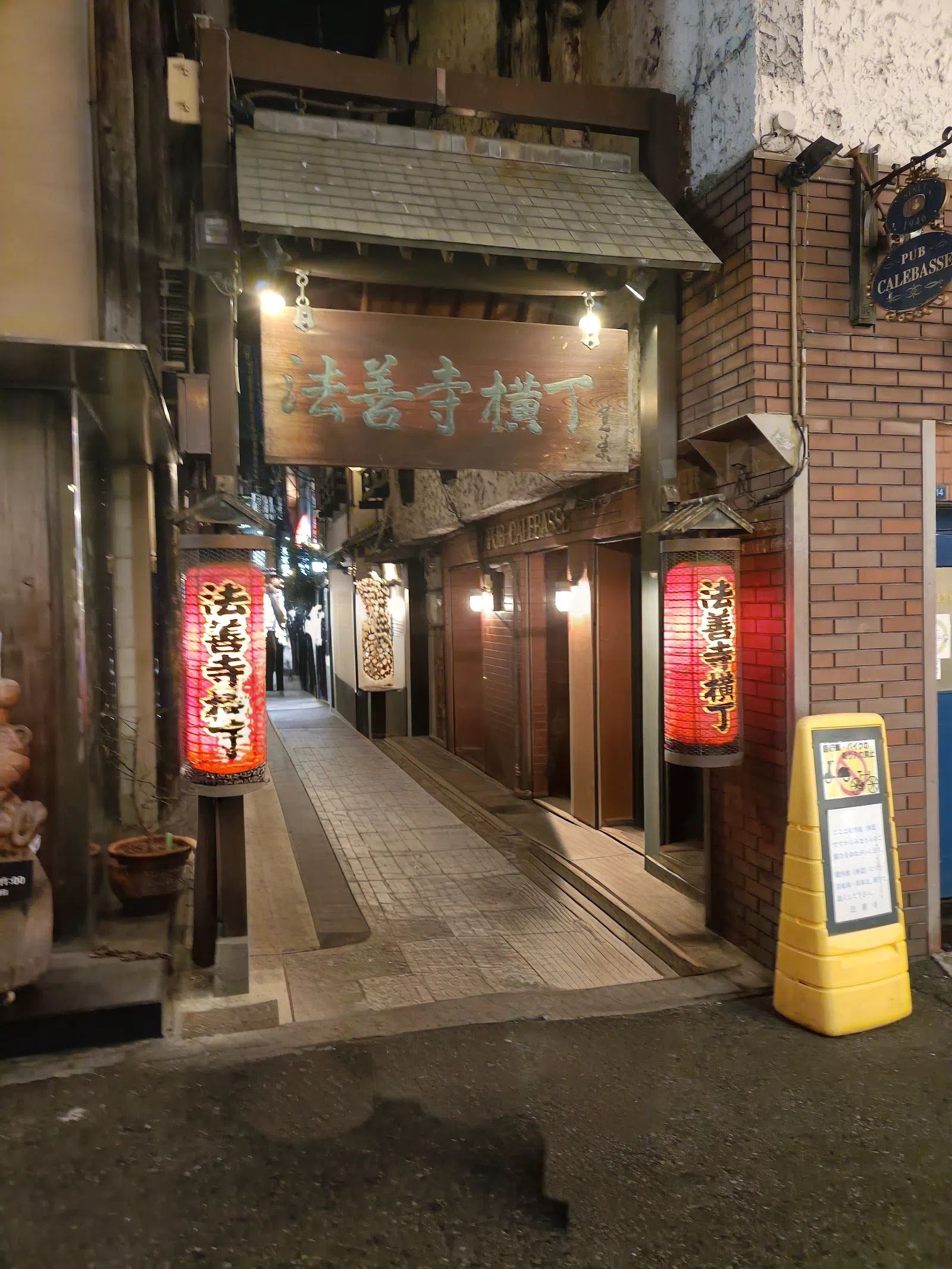
The lane is barely wide enough for two people to pass, and the first thing you notice in it is the sound of water. Somewhere ahead, past the paper lanterns and the flagstones and the sliding doors of sixty-odd kitchens, someone is tipping a ladle over a stone figure so thickly furred with green that it has lost its face. The whole walk takes about ten minutes, which is the single most useful thing anyone can tell you before you go.
What you are actually walking into
Hozenji Yokocho (Namba, in the Minami half of central Osaka) is not a site with a door. It is a pair of stone-paved lanes, a little over a hundred paces end to end, running between the Dotonbori canal and Sennichimae, roofed by nothing but the overhang of the buildings on either side and lined with the noren curtains of around sixty businesses: kappo counters where one chef cooks for eight people, standing bars, okonomiyaki griddles, kushikatsu shops. It is a public right of way. There is no ticket, no gate and no opening time; you can walk it at four in the afternoon or four in the morning, and it costs nothing.
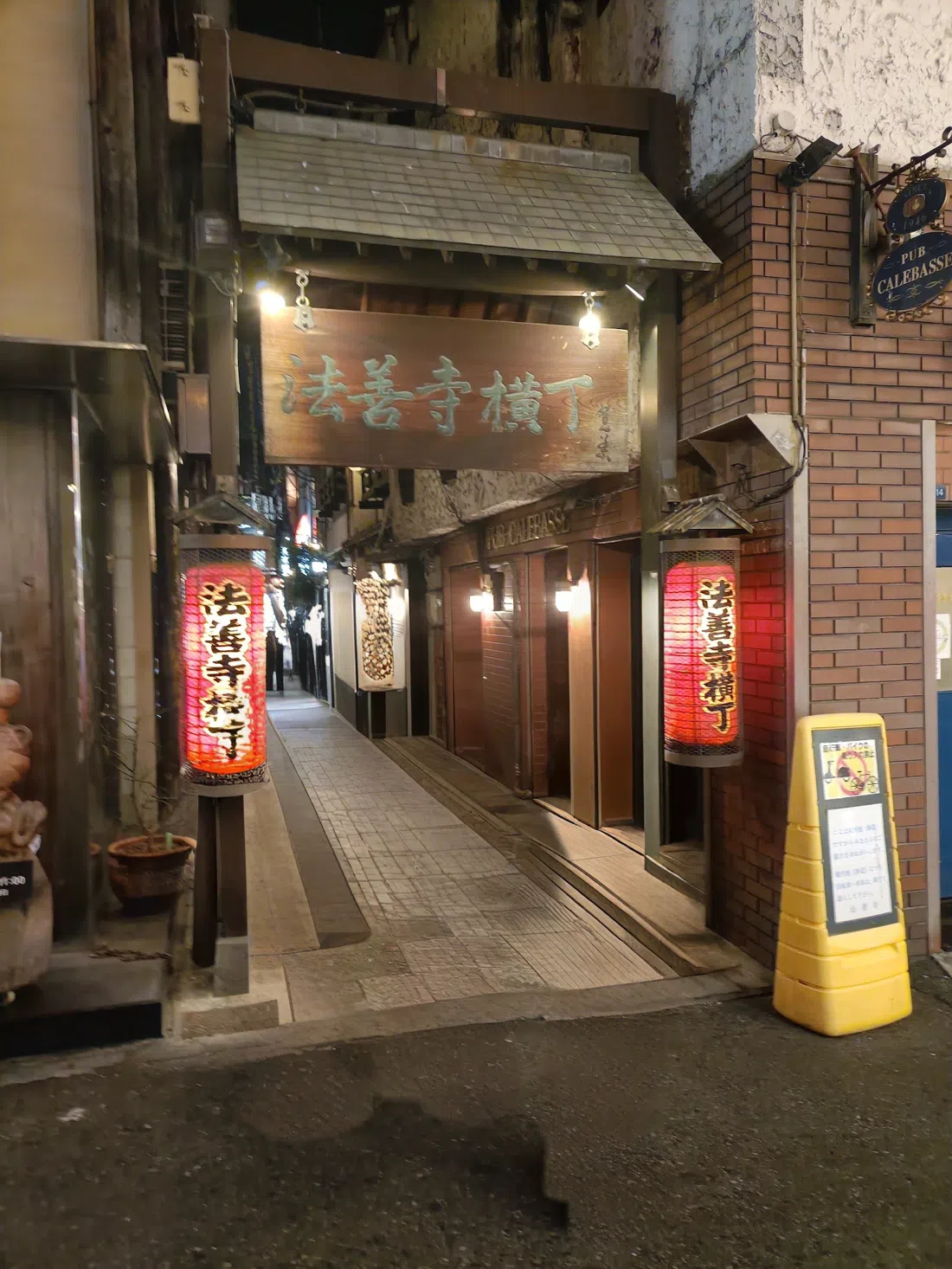
The history is why it reads so differently from the neon two minutes north. The lane grew up in the 1600s as the approach to a temple, came through the firebombing of 1945, and was rebuilt twice more after fires in 2002 and 2003, deliberately in the old grain, with the flagstones relaid and the lanterns restrung. That is why the woodwork looks cared for rather than merely old. What you are looking at is a working restaurant alley that has chosen to stay narrow.
That narrowness is the whole experience. Two people abreast is the comfortable maximum. You hear knives, extractor fans, someone laughing behind a paper screen, the scrape of a stool. Then you are out the other end and back in the noise. Ten minutes.
The moss, the ladle and the wish
Hozenji Temple and its Mizukake Fudo statue (at the alley's turn, Namba) are the reason all of this exists. The temple was founded in 1637, the lane formed as its approach, and the statue is what everyone comes for: a seated Fudo Myoo, flanked by two attendants, invisible under a coat of moss grown from roughly eighty years of people pouring water over it. You take a ladle from the basin, scoop, pour it over the figure, and make your wish silently. Nobody will tell you how to do it; you copy the person in front.
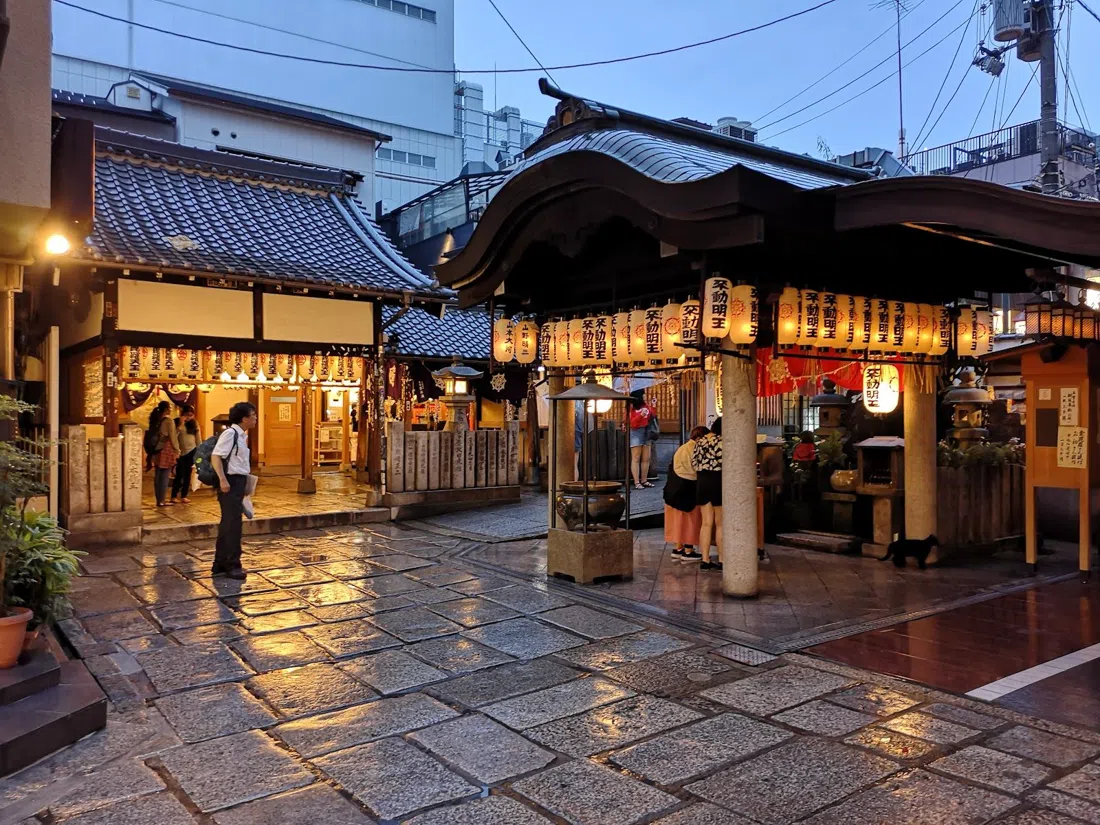
There is no booking and no ticket, and the constraint is physical rather than administrative: only two or three people fit at the basin at once. At quiet hours you walk straight up. At eight on a Saturday evening there will be a short, orderly line, and it is worth letting it stay short. This is a two-minute act rather than a ceremony, and the queue moves at the pace of people taking turns. Ten to fifteen minutes covers the statue, the incense, and a proper look at the surrounding stonework. The office selling amulets and writing goshuin runs 10:00 to 18:00, so a stamp needs a daytime visit rather than an evening one.
How long the whole thing takes
Budget it honestly. The lane itself is ten minutes. The statue is another ten to fifteen. A bowl of something sweet or a coffee adds twenty to thirty. That is an hour, unhurried, with photographs. Add a proper sit-down dinner at one of the counters and you are at two and a half to three hours for the evening.
So Hozenji Yokocho works as an anchor rather than a day out: the still point you build an afternoon and evening around, with Dotonbori, a market and a museum hung off it. If you are assembling the wider itinerary, the Osaka guide covers what else belongs in the same day. Treat the alley as the thing you walk into at dusk, not the thing you travel across the city for on its own.
Eating inside the lane
Meoto Zenzai (Hozenji Yokocho) has been trading here since 1883 and is the alley's other photograph. It serves zenzai, sweet red bean soup with mochi, and serves one portion as two small bowls, the couple's portion that gave Oda Sakunosuke his 1940 novel its title. A serving runs about ¥800 to ¥1,000, the shop opens 10:00 to 22:00 with no closing day, and it switches to a shaved-ice version in summer. The room is tiny and takes no reservations; four is the sensible upper limit, and a group of six should expect to split across tables or wait on the stones outside.
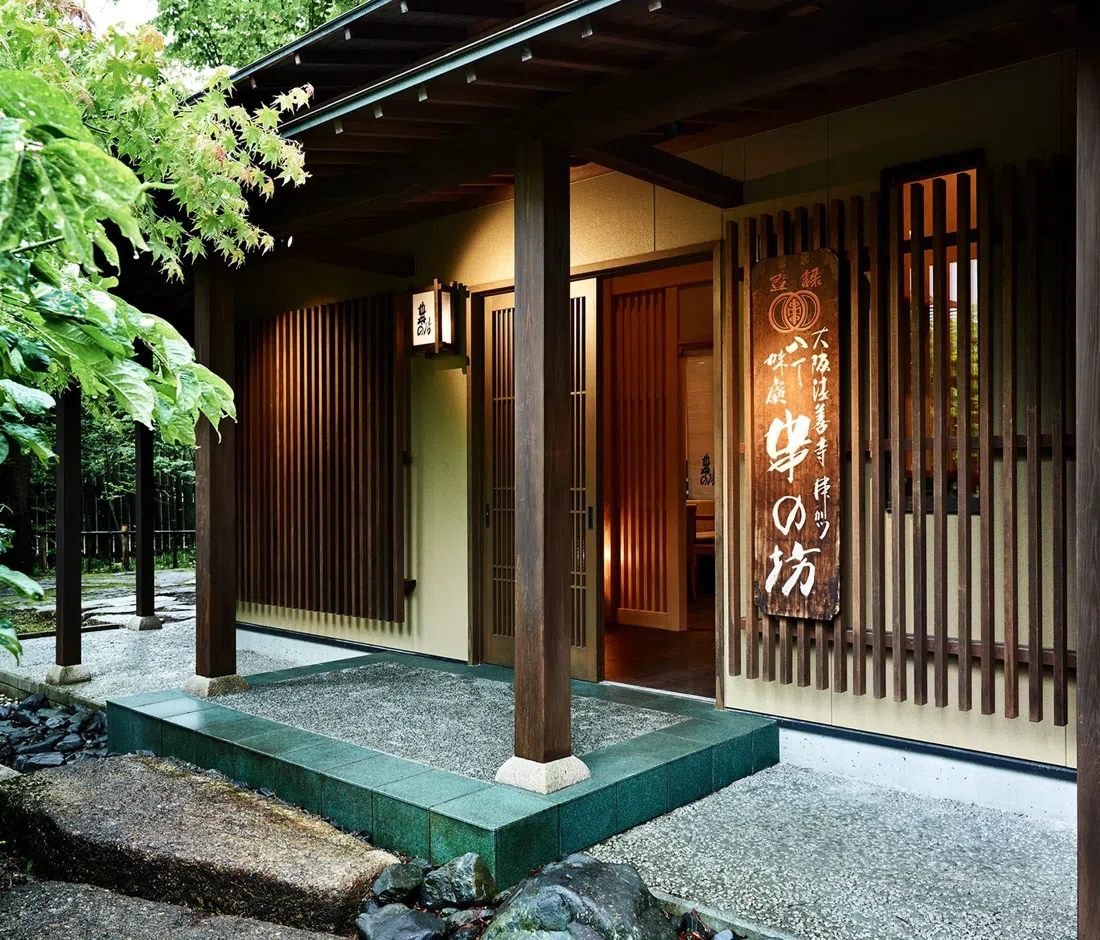
Kushinobo Osaka Hozenji Honten (Hozenji Yokocho) is the original branch of the house that turned kushiage, skewered and breaded and deep-fried everything, from a cheap standing snack into a proper course. Expect roughly ¥4,000 to ¥8,000 a head for a set, served 11:30 to 22:00 almost every day. It is counter-led and it takes reservations, which makes it one of the few places in the lane where a booked party of six or eight is genuinely welcome rather than tolerated. For the same reason it is comfortable for a solo traveller: at a counter, one person is a normal number.
Three minutes out for the rest of dinner
The alley's kitchens are small and they fill. These four are all within a few minutes' walk and solve the overflow.
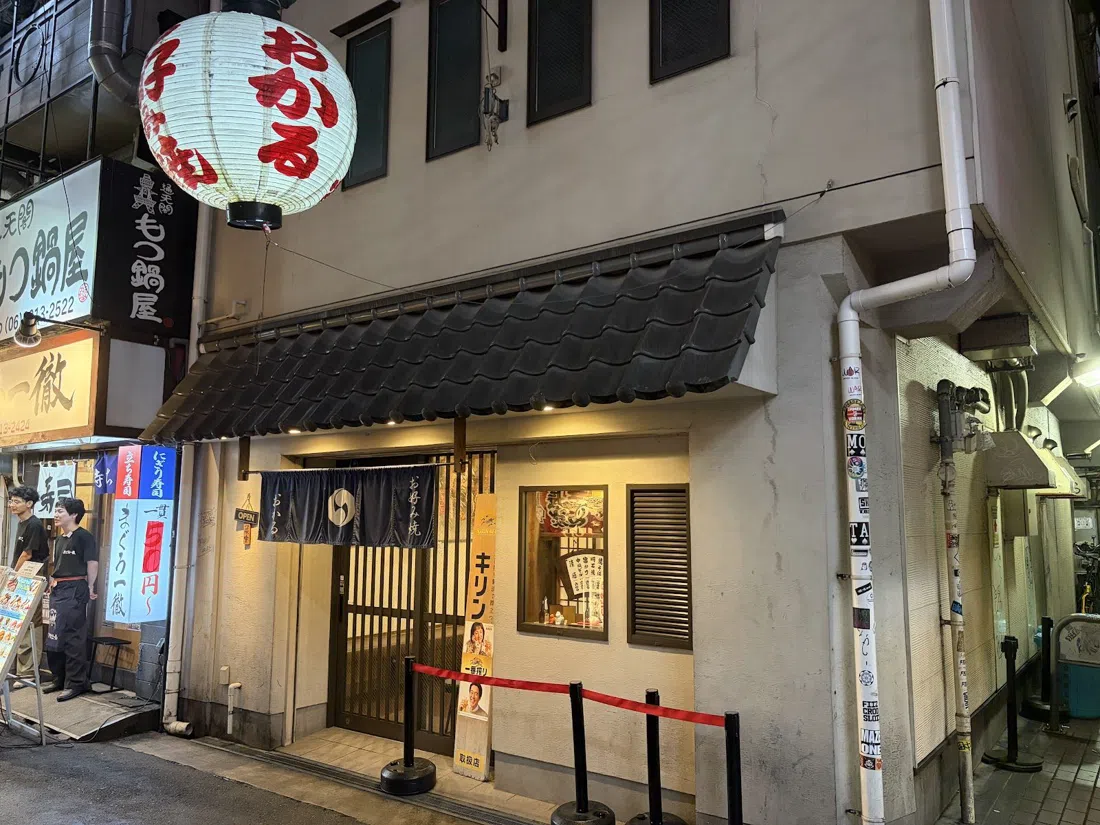
Okaru (Sennichimae) is a five-minute walk toward the arcade and worth the detour for okonomiyaki at about ¥1,000 to ¥1,800 a pancake, with the owner drawing characters on each one in mayonnaise. It holds a Tabelog Okonomiyaki 100 listing, which is exactly why it queues. Two things catch people out: it closes on Thursdays, and it shuts for an afternoon break between 14:30 and 17:00. Seating is at the griddle, there are no reservations at peak, and groups of more than four rarely get in together.
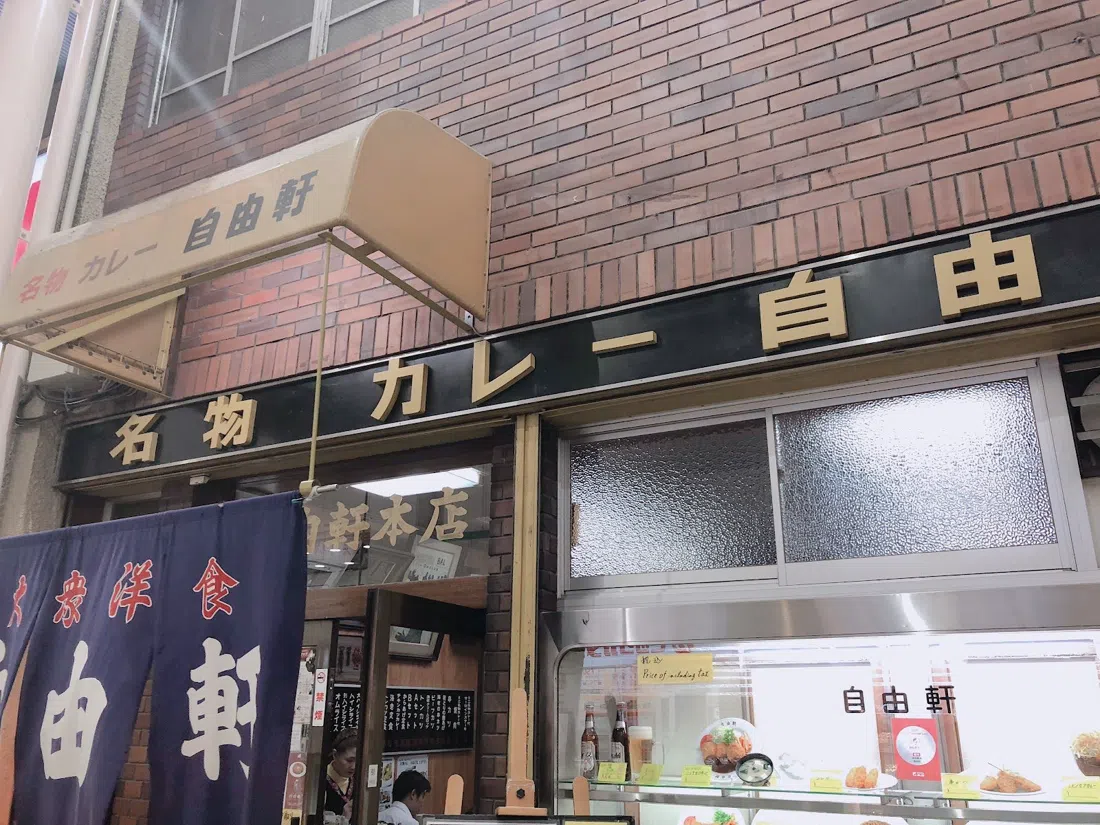
Jiyuken Namba Honten (Namba) opened in 1910 as Osaka's first Western-style restaurant and is tied to the same novelist as the sweet shop; the egg-on-curry is the dish he wrote about. It is a ticket-and-table operation with fast turnover, ¥900 to ¥1,300, serving 11:00 to about 19:35 and closed Mondays. Fine for a small group, no private space, and not somewhere to linger.
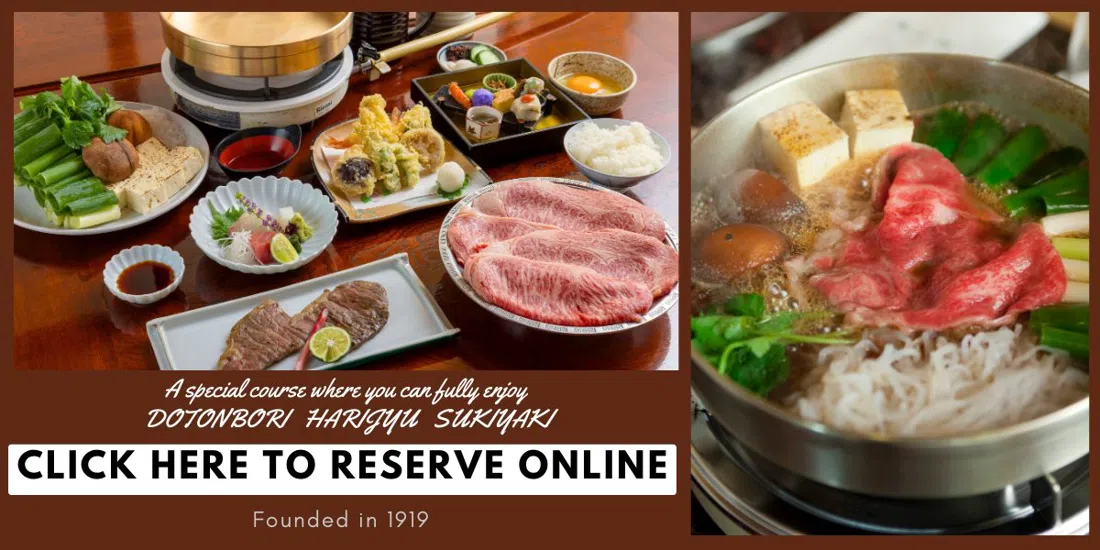
Hariju Dotonbori Honten (Dotonbori) is two minutes away and has been open since 1919. This is where the splurge goes when the alley's counters are full: a multi-floor restaurant with private tatami rooms, grill lunches from around ¥3,000 and sukiyaki dinners at ¥15,000 and up, 11:30 to 21:00 with last orders at 20:00, closed Tuesdays. It takes booked groups comfortably. If the price makes you wince, the street-side croquette counter is the cheap way to taste the same beef.
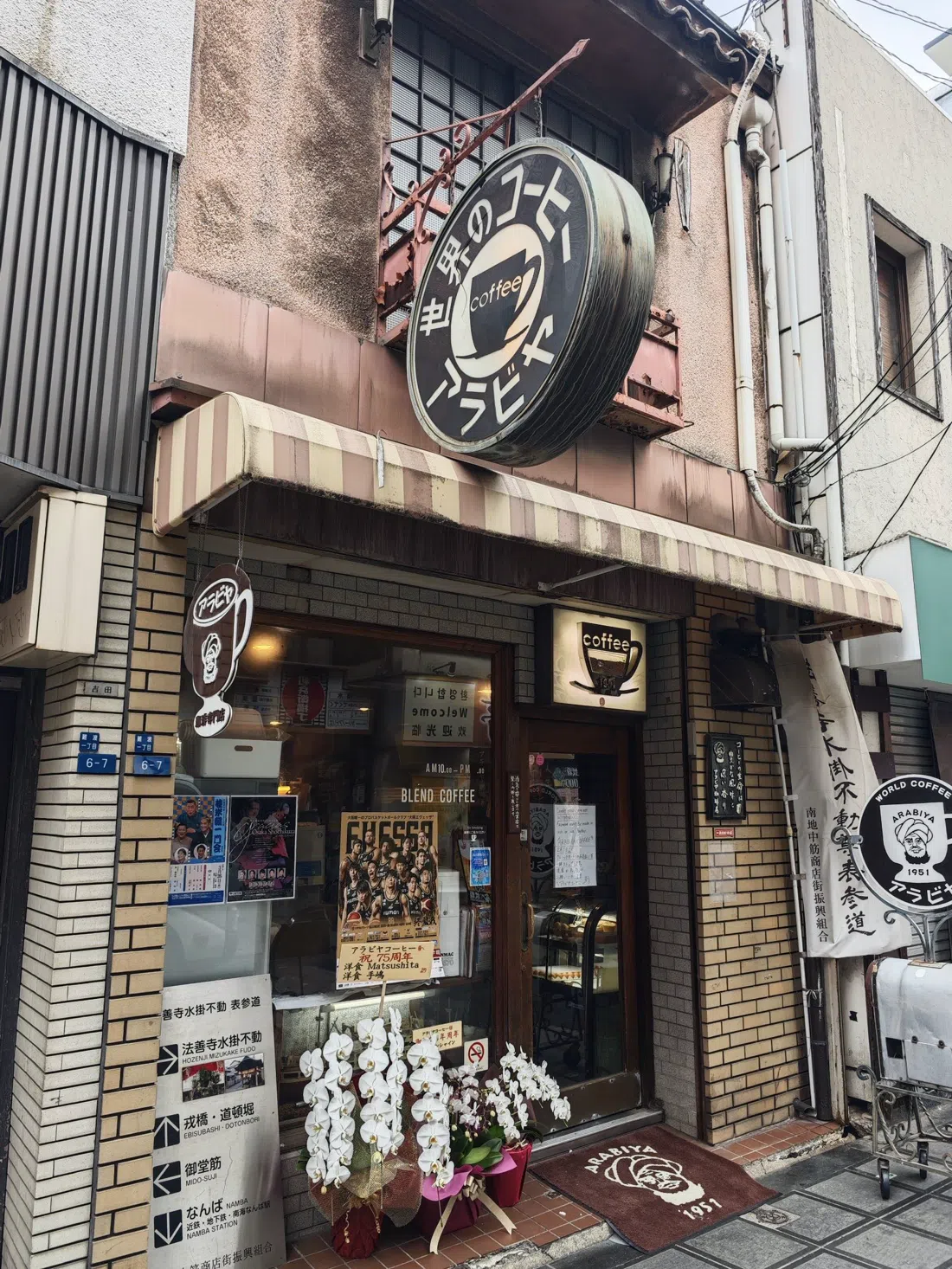
Arabiya Coffee (Namba) has been pouring since 1951, two minutes from the lanterns, at ¥600 to ¥1,200. Its hours are morning to afternoon, which pairs naturally with an early, empty visit to the statue, and it is the right answer to the question of where to go before the lanterns come on. The room is very small; one to four people, and do not attempt it as a group at lunch.
Ten minutes in every direction
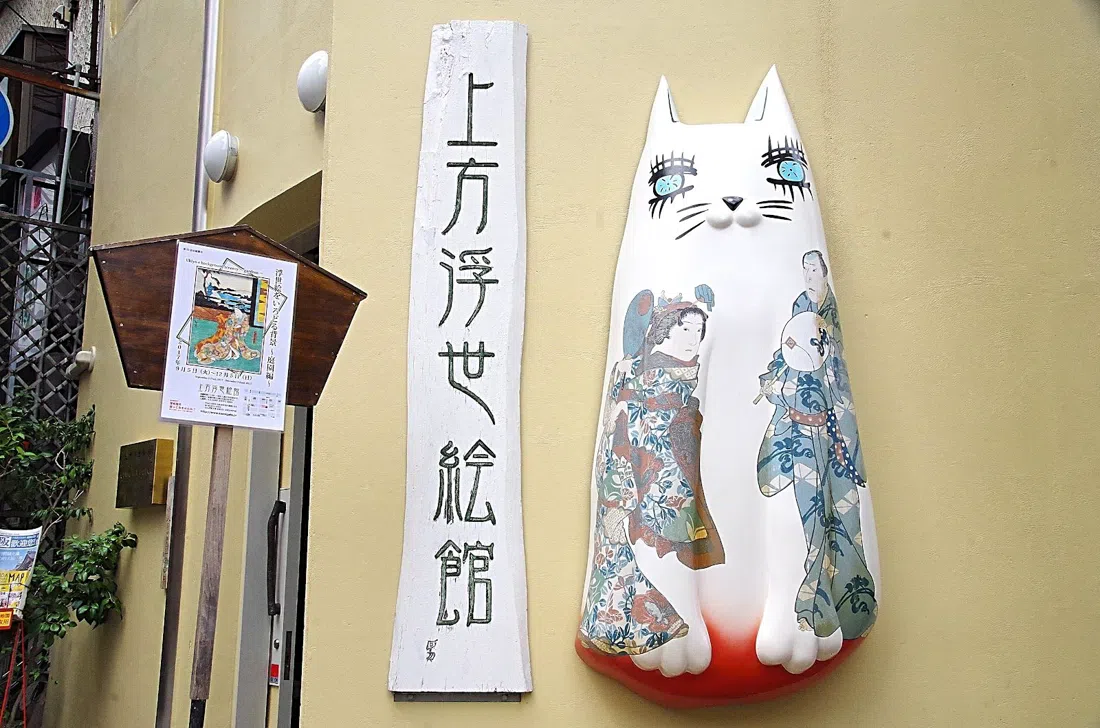
Kamigata Ukiyo-e Museum (Namba) is literally around the corner and is the only museum in the world devoted to Kamigata ukiyo-e, the woodblock prints of this region, whose actor portraits are realistic and unflattering rather than idealised. About thirty works hang at a time, rotated quarterly. Entry is ¥700 for adults, ¥500 high school, ¥300 elementary and junior high; 11:00 to 18:00, last entry 17:30, closed Mondays. The floors are very small, so a group above about ten has to go in waves.
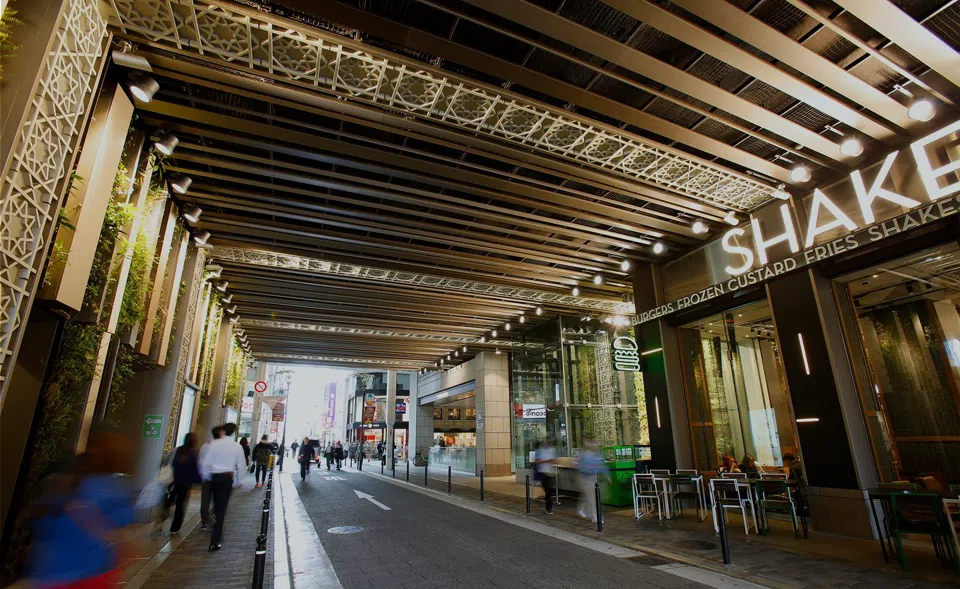
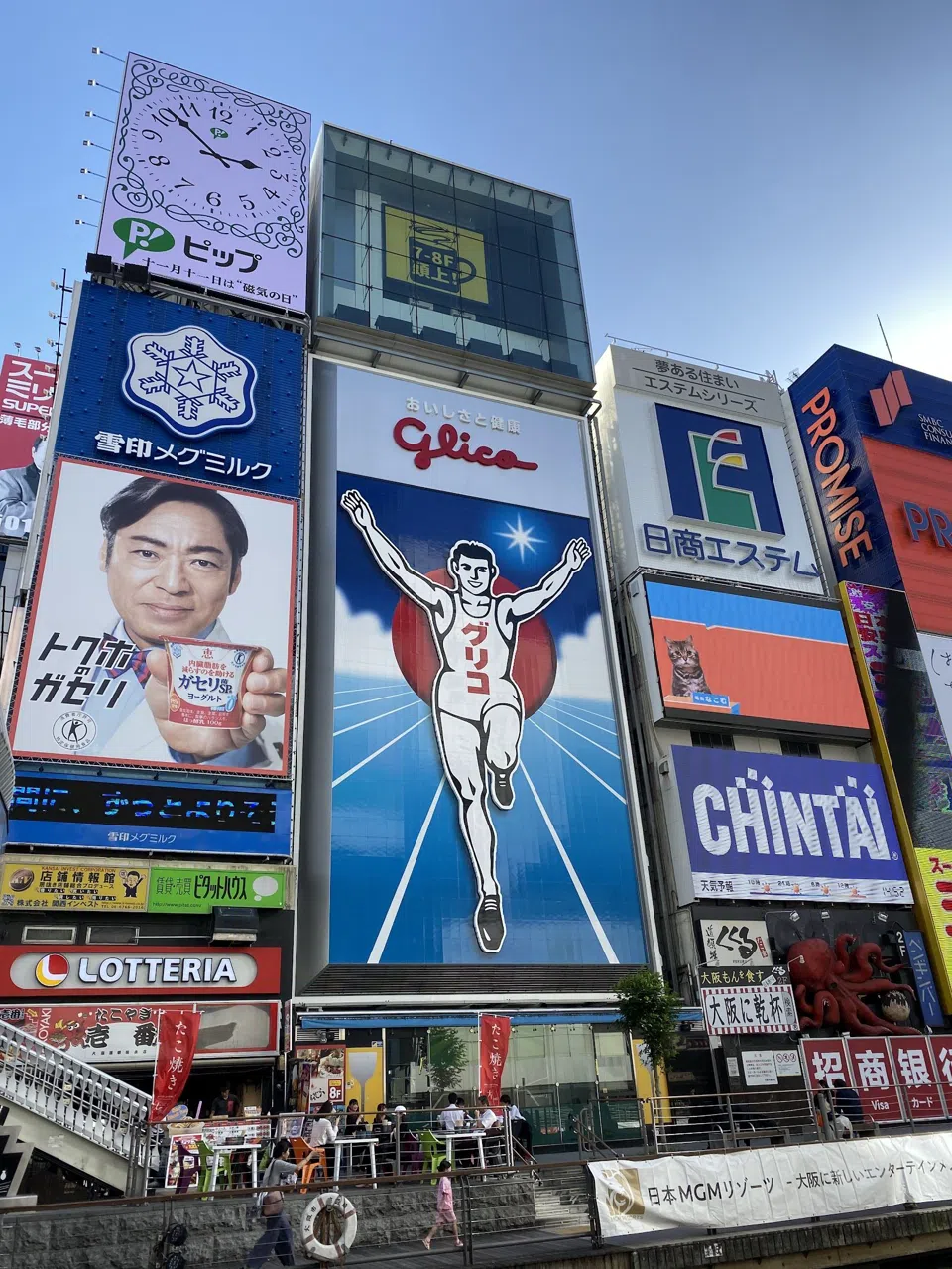
Ebisubashi Bridge and the Glico Sign (Dotonbori) sit two minutes north and are the obvious pairing. The sixth-generation sign has stood since October 2014 and lights from roughly thirty minutes after sunset until midnight, which is the timing that makes a single trip work: cross the bridge at blue hour for the sign, then drop into the alley as its lanterns start to read. The bridge is free, public and shoulder to shoulder after dark.
Tombori River Cruise (Tazaemonbashi Pier, Dotonbori, beside Don Quijote) is a twenty-minute guided run with departures every thirty minutes, 11:00 to 21:00 daily, at ¥2,000 adults, ¥1,000 students, ¥500 children. Buy at the pier; phone bookings are not taken. It is the cheapest way to put a seated, narrated element into what is otherwise a walking evening, and whole-boat charters exist for groups.
Nakaza Cui-daore Building (Dotonbori) stands on the site of the old Nakaza theatre, one of Dotonbori's historic five. It reopened fully in March 2025 after about six months dark, with the mechanical drummer Taro back at the door, and an English-style pub was added on the second floor in August 2026. Free to enter; food and drink prices vary by floor. It absorbs groups easily, which makes it a useful fallback when the alley will not seat you.

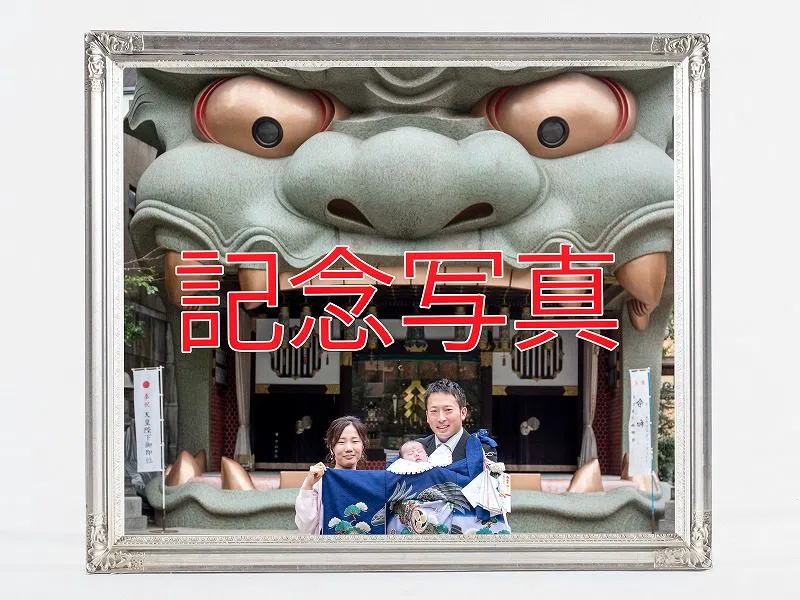
Namba Yasaka Shrine (Namba) is about ten minutes' walk southwest and the best contrast to Hozenji's hush. Its 1974 Lion Hall is a giant lion's head said to swallow bad luck, and the mouth is a real stage used for kagura and lion dances at New Year and the summer festival. The grounds are open and handle any group size; the only queue is for the one good photo angle.
Kuromon Ichiba Market (Nipponbashi) is ten minutes east and the daytime half of the plan. Most stalls trade roughly 08:00 to 18:00, snacks run ¥300 to ¥1,500 a piece, and it is one of the few places in Japan where eating as you walk is normal. The arcade is wide and takes groups; individual stalls are single-file.

Sennichimae Doguyasuji Shopping Street (Sennichimae) is five minutes away, 170-odd cookware shops open roughly 09:00 to 18:00. It is the rainy-afternoon and souvenir answer: the knife shops handle export packing, and the plastic food-sample workshops run on booked slots that suit small groups at about ¥2,000 to ¥4,000.
Doors, groups and the single-file problem
Be realistic about size. In a lane this narrow, a walking group of more than six to eight becomes an obstruction, which is why guides split parties and move in single file, and why a party of ten taking photographs at the basin is the thing locals quietly resent. If you are more than six, split into two groups, agree a meeting point at the far end, and go through separately.
Doors follow the same logic. The counters and the sweet shop are built for one to four. Reservations are the exception rather than the rule: the kushiage house takes them and rewards you for booking a larger party ahead, the sukiyaki house has private tatami rooms and genuinely wants groups, and the okonomiyaki griddle takes none at peak. Everything else is walk-in and first-come. The flagstones are uneven and the lane is tight, so anyone using a wheelchair or a pushchair will find the surrounding streets far easier than the alley itself.
Walking in free or walking in with a guide
At the door, the core of this is free. The alley costs nothing, the temple costs nothing, the bridge costs nothing. The only fixed prices are the museum at ¥700, the boat at ¥2,000, and whatever you eat. You do not need to book anything to stand in front of the statue with a ladle in your hand.
What a guide adds is the layer you cannot see: which counter is the old one, what the novel has to do with the sweet shop, why the lane bends where it does. Guided walks covering this area exist, they run seven days a week, and they start from 42 USD per person. Across the bookable options here there are 4,517 traveller reviews, and the top one is rated 4.9 out of 5 from 1,851 reviews. Book ahead if you want a specific day or a private party; otherwise the alley itself is always open to you for nothing.
Booking ahead matters far more for the restaurants than for the lane. A Friday evening table at the kushiage counter or the sukiyaki house is the thing that sells out. The flagstones do not.
Is it worth it
Yes, with the scope set correctly. As a destination in its own right, it is ten minutes of walking and a moss-covered statue, and anyone arriving expecting a major sight will be underwhelmed within a quarter of an hour. As an anchor, the quiet, old, low-lit thing you step into halfway through a loud evening in Minami, it is one of the most effective hundred metres in the city, and the contrast with the canal two minutes away is the actual experience.
It suits couples, solo travellers who are happy at a counter, photographers working the blue hour, and first-time visitors who want one piece of pre-war Osaka within walking distance of everything else. It suits large groups poorly, and it suits anyone who needs a wide, even surface poorly too. Nobody should build a day around it; almost everybody should walk through it once.
Best time to go
The sweet spot is the thirty minutes either side of the lanterns coming on, roughly half an hour after sunset, the same window in which the Glico sign lights. You get the lanterns reading warm against a sky that is still blue, and the alley's own kitchens are opening rather than full. In practice that means arriving about an hour before you want to eat.
The opposite strategy works just as well and is better for photographs of the statue: come between 10:00 and noon, when the lane is nearly empty, the basin has no queue, the amulet office is open, and the retro coffee house nearby is at its best. The moss is greener in the morning light and nothing is closed that matters at that hour.
Avoid 19:00 to 21:00 on a Friday or Saturday if a short wait irritates you: the basin queues, the small rooms fill, and the okonomiyaki griddle five minutes away will have a line out of the door. Note the closing days before you plan around a specific meal: Mondays for the museum and the curry house, Tuesdays for the sukiyaki house, Thursdays for the okonomiyaki. The sweet shop closes on no day at all. Rain is barely a factor in the lane itself, since the overhangs cover most of it, and a wet evening is genuinely better, because the flagstones hold the lantern light. In summer, shift later; the humidity in a covered arcade at three in the afternoon is not something to walk off.
Getting there, paying and timing it
The alley sits between Namba and Nippombashi stations, five to eight minutes on foot from either, and the walk from Dotonbori's bridge is two minutes. You will be arriving on the subway, with the Midosuji, Sennichimae and Yotsubashi lines all landing you close, and an IC card is the only sane way to pay for it. There are two entrances off the main streets and both are easy to miss; look for the lantern-lit gap rather than a sign.
Carry cash. The bigger restaurants take cards, but the small counters, the sweet shop and the market stalls are far happier with yen, and the temple takes coins for offerings only. A realistic evening runs ¥1,500 to ¥3,000 a head if you graze on sweet soup, a pancake and coffee, and ¥5,000 to ¥9,000 with a kushiage course, while the sukiyaki dinner takes it past ¥15,000. The free core plus the museum and the boat comes to ¥2,700 a person.
For timing, the clean version of the day is the market in the morning, the cookware arcade or the print museum in the afternoon, the alley and the statue at dusk, then dinner within three minutes of where you are standing. Nearly everything named here sits inside one ten-minute walking radius, which is the real argument for basing yourself in Minami. See the Osaka hotel search for what is within that radius. One last piece of etiquette: the lane is where people work. Move through it, stand aside when a chef comes out, and keep your voice down between the walls.
Questions
Is Hozenji Yokocho free to visit, and do I need a ticket?
It is free. The alley is a public right of way with no gate and no opening hours, and Hozenji Temple's Mizukake Fudo statue has no ticket either; you walk up and take a ladle. The only fixed costs nearby are the Kamigata Ukiyo-e Museum at ¥700 for adults and the Tombori River Cruise at ¥2,000, plus whatever you eat.
How long do you need at Hozenji Yokocho?
The lane takes about ten minutes to walk end to end and the statue another ten to fifteen. With a bowl of zenzai or a coffee, an hour is comfortable. Add a sit-down counter dinner and the evening runs two and a half to three hours. It works as an anchor inside a Minami evening rather than a half-day sight.
What is the water-pouring ritual, and am I doing it wrong?
Take a ladle from the basin, scoop water, pour it over the moss-covered Fudo Myoo statue and make your wish silently. That is all there is to it, and it takes under two minutes. If you are unsure, copy the person ahead of you; nobody will correct you. Only two or three people fit at the basin at once, so take your turn and step back.
What is the best time of day to see the lanterns?
Come roughly thirty minutes after sunset, the same window in which the Glico sign at Ebisubashi lights. The lanterns read warm against a still-blue sky, and the kitchens are opening rather than full. For an empty alley and the best look at the moss, go between 10:00 and noon instead, when the amulet office is also open.
Can a large group visit, or should we split up?
Split up. A walking group of more than six to eight blocks the lane, which is why guides move parties through in single file. Meoto Zenzai takes no reservations and works best for four or fewer, Okaru rarely seats more than four together, and the museum's small floors need groups above ten to enter in waves. Kushinobo and Hariju both take booked groups properly.
First published on osakaguides.com, the Osaka guide.