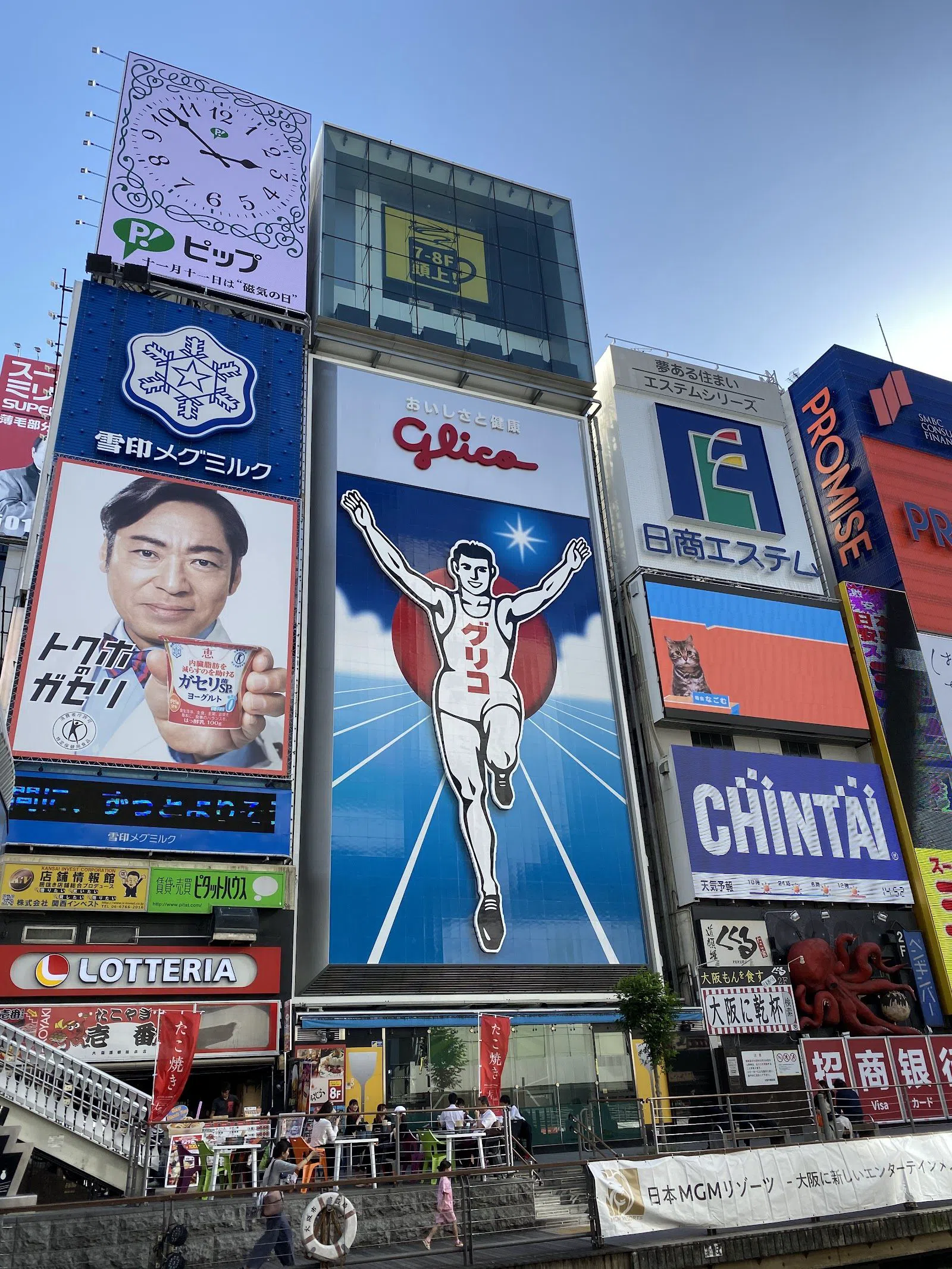
The canal holds the light better than the street does. By half past six the signs along Dotonbori have come on in no particular order (a running man, a moving crab, a dragon over a doorway), and the water underneath turns into a shakier, more generous copy of all of it. Then you look up from the reflection and remember there are several hundred other people on the bridge with you, all holding their phones at the same angle.
What you are actually walking into
Dotonbori is a canal and the four hundred-odd metres of street beside it, in Minami, the southern half of central Osaka. It has been an entertainment district since the 1600s, when the theatres stood along this bank; almost none of that fabric survives, and the signage took over. That is the short explanation for why a strip with barely a historic building left is still the single image most people carry of the city.
Most visitors walk it end to end in twenty minutes, take the photograph, and leave. That is the version worth avoiding. Done properly, Dotonbori is either a three-hour evening or a full day split into two halves, and it suits a group of six to twelve better than most famous streets, because everything here is short, cheap and repeatable: a ¥600 ride, a ¥500 box of takoyaki, a twenty-minute boat. Nobody is locked into a two-hour commitment they stop enjoying after forty minutes. The eating is genuinely the point. So is the fact that the quiet sits ninety seconds away in any direction, if somebody shows you where.
The neon core and where to stand in it
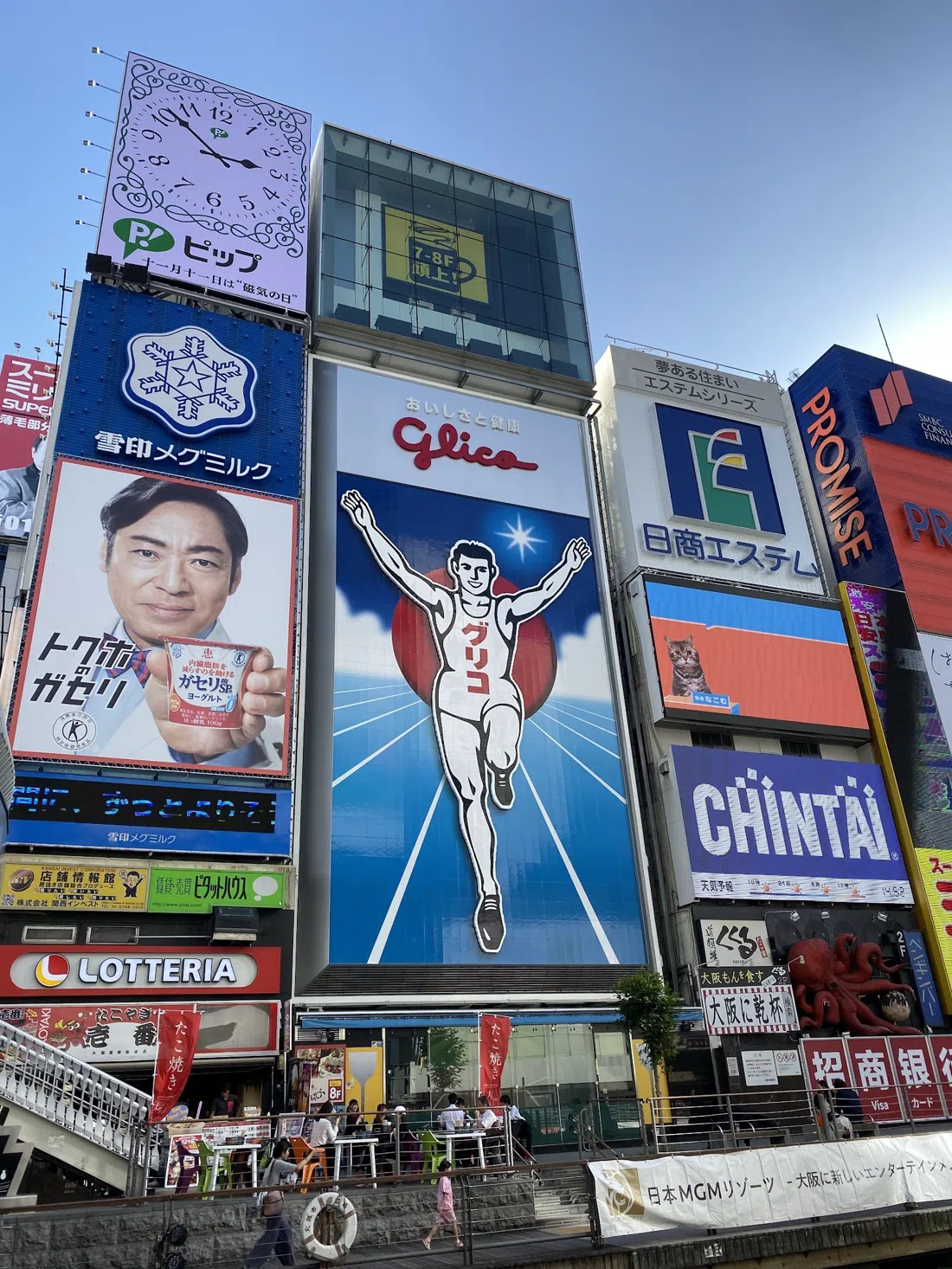
The Glico Sign at Ebisubashi Bridge (Dotonbori, on the canal's main crossing) is the shot everyone comes for, and there is no sense pretending otherwise. It is lit from dusk until around midnight, the bridge is public and free, and there is no door policy and nothing to book. What there is, after dark, is a deck that jams solid. Guides deal with this by briefing the group on the north side and then crossing in twos, which is also the sensible way to do it on your own. An eight-person huddle in the middle of that bridge makes enemies fast. If you want the sign without a wall of heads in frame, 07:00 to 09:00 is the only window that reliably delivers it.
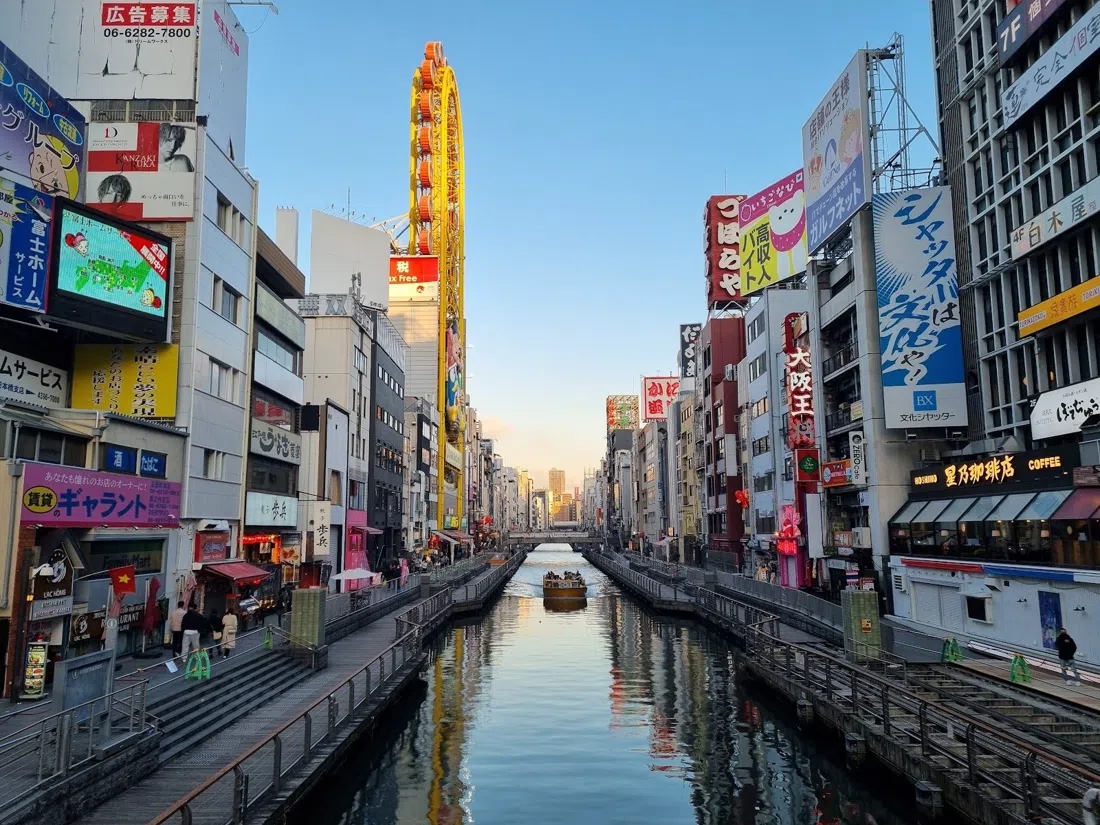
One level down, the Tombori Riverwalk (the promenade running along both banks) is the release valve. It is open around the clock, it is wide enough to hold a party of eight to twelve without blocking foot traffic, and it offers the same view with a fraction of the shoulder-to-shoulder shuffle. It is also the better photograph: from the water's edge the signs read cleanly, without a forest of raised arms in front of them. If you are moving as a group, this is where you stop to talk. The arcade level above is not.
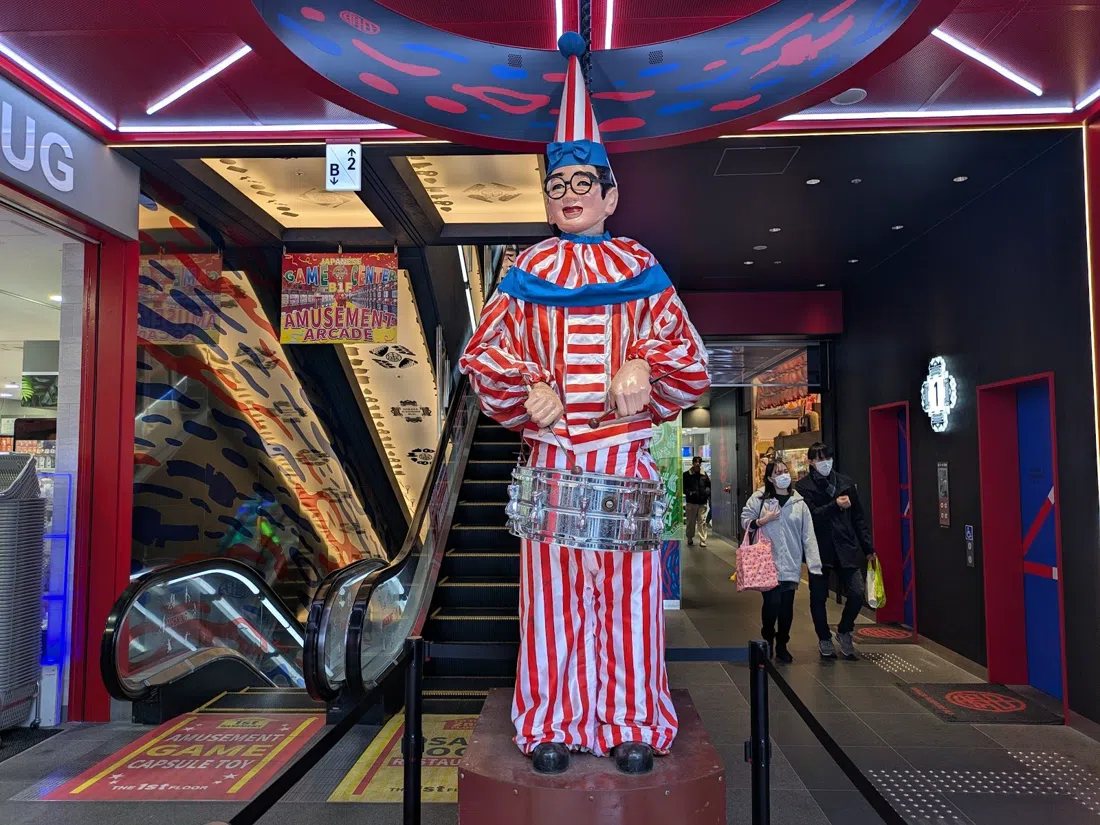
At the eastern end, the Nakaza Kuidaore Building (Dotonbori, marked by the Kuidaore Taro drummer doll) reopened in spring 2025 after renovation and now carries a new giant moving signboard, so most photographs of it online are already out of date. Street level is free to look at, and the floors above hold restaurants and bars that take groups. The ground-floor entrance is a pinch point, though, so shoot it and move on. The line worth saying while everyone takes the picture is that the building stands on the site of the historic Nakaza theatre. This strip was performance long before it was advertising.
Twenty minutes on the water and ten in the air
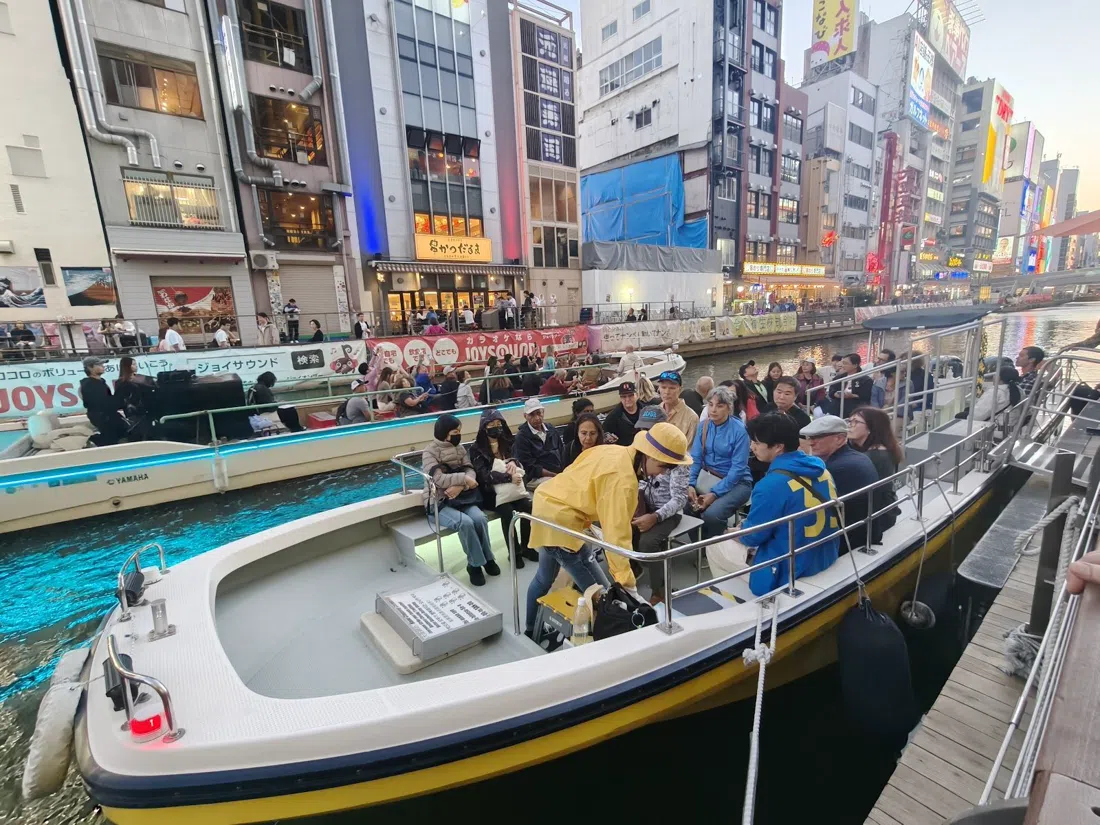
The Tombori River Cruise (boarding at the Tazaemonbashi kiosk beside Don Quijote) is the one paid thing here I would push almost anyone towards. Twenty minutes, nine bridges, ¥2,000 for an adult, ¥1,000 student, ¥500 child, and free if you are carrying an Osaka e-Pass. It runs as a shared boat every thirty minutes, so a small group slots straight in with no planning at all; a whole-boat charter is possible if you want the deck to yourselves. Take the 18:30 to 19:30 departures and you get the dusk-to-lit transition, which is the only vantage from which the signs read as one continuous neon wall rather than a series of separate adverts. Those slots fill first, because the free e-Pass entry pushes everyone towards the evening boats. Same-day timed tickets are sold at the kiosk, so you can turn up and ask rather than plan around a booking.
Directly above the same block, the Dotonbori Ferris Wheel (Ebisu Tower, third floor of Don Quijote Dotonbori) costs ¥600 and is the cheapest aerial view of the canal going. It is the world's only horizontally rotating oval wheel, which is a stranger sentence than it reads and a stranger ride than you expect. Pods take four, so a group of eight books two back to back; there are no reservations, you queue at the 3F entrance inside the store. Two timings matter if you are building an evening around it: maintenance starts at 13:00 on Tuesdays, and last admission falls between 21:30 and 22:00.
Eating the street properly
The honest way to eat Dotonbori in a group is small portions at several counters rather than one sit-down meal, and to accept that almost nothing here takes a reservation.
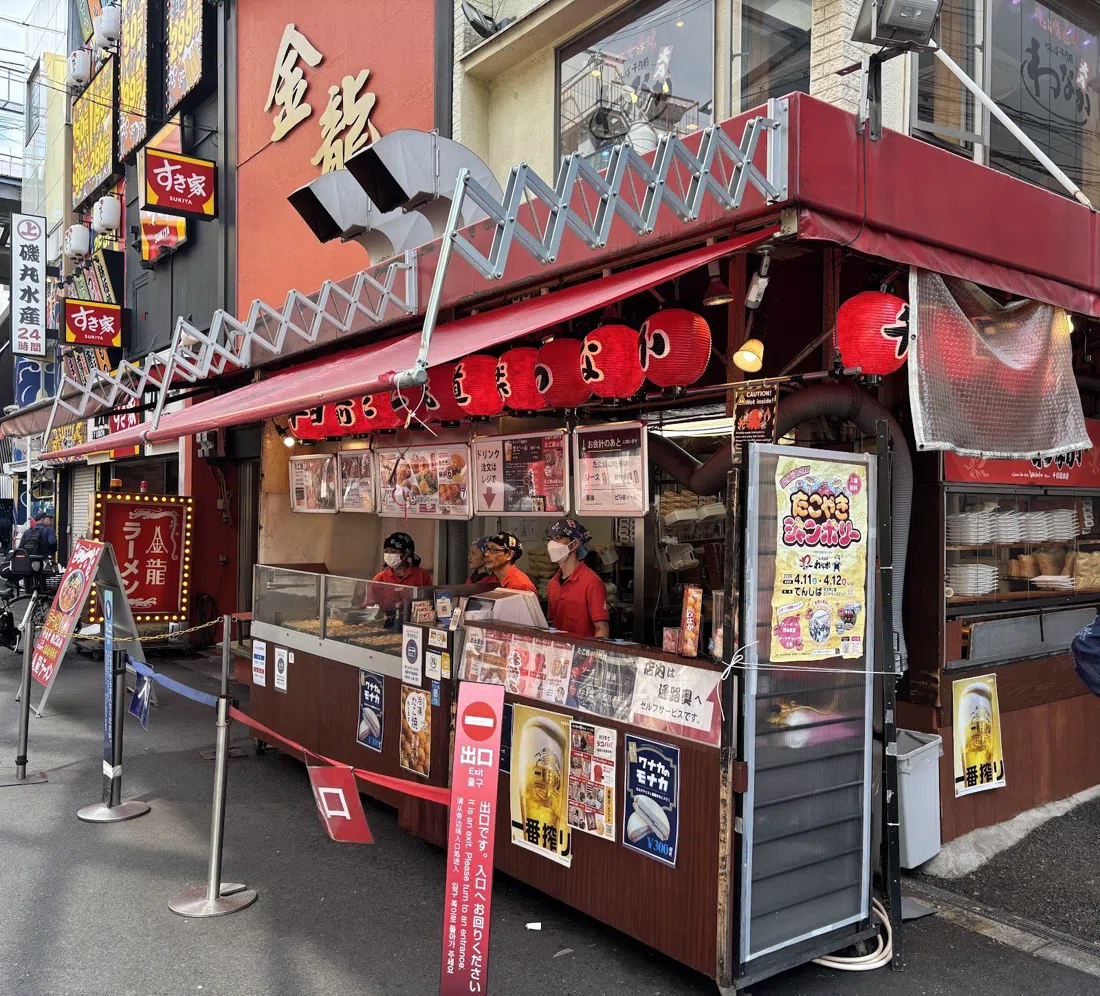
Takoyaki Doraku Wanaka (Sennichimae Honten, a minute south of the canal) is the benchmark, the takoyaki locals queue for rather than the tourist novelty. It is a takeaway window with a standing area, ¥500 to ¥900 for eight to twelve pieces, no seats to reserve, and the line moves in a few minutes. Six people can order and eat on the spot. Eat at the counter, not while walking; the batter is molten in the middle for the first minute anyway.
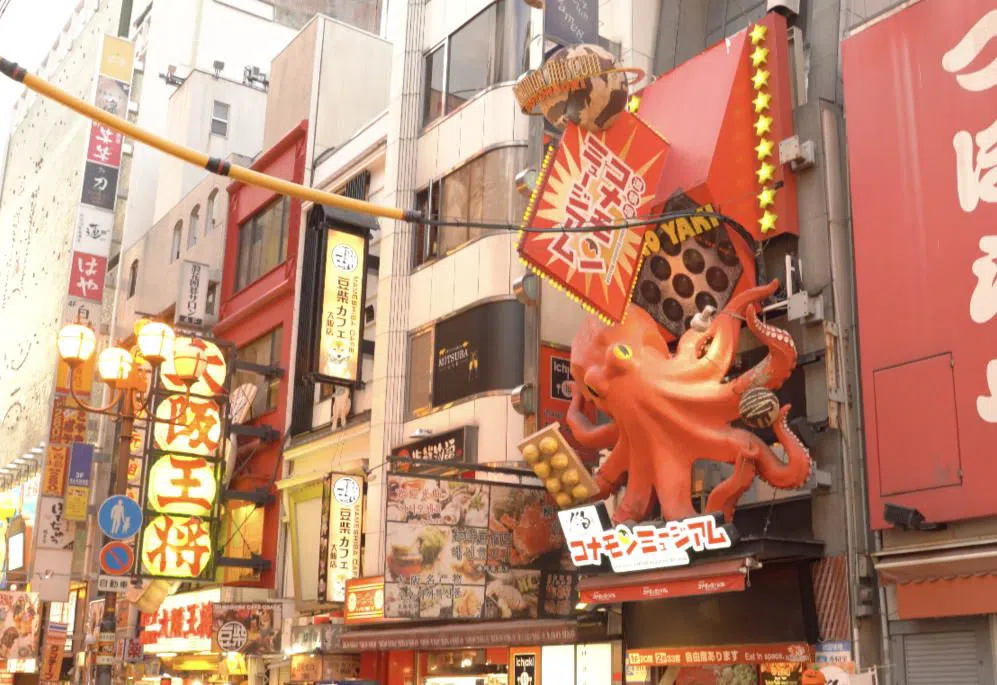
The Dotonbori Kukuru Konamon Museum (Dotonbori, on the main strip) is the best small-group activity on the street and the one stop that reliably survives contact with teenagers. Entry is free, takoyaki from around ¥600, and the plastic food-sample workshop runs about ¥2,000. It sits somewhere between a museum and a craft class, and larger parties should book the workshop slot ahead. It is also your rain plan.
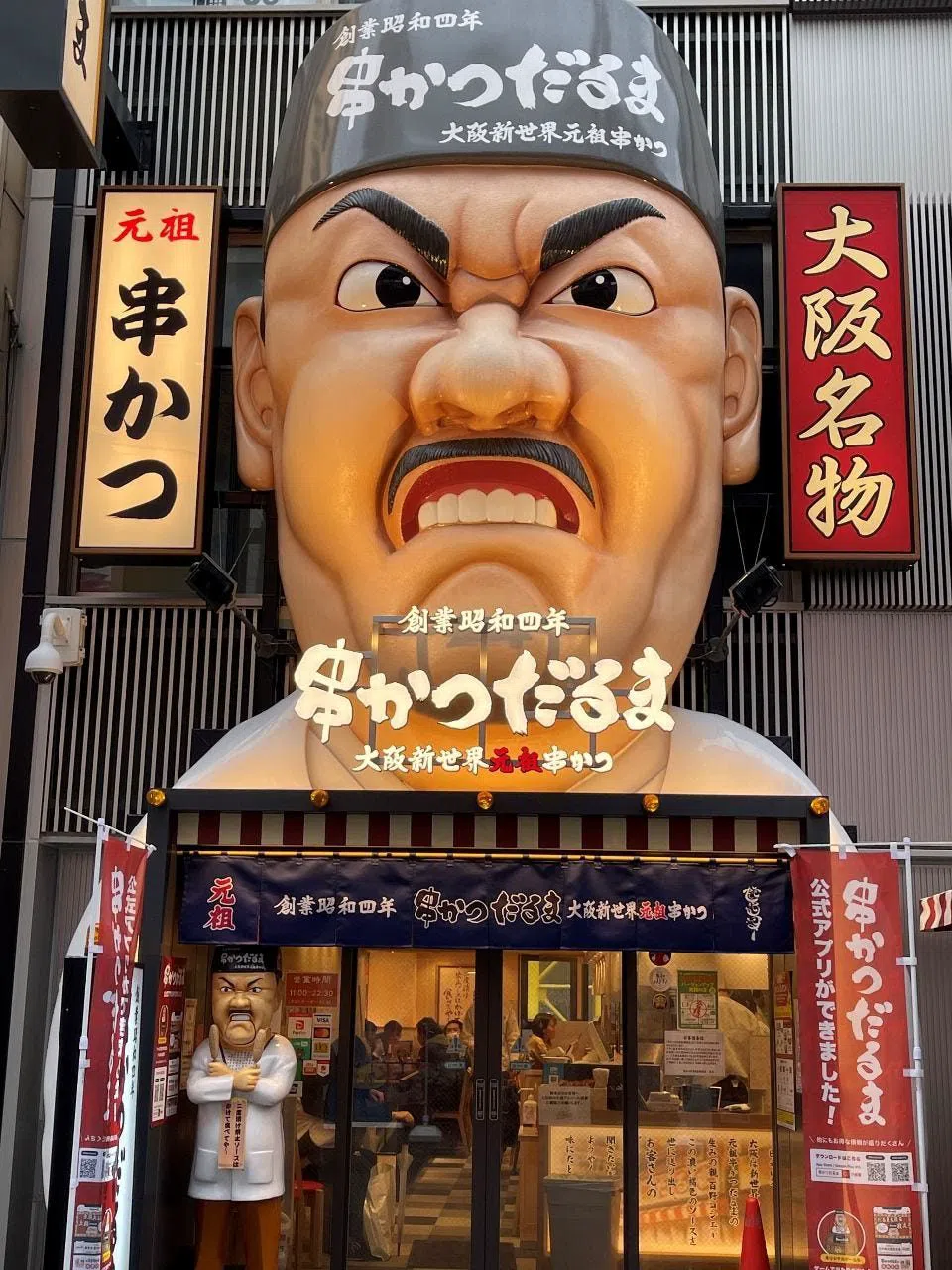
Kushikatsu Daruma Dotonbori (Dotonbori) is the original kushikatsu house, founded in Shinsekai in 1929, and deep-fried skewers run roughly ¥150 to ¥300 each, or ¥2,000 to ¥3,000 a head. Counter plus basement seating takes small groups, but it fills at peak: go before 18:00 or wait. The Dotonbori branch now issues individual squeeze bottles, so the famous no-double-dipping rule is handled for you. Say it out loud before your group starts ordering anyway, because half of them will have heard about the shared sauce tub.
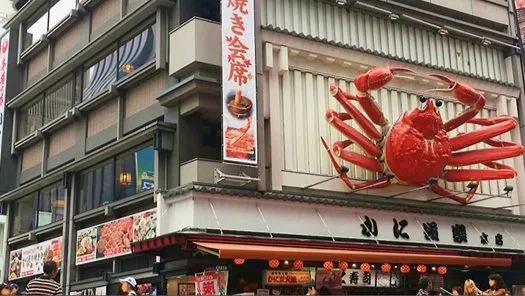
Kani Doraku Dotonbori Honten (Dotonbori) is the moving crab, on the street since 1962, and the only venue here that genuinely seats ten at one table thanks to its private tatami rooms; reserve ahead for that. Crab courses run ¥4,000 to ¥15,000 a head, which is a real decision for a group. If it is too steep, the takeaway grilled-crab window out front gives you the same signature for pocket change, and nobody has to pretend the course was their idea.
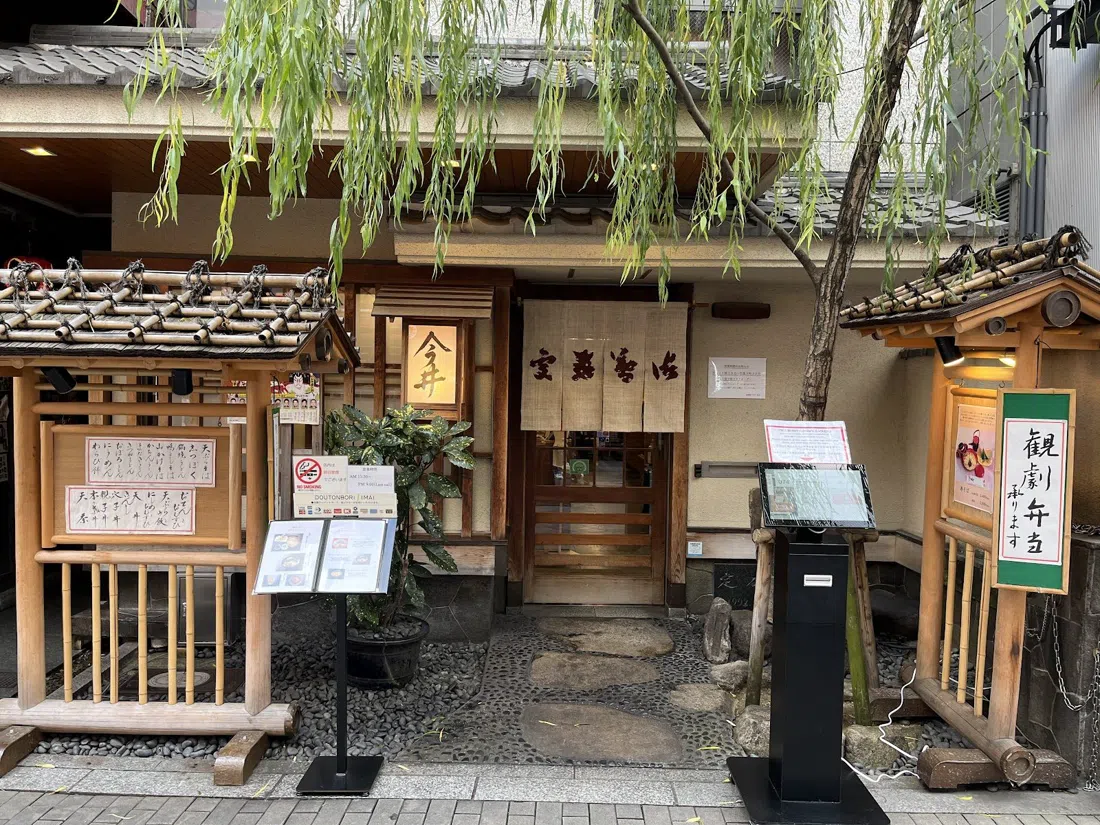
Dotonbori Imai Honten (Dotonbori) is the quiet counterweight to all of it: a traditional udon house founded in 1946, calm sit-down rooms, ¥700 to ¥2,000 a head, closed Wednesdays. There is no queue culture here, so arrive off-peak and you walk in. The kitsune udon is the single clearest illustration of Osaka dashi you can order, and this is the venue for anyone in your party who finds the street outside genuinely overwhelming.
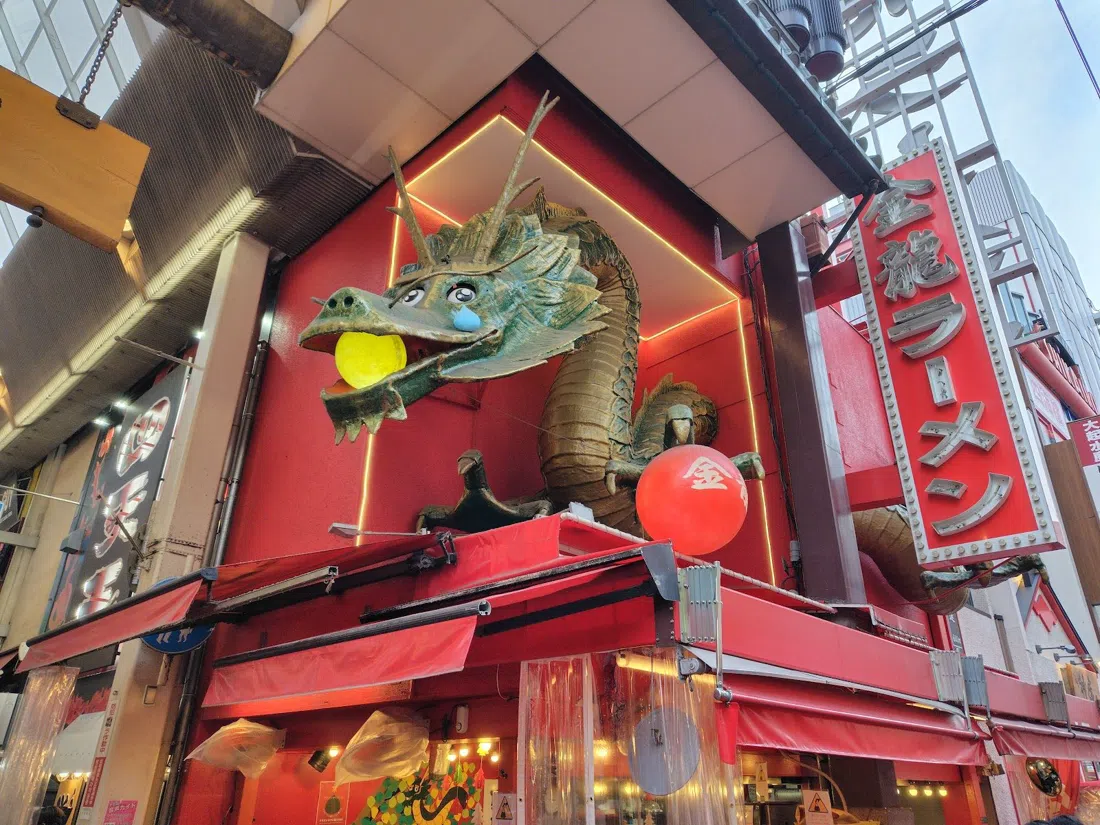
Late, the answer is Kinryu Ramen Dotonbori (Dotonbori), open around the clock since 1993. Light pork-bone broth, ¥800 for ramen and ¥1,100 for the chashu version, ordered from a ticket machine, eaten at a counter or on the platform seating. No reservations and no service to speak of, and groups seat in twos and threes. When somebody asks where you eat after the 21:00 boat, this is the truthful reply.
Ninety seconds of quiet off the main drag
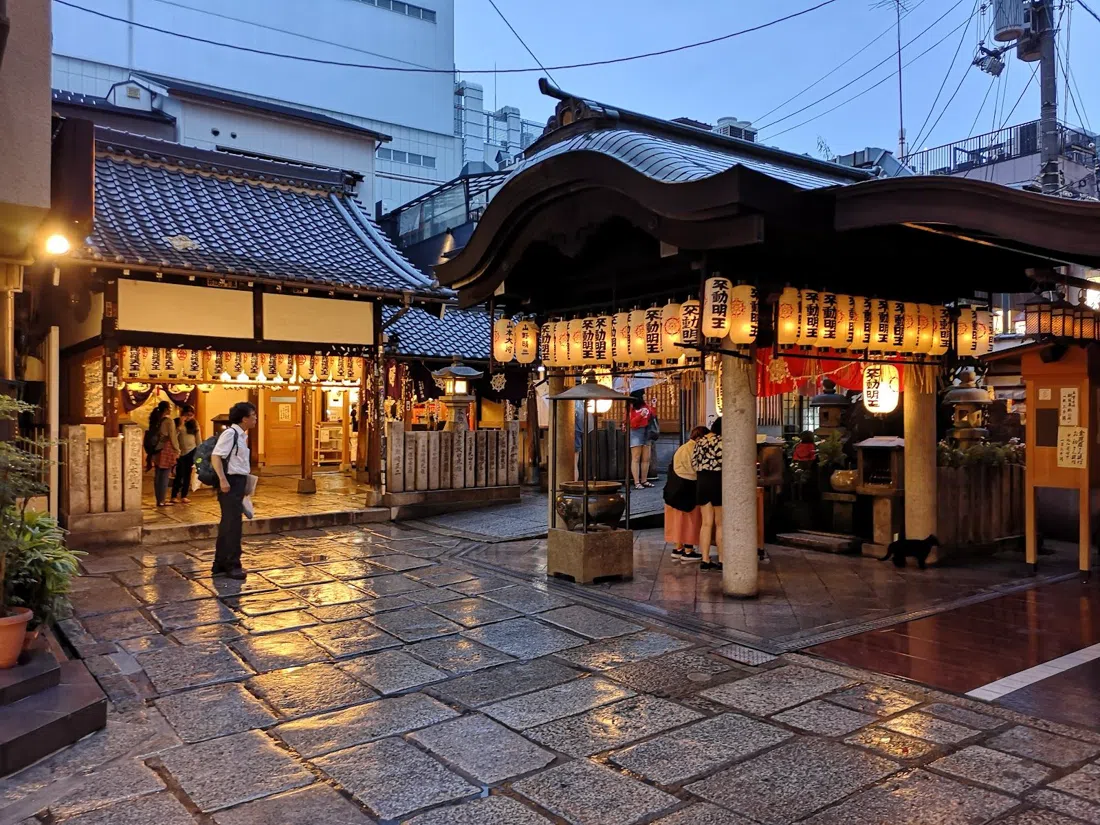
Hozenji Yokocho and Hozenji (Mizukake Fudo) (Namba, immediately south of the canal) is the reason to hire a guide or at least read one paragraph in advance. The lanes are stone-paved, lantern-lit and narrow, and the temple forecourt is open twenty-four hours and free. You pour water over the moss-covered statue three times and make your request. It is a working place of worship with residents living above the restaurants, not a photo set. Guides bring parties of six to ten through single file and keep voices down, and you should do the same. A charm costs ¥200 to ¥800. This is precisely the kind of stop that works for a small group and fails badly for a crowd.
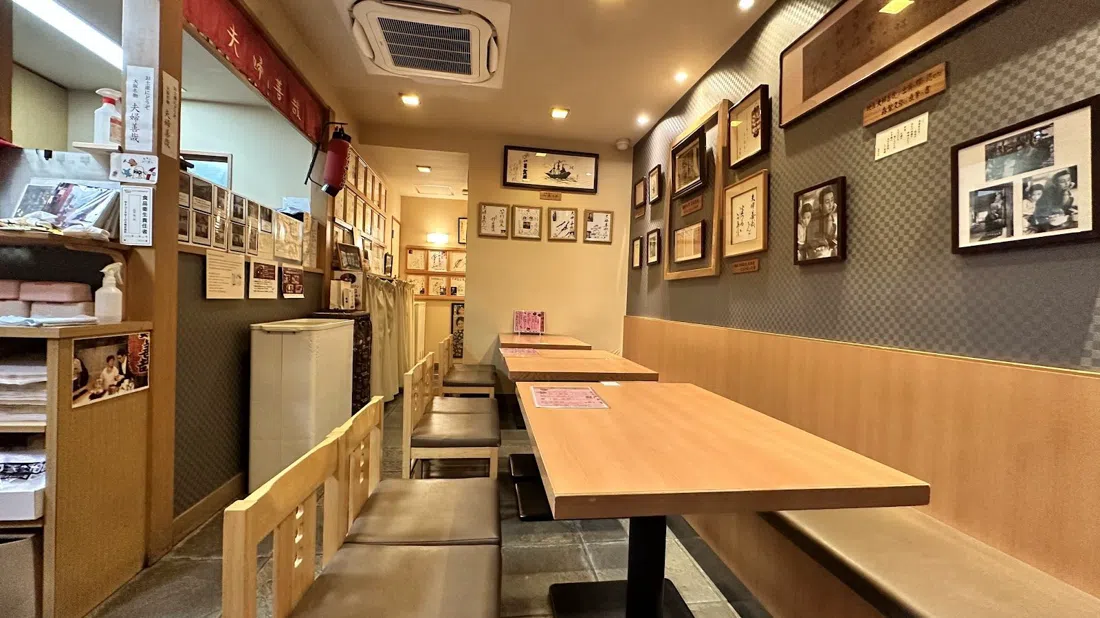
In the same lanes, Hozenji Meoto Zenzai (Hozenji Yokocho) serves its sweet red-bean soup in the two-bowls-for-one-person ritual that is genuinely 140 years old. It is the right five-minute sit-down mid-walk, at roughly ¥800 to ¥900 a serving, cash only, no reservations. The room is very small, and that is the only real constraint: parties above four get split across tables or asked to wait. Go early afternoon rather than after dinner.
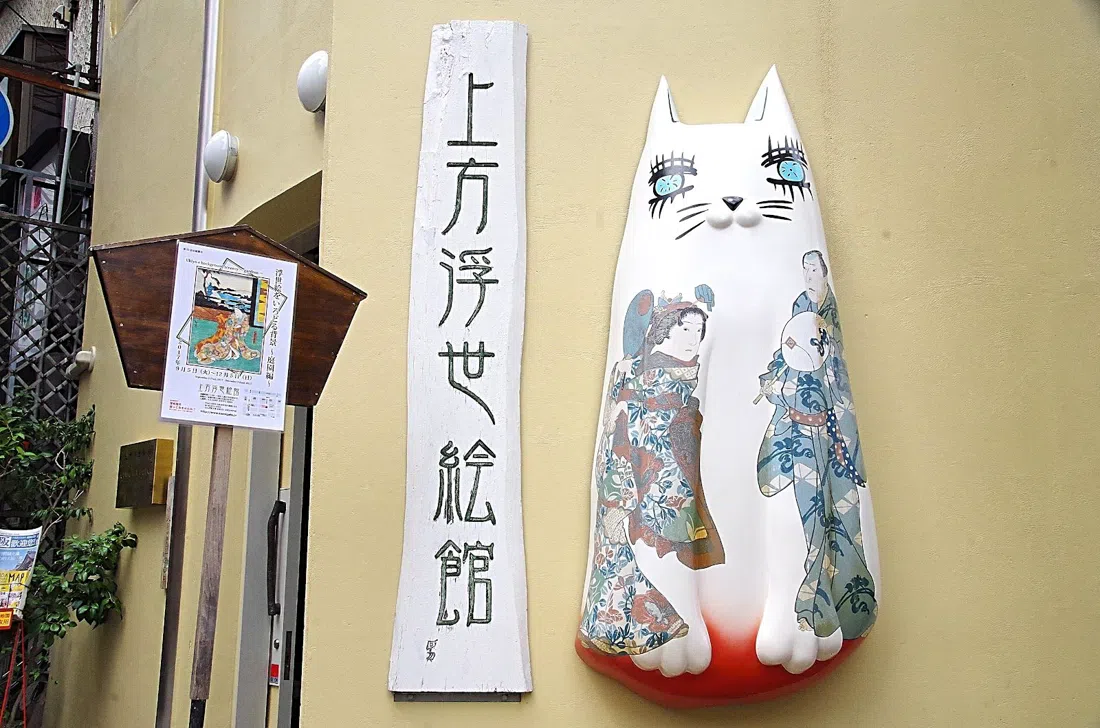
When it rains, and it does, the Kamigata Ukiyo-e Museum (Namba, beside Hozenji Yokocho) is the indoor, air-conditioned stop two minutes from the canal, and the only permanent collection of Kamigata ukiyo-e anywhere in the world. Tickets are ¥700 adult, ¥500 high school, ¥300 for younger children, free with an Osaka e-Pass, and no advance booking is needed. The floors are tiny and the stairs steep, so staff ask bigger parties to go up in batches of four or five. It closes on Mondays, so check before you build a wet afternoon around it.
The morning half of a Dotonbori day
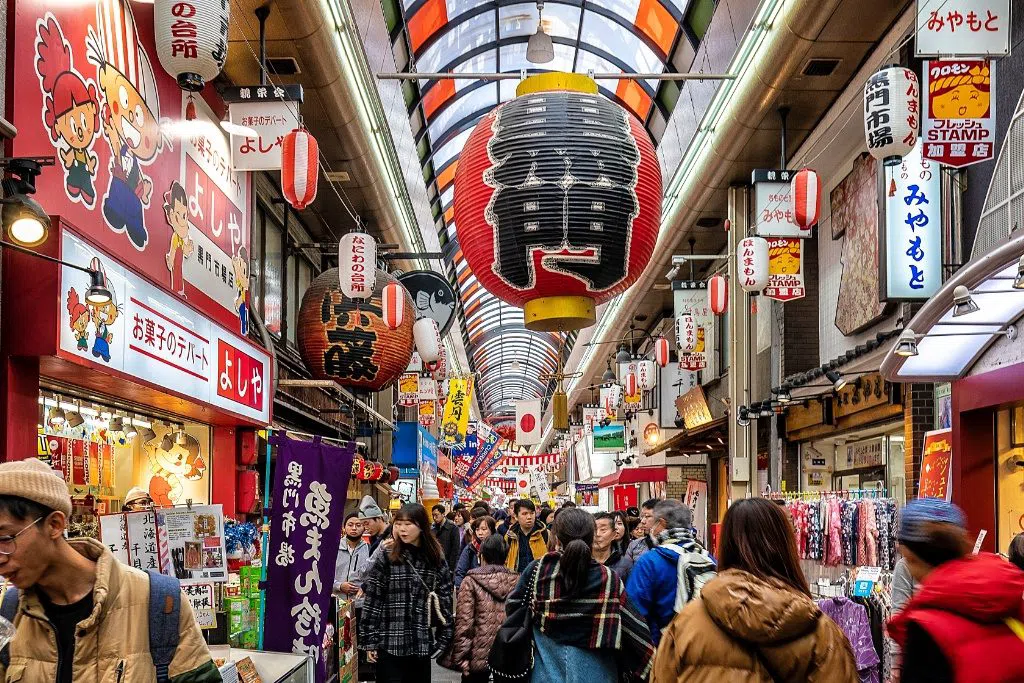
Kuromon Ichiba Market (Nipponbashi, ten minutes east of the canal) is the natural first half of a full day here, because Dotonbori itself is still asleep before about eleven. Most stalls run roughly 09:00 to 18:00, entry is free, and snacks land between ¥300 and ¥2,000. It takes small groups easily in the morning. Two rules to brief before you go in: eating while walking is prohibited, and several stalls keep a designated standing area strictly for their own customers. Buy, stand, eat, move.
Seeing it from behind a steering wheel
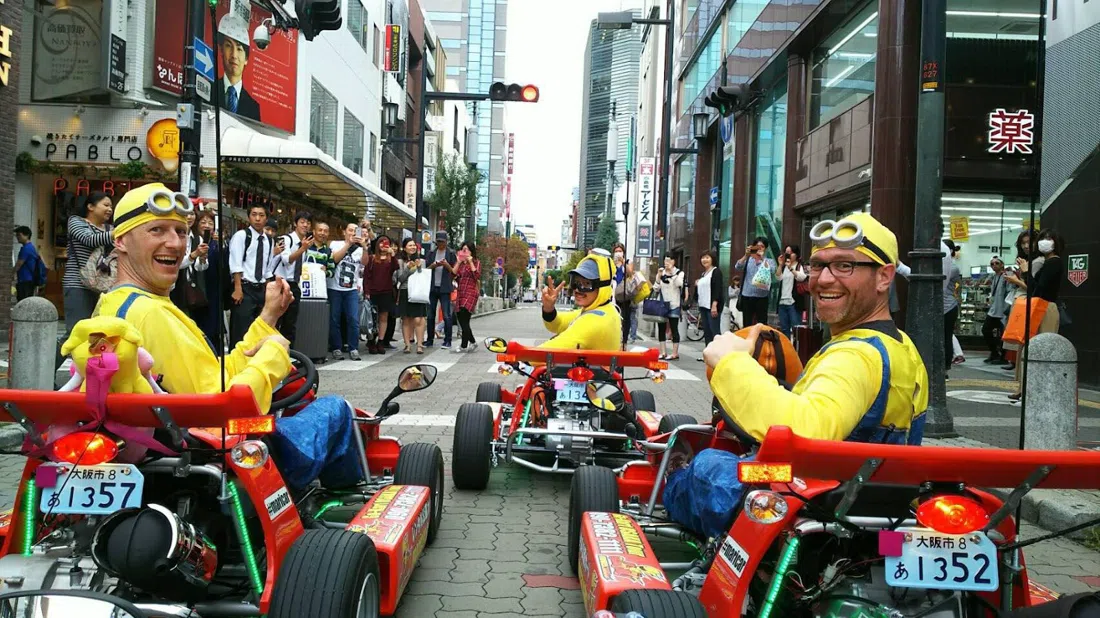
Street Kart Osaka (Minami-Horie, four minutes from Yotsubashi) runs small guided convoys of street-legal karts through the city, and the route does pass Dotonbori. It costs roughly ¥7,000 to ¥12,000 per person for the one-hour course, and it is easily the most-booked way to see the district without walking it. One rule kills more bookings than everything else combined: every driver needs either a valid Japanese licence or a 1949-Convention International Driving Permit obtained in their own country before arriving in Japan. No original permit at the desk means no drive and no refund. Check every single person in your group before you reserve, not at the counter.
Turning up versus booking ahead
Nothing on this street requires a ticket to see. The bridge, the promenade, the alley, the temple and the signs are free and open; the boat, the wheel, the museums and the food are all pay-at-the-door and mostly same-day. That is the case for simply walking in.
The case for a guided small group is about sequencing and context rather than access: the order you do things in, who tells you what the Nakaza site was, and somebody who knows to take you down to the promenade instead of fighting the bridge. The guided options attached to this page have collected 6,926 traveller reviews between them, and the top-rated one holds 5.0 out of 5 from 3,162 reviews, which tells you the format works for most people who try it. Departures run seven days a week. Some departures of that top tour are already fully sold out on 9 October 2026; other dates are still bookable. If you want a specific evening slot for a group, book it rather than assume.
Is it worth it
Yes, with one condition: give it more than the photograph. Twenty minutes on Ebisubashi in peak crush is a disappointing experience and a fair number of people leave having had exactly that. Three hours (boat at dusk, skewers or takoyaki, ten minutes in Hozenji Yokocho, ramen at midnight) is one of the better evenings in Japan, and it costs very little.
It suits groups of four to twelve, families with children old enough to stand in a queue, and anyone who would rather eat six small things than one expensive thing. It suits couples in the alley and the sweet shop far better than it suits them on the bridge. It is hard work for anyone with mobility limits after dark, when the pavement narrows to a shuffle, and for anyone who hates crowds full stop, though for them the fix is the morning rather than avoidance. For wider context on the city around it, the Osaka guide covers what else fits in the same day.
Best time to go
For photographs of the signs, 07:00 to 09:00, when the bridge is near empty and the Glico sign is still lit or just off. For the neon at full strength, arrive around 17:30, ride the 18:30 to 19:30 boat, and eat from 20:00. For everything else, mornings: Kuromon Ichiba between 09:00 and 11:00, then the covered lanes and the museum in the early afternoon, then a break, then the evening loop.
Avoid Friday and Saturday between 19:00 and 22:00 if the crowd is the thing you mind most; the same walk on a Tuesday evening is a different street. Watch the individual closures: the museum shuts Mondays, the udon house shuts Wednesdays, and the Ferris wheel starts maintenance at 13:00 on Tuesdays. Rain is not a reason to cancel here, because the arcades are covered, the museum and the workshop are indoors, and the boat runs with a roof. Summer evenings are hot and humid enough that the promenade and the canal breeze earn their keep; in winter the sweet shop and a bowl of udon do the same job.
Practical notes
Namba station serves the district on the subway and private lines and puts you three minutes from the canal; Nipponbashi is closer to the market end. Everything named above sits inside a twenty-minute walk of everything else, and the only stop needing separate transport is the go-kart shop in Minami-Horie.
Carry cash. The sweet shop is cash only, the street stalls prefer it, and the smaller counters are faster with coins. Cards and IC cards work in the bigger restaurants, the store and the museums, and convenience-store ATMs take foreign cards.
A generous evening without a crab course runs about ¥3,000 to ¥5,000 a head: boat ¥2,000, wheel ¥600, takoyaki ¥500 to ¥900, skewers ¥2,000 to ¥3,000 or ramen ¥800. An Osaka e-Pass covers the cruise and the ukiyo-e museum and pays for itself quickly. Crab courses at ¥4,000 to ¥15,000 are the one line item that changes the maths.
Allow three hours for the evening loop, five to six if you add the market and the museum in the morning. Book anything with a fixed seat, meaning private tatami rooms, the sample workshop, or a guided departure on a specific date, and leave the rest to the door.
Sleeping within a few minutes of the canal is what makes the 07:00 photograph and the midnight ramen both possible in the same twenty-four hours; compare rates and locations with the Osaka hotel search.
Questions
How long do you need in Dotonbori?
Three hours covers the evening properly: the dusk river cruise, a couple of food counters, ten minutes in Hozenji Yokocho and a late bowl of ramen. Add Kuromon Ichiba Market and the Kamigata Ukiyo-e Museum in the morning and you are at five to six hours. Twenty minutes gets you the photograph and not much else.
When can you see the Glico sign without crowds?
Between 07:00 and 09:00, the only window when Ebisubashi Bridge is near empty. After dark the bridge deck jams solid, so drop down to the Tombori Riverwalk instead, where the signs photograph cleanly from the water's edge.
Do you need to book the Tombori River Cruise in advance?
No. It is a shared boat leaving every 30 minutes, and the Tazaemonbashi kiosk beside Don Quijote sells same-day timed tickets at ¥2,000 adult, ¥1,000 student and ¥500 child, or free with an Osaka e-Pass. The 18:30 to 19:30 departures fill first, for the dusk-to-lit view and the free e-Pass entry, so ask early in the day if you want one.
Where can you eat in Dotonbori late at night?
Kinryu Ramen Dotonbori has been open 24 hours since 1993. Light pork-bone broth, ¥800 for ramen and ¥1,100 with chashu, ordered from a ticket machine. It takes no reservations and has only counter and platform seating, so a group seats in twos and threes. It is the standard answer after the 21:00 boat.
Can you drive a go-kart past Dotonbori without a Japanese licence?
Only with a 1949-Convention International Driving Permit, issued in your own country before you arrive in Japan. Street Kart Osaka checks the original document at the desk in Minami-Horie, and without it you do not drive and you do not get a refund. Check every person in your group before you reserve, rather than on the day.
First published on osakaguides.com, the Osaka guide.