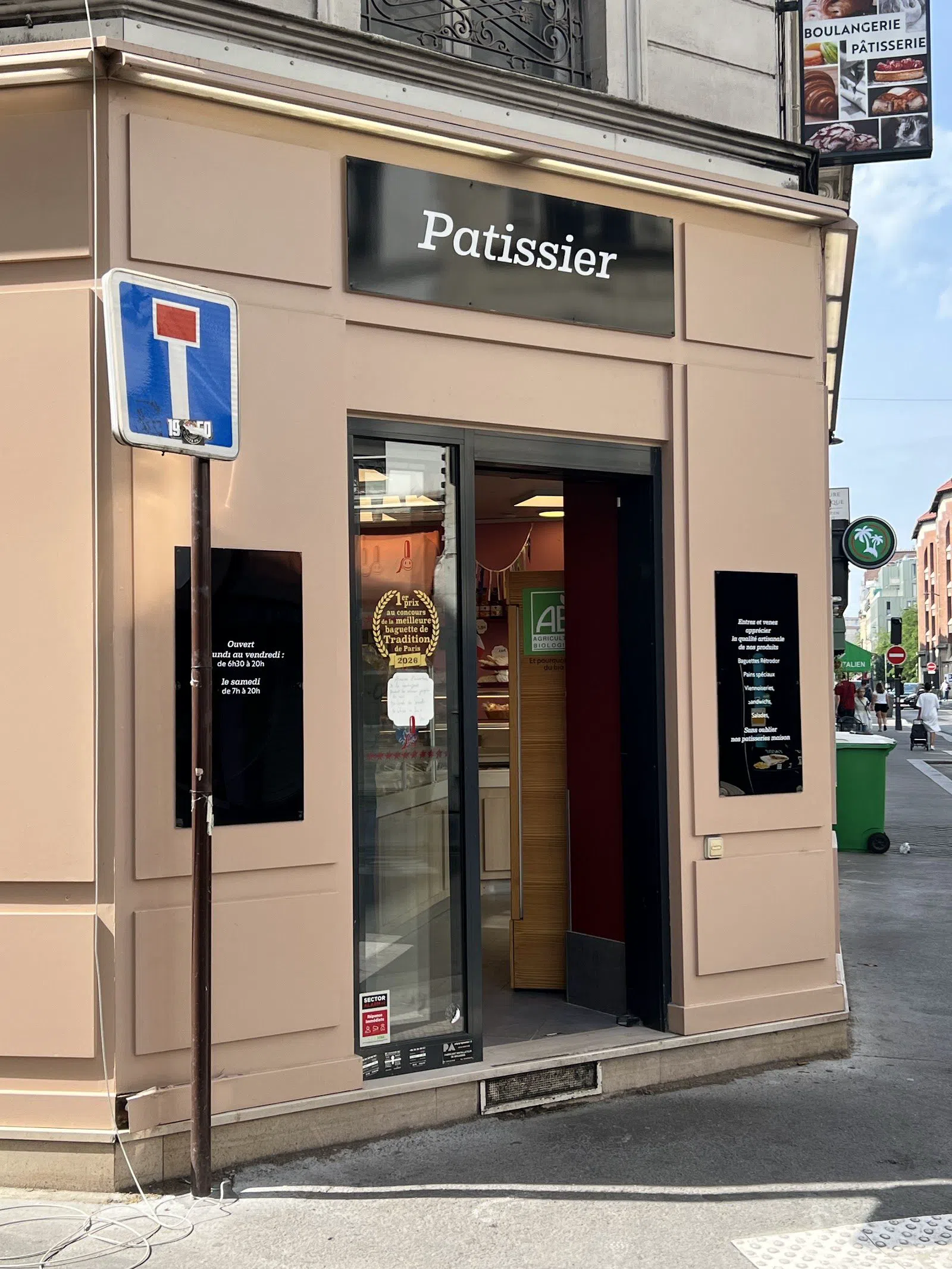
At ten past seven the queue outside a good Paris boulangerie is four people long and nobody is talking. The baker's night is ending, the first tradition loaves are still too hot to bag properly, and each transaction takes about eleven seconds. Two days spent walking between shops like these will show you how the city is actually organised (who lives where, who starts work when, which streets wake first) better than any monument queue.
What the baguette prize decides
Every February the city runs the Grand Prix de la Baguette de Tradition Française. Bakers bring loaves to a jury, the loaves are cut open and scored on crust, crumb, baking, smell and salt, and the winner supplies the Élysée Palace for the year and takes a cash prize. It matters to a visitor for one dull, useful reason: it is a blind judgement made by people who bake for a living, against a written standard. That beats any ranking of "the best croissant" compiled by someone who has never stood on the pavement outside the shop.
The loaf itself is defined in French law. A baguette de tradition contains flour, water, salt and yeast or leaven, nothing else, and it cannot be frozen at any stage. It costs about €1.40 at nearly every address below, which is the quiet joke of this whole trail: the single best thing to eat in Paris is also the cheapest, and the price barely moves between a prize-winning shop and an ordinary one. What changes is the baker.
Sixteen shops follow. You will not eat properly at all of them, so buy one thing in each, eat half, hand the rest to whoever you are walking with, and keep moving.
Build the 48 hours around a Friday and a Saturday
This is the part most itineraries get wrong. Paris bakeries close on rotation and several of the best ones are shut precisely when a visitor has free time.
Mondays remove three good shops at once. Tuesdays and Wednesdays close Montmartre's two-time winner. Two of the strongest addresses on the route trade on weekdays only and are dark all weekend. Meanwhile the one bakery built to seat a whole group serves its big brunch on Saturday and Sunday only.
Friday plus Saturday is the only pairing that catches everything. Friday covers the weekday-only pair (the shop on the Canal Saint-Martin and the one in the Latin Quarter) and Saturday delivers the brunch finish, with a single hard deadline to respect before two in the afternoon. If your trip cannot include a Friday, run Thursday and Friday and accept that you will end the trail standing up rather than sitting down.
Stay central-east or central-north if you can; the second day is almost entirely on the Right Bank and you will want a short walk home. Start from a Paris hotel search around the 10th, 11th or 9th and the whole of day two becomes walkable.
Friday before nine in the fourteenth
Begin at Fournil Didot (rue Didot, 14th), because in 2026 it is the most defensible first stop in the city. Sithamparappillai Jegatheepan won the 33rd Grand Prix here in February 2026 at his first attempt, which means the bread you carry out of this door is the bread going to the presidential palace for the year. The shop is tiny: a takeaway counter, no seating, no bookings. A group of six will physically fill it, so queue on the pavement and send one person in to buy for everyone. Baguette de tradition is about €1.40, viennoiserie €1.50 to €2.50. Eat the baguette on the street within twenty minutes; that is the window the crust was built for.
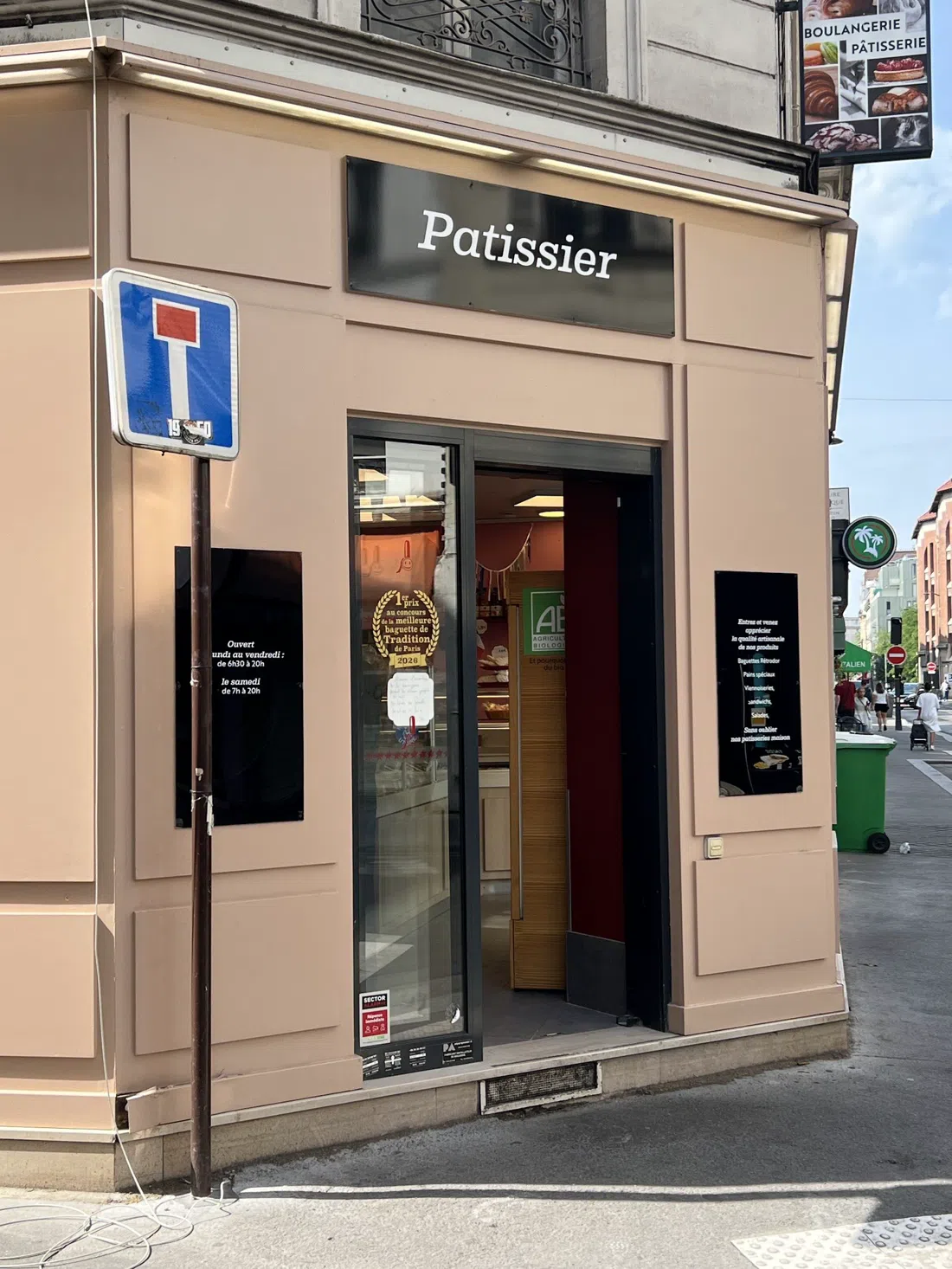
Ten minutes' walk away, Boulangerie Maison M'seddi (14th) gives you the control sample. Mahmoud M'seddi won the Grand Prix in 2018 and has held the standard ever since, which is the rarer achievement. Plenty of winners coast. Tasting a 2026 laureate and a 2018 laureate within half an hour, both at the same price, is the clearest lesson on this trail in what the judges reward. Standard counter shop, takeaway, small groups fine, no bookings. Sandwiches run €5 to €8 if you want lunch later. Closed Mondays.
Late morning in the fifth
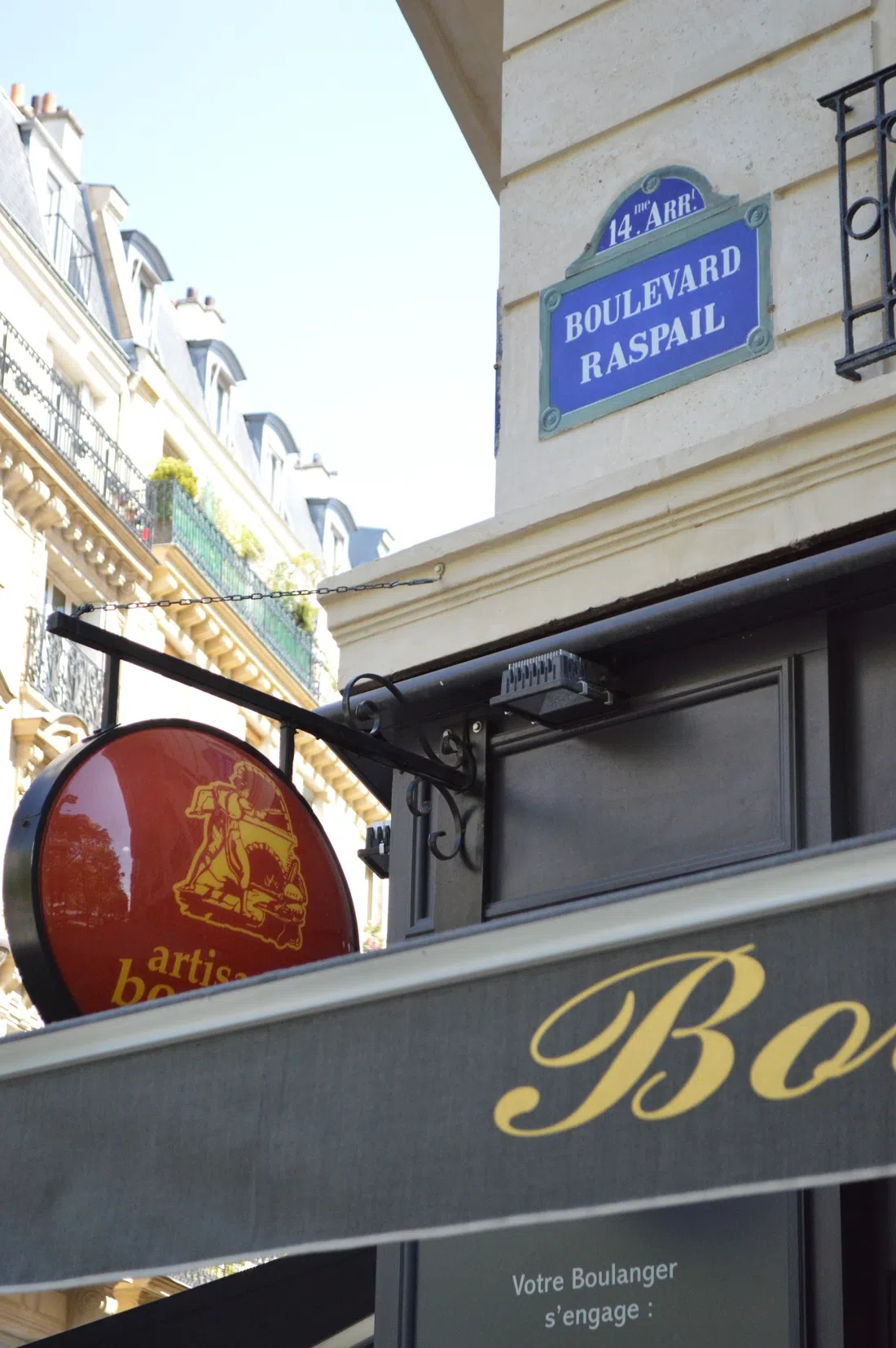
Cross the river to the Latin Quarter for Boulangerie Guyot Ferreira (5th), which opened only in 2024 and has already become a repeat name on the Paris baguette podium, including the 2026 laureate list. The 5th has become the competition's powerhouse and this is the proof. It trades weekdays only, 6.30am to 8.30pm, which is exactly why this stop belongs on your Friday and cannot be shuffled to Saturday. The shop is compact and takeaway only; a group is manageable if you avoid the 8am and 6pm rushes. Pastries €3 to €5.
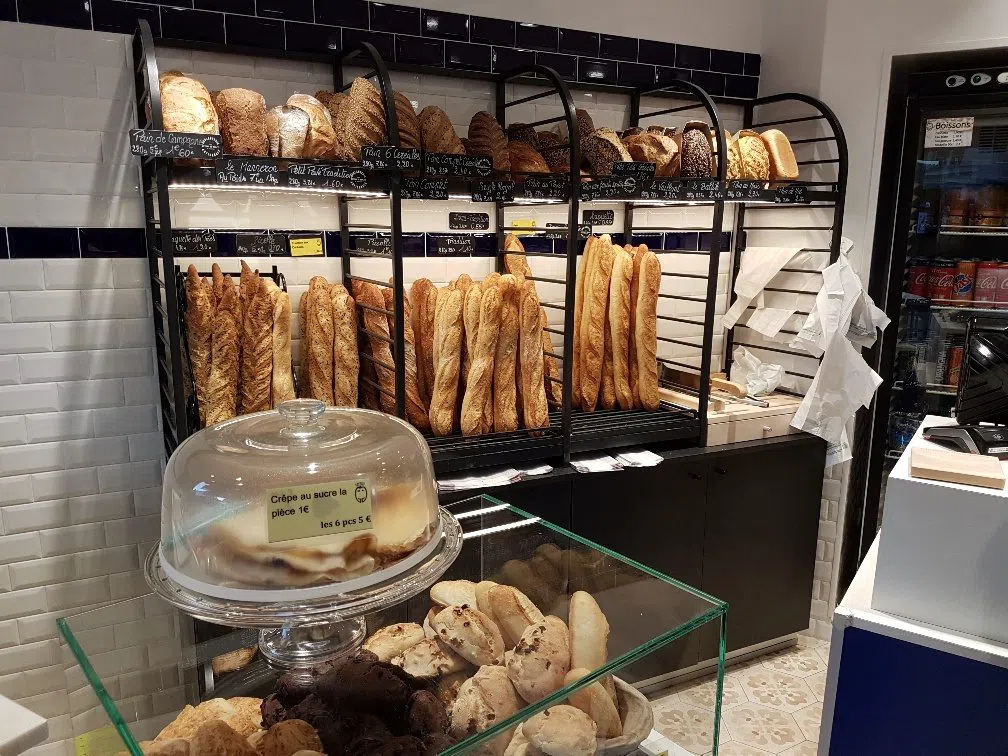
A few streets over, Circus Bakery (5th) is the deliberate counterpoint. Open since 2018, it is the cinnamon bun people mean when they say Paris took Scandinavian baking seriously: dense, properly cardamom-scented, €4 to €5. The room is very small with minimal seating, so a group will spill onto the lane and nobody will mind. Sourdough loaves €6 to €8. Open daily, roughly 7am to 8pm, which makes it a reliable fallback when a scheduled stop turns out to be shut.
A quarter loaf in Saint-Germain
Poilâne (rue du Cherche-Midi, 6th) has been the city's benchmark wood-fired sourdough since 1932, and its miche (a wide, dark, slightly sour wheel scored with a P) is a different food from everything else on this route. You do not need a whole one. The shop sells by the quarter at around €5, which is the right amount for two people and a park bench; a whole loaf is €12 to €14.
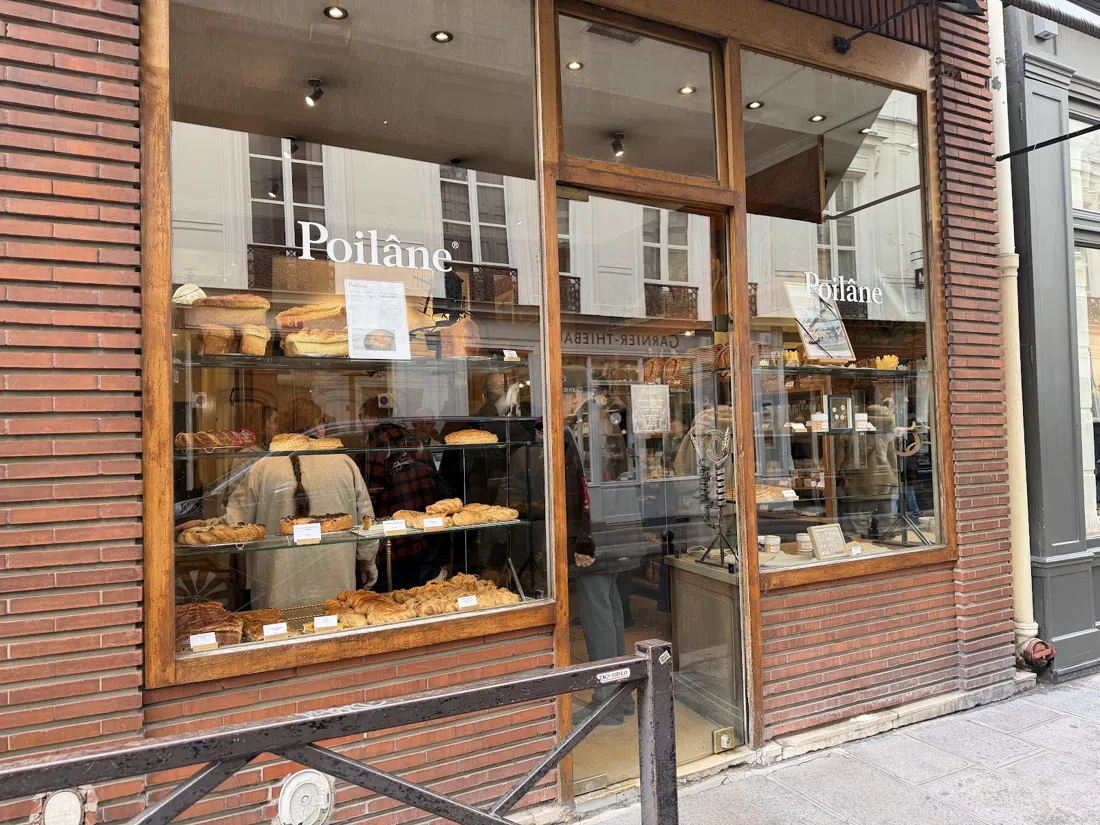
Be straight with yourself before making a special journey. The company entered judicial reorganisation in January 2026, following the closure of its main production site outside the city over hygiene breaches in 2025. All five Paris shops were still trading as this was written, but a business in that position can change fast. Check the day you go rather than building your morning around it.
Lunch at Louvre-Rivoli
By midday a trail of takeaway counters gets tiring, and if you are more than four people it gets impossible. BO&MIE (Louvre-Rivoli, 1st) is here on capacity rather than craft purity: a large floor with actual seats, open 7.30am to 8pm every day including Sunday. Eight people arriving off the Louvre can all be fed at once, which no other address on this list can promise. Baguette de tradition €1.50, pastries €4 to €7, a lunch formula around €10 to €14. The standard is high for the size of the operation. Use it as the release valve rather than the destination.
The Marais croissant and the canal loaf
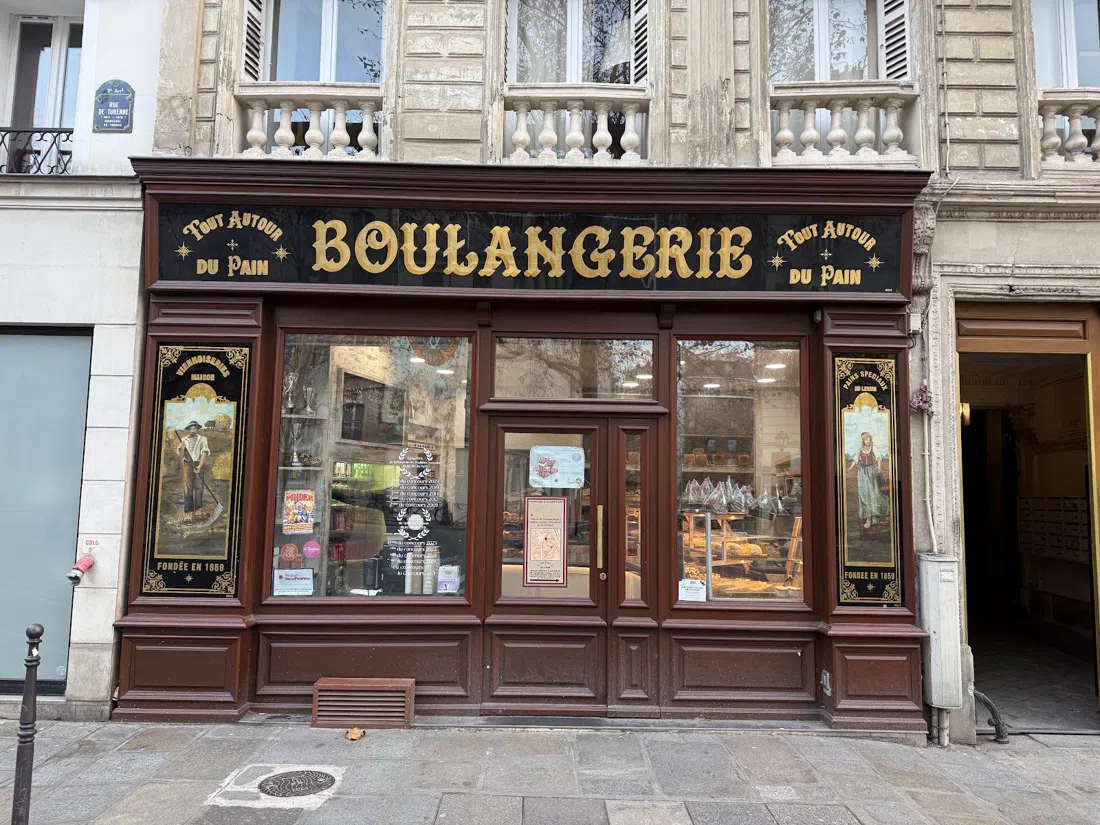
Tout Autour du Pain (Marais, two addresses) is the one stop where you should buy the viennoiserie over the bread. Benjamin Turquier has finished in the top ten of the baguette Grand Prix three times and has also won Best Croissant in Paris, and the croissant, at €1.60 to €2, is the one to compare everything else against: shattering outer layers, a honeycomb centre that pulls apart in strands rather than crumbs. Counter service, takeaway, no bookings, groups fine. Open seven days, which makes it the easiest stop to slot anywhere.
Finish Friday at Du Pain et des Idées (Canal Saint-Martin, 10th). Christophe Vasseur has run it since 2002 inside a preserved 19th-century room (painted glass ceiling, gilt lettering, mirrors) and it is the prettiest boulangerie interior in Paris by a distance. Ask for the pain des amis, sold by weight at roughly €6 to €10, a flat sourdough with a near-burnt crust that keeps for days. Viennoiserie is €2 to €5. It is very small, takeaway only, no seating and no reservations; a group queues outside and orders in one batch. It is also closed Saturday and Sunday. Miss it on Friday and you miss it entirely.
Saturday starts at Faubourg-Poissonnière
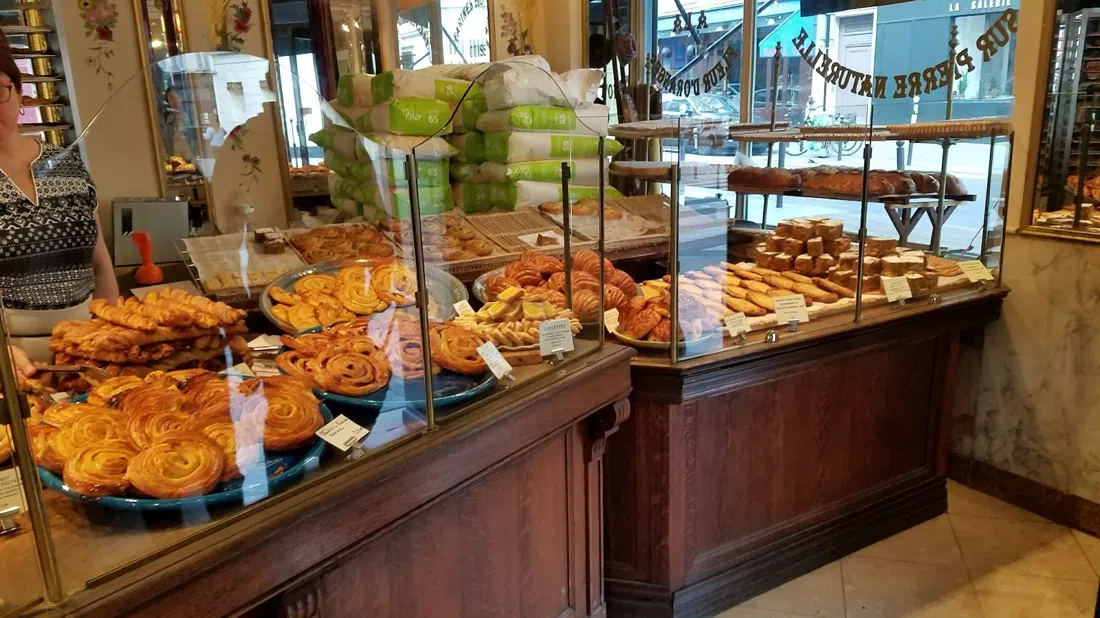
Be at Boulangerie La Parisienne (Faubourg-Poissonnière) early. Mickaël Reydellet won the Grand Prix in 2025 and had already won it in 2016, and while the business now runs seven shops across the city, this is the address that carries the win, so go to this one rather than the nearest branch. Counter service, no reservations; groups are fine as long as you order together rather than one person at a time. Baguette €1.40, viennoiserie €1.50 to €3.
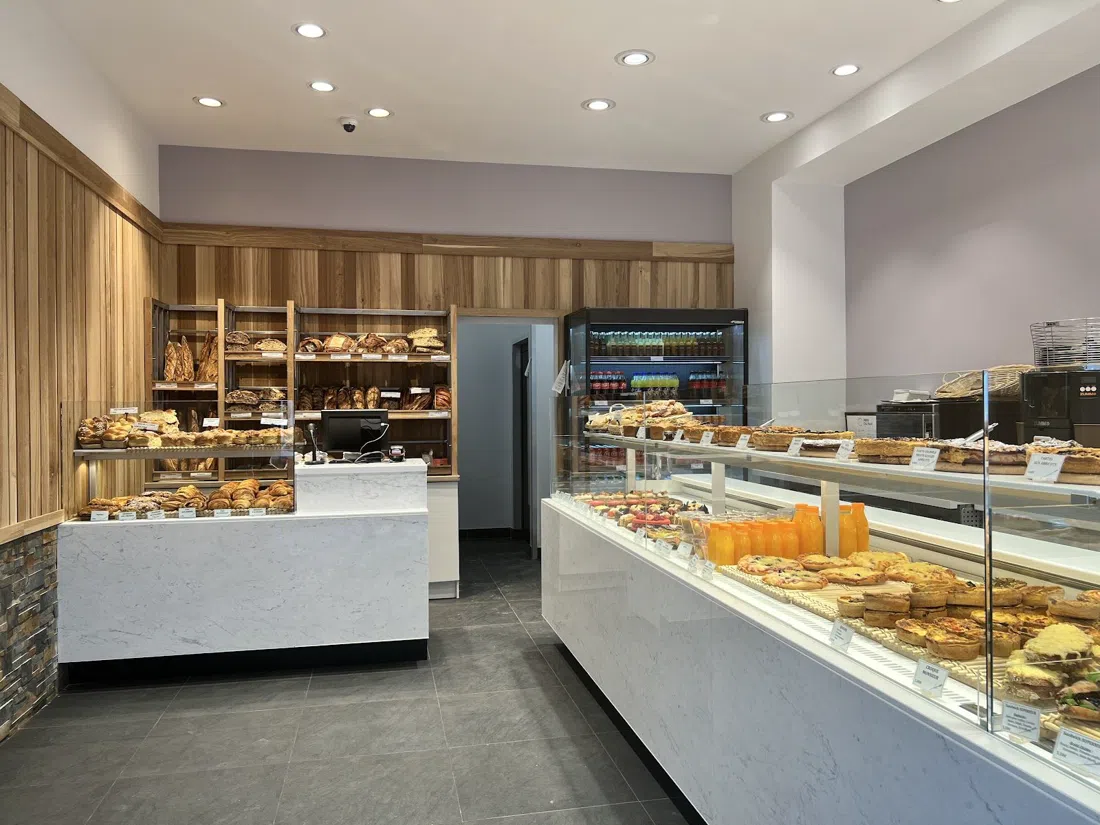
Walk on to Mamiche (South Pigalle, with a second shop at 32 rue du Château d'Eau). Victoria Effantin and Cécile Khayat founded it in 2017 and it remains the best-loved women-run bakery in the city. The chocolate babka at €5 to €7 a slice is what the queue is for, but the miche at €5 to €8 is the reason it belongs on a bread trail rather than a pastry one. Small shop, takeaway; at busy hours a group of more than four waits on the pavement. Closed Mondays.
Up the hill to Abbesses
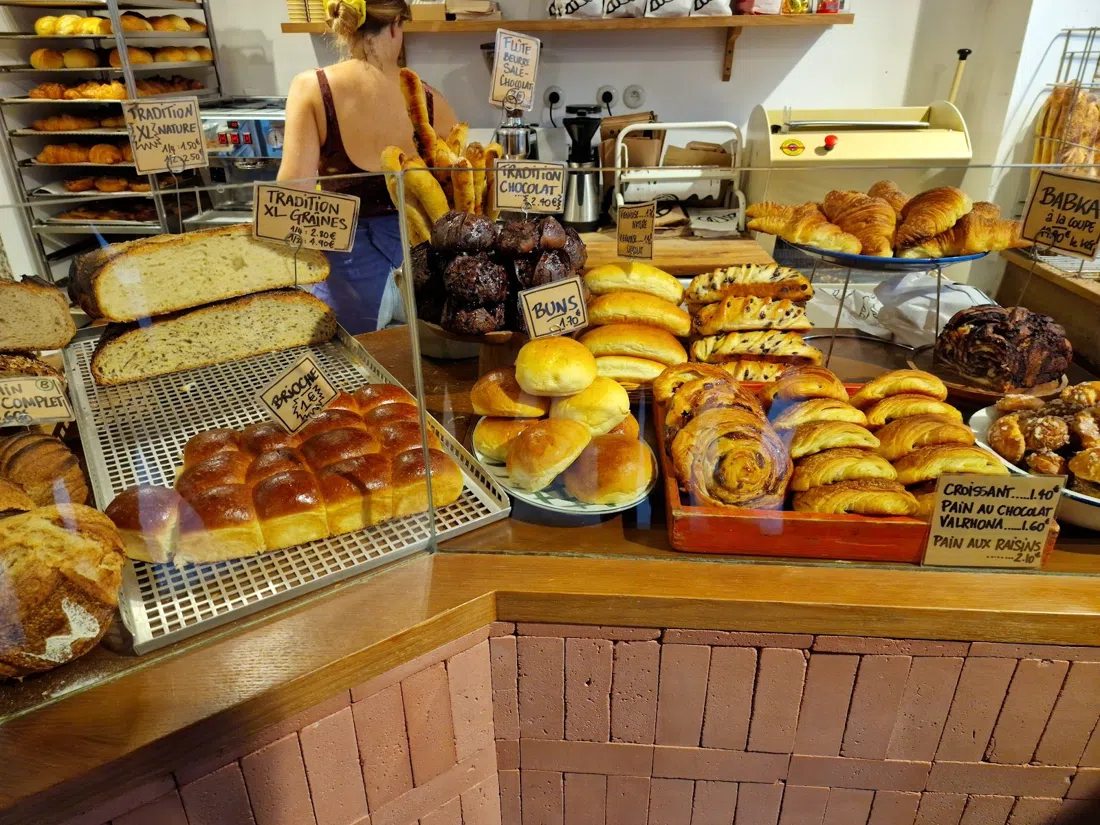
Le Grenier à Pain (Abbesses, Montmartre) is the reason Montmartre earns a place on a bread route rather than only a postcard one. Djibril Bodian has won the Grand Prix twice, in 2010 and 2015, and the loaf holds up on a street where almost nothing else does. Small shop, takeaway only, on a busy tourist lane, so expect a wait at peak. Baguette €1.40, viennoiserie €1.50 to €3. It is listed as open Thursday to Monday and shut Tuesday and Wednesday, another reason the Friday and Saturday pairing works and a Tuesday start does not.
The twentieth before two o'clock
Head east to Au Levain des Pyrénées (rue des Pyrénées, 20th) and get there by half past one. Tharshan Selvarajah won the 2023 Grand Prix here, and this shop is the strongest argument on the whole trail that the finest baguette in Paris is usually found in a plain local bakery with no English menu, no design, and a queue of people buying lunch. It is a working neighbourhood bakery rather than a destination room; groups are fine but nobody is performing for you. On Saturdays it closes at 2pm, and it does not open Sunday at all.
Brunch in Ménilmontant
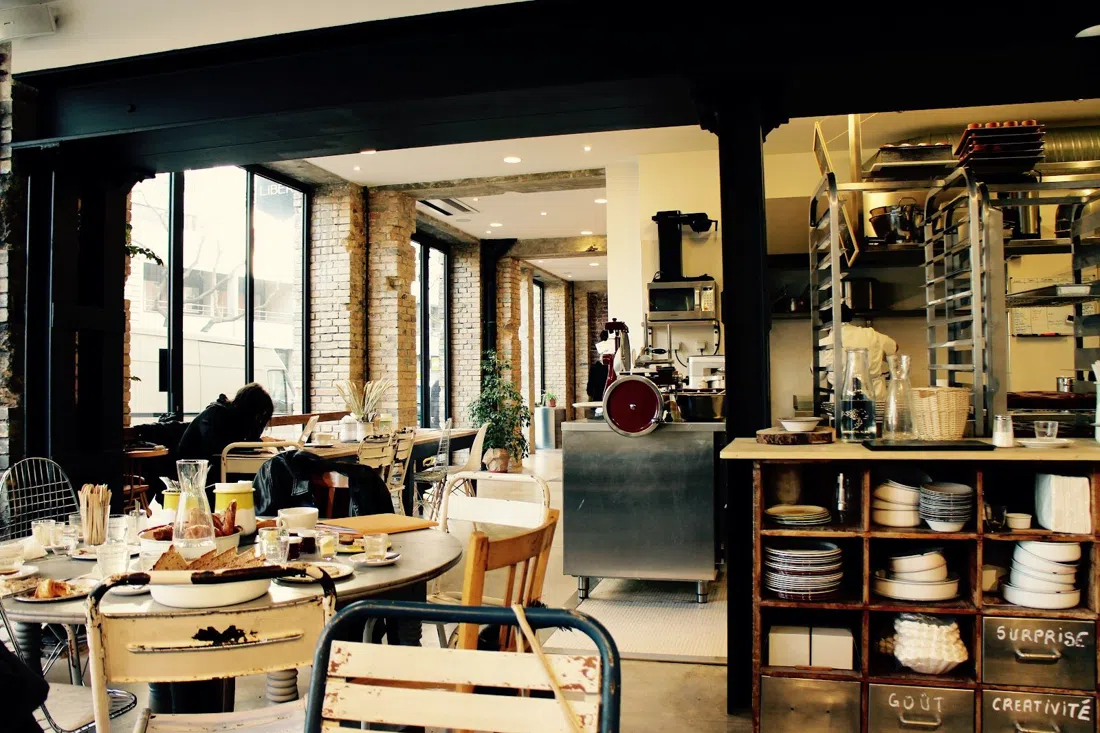
End at Benoît Castel (Ménilmontant, 20th), which is built for exactly this. The weekend brunch is all-you-can-eat at shared tables with two sittings, 10.30am and 1pm, at €32 to €38 a head. Take the 1pm and you can do the Pyrénées stop first. Book ahead for anything larger than a couple. What lands on the table is the week's baking laid out at once: loaves, tarts, viennoiserie, the lot, which is a fitting way to close two days of eating standing up. Bakery items are €2 to €7 if you only want a counter visit. There are further sites at 72 rue Jean-Pierre Timbaud and 11 rue Sorbier.
The eleventh in the late afternoon
If you still have room, and if you have been sensible you will, the 11th holds three worthwhile closers.
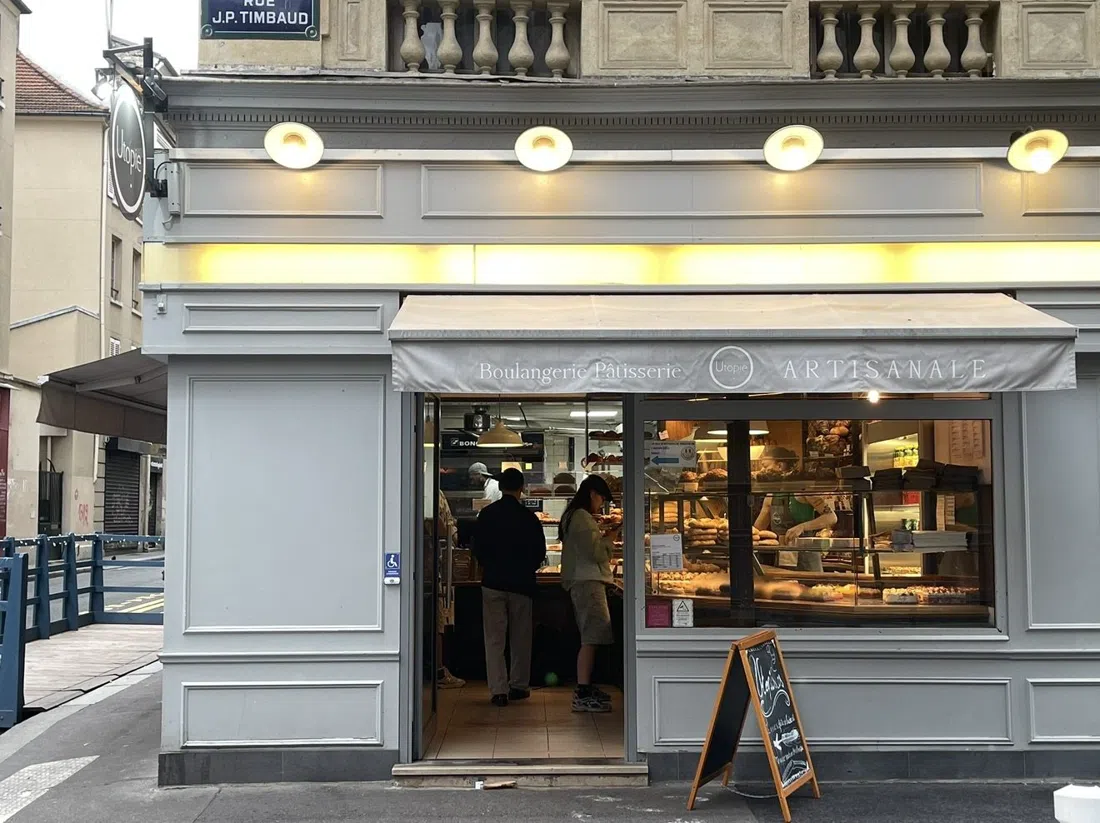
Boulangerie Utopie (Oberkampf, 11th) is where Xavier Netry took the 2024 Grand Prix, and it is the most visually distinctive shop on the route: squid-ink black breads, matcha-and-sesame viennoiserie, pastries at €3 to €6 alongside the €1.40 tradition. The room is narrow standing-room, takeaway only, no bookings, so split a large group or send two people in. Closed Mondays.
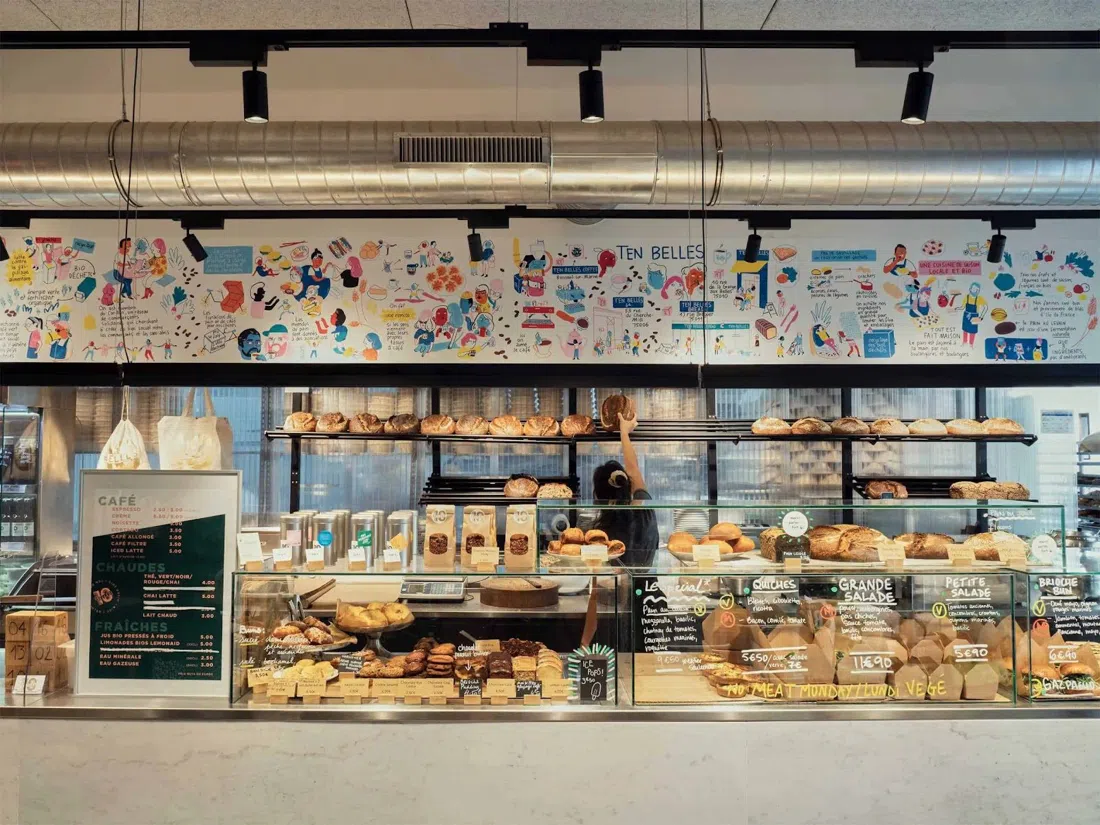
Ten Belles Bread (11th) is the trail's best group stop and the only place designed for sitting down mid-route: a large seating area and a terrace, though no reservations are taken. Proper pain au levain, seasonal tarts, and some of the better coffee roasting in the city. Coffee €3 to €5, pastries €3 to €6, lunch plates €12 to €18. Weekdays 8.30am to 7pm, weekends 9am to 5.30pm, so on Saturday arrive by five.
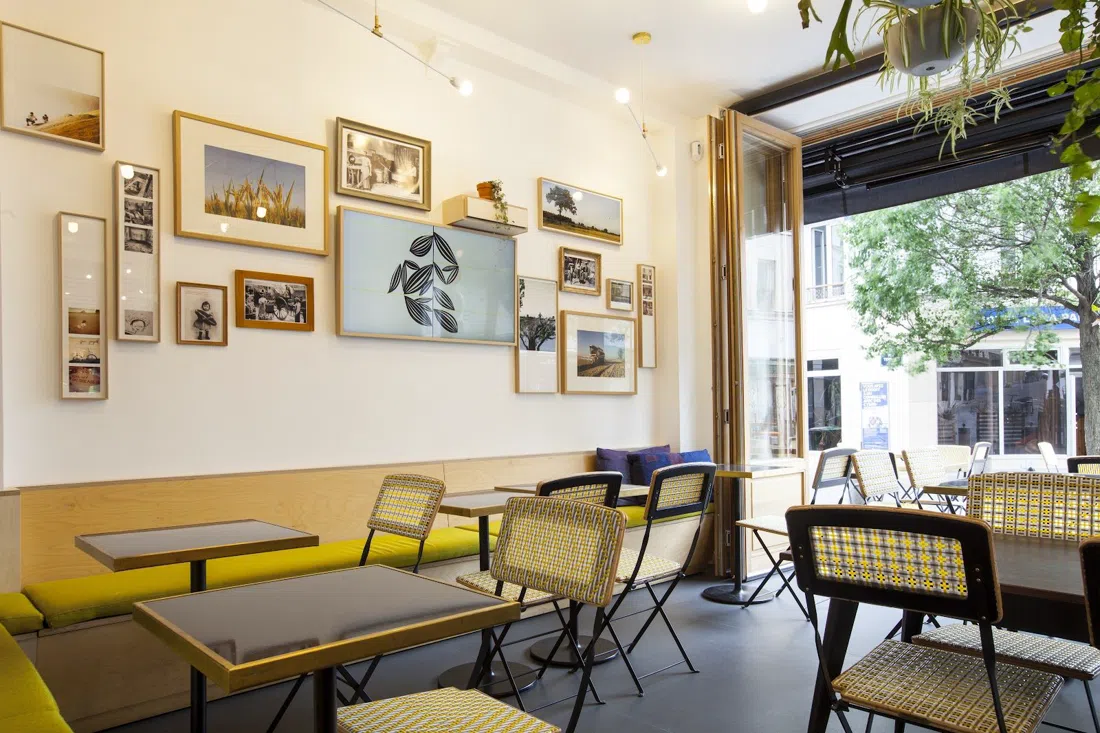
Chambelland (11th) is entirely gluten-free and mills its own flour, with a tea room and outdoor terrace that genuinely seats a group. It is the only stop a coeliac traveller can use, and the rest of the table will not notice what is missing. Loaves €5 to €9, pastries €3 to €5, lunch €10 to €15, open seven days, no reservations.
Practical notes
Transport. All sixteen addresses are reachable on the metro, and the clusters (the 14th, the 5th and 6th, the Marais and canal, the 9th and 10th, the 11th, the 20th) are walkable within themselves. Load a Navigo Easy card at any station rather than buying singles; two days of this involves a lot of short hops. Budget 20 to 30 minutes for each cross-city move and do not schedule more than six stops a day.
Cash and cards. Cards work almost everywhere now, but small independent boulangeries commonly set a card minimum of around €5 to €10, and a single €1.40 baguette will fall under it. Carry coins. Nobody is being difficult; the card fee on a €1.40 sale is real money to them.
Timing. Tradition loaves come out in batches, typically early morning and again in the late afternoon between four and six. The second bake is the quieter, better-crusted one. Viennoiserie is a morning product and shops sell out. Anything sitting under a light at 4pm was baked at dawn.
Budget. One item per stop, six stops, works out at roughly €12 to €20 a person per day. The Saturday brunch adds €32 to €38. That makes this the cheapest two days you will spend in the city, and the best fed.
One rule. Buy the tradition, not the ordinary baguette. Ask for "une tradition" and you will get the legally defined loaf; ask for "une baguette" and you may get the industrial one for twenty cents less. For where these routes sit relative to the rest of the city, the Paris guide has the wider picture.
Questions
Which two days of the week should I do this trail on?
Friday and Saturday. Two of the strongest shops, Du Pain et des Idées on the Canal Saint-Martin and Guyot Ferreira in the 5th, trade weekdays only, so Friday is the only way to catch them, and Saturday ends with the Benoît Castel brunch. Avoid starting on a Monday (Utopie, Mamiche and Maison M'seddi are shut) or on a Tuesday or Wednesday (Le Grenier à Pain at Abbesses is closed).
Is the Grand Prix de la Baguette winner actually worth queueing for?
Yes, for about €1.40. The jury cuts the loaves blind and scores crust, crumb, bake, smell and salt against a legal standard, so the shortlist reflects quality rather than popularity. In 2026 that means Fournil Didot in the 14th, where Sithamparappillai Jegatheepan won in February. Eat it within twenty minutes of buying, which is the window the crust is built for.
Can I do this with a group of six or eight people?
Only if you plan around it. Most of these shops are tiny takeaway counters with no seating and no bookings. Fournil Didot, Utopie, Du Pain et des Idées and Circus Bakery will all be overwhelmed by six. Send one or two people in to buy for the group and eat outside. For stops where everyone sits down, use BO&MIE at Louvre-Rivoli, Ten Belles Bread, Chambelland, or book the shared-table brunch at Benoît Castel.
Do Paris bakeries take cards, or do I need cash?
Nearly all take cards, but independent boulangeries commonly enforce a card minimum of roughly €5 to €10, and a single tradition baguette at €1.40 falls well under it. Carry coins and small notes. If you are buying for a group in one transaction you will usually clear the minimum anyway.
Is there anything on this route for a gluten-free traveller?
One stop, and it is a good one. Chambelland in the 11th is entirely gluten-free and mills its own flour, with loaves at €5 to €9, pastries €3 to €5 and lunch around €10 to €15. It has a tea room and a terrace so a mixed group can sit together, it is open seven days, and the rest of your table will not notice the difference.
First published on theparistravel.com, the Paris guide.