On the north side of the Butte, where rue Saint-Vincent drops away into shadow, there is a slope of gamay behind green railings that most people walk straight past while looking for the café in the postcard. It has been pruned every spring since 1932. Paris keeps ten working plots like it inside its own boundary, all of them pruned, picked, pressed, bottled and labelled. Nearly all are free to see, and almost none will sell you the wine.
This is a day built on looking rather than drinking. Four of the ten sit in open public parks where nobody will stop you. Three are locked behind fences you can see through. Two open only on a specific weekend of the year. One is on the wall of a fire station. Plan it as a walk with two cellars at the end and it works beautifully; plan it as a tasting tour and you will spend the afternoon disappointed.
The Montmartre morning and the vineyard everyone means
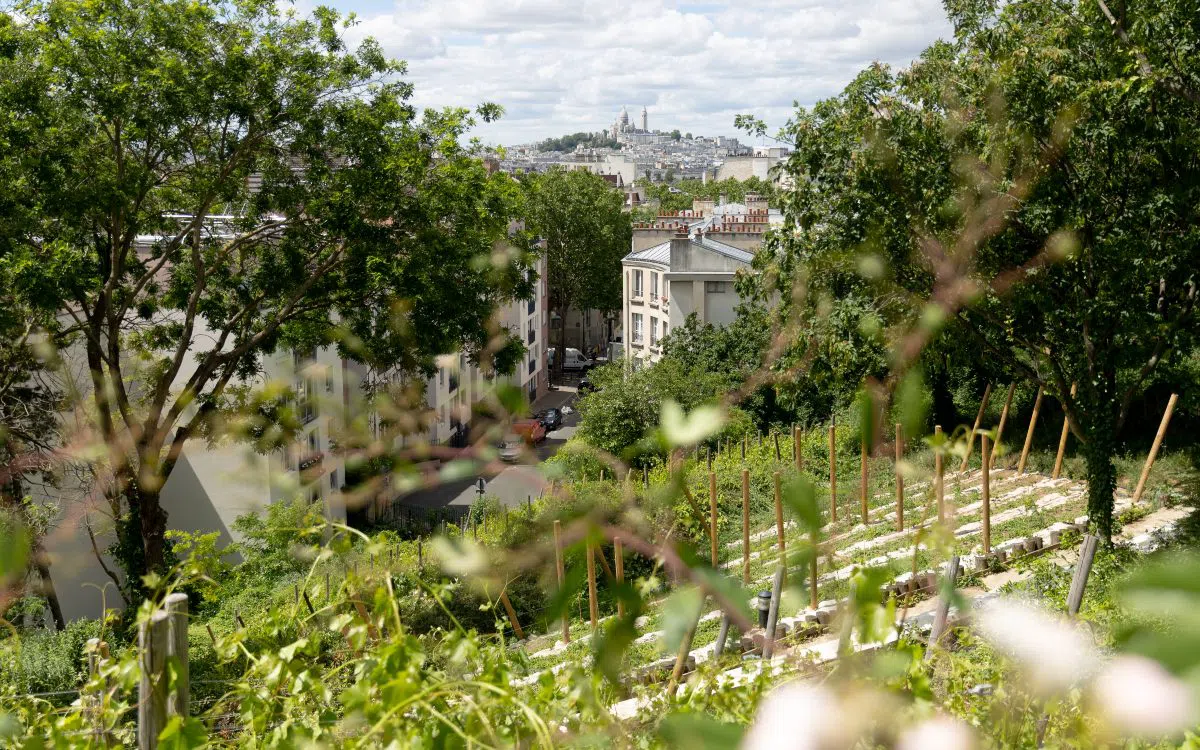
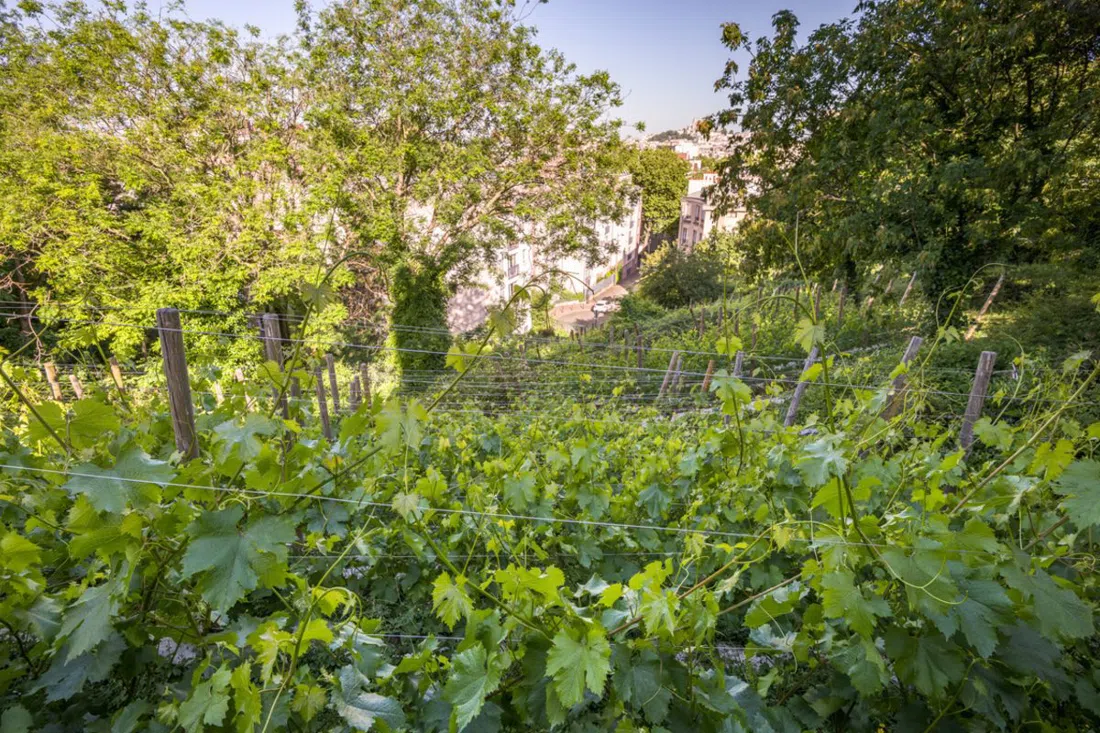
Start at the top and walk down. Clos Montmartre (18e, on the corner of rue des Saules and rue Saint-Vincent) is the anchor of the whole story and the only city plot with any public profile at all. It covers 1,556 square metres, a sliver of hillside that is noticeably smaller in person than in photographs, planted with roughly 1,762 vines across 27 varieties, about three-quarters gamay and a fifth pinot. The ground was bought back from developers and replanted in 1932, which is why the rows sit at an awkward angle to the street: they follow the old parcel, not the street plan.
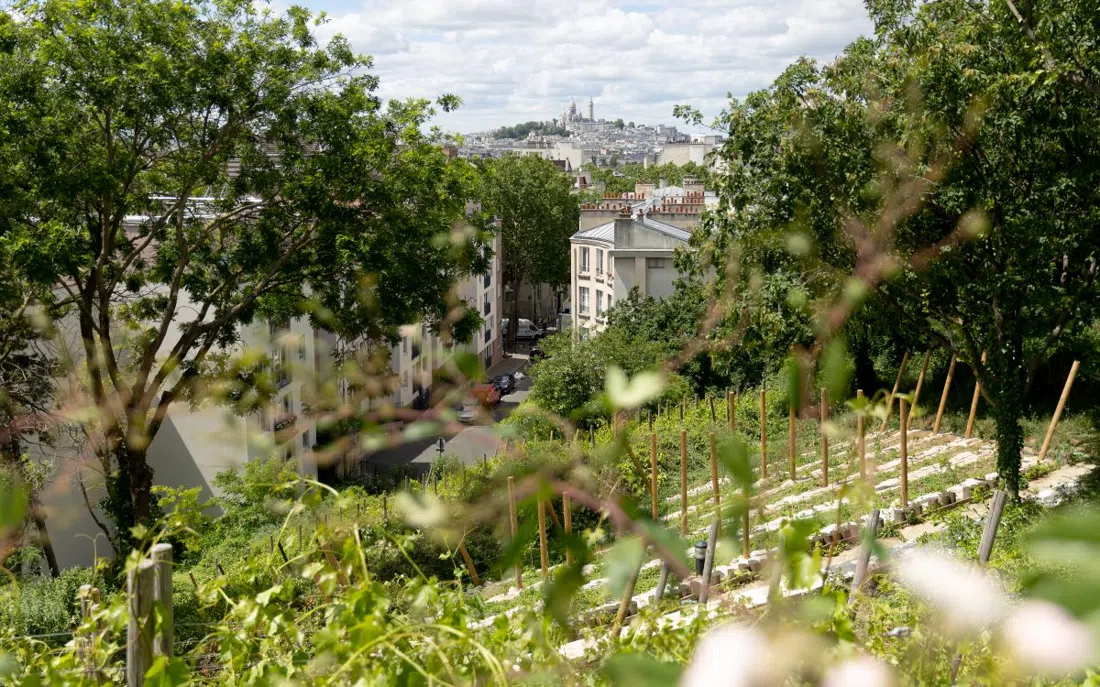
The vineyard is fenced and locked year-round. You see it from the pavement, and for a group of any size that works fine, because the railings run the length of the slope and everyone gets a clear view. It costs nothing and takes five minutes. Go before ten, because by late morning the corner below is a standing queue of tripods. Bottles surface at the mairie du 18e at roughly €50-60, which is a charity price attached to a curiosity rather than a wine price. Buy one for the label if you want it; nobody should pretend otherwise.
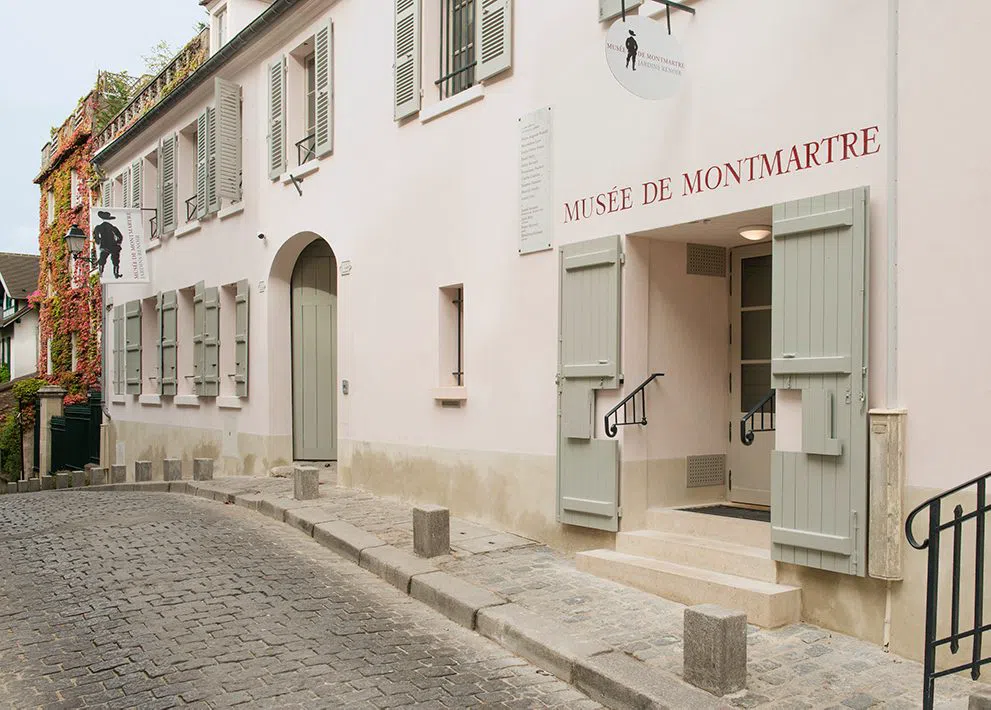
Three minutes uphill, Musée de Montmartre — Jardins Renoir (18e, rue Cortot) is the only reliable legal way to stand inside those vines rather than look through them. The guided vine visit with a tasting, an engraved glass and museum entry runs €43; museum entry alone is around €15. Places on the guided visit are capped and it sells out, so reserve rather than turning up. Even if you skip the tour, the garden terrace is the single best viewpoint over the Clos: you look down the rows instead of across them, with the roofs of the 18th behind. Couples can do the whole thing in an hour. Larger parties should use the museum's dedicated group-visit booking rather than arriving twelve-strong and hoping.
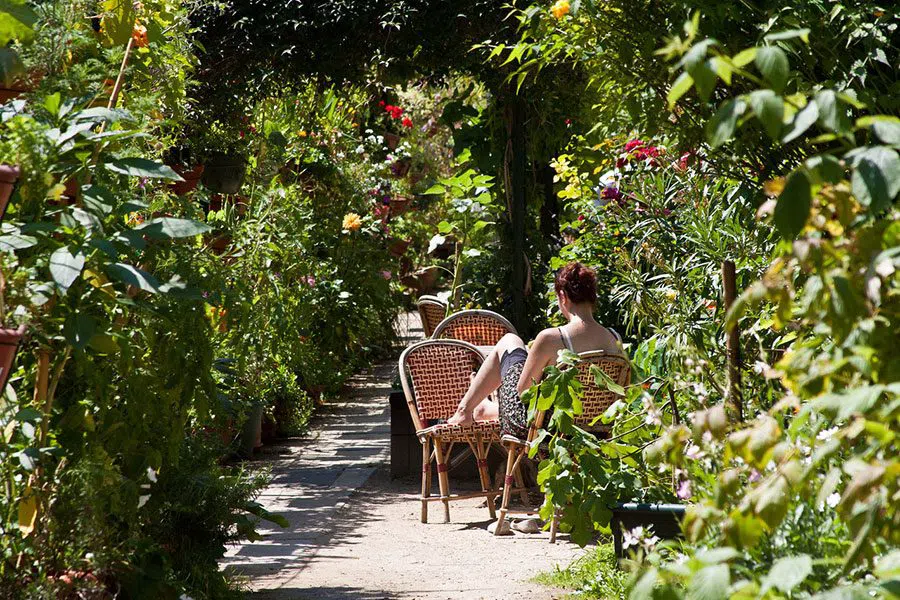
Fifteen minutes north, well clear of the Butte crowds, Les Jardins du Ruisseau (18e, up by Porte de Clignancourt) grows vines along an abandoned railway cutting a few minutes from the flea market. It is run by an association and staffed by volunteers, so it works on open days and booked visits rather than drop-in, and the hours really do depend on who is free that week. Email ahead if you are bringing people. It hosts events during the October harvest week and now sits at an entry point onto the new Petite Ceinture promenade, which makes it a deliberate stop rather than a gamble.
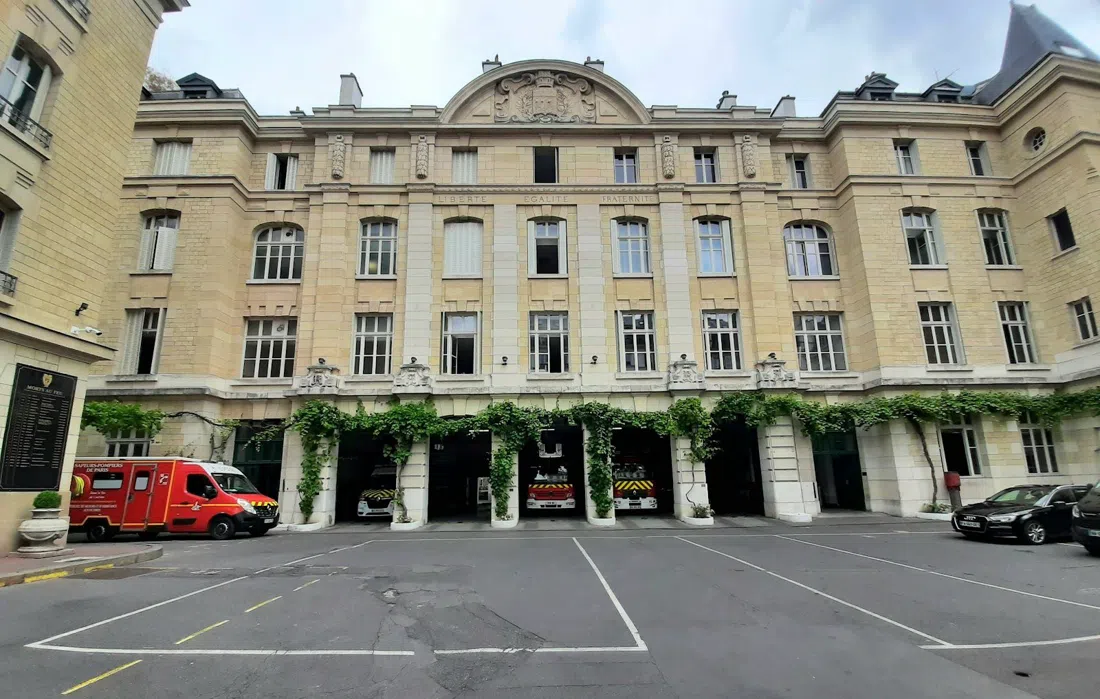
Walking back down towards Pigalle, the Vigne de la Caserne Blanche (9e, rue Blanche) has had vines on its wall since 1926. The Paris firefighters still hold a harvest, and it ends with the most recently married sapeur and their spouse treading the grapes. The result is thirty to fifty bottles of what they call château-blanche, ceremonial and not remotely for drinking. This is a live fire station. There are no visits, no entry, ever. You look up from the pavement for two minutes and you keep walking, and you do not knock.
Two hills in the northeast where the vines sit in public parks
The second walk is the best value on this list and almost nobody does it. Clos des Envierges, in Parc de Belleville (20e), is 250 square metres of pinot meunier and chardonnay planted in 1992 on a hill that monks worked from the 13th century. This was wine country long before it was Paris, and the terracing still reads that way. The park is public and unfenced, you walk up to the vines, and there is no booking and no size limit. The wine is never sold; the only way to taste it is at the 20th arrondissement's spring and harvest events. Climb to the top of the park afterwards for the view west across the whole city, and take the painted walls on the streets below on the way up. The stop costs nothing, and it is the one that makes people understand the subject.
Twenty-five minutes north-west, Vignes de la Butte Bergeyre (19e, on the hill above the Buttes-Chaumont) is the most secret of the lot. The plot is properly called the Clos des Chaufourniers: 600 square metres of sauvignon, chardonnay, muscat, chasselas and pinot noir on a 1930s garden-city hill of some 600 residents that most Parisians have never climbed. It is gated and closed almost all year, so the ordinary visit is a look through the fence. It opens for the Fête des Jardins in late September, when city gardeners pour the Bergeyre cuvée. The way up is steep stairs, there is no wheelchair access, and the streets at the top are residential and quiet. Go for the belvedere as much as the vines. On a clear morning Sacré-Cœur sits square in the gap between two houses, and that view is the reason to make the climb.
The east and the southwest for vines you can stand next to
Clos de Bercy, in the Jardin Yitzhak-Rabin (12e), is the most historically loaded ground in this piece. Three hundred and fifty vines on 660 square metres, planted in the 1990s on the site of the Bercy warehouses that once handled most of the wine drunk in the capital. Barrels came up the Seine, were stored here, and went into the city from this exact patch of earth. The park is open, unfenced and suits any group. There is a small participatory harvest each autumn, but it is neighbourhood-scale and run for locals, not a product you can book; if you are there when it happens, watch politely. The old warehouse buildings survive along the cour Saint-Émilion nearby, which is what makes the stop worth the métro ride rather than just a photo of ten metres of vine.
Across the river and south-west, Clos des Morillons, in Parc Georges-Brassens (15e), is the easiest of all the city vines to reach and stand beside. It runs to 1,200 square metres and about 720 vines (pinot noir, pinot meunier and table grapes), planted in 1983 on the site of the old Vaugirard horse market, whose iron halls still stand at the park entrance. No gate, no booking, no problem with a coach party if you have one. Roughly 300 bottles a year go to charity auction, which makes the wine effectively unbuyable, so the point here is the view down the terraced rows with a residential 15th behind them. It is the most ordinary-feeling vineyard on the list, and that is the appeal.
Three Left Bank oddities worth a ten-minute detour
Clos Saint-Juliénas, in Square Félix-Desruelles (6e, just off the boulevard Saint-Germain), is ten vines. That is the whole vineyard, and it is the smallest in Paris. It is tended by the Saint-Juliénas des Prés brotherhood, who induct a local figure every year with proper ceremony, and the bottles that result go to charity at €50 and up. The square is open, busy and on a main boulevard, so it suits a small group stopping for two minutes: there is nothing to enter and no facilities. Treat it as a joke that is completely serious, because that is exactly what it is.
Vigne du Jardin écologique, inside the Jardin des Plantes (5e), is the one plot here planted for science rather than nostalgia. Alongside pinot noir, chardonnay and gamay it carries the American hybrids noah and baco, muscat de Hambourg, chasselas de Fontainebleau and a protected wild vine, a living record of what the phylloxera era did to European viticulture and what was tried in response. The botanical garden itself is free; the ecological garden has restricted opening and is best seen on a guided visit, and the museum galleries are ticketed separately. Check the times before bringing a group, or you will walk a long way to a closed gate.
Jardin du presbytère de Saint-François-Xavier (7e) is the purest you-would-never-know-it-was-there entry, two minutes from the tourist flow around the Invalides. It is private parish ground with vines in it, closed most of the year, opening for parish fêtes and the Rendez-vous aux Jardins weekend. Small groups only, and only on an open day. Do not turn up unannounced. This is somebody's garden attached to somebody's work.

The one vineyard near Paris you can properly walk into
Clos du Pas Saint-Maurice is in Suresnes, in Hauts-de-Seine, just over the city boundary rather than inside the arrondissements. It earns its place anyway, because at one hectare and around 4,500 bottles a year of three white cuvées it is the largest vineyard in Île-de-France and the only one within easy reach that you can actually enter. Free one-hour vineyard visits run on weekdays by appointment on +33 1 47 98 90 18, the cellar opens on Mondays, tastings are tied to town events, and the harvest festival falls on the first Sunday of October. Bottles cost €11-14 at the tourist office, an ordinary price for a wine you can drink, which after a day of €50 charity bottles behind railings feels almost startling. For groups this is comfortably the best option on the list.
Where to actually drink something
Two indoor anchors make the day work when it rains, which in Paris it will. Le M. Musée du Vin (16e, in the old quarry cellars near Passy) has been rebranded and is now part museum, part restaurant, part tasting school. Entry is €15 full and €10 reduced, tasting courses cost extra, and the scheduled classes run Friday 18:00-20:00 and Saturday 15:00-17:00. It is closed Sunday and Monday, which catches people out. It takes groups seriously: receptions from 10 to 200 for tastings, seminars and private dinners, with a quote back inside 24 hours.
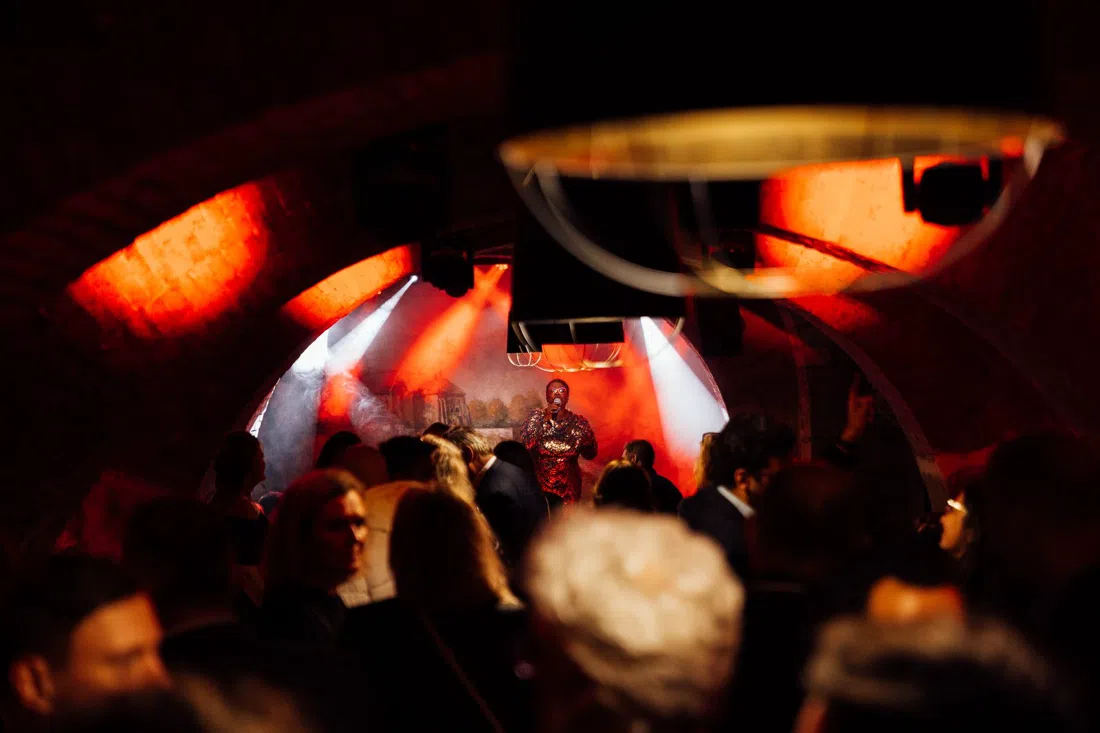
Les Caves du Louvre (1er, a few streets behind the palace) is the better choice for two people who want an hour of real instruction. Louis XV's cellarman stocked the royal table from these vaults, and the space still reads as a working cellar rather than a display. Experiences take up to 20 people, private hire and blending workshops are available, and you should expect roughly €30-60 a head depending on what you choose. English-language tours book out, so reserve at least a week ahead.

Harvest week and the other open days in 2026
If you can choose your dates, choose October. The 93rd Fête des Vendanges de Montmartre runs 7-11 October 2026, with the Ban des Vendanges held at the vines themselves. It is the one week the Clos stops being a thing behind a fence and becomes an event, and Les Jardins du Ruisseau is among the venues. Book accommodation early for it; the 18th fills. Late September brings the Fête des Jardins, which is when the Butte Bergeyre gate opens and the city gardeners pour the Bergeyre cuvée. The Rendez-vous aux Jardins weekend is your chance at the Saint-François-Xavier presbytery. Suresnes holds its harvest festival on the first Sunday of October, and Bercy runs its small neighbourhood harvest in the same autumn window. For what else falls in those weeks, see our Paris guide.
Planning notes
Everything inside the city is on the métro. The Montmartre cluster works from Lamarck-Caulaincourt; Belleville and the Butte Bergeyre from Pyrénées and Buttes-Chaumont; Bercy from Cour Saint-Émilion; Georges-Brassens from Convention or Porte de Vanves. Buy a Navigo Easy card and load a carnet rather than paying single fares. Suresnes is reached by the T2 tram along the Seine or the suburban line from Saint-Lazare, and takes about half an hour door to door.
Nothing here needs cash except the occasional donation tin at a community garden. Bottle sales at the mairie du 18e and at the Suresnes tourist office take cards.
Vines are green and worth photographing from May to October and bare sticks from November to March. October is the only month with real events. Mornings beat afternoons everywhere on the Butte. The hills at Belleville and Bergeyre are genuinely steep. Factor that in for anyone with mobility limits, and skip Bergeyre entirely if stairs are a problem.
Eight of the ten city plots cost nothing at all. A realistic full day comes to around €43 for the Montmartre guided visit and €15 for a wine museum entry, plus whatever a tasting class costs on top; two people can do the entire walking route for the price of transport if they skip the tours. If you want a bottle you can actually open, the €11-14 ones from Suresnes are the only honest answer.
Base yourself in the 18th if harvest week is the reason you came, or somewhere central on the right bank if you want the east-and-southwest parks in the same day. Compare rates and locations with our Paris hotel search.
Questions
Can you actually go inside the Clos Montmartre?
Not on your own: the vineyard is fenced and locked all year. The only reliable way in is the guided vine visit run by the Musée de Montmartre, which costs €43 including a tasting, an engraved glass and museum entry. It is capped and sells out, so book ahead. The other chance is the October harvest festival. Otherwise you see it free from rue des Saules and rue Saint-Vincent.
Can you buy wine grown in Paris?
Barely. Clos Montmartre bottles appear at the mairie du 18e at roughly €50-60, and the ten-vine Clos Saint-Juliénas produces charity bottles at €50 and up. Morillons sends around 300 bottles a year to charity auction, Belleville's wine is never sold, and the firefighters' château-blanche is ceremonial. The only realistically drinkable bottles are the €11-14 whites from Suresnes.
When is the Montmartre harvest festival in 2026?
The 93rd Fête des Vendanges de Montmartre runs 7-11 October 2026, and the Ban des Vendanges takes place at the vines themselves. It is the busiest week of the year on the Butte, so book accommodation well ahead.
Which Paris vineyards are free and open with no booking?
Four. Clos des Morillons in Parc Georges-Brassens, Clos de Bercy in the Jardin Yitzhak-Rabin, and Clos des Envierges in Parc de Belleville all sit in open public parks with no gate and no group limit. The vine in the Jardin des Plantes is inside a free botanical garden, though the ecological garden itself has restricted hours.
Is it worth crossing the city boundary to Suresnes?
Yes, if you want more than a look through railings. Clos du Pas Saint-Maurice is in Hauts-de-Seine rather than inside the arrondissements, but at one hectare and about 4,500 bottles a year it is the largest vineyard in Île-de-France. It runs free one-hour visits on weekdays by appointment and sells bottles at €11-14, which makes it the best option for a group.
First published on theparistravel.com, the Paris guide.