
Barrio Lastarria is six blocks of cobbles, 1930s apartment buildings and pavement tables squeezed between a wooded hill and a long thin park. In October it finally moves outdoors: chairs on the street by one o'clock, the Andes still white above the rooftops. It is also the stop where car tours of Santiago lose the most time, because the best street in it is shut to traffic and its three museums close on three different schedules. Get the timing right and ninety minutes here is the strongest leg of a half-day loop. Get it wrong and you arrive on a Monday to find every door locked.
What you actually see in Lastarria
The spine is José Victorino Lastarria street, running from the Alameda north to Merced and the green strip of Parque Forestal. Its central stretch is cobbled and effectively car-free: pavement tables, buskers, second-hand book stalls, small galleries on first floors, and rows of mid-century apartment blocks that came through the city's demolition decades intact. End to end is an eight-minute walk. Looking at it properly takes two hours, and most car itineraries allow forty-five minutes.
There is no turnstile and no single attraction. You walk a short grid, go into one or two museums, sit down twice, and read the street. The quarter is residential above shop level, so you are watching people carry bread home as much as anything curated. That is the point of it, and it is why the strip reads differently at 10:00 than at 20:00.
A workable route, starting uphill and ending with a drink: the ticketed museum at 10:00, across Merced for ice cream at 11:15, north over Parque Forestal to the two free art museums by 11:45, back to the strip for a late lunch at 14:00, wine bar last. That is a four-and-a-half-hour version of the quarter. Compressed into a car tour's ninety-minute stop you get one museum, one terrace and the street itself, which is enough to decide whether you want to come back after dark on your own.
Three museums, and which two are free
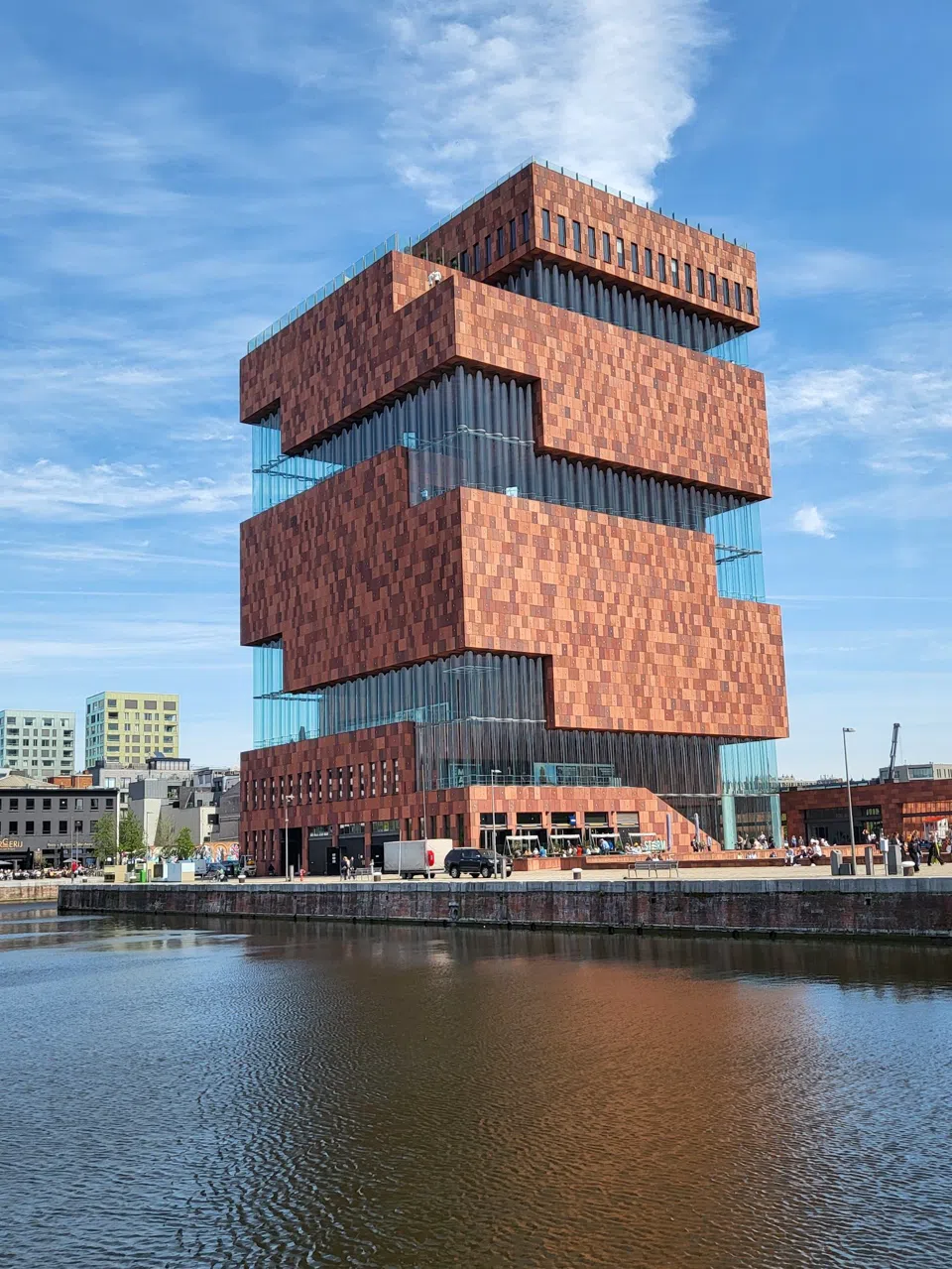
MAVI UC — Museo de Artes Visuales (Lastarria) is the one paid interior most car tours include, and the only place in the quarter where you hand over money at a door: CLP 2,000 general, about USD 2, CLP 1,000 for ages 13 to 18, free for under-12s, over-65s, disabled visitors and students with ID. It opens Tuesday to Sunday, 10:00 to 18:00, closed Mondays and on 1 January, 1 May, 18 and 19 September and 25 December. Entry is free for everyone on the last Sunday of the month, which in October 2026 is Sunday the 25th. The Sala MAS wing here holds the former Museo Arqueológico de Santiago collection, more than 3,000 pre-Columbian pieces, so that is a room inside MAVI and not a second stop; the old museum no longer has an address of its own to hunt for. The building is stacked over several half-levels, which matters for parties: guided group visits can be booked by phone or email in advance, and large groups get split across levels instead of being moved around as one block.

Five minutes north, across Parque Forestal, Museo Nacional de Bellas Artes (Parque Forestal) is free and open Tuesday to Sunday, 10:00 to 18:30, last admission 18:20. School and tour groups should book a slot through the museum's education unit rather than arrive unannounced. It is the obvious wet-weather substitute for the outdoor half of the plan: free, indoors, and big enough to absorb an hour without feeling like you are killing time. That matters in October, when a passing front can shut Cerro Santa Lucía, the hill at the quarter's eastern edge, at short notice.
MAC Parque Forestal (Parque Forestal) shares the building but is a separate institution with its own door at Ismael Valdés Vergara 506, also free, open Tuesday to Sunday, 10:30 to 17:30. The earlier close is the trap, and it catches afternoon arrivals every day of the week: do Bellas Artes first from 16:30 and MAC will be shut before you reach it. If contemporary work is what you came for, go through MAC's door first and leave Bellas Artes for the long tail of the afternoon. Guided visits here are arranged with the museum in advance too.

A cinema that proves the strip still works
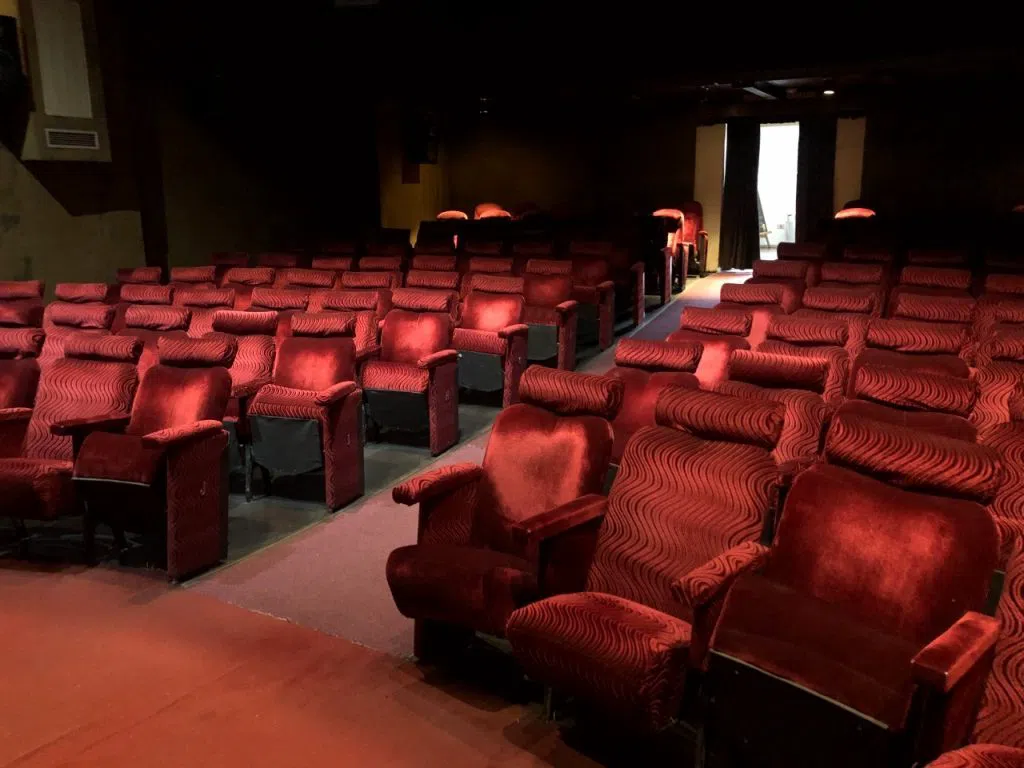
Cine El Biógrafo (Lastarria) has been at Lastarria 181 since 1987, open daily from roughly 15:00 to 23:30, screening subtitled auteur and world cinema for about CLP 4,000 to 5,000 a ticket. The auditorium is tiny; more than a dozen of you should buy ahead rather than turn up hopeful. It is not a car-tour stop, because afternoon-only opening plus a two-hour sit does not fit a driving itinerary, but it is the clearest evidence that this is a working cultural quarter and not a dressed-up set for visitors, and it is the reason to come back in the evening under your own steam.
Where to eat, drink and stop for ten minutes
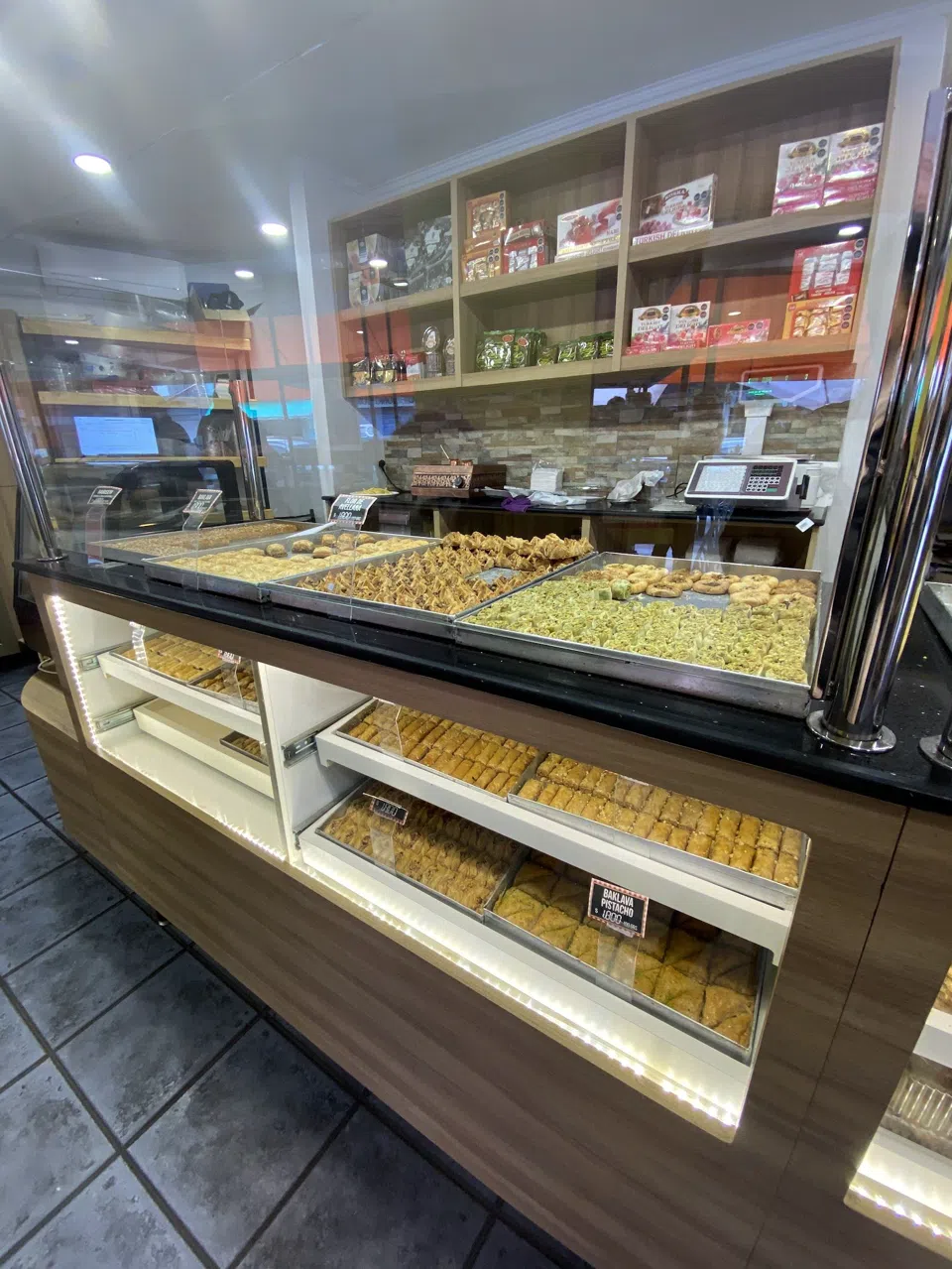
Emporio La Rosa (Merced) (corner of Parque Forestal) sits at Merced 291 and opens daily, holidays included, 09:30 to 20:30. Scoops from about CLP 3,500, breakfasts and sandwiches CLP 6,000 to 12,000. Counter service takes any number of people, which is why drivers build it in as the five-minute comfort stop, and it is genuinely good rather than merely convenient. The terrace fills fast on warm afternoons, which in October means most afternoons, so expect to stand and eat.

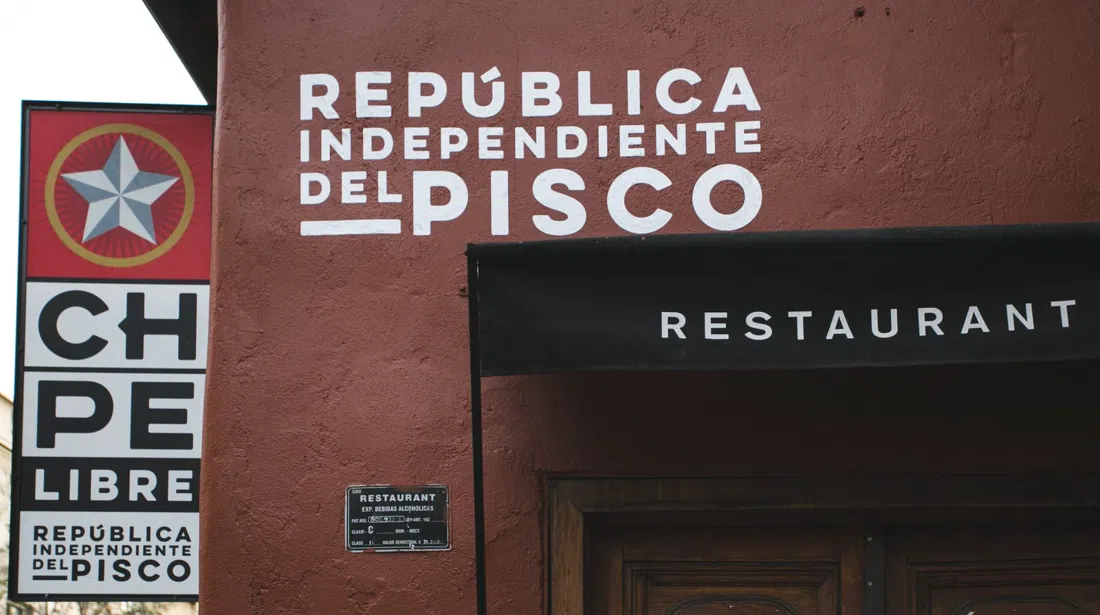
Chipe Libre — República Independiente del Pisco (Lastarria) is at Lastarria 282, open Monday to Saturday only, closed Sundays, with cocktails from around CLP 6,500 and mains CLP 12,000 to 22,000. It has been running since 2014 and the whole place is built around the Chile-versus-Peru pisco argument, which it treats as a tasting exercise instead of a joke. The terrace handles groups comfortably; reserve if there are more than four of you. That Sunday closure is the single most common mistake in a weekend car itinerary, which tends to assume the strip runs seven days.
Bocanáriz (Lastarria) at Lastarria 276 opens Monday to Saturday, 12:00 to 00:30, and Sundays in the evening only, from 19:00. Tasting flights run roughly CLP 9,000 to 15,000, mains CLP 14,000 to 25,000. This is the serious Chilean-wine room in the quarter and the natural end point of a half-day here. Flights are organised by region and style, so an hour at the bar does more for your understanding of Chilean wine than a vineyard day trip half an hour outside the city. The room is narrow: book ahead for six or more, and accept that couples and pairs get the better experience of it.
One caveat, if the car is yours. Chile's drink-drive thresholds are 0.3 g/l for driving under the influence and 0.8 g/l for the drunk-driving offence, both enforced with roadside checks. A tasting flight and your own car do not go together. Either put the wine bar at the end of the day and leave the car where it is, or let someone else do the driving.
Adding Sky Costanera to the same car leg
Sky Costanera (Costanera Center, ten minutes' drive east) occupies floors 61 and 62 and opens daily 10:00 to 21:00, about CLP 23,000 for an adult, roughly USD 24, CLP 8,000 for ages 5 to 12, free under 5. Tickets are timed-entry and there is a published prohibited-items list (no liquids, aerosols or tools), so turning up unbooked and carrying a water bottle is how people waste the stop entirely. Group bookings go through the contact form, and everyone in the group has to hold the same slot.

October is a decent month for it. The cordillera still carries snow in mid-spring, and the air is clearer than in the winter inversion months, though a flat haze over the basin is still normal by mid-afternoon. Morning slots give the cleanest view of the mountains; the last slots of the evening catch sunset, which in October falls between 20:00 and 20:30, leaving you comfortably inside the 21:00 close. Pick one or the other, because the middle of the day is the weakest ticket you can buy here.
Timing Lastarria in October
October is mid-spring in Santiago. Expect days in the low-to-mid 20s°C, nights down near 8 to 11°C, high UV by late morning, and one or two days of frontal rain across the month. That is a real possibility rather than a washout, which is why the free indoor museums are worth keeping in reserve instead of ticking off first. Bring a layer for the evening; the temperature drop after sunset on the terraces is sharper than the daytime figure suggests.
Day of the week decides more than the weather. Monday is the dead day: MAVI, Bellas Artes and MAC are all shut, which leaves you the street, the ice cream, the cinema from 15:00 and the bars. In 2026 the 12 October public holiday lands on a Monday, so that is the worst date in the month to schedule the museum half of the plan. Put the strip-and-terrace version there instead. Sunday is the second awkward day: Chipe Libre is closed, Bocanáriz does not open until 19:00, and MAC shuts at 17:30. Tuesday to Saturday is the clean window, and Saturday afternoon is the busiest the pavement gets.
By time of day: museums from 10:00, lunch between 13:00 and 15:00, and the strip at its best from 18:00 to 21:00, when the residential quarter and the bar quarter are both awake. There is no ticket queue to dodge here. The two pressure points are the ice-cream terrace on a warm afternoon and the narrow wine-bar room, and both are solved by reserving or by going an hour earlier.
Doors, groups and what arriving by car changes
The central block is closed to through traffic, so there is no scenario where you park on the good part of the street. Kerb space on the surrounding streets is scarce and the paid lots around the Alameda edge are competitive from mid-morning, so the realistic plan is a drop-off on Merced or at the park side and a pick-up at an agreed corner afterwards. If you are self-driving, factor ten to fifteen minutes of circling into the arrival and the same again on the way out.
One piece of good news for October: the winter smog-episode measures that restrict circulation between roughly April and August are not in force, so traffic is ordinary city traffic rather than actively managed. It is still slow on the Alameda between 08:00 and 10:00 and again from 18:00.
For groups arriving by minibus, book the museum visits in advance at all three institutions (MAVI by phone or email, Bellas Artes and MAC through their education or guided-visit channels) and expect to be split at MAVI rather than led as one party, because of its half-level layout. Couples and pairs need to book nothing except a table at the wine bar.
Door prices against a guided car tour
Done independently, the whole quarter is cheap. One museum ticket at CLP 2,000, two free museums, ice cream at CLP 3,500 and a tasting flight from CLP 9,000 puts a full, unhurried day somewhere in the CLP 15,000 to 25,000 range per person before food, plus fuel and parking if you drive yourself.
The guided alternative is a different product, not a better price. Private half-day city tours taking in this quarter start from 149 USD per person and run seven days a week, and the top one is confirmed manually by the operator, so allow up to 48 hours. It is not something you arrange over breakfast on the day. What the money buys is the driving, the parking problem, the Monday-and-Sunday closure knowledge, and someone who knows that one of the free museums shuts at 17:30. If you are here for two days and want the quarter slotted into a wider loop, that is a fair trade. If you are here for a week, walk it yourself.
Is it worth it
Yes, with one condition: treat it as ninety minutes to half a day, not a destination in itself. There is no monument here, no view, nothing that photographs as an achievement. What you get is the one part of central Santiago that works as a neighbourhood and as a cultural district at the same time: a cheap serious museum, two free ones five minutes away, a 1987 arthouse cinema, and the best place in the city to be taught Chilean wine by the glass instead of by a brochure.
It suits first-time visitors doing a half-day city loop, couples who want an evening that does not involve a reservation fight, and anyone with a wet afternoon and two free museums within reach. It suits groups less well: the museum layout splits you, the wine bar is narrow, and the ice-cream terrace will not seat ten. It does not suit travellers who need a headline sight per stop, and it is a poor use of a Monday.
Practical notes for October 2026
Metro lines 1 and 5 both land within a five-minute walk at Universidad Católica, Baquedano or Bellas Artes, which is faster than driving at rush hour and removes the parking question entirely. By car, aim for the Alameda or Merced side and plan a drop-off; the strip itself is unreachable by vehicle.
Prices are in Chilean pesos and cards work almost everywhere, but carry small notes for the museum desk, the ice-cream counter and street vendors. A 10 percent tip is standard in restaurants and usually appears on the bill as a suggested amount you can decline.
For timing, stick to Tuesday to Saturday, museums from 10:00, terraces from 18:00. Avoid Monday 12 October for anything indoors, and check the 17:30 close at MAC before you plan a late-afternoon arrival. Sunday 25 October is the free day at the paid museum.
On budget, CLP 15,000 to 25,000 per person covers museums, a stop and a wine flight; add about CLP 23,000 if you tack on the observation deck; add CLP 25,000 to 40,000 for a proper sit-down dinner with wine.
Sleeping in or beside the quarter means you can do the evening version without a drive back. Compare rates and locations through Santiago hotel search, and read the wider Santiago guide for how this fits with the rest of the centre.
Questions
Is Barrio Lastarria worth visiting by car?
Worth it as a ninety-minute to half-day stop, not as a destination on its own. The central block is closed to traffic, so a car only ever gets you to the edge of it: drop off on Merced or the Alameda side and agree a corner for the pick-up. If you are self-driving, add ten to fifteen minutes each way for circling and parking.
What is closed in Barrio Lastarria on Mondays and Sundays?
Monday is the dead day: MAVI UC, Museo Nacional de Bellas Artes and MAC Parque Forestal are all shut, leaving the street, Emporio La Rosa, the cinema from 15:00 and the bars. On Sundays, Chipe Libre is closed entirely, Bocanáriz opens only from 19:00, and MAC closes early at 17:30. Tuesday to Saturday is the clean window.
How much does Barrio Lastarria cost if you go on your own?
Very little. MAVI UC is CLP 2,000 general, about USD 2, with reductions and free entry for under-12s, over-65s, students with ID and disabled visitors; Bellas Artes and MAC are free. Add CLP 3,500 for ice cream and CLP 9,000 to 15,000 for a wine tasting flight, and a full day sits around CLP 15,000 to 25,000 per person before a proper meal. Guided private half-day city tours covering the quarter start from 149 USD per person.
Do you need to book anything in advance in Barrio Lastarria?
For two people, only a table at Bocanáriz if you want the bar on a Saturday evening, because the room is narrow. Groups should book guided museum visits ahead at all three museums, and MAVI will split a large party across its half-levels. Sky Costanera is timed-entry and should be booked before you drive over. If you want the guided car option, note the top tour is confirmed manually by the operator, so allow up to 48 hours; it cannot be arranged last-minute, though it does run seven days a week.
What is the weather like in Barrio Lastarria in October?
Mid-spring: days in the low-to-mid 20s°C, nights down near 8 to 11°C, strong UV by late morning, and usually one or two days of frontal rain in the month. Terraces are comfortable most afternoons but cool quickly after sunset, which falls around 20:00 to 20:30. Keep the two free indoor museums in reserve rather than using them first, in case a wet afternoon lands on you.
First published on santiagoguides.com, the Santiago guide.