The Guadalquivir is barely a minute's walk across at the old iron bridge, but it works like a border. Cross from the city side on an October afternoon and the cathedral crowds thin out somewhere over the water; by the far pavement the streets have straightened, the facades have started wearing glazed tile instead of plaster, and you are in the half of Seville that keeps its own saints, its own kilns and its own opening hours. October is the month to do it, because the summer glare has gone, the river terraces are usable from lunch until midnight, and the first squalls of autumn turn an outdoor quarter into a test of whether you know where the good indoor hours are.
What you are actually crossing into
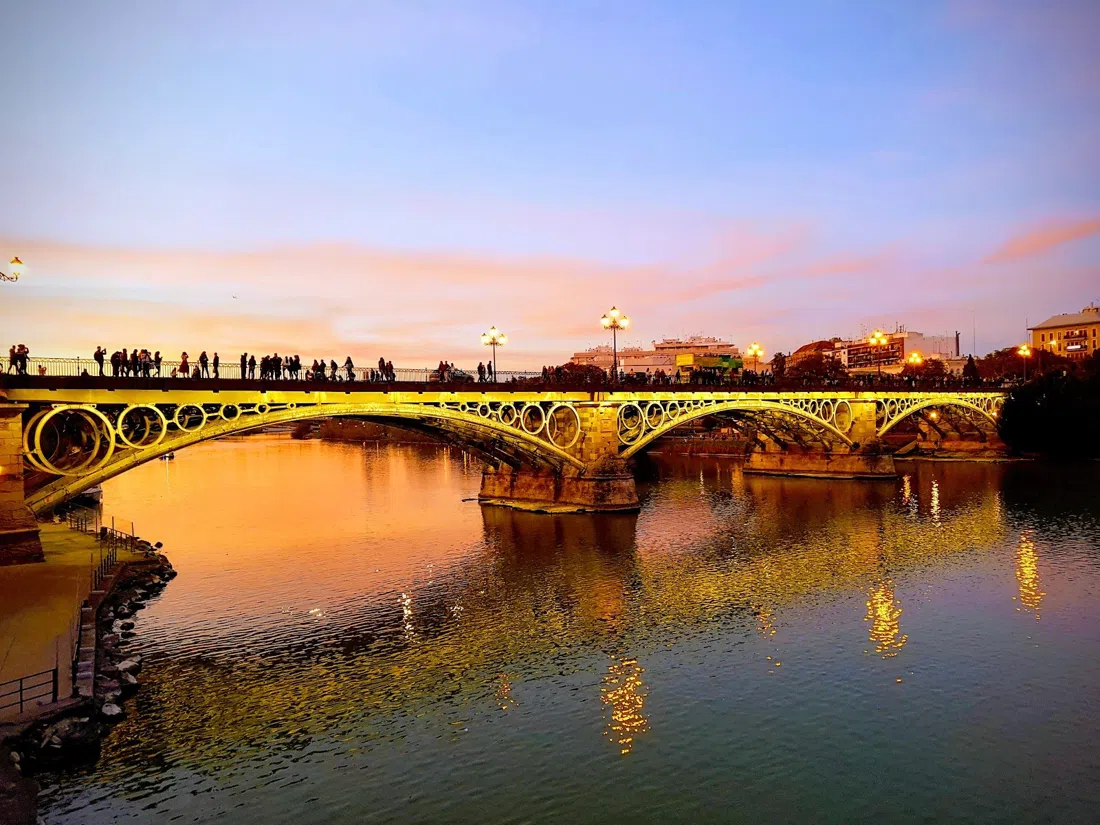
Puente de Isabel II (the Puente de Triana, the barrio's front door) is free, public and permanently open, which makes it the natural beginning and end of any walk over here. Cross it in the late afternoon from the city side, with the sun dropping behind the rooftops ahead of you, and the whole district arranges itself into one frame: the water, the tiled parapets, the awnings of the riverside terraces trailing away downstream. The mid-nineteenth-century ironwork is the defining image of the place, and everybody stops on it. The pavements are narrow and busy, so a group should stand on the downstream side rather than plug the walkway while one person takes the photograph. In October the same span can turn on you inside the hour. The handrails go slick, the open deck funnels the wind off the river, and a shower that would be a novelty in August becomes a reason to have the market or a chapel already picked out.
The bridge delivers you onto Plaza del Altozano (the open square where Triana begins), where the bridge, the market and the site of the old castle all land in the same space. It is the obvious meeting point, every walking group in the barrio forms up here, and it costs nothing to stand in. The Castillo de San Jorge beneath the square, the Inquisition site that guidebooks still list, is closed to visits. Only its entrance hall is working, as a tourist information desk, roughly 09:30 to 14:30 daily. Do not plan a morning around it; plan it around the market instead.
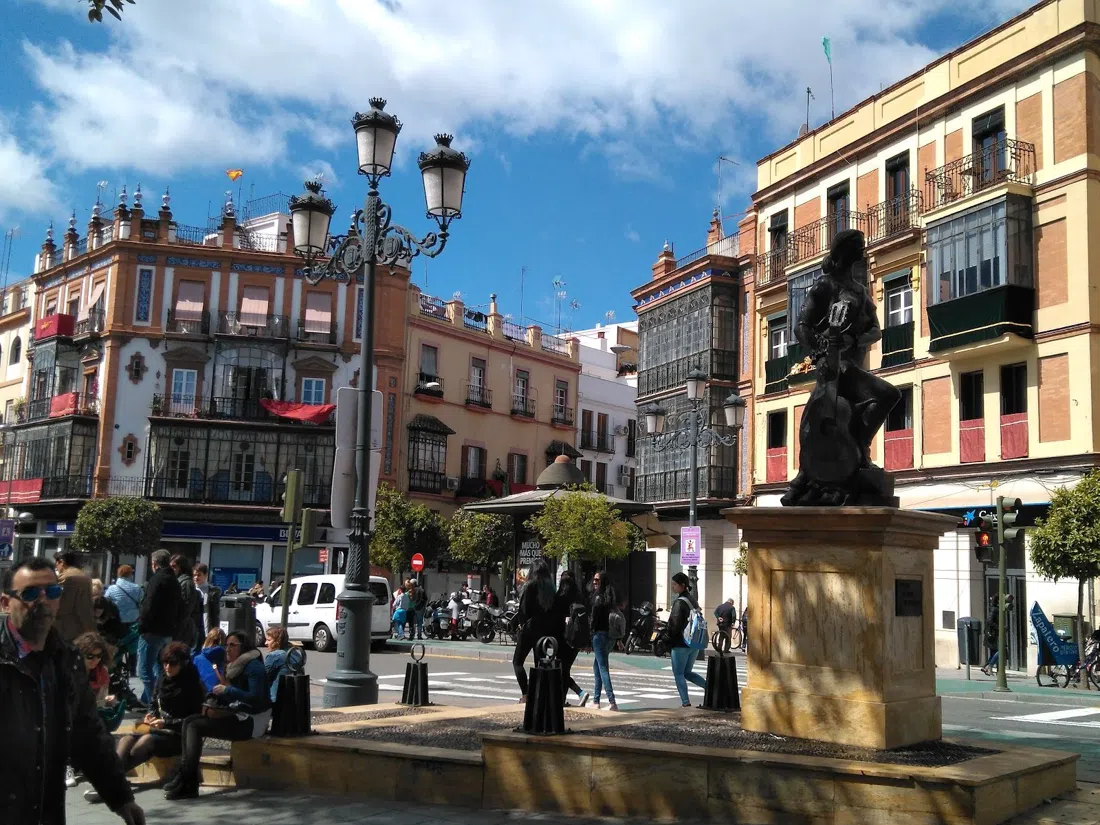
The market, and why two in the afternoon is the deadline
Mercado de Triana (Altozano, built into the castle foundations) is the anchor of any visit here and the one stop that works in rain. It is also the stop people get wrong by arriving late. The produce stalls (the fish, the olives, the spice counters, the reason the building looks like a market rather than a food court) run Monday to Saturday from 09:00 to 14:30 only. The bars inside keep going from 09:00 to 17:00 and again from 18:00 until midnight. Turn up at four in the afternoon and you will get a decent plate of something at a counter surrounded by shuttered stalls. Turn up before 14:00 and you get the real thing.
Prices are honest and unchanged by tourism in any way that matters: tapas run €3-6, a glass of beer or wine €2-3.50, and a proper graze across several counters lands at €15-25 a head. The aisles are wide enough to swallow a crowd, but the counters themselves seat only two to four people, so a party above six will end up split across stalls, which is fine, and probably the better way to eat here anyway. Several stalls will take a group booking by phone if you want to avoid the shuffle. Walk-in otherwise; there is no door policy and never has been.
Where all those tiles come from
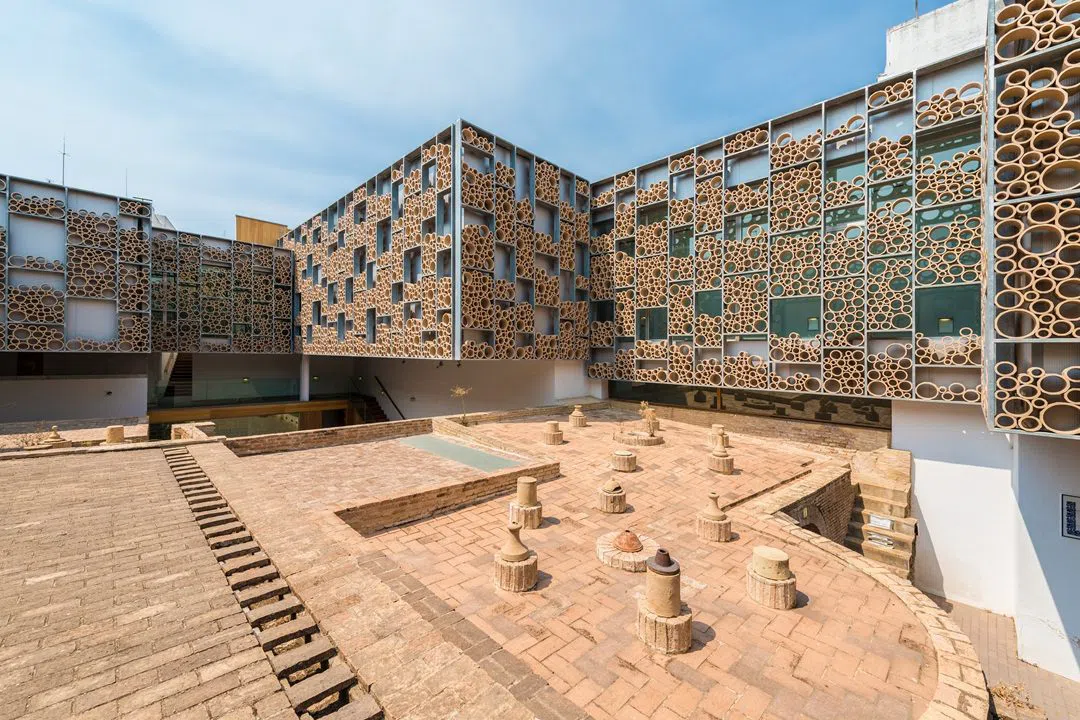
Centro Cerámica Triana (Calle Antillano Campos, a few minutes inside the barrio from the market) is the single best indoor hour on this side of the river, and the thing that explains every tiled facade you have been photographing outside. It is built over excavated kilns, and it treats the ceramics trade as industrial history rather than decoration: who fired what, for whom, and why a working-class quarter ended up supplying glazed tile to half the country. Entry is around €2-3, with free slots and concessions for students and seniors. It closes on Mondays and otherwise runs Tuesday to Sunday, roughly 10:00 to 19:00. It is a small building: fine for a group of up to about fifteen if they spread out, bookable in advance by phone for a guided group visit, and comfortably ruined if two coach parties arrive at the same moment. Mid-morning or late afternoon on a weekday is the way to have it to yourself.
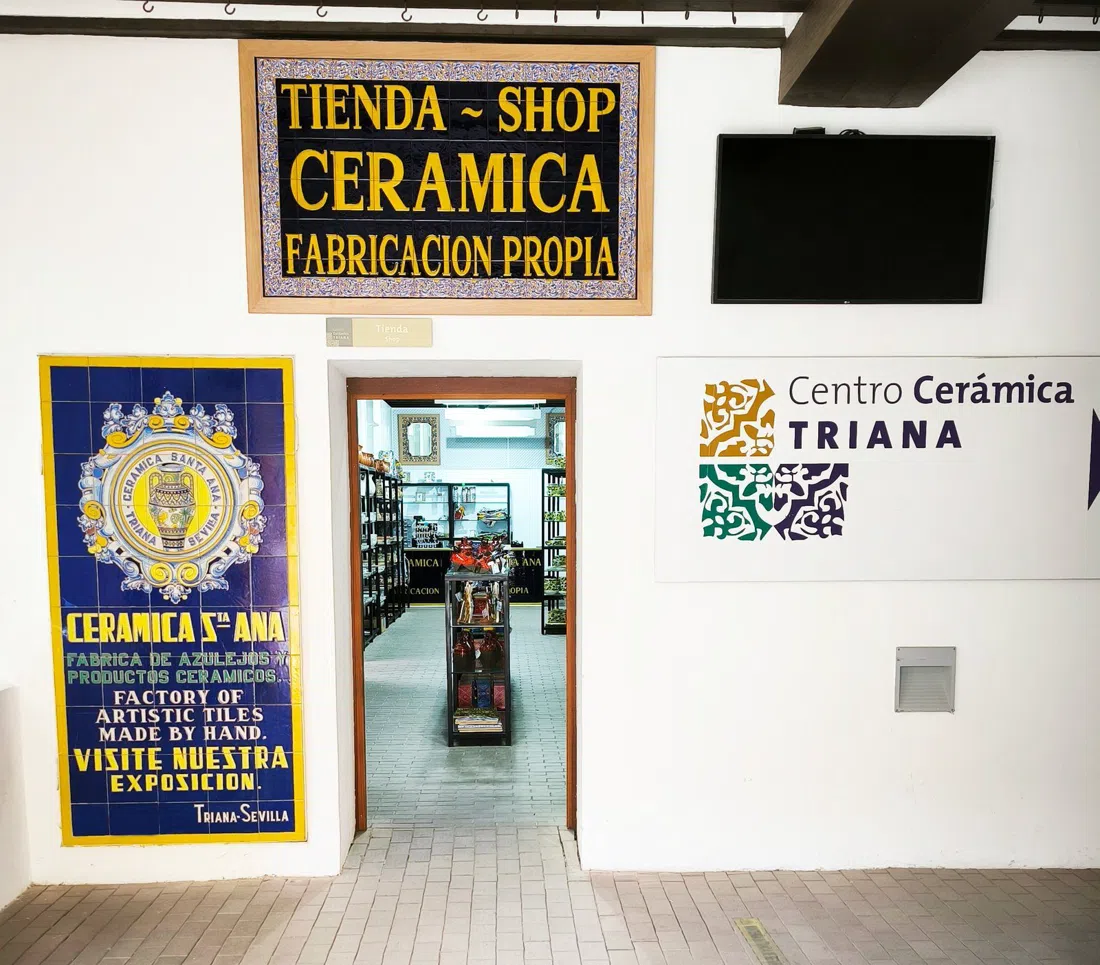
For the commercial end of the same story, Cerámica Santa Ana (on the Altozano, a minute from the bridge) has been trading since the nineteenth century and its own tiled frontage is worth the photograph whether or not you buy. Small painted pieces go for €5-15; a commissioned tile panel runs into the hundreds. The aisles are tight, so large parties get asked politely to come in waves. Hours are roughly 10:30 to 20:00 Monday to Saturday and 10:30 to 18:00 on Sunday, which makes it the useful Sunday stop in a barrio where the market stalls are shut.
Three buildings the barrio still uses
Real Parroquia de Santa Ana (central Triana, in the lanes off Calle Pureza) is the oldest church in Seville and the one piece of hard history the neighbourhood still administers itself. The cultural visit, nave plus crypt and museum, asks a €3 donation, and entry for prayer is free. The cultural timetable runs October to June, Monday to Friday 10:30 to 19:00 with last entry at 18:30, so an October visit gets far more of this building than a July one does. It is a living parish: mass times override the visitor route, and it can close without notice for a funeral or a brotherhood service. Have a fallback and do not take it personally.
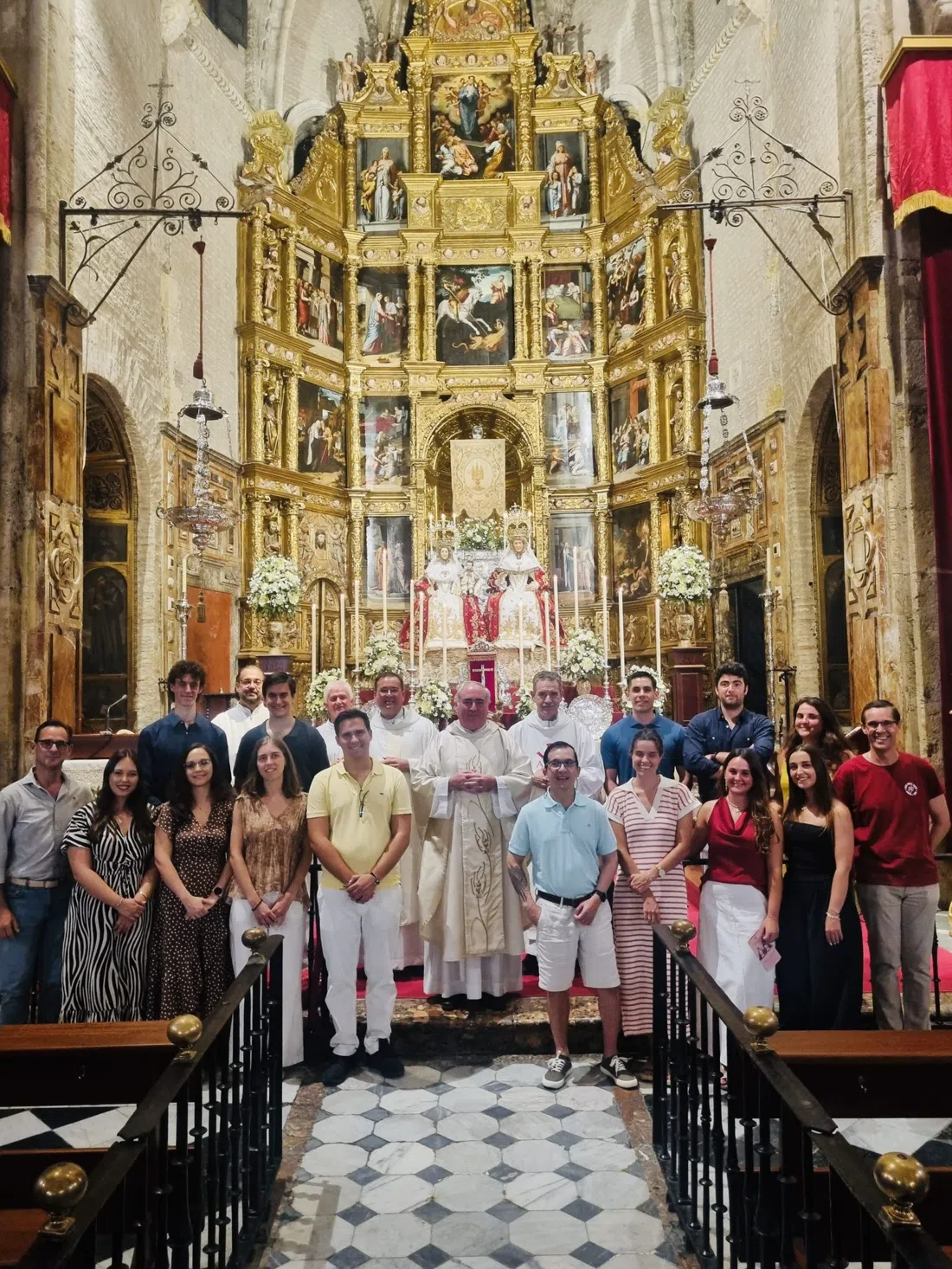
Two minutes away, Capilla de los Marineros (Calle Pureza) is the emotional centre of Triana rather than a sight in any conventional sense. The chapel door is open, entry is free, and groups are welcome provided they stay quiet. The Tesoro Devocional rooms, entered through the shop for a small charge, get cramped above about ten people. Mornings run 10:00 to 13:30 and evenings 17:30 to 21:00, and the evening slot is the one to take, because that is when you watch people from the surrounding streets come in and use it.
If you have the legs, Basílica del Patrocinio (El Cachorro) (north Triana, about fifteen minutes up Calle Castilla from the bridge) holds one of the most famous carved Christs in Spain. Entry is free, hours are Monday to Saturday 10:30 to 13:30 and 17:00 to 21:00, and Sunday mornings only. There is no booking system, so a large party should arrive staggered rather than as a block. The walk up Calle Castilla is half the point: this is the street of the old potteries, and it still reads like a working road rather than a promenade.

The hour before sunset on Calle Betis
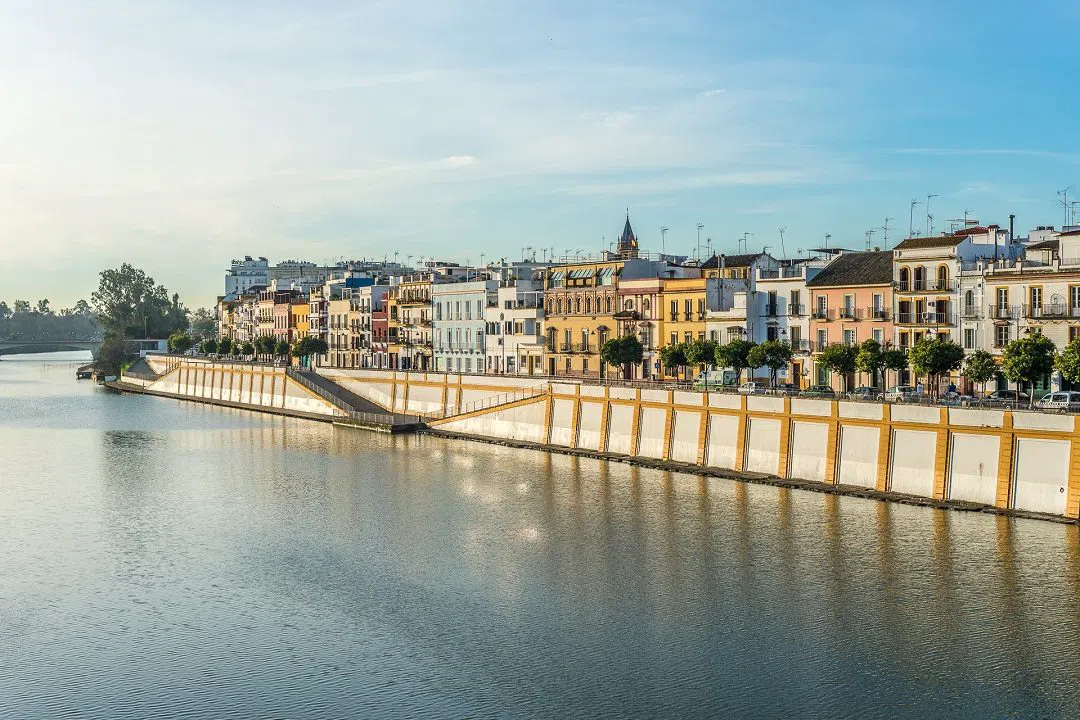
Calle Betis (the riverfront terrace strip, downstream of the bridge) is the best free view in Seville's western bank and the single reason this is a weather-dependent outing. The street is public and costs nothing to walk; the terraces on it are small, and most will not seat a party over six without a phone call first. Terrace drinks run €3-5 and a river-view dinner starts around €30. Go an hour before sunset on a weekday, when the light is doing its work on the far bank and there are still tables; weekends and public holidays pack it solid, and in October the pack-out happens earlier because everyone wants the outdoor hour while it lasts.
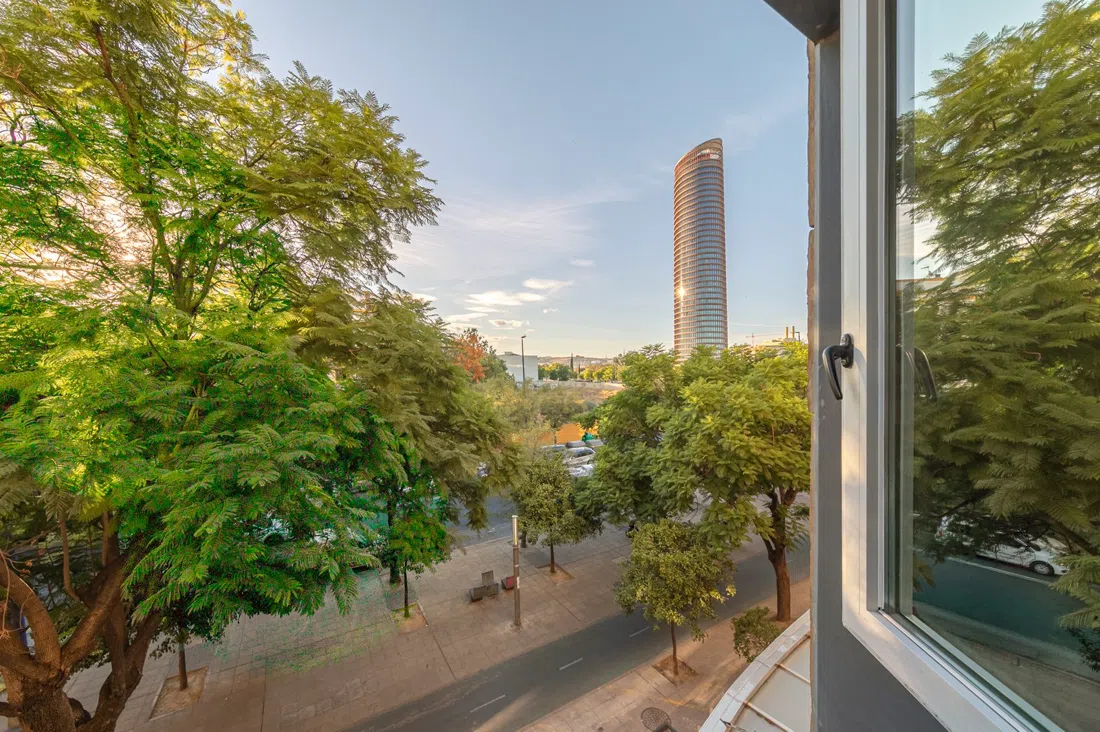
For height, LEVEL 5th (the rooftop of the Hotel Ribera de Triana, at the northern end) is the only proper elevation on this side and the best place to finish a day here. The pool and sundeck are guests-only during the day, which is worth knowing if you have been searching for a hotel with a pool in Triana and expecting to buy your way onto it; the bar, not the water, is what opens to non-guests from the late afternoon until late. Cocktails are around €10-11 and there is no evening entry fee. It takes groups and has event space. It is also an open terrace, so a wet or windy October night closes the experience down; keep it as the plan you confirm on the day. If you would rather sleep over here than commute to it, this side of the river is a quieter, cheaper base than the old centre and still a ten-minute walk from the cathedral, so start with a Seville hotel search and filter for the streets between Pureza and Pagés del Corro.
Eating here without a booking, and when to make one
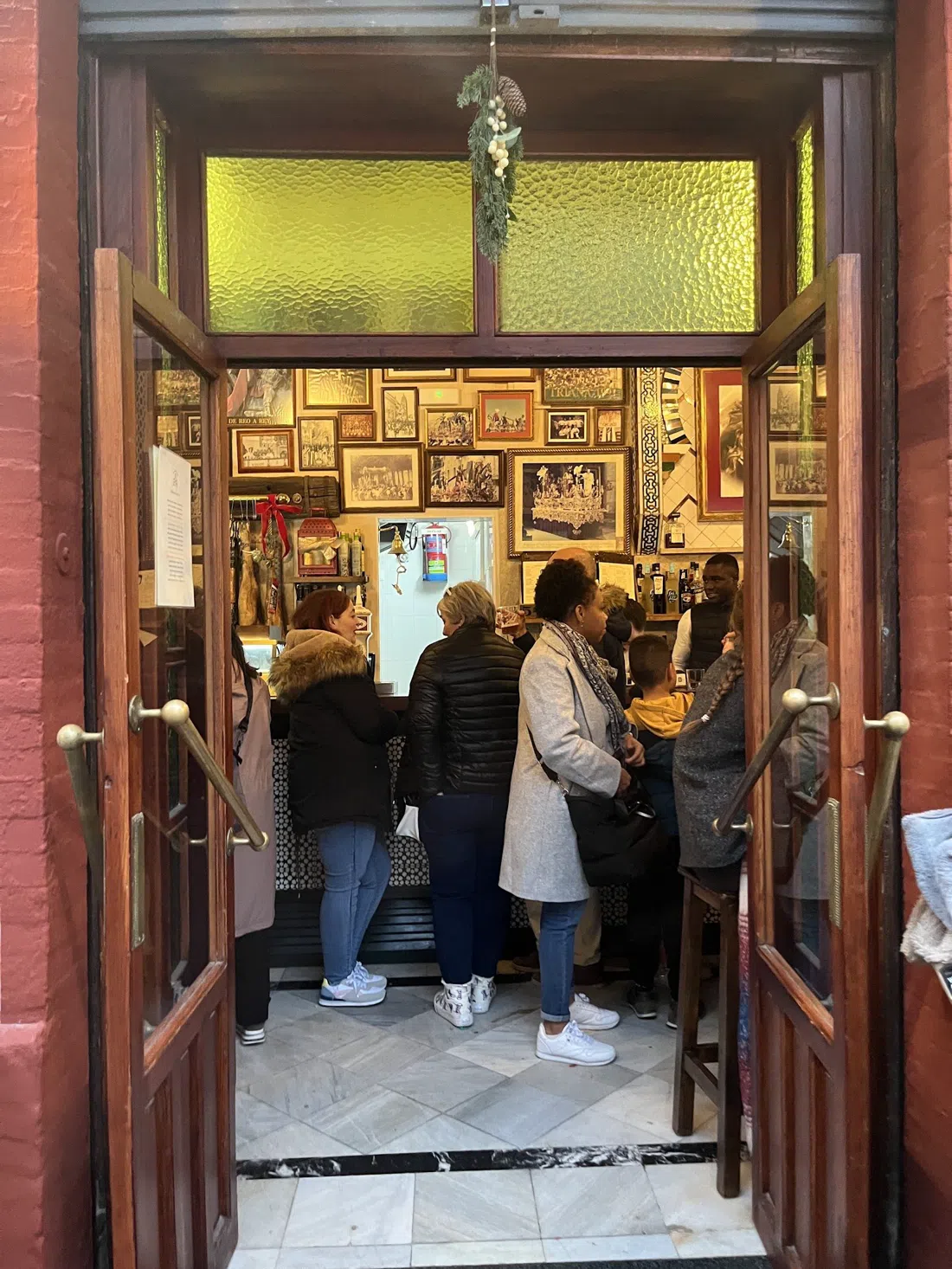
The default mode in Triana is walk in, stand up, order two things, move on. Bar Santa Ana (Calle Pureza, on the walk between the church and the chapel) is the most flexible of the classics: family-run, open 09:30 to midnight so it covers breakfast through to late tapas, tapas €3-6, a tostada and coffee around €4. No reservations, first come first served, and its street tables and long bar absorb a mid-sized group better than almost anywhere else here. Bar Las Golondrinas (Calle Antillano Campos) is the opposite case and the more honest room: open since 1962 with a menu that has barely changed in forty years, tapas €3-5, a round of beers under €10, and almost no floor space. Four is the practical maximum, and it goes shoulder-to-shoulder from about 21:00. For a bigger party, use its sister bar on Pagés del Corro instead of trying to force it.
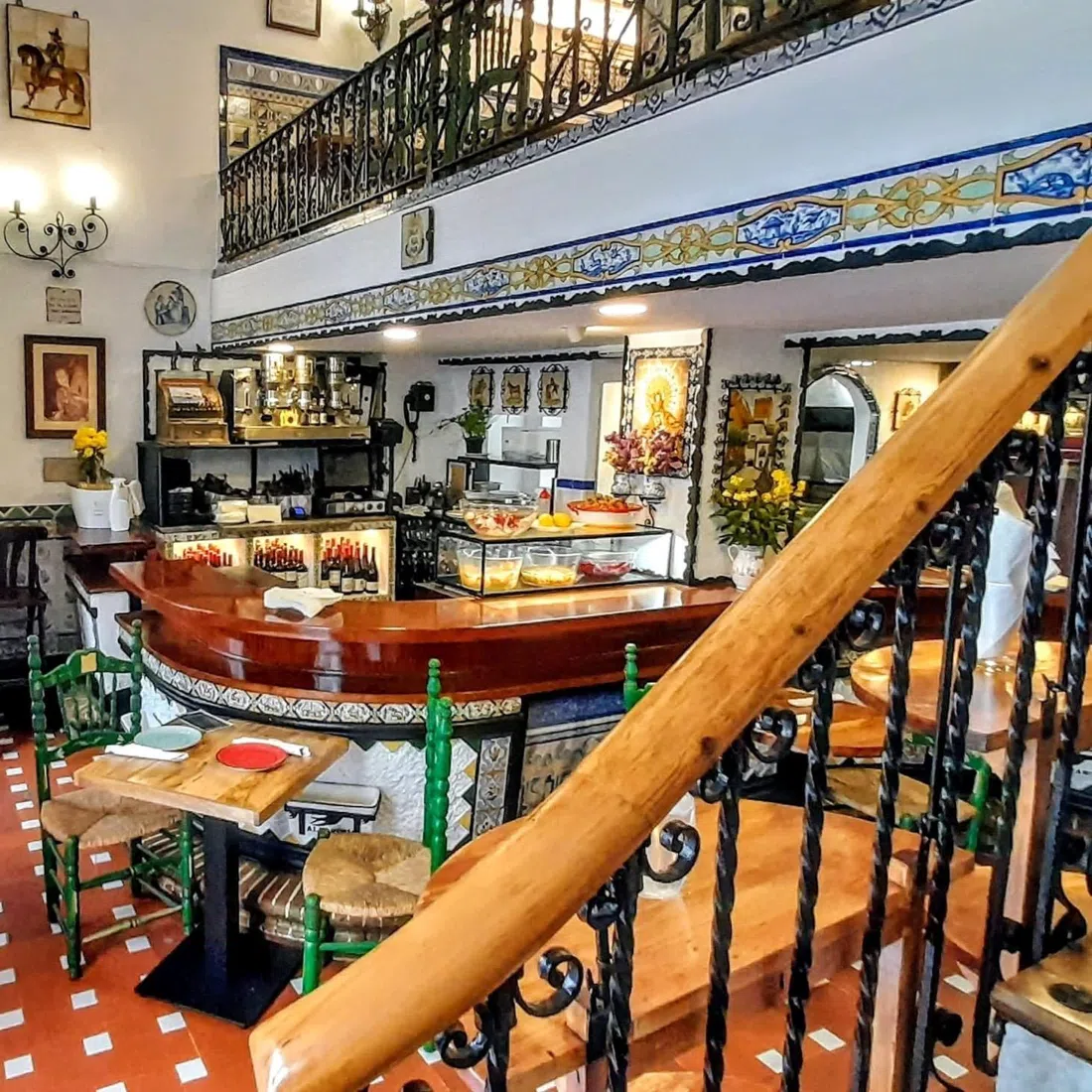
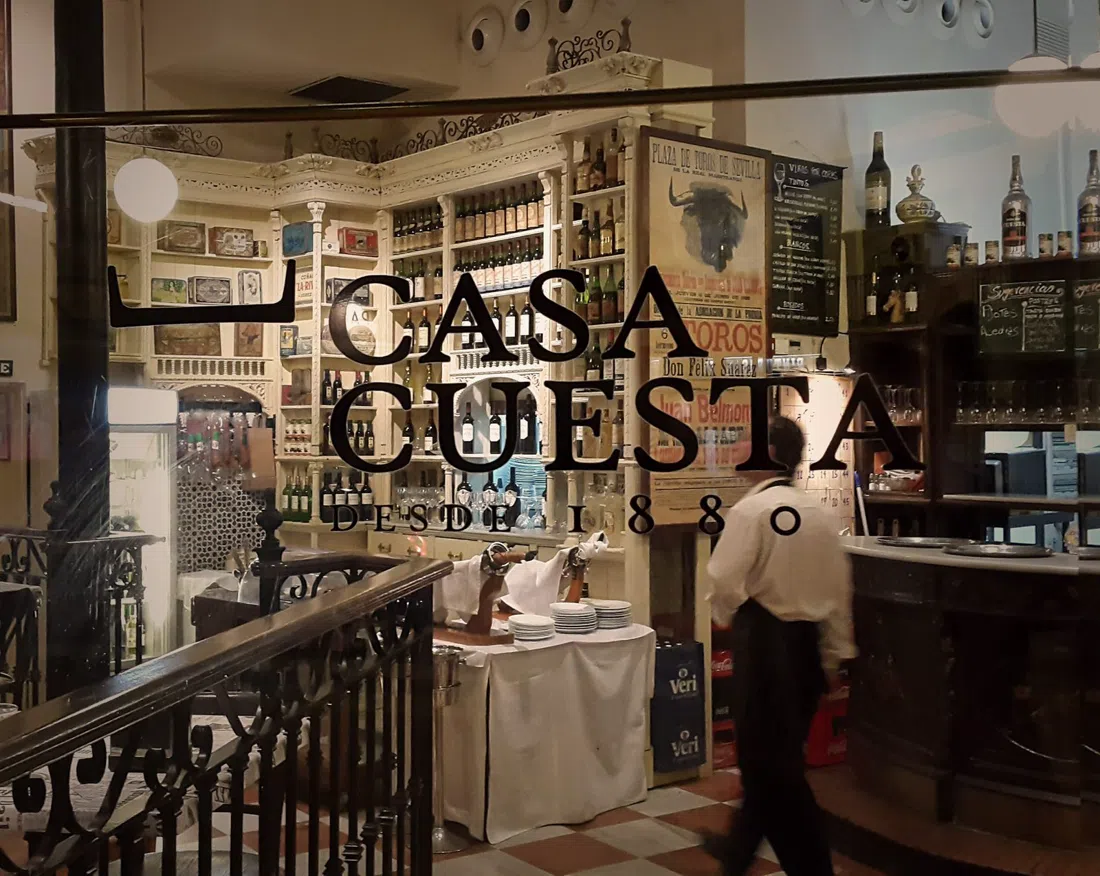
When you want a chair and a tablecloth, Restaurante Casa Cuesta (Calle Castilla, close to the Altozano) has been trading since 1880 and is one of the few Triana institutions with a proper dining room: group bookings and set menus for larger tables, tapas €4-7, mains €14-22, a full dinner €30-40 a head. It serves continuously through the afternoon, which is what you need on the day you miss the market's 14:30 cut-off. At the top end, Abades Triana (Calle Betis, right on the water) is the splurge with the view: mains €25-35, tasting menus upward of €70, private dining rooms and a terrace, and the most capable large-party venue on the river. Its glass frontage means the panorama survives an October downpour intact. Service runs 13:30 to 16:00 and 20:00 to midnight, Monday to Saturday, and the window tables need booking well ahead.

Flamenco at half four, and a kitchen for a wet afternoon
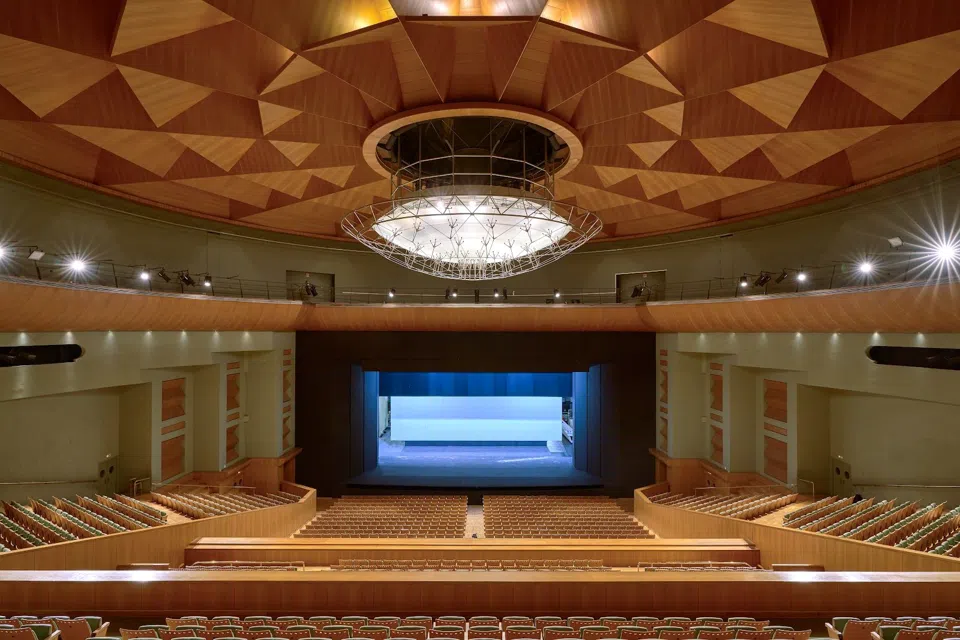
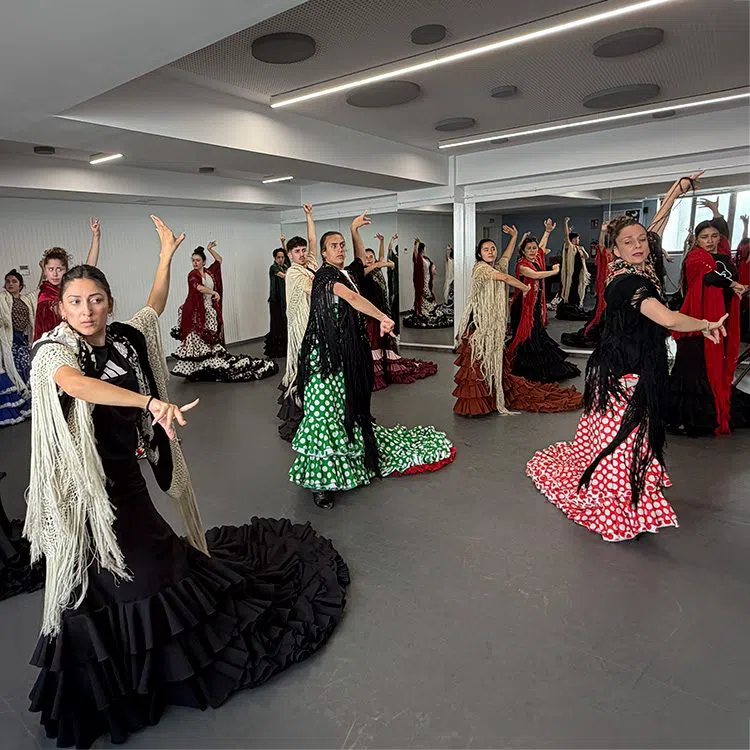
Teatro Flamenco Triana (Calle Pureza) is the real flamenco venue left in the barrio now that Casa Anselma has gone, and it is honest about what it is: a purpose-built theatre, not a bar where something might happen. Tickets are €25-27 for adults, around €20 for students and over-65s, €15 for children, and the show runs about an hour. There are four daily slots, at 16:30, 18:00, 19:30 and 21:00. The tiered seating means a party of twenty all see the feet, and there is a dedicated group and agency booking desk. In October, take one of the earlier slots: the evening performances fill first, and a 16:30 show also leaves the whole sunset hour on the river free.
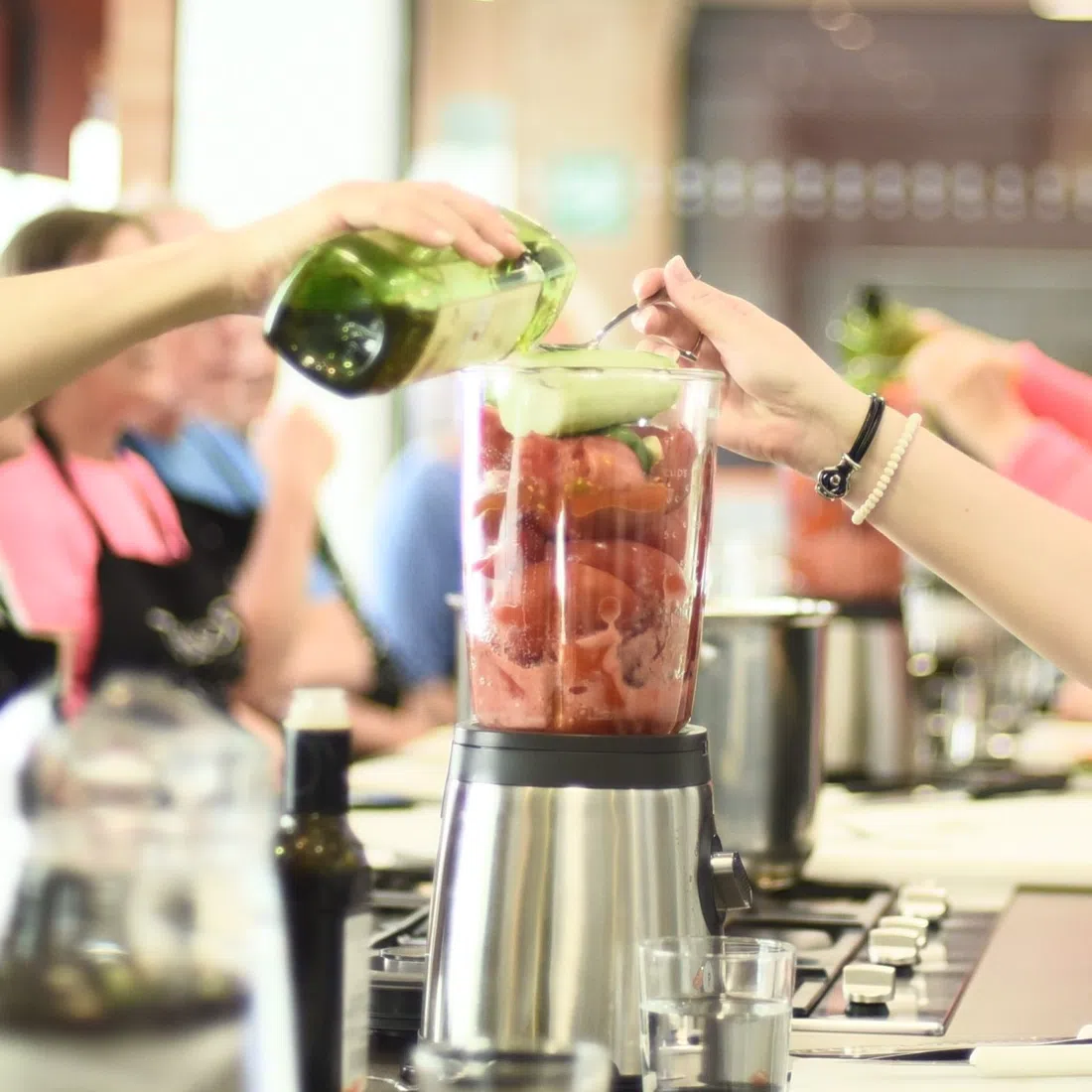
If the forecast collapses, Taller Andaluz de Cocina (inside the market building) is the strongest indoor option in Triana and the best group booking in the district. Around €70-90 a head buys a three to three-and-a-half-hour class in English with a trained chef, opened by a walk-through of the market stalls and closed by eating what you cooked with wine or beer. Private group classes are bookable directly and the market tour is built for a dozen or more. It is fully indoors, which is the whole argument for having it in your back pocket on a rained-off afternoon.
How long it takes and the best time of day
The honest minimum is three hours: the bridge, the market before it shuts, one church and the ceramics centre. A proper day is two blocks with a gap in the middle. Arrive around 10:00 for the market and the indoor hours, break in the afternoon, then come back at 17:30 for the chapel, the river at golden hour, a rooftop drink and tapas from 21:00. Tuesday to Friday is the sweet spot. Monday loses the ceramics centre entirely and dents the Santa Ana cultural visit; Sunday loses the market stalls, though Cerámica Santa Ana opens and the Patrocinio runs its morning slot.
At the door or booked ahead
Almost everything in Triana is walk-in and free or nearly free: the bridge, the square, the river street, the chapel, the Patrocinio. The only things that genuinely need booking are the flamenco theatre (particularly the evening shows), the cooking class, a window table at the riverside fine-dining room, and any group over six at a terrace or a market counter. A guided option covering this side of the river also exists and is attached to this page as a card rather than described here; across those bookable tours there are 6,727 traveller reviews, with the top-rated one at 4.9 out of 5 from 2,420 reviews. They run seven days a week and start from 40 USD per person, which is roughly the price of a good lunch and makes sense mainly if you want the history narrated while you cover ground quickly. On foot and unguided, the same ground costs you a €3 donation and a market lunch.
Is it worth it
Yes, without hedging, but understand what you are buying. Triana is not a monument you tick; there is no queue, no headline building, no single view you came for. It is an hour of ceramics history, a church older than anything on the other bank, a chapel people actually pray in, a market with real fish in it, and a riverfront that pays you back for standing still at the right time of day. It suits walkers, eaters and anyone on a second or third day in the city who has had enough of ticket lines. It suits couples best in the small bars and groups best in the theatre, the cooking school and the two restaurants with real dining rooms. It suits nobody chasing a blockbuster sight, and the cobbles, narrow pavements and standing-room bars make it hard going for anyone who needs flat, roomy access.
Best time to go in October
Early October still hands you high-summer afternoons with none of the punishment: comfortable warmth in the middle of the day, evenings that want a light jacket by the water, and the terrace season fully open. By the back half of the month the first proper Atlantic rain arrives, usually in short heavy bursts rather than all-day drizzle, which is the pattern this barrio is built for: duck into the market, the ceramics centre or a chapel for forty minutes and come out to a dried pavement. Plan the outdoor half of your day (the bridge crossing, Calle Betis, the rooftop) as the movable part, and the indoor half as fixed. Weekday evenings are notably calmer than weekend ones, and the river street starts filling well before sunset either way. The one real gamble of the month is the rooftop, since an open terrace in a wind-driven shower is shut as an experience; decide that one on the morning of.
The practical part
Walk in. From the old centre it is ten to fifteen minutes on foot to the bridge, and walking over is the whole point; taxis will drop you at the Altozano if you need them, and city buses serve Pagés del Corro on the far side. Carry cash: the market counters and the oldest bars are quickest with coins and small notes even where cards work, and the church donations are cash only. Budget roughly €25-35 a head for a full day of market tapas, a church visit and a terrace drink; €55-70 with a flamenco ticket; €120 and up if you add the riverside tasting menu or the cooking class. Opening hours are the real constraint here rather than money: the market stalls at 14:30, the ceramics centre closed Mondays, the chapel's split morning and evening, the Patrocinio's Sunday mornings only. Pin those four on your plan and the rest of the day arranges itself. For the other bank, the cathedral, the Alcázar and the rest of the city, start from the Seville guide.
Questions
Is crossing the bridge into Triana worth it in October?
Yes, and October suits it better than high summer. The Santa Ana cultural visit runs on its October-to-June timetable (Mon-Fri 10:30-19:00, last entry 18:30), the riverside terraces on Calle Betis are comfortable all day rather than only after dark, and the first autumn showers are short enough to sit out inside the market or the ceramics centre. Treat the outdoor half of the day, meaning the bridge, Calle Betis and the rooftop bar, as the movable part of the plan.
What time does Mercado de Triana close, and when should I arrive?
The produce stalls run Monday to Saturday 09:00-14:30 only; the bars inside keep going 09:00-17:00 and 18:00-midnight. Arrive before 14:00 if you want the building to look like a working market rather than a row of tapas counters among shutters. Tapas are €3-6, a glass of beer or wine €2-3.50, and a full graze across stalls €15-25 a head. On Sundays the stalls are shut, so make Cerámica Santa Ana your stop instead.
Do I need to book flamenco in Triana ahead?
For the evening shows, yes. Teatro Flamenco Triana runs four one-hour performances a day at 16:30, 18:00, 19:30 and 21:00, at €25-27 for adults, around €20 for students and over-65s and €15 for children. The evening slots fill first in October, so book an earlier one; a 16:30 show also leaves the whole sunset hour on the river free. There is a dedicated group desk, and the tiered seating means a party of twenty all see the feet.
Is accommodation in Seville's Triana a good base, and can I use a hotel pool there?
It is a quieter, generally cheaper base than the old centre and still ten to fifteen minutes' walk from the cathedral over the bridge. The streets between Pureza and Pagés del Corro are the sweet spot. The sundeck and pool at the Hotel Ribera de Triana are guests-only by day, while the LEVEL 5th rooftop bar is open to everyone from the late afternoon, cocktails around €10-11 with no entry fee in the evening.
What do I do in Triana if it rains?
There are four reliable indoor hours. Mercado de Triana works in any weather; Centro Cerámica Triana is a small ticketed museum at around €2-3 (closed Mondays, Tue-Sun roughly 10:00-19:00); the Capilla de los Marineros is free and open 10:00-13:30 and 17:30-21:00; and Abades Triana keeps the river panorama behind glass. For a washed-out afternoon, the three to three-and-a-half-hour cooking class at Taller Andaluz de Cocina, around €70-90 a head including the market walk and the meal, is the fully indoor fallback.
First published on sevilleholidays.com, the Seville guide.