
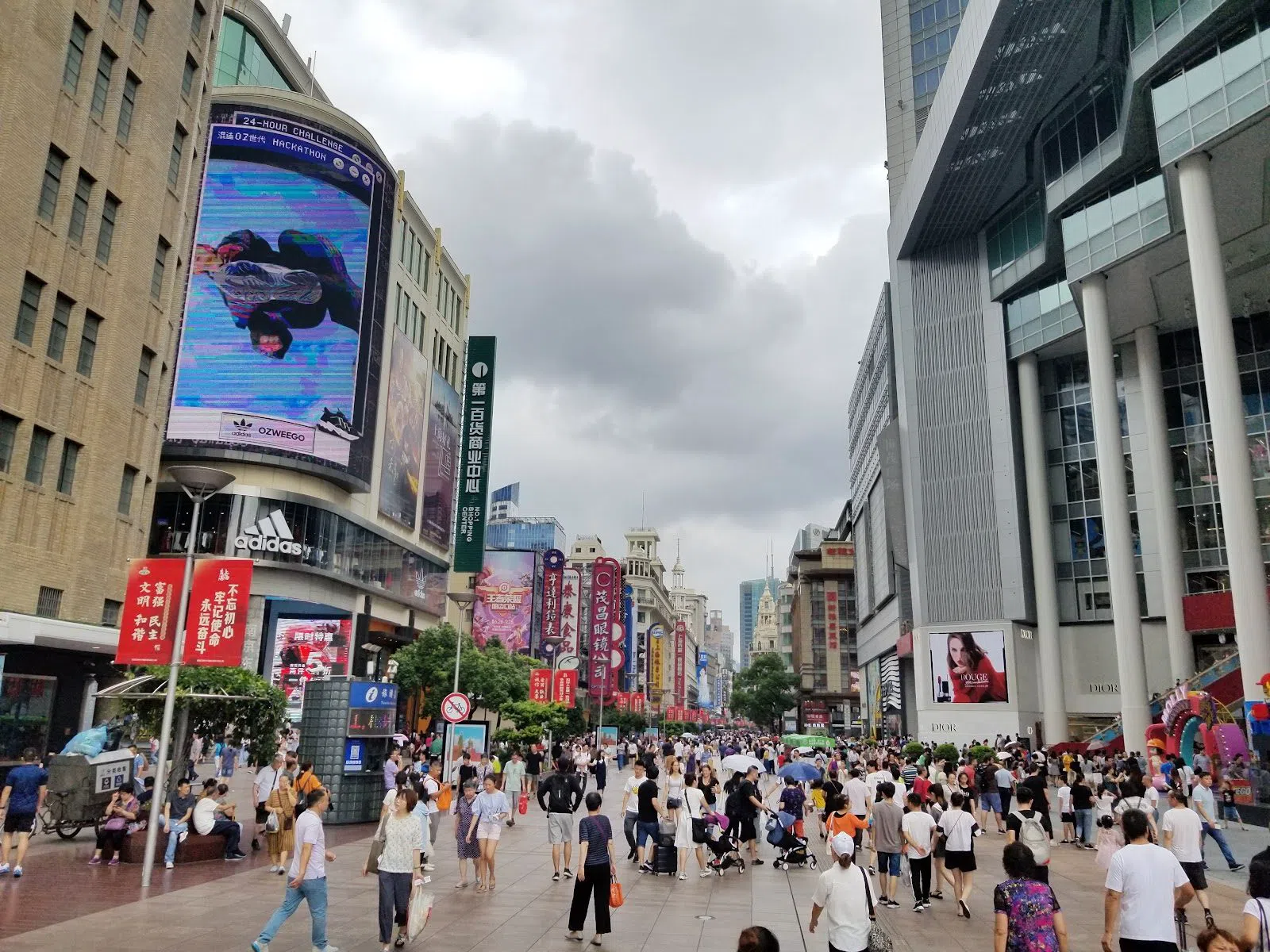
Nanjing Road runs one kilometre of car-free pavement from People's Square down to the edge of the Huangpu, and its two ends have almost nothing in common. The western end hands you three free museums, a park and a weekend marriage market; the eastern end delivers you into the 1930s banking facades of the Bund. The retail in between is mostly chains. The reason to walk the full length is the handful of century-old businesses still trading on it, not the storefronts either side of them.
What you are actually walking
The Nanjing Road Pedestrian Street (East Nanjing Road) is a one-kilometre car-free run between Middle Henan Road and People's Square. It is fully public, open 24 hours, free, and has no door policy of any kind. Walked straight through without stopping, it takes 35 to 50 minutes. Walked properly, with two or three stops, one shop and something to eat, budget an hour and a half to two and a half hours, and count anything at either end as separate time on top of that.
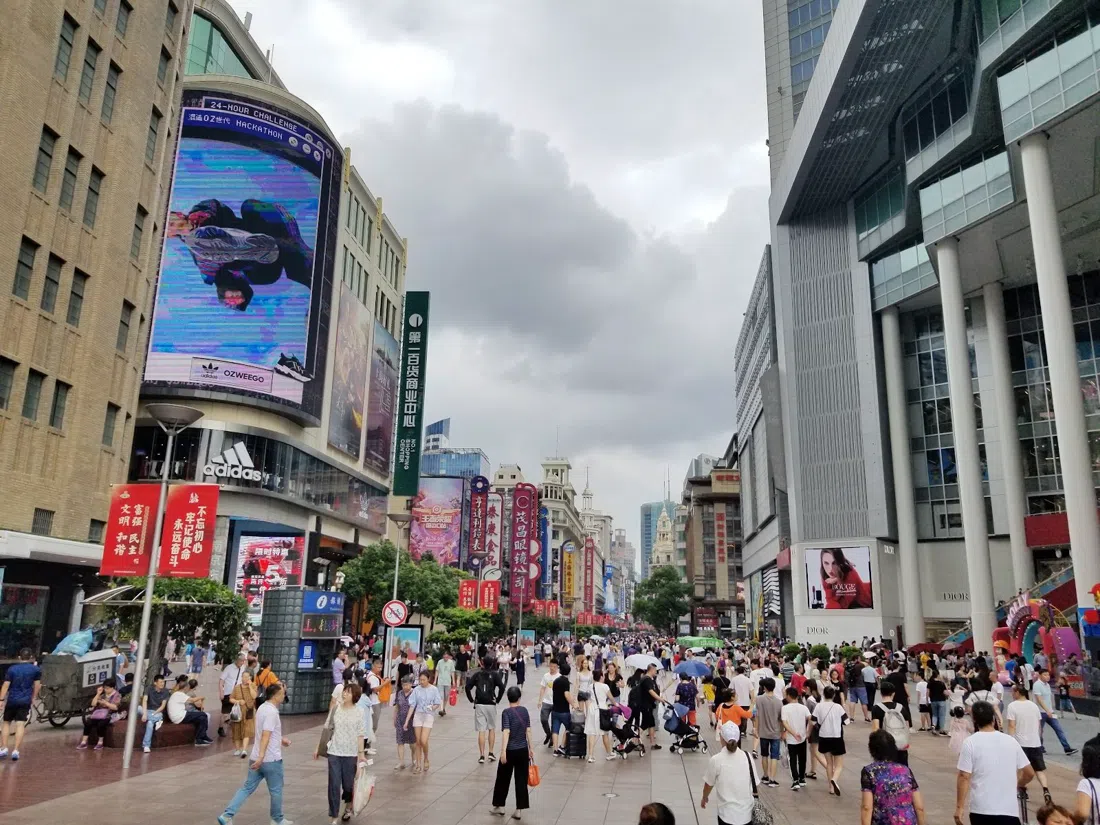
You get a wide pavement under a dense stack of illuminated signage, flanked by international chains, Chinese retail brands and four or five survivors that have held the same addresses for a century. After dark the signage, not the buildings, is what people photograph, which is unusual for a shopping street anywhere. It is not a market, a street-food lane or a bargain hunt. Prices are ordinary city-centre prices.
The street has its own transport. The Dangdang Sightseeing Tram (Nanjing Road pedestrian street) boards at either end, costs ¥5 per ride (about US$0.70) paid on board with no booking, and runs daily from roughly 08:30 to 22:00. The end-to-end hop takes about ten minutes and the cars are styled on the trams that ran here from 1908. With a dozen or so seats per car it is useful for tired feet and small children, and not much more: a party of fifteen will ride in waves rather than together, and riding instead of walking defeats the point of the street. Take it one way, at the end, after you have done the mile on foot.
Which direction to walk it
Walk west to east, from People's Square towards the river. Three reasons. The free museums at the western end close at 17:00 with last entry at 15:00 or 16:00, so they have to come first in the day. The neon only earns its reputation after dark, and it gets denser as you move east. And the Bund is the right place to end, because you arrive at a river and a skyline rather than at a metro entrance. The reverse direction works, but you will be fighting the clock at the museum end and finishing in a shopping crowd.
If you lose people, use the bronze statues along the pavement and the tram stops at either end as rally points. That is what local guides do, because the shop frontages all look alike once a crowd thickens.
The heritage shops that still justify a stop
Four buildings on this street are worth going inside. The rest you can walk past without guilt.
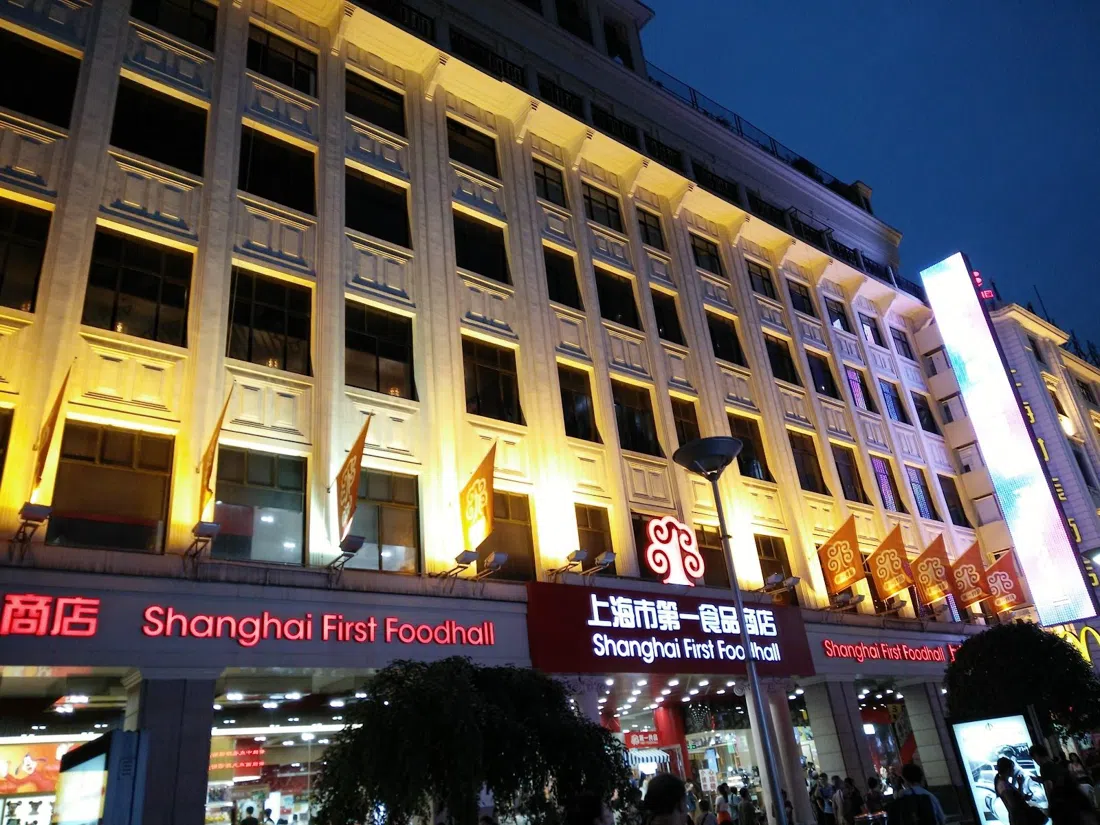
Shanghai First Foodhall (Shanghai No.1 Food Store, 720 East Nanjing Road) is open daily 09:30 to 22:00 and is the single best stop on the street for edible souvenirs, with snacks and gift boxes running roughly ¥20 to ¥150. It is also a far more interesting shop than the chains on either side of it. The catch is the crush: the aisles jam solid at weekends and the ground floor is the worst pinch point in the building. Send a group straight up to floors three and four, where the food court and restaurants are, and let one or two people do the ground-floor buying.
Shanghai No.1 Department Store (830 East Nanjing Road, daily 09:30 to 22:00) is free to enter and browse, with mid-range retail you have seen before. Two other things make it worth the door. China's first department store escalator and first basement retail level were installed here, which the building still trades on, and the rooftop deck gives the best free overhead view of the street you will get anywhere on the mile. The fifth-floor hot pot is the other thing a group will actually want. Both the roof and the fifth floor bottleneck at the lifts, so stagger your party rather than arriving as one block.
Wing On Department Store (Yong'an, 635 East Nanjing Road) was founded in 1918 by the Guo family on their return from Australia and passed its 107th year in 2025. The facade is a better reason to stop than the stock inside. It has revived its balcony concerts, which spill onto the pavement and pull a standing crowd. Pleasant if you are watching, less so if you have told six people to wait below, because they will be in the middle of it.
Eating on the route without a long detour
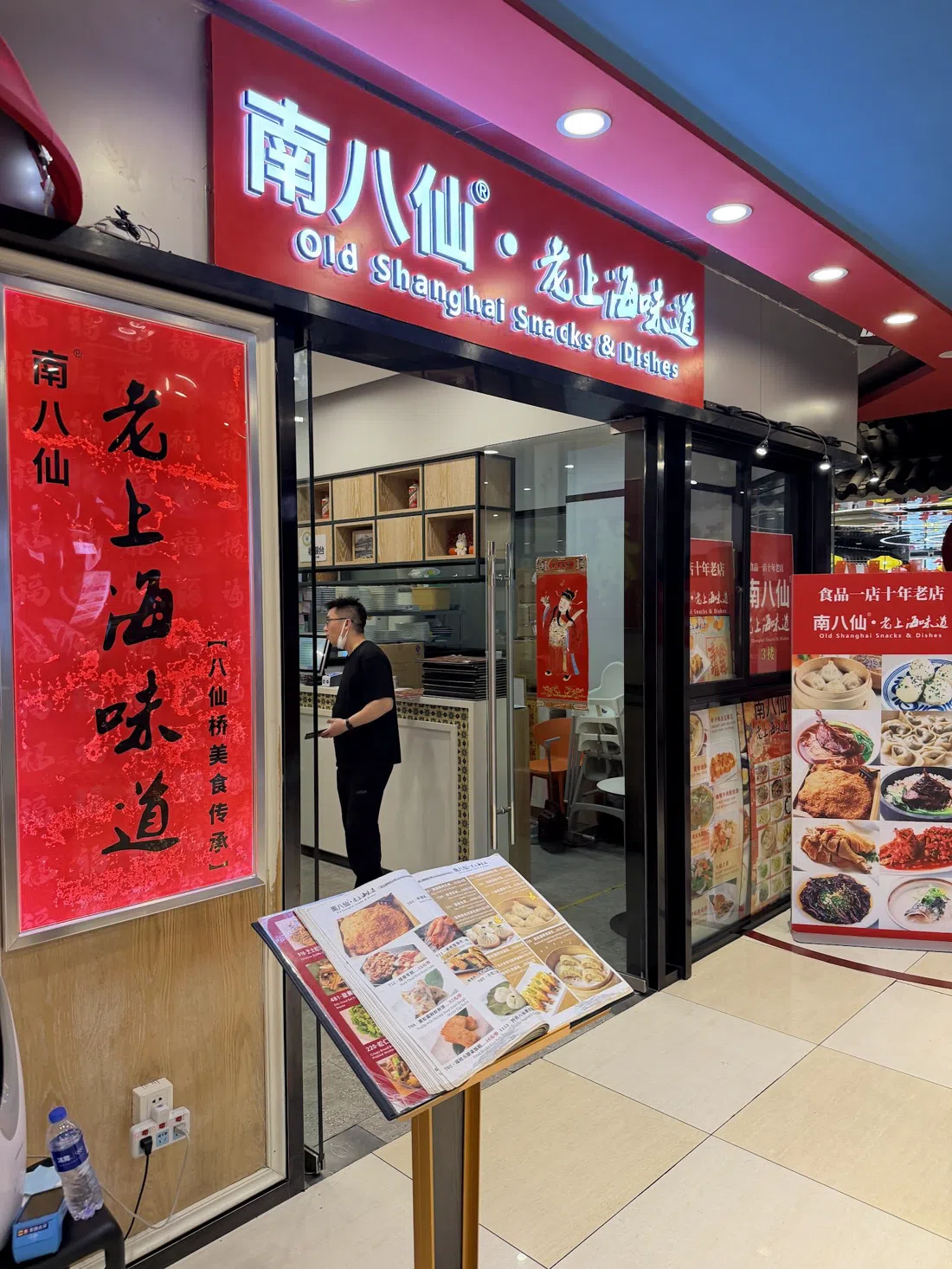
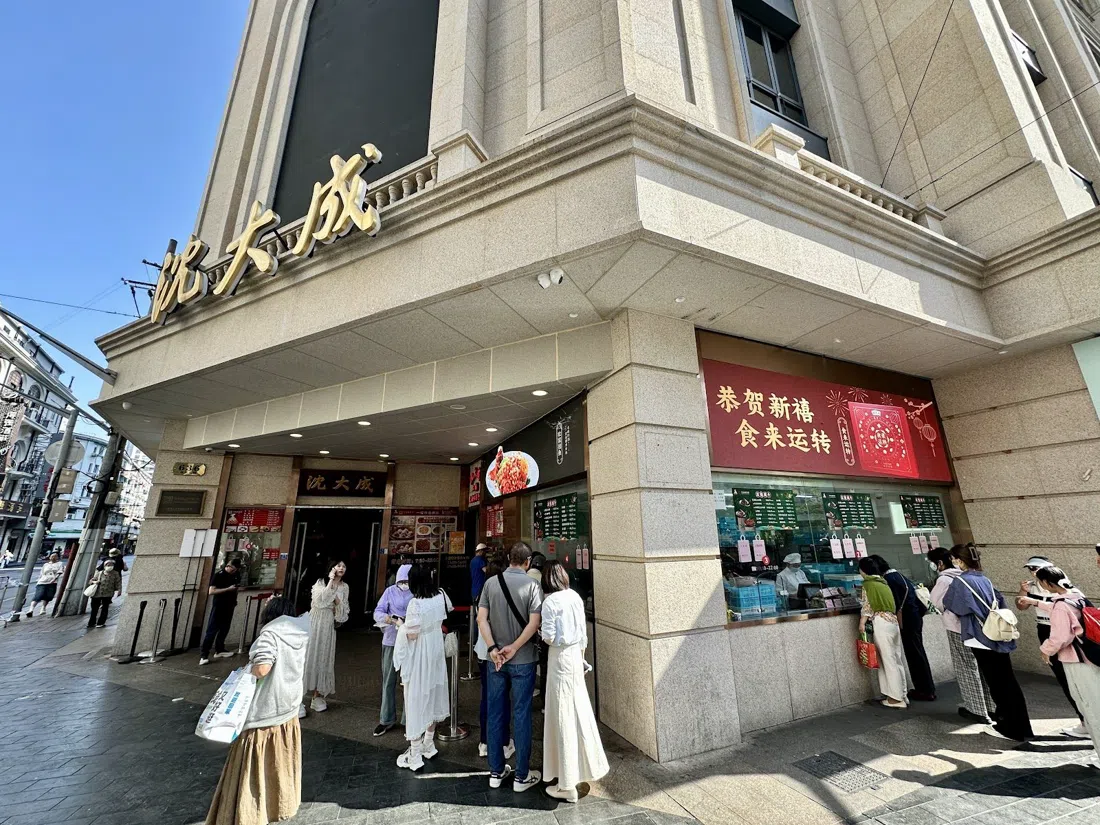
Shen Da Cheng (636 East Nanjing Road) was founded in 1875 and turned 150 in 2025. Its dim sum techniques are listed as Shanghai municipal intangible cultural heritage, and the thing to order is the double-stuffed glutinous rice ball. Items run ¥10 to ¥40. There is a takeaway window, a noodle floor, and a sit-down restaurant upstairs. The queue at the window is effectively permanent, so do what everyone else does and send one person to buy for the whole group rather than all queueing.
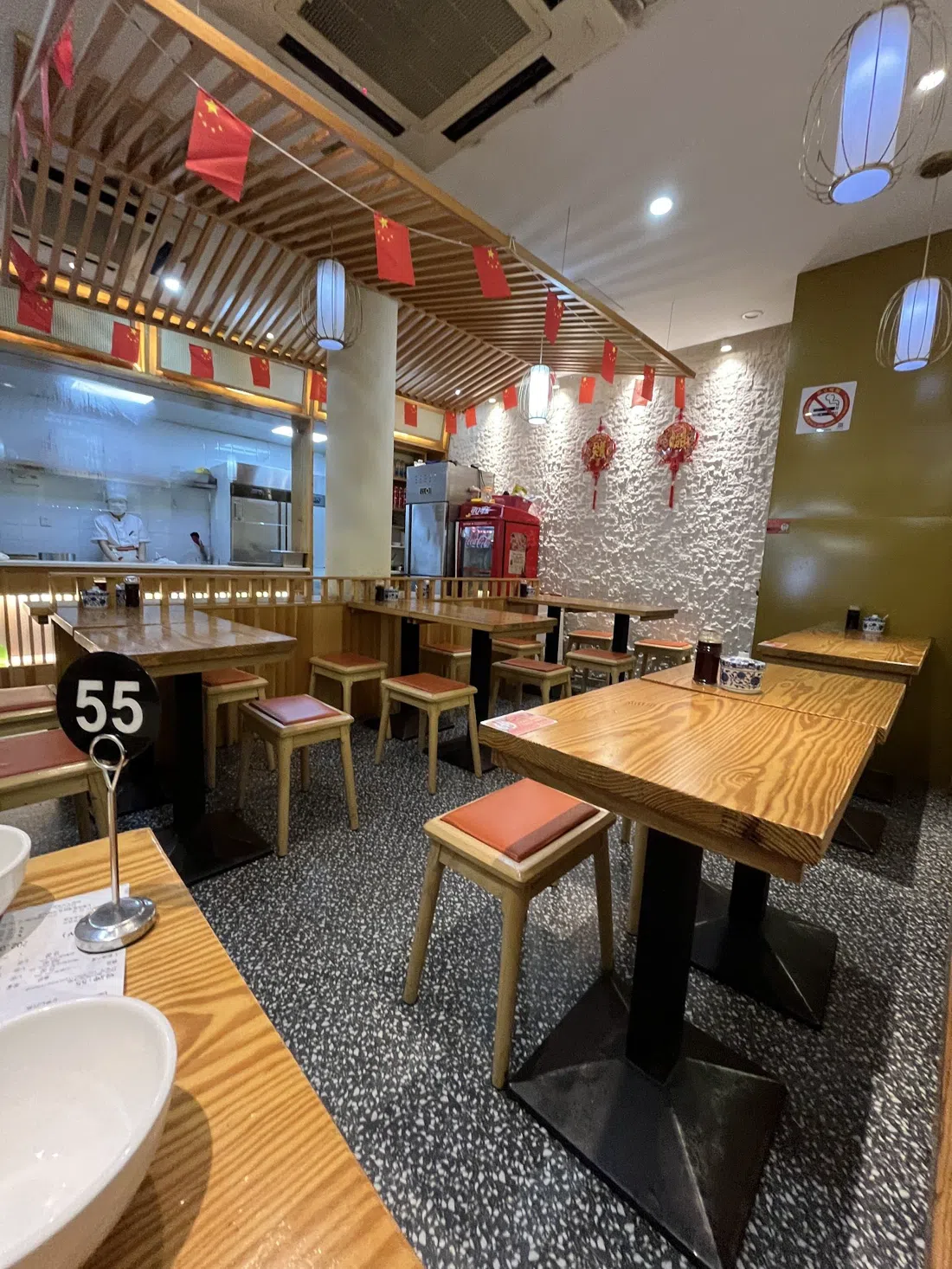
Jia Jia Tang Bao (Huanghe Road) is the long-running soup dumpling institution of the Nanjing Road end, five to ten minutes' walk from People's Square station, open daily 07:30 to 20:30, ¥25 to ¥60 a head. It is a very small room with a near-permanent pavement queue and takes no reservations. That makes it excellent for two to four people and impractical for anything larger. Arrive before 11:30 or after 13:30 and the queue is survivable; at 12:30 it is not.
The free museums at the People's Square end
This is where Nanjing Road becomes a half-day rather than a walk, and all three are free.
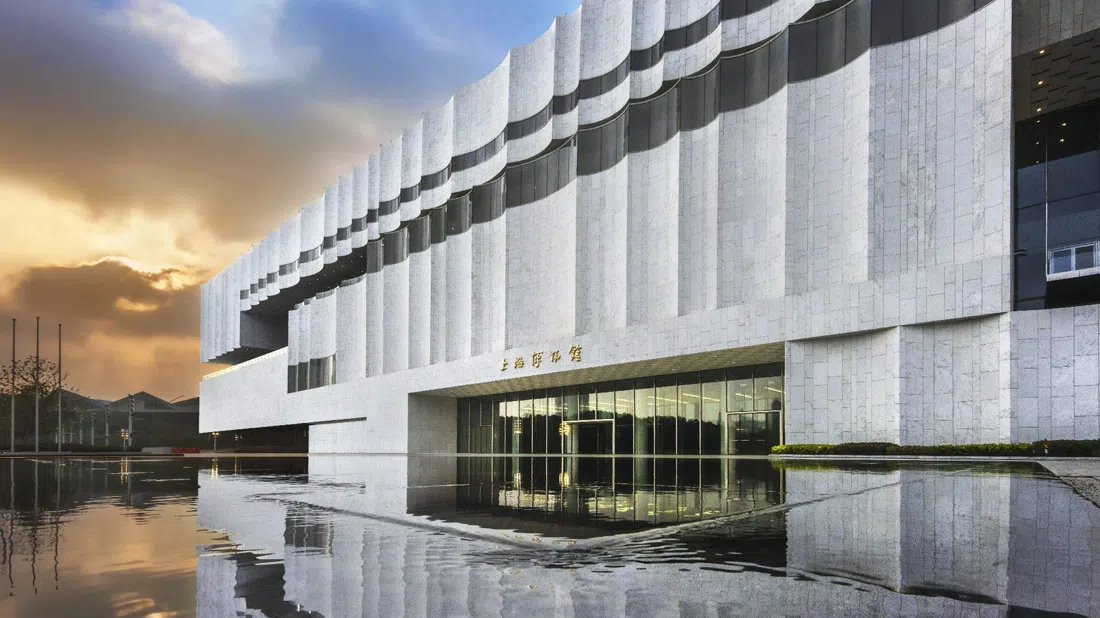
Shanghai Museum (People's Square) opens 09:00 to 17:00 with last entry at 15:00, closed Mondays except public holidays. General admission is free, but a free timed-entry reservation is required while the Ancient Civilizations of the Americas programme runs, and the 2026-27 Inca exhibition On Top of the World Tree takes floors one to three, which makes advance booking essential rather than advisable. The special exhibition is ticketed separately from free general admission. Groups go through the museum's reservation system, not the walk-up queue. Turning up with twelve people and no slots will not work.
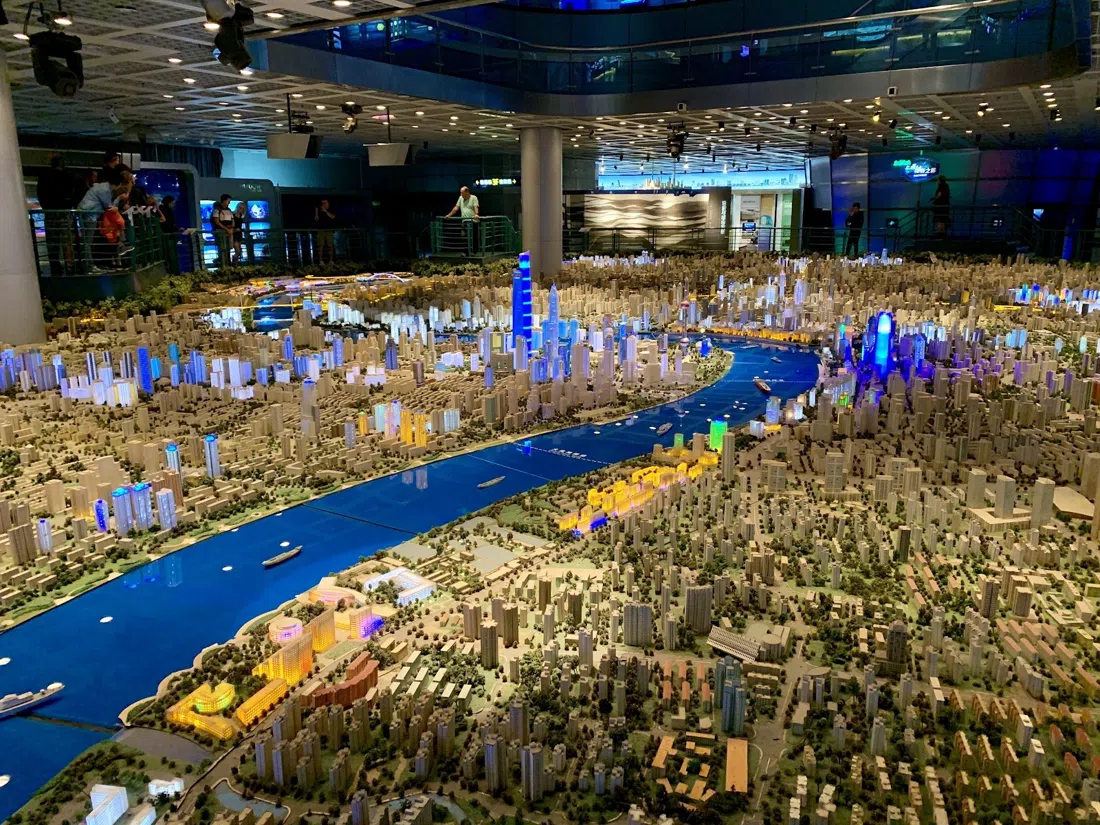
Shanghai Urban Planning Exhibition Center (People's Square) is free, open Thursday to Tuesday 09:00 to 17:00 with last entry at 16:00, and closed Wednesdays. Every visitor must show a passport or ID at the door, so have documents out of your bag before you reach the front. The panoramic city model is the best twenty minutes on this list for understanding what you are about to look at from the Bund, and it is entirely indoors, which matters more than it sounds.
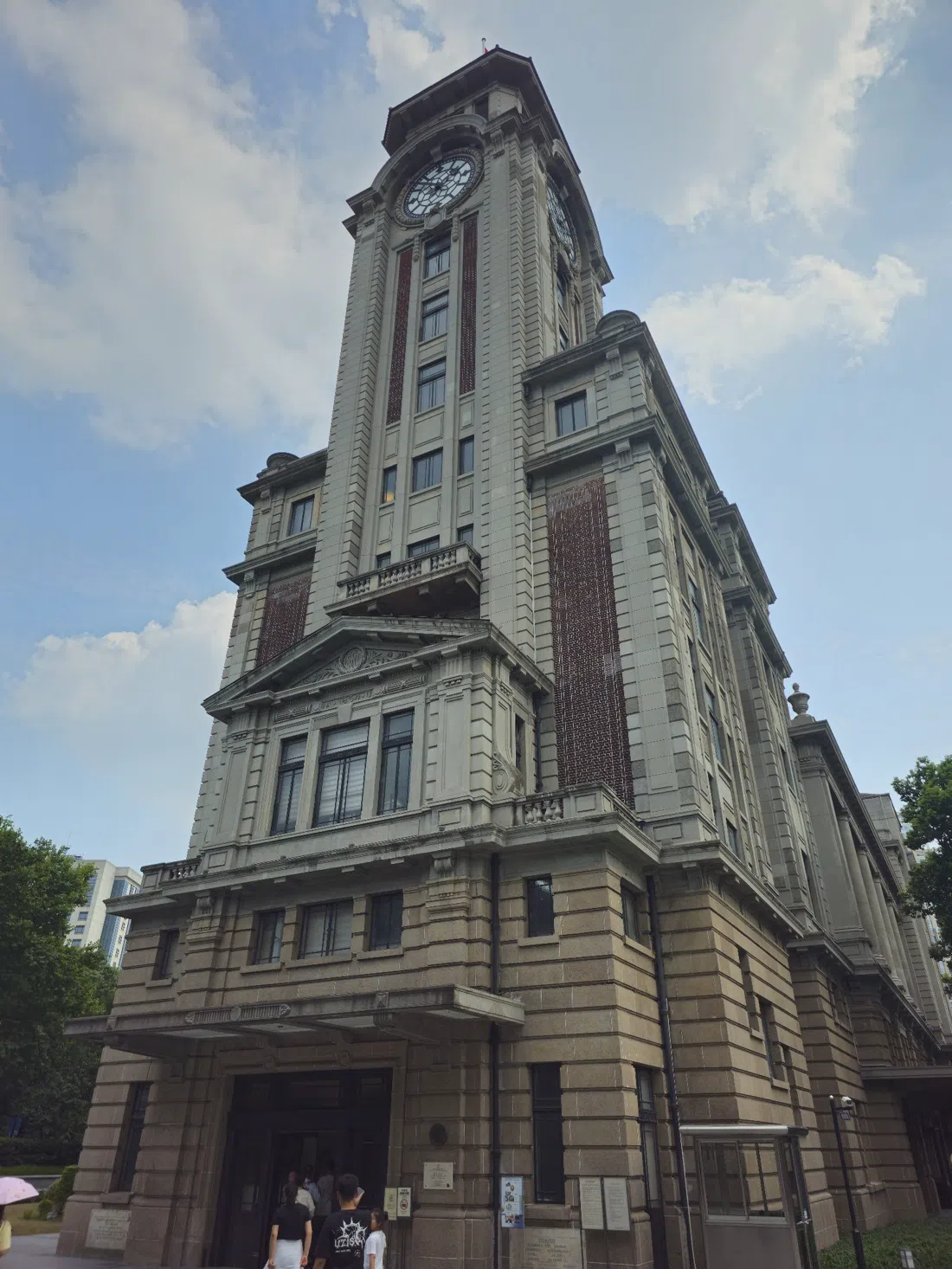
Shanghai History Museum (325 West Nanjing Road) sits five minutes from the street's western end, open Tuesday to Sunday 09:00 to 17:00 with last entry at 16:00, closed Mondays, free apart from special exhibitions. Entry is by code-scan or ID-scan appointment at the gate, and there is a paper registration lane for visitors without Chinese ID. Use it rather than struggling with the scanners. This is the clearest narrative anywhere nearby of how the Bund and Nanjing Road came to exist in the first place.
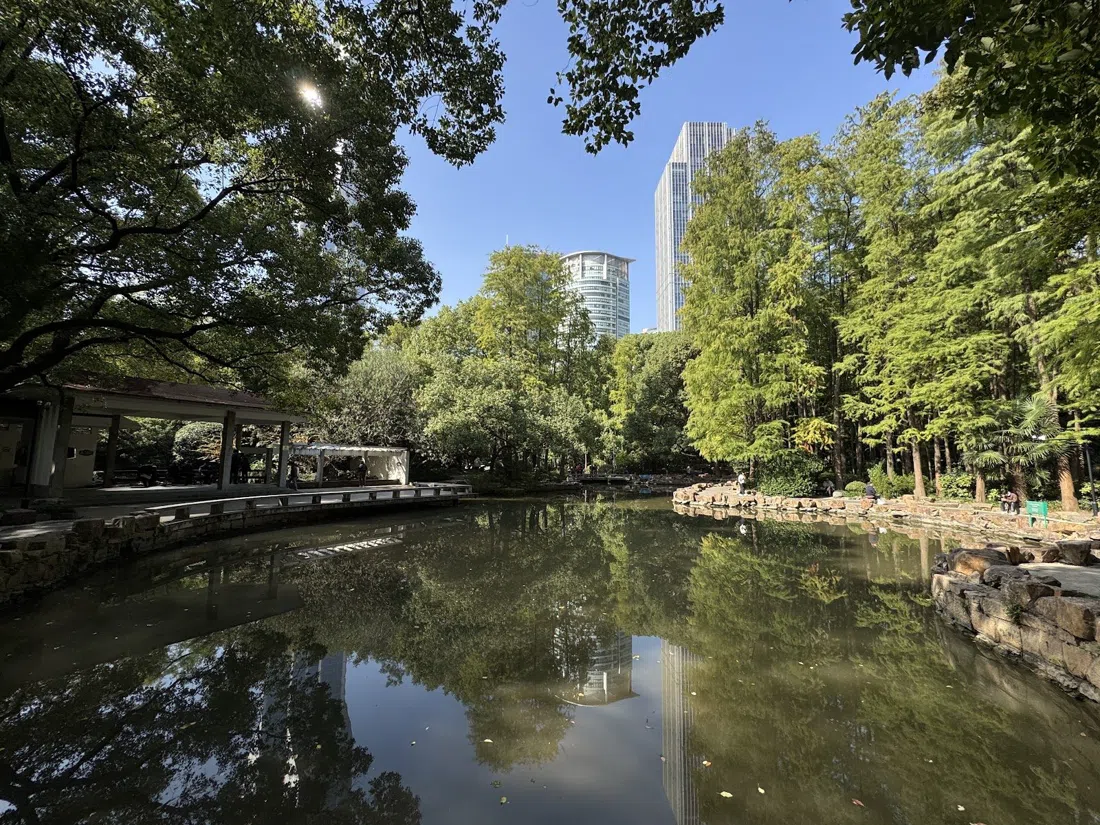
If your walk lands on a Saturday or Sunday, People's Park and the Shanghai Marriage Market (People's Square) cost you nothing but a short detour. The market runs weekends from roughly noon to 17:00 and was still going in 2026. One rule, and it is not negotiable: the parents holding those laminated profiles are not an exhibit. Keep your group small, keep moving, and ask before you photograph anyone's face.
The Bund end and your evening
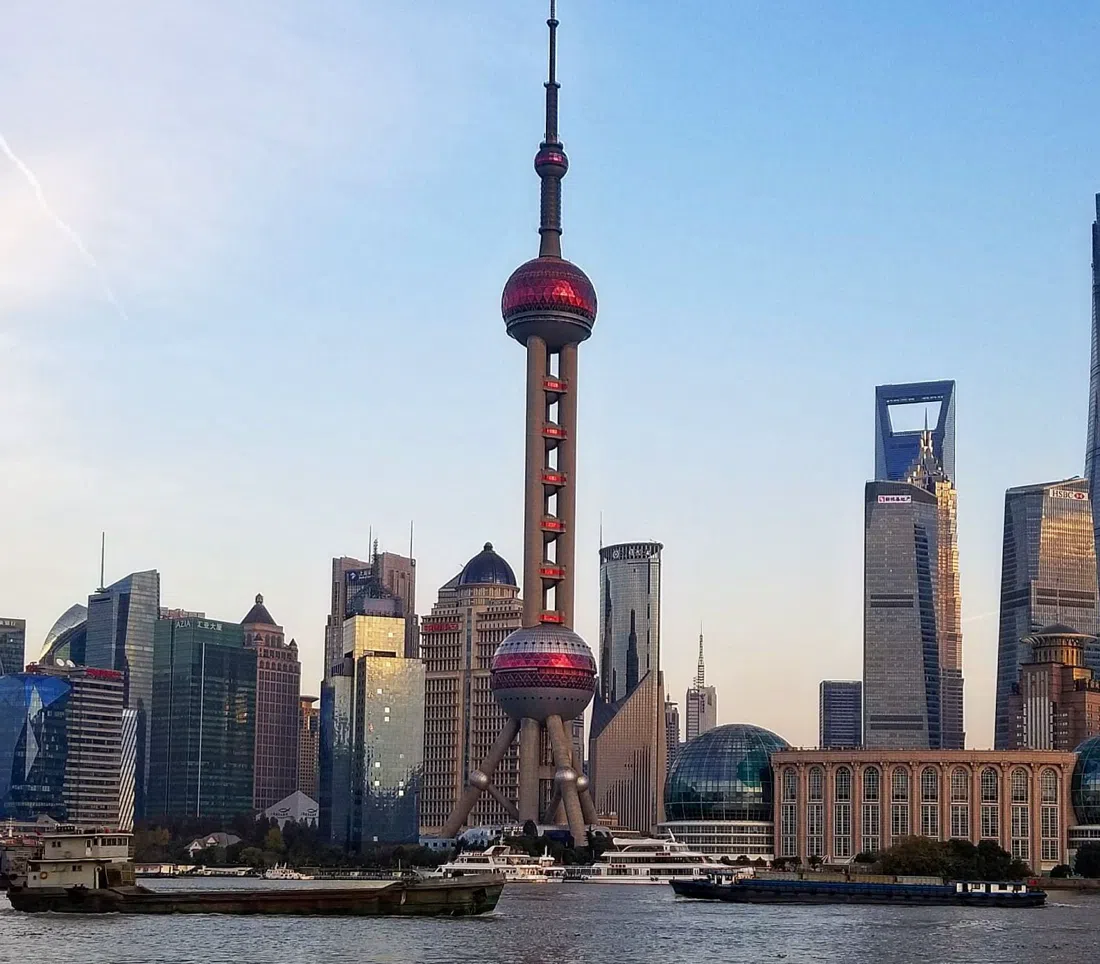
The Bund (Waitan riverfront promenade) is the eastern terminus of Nanjing Road and the natural finish to the walk. It is public, free and open round the clock, with skyline lighting running to roughly 23:00. Budget Bund time separately from street time, because the two are not the same visit. On holiday evenings the promenade gets crowd-control barriers and one-way pedestrian flow, which will split a group whether you like it or not, so agree a meeting point before you step onto the ramps.
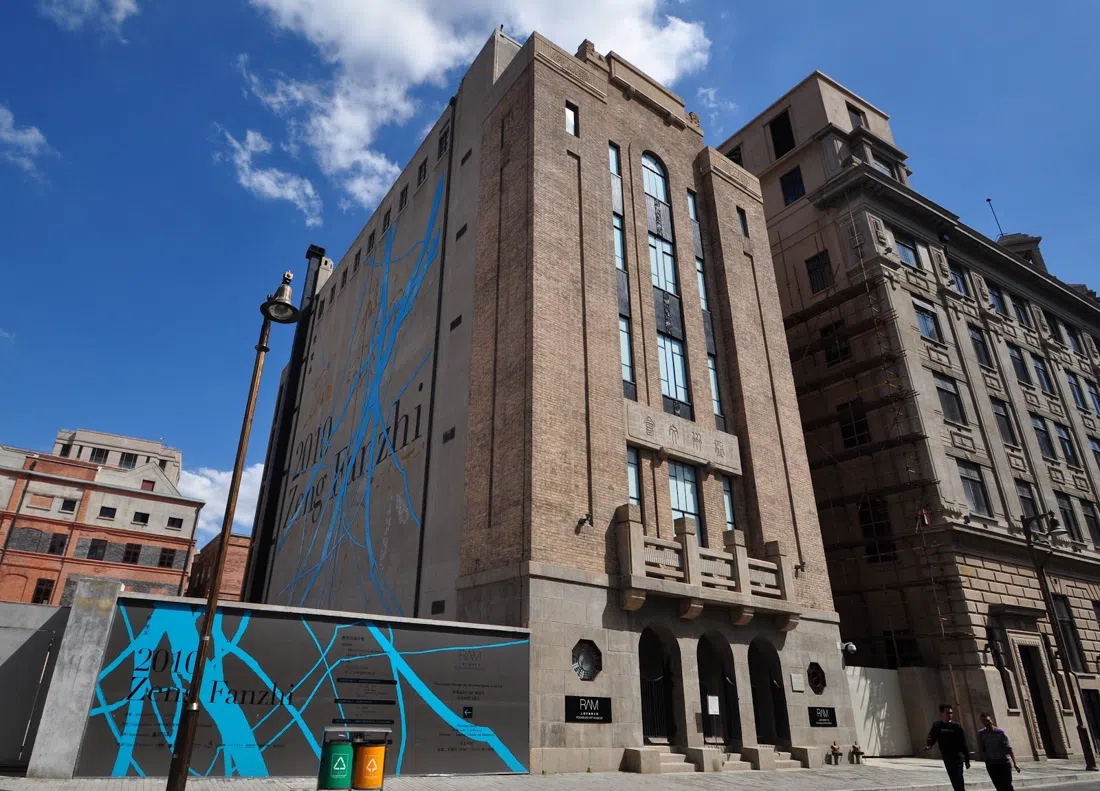
Rockbund Art Museum (RAM, 20 Huqiu Road) is a one-minute detour off the Bund end and the best art stop within walking distance of the street. Admission has been permanently free since May 2025. It opens Wednesday to Sunday 11:00 to 19:00, last admission 18:30, closed Mondays; no reservation is needed Wednesday to Friday, with optional advance booking by WeChat for weekends and holidays. Lifts reach all floors and wheelchairs are available at the desk, but the floorplates are small, so a large group should split and meet at the entrance.
Fairmont Peace Hotel (the Bund, at the foot of Nanjing Road) is the one place on this walk where the 1930s is still a working business rather than a plaque. The Old Jazz Band, Guinness-recognised as the world's oldest, plays nightly from 19:00 in the Jazz Bar, which is small, reservation-led and carries a per-person minimum spend of roughly ¥400 and up. Book ahead for anything above four people. The Peace Museum's complimentary guided tours, in English at 09:00 and 15:00, are for registered hotel guests by prior reservation only; non-guests need a paid tour or a dining package, so do not plan on wandering in.

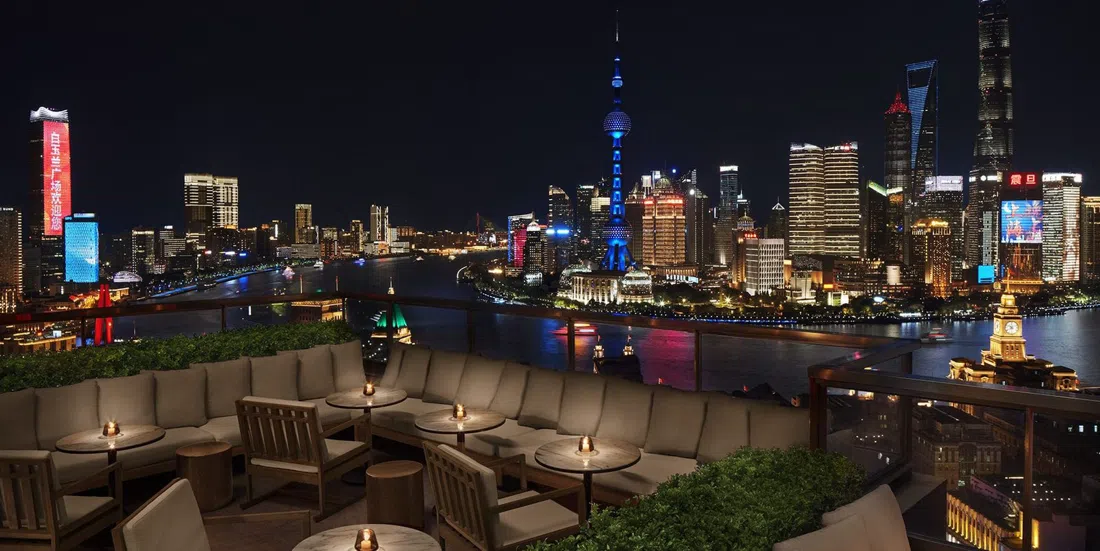
ROOF at The Shanghai EDITION (199 Nanjing Road East) is the only high rooftop actually on Nanjing Road rather than on the Bund, and that is the argument for it: you look at the Bund's skyline instead of standing inside it. Afternoon tea runs 14:30 to 17:00 and the bar 17:30 to midnight daily, with cocktails roughly ¥120 to ¥170. The terrace is small. Groups over six should ring the concierge on +86 21 5368 9999 rather than walk up on a weekend evening.
The rain plan
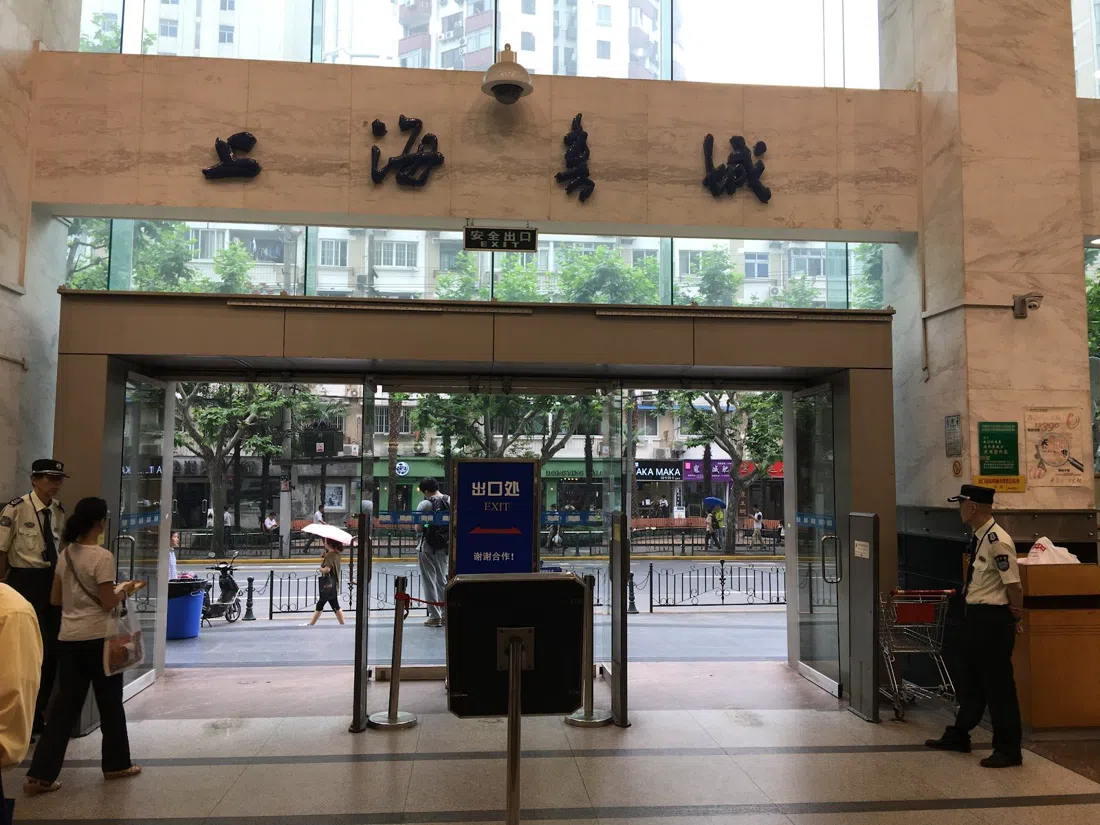
Shanghai weather will turn on you, and a neon street in heavy rain is miserable. Shanghai Book City (Fuzhou Road store, 465 Fuzhou Road) is one block south of the pedestrian street, open daily 09:30 to 21:30, free to enter, with coffee at ¥30 to ¥50. It reopened in October 2023 after a two-year rebuild by Wutopia Lab, and with lifts and wide floors it is one of the very few places near Nanjing Road that comfortably absorbs a large group in bad weather. The Urban Planning Exhibition Center is the other indoor fallback.
Door prices, bookings and whether a guided walk earns its fee
The street itself has no ticket, no gate and no queue. Nothing here needs buying in advance except the museums, where the reservations are free, and the restaurant and bar bookings mentioned above. That is the baseline: your cost of walking Nanjing Road end to end is zero, plus ¥5 if you take the tram.
Guided options exist and sell steadily. There are 2,205 traveller reviews across the bookable experiences covering this attraction, with the top-rated option sitting at 5.0 out of 5 from 1,338 reviews, and they run every day of the week with no closed day. Prices start from 115 USD per person. At that level you are paying for someone to handle the museum reservations, the language at the door and the sequencing, usually as part of a longer day that bundles the Bund and other sights. You are not paying for access, which is free. If you are off a ship on a tight window, or you want the history explained rather than read, that is a reasonable trade. If you have a free evening and can read a map, walking it yourself costs nothing and loses nothing.
Access, ID and group realities
The pavement is flat, wide and fully step-free for the whole kilometre, and so is the Bund promenade. The friction is documents and capacity, not mobility. Carry your passport: the Urban Planning Exhibition Center checks it at the door for every visitor, and the History Museum's gate expects a scan with a paper lane as the alternative. Shanghai Museum needs its free slot booked before you arrive. Rockbund's lifts and wheelchairs are good, its rooms are small. The food places are the real squeeze: Shen Da Cheng's window, Jia Jia Tang Bao's single room and the First Foodhall ground floor all work for two to four people and all fail for a coach party.
Is it worth it
Yes, with one condition: walk it for the century of commerce, not for the shopping. Treated as a retail destination, Nanjing Road is a disappointment, the same chains you have at home, at normal prices, in a bigger crowd. Treated as a one-kilometre corridor that links three free museums, a 1918 department store, an 1875 pastry shop, a 1908-styled tram and the Bund, it is one of the best-value walks in any major city, and most of it is free.
It suits first-time visitors wanting to understand the city's shape, anyone on a short stop with fixed hours, and couples who will happily eat where the room holds twenty people. It suits large groups less well: the street itself is fine, but every interesting interior on it is small. Dedicated shoppers and anyone allergic to crowds should spend the time elsewhere and keep the Bund.
Best time to go
The sweet spot is a late weekday afternoon into the evening. Start at the People's Square end around 13:00 to 14:00, with museum slots booked, so you clear the 15:00 and 16:00 last-entry cutoffs. Walk east as the light goes, and arrive at the Bund after dark, when the signage behind you is fully lit and the skyline lighting is on until roughly 23:00.
Mornings before 10:00 are the quietest hours on the pedestrian street and the best time for photographs without crowds, but the neon is off and the heritage shops are only just opening. Weekday evenings are busy but workable. Saturday and Sunday afternoons are the hardest, because the First Foodhall aisles seize up and Jia Jia Tang Bao's queue stops being funny. Weekends are also the only time the marriage market in People's Park runs, so a weekend visit means arriving early, doing the park detour around midday, and accepting the shop crowds. Public holiday evenings are the one slot to avoid outright: that is when the Bund gets barriers and one-way flow. Note the closures when you pick a day. Mondays shut Shanghai Museum, the History Museum and Rockbund, and Wednesdays shut the Urban Planning Exhibition Center. Rain changes nothing structural, since Book City and the city model are both indoors.
Practicalities
Getting there. People's Square station serves the western end and Middle Henan Road sits at the eastern end, so the metro drops you at either terminus and you never need a taxi for the walk itself. The ¥5 Dangdang tram covers the length if legs give out.
Money. Carry some cash for the small places. The tram takes payment on board, and the pastry window and dumpling room are cheap enough that cash is simplest. Museums are free, so the only real spend is food, a rooftop drink or a jazz bar minimum.
Timing. Three to four hours covers the street plus one museum and a food stop. A full day covers all three museums, the shops, Rockbund and the Bund after dark.
Budget. A walk-only visit costs ¥5. Add ¥20 to ¥150 at the First Foodhall, ¥10 to ¥40 at Shen Da Cheng, ¥25 to ¥60 for dumplings, ¥120 to ¥170 a cocktail on the rooftop, or roughly ¥400 and up per person for the jazz bar minimum. The guided alternative starts from 115 USD per person.
Staying on the mile. Sleeping on or just off East Nanjing Road is the one genuine convenience play here, because it turns the evening walk into a five-minute stroll from your room and lets you do the quiet early-morning pass before the crowds. Compare rates on the Shanghai hotel search, and read the wider Shanghai guide for how this corridor connects to the rest of the city.
Questions
How long does it take to walk Nanjing Road?
Straight through without stopping, the 1.0km pedestrian street takes 35 to 50 minutes between Middle Henan Road and People's Square. A selective visit with a couple of shops and a food stop runs 1.5 to 2.5 hours. Add the Bund and a museum at the People's Square end and you are at a half to full day. Count those as separate time, not part of the walk.
What is the best time of day to walk Nanjing Road?
Start at the People's Square end in the early afternoon so you clear the museums' 15:00 and 16:00 last-entry cutoffs, then walk east as the light goes and finish on the Bund after dark, where skyline lighting runs to roughly 23:00. Before 10:00 is the quietest hour for photographs but the neon is off. Avoid public holiday evenings, when the Bund promenade gets crowd barriers and one-way flow.
Do I need to book anything or bring my passport?
The street is free, open 24 hours and needs no ticket. The museums do need paperwork: Shanghai Museum requires a free timed-entry reservation while its Ancient Civilizations of the Americas programme runs, the Urban Planning Exhibition Center checks a passport or ID for every visitor at the door, and the Shanghai History Museum uses a code or ID scan with a paper registration lane for visitors without Chinese ID. Carry your passport.
Is the Dangdang sightseeing tram worth taking?
At ¥5 per ride (about US$0.70), paid on board with no booking, it is a fair ten-minute hop between the two ends and useful for tired feet. It is styled on the trams that ran here from 1908. But with only about a dozen seats per car, a large group rides in waves rather than together, and it is no substitute for walking the street. Take it one way, at the end.
Is a guided tour of Nanjing Road worth paying for?
Access is free, so a guide buys you sequencing, museum reservations and the history explained, rather than entry. Guided options here have 2,205 traveller reviews between them, the top-rated at 5.0 out of 5 from 1,338 reviews, and they run seven days a week from 115 USD per person. Worth it on a tight shore-excursion window or if you want the commentary; unnecessary if you have a free evening and a map.
First published on shanghaicitybreak.com, the Shanghai guide.