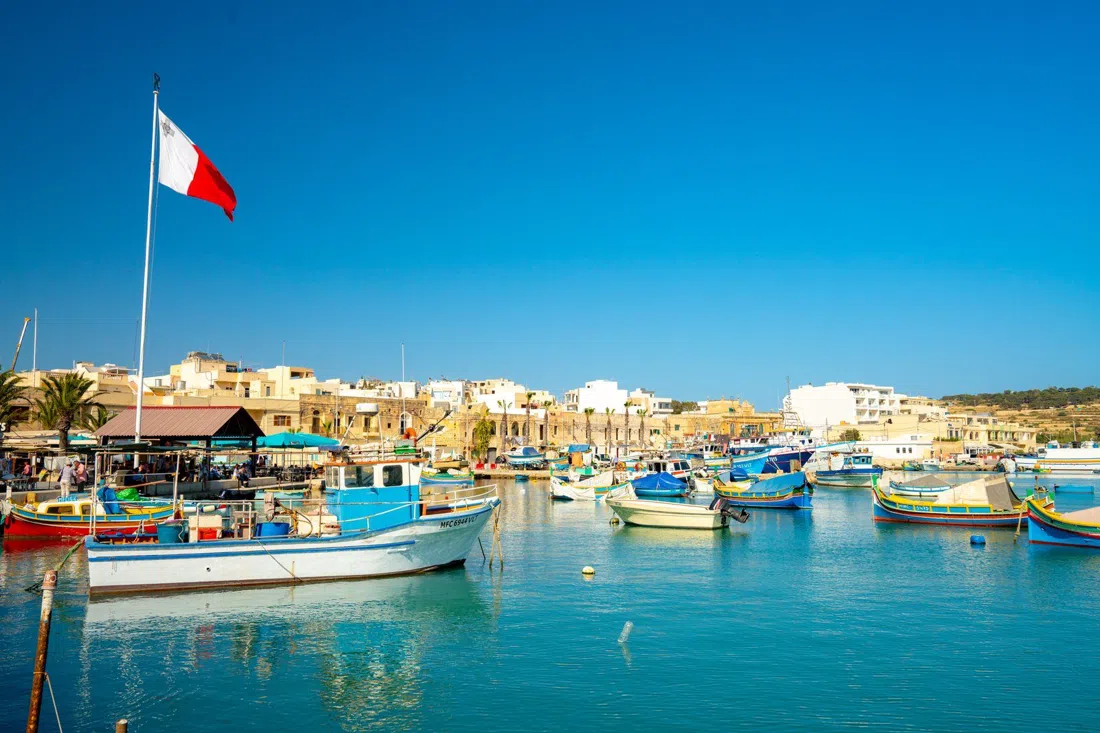
The luzzus in the harbour are painted in flat blocks of yellow, red, blue and green, each with a pair of eyes on the bow, and they never sit still long enough to make photographing them simple. Most visitors arrive by coach on a Sunday morning, reach the quay after the fish has already been sold, and go home with the picture and a jar of honey. Half a day here is enough to do considerably better than that, and the first decision is which day you turn up.
What you are actually looking at
The Xatt is-Sajjieda waterfront and luzzu harbour, the single curved quay that is the village's front door, is an open promenade with no gate, no ticket and no closing hour. A luzzu is a small wooden fishing boat with a high, blunt bow and a painted eye on each side of it, a motif that predates the boats themselves by a few thousand years. They are working craft rather than display pieces, which is why the harbour looks different at 07:00, when several are out or being loaded, than it does at 15:00, when the whole fleet is swinging on its moorings in the same direction.
Walk the quay from one end to the other at an unhurried pace and it takes about twenty minutes. Do it twice, in opposite directions, and you will have seen everything the waterfront has to offer, because the interest is in the water and not in the buildings behind you. The northern end gives the best angles: the boats sit between you and the village, the light is on them for most of the morning, and there is enough width of pavement for a group of eight or ten to stand without blocking anyone. The southern half is narrower, and on market day it is where the crush happens.
This part of the visit works on any day of the week. The boats do not move to a timetable, they are free to look at, and a weekday morning gives you the identical harbour with a fraction of the people on the quay.
The Sunday market and its one honest hour
The Marsaxlokk Sunday Fish Market (along the same Xatt is-Sajjieda quay) is the reason most people come, and it is also the thing most people get wrong. The genuine fish trade runs from roughly 06:00 and thins out by midday. What happens after that is a different market: the stalls tilt towards souvenirs, table linen, honey and nougat, and the fish that remain are the leftovers of a sale that ended hours earlier.
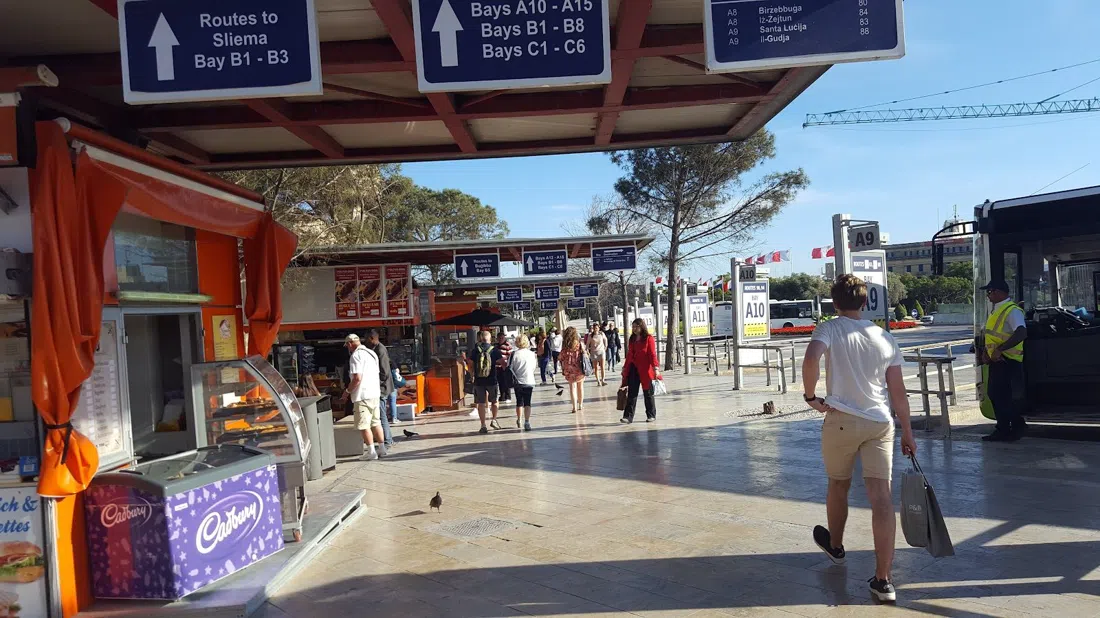
Coach parties start arriving at about 09:00, the precise moment the trade begins winding down and the quay becomes busiest. If the fish market is what you came for, be there before 08:00. If you cannot face that, come on a weekday instead and accept that you are here for the harbour rather than the market, which for most people is the honest reason anyway.
There is no door policy, no admission and no booking. It is a free public street market on a narrow quay, so large groups are normal and everybody has to give way to everybody else. Bring small notes if you intend to buy anything.
The church five minutes off the quay
Walk in from the water and you reach the Parish Church of Our Lady of Pompei (the village centre, a five-minute walk from the harbour). It is free to enter during daylight hours and donations are welcome. It is a working parish rather than a monument, so keep clear of Mass times, and dress to cover shoulders and knees. That applies to the whole group, not just whoever wants to go inside.

The interior is worth the ten minutes it takes, and the church is the reference point for the village's own feast in honour of Our Lady of Pompei, which takes over the streets when it comes around. If your half day happens to land on the feast, the harbour will be secondary to what is going on inland.
Getting out to the swimming coast
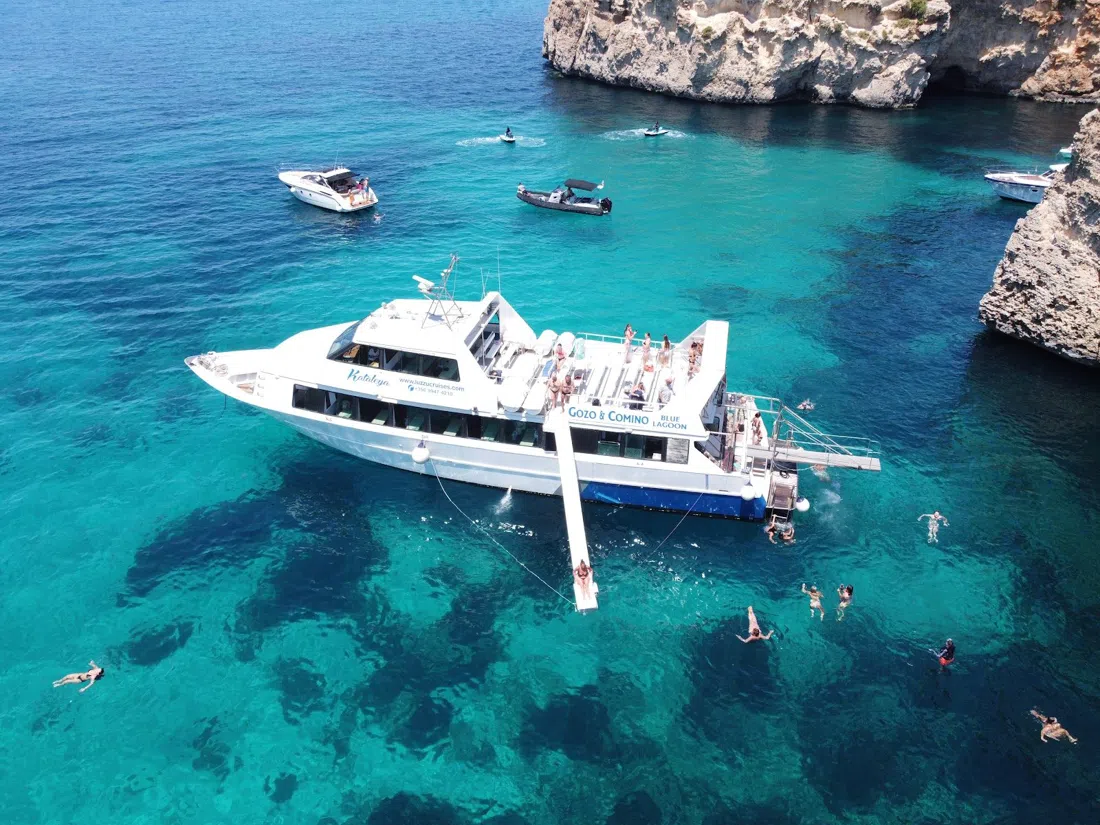
The coast east of the village is the best part of this trip and the hardest to reach by car. Rima Cruises (on the harbour quay) is the family-run operator that solves it. They take walk-up passengers on shared trips and also do tailor-made private charters, so they suit a couple turning up on the day and a group of a dozen booking in advance. The shared one-hour run out to St Peter's Pool is around €15 per person, charters are priced on request, there is a swimming-stop option, and cancellation is free up to 24 hours ahead. Of the boats touting along the quay, this is the one whose terms are clearly documented, which matters when you are handing cash to someone on a waterfront.
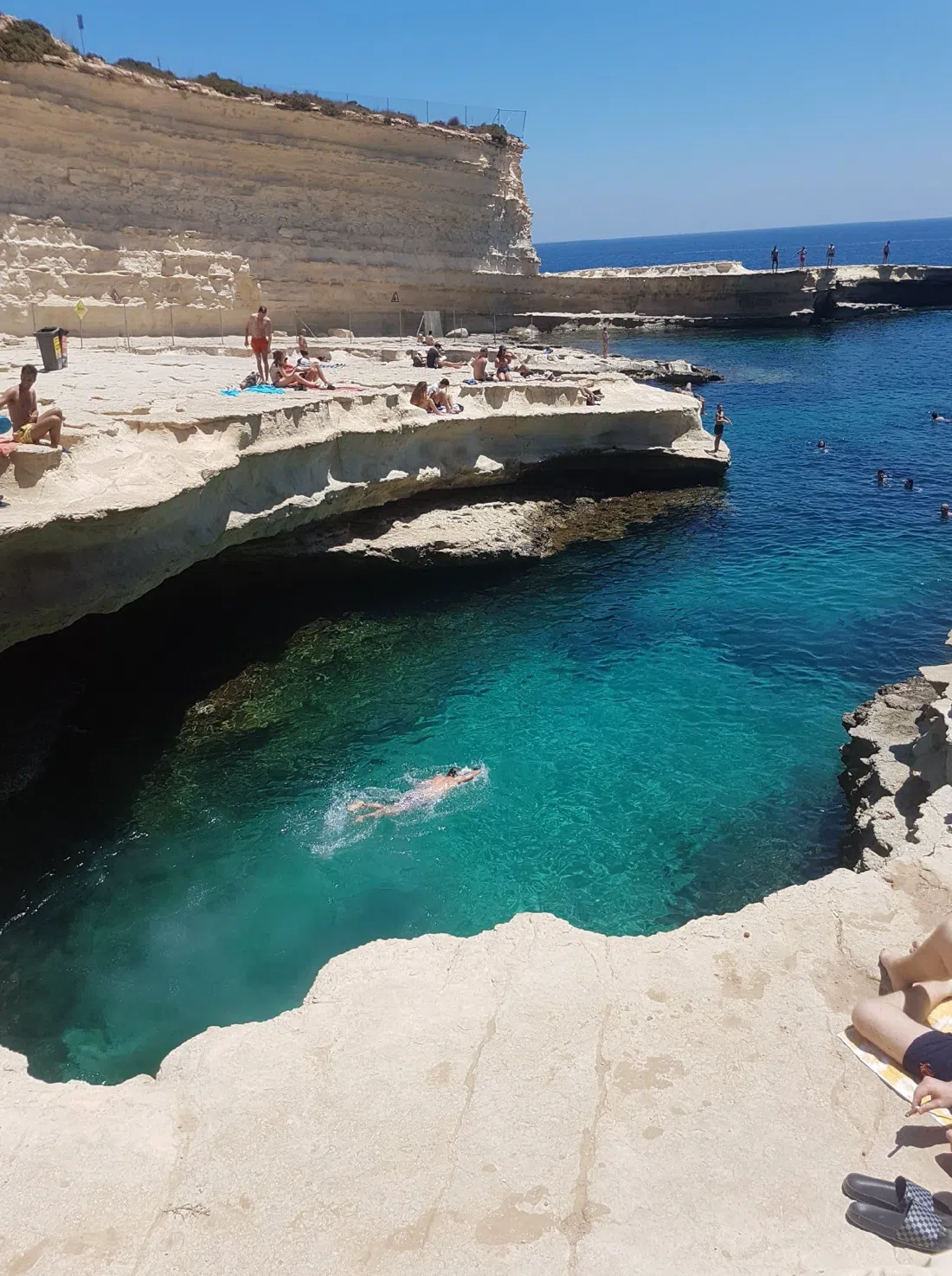
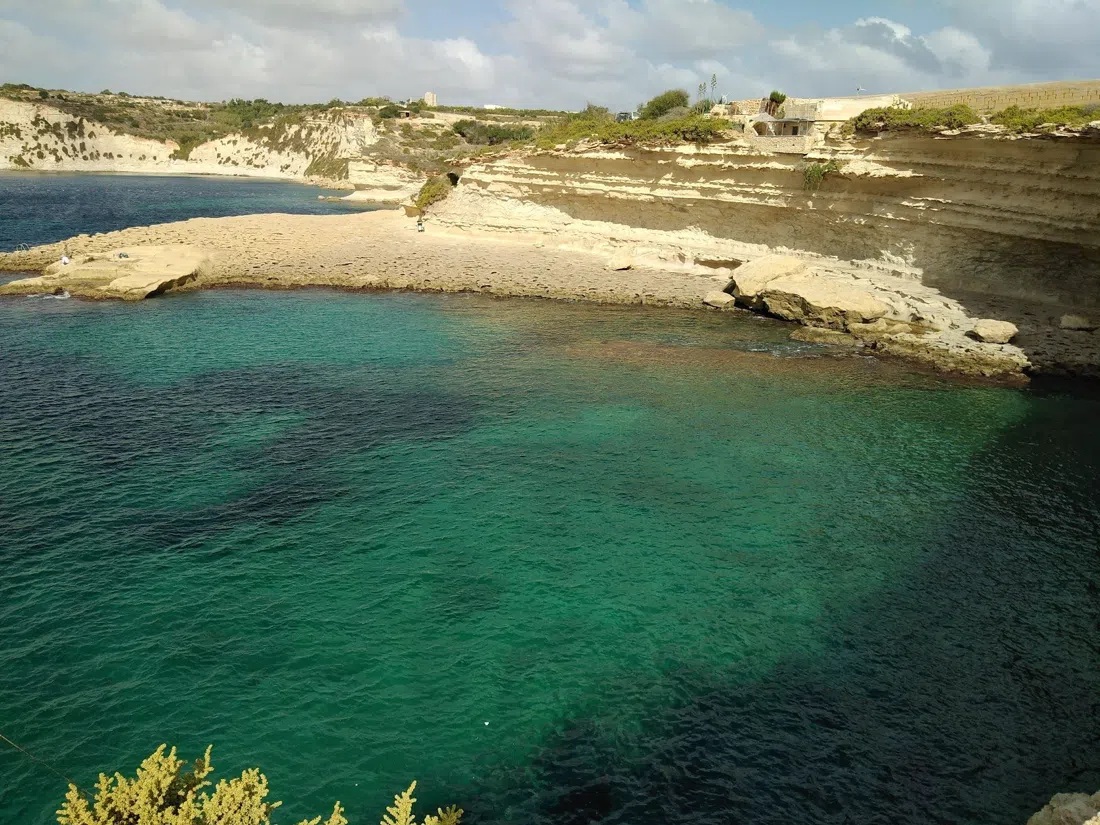
St Peter's Pool (Delimara headland, east of the village) is a natural swimming spot cut into flat rock, free and open at all hours, with no gate and no limit on numbers. It is also completely unmanaged: no shade, no toilet, no café, no lifeguard. The last kilometre of road is narrow, and its handful of parking spaces fill by around 08:30 from June through August. Arriving by boat removes that problem entirely, and is the reason the short harbour trips exist.
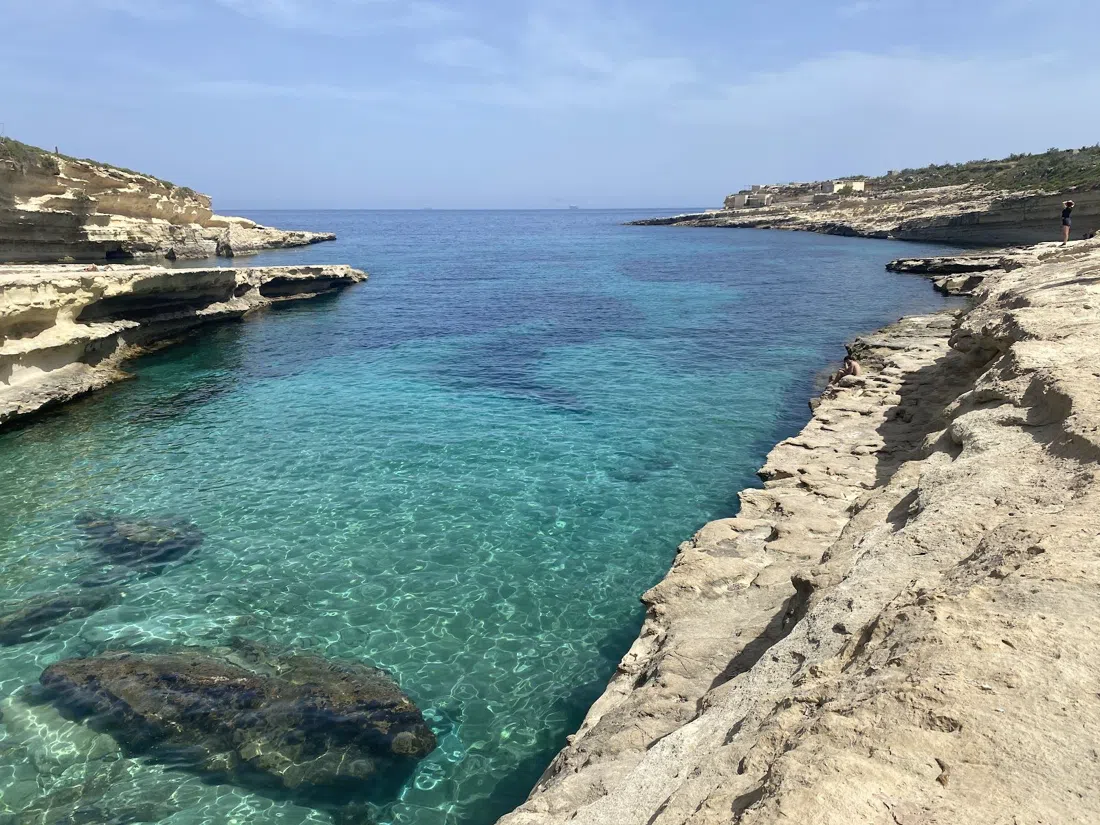
When the pool is at capacity, Il-Kalanka Bay (the same headland, a short way on) is the overflow. Same clear, deep water, considerably fewer people, free and unrestricted. It is a small bay that one large group will fill on its own, the rock underfoot is sharp, and there is no gear hire on site. Bring something for your feet and bring your own mask if you want one.
Back in the village, The Wet Deck (the waterfront, at the edge of the harbour) is the newest thing on this shoreline and the only place here that combines a swim with table service. It opens daily from 11:00 until late, takes bookings online and by phone, and charges €8 a day for a deckchair, which is waived after 18:00 if you order food or a drink. It is set up for groups and events, and it answers the question that hangs over every afternoon in Marsaxlokk, which is where to go once the market is over. St Peter's Pool, with no facilities at all, cannot.
The headland beyond the harbour
If you have a car or a driver, the Delimara road is the natural second half of the morning. Delimara Lighthouse (the tip of the headland) is held in trust by Din l-Art Ħelwa, and the restored keeper's quarters are let as two holiday apartments rather than run as a museum. You can view the exterior and walk the headland freely and at no cost; you cannot buy a ticket and go inside. Treat it as the turnaround point of the drive or the walk. The restoration is real and the setting is the reason to go.
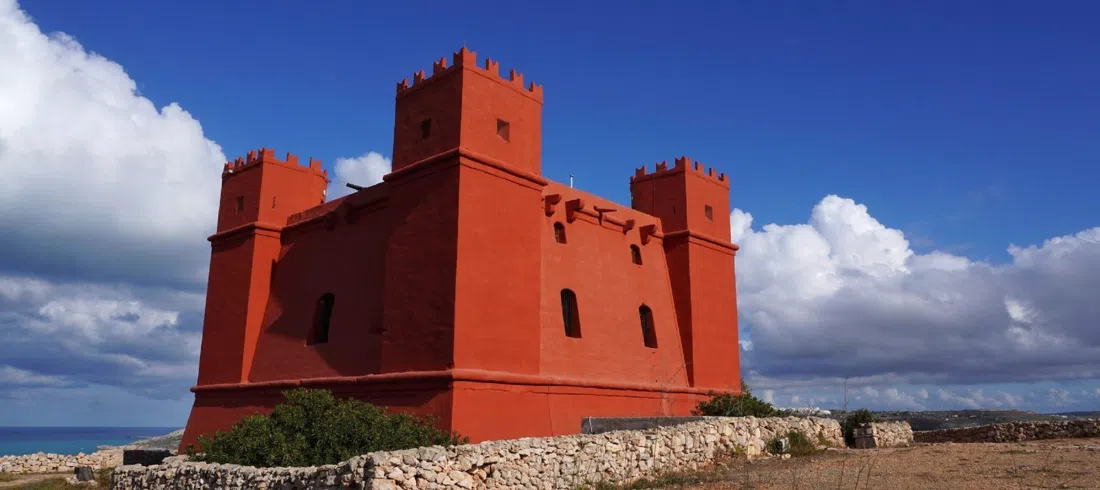
Fort Delimara (the same headland) is a Victorian fort that is closed for most of the year. Heritage Malta runs occasional hourly guided tours on announced open weekends, alternating between Maltese and English, and those tours book out. Admission on open days is around €5 for adults and €1 for children. For anyone interested in military history it is a genuine find, but check Heritage Malta's what's-on before you build a day around it, because the default state of the gate is shut.

Further along the coast, Xrobb l-Għaġin Nature Park and Wildlife Rehabilitation Centre (the cliffs east of the village) is run by Nature Trust Malta. The park is free and open during daylight, with coastal walking, cliff views and a hostel on site. The wildlife rehabilitation centre itself is advance-booking only, by email. Public transport barely reaches it, so this one is for drivers or organised groups rather than anyone working from a bus timetable.
Four thousand years above the village
On the hill directly above the bay, the Tas-Silġ Archaeological Complex records four thousand years of continuous sanctuary use: prehistoric temple, Punic and Roman worship, early Christian basilica, one layer on top of another. It explains why this particular bay was settled at all. Visits are strictly by appointment through Heritage Malta, generally on weekdays between 09:00 and 17:00, with occasional public open days running several timed tours in Maltese and English. It is free on open days, but it is never a walk-up, so arrange it before you travel or leave it out.
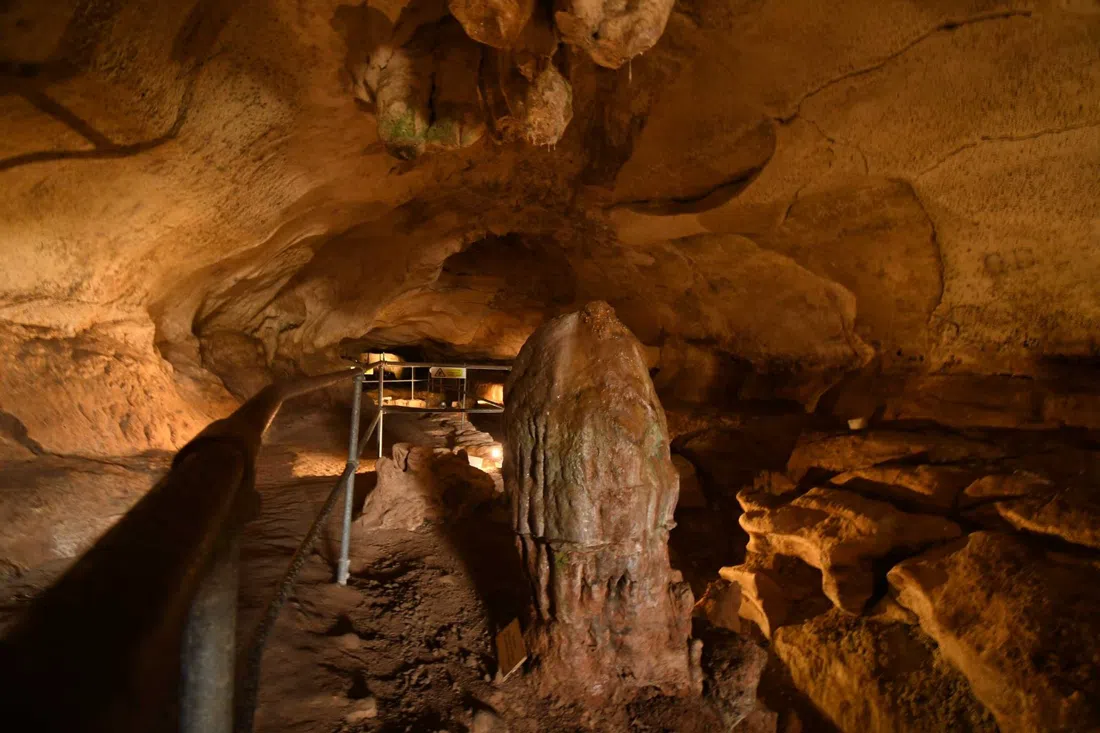
For a wet morning, or for anyone travelling with children who have had enough of boats, Għar Dalam Cave and Museum (a short drive inland from the harbour) is the nearest indoor, all-weather option. It is a ticketed Heritage Malta site open Tuesday to Sunday, 09:00 to 17:00. Admission is €6.50 for adults, €5 for youths, seniors and students, €4 for children aged 6 to 11, and free for under-5s, with a combination ticket that also covers Borġ in-Nadur. Coaches and school groups are routine here, so pre-booking is sensible. Only the first 50 metres of the cave are open to the public, and the museum cases of bones do most of the work.
Borġ in-Nadur (about 500 metres from Għar Dalam) is a small open site holding Malta's earliest known fortification, a Bronze Age defensive wall alongside a prehistoric temple. Tickets for it are sold only at Għar Dalam and there is nothing on the gate, so pair the two or skip it. Turning up at the fence without a ticket bought up the road means walking back.
Lunch on the quay
Tartarun (the waterfront) is the serious meal in the village, a Michelin Guide entry run by the Schiavone family with a menu that changes according to what came in that day. Mains run roughly €25 to €35. Book ahead, and read the days carefully, because they catch people out: lunch and dinner on Tuesday, Wednesday, Friday and Saturday, lunch only on Sunday, closed Monday and Thursday. The room is small, so a party of more than four should call rather than hope.
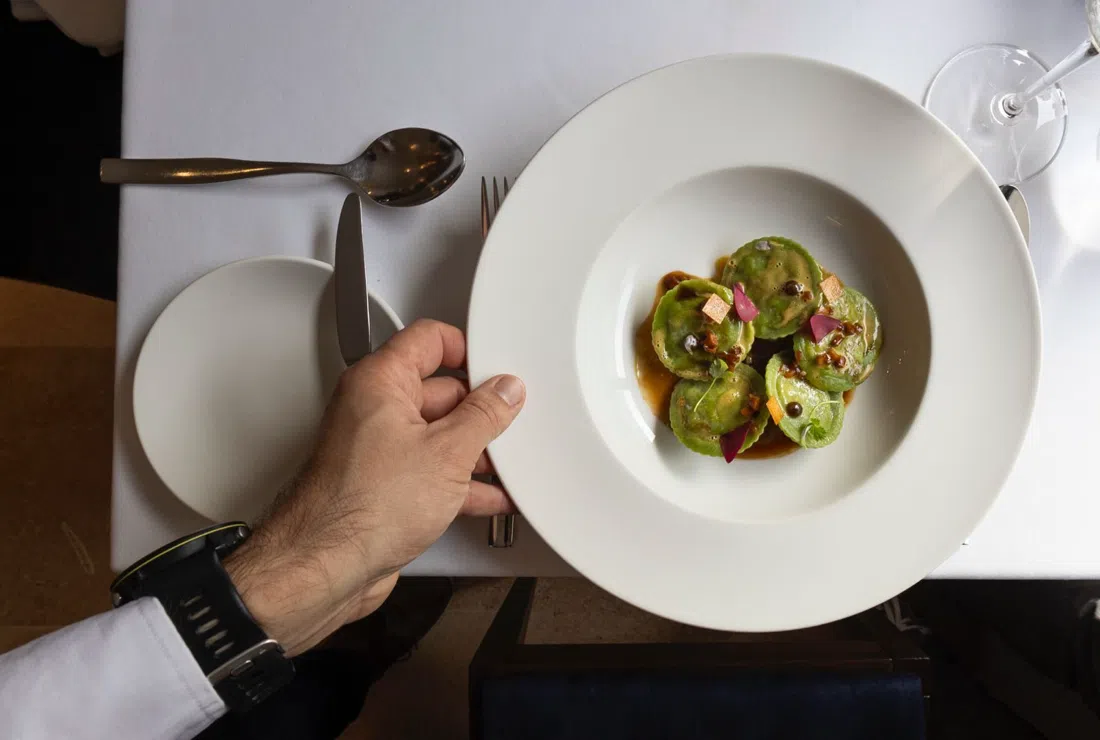
Ir-Rizzu (the waterfront) is the long-standing family-run name, open daily for lunch and dinner and closed on public holidays, with online booking and the capacity to take larger tables in peak season. Mains are roughly €20 to €28. The kitchen is open and you choose your fish yourself, which is the only reliable test of anybody's 'fresh catch' claim.

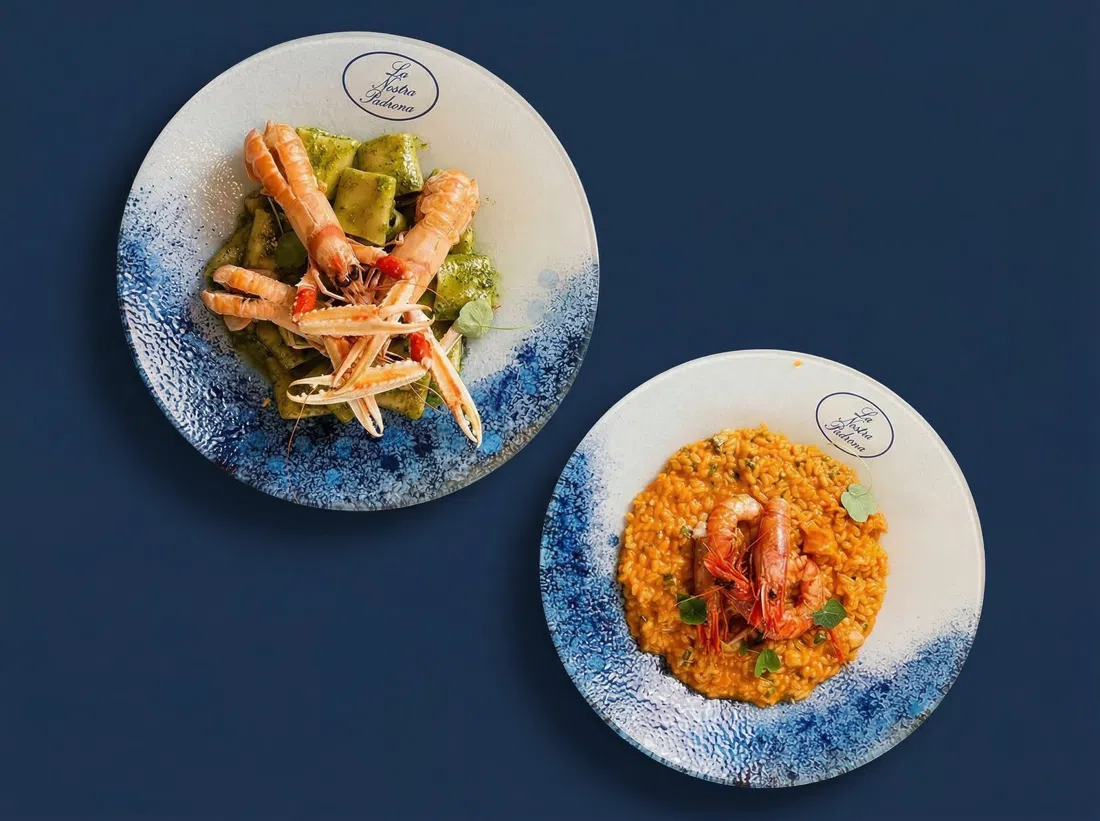
La Nostra Padrona (the waterfront) has the seating that puts the harbour in front of you while you eat, with reservations by phone. Mains run roughly €20 to €30 for solid Italian-Mediterranean seafood. It copes with groups and it is busy at Sunday lunch. Choose it if you want the view at the table rather than the best plate for the money, a real trade-off here and worth making deliberately.
Turning up on your own or taking a guide
Almost nothing in this article has a ticket gate. The harbour, the market, the church, the swimming spots and the nature park are all free and unbooked; Għar Dalam is the one place where you buy admission, and Tas-Silġ and Fort Delimara are the two places where turning up unannounced does not work at all. There is no queue to beat and no ticket to secure in advance. What you are booking, if you book anything, is transport and a lunch table.
Guided options that fold the harbour into a wider island day do exist, run seven days a week, and are attached to this page separately. They start from around 304 USD per person for the private, full-day format. Across the bookable options here there are 298 traveller reviews, with the top-rated tour at 4.9 out of 5 from 88 reviews. That price buys a driver and a full day rather than access, since you can stand on the same quay for nothing. It is worth it if you want the headland, the swimming coast and the archaeological sites in one run without hiring a car; it is poor value if the harbour itself is all you came for.
Is half a day here worth it
Yes, with one condition: go for the harbour, not the market. The boats are the thing, they are there every day, and they cost nothing to look at. Add a boat trip to the swimming coast and lunch on the quay and you have a four-to-five-hour morning that stands up on its own.
It suits photographers, anyone who likes working harbours, families who will swim, and couples who want a slow lunch with the water in front of them. It suits military-history readers only on the specific weekends the fort opens. It does not suit anyone expecting a visitor centre, a scheduled tour or a wet-weather backup within walking distance of the quay. Għar Dalam is the nearest indoor option and it is a drive away.
When to go
Early morning, on almost any measure. Before 08:00 on a Sunday if you want the real fish market; any weekday morning between about 08:00 and 11:00 if you want the same harbour without the coach crowd, which builds from roughly 09:00. Afternoons are the weakest part of the day: the market has turned to souvenirs, the light is behind the village, and the heat on an unshaded quay is the main thing you will remember.
By season, June to August gives reliable swimming and the worst of the parking. The St Peter's Pool road fills by about 08:30 in those months, which is the argument for arriving by boat. Spring and autumn give you the harbour at its most comfortable, with the water still warm enough to swim into the autumn and the quay walkable in the middle of the day. Winter is for the boats and the church rather than the bays: everything outdoors stays free and open, but the swimming spots have no shelter of any kind.
Practical notes
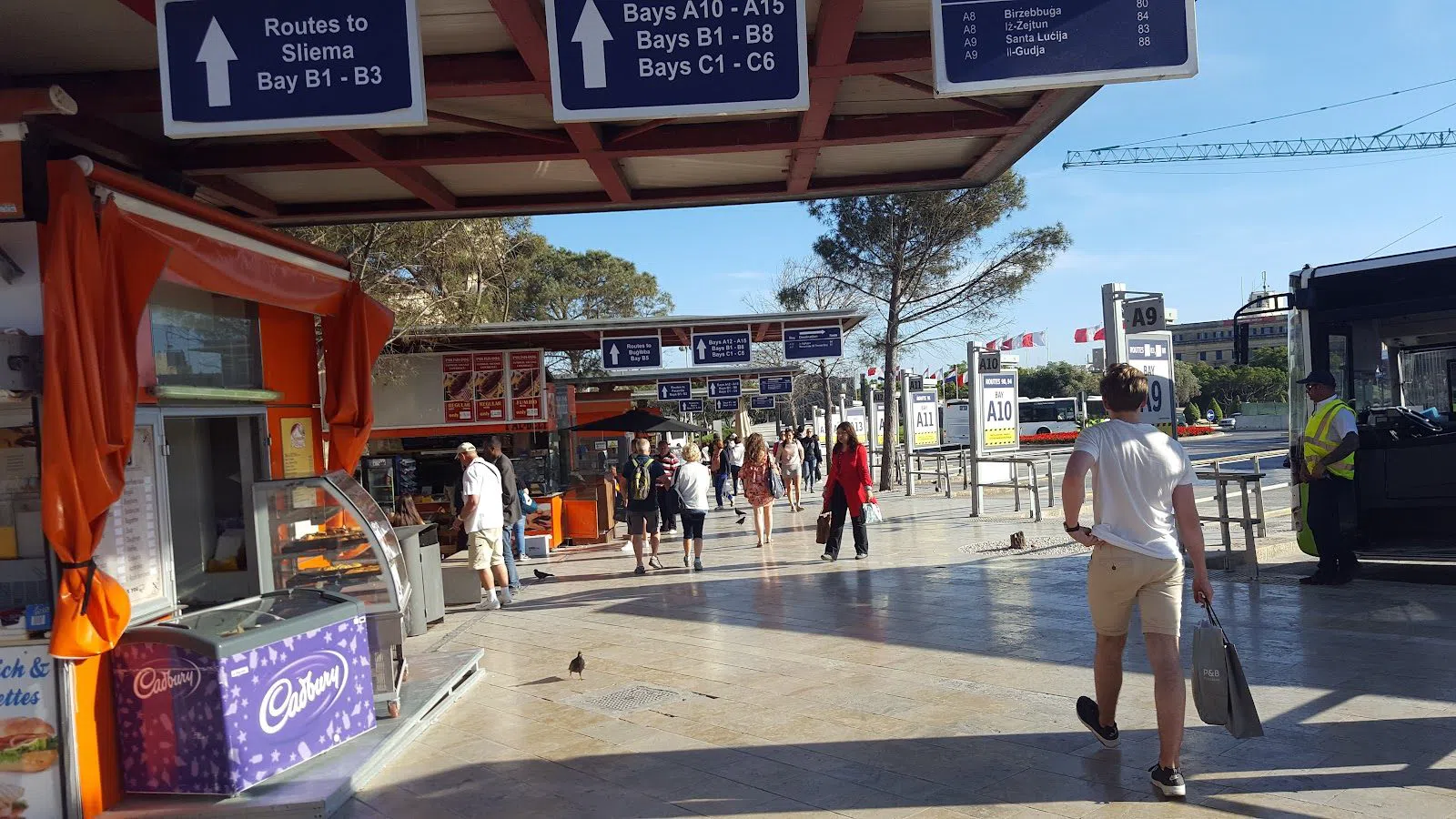
Getting there. The village is a bus ride from the resort strip, usually with one change at the island's main terminus; check the route number on the day, as services to the southeast are less frequent than the coastal routes. By car it is well under an hour outside rush hour, but park in the village and walk. Do not attempt to drive the last stretch to St Peter's Pool in high summer. A boat from the quay is the simplest way to reach the swimming coast.
Money. Malta uses the euro. Market stalls are cash, and small notes are easier than large ones. Restaurants and the lido take cards. Budget roughly €15 per person for the shared boat trip, €8 for a deckchair, €6.50 for Għar Dalam admission and €20 to €35 for a main course on the waterfront. A half day with a boat, a swim and a sit-down lunch lands somewhere around €45 to €60 a head.
Timing. Four to five hours covers the quay, the church, a boat trip with a swimming stop and lunch. Add two hours if you are driving out to the lighthouse and the nature park, and a further ninety minutes for Għar Dalam and Borġ in-Nadur together.
Booking. Reserve a restaurant table for Sunday lunch and for any group over four. Confirm Tartarun's opening days before you plan around it. Book Tas-Silġ through Heritage Malta well ahead, and check the fort's open-weekend listings rather than assuming.
For where to base yourself before an early start, see the St Julian's hotel search, and the St Julian's guide covers the rest of the area, including the bus connections you will be using to get down to the harbour and back.
Questions
Is the Sunday fish market worth getting up early for?
Only if you are there before 08:00. The fish trade runs from about 06:00 and thins by midday, and coach parties start arriving around 09:00. By then the stalls have tilted towards souvenirs, honey and table linen. If early is not realistic, come on a weekday instead: the same painted boats in the same harbour, without the crush on the quay.
Can I reach St Peter's Pool without a car?
Yes, by boat from the harbour quay. Rima Cruises runs a shared one-hour trip out to the pool for about €15 per person, with a swimming-stop option and free cancellation up to 24 hours ahead. It also saves you the drive: the last kilometre of road is narrow, and its few parking spaces fill by around 08:30 from June to August.
How long do I actually need in Marsaxlokk?
Four to five hours covers the waterfront, the parish church, a boat trip with a swim, and lunch on the quay. Add about two hours if you are driving out to Delimara Lighthouse and the nature park, and another ninety minutes if you want Għar Dalam and Borġ in-Nadur on the same day.
What is there to do if the weather turns?
Għar Dalam Cave and Museum is the nearest indoor, all-weather option: open Tuesday to Sunday, 09:00 to 17:00, €6.50 for adults, with a combination ticket covering Borġ in-Nadur about 500 metres away. Only the first 50 metres of the cave are open to the public, so the museum displays do most of the work. Coaches and school groups are routine, so book ahead.
Do I need to book a restaurant on the waterfront?
For Sunday lunch and for any party over four, yes. Tartarun is a small room and its closing days catch people out: no lunch or dinner on Mondays and Thursdays, and Sunday is lunch only. Ir-Rizzu opens daily for lunch and dinner, closed on public holidays, and takes online bookings; La Nostra Padrona books by phone and gets busy at Sunday lunch.
First published on stjuliansguide.com, the St Julian's guide.