
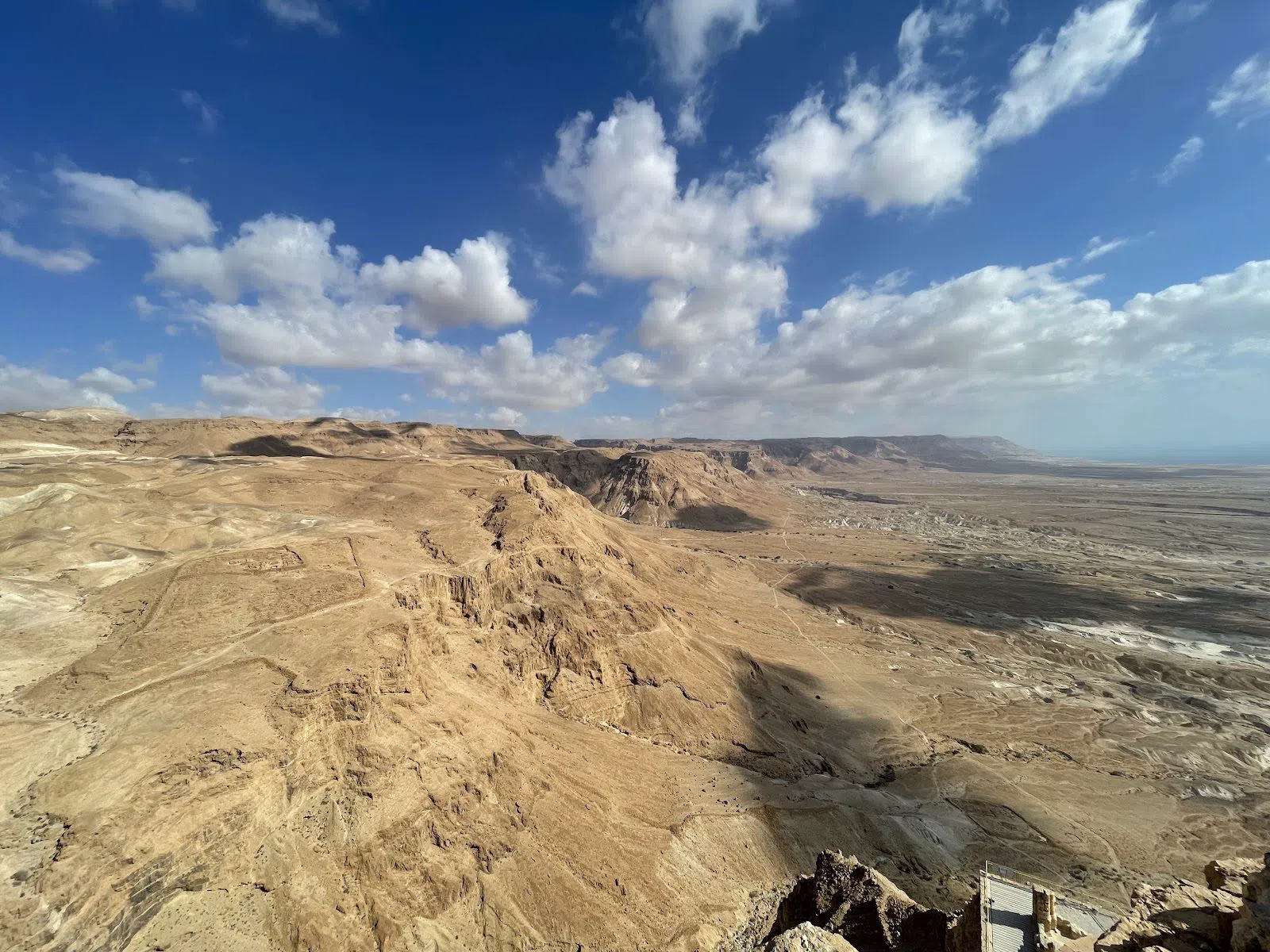
You leave Tel Aviv in the dark, and for the first hour there is nothing to look at but the seat in front of you. Then the road tips downhill, your ears go, and the Dead Sea arrives on your left as a flat grey absence with no far shore yet visible. By the time you are standing at the foot of the rock with a head torch on, the sky behind the mountains of Moab has begun to thin, and you have roughly fifty minutes of climbing to do before it turns orange.
What the day is, in order
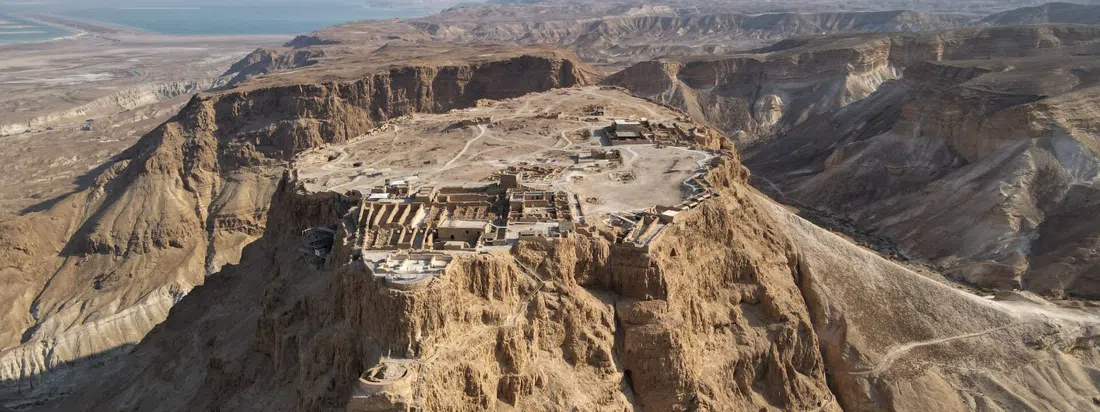
A Masada sunrise from the city is a twelve-hour day built around about twenty minutes of light. Masada National Park (East Gate, Route 90) sits on the Dead Sea highway, a little over two hours south-east of the city, and a sunrise visit turns on one scheduling quirk: the park proper opens at 08:00, but its two footpaths open before dawn. So you climb in the dark, stand on the summit for the sunrise, come down as the site fills with the first cable-car arrivals, and spend the rest of the morning on the shore below, at an oasis or a scroll site, and in water you cannot sink in. Entry is NIS 37 for an adult and NIS 21 for a child without the cable car, and the museum adds NIS 20 on top. Guided coach parties are the normal way this is done rather than an imposition on it: the east gate has a large free coach park, and the Nature and Parks Authority sells pre-booked group entry and group rates.
Why the cable car cannot give you the sunrise
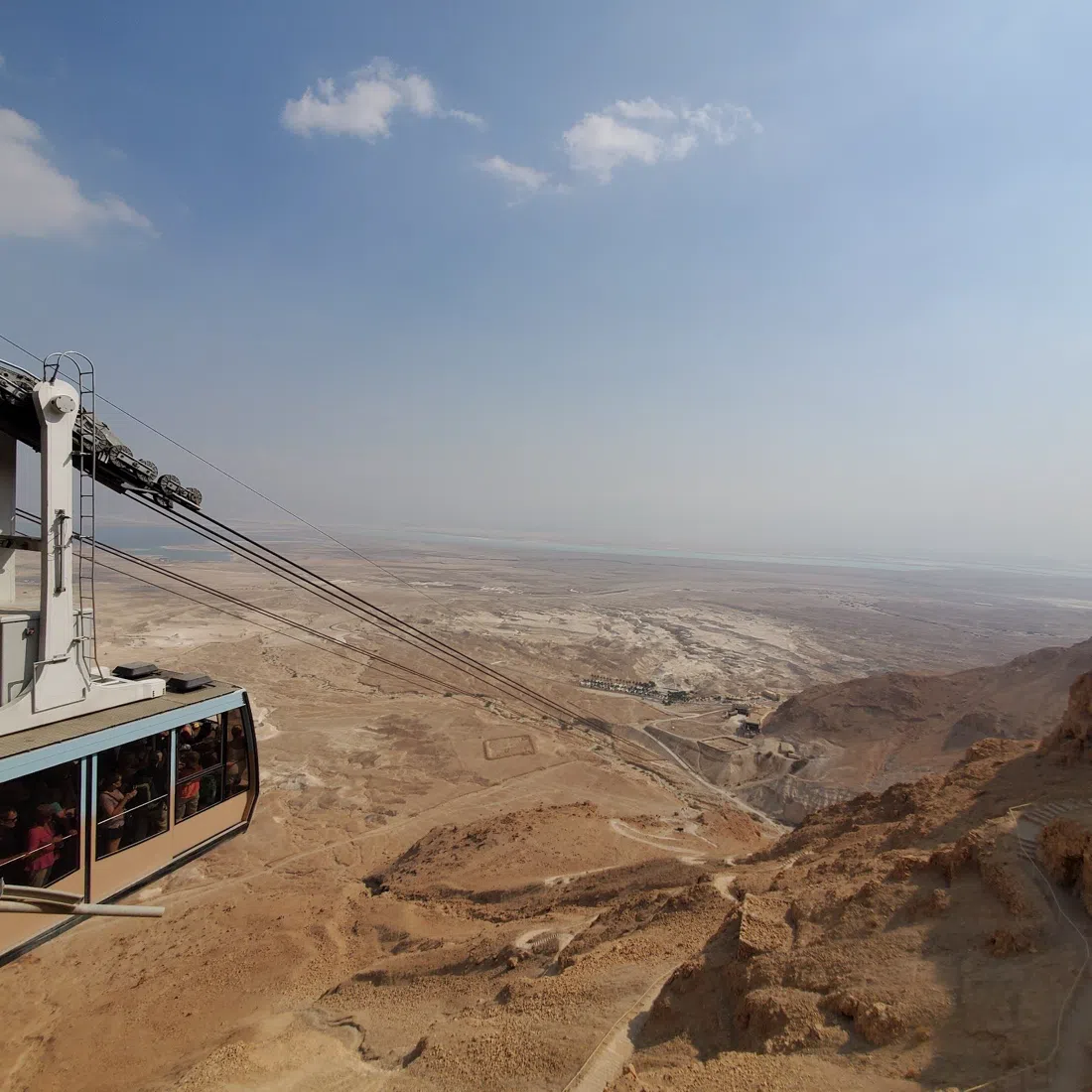
People get this wrong more often than anything else about the mountain, and it decides whether the day is for you. The Masada Cable Car (east gate, base station beside the visitor centre) does not run for sunrise. The first cabin is around 08:00, long after the light has happened. It costs NIS 32 one way or NIS 54 return for an adult, NIS 16 and NIS 32 for a child, and it is not covered by the Israel Pass, so keep that money aside. Where the cable car earns its keep is the way down, when your legs have had enough and the heat is starting to stand up off the rock. It has high throughput and was built for coach parties, but a group over about thirty should reserve a slot, because the queue at the base station thickens quickly once the 08:00 crowd lands.
The Snake Path in the dark
The Snake Path (Masada east ascent, from the visitor centre) opens about an hour before sunrise, and that hour is your entire margin. It is roughly two kilometres with 310 metres of climb, 45 to 60 minutes at a steady pace, and it is a walking path rather than a scramble. You will not need your hands, only a torch and a sensible pair of shoes. The path takes groups freely and has no cap, but it self-selects honestly: guides routinely split a party, walkers up the path and everyone else waiting below for the first cabin. Nobody is embarrassed by that arrangement. One hard limit to know in advance: in high summer the authority can cut off the ascent as early as 07:00 on extreme-heat days. That is about the afternoon, not the dawn, but it tells you how seriously the desert is treated here.
The quiet way up from the west
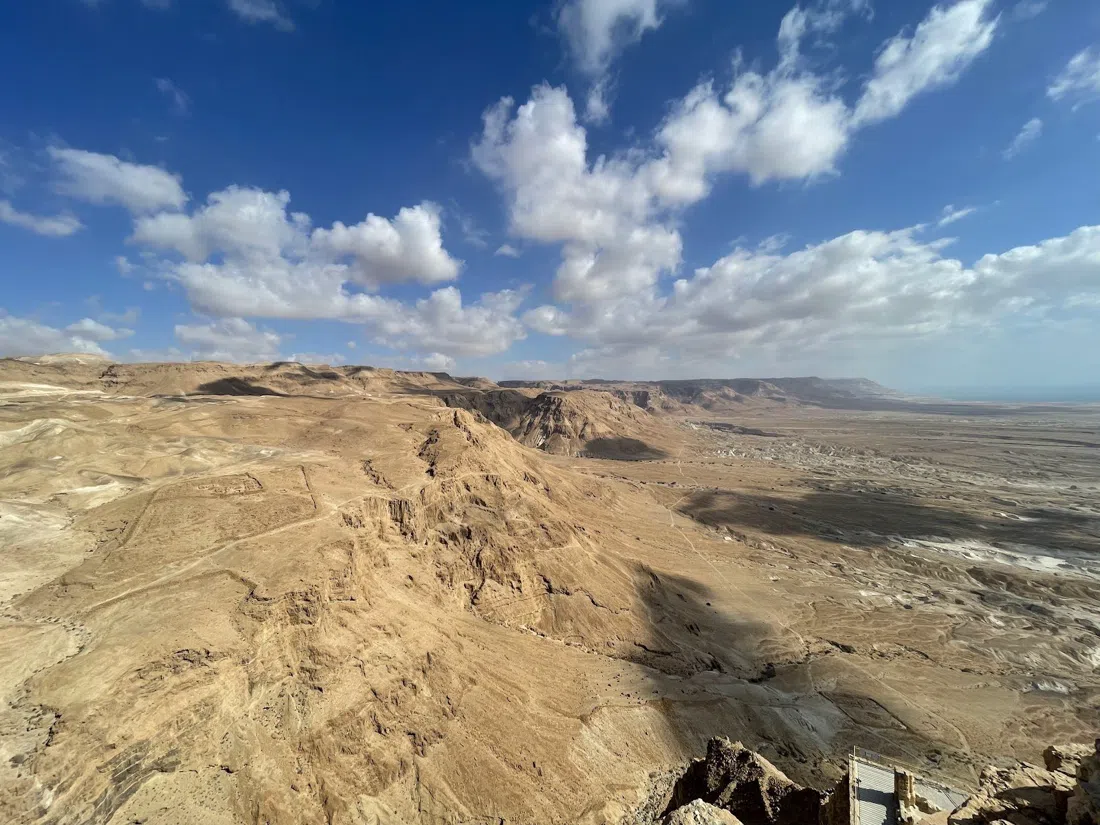
If the Snake Path is out of the question, there is a real alternative that almost nobody on a day trip gets to use. The Roman Ramp Trail and Masada West Gate (western approach, off road 3199) is about fifteen minutes of walking and sixty metres of climb, with free car and coach parking, toilets, a picnic awning and a small service centre. You walk up the siege ramp itself, the earthwork the Roman Tenth Legion pushed against the western wall, which is a stranger thing to do with your feet than the view alone suggests. It is also quiet enough that a group tends to have the ramp to itself. The catch is geography: it is reached across the desert plateau by road 3199, a completely separate approach from the Dead Sea highway, so a day trip running down Route 90 cannot include it. This gate is for people with their own car, or an overnight nearby.
Sunrise on Herod's terraces
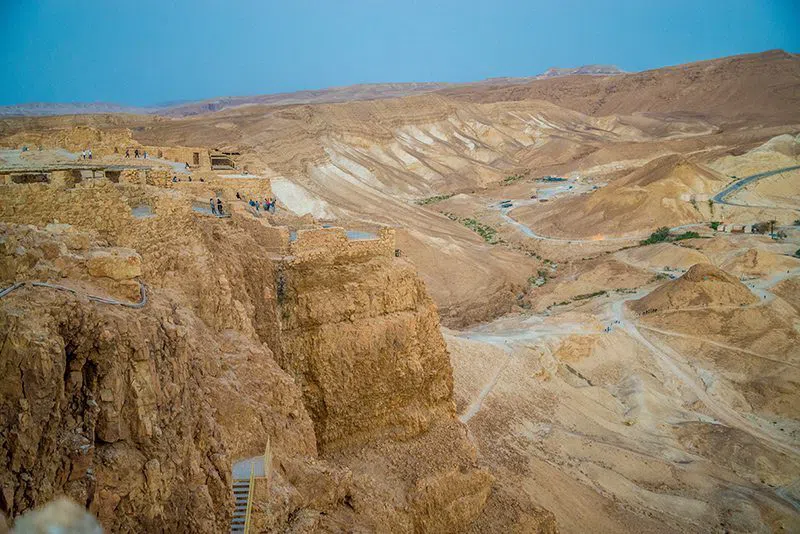
The summit is wide and mostly low ruin, and it is easy to wander it aimlessly in the half-dark. Go straight to Herod's Northern Palace (Masada summit, northern cliff). Herod built a villa hanging off the cliff in three stepped terraces, private, shaded and absurdly placed, and the eastern edge here looks over the Dead Sea to the Moab mountains where the sun comes up. That edge is the one part of the summit worth standing in a queue for. The palace is open-air and self-guiding with signage, and the terraces themselves are reached by narrow stairs, which is why guides brief a large group on top and then send people down in waves. If you are two rather than twenty, take the eastern edge for the light, then drop onto the terraces twenty minutes later when the first parties have cleared.
Thirty minutes that puts names to the rubble
On the way back down, The Masada Museum in Memory of Yigael Yadin (east gate, beside the visitor centre) is the half-hour that turns a field of foundations into a story with people in it: Yadin's excavations in the 1960s, the small objects, the names scratched on potsherds. It costs NIS 20 on top of park entry, entry is by reservation so group slots have to be booked with the park, and audio headsets in Hebrew and English are handed out at the door. It opens with the park at 08:00, which is exactly why sunrise walkers do it last rather than first. It is also honest about the hardest part: the account of how the siege ended comes from one Roman-era writer, Josephus, and archaeologists have argued about it ever since.
Water, and the only food for miles
The Masada Visitor Center Food Court (east gate) is a self-service cafeteria at snack-bar to mid prices, and it matters only because there is nothing else: no kiosk on the summit, no shop on the highway either side. It is built for coach loads, and guides time their stop to miss the 09:00 crush. Carry your own water for the climb. The summit has no shade worth the name, and the desert heat here is not a matter of opinion.
Sleeping 200 metres from the trailhead
The unglamorous fix for the whole timing problem is to not start in the city. HI Masada Hostel, also signed as the Masada Guest House (east gate, beside the visitor centre), has 88 rooms in dorms and modest private rooms with breakfast included, and it was purpose-built for school and tour groups, so nobody will blink at a party of forty. It sits about 200 metres from the trailhead, which turns a 03:00 alarm in a city hotel into a 04:30 one and a short walk. If you would rather keep the city as your base for the rest of the week and take the long pre-dawn drive on the chin, the Tel Aviv hotel search is the place to sort that out first, because the pickup time dictates which side of the city is worth staying on.
The float, and which beach
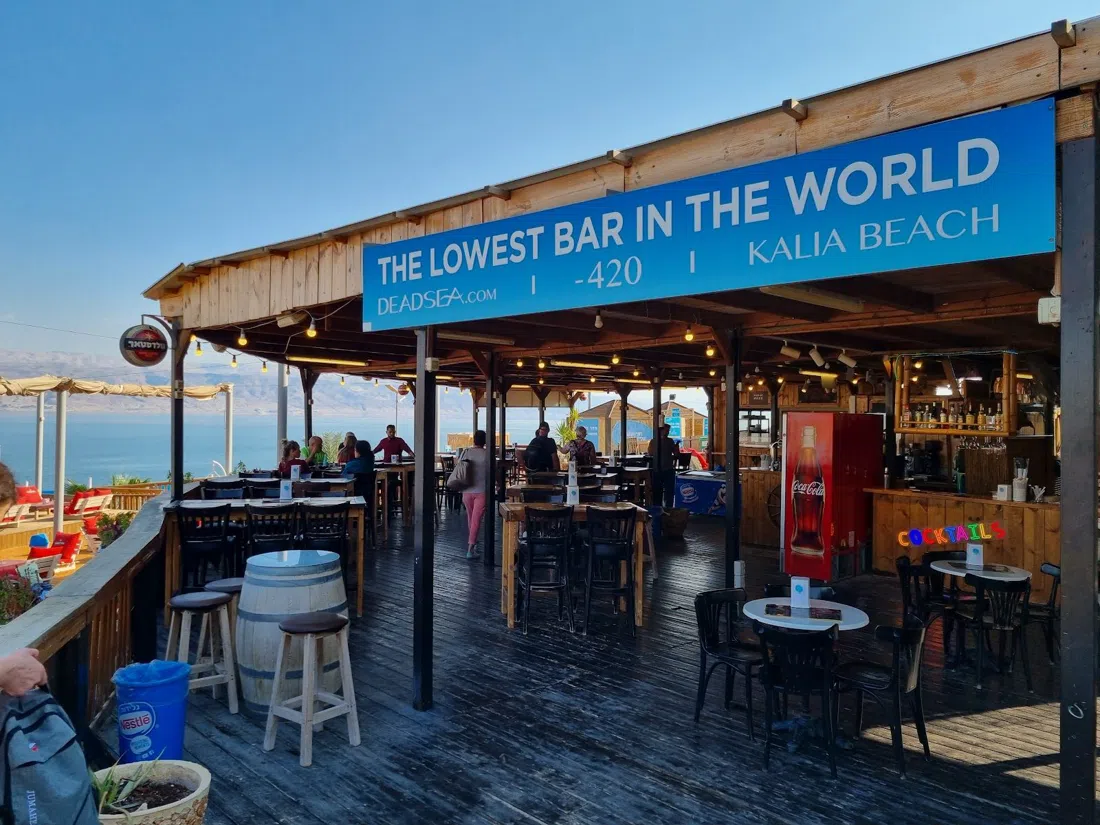
By mid-morning you want to be in the water, and the choice is simple. Ein Bokek Central Beach (southern basin, Route 90) is free, municipal and unrestricted, with no booking and no door policy, and with showers, changing rooms, toilets, chairs and umbrellas all at no charge. It is the default float stop for coach groups on the southern shore. The southern basin here is an engineered evaporation pond, which is precisely why the water stays put and the beach is safe to wade into; lifeguards are posted roughly 07:00 to 18:00 in summer. Kalia Beach (northern shore, Route 90) is the paid option, NIS 45 for an adult and NIS 35 for a child, student or senior, including parking, a chair, a parasol and unlimited shuttles down to the water. Most day trips use it because it is the closest float to the road home, and because the natural mud is free to scoop by the handful, which is the reason people choose it over a hotel beach.
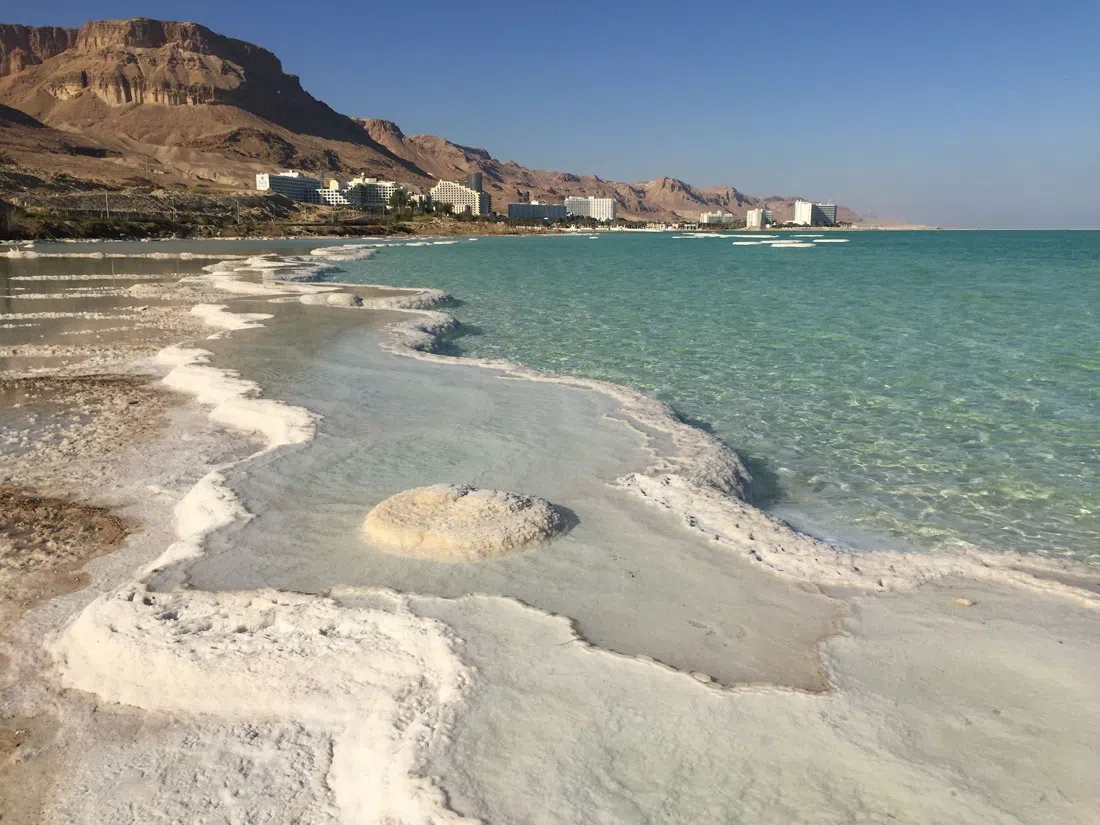
The water asks for some discipline. Ten to twenty minutes is plenty, keep your head up and your face dry, do not shave that morning, and rinse thoroughly in fresh water afterwards. Any cut you had forgotten about will remind you it exists.
The oasis, and what the flood took
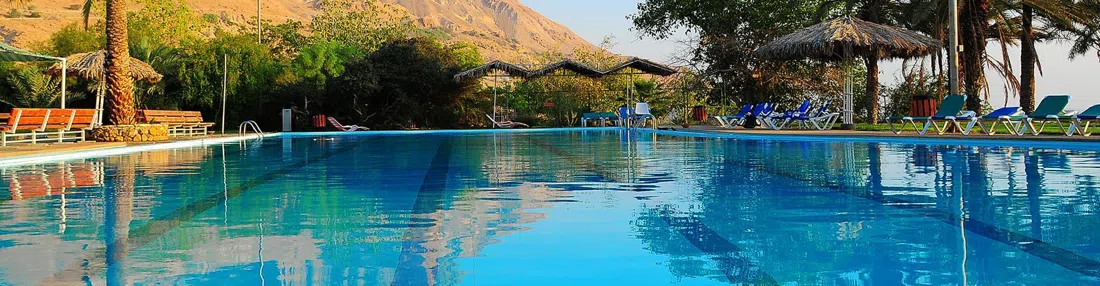
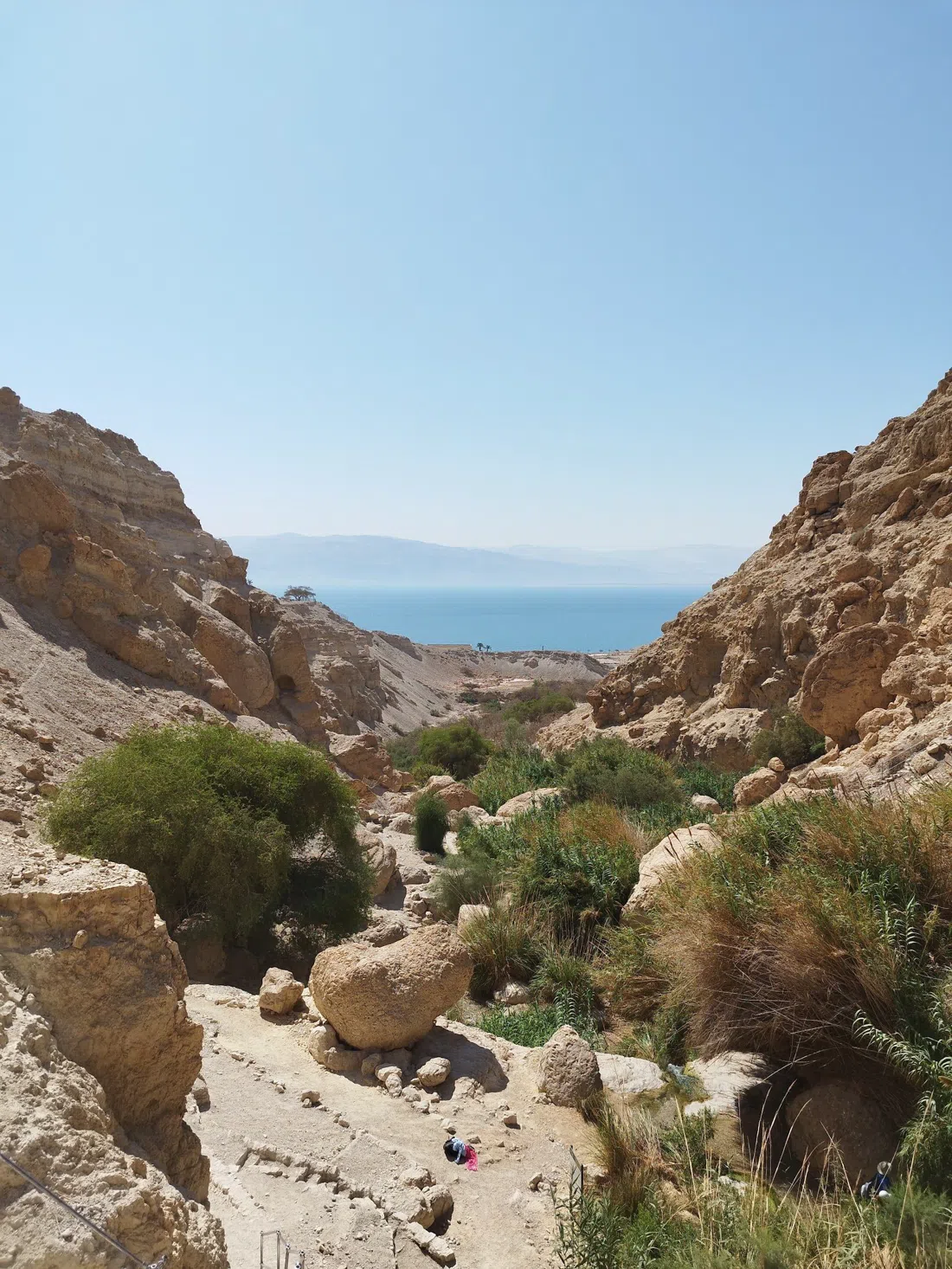
The third stop is where itineraries currently diverge, and you should check it on the day rather than trust a printed plan. Ein Gedi Nature Reserve (Nahal David) (northern shore, Route 90) costs NIS 31 for an adult and NIS 16 for a child, but a flash flood in May 2026 wrecked trails, bridges and infrastructure. As things stand, only the accessible path to the first waterfall is open, about five minutes each way, while the spring, Dudim's Cave and the longer routes are shut. It still takes groups, but the open stretch is short and bottlenecks fast, so book the entry slot and expect a tight turnaround. Some operators have quietly substituted another stop, and a sensible one is next door: the Ein Gedi Botanical Garden (kibbutz Ein Gedi, northern shore) is a genuinely odd, genuinely green half-hour in the middle of a salt desert, with a small entry fee, free entry for hotel guests, and guided walks in English arranged through the kibbutz hotel for groups or privately for a fee.
An hour at the scroll caves
Qumran National Park (northern basin, Route 90) is the other natural pairing on the same drive, and it is honest about what it is: a modest archaeological site whose importance is entirely out of proportion to its size, because the Dead Sea Scrolls came out of the caves in the cliff above it. There is coach parking, an introductory film in a proper auditorium, a shop and a café, and the whole thing is built to process a group in an hour, which is also about how long it deserves. Standard national-park fee, in the low tens of shekels for an adult. It opens 08:00 to 17:00 in summer with last entry at 16:00, and an hour earlier in winter.
Best time to go
November to March is the season that makes this comfortable rather than survivable. Daytime heat on the shore is manageable, the water is still warm, and sunrise falls late enough that the pickup is merely early rather than brutal. The trade-off is the wadis: winter and early spring are the flash-flood months, which is why a desert canyon can be closed on a clear morning and why the Ein Gedi situation exists at all. April to May and October are the comfortable middle. From June to September the sunrise is early and you may be on the path before 04:30, the summit is bearable for an hour after dawn and unpleasant after that, and the heat cut-off on the ascent is a live possibility. Day of the week matters too, because the guided day from the city runs four days a week, on Monday, Wednesday, Friday and Saturday. Whatever the month, go up for sunrise and float afterwards, never the reverse; the salt on your skin and a 310-metre climb do not belong in the same order.
Tickets at the door against booking ahead
With your own car, nothing needs reserving except the museum, which is entry by reservation, and a cable-car slot if you are a large party. You pay NIS 37 at the gate, NIS 32 for the cabin down, NIS 20 for the museum, and then either nothing at all at Ein Bokek or NIS 45 at Kalia. That is the cheap way and it works. A guided day from the city starts from 99 USD per person, and what you are buying is the drive in the dark, a 4am start you did not have to organise, and someone who knows which stop is actually open this week. The main tour is flagged as likely to sell out, so if your dates are fixed, book it before you fly rather than on the evening you arrive.
Access, heat and the rules that are not negotiable
There is no shade on the summit, no water on the summit, and no way to shorten the Snake Path once you are on it. If a 310-metre climb in the dark is not realistic, do not treat that as a failure: arrive at 08:00 with the first cabin, take the cable car up, and you will see the same fortress in slightly less flattering light. If you have your own car and limited mobility, the Roman Ramp Trail is the gentler ascent, at the cost of a completely different approach road. On the terraces, the stairs are narrow and there is no way round that. At the water, obey the lifeguards, do not swim head-down, and keep the salt out of your eyes.
Is it worth it
Yes, with a clear head about what you are paying for. You are spending twelve hours, most of them in a seat, on about twenty minutes of light and an hour on top. It still works because Masada at dawn is the only time the place feels like the refuge it was built as, before the coaches make it a monument. The climb is the point, not an obstacle to it. It suits anyone who can walk uphill for an hour, travellers with one free day and an appetite for the desert rather than the city, and group trips where a guide handling the logistics is worth real money. It suits you less if you need a lie-in, if you are travelling with small children who will be awake at 03:00 and asleep by sunrise, or if what you actually want is the float, in which case skip the mountain, drive to the shore at a civilised hour, and give the afternoon to the water.
Practical notes
Route 90 down the Dead Sea shore is the whole journey. A guided day handles it, and a hire car makes it flexible and lets you use the west gate; driving yourself before dawn means camels and unlit verges, so take it slowly. Cards work at park gates and the food court, but carry some shekels for a beach ticket and small extras. Be at the Snake Path when it opens, an hour before sunrise, and allow 45 to 60 minutes up and an hour on top, with the museum after 08:00 on the way out. Independently, reckon on around NIS 130 to NIS 180 per adult for entry, the cable car down, the museum and a paid beach, plus fuel and food; the guided day starts from 99 USD per person. Bring two litres of water each, a torch, a hat, real shoes, a towel, flip-flops for the salt and stones, and swimwear you do not love. For the days either side of this one, the Tel Aviv guide is the better place to start.
Questions
Can I take the cable car up Masada for sunrise?
No. The Masada Cable Car's first cabin is around 08:00, well after the light, so sunrise means walking up the Snake Path and using the cable car for the descent. A one-way adult ticket is NIS 32, return NIS 54, and it is not covered by the Israel Pass.
How hard is the Snake Path, and how early does it open?
It opens about an hour before sunrise and takes 45 to 60 minutes, roughly two kilometres with 310 metres of climb. It is steady walking rather than scrambling, but there is no shade and no water on the way, so carry two litres each and a torch. In high summer the authority can close the ascent as early as 07:00 on extreme-heat days.
What time does a day trip from Tel Aviv leave, and how long is it?
Pickups are in the small hours, because the drive down Route 90 takes a little over two hours and you need to be on the path an hour before sunrise. Plan on a twelve-hour day door to door. The guided option runs four days a week (Monday, Wednesday, Friday and Saturday), starts from 99 USD per person, and is flagged as likely to sell out, so book before you travel if your dates are fixed.
Is Ein Gedi Nature Reserve open after the 2026 flood?
Only partly. A flash flood in May 2026 damaged trails, bridges and infrastructure, and as things stand just the accessible path to the first waterfall is open (about five minutes each way), with the spring, Dudim's Cave and the longer routes shut. Verify on the day; the Ein Gedi Botanical Garden nearby is a sensible substitute stop.
Free beach or paid beach for the Dead Sea float?
Ein Bokek Central Beach on the southern shore is free and municipal, with free showers, changing rooms, chairs and umbrellas, and lifeguards roughly 07:00 to 18:00 in summer. Kalia Beach on the northern shore charges NIS 45 for an adult and NIS 35 for a child, student or senior, including parking, chair, parasol and shuttles, and has natural mud you can scoop yourself. Either way, keep the float to ten or twenty minutes, keep your head up, and rinse afterwards.
First published on telavivguides.com, the Tel Aviv guide.