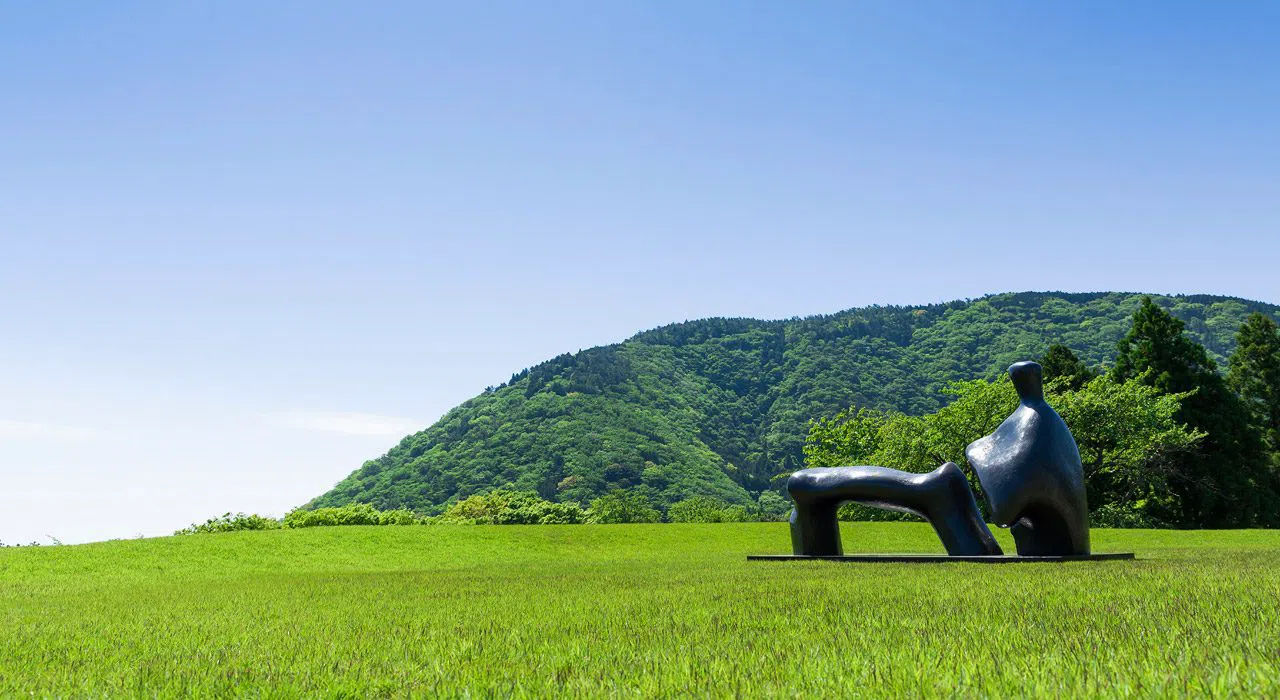
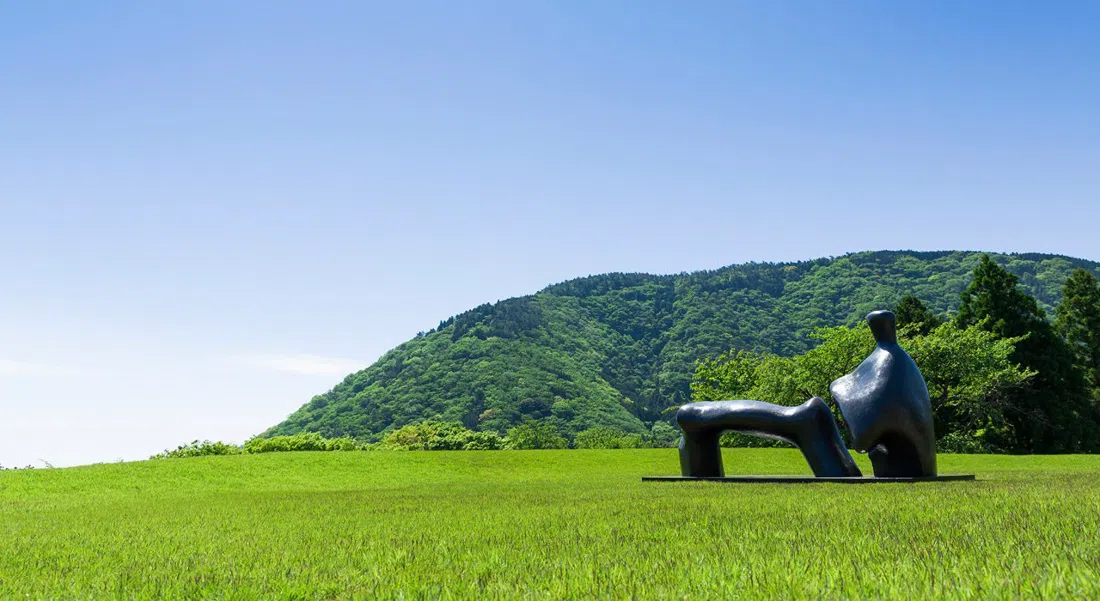
The gate is a two-minute walk uphill from Chokoku-no-Mori station, and past the ticket window you come out onto a lawn with sculptures standing on it, terracing away down the mountainside, before you reach any building. Most people ride up from Tokyo for the day, arrive somewhere around eleven, and leave having walked considerably further than they meant to. Allow for the gradient and this is one of the easiest good days out of the city.
What you are walking into
The Hakone Open-Air Museum (Chokoku-no-Mori, one stop short of Gora on the mountain railway) is a sculpture collection laid out across a hillside rather than hung on walls. The site works as a loop: open lawns and terraces holding the outdoor works, a handful of indoor pavilions for the things that cannot sit in the weather, a buffet restaurant, a café, and paths that drop and climb between all of it. You are outdoors for most of the visit, on real slope, so the shoes matter more than the itinerary.
It opens 9:00 to 17:00, every day of the year, with last entry at 16:30. Admission is ¥2,000 for an adult at the door and ¥1,800 booked online, ¥1,600 for university and high school students, ¥800 for elementary and junior high. If you are carrying a Hakone Free Pass, that is ¥100 off. There is no timed entry and no slot system: you walk up, pay, and go in. That shapes the whole day, because your only real scheduling problem is other people, not availability.
How long it takes
Two hours is the floor and it feels rushed. Three hours is the honest number for walking the full outdoor circuit at a normal pace, stopping at the pieces that hold you, and giving the indoor rooms a proper look. Four hours with lunch on site is comfortable and is what I would budget if you are coming up from Tokyo and not trying to bolt anything else on.
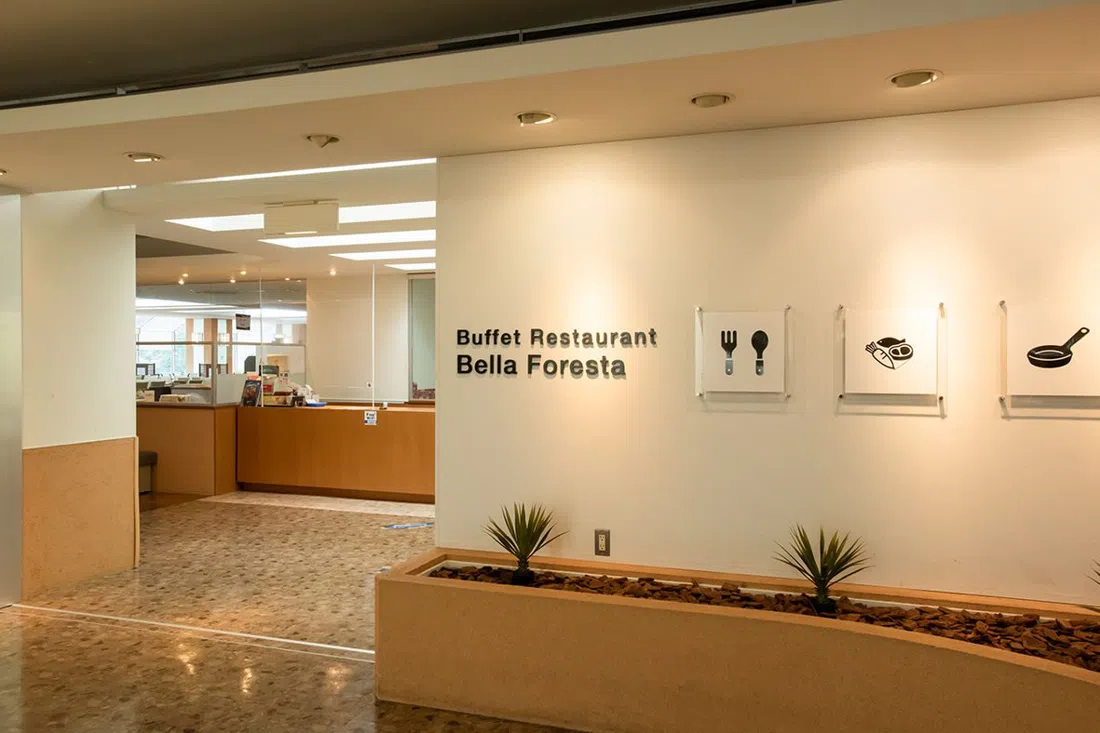
The constraint is the restaurant clock, not the art. Bella Foresta (inside the museum grounds) serves 11:00 to 15:30 on weekdays and 11:00 to 16:00 at weekends and on holidays, but the doors close at 15:00. Arrive after that and your only option inside the gate is the café by the Picasso Pavilion, which runs until 16:30. So a late-morning arrival, outdoor loop first, lunch at around 13:00, indoor rooms after, works cleanly. A 14:30 arrival does not.
The Picasso Pavilion and the one bottleneck on site
Picasso Pavilion (inside the museum, included in your admission) holds roughly 300 works, ceramics above all, donated by the artist's daughter Maya. It is a small building and it is the only part of the site that genuinely jams. Outdoors, a hundred people disperse across a hillside and you barely register them; in here, one coach party arriving together fills the rooms and you end up shuffling.
It is also the rainy-day half of the visit, so everyone has the same idea at the same time when the weather turns. If you can, do the pavilion first thing at 9:00 or in the last hour before 16:30 and take the lawns in the middle of the day. If you are with a group of any size, split it and send people through in waves rather than as a block: you will all see more and the room stays usable for everyone else.
Tickets at the gate versus booking ahead
Because there is no timed-entry queue, buying ahead online saves you ¥200 a head and a minute at the window, and nothing else. There is no scenario where the museum sells out from under you. If you are travelling on a Hakone Free Pass, just take the ¥100 discount at the gate and keep it simple.
Groups are the exception. Advance booking through the museum office gets you a group rate and, more usefully, means the gate is expecting you. There is coach parking on site. If you are a group of twenty arriving unannounced at 11:00 on a Saturday, you will get in, just slowly.
A guided option exists if you would rather someone else drove and handled the day, and the good ones combine the museum with the wider area. That is a different product entirely: private full-day car tours here start from 635 USD per person, run seven days a week, and the strongest-rated one is flagged as likely to sell out, so if that is the format you want, book it well before you fly. For an independent traveller doing it on trains, the door price is the door price and you can decide the night before.
Getting up there
The access route is the Hakone Tozan Railway (the mountain line running up from Hakone-Yumoto). Hakone-Yumoto to Chokoku-no-Mori is ¥470, it is covered by the Hakone Free Pass, and no booking is needed or possible. Chokoku-no-Mori station is two minutes from the museum gate, which is the whole argument for arriving by train.
The cars are short and fill fast. A large group should deliberately spread across carriages rather than trying to board as one; a couple can usually get a seat by letting one train go. If you are driving, know that the museum car park can be full from around 10:00 on a busy weekend, and that the train sits you two minutes from the entrance for ¥470, which is cheaper and more certain than circling.
From Tokyo, this is a same-day return without drama, but it is a long day on trains at both ends. Staying a night in the area turns it into a much better trip; if you would rather base yourself in the city and treat this as an excursion, our Tokyo hotel search covers the districts with the fastest access to the mountain line, and the wider Tokyo guide has the rest of the city planning.
Lockers, prams and what you may photograph
Coin lockers at the entrance are free, and so is the stroller loan, which is worth knowing before you haul a bag around a hillside. Photography is fine for personal use. Commercial photography is not permitted, and video is not allowed inside the indoor galleries at all, the Picasso Pavilion included, so put the phone away before you go in rather than being told to.
The site is a slope with steps and ramps in places. It is walkable with a pushchair, and the loan strollers exist precisely because people underestimate the terrain, but anyone with limited mobility should plan a shortened outdoor loop rather than the full circuit.
Lunch inside the gate and within walking distance
Bella Foresta is a buffet at roughly ¥2,000 to ¥2,800 per adult and publishes a dedicated set menu for groups, which makes it the obvious answer for a coach party: you feed thirty people without anybody negotiating a menu. For two people it is convenient rather than exciting, and the hours above are the catch.
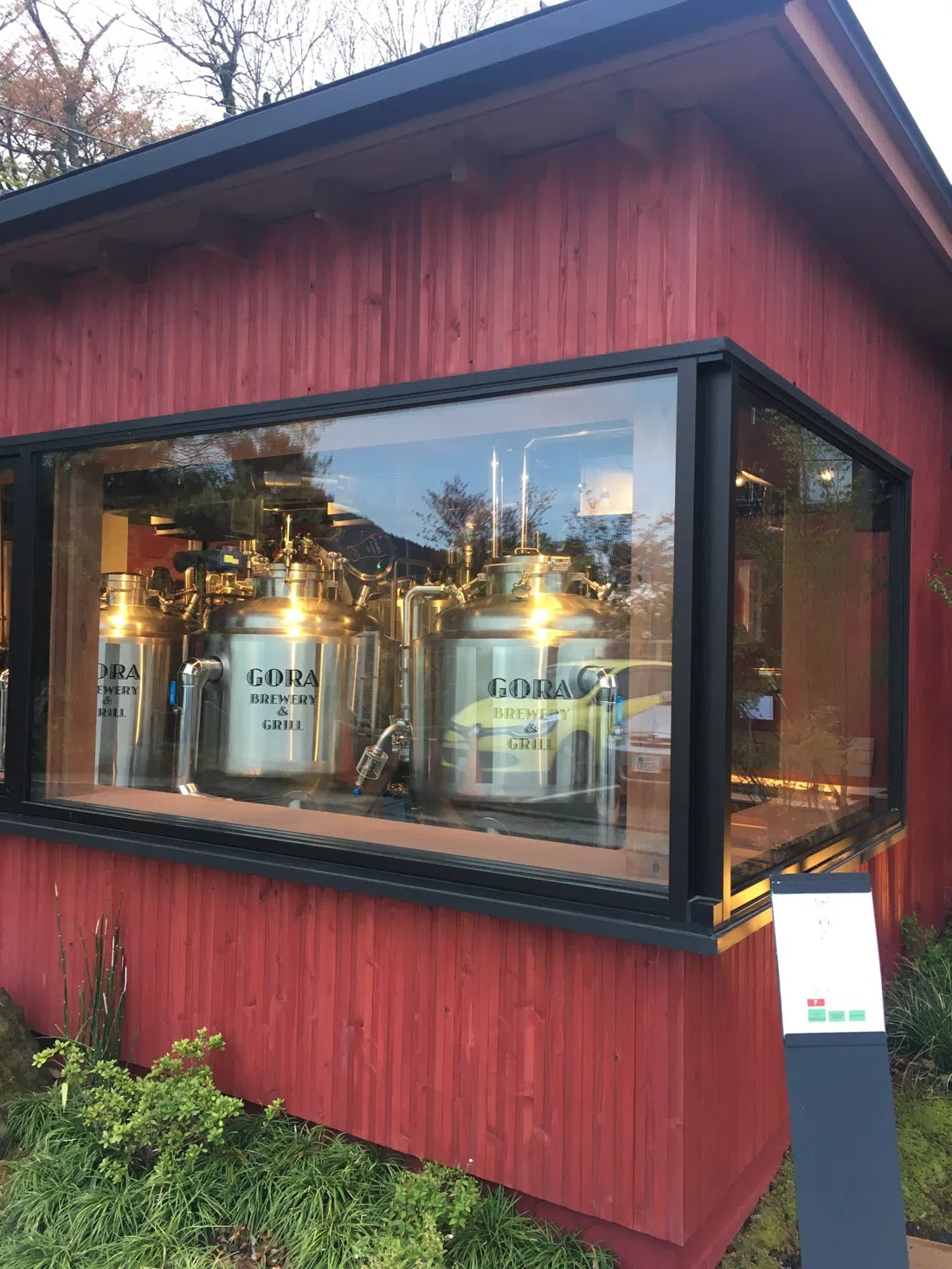
One stop further up the line, Gora Brewery & Grill (Gora, walking distance from the station) brews its own ales on site and cooks over wood, ¥2,500 to ¥6,000 a head. It takes groups by reservation and walk-ins at peak lunch are a gamble. It is the best proper sit-down within walking distance of the station and the one I would book if the day is meant to have a meal in it rather than a refuelling stop.
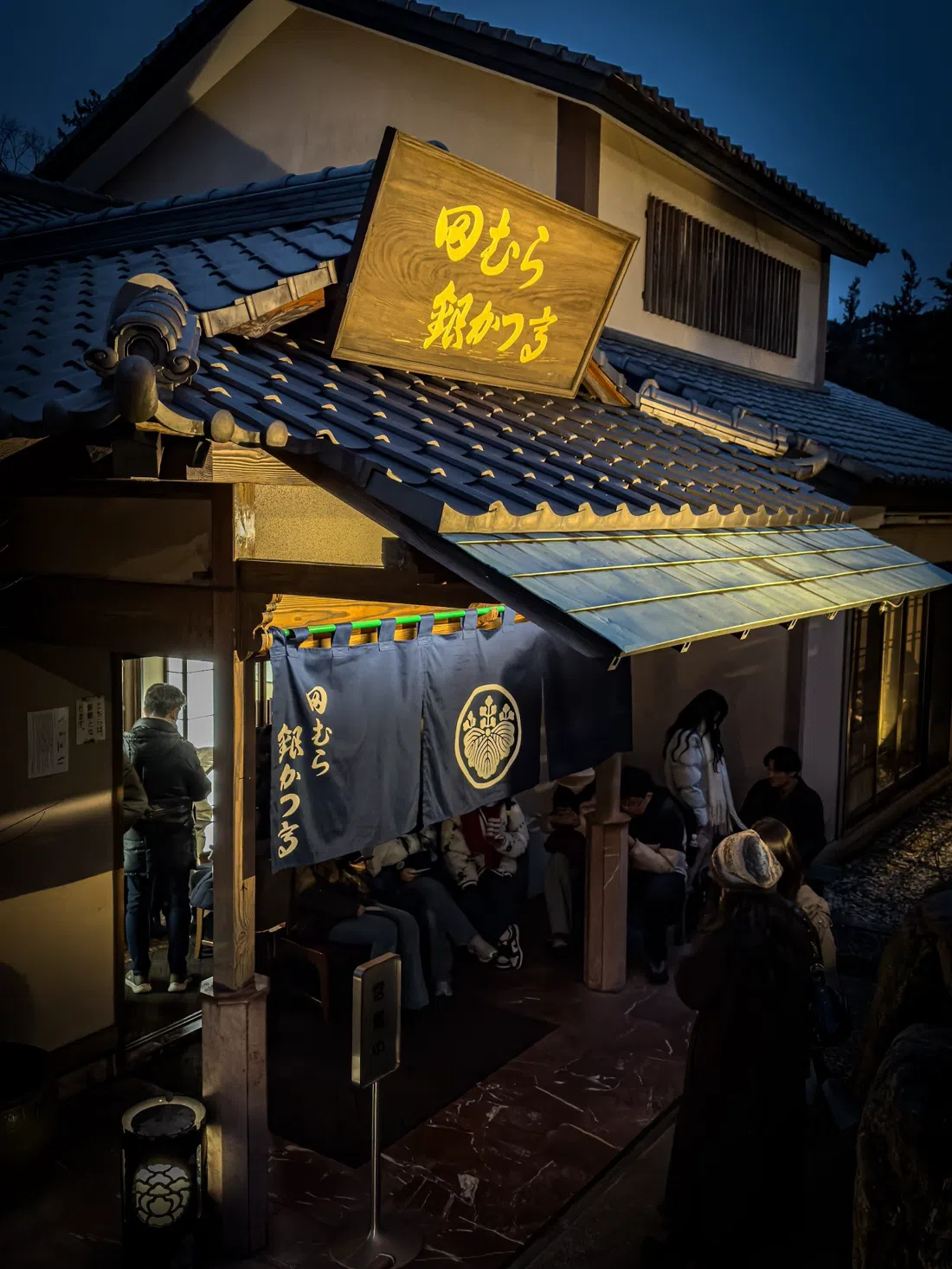
Tamura Ginkatsutei (Gora) has been open since 1973 and is known for one dish, tofu katsu-ni (minced pork wrapped in tofu and simmered), at ¥1,800 to ¥2,800. The queue outside at 12:30 is the local landmark. Go at 11:15 or after 14:00, or accept that you are standing in line. Small groups are fine; a big party should book.
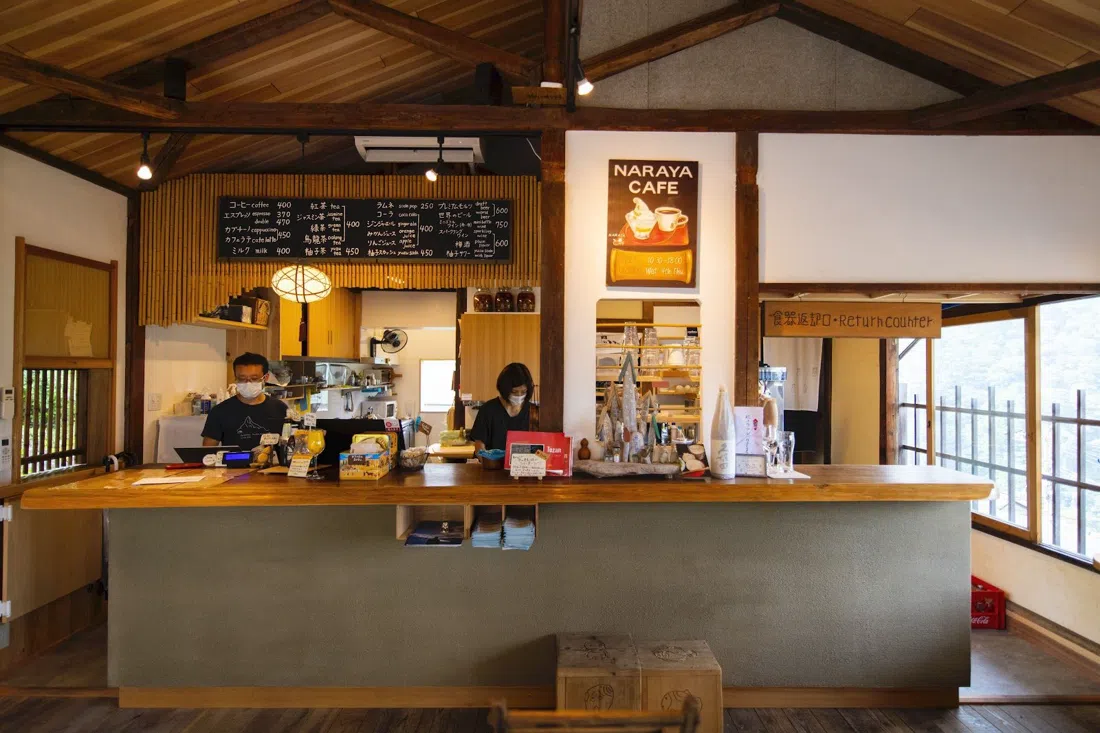
NARAYA CAFE (Miyanoshita, on the line below) does Hakone in ten minutes: a free foot bath, a coffee, a gourd-shaped steamed bun, ¥500 to ¥1,200, built in the grounds of a former ryokan. It is counter-service and small. Two people, perfect. A coach group will swamp it, so send people in waves or skip it. Note the closures, Wednesdays and the fourth Thursday, and the short hours, 10:30 to 17:00.
The Fujiya Hotel (Miyanoshita) is Japan's first resort hotel, back in business after a full seismic restoration. Public areas, garden and bakery welcome non-residents, and it costs nothing to walk in and look at the staircase. The Picot bakery at the front is ¥300 to ¥800 and is the cheap way in if you only want ten minutes; the lounge runs ¥1,200 to ¥2,500 and the curry lunch starts around ¥3,000. The dining room takes group bookings.
Filling the rest of the afternoon
Hakone Museum of Art (five minutes' walk from the Open-Air Museum) is the area's oldest museum, ¥1,430 adult with ¥200 off on the Free Pass, and its moss garden is the reason to go. Two things to plan around: it closes on Thursdays, and it shuts at 16:30, or 16:00 from December to March, so it closes before its neighbour does. The garden paths are narrow and one-way in practice, which is fine for a couple and awkward for twenty people.
Hakone Gora Park (Gora) is ¥550, free with the Free Pass, open 9:00 to 17:00 with last entry 16:30. At that price it is a legitimate 40-minute filler between the museum and the cable car, and the glasshouses give you somewhere to be if it is raining. Craft workshops on site need booking for larger parties.
If the weather has genuinely turned and you want more serious indoor art, Pola Museum of Art (Sengokuhara) is ¥2,200 and open 10:00 to 17:30. It sits outside the Gora walking cluster, so it costs you a bus leg each way. It takes groups with advance notice and has coach parking.
Carrying on round the loop
The museum sits on the standard circuit, and you can finish the loop in an afternoon if you leave the gate by about 14:00. From Sounzan, the Hakone Ropeway runs to Togendai for ¥1,500 one way, covered by the Free Pass, loading continuously so groups board in batches without a reservation. The maintenance shutdown of January and February 2026 is over and the volcanic alert sits at level 1, so it is running, though it still stops for high wind or gas, and a substitute bus covers the gap when it does.
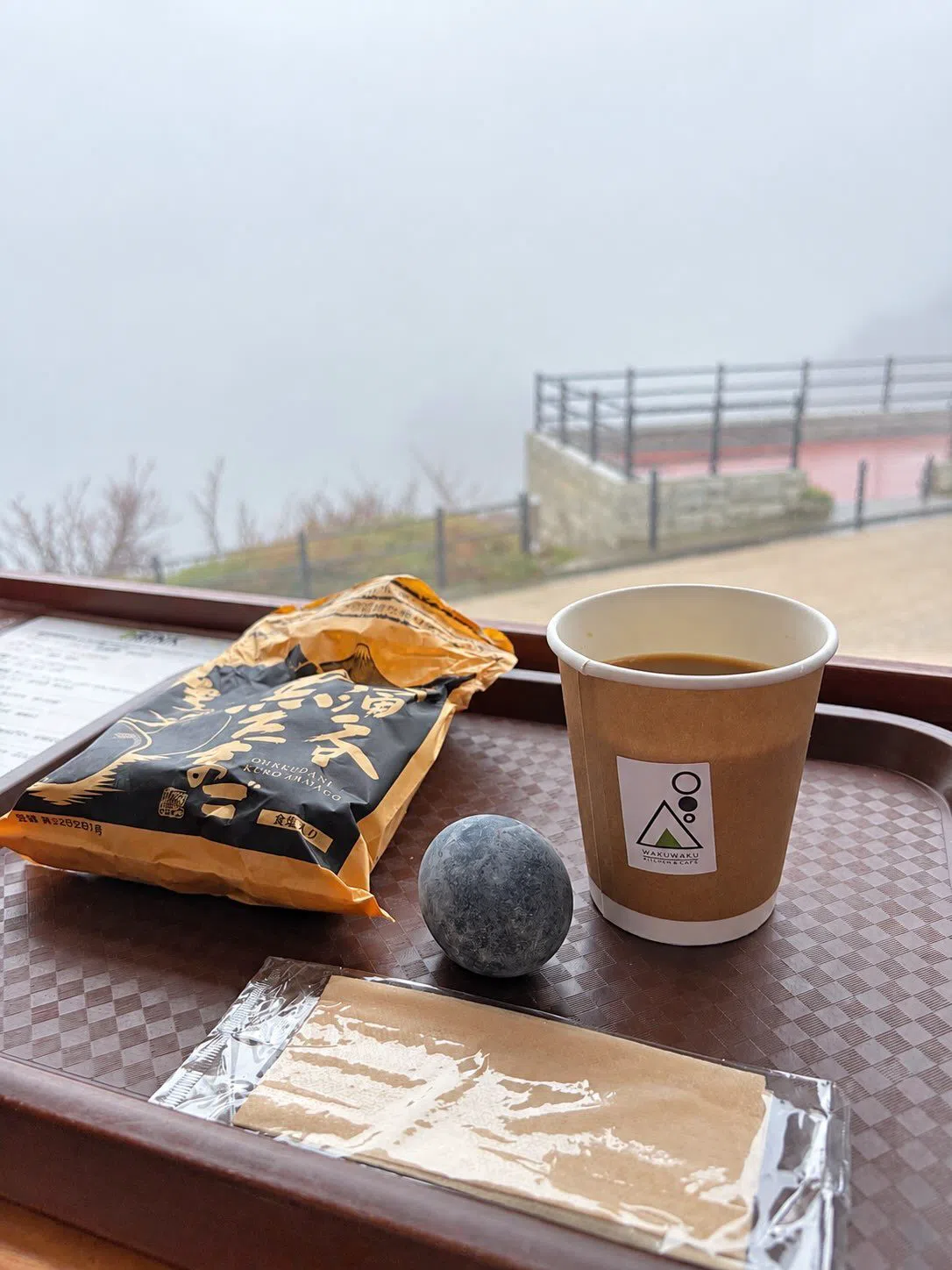
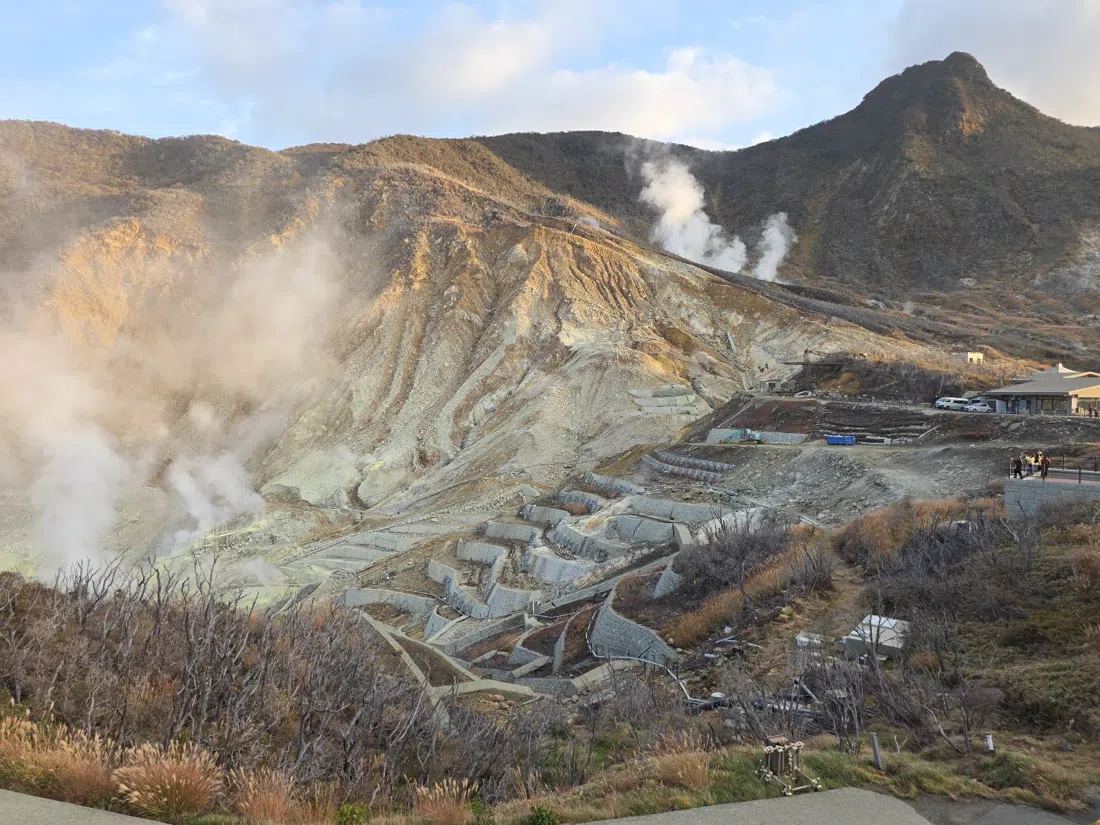
Owakudani (top of the ropeway) is free to walk into, has the strongest view of Mount Fuji on the loop, and sells black eggs at about ¥500 for five. The 700m Natural Research Trail into the boiling ground has been closed to walk-ups since 2015 and is guided-and-booked only, so do not promise anyone a walk to the fumaroles.
The Hakone Sightseeing Cruise crosses Lake Ashi from Togendai in 30 to 40 minutes, about ¥1,200 one way to Hakone-machi or ¥2,220 return, covered by the Free Pass, no reservation needed on high-capacity open-deck ships. Sit on the starboard bow leaving Togendai for the Fuji angle.
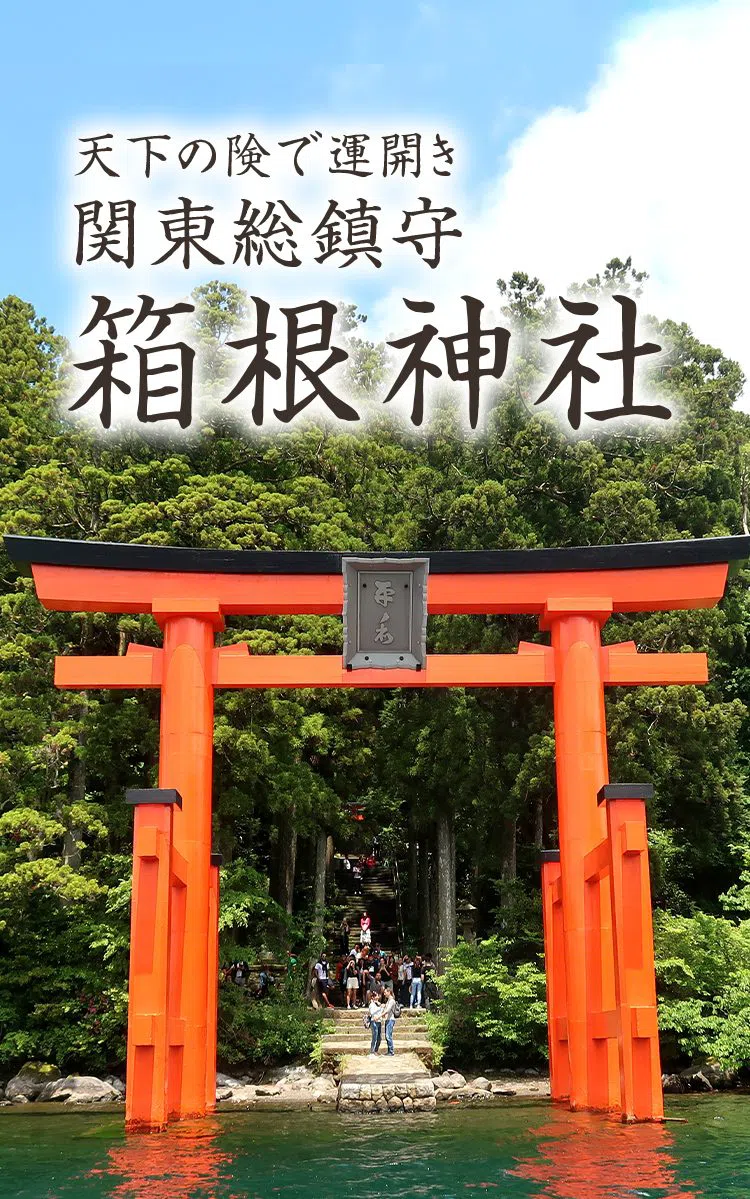
At the far end, Hakone Shrine / Heiwa-no-Torii (Motohakone) is free to enter, with the treasure hall at ¥500. The torii photo platform on the water is the one place around here with a real queue, single-file, building through the day and impossible to skip as a group. Go first thing or late afternoon and budget the wait honestly if you are on a ship's timetable. BAKERY & TABLE HAKONE (Motohakone) is two minutes from the pier, ¥500 to ¥1,500 downstairs and ¥2,000 to ¥3,500 in the upstairs restaurant, which takes bookings. The foot-bath bench seats are first-come, few, and unreservable.

Is it worth it
Yes, with one condition: you have to want to walk. The value here is in seeing large work outdoors, at a distance, with a mountainside behind it, and that only pays off if you cover the ground. If you are looking for a 45-minute gallery tick, ¥2,000 is poor value and you will feel it.
It suits couples and independent travellers best, because the site rewards drifting and doubling back. It suits families better than most art museums, since the lawns absorb children, the strollers are free, and nothing is behind glass outdoors. Groups work, but only with the Picasso Pavilion handled in waves and lunch pre-arranged. It does not suit anyone on a tight connection, because the walking loop cannot be honestly compressed below two hours.
Best time to go
Be at the gate for opening at 9:00 if you can. The first hour is the quietest, the pavilion is empty, and you get the outdoor works without other people in frame. The second-best slot is arriving around 14:30 and staying to last entry at 16:30, which is thin on lunch options but strong on light and space, though check the Museum of Art's earlier closing time before you plan to pair them that late.
The middle of the day, roughly 11:00 to 14:00, is when coaches and the trains coincide. Weekdays beat weekends by a wide margin, and the car park filling from about 10:00 on busy weekends is the clearest signal of when the site is under pressure. On a Thursday the Open-Air Museum is open, as it is every day of the year, but the Museum of Art is closed, so pair a Thursday visit with Gora Park instead.
Season-wise, this is a year-round site precisely because it never shuts, and rain is survivable rather than ruinous: the Picasso Pavilion, the museum café and the Gora Park glasshouses give you two or three hours indoors between showers. Winter shortens everything. The Museum of Art closes at 16:00 from December to March, and the ropeway is the first thing to stop in high wind. In the warm months the outdoor loop is the whole point and worth the earliest start you can manage.
Practical notes
Take the mountain railway, not a car. Hakone-Yumoto to Chokoku-no-Mori is ¥470 and the gate is two minutes from the platform. If you are doing the full loop, the Hakone Free Pass is the sensible purchase: it covers the railway, the ropeway at ¥1,500 and the lake cruise at ¥1,200 one way, takes ¥100 off the Open-Air Museum, ¥200 off the Museum of Art, and gets you into Gora Park free. Do the arithmetic on your own route, but a loop day clears the pass price comfortably.
Carry a few thousand yen. The cheap end of the day, a ¥500 bag of black eggs, a ¥500 coffee at a counter, a bakery pastry, moves faster with coins, and the entrance lockers are free so you are not hunting change for those.
On timing: the gate is open 9:00 to 17:00, last entry 16:30, every day. On-site lunch stops admitting at 15:00. The Museum of Art shuts at 16:30, or 16:00 in winter, and closes Thursdays. NARAYA CAFE is closed Wednesdays and the fourth Thursday.
A lean independent day is about ¥2,000 admission, ¥470 each way on the train and ¥2,000 to ¥2,800 for the buffet, so call it ¥5,000 to ¥6,000 per person before extras. Add the full loop and you are nearer ¥8,000 with the pass doing the heavy lifting. A private guided day with a driver is a different order of spend, from 635 USD per person, and buys you the door-to-door logistics rather than better access to the museum itself.
Questions
How much is admission, and is it cheaper to buy online?
Adults pay ¥2,000 at the door or ¥1,800 booked online. University and high school students pay ¥1,600, elementary and junior high ¥800. A Hakone Free Pass takes ¥100 off the door price. There is no timed entry, so booking ahead saves money but does not hold you a place.
What is the easiest way to get there, and should I drive?
Take the mountain railway to Chokoku-no-Mori: ¥470 from Hakone-Yumoto, covered by the Hakone Free Pass, and the gate is a two-minute walk from the platform. Driving is the weaker option, because the car park can be full from about 10:00 on busy weekends.
How long do I need at the museum?
Two hours is the minimum and feels hurried. Three hours covers the full outdoor loop plus the indoor rooms at a normal pace, and four hours is right if you eat on site. The site is a hillside, so your time goes on walking rather than queuing.
Is it still worth going if it rains?
Yes, with adjustments. The Picasso Pavilion (roughly 300 works, mostly ceramics) is the indoor half of the visit, and the museum café runs to 16:30. The Gora Park glasshouses nearby are another sheltered stop. Expect the pavilion to be busier than usual, because everyone else has the same plan.
Do I need to book anything in advance?
Not for entry as an independent visitor: you walk up and pay, any day of the year. Groups should book through the museum office for the group rate and a smoother arrival. If you want a private guided day with a driver instead, those start from 635 USD per person, run seven days a week, and the top-rated one is flagged as likely to sell out, so book it early.
First published on tokyohoilday.com, the Tokyo guide.