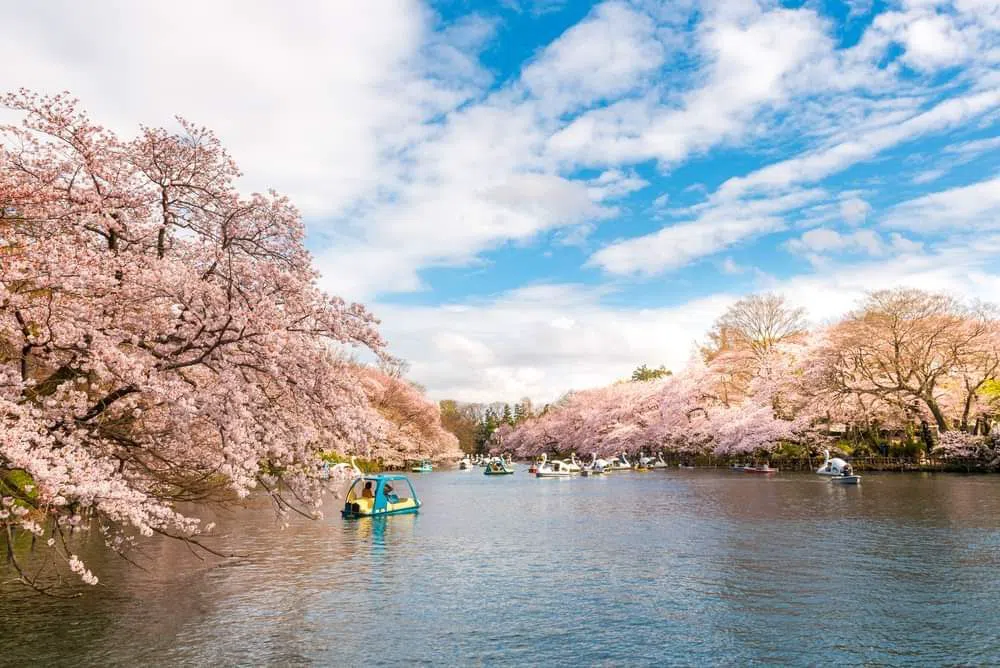
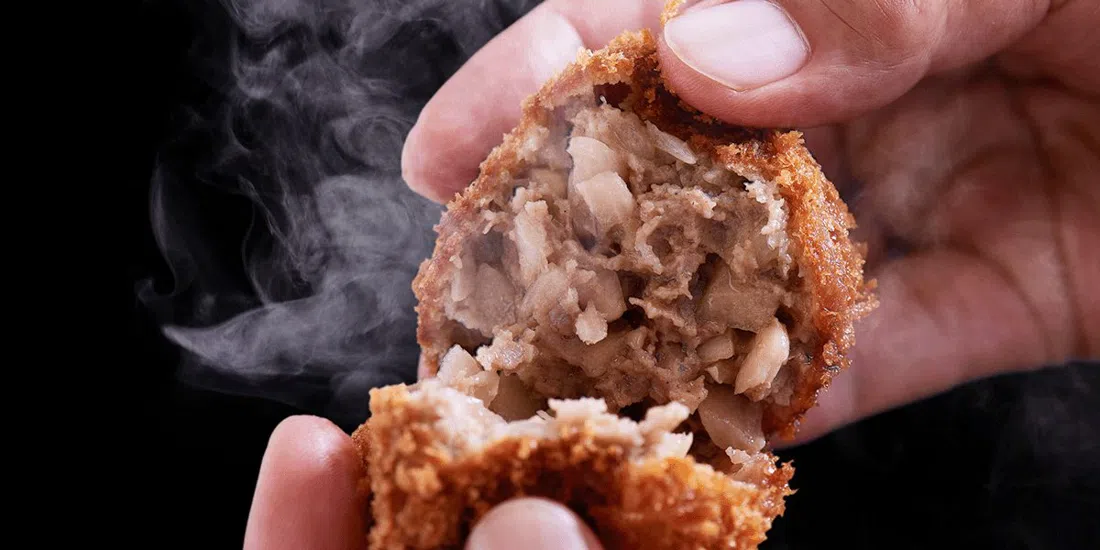
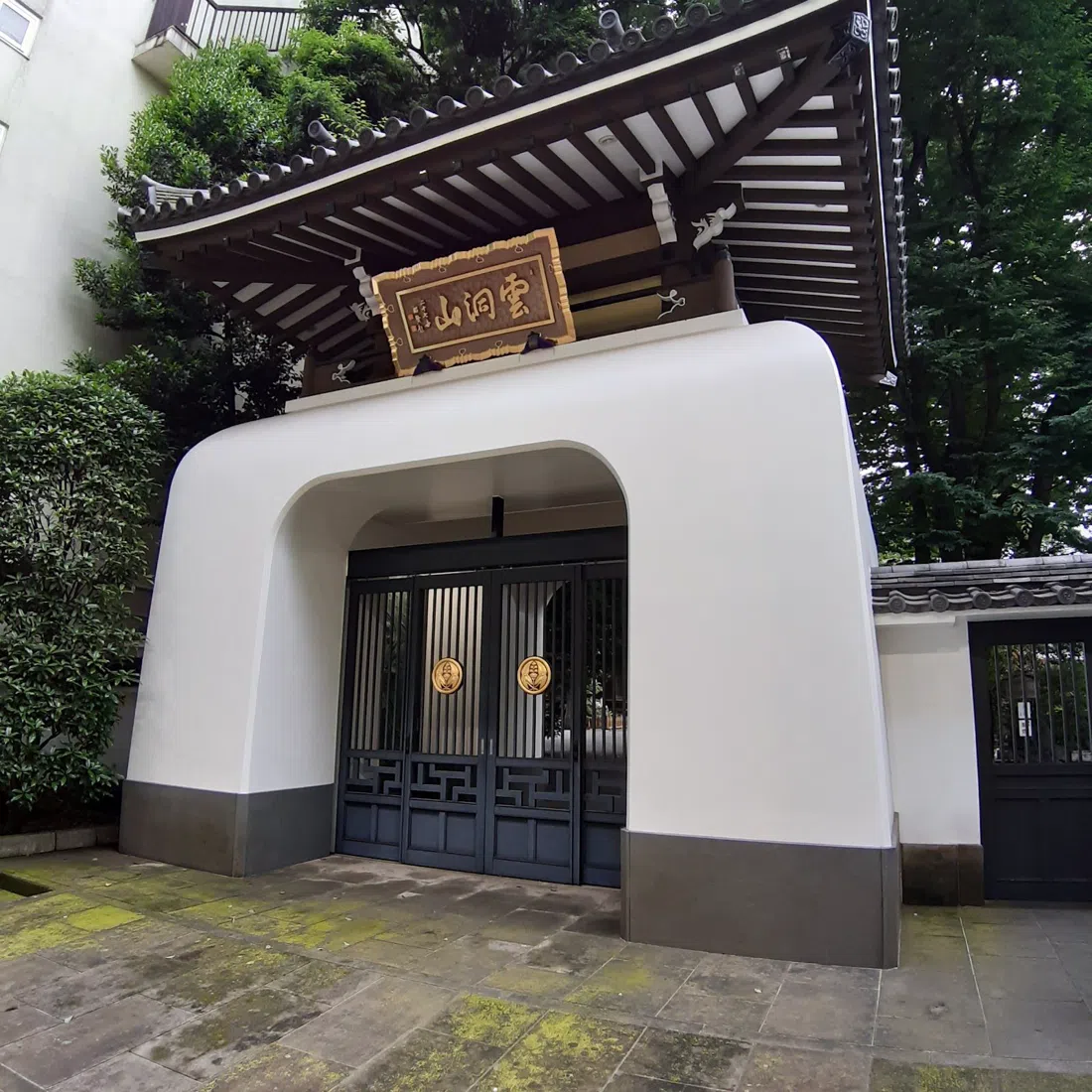
Gessoji Temple keeps raked gravel and clipped pines inside a walled compound within 300 m of Kichijoji Station. Five minutes out of the south exit, white fibreglass swan boats and plain rowboats crowd the forked pond in Inokashira Park. At the north exit, the queue for Satou's minced-beef cutlets bends along the pavement.
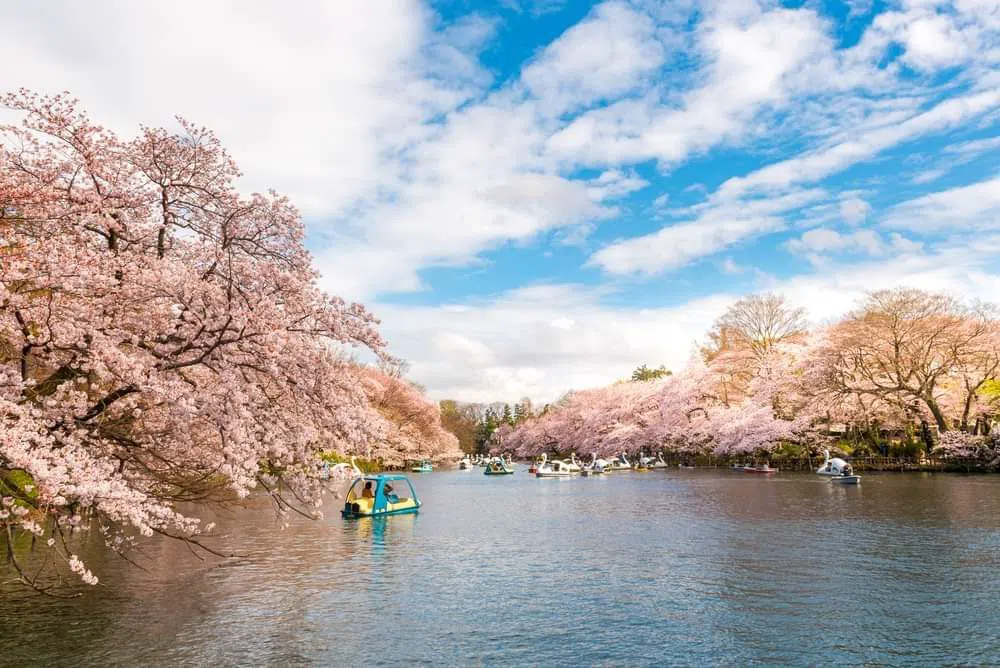
Inokashira Park and the pond
Entry is free and the park never closes. Buskers work the pond-side path, cherry trees ring the water, and the red rail of the Nanai bridge crosses it. In late March and early April the blossom crowd packs that path shoulder to shoulder, so walk it early in the morning.
The jetty rents by the boat at ¥700 to ¥1,000 per 30 minutes. One boat takes two adults plus children.
Inokashira Benzaiten (Daiseiji) sits on a spit of land in the pond with water on three sides, reached by a short stone causeway. The hall is octagonal and lacquered vermilion. A dragon-carved water basin stands in the grounds, with rows of white votive papers alongside. Admission is free, the grounds open 07:00 to 16:00, and the hall itself has standing room. It was founded in the Tengyo era, 938 to 946, and pilgrims have stopped here since Edo times. Couples who row past it are said to break up.
Booking the Ghibli Museum
Ghibli Museum is half-buried in the park greenery, ochre and olive stucco with ivy up the walls. Stained glass of Totoro fills the entrance, a life-size plush Catbus sits indoors, and the Laputa robot soldier rusts on the roof garden.
It is the hardest ticket in Kichijoji. Tickets for the following month go on sale on the 10th at 10:00 JST through Lawson Ticket and sell out fast, so buy them before you buy flights. Entry is timed and reservation-only, with no tickets at the door. Every visitor needs a dated ticket in their own name plus ID, and no group rate applies. Adults pay ¥1,000, ages 13 to 18 pay ¥700, ages 7 to 12 pay ¥400 and ages 4 to 6 pay ¥100.
An hour at Inokashira Park Zoo
Inokashira Park Zoo (Inokashira Natural Culture Park) climbs a wooded hillside split by a road. Red squirrels run overhead in a walk-through cage and guinea pigs sit in petting pens. A separate pond-side garden holds the waterfowl ponds and the Hokuto Kitamura sculpture hall.

Adults pay ¥400, junior-high pupils ¥150, and primary age and under go free. The sculpture hall and the old Japanese house are inside that ¥400. Hours are 09:30 to 17:00, Tuesday to Sunday, closed Mondays, and the city is extending the opening days and hours through 2026. If you have children and the Ghibli tickets are gone, spend the morning here.
Gessoji and Musashino Hachimangu
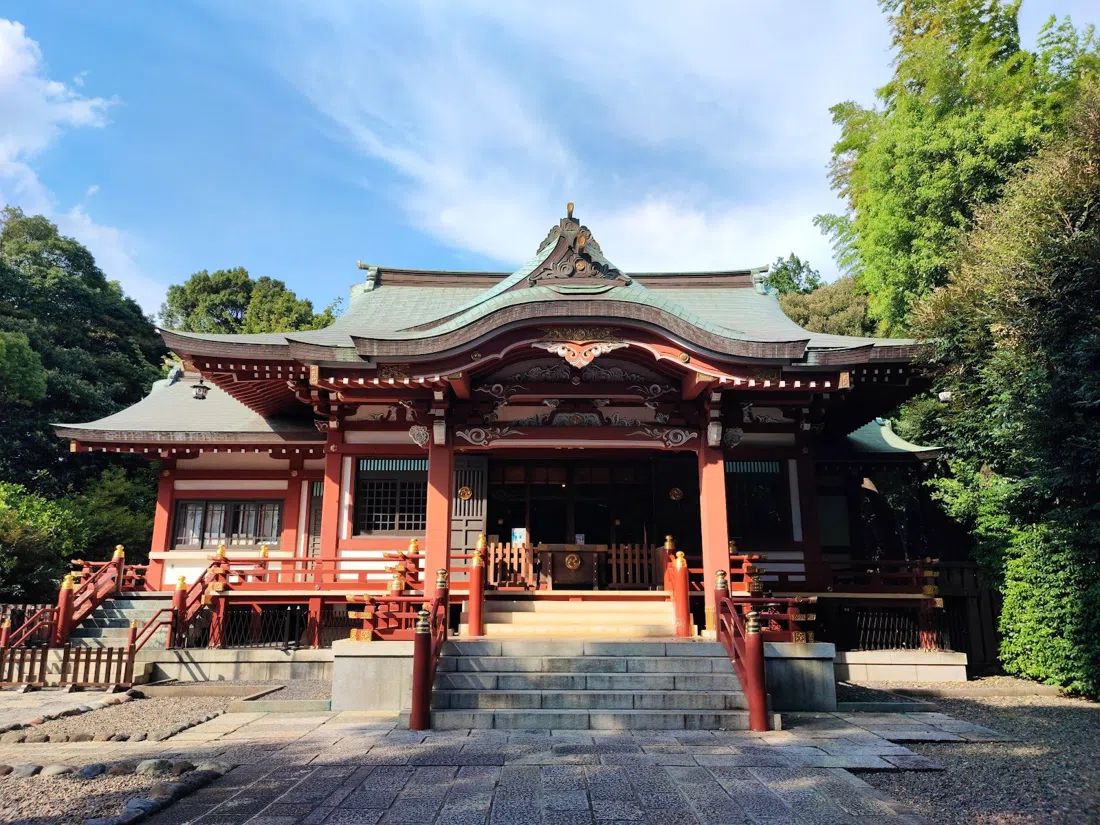
Gessoji was founded in 1663, and the town grew up around it. Tiled roof lines rise straight out of the shopfronts, and the stone-paved courtyard inside stays quiet with traffic running just beyond the wall. The temple is free to walk into and still working. Keep your voice down and stay out of the hall.
Musashino Hachimangu Shrine is a 5 to 7 minute walk north of the station. A big wooden torii stands back from a busy shopping street, and the gravel approach passes stone lion-dogs under tall zelkova and ginkgo trees to a cypress-bark main hall that stays dim at midday. The grounds are free, open without booking, and the forecourt is wide. Villagers burnt out of the Kichijoji temple district by the Meireki fire of 1657 resettled here and enshrined Hachiman as their guardian, which is how this part of Tokyo carries a temple's name. The Tori-no-Ichi fair falls in December and is worth timing a visit for.
Sun Road and the lanes north of the station
Kichijoji Sun Road Shopping Street runs 300 m dead straight from the north exit under a glass-and-steel vaulted roof, daylight dropping through it onto tiled paving. The arcade holds 160 shopfronts, with seasonal banners strung overhead. Walking it costs nothing and keeps you dry.

It is the main run through the shopping district, and it feeds into Nakamichi-dori's independent shops and the Diamond Street lanes. It relaunched in March 2026 with an AR layer over the Showa-era shopfronts. Start here when it rains.
Satou's window and Iseya's grill
Satou's window sits a minute from the north exit. White-coated staff work the deep fryers behind the glass and turn out ball-shaped maru-menchi katsu from 10:30, 5,000 of them a day. The shop opens 10:00 to 19:00. Go on a weekday morning; the weekend line takes half an hour. The takeaway window serves any number of people once you have queued. Up the stairs, a small steak restaurant serves Matsusaka beef sets at ¥¥¥ and needs a reservation.
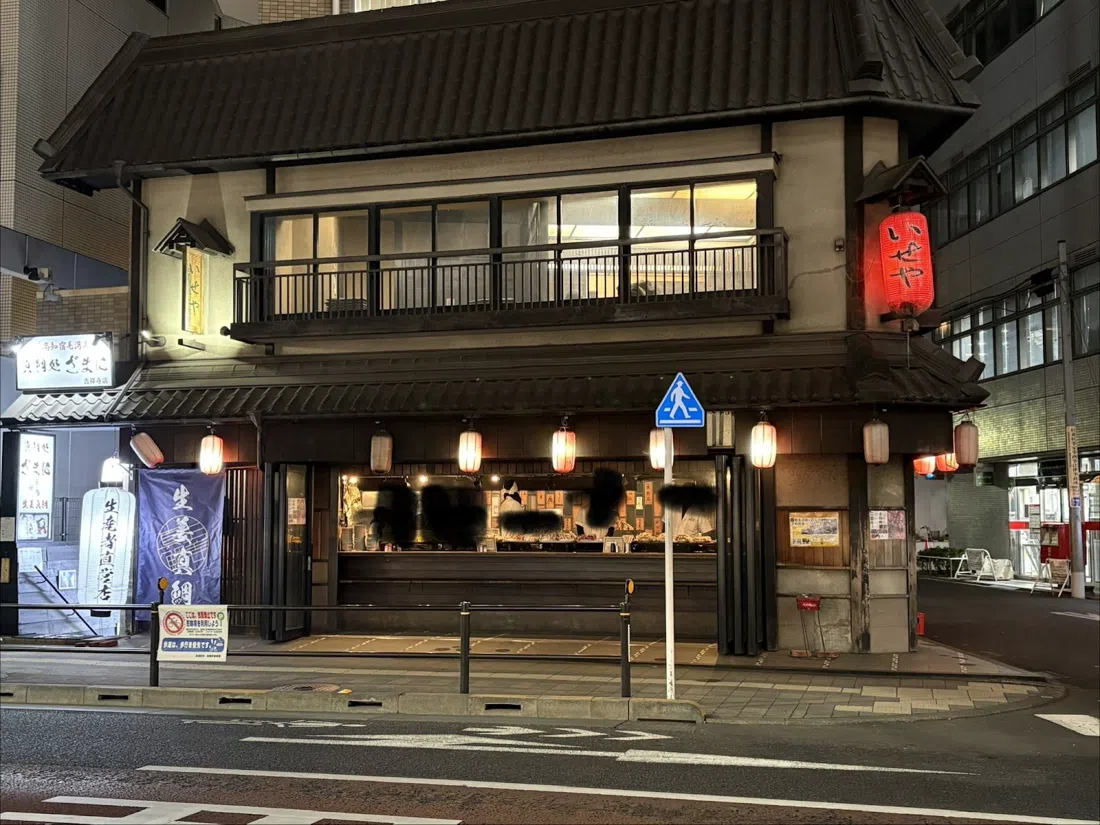
Iseya Sohonten opened in 1928 as a butcher and stands at the park entrance, pouring the cheapest beer and skewers in the area. Charcoal smoke comes out of the ground-floor grill window. The floors above hold plastic stools, bare wooden tables and tatami rooms, hundreds of seats in all, and no reservations are taken. Skewers start at ¥100 and a full round comes in under ¥2,000 a head. The Inokashira Park branch opens at noon for daytime drinking and closes Mondays. The main store near the station closes Tuesdays. Check which one you are walking to.
Harmonica Yokocho after 17:00
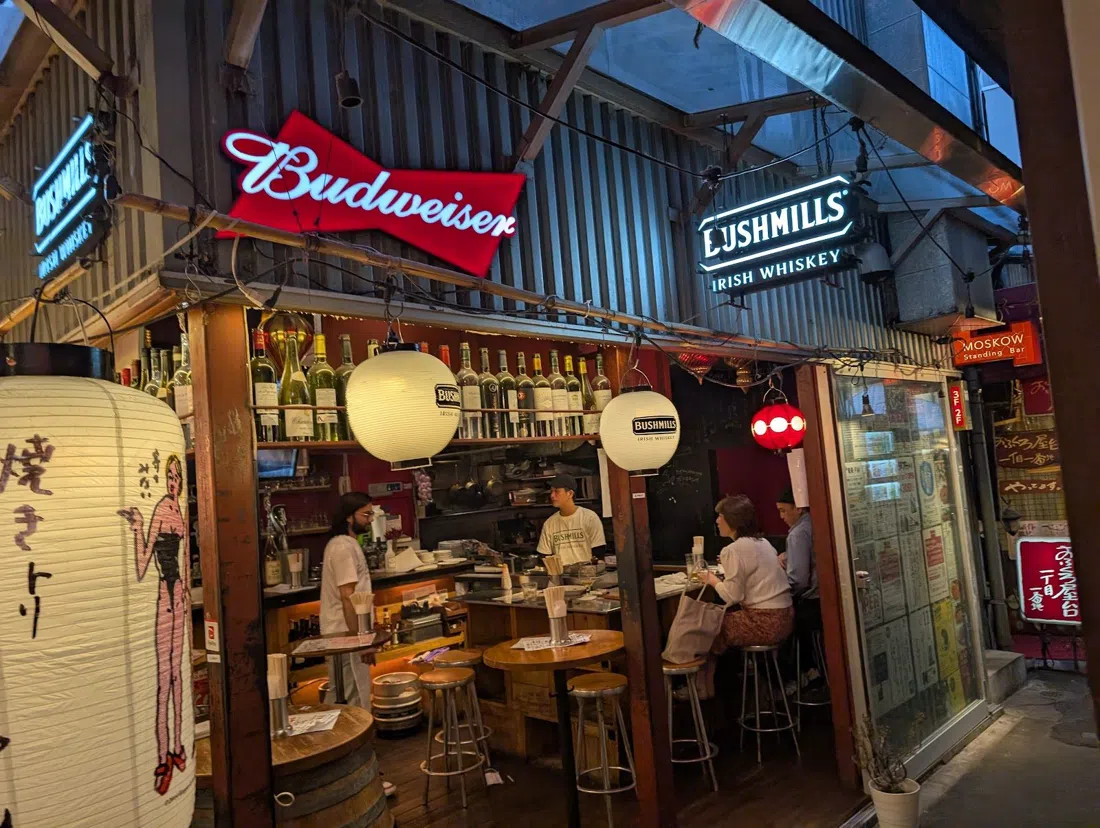
Harmonica Yokocho fills a grid of alleys barely two people wide outside the north exit. Corrugated roofs and tangled wiring run overhead, red paper lanterns hang at the doors, and charcoal smoke lifts off the yakitori grills. The lane packs 100 shopfronts side by side like harmonica reeds. It was a postwar black-market lane and never got redeveloped.
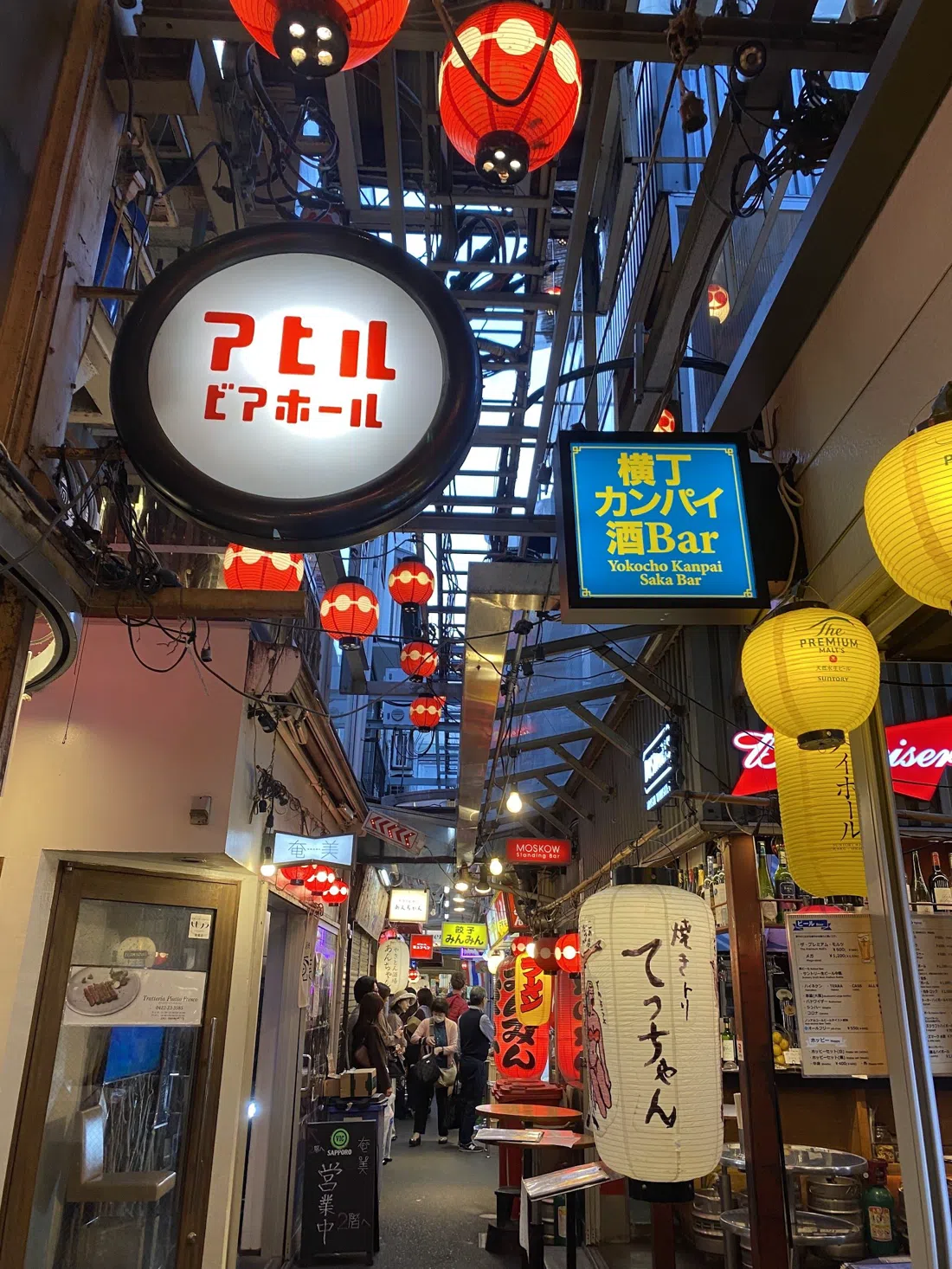
By day, produce stalls trade and a queue forms for taiyaki. The standing bars run from 17:00 until past midnight, and a stop costs ¥1,000 to ¥3,000. Most of the district's nightlife is in this one block. Counters seat 6 to 12, so a party above four should split up and bar-hop.
Tetchan holds a corner of the alleys, and Kengo Kuma rebuilt its interior in 2014 out of industrial waste. A green fringe of recycled LAN cables hangs over the counter under glowing translucent panels of offcut acrylic, old grill smoke underneath. The counter and a handful of seats are the whole room. It opens 15:00 to midnight with no regular closing day, and a head costs ¥2,000 to ¥3,000. Arrive at 15:00.
Beer on the Minamicho side
Baird Beer Kichijoji Taproom (Kichijoji Minamicho) is five minutes from Inokashira Park, upstairs on the park side of the tracks in a wood-lined room. Twelve chrome tap handles run in a row behind the counter, pouring the Shizuoka brewery's own beers including limited releases, listed on a chalkboard. Tulip glasses of amber Suruga Bay IPA come with Tex-Mex plates.
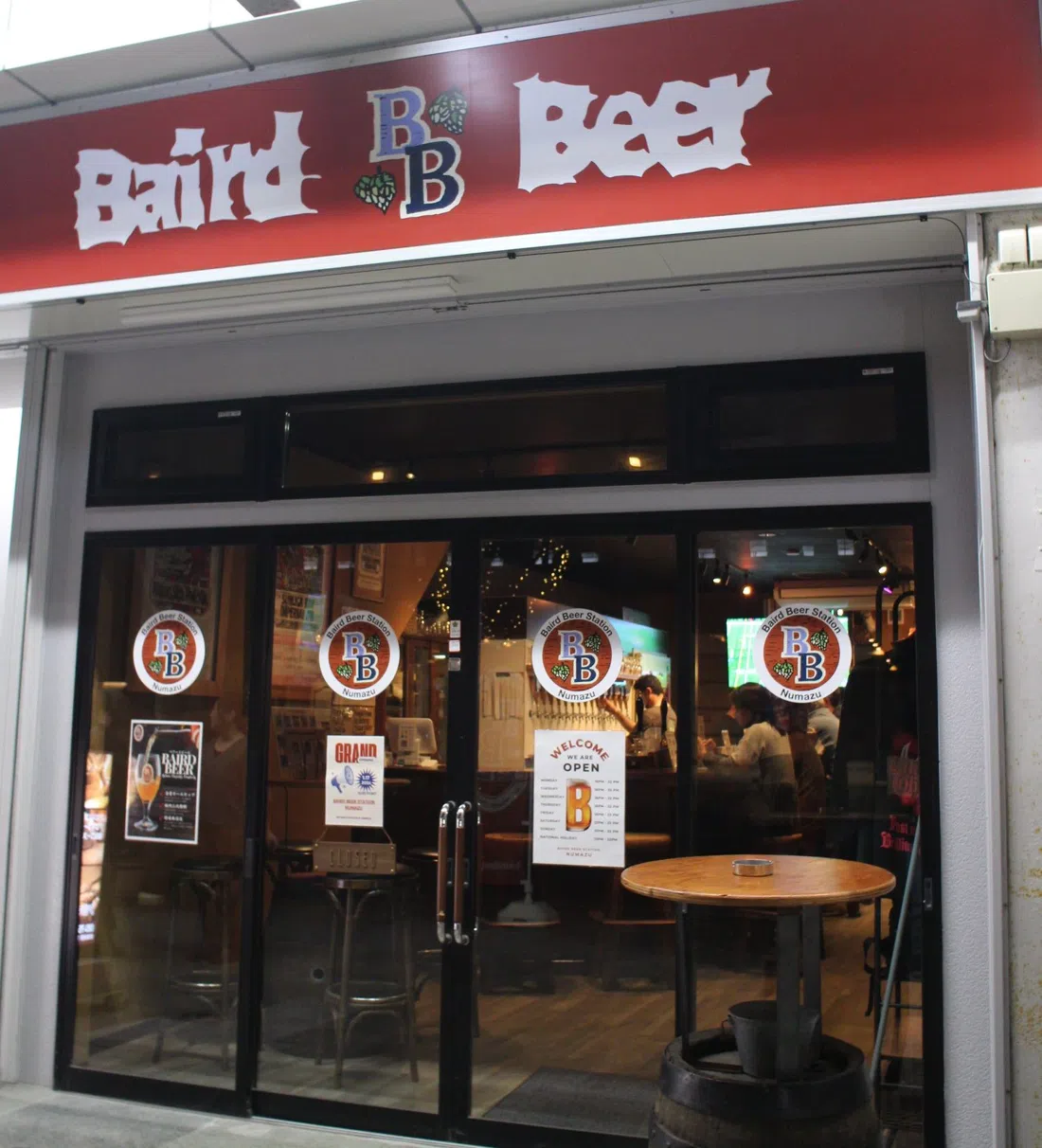
Pints are ¥900 to ¥1,200 and food ¥1,000 to ¥2,000. Ordering works in English. It seats 25. Call ahead for more than six people. The taproom closes Tuesdays and Wednesdays.
Uplink, Star Pine's Cafe and Sometime
Uplink Kichijoji is a basement multiplex under Kichijoji Parco, five boxy micro-auditoria with coloured acoustic walls and individually angled seats, off a poster-papered lobby on B2. The programme runs art films, documentaries and festival runs, open daily, with a full schedule through November 2026. Seats cost ¥1,500 to ¥2,000, booked online or at the kiosk. Book the screening early.
Star Pine's Cafe plays nightly through 2026: jazz, Japanese singer-songwriters, world music and anniversary tours. The basement stage is low under an exposed black ceiling rig, the back-bar is mirrored, and cabaret tables clear away for standing shows. Coloured wash lighting sits dense on the band. Tickets are ¥3,000 to ¥5,000 in advance plus a drink charge at the door. Standing nights have room; seated nights sell out.

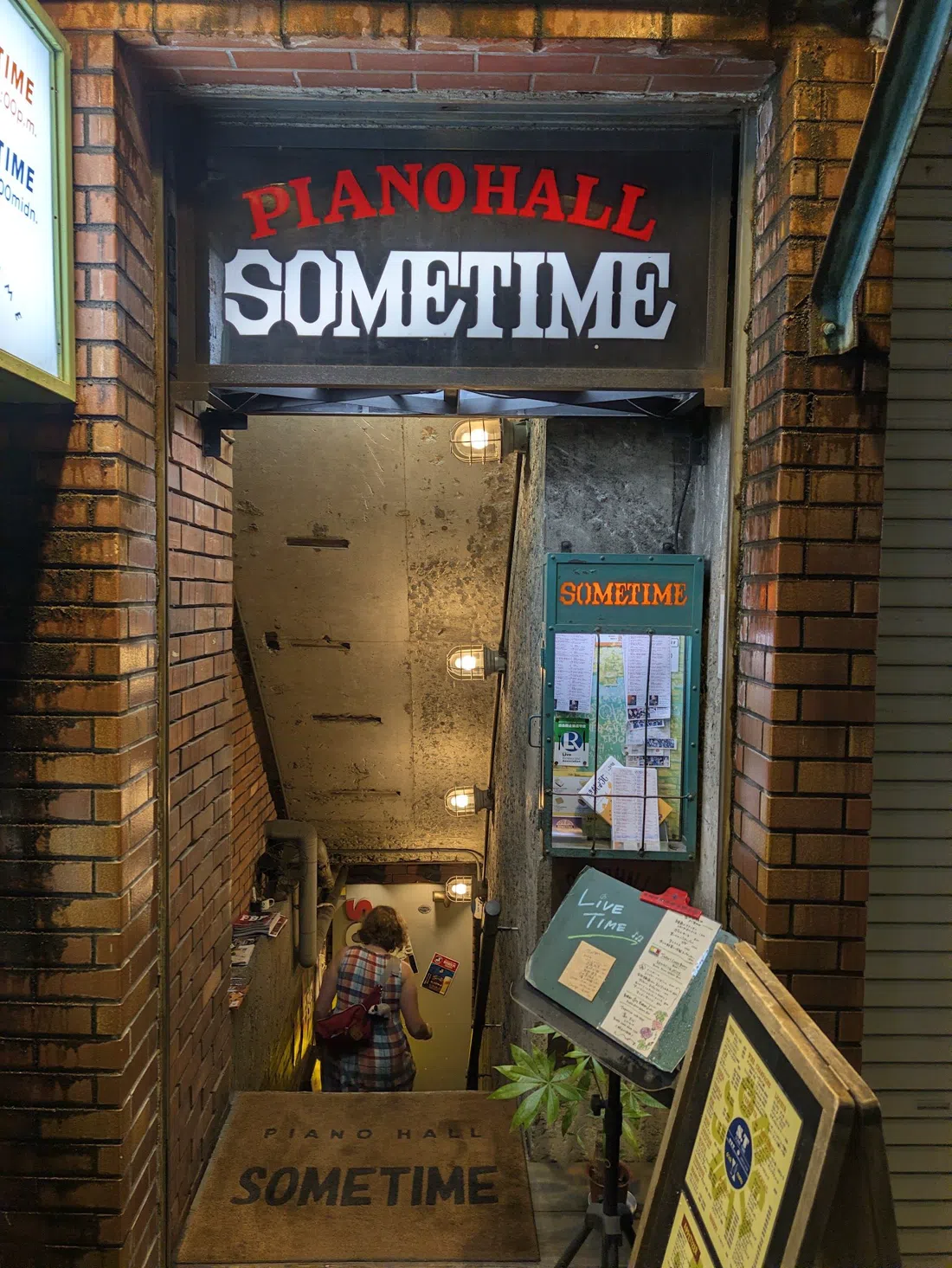
Sometime has played live jazz every night since 1975. The grand piano is wedged against the brick wall of the basement, ducting runs exposed above, a mezzanine rail looks down on the band, and mismatched wooden chairs stand at candlelit tables a metre from the drummer. Sets are at 19:30 and 21:00, and the music charge is ¥1,800 to ¥4,000 on top of food and drink. The café opens from noon. Reserve ahead; the room is small.
Staying in Kichijoji
Kichijoji Excel Hotel Tokyu opened in October 2022, eight minutes' walk from the north exit. Six storeys hold 99 rooms, standard twins and queens, pale and nature-toned, some of them looking onto the park. The lobby is a planted open atrium and the all-day dining room is finished in timber and greenery. Rooms are ¥15,000 to ¥30,000 a night.

It is walking distance from both the Ghibli Museum and Harmonica Yokocho, which is the reason to sleep out here. With 99 rooms, block-book early for cherry-blossom season. See the Tokyo guide and the Tokyo hotel search.
Opening days and booking
Mondays close the zoo and the park branch of Iseya Sohonten, Tuesdays close the main Iseya store, and Tuesdays and Wednesdays close the Baird taproom. Buy Ghibli Museum tickets on the 10th of the month, reserve Sometime and the steak restaurant above Satou, and get tickets for Star Pine's Cafe and Uplink in advance.
Questions
How do I get tickets for the Ghibli Museum?
Tickets go through Lawson Ticket in advance only, on sale on the 10th of each month at 10:00 JST for the following month, and they sell out fast. Entry times are fixed, the door sells nothing, and every visitor needs a dated ticket in their own name plus ID. Adults pay ¥1,000, ages 13 to 18 ¥700, ages 7 to 12 ¥400 and ages 4 to 6 ¥100.
What is worth doing in Kichijoji if the Ghibli tickets are sold out?
Inokashira Park Zoo takes walk-ins Tuesday to Sunday, 09:30 to 17:00, and closes on Mondays. The ¥400 adult ticket includes the Hokuto Kitamura sculpture hall and the old Japanese house, and children of primary age and under go free.
Can a large group eat and drink together in Kichijoji?
Iseya Sohonten has hundreds of seats across its floors, tatami rooms included, and takes no reservations. Most counters in Harmonica Yokocho seat 6 to 12, so a party above four should split up and bar-hop: Tetchan is a counter plus a handful of seats.
When is Inokashira Park too crowded for the cherry blossom?
The pond path goes shoulder to shoulder with the blossom crowd in late March and early April. The park is free and open at all hours, so go early in the morning. Boats cost ¥700 to ¥1,000 per 30 minutes and each one takes two adults plus children.
Is there a hotel in Kichijoji itself?
Kichijoji Excel Hotel Tokyu opened in October 2022 and has 99 rooms at ¥15,000 to ¥30,000 a night, eight minutes' walk from the station's north exit. The Ghibli Museum and Harmonica Yokocho are both walkable from there. Block-book well ahead for cherry-blossom season.
First published on tokyohoilday.com, the Tokyo guide.