Cologne's beer halls do one thing very well and they do it until the small hours, which is why a lot of visitors leave without discovering what else the city cooks. Two minutes' walk from the loudest of them is a kitchen that carried a Michelin star for a decade and still cooks exactly the same food. A tram ride west, a working market hall puts the butcher, the cheese counter and a bistro under one roof, then shuts at half past six. Details like that decide whether you eat well here.
Everything below is a place I have eaten at more than once, with what it costs and the door rules that trip people up. I have been strict about opening days, because Cologne closes more often and earlier than most people expect.
The starred rooms and what they actually ask of you
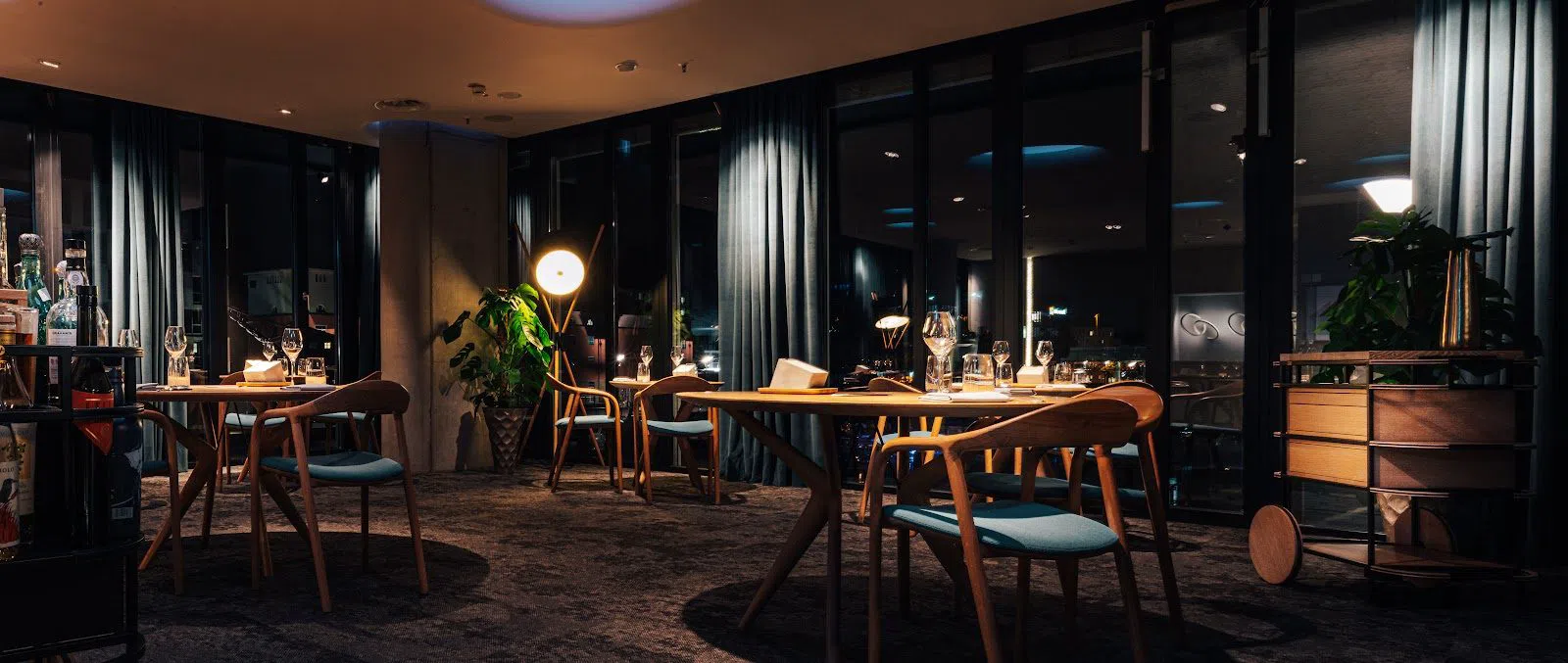
Ox & Klee (Rheinauhafen, right on the water) is the city's only two-star kitchen and the clearest argument that Cologne is more than Kolsch and pork knuckle. Daniel Gottschlich builds his menus around the six tastes, and there is a full vegetarian version that is a genuine parallel menu rather than a set of substitutions. It is reservation-only, tasting-menu-only, and the pairings are where the bill moves: wine runs €130 to €299 per person, with an alcohol-free pairing at €130. That non-drinking pairing is treated as a real piece of cooking here, not a consolation. Plan a whole evening; this is three hours minimum, and it is the wrong booking for the night you land. Private events and buy-outs go through the events enquiry, and small groups are fine, but understand that everyone at your table eats the same menu.
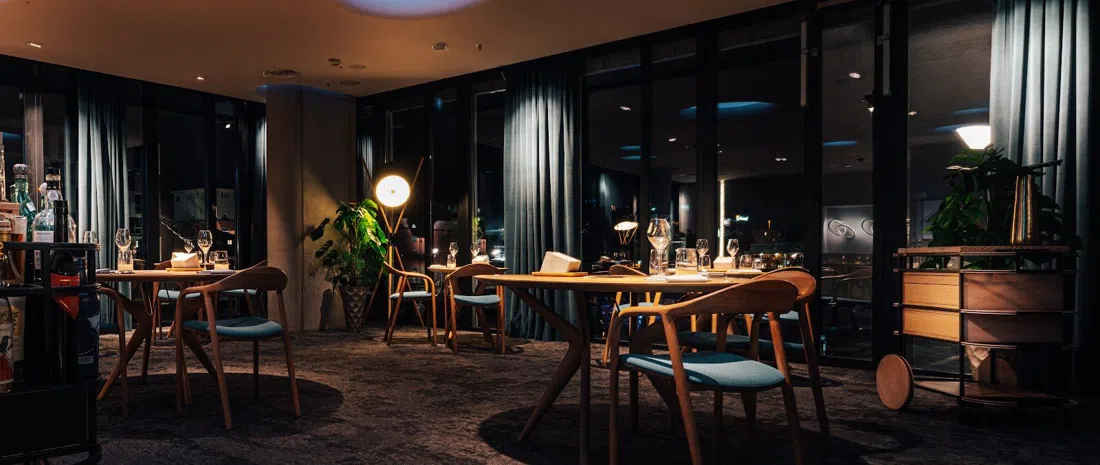
Sahila – The Restaurant (central) is the one I recommend most often to people arriving from a long way away. Julia Komp was the youngest starred chef in Germany when she won her first star, and the menu she cooks now is built from her own travelling rather than from the Rhineland larder. If you have flown a long way, that reads far better than a fourth regional German tasting menu in a row. Multi-course only, booking required, €€€€. Private events by arrangement, with the same caveat as above: menu-only means the group eats in lockstep.
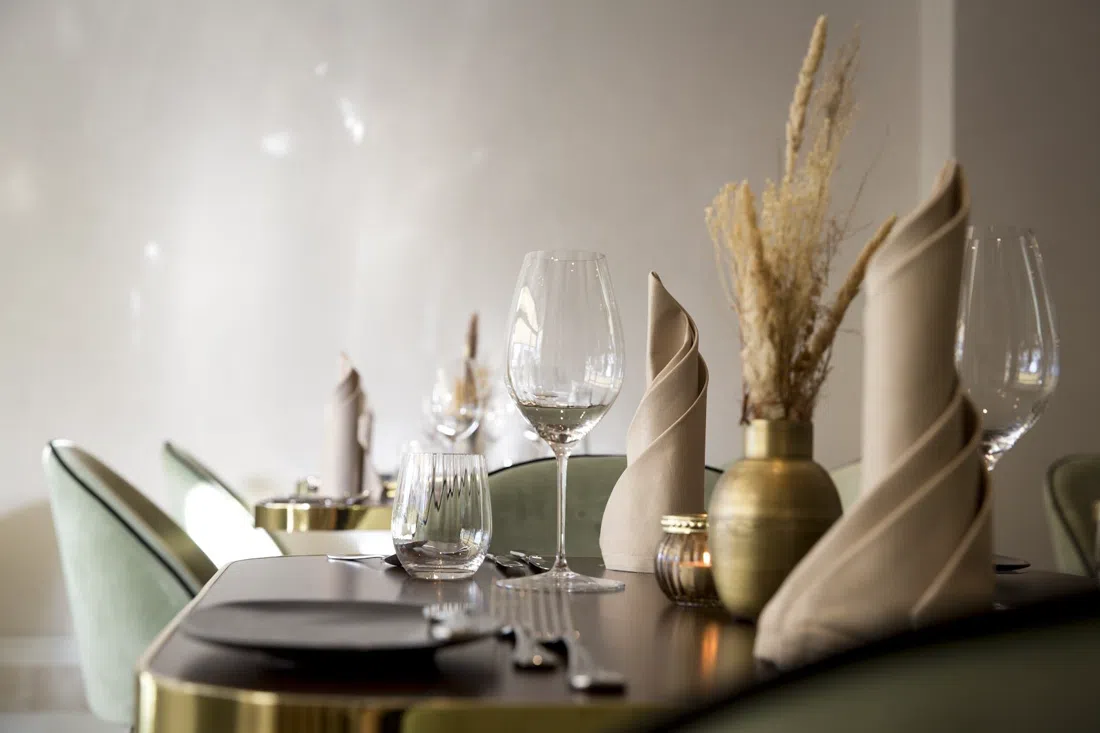
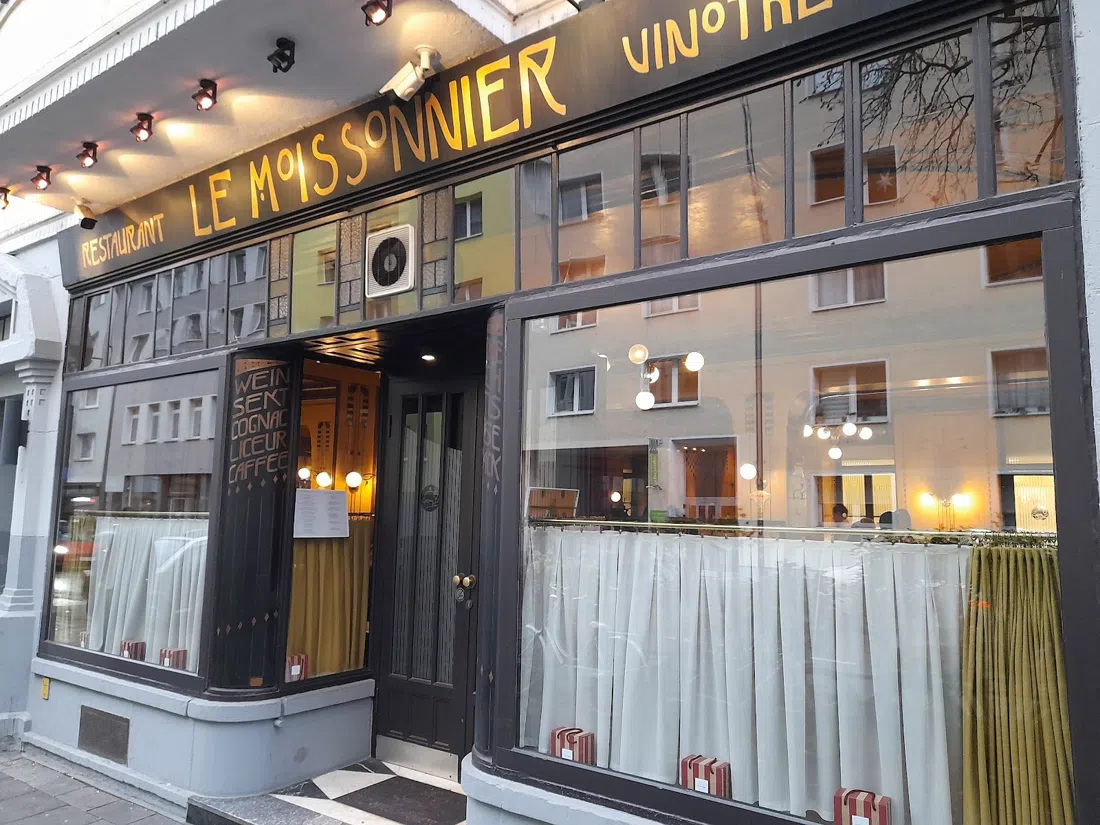
Le Moissonnier Bistro (north of the old town) is the interesting case. In 2023 the Moissonniers deliberately stepped back from two-star fine dining and reopened as a bistro with the same kitchen and much less ceremony: a daily plat du jour, fish soup and oysters. Mains sit broadly at €40 and up, so this is not cheap, but it is a one-star kitchen served without the choreography. Reservations are taken by telephone between 09:30 and 11:30 or by email, not through an app at midnight. The opening window is narrow, mostly lunchtimes Tuesday to Saturday plus Friday evening, and that is the single most common way visitors miss it. Best for two or four. A party of ten trying to find a slot here will lose an afternoon.
Breakfast is the cheapest way into a starred kitchen
NeoBiota (central, and no longer at the Ehrenstrasse address older guides give) is where I send anyone who wants to eat starred cooking without committing €200 a head. Sonja Baumann and Erik Scheffler cook strictly regional, partly foraged food, and they serve breakfast Tuesday to Saturday. At night it is a four, six or eight-course menu at proper starred prices; in the morning it is a la carte and dramatically cheaper, from the same hands, in the same room. Breakfast is also easier to get into: the dining room is small, dinner books out, and the morning service does not. Reservations are essential either way, and larger groups need to call rather than book online. They moved here in 2025, so check the address on their own site before you set off, not in a guidebook printed earlier.
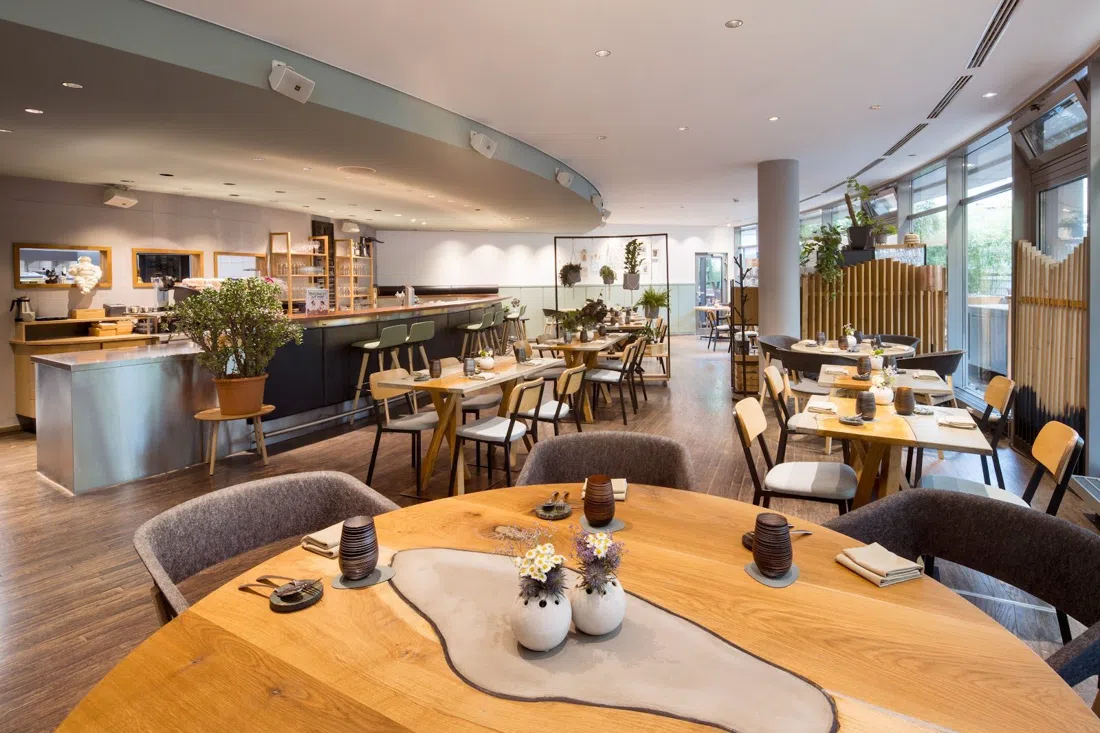
A serious dinner two minutes from the beer halls
maiBeck (old town) is, right now, the best-value proper meal within walking distance of the cathedral. Jan Maier and Tobias Becker held a star for ten years and lost it without changing how they cook. Refined Rhineland food, a la carte or a short menu, at €€€ rather than the €€€€ the cooking would have cost you before. That is a straightforwardly good deal, and it is a two-minute walk from the beer halls, which makes it the easy answer when half your group wants an old-town evening and the other half wants dinner to be about the food.
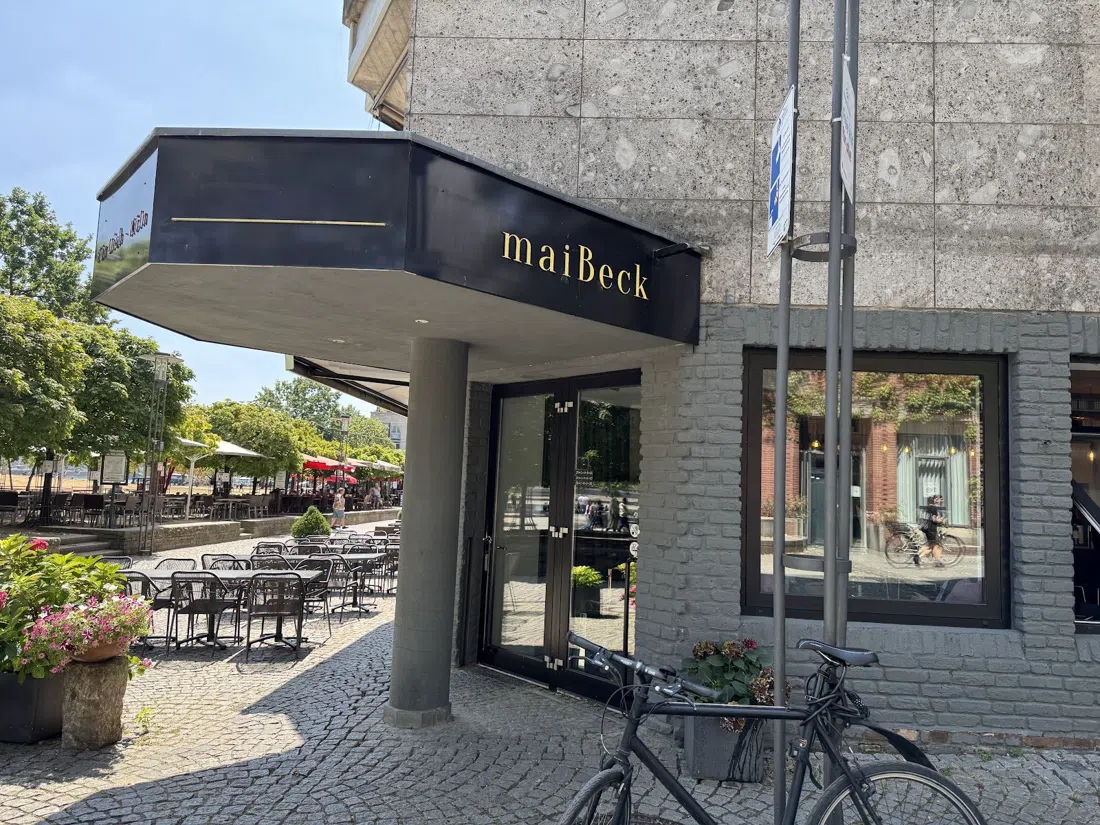
They close for several weeks in August, so confirm your dates before you build an evening around it. Their second, more casual place runs under the same name, so check carefully which door you have booked. Arriving at the wrong one with a reservation is a bad start to a night.
Two kitchens that cook nothing like the Rhineland
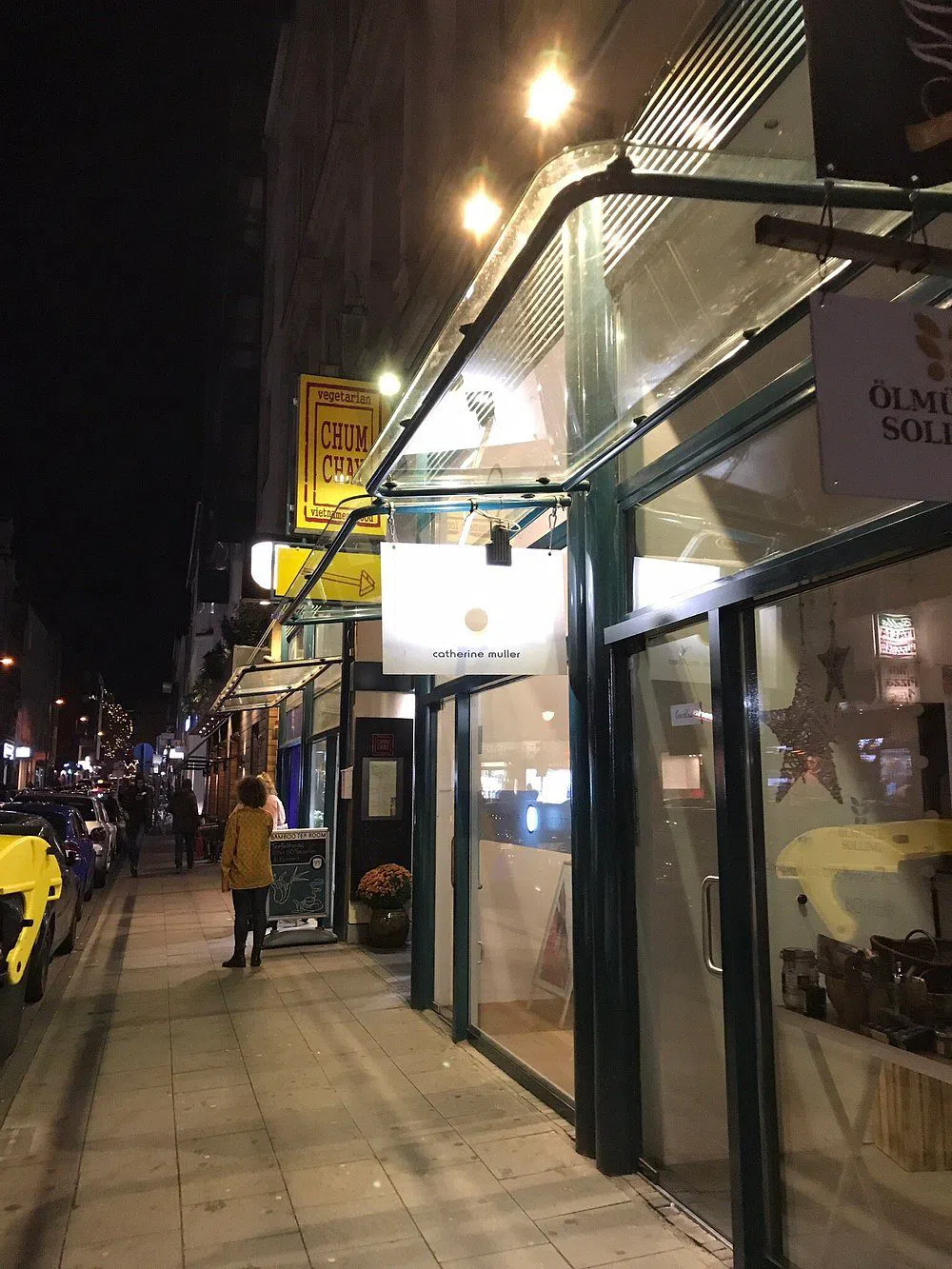
Chum Chay (Belgian Quarter) is vegetarian and vegan Vietnamese, and the reason it works is technical: Toni Pham makes his own meat-free fish sauces, so the food tastes properly Vietnamese rather than apologetically vegetarian. The difference is immediate, with salt and funk and depth where most meat-free versions of this cooking go flat. Mains are roughly €12 to €20. The hours are the other draw: Monday to Saturday from noon to 23:00, Sunday from 15:00, which makes it one of very few good kitchens that will feed you at 16:00 or at 22:30. Walk-ins work outside peak; book for six or more.
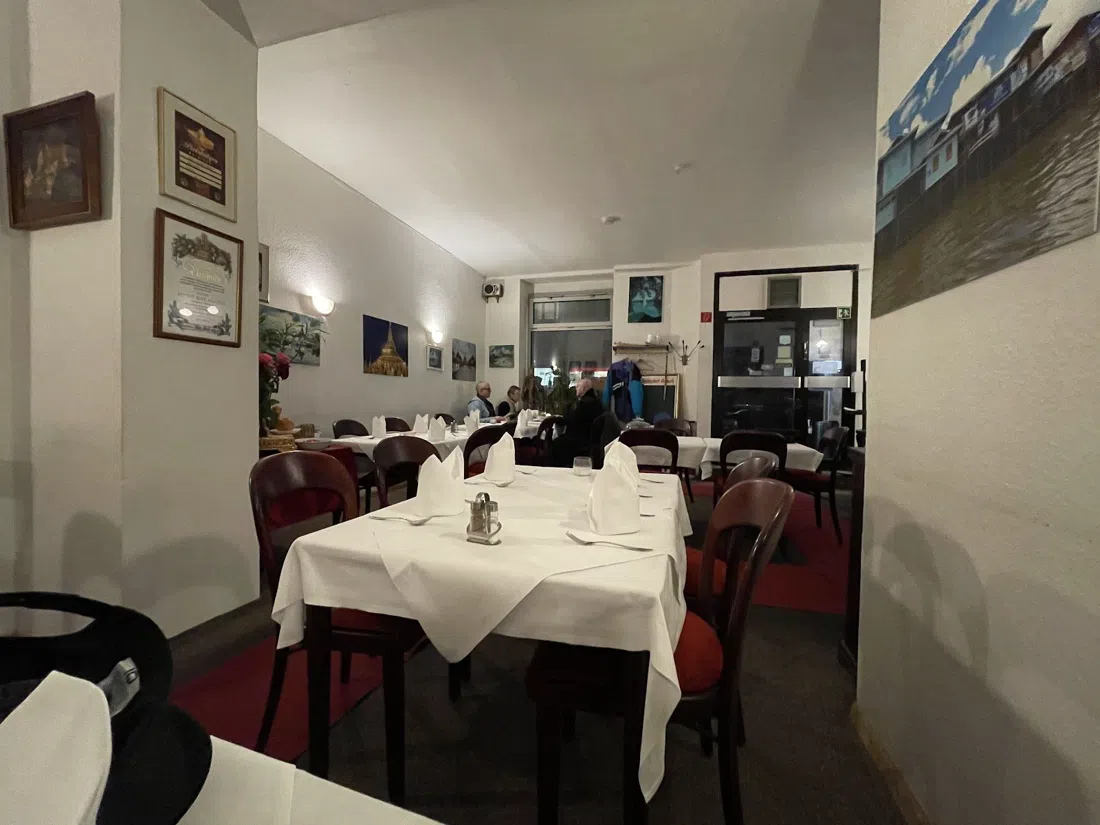
Mandalay (city centre) is Burmese, has held the same corner for three decades, and is routinely described as the only restaurant of its kind in the country. Mains are around €15 to €25. The opening pattern catches almost everyone out: dinner only, Monday to Friday, roughly 18:00 to 23:30, closed at weekends. If you are in town Friday to Sunday, Friday night is your only shot. The room is small, so groups must reserve by phone.
The Belgian Quarter from nine in the morning until late
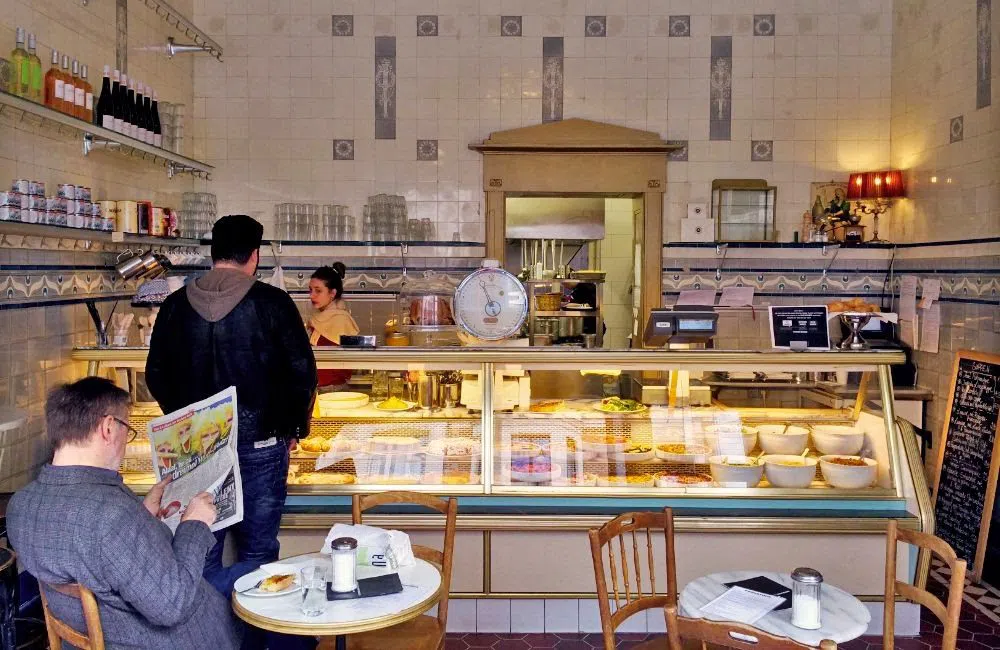
If you only remember one address from this piece, make it Salon Schmitz / Metzgerei Schmitz (Belgian Quarter). Count the Salon, the Metzgerei next door and the club COCO as one operation rather than three separate stops, and it becomes the most useful single address in the city: breakfast from 09:00, a changing lunch menu from noon, cakes and ice cream through the afternoon, and a bar that runs late. Breakfast, quiche and cake land roughly between €5 and €18. The one piece of local knowledge is where to order: drinks at the Salon, food at the Metzgerei next door. That catches out first-timers who sit down and wait for a menu that is not coming. Open daily, walk-in friendly, comfortable for a group, and they cater.
Ehrenfeld, where the everyday eating is
Markthalle Koernerstrasse (Ehrenfeld) is a working neighbourhood market, not a curated food court with picnic benches. Butcher, cheese, wine, preserves and a bistro share one hall on Ehrenfeld's best shopping street. Deli prices at the counters; bistro plates around €10 to €20. The hours are short and unforgiving: the hall runs roughly Tuesday 11:30 to 16:00 and Wednesday to Saturday 10:00 to 18:30, the bistro shorter still, and the whole thing is closed Sundays and Mondays. Go at lunchtime midweek or you will stand outside a shut door. Groups are welcome in the bistro, and they take catering and events.
On the same street, Van Dyck Roesterei (Ehrenfeld) is the family roaster that has been going since 2010 and is the reason Koernerstrasse became a coffee street at all. Coffee is €3 to €5. One thing to know before you plan a morning around it: the actual roastery moved to Schanzenstrasse in Muelheim, across the river, in 2016. Go to the Ehrenfeld cafe to drink, and to the Muelheim site if you want the machines, a roastery tour or a barista course, which are bookable there. Both are closed Sundays. The cafe is small and takes no reservations, so it is perfect for two to four and awkward for a crowd.
Eaten standing up, cash in hand
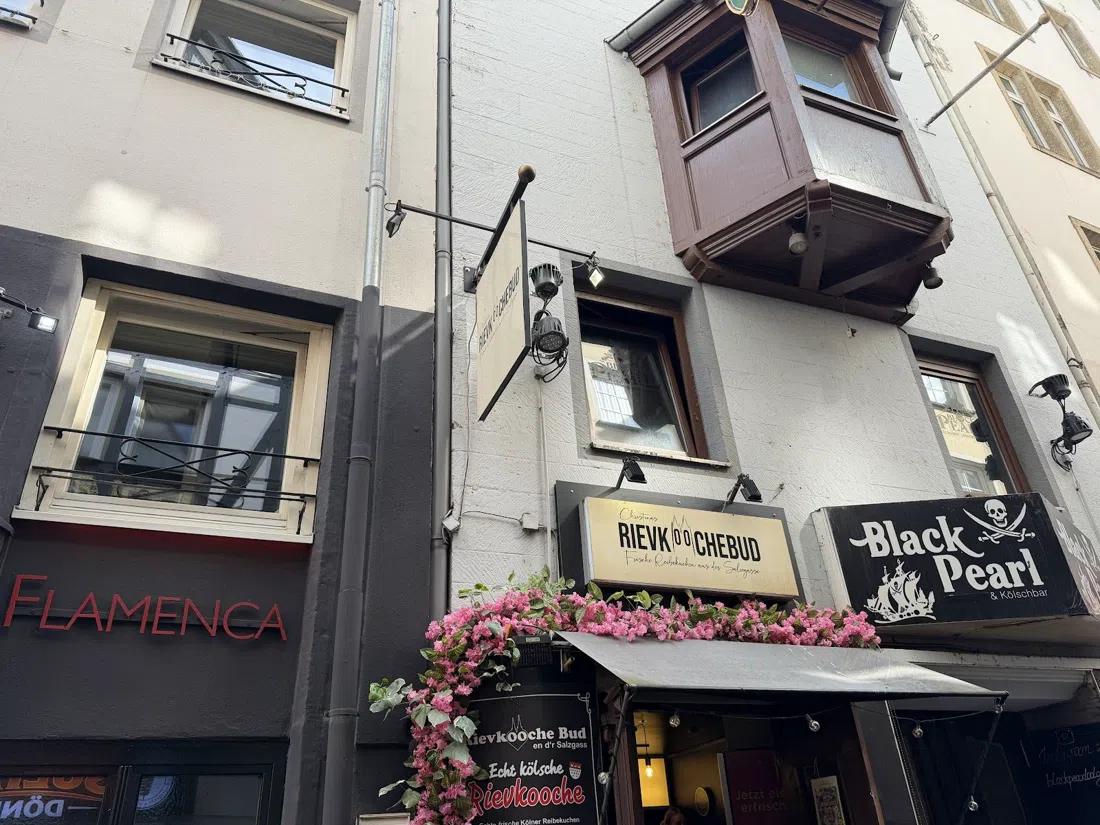
Rievkoochebud (central) does the thing most visitors only meet once a year at a Christmas market, all year round: mini Reibekuchen, the crisp potato fritters, with apple sauce, beet syrup or cinnamon sugar. A portion is a few euros. It is standing room and takeaway only, and it is cash only, no card, no exceptions, and there is rarely a machine as close as you would like. It opens at noon and closes Mondays and Tuesdays. Ideal as a grazing stop for a group; impossible as a sit-down meal.
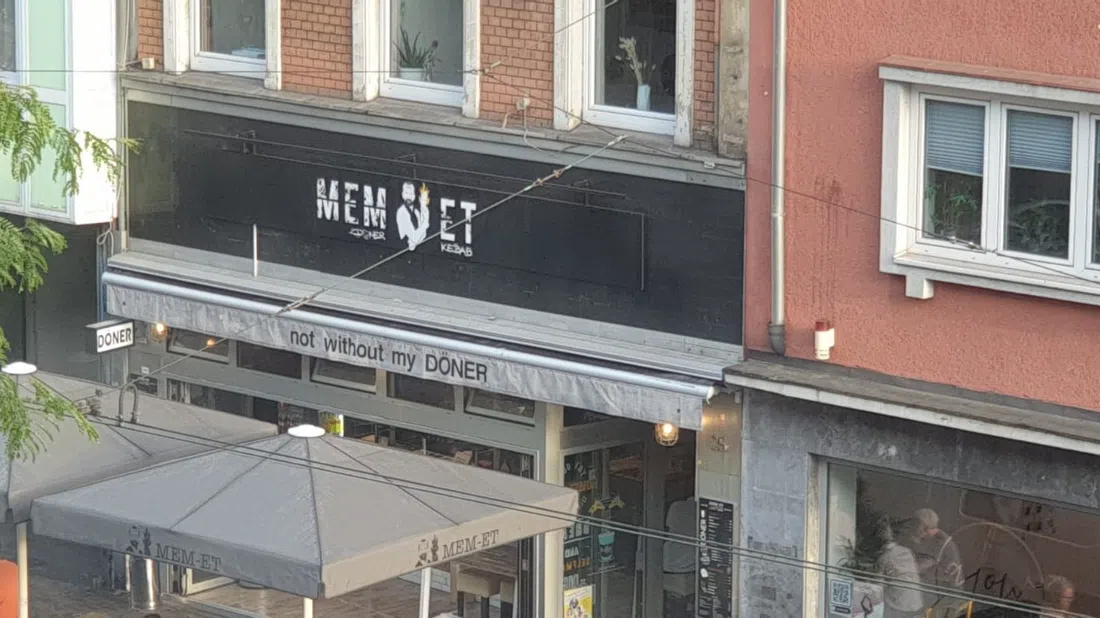
MEM-ET (west of the ring, on the tram line) sits consistently at the top of the city's doner rankings, and the bread and the fries are why, more than the meat. Around €7 to €9. It is a pure takeaway counter with a few stools, no bookings, and there is a queue at night. That is fine, because its position on the main tram artery makes it a late stop on the way home rather than a special journey. The reviews are not unanimous, and it is not the place if you want to sit down and talk.
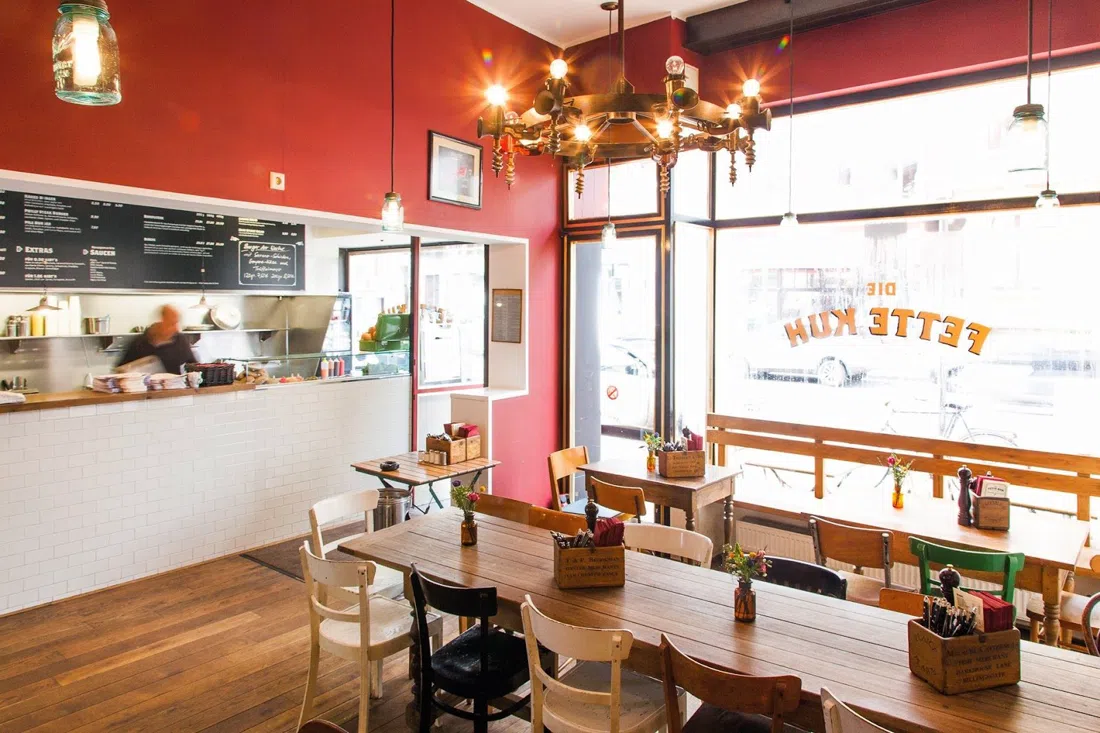
Die Fette Kuh (north of the ring) has been open since 2011 and is still the burger benchmark here. Burgers run €7.70 to €19.90, sides €5.80 to €12.20. The door rule is absolute and worth repeating: no reservations at all, and no group bookings under any circumstances. A party of eight arriving at 20:00 on a Saturday will wait a long time. Split into two tables, or go early. Closed Tuesdays.
Twenty people and one table
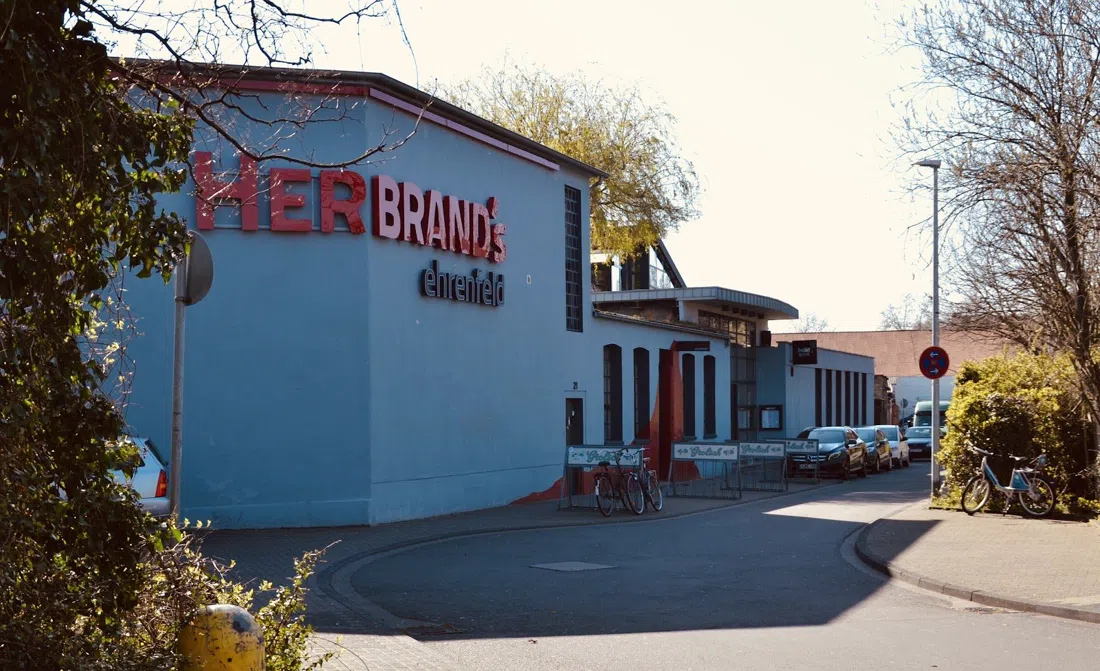
Herbrand's (Ehrenfeld) is the best group option in this guide by a distance. It is an industrial-scale space with a beer garden, a club and an event hall in the same complex, an events office and online reservations, and it will absorb a party of twenty without visible strain. Mains are roughly €15 to €28, and there is a Sunday brunch. It is mostly an evening place, from 17:00 on weekdays and earlier at weekends, and it has scattered annual closure dates, so check yours. Beer-garden tables in summer need booking well ahead.
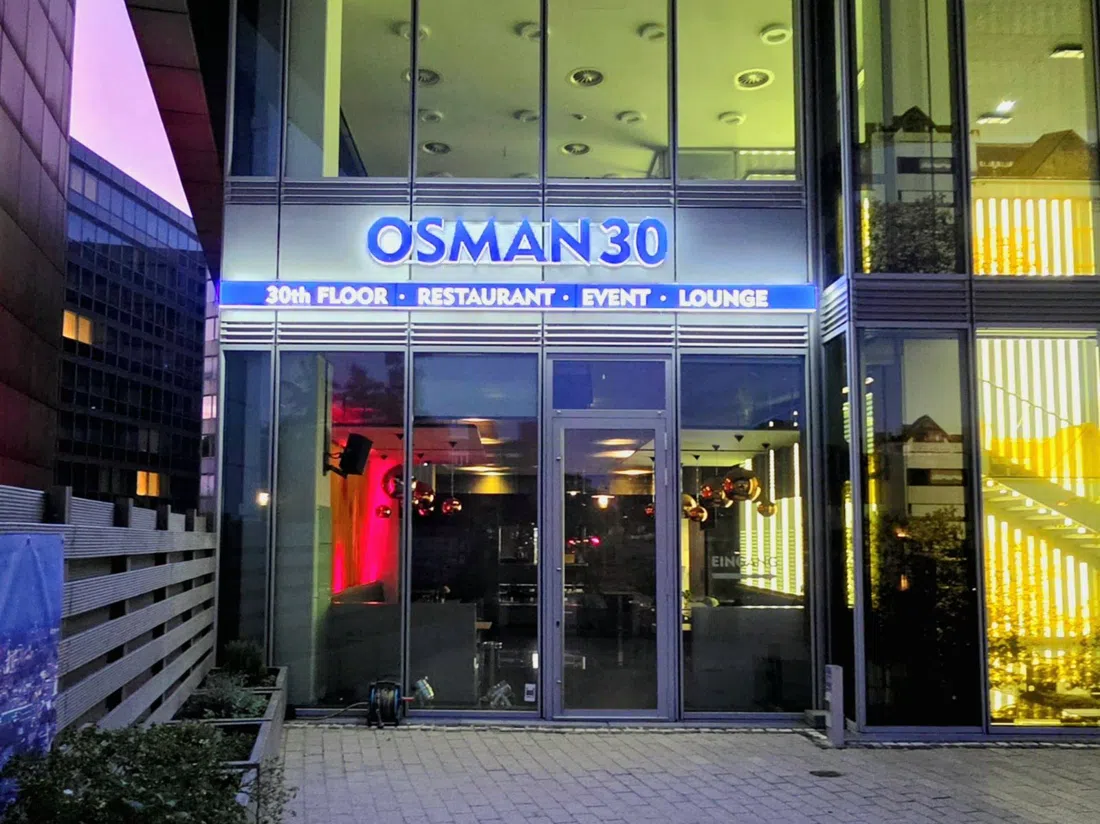
Osman 30 (high above the Mediapark) has the best dining view in the city and Mediterranean-leaning international cooking to go with it: two- and three-course menus or a la carte, at €€€. Since the view is the reason you are there, request a window table when you book rather than hoping. The inner room is a different and much less interesting experience for the same money. There is a dedicated bar area and separate event spaces, and it is popular for large parties. Reservations are essential. Closed Sundays and Mondays, and Saturdays are evenings only.
Practical notes before you go
Nearly everything here is reachable on the tram and light-rail network, and the Belgian Quarter and Ehrenfeld are each walkable end to end once you are in them. MEM-ET is on the main tram artery west of the ring, which is exactly why it works as a last stop. If you want to be able to walk home from dinner rather than plan a return journey, stay in or near the Belgian Quarter. Start with the Cologne hotel search and filter for that side of the ring.
Cards are normal in the restaurants, but carry €20 to €30 in notes. Rievkoochebud is cash only, and a couple of the market counters are happier with it.
Timing is the part that decides your trip. Sundays and Mondays are the danger days: Markthalle Koernerstrasse, Van Dyck and Osman 30 all close for at least one of them, Rievkoochebud shuts Monday and Tuesday, and Die Fette Kuh closes Tuesdays. Mandalay is closed all weekend. Le Moissonnier Bistro is mostly a lunchtime operation. maiBeck closes for weeks in August. Salon Schmitz, open daily from 09:00, and Chum Chay, open late six days a week, are your reliable fallbacks when a plan collapses.
A good day here needs about €35 to €50 a head: breakfast at Salon Schmitz, a fritter or a doner standing up, dinner at Chum Chay or maiBeck. A starred dinner at Ox & Klee or Sahila with pairings is a €300-plus evening per person, and NeoBiota's breakfast is the honest workaround if you want the cooking without that number.
Star-level rooms want two to four weeks, more for a Saturday. Le Moissonnier takes calls in a 90-minute morning window. Herbrand's and Osman 30 handle big groups properly; Die Fette Kuh will not take your group at all, whatever you offer. For everything else in the city, what to see between meals and how the districts fit together, the Cologne guide is the place to start.
Questions
Can I eat at a Michelin-starred restaurant in Cologne without spending hundreds?
Yes. NeoBiota serves breakfast Tuesday to Saturday, a la carte and far cheaper than its four, six or eight-course dinner menus, out of the same kitchen and the same small dining room. It is easier to book than dinner, too. maiBeck is the other one worth the money: it held a star for ten years, lost it without changing the cooking, and now charges mid-range prices two minutes from the beer halls.
Which Cologne restaurants can take a group of fifteen or twenty?
Herbrand's in Ehrenfeld is the best bet: an events office, online reservations, a beer garden and an event hall, with mains around €15 to €28. Osman 30 has dedicated event spaces and a bar area, and is popular with large parties. Salon Schmitz and the bistro at Markthalle Koernerstrasse both work for groups too. Die Fette Kuh takes no reservations and no group bookings at all, so split a large party or go off-peak.
Do I need cash to eat out in Cologne?
Mostly no, but carry €20 to €30 in notes. Rievkoochebud, the year-round potato-fritter stand, is cash only, and some counters in Markthalle Koernerstrasse prefer it. Restaurants and cafes take cards normally.
What is open in Cologne on a Sunday or Monday?
Salon Schmitz opens daily from 09:00 until late. Chum Chay runs from 15:00 on Sundays and from noon Monday to Saturday, and Herbrand's starts earlier at weekends. These close at least one day a week: Markthalle Koernerstrasse and Van Dyck Roesterei on Sundays, Osman 30 on both, Rievkoochebud on Mondays and Tuesdays, Die Fette Kuh on Tuesdays. Mandalay is closed all weekend.
Where can I eat Reibekuchen in Cologne outside the Christmas market season?
Rievkoochebud serves mini Reibekuchen all year with apple sauce, beet syrup or cinnamon sugar, a few euros a portion. It opens at noon and closes Mondays and Tuesdays. Takeaway and standing room, cash only.
First published on colognecitybreaks.com, the Cologne guide.