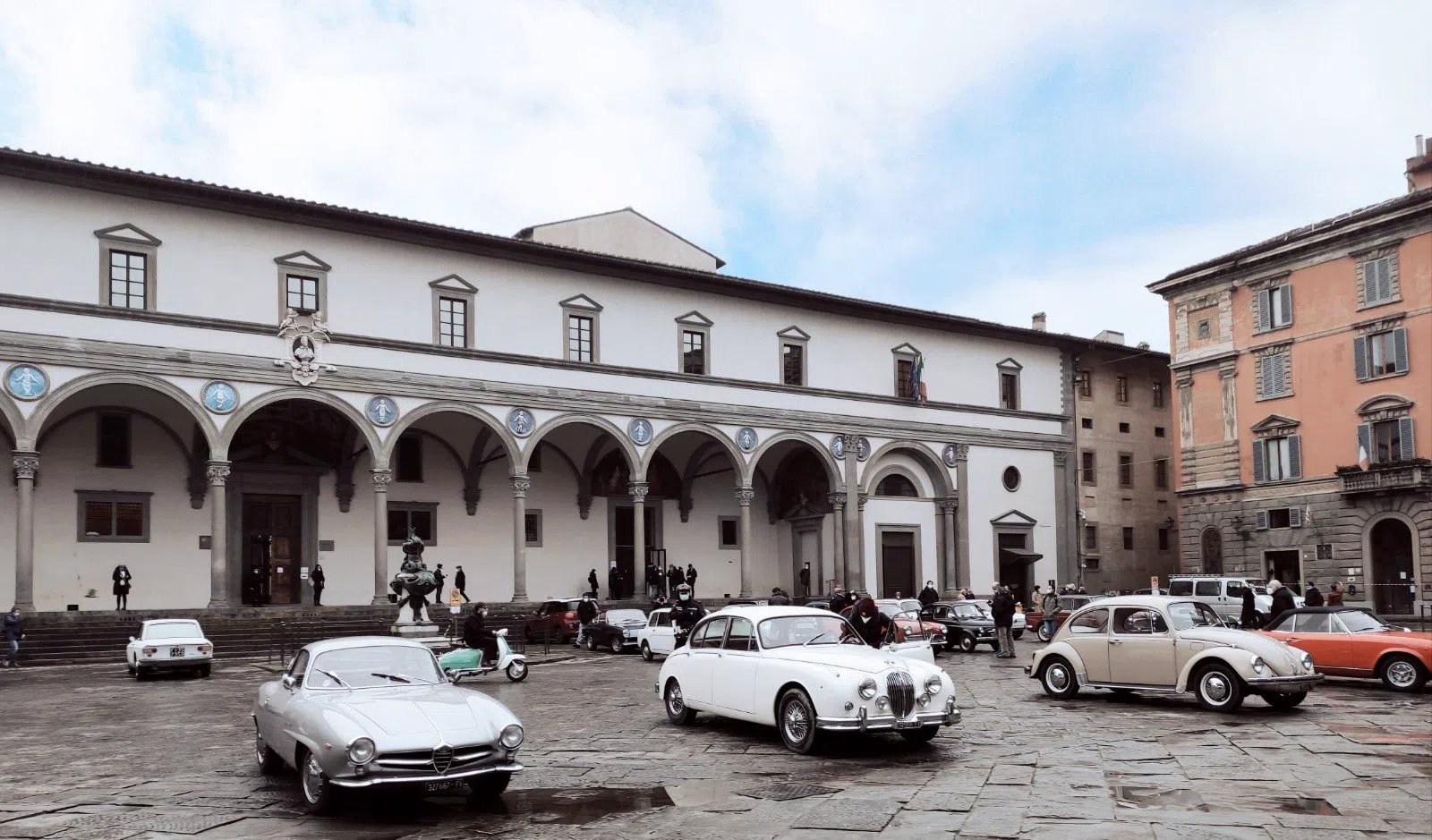
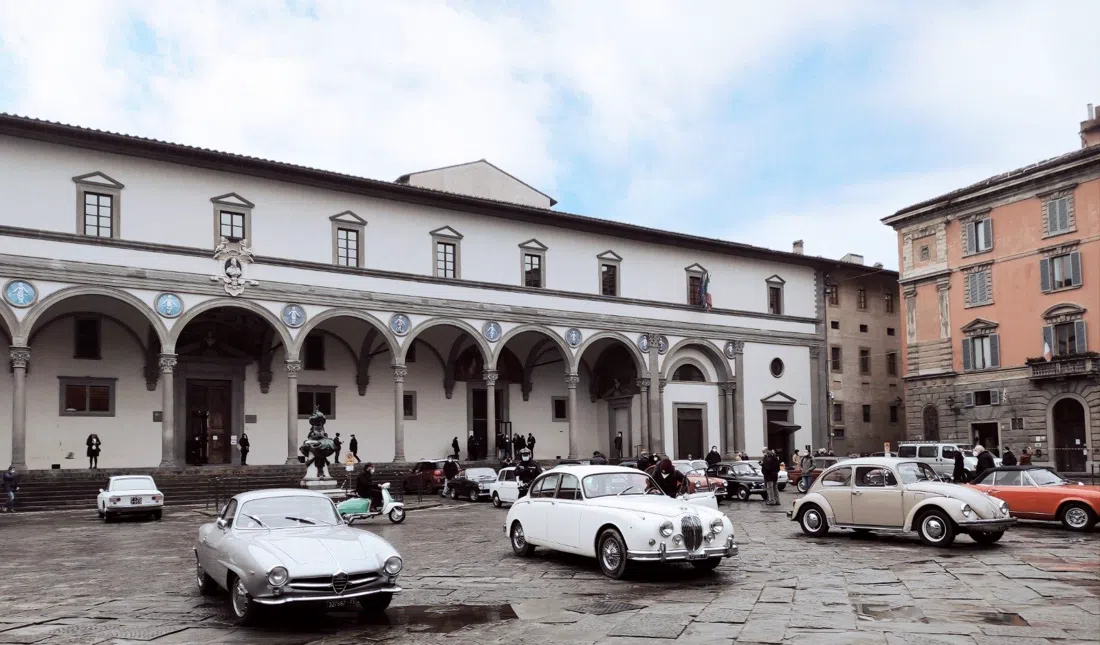
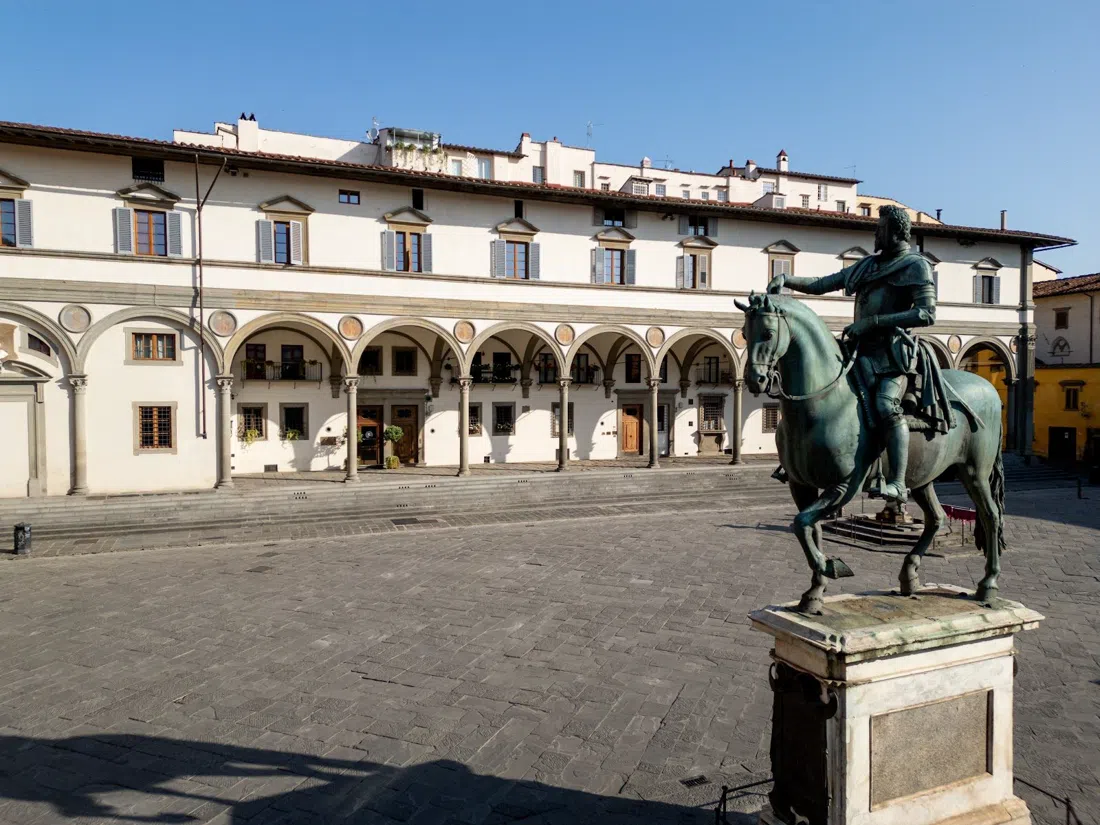
Giambologna's bronze Ferdinando I stands at the centre of Piazza della Santissima Annunziata, facing the Duomo, with one of Pietro Tacca's two sea-monster fountains on either side. Matching arched loggias close the square on three sides. By dusk the day-trippers have gone back to the cathedral.
The square and the basilica
The square is open public space, nothing to pay and no door to pass, which is why walking groups and school parties use it as their muster point. It is Florence's only fully planned Renaissance square. Late in the day, with the groups gone, the symmetry is easiest to read from the middle of the paving.
Basilica della Santissima Annunziata, on the square, is free to enter. You pass first through the Chiostrino dei Voti, a small arcaded cloister whose lunettes were frescoed by Andrea del Sarto and Pontormo, then into a dark baroque nave where the silver-canopied Annunciation shrine blazes with votive candles. Most of the reason to come is in that first cloister.
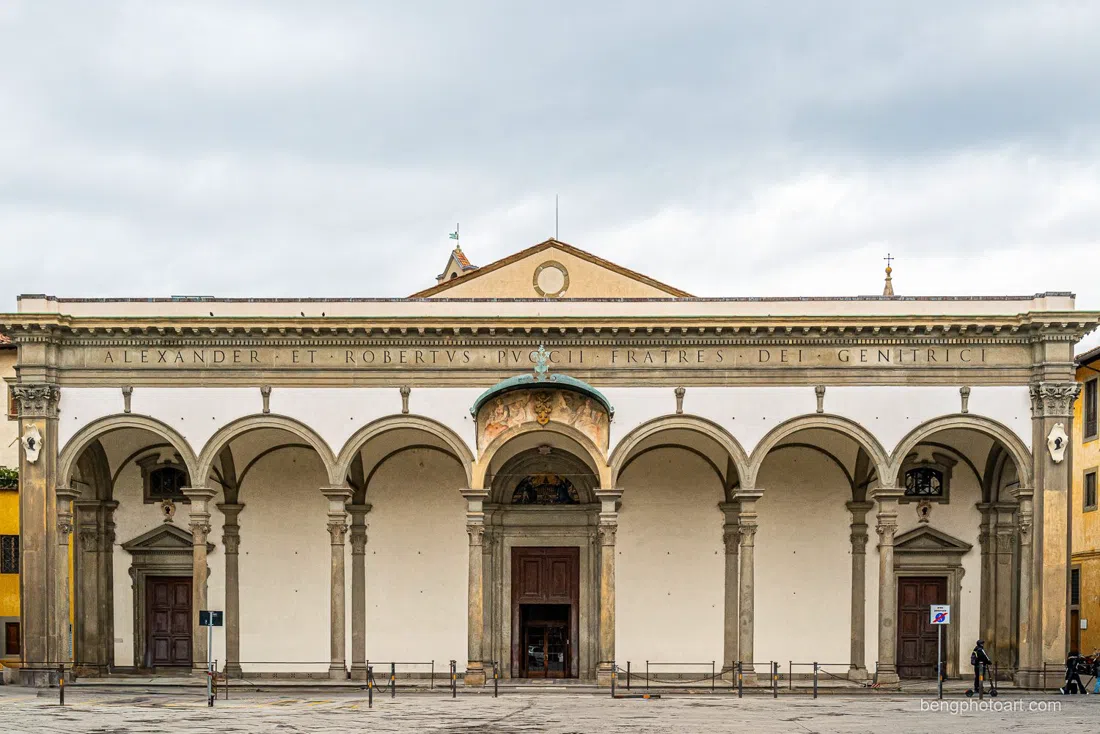
This is the mother church of the Servite order and the city's main Marian shrine, still in daily use as one. Cover your shoulders and keep quiet inside, and give any guided commentary out on the paving. It shuts over the middle of the day, from 12:45 to 16:00, so put it in the morning or after four.
Museo Archeologico and Museo di San Marco
The Museo Archeologico Nazionale di Firenze, in a Medici palace on the square, holds one of the great Etruscan collections. The Chimera of Arezzo snarls with the wound in its goat head, the bronze Arringatore stands mid-speech, and long galleries beyond them carry Egyptian chariots and painted mummy cases. Entry is €8, and the first Sunday of the month is free. During the restoration works running to the end of 2026 visitors go in through the old door at Via della Colonna 38.
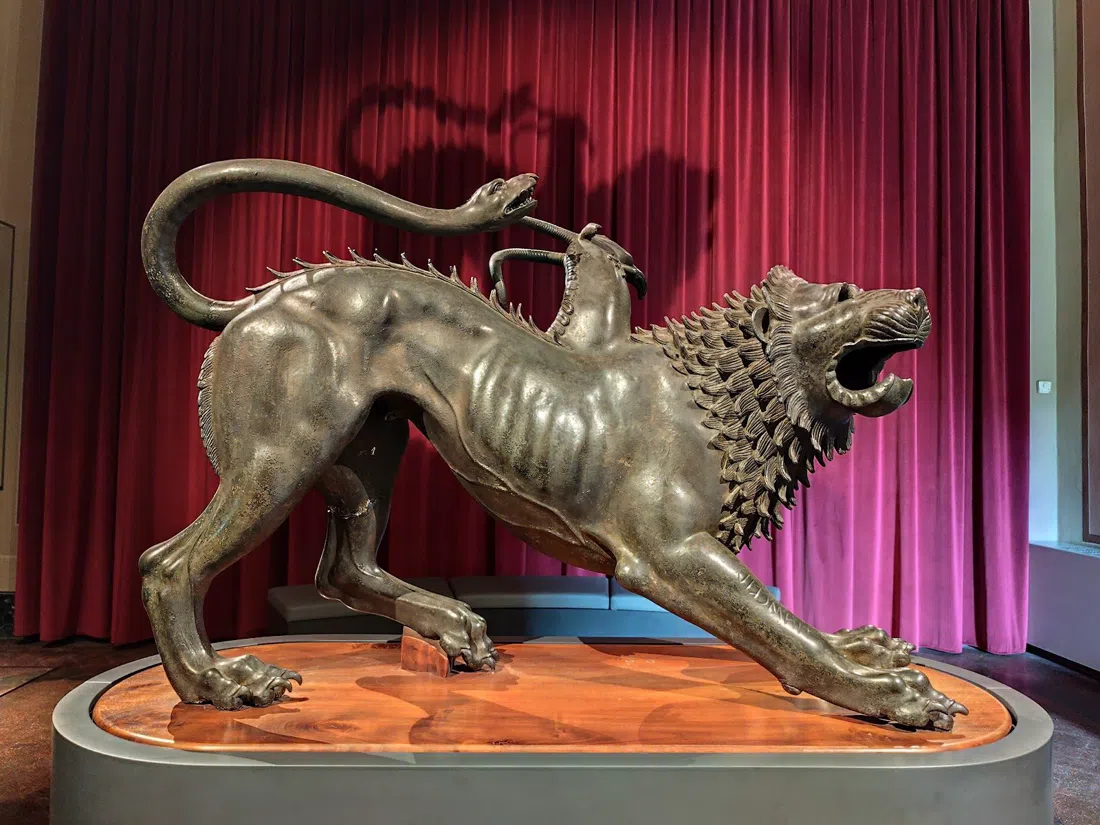
On a morning when the Accademia queue is running round the corner, these galleries stay empty. Start the day here, before the quarter's narrower rooms open up.
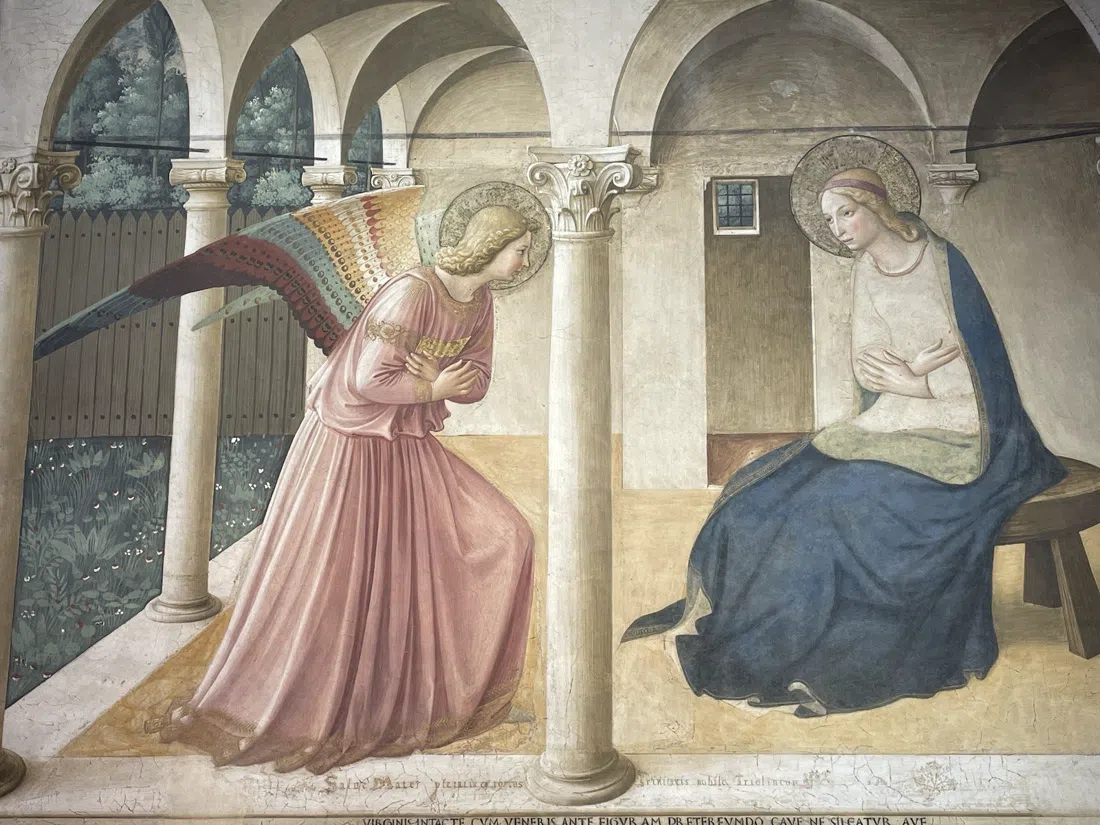
If the quarter gets one morning, give it to Museo di San Marco. Fra Angelico painted its frescoes for the friars who slept in front of them, and the paintings are still where he put them: 44 bare cells off Michelozzo's whitewashed cloister, one small fresco in each, the luminous Annunciation at the top of the dormitory stairs, and Savonarola's spartan cell at the end. Entry is €11, mornings only. It closes on Mondays and on the fifth Sunday of the month. The cell corridors are narrow. Split a group into small clusters and let them move at their own pace.
The Accademia queue on Via Ricasoli
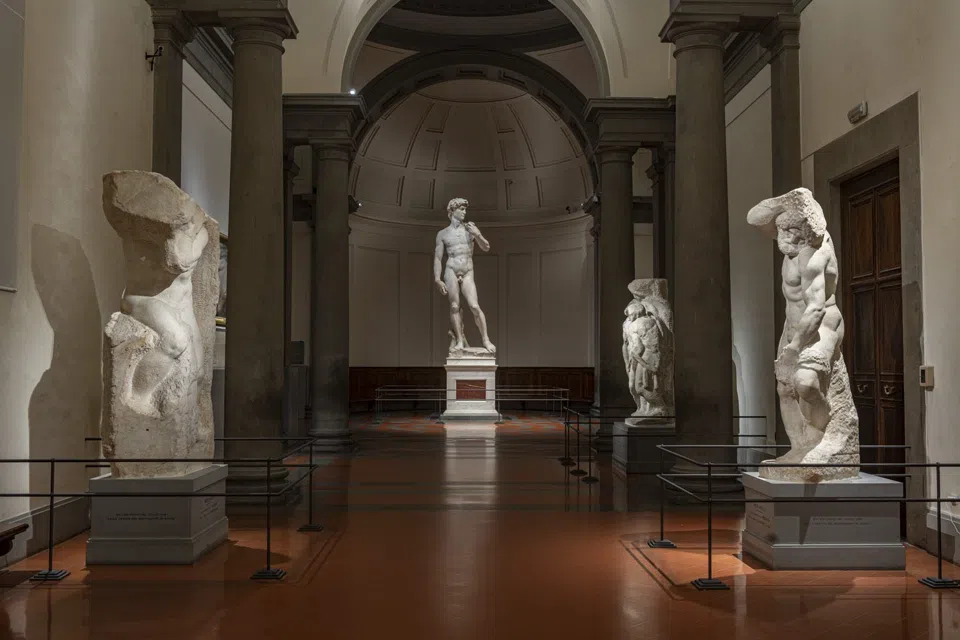
Galleria dell'Accademia is two minutes off the piazza on Via Ricasoli, and it is the one unavoidable queue in the quarter. Michelangelo's David stands under a purpose-built skylit tribune at the end of a corridor lined with the unfinished Prisoners, figures half out of their raw marble blocks. Tickets are €16 to €20 and entry is timed.
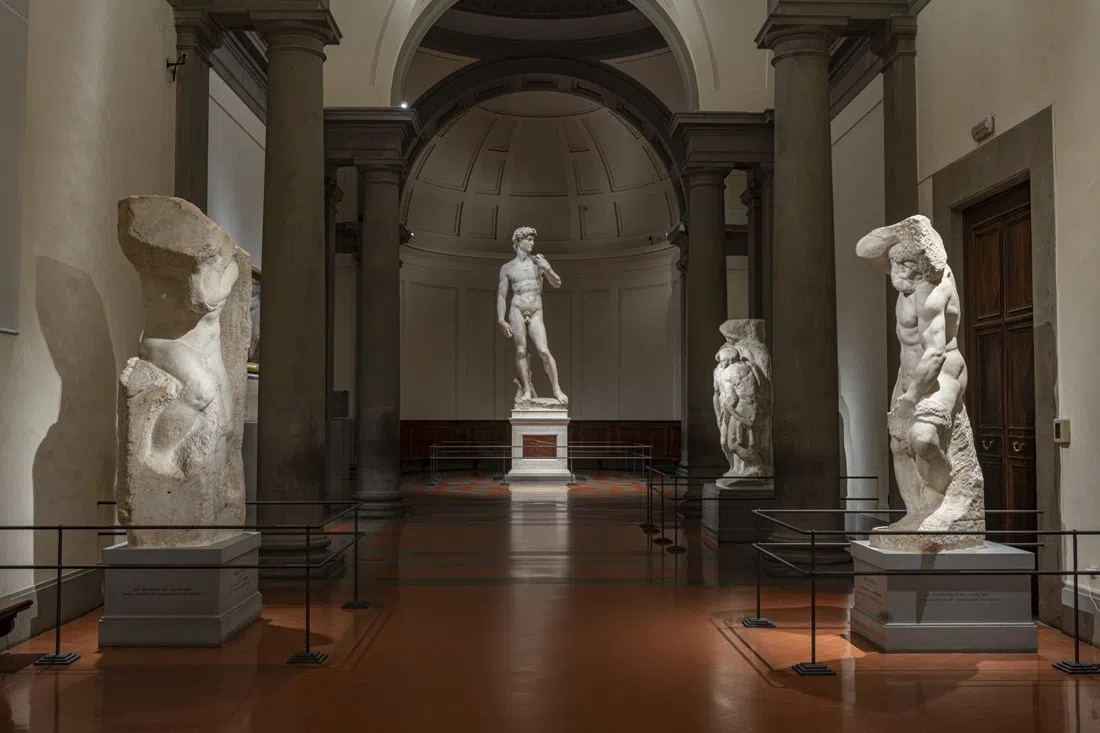
Same-day tickets sell out routinely, groups book their slots with headsets in advance, and the gallery closes on Mondays. Book a slot online before you travel. If every slot has gone, spend that hour in San Marco and come back to the David another day.
Two small rooms with short hours
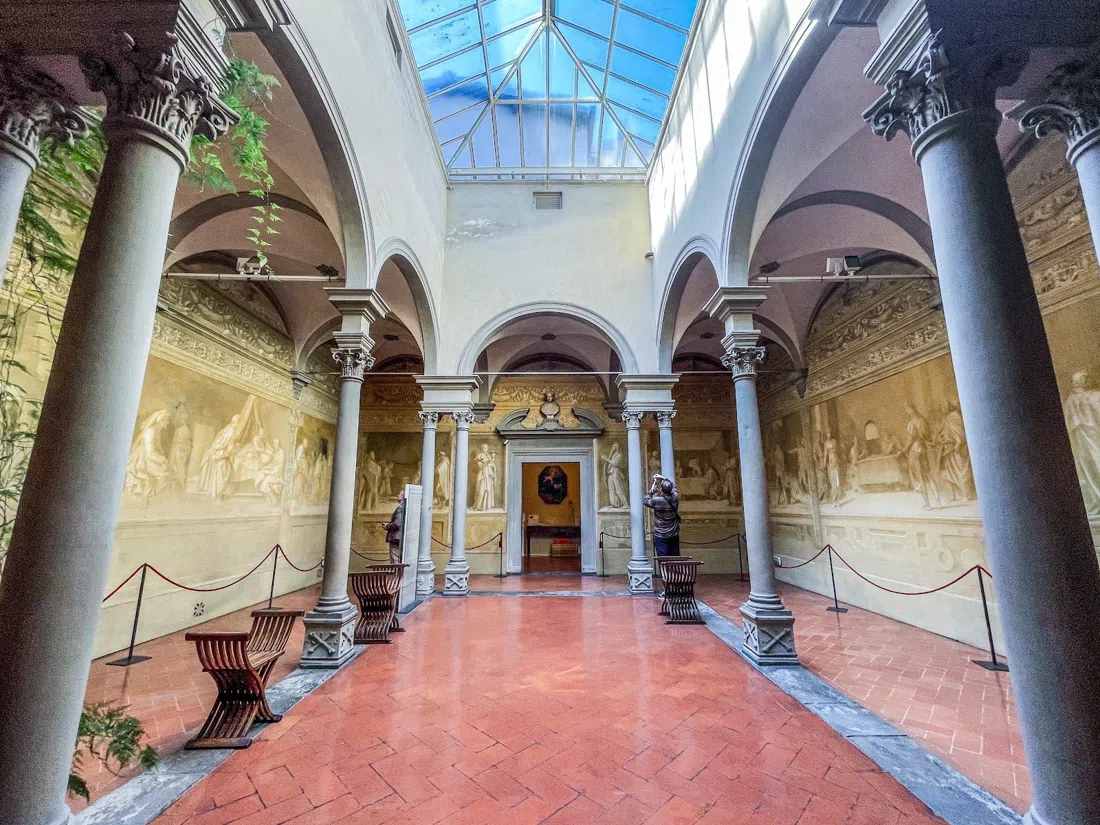
Chiostro dello Scalzo is free and almost nobody goes in. Andrea del Sarto worked on this one columned courtyard for 17 years, painting the life of John the Baptist in grisaille, monochrome grey on cream, the scenes reading as carved stone relief. The room is small and staff cap numbers, so groups of more than 10 should go in waves. Opening days are irregular, mornings only, with odd Sunday and Monday closures. Check before you walk over.
Museo dell'Opificio delle Pietre Dure is a single tall hall attached to Italy's national restoration institute, and 20 minutes covers it. Medici table tops are inlaid with lapis, jasper and agate so finely that they read as paintings. Upstairs sit the original 19th-century wooden workbenches and the racks of stone slices they worked from. Entry is €4 to €6. It opens mornings from Monday to Saturday and closes on Sundays. Small groups are taken by arrangement. After this hall, Florentine mosaic stops looking like decoration.

The botanical garden behind the walls
The Orto Botanico "Giardino dei Semplici" was founded in 1545 for Cosimo I and is the third-oldest botanical garden on earth. Its 2.3 hectares run behind high city walls: gravel paths, a cork oak planted in the 1700s, a vast yew, Victorian glasshouses and tanks of water lilies. Entry is €8 and it closes on Mondays.
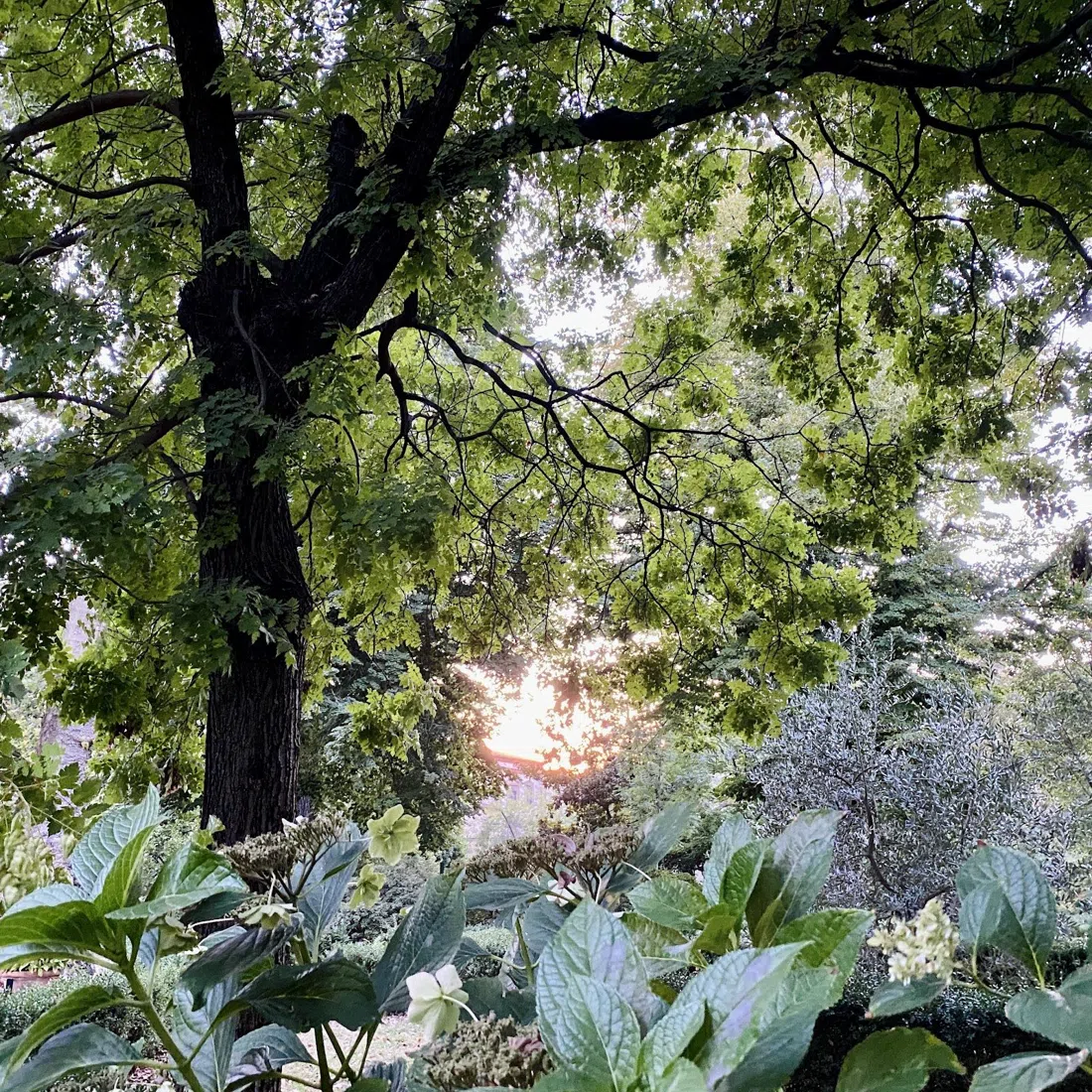
This is the quietest green space inside the historic centre, and the one place in the quarter where children can be loud. Guided visits are bookable through the university museum system. An hour here after a morning of frescoes resets everybody.
Teatro della Pergola tours
Teatro della Pergola sits south of the piazza and still works as a prose stage. The 1656 auditorium is a horseshoe in red velvet and gold, three tiers of boxes rising to a painted ceiling, the prototype for every Italian opera house that followed.
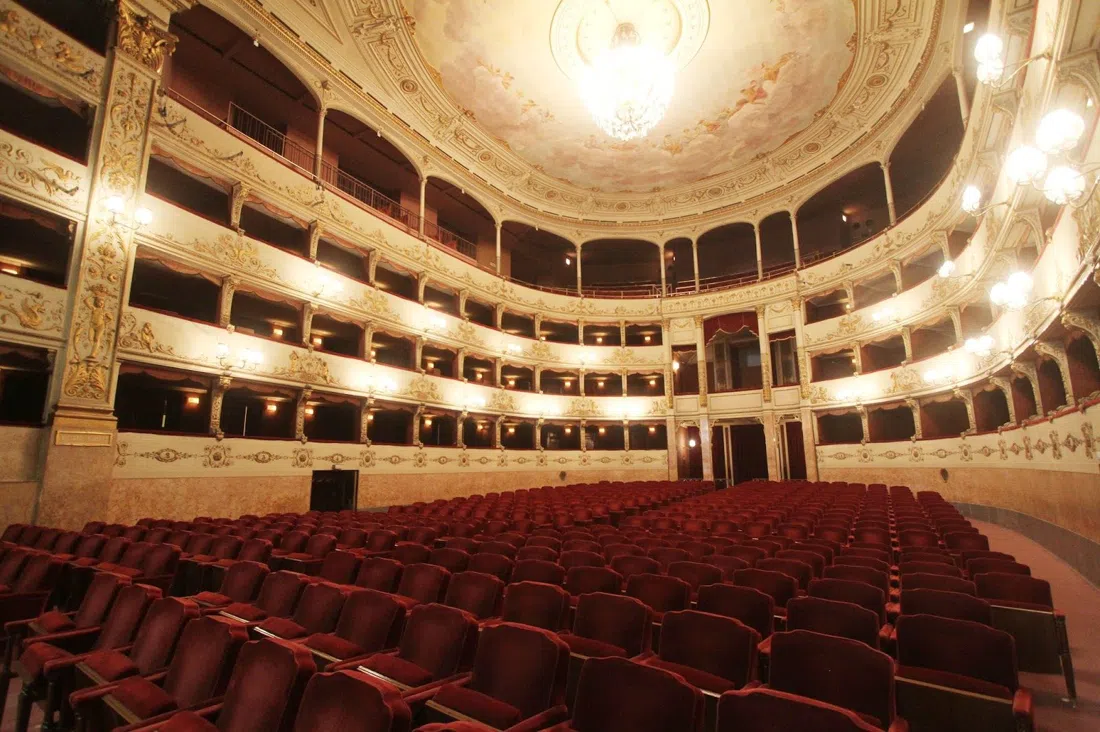
Daylight access comes through the guided "Grand Tour" backstage visit, which runs in English by reservation and needs 10 people. Tickets are €15 to €40, and seats for performances are sold individually. Two travellers wanting to see the inside should buy a ticket to whatever is playing.
Lunch and gelato around Piazza San Marco
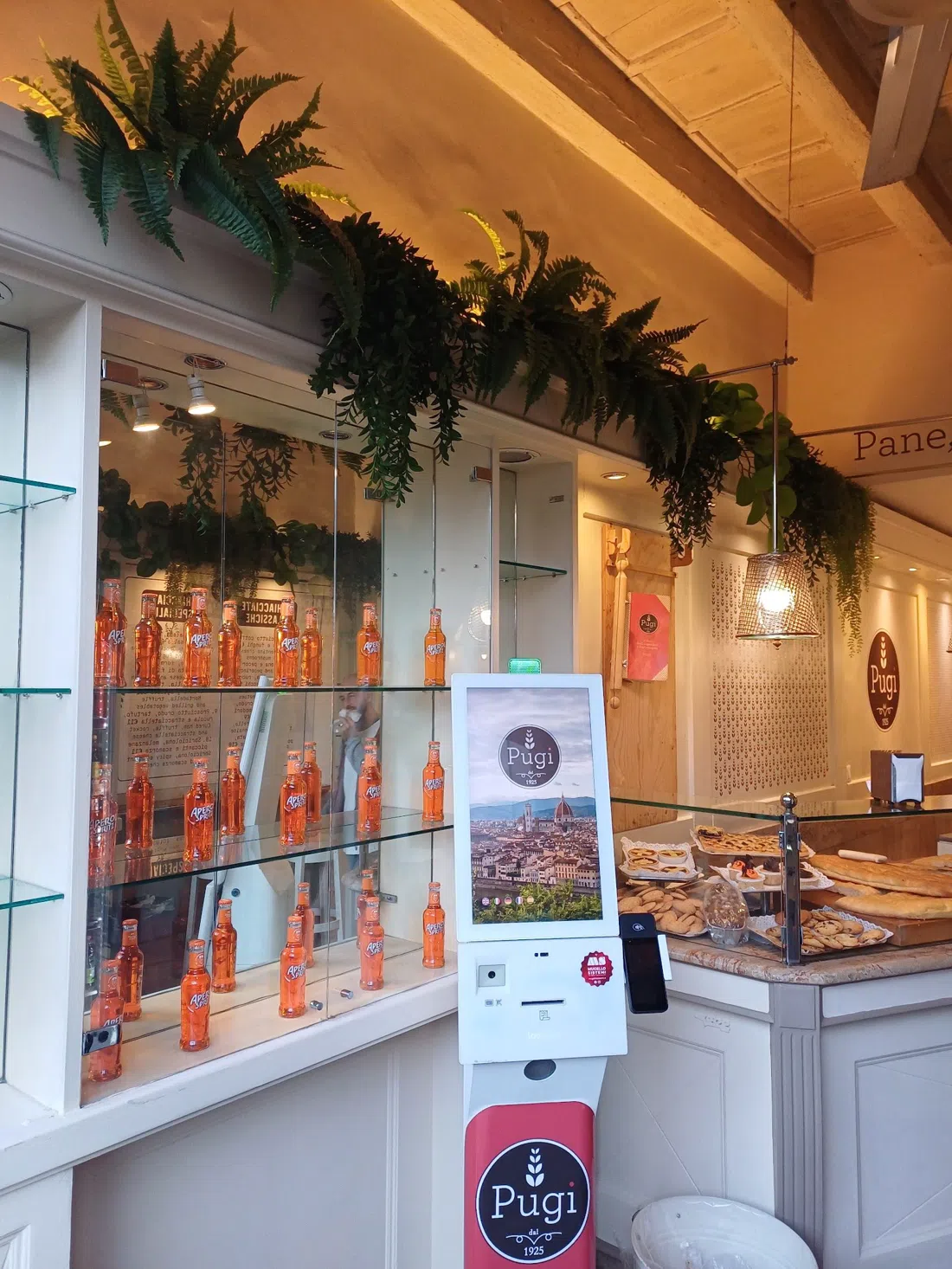
Pugi has been baking on the corner of Piazza San Marco since 1925. Steel trays of oil-glossed schiacciata come out to the counter, get cut with scissors and weighed by the slab, and in autumn the grape-studded schiacciata all'uva appears. The queue out the door is students and office workers. It is a takeaway counter with no seating, €, and it closes on Sundays. Buy it hot and eat it on the square.
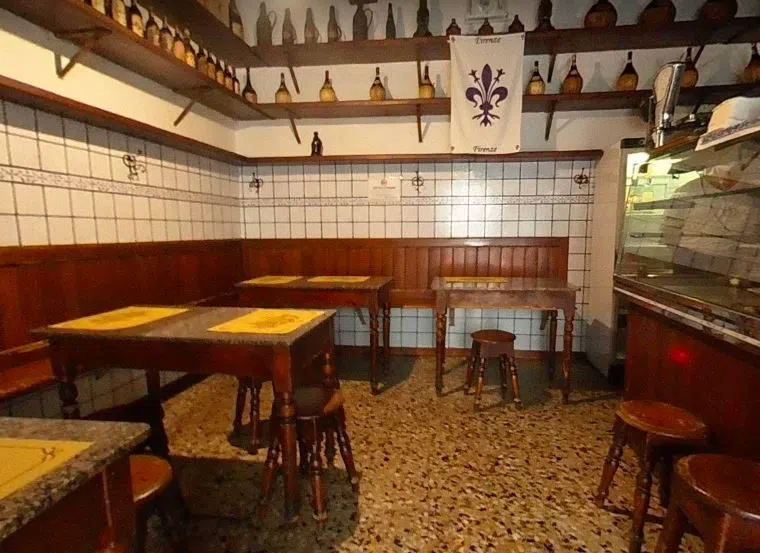
Trattoria La Mescita (Via degli Alfani) has been open since 1919 and serves lunch only, 11:00 to 16:00. Ribollita and stracotto arrive at low prices in one narrow room of paper tablecloths and shared tables, wine flasks on a wooden shelf above them and the day's menu handwritten and taped to the wall. The menu is short by design, so order the day's dishes. Four or five people fit at a push. €€.
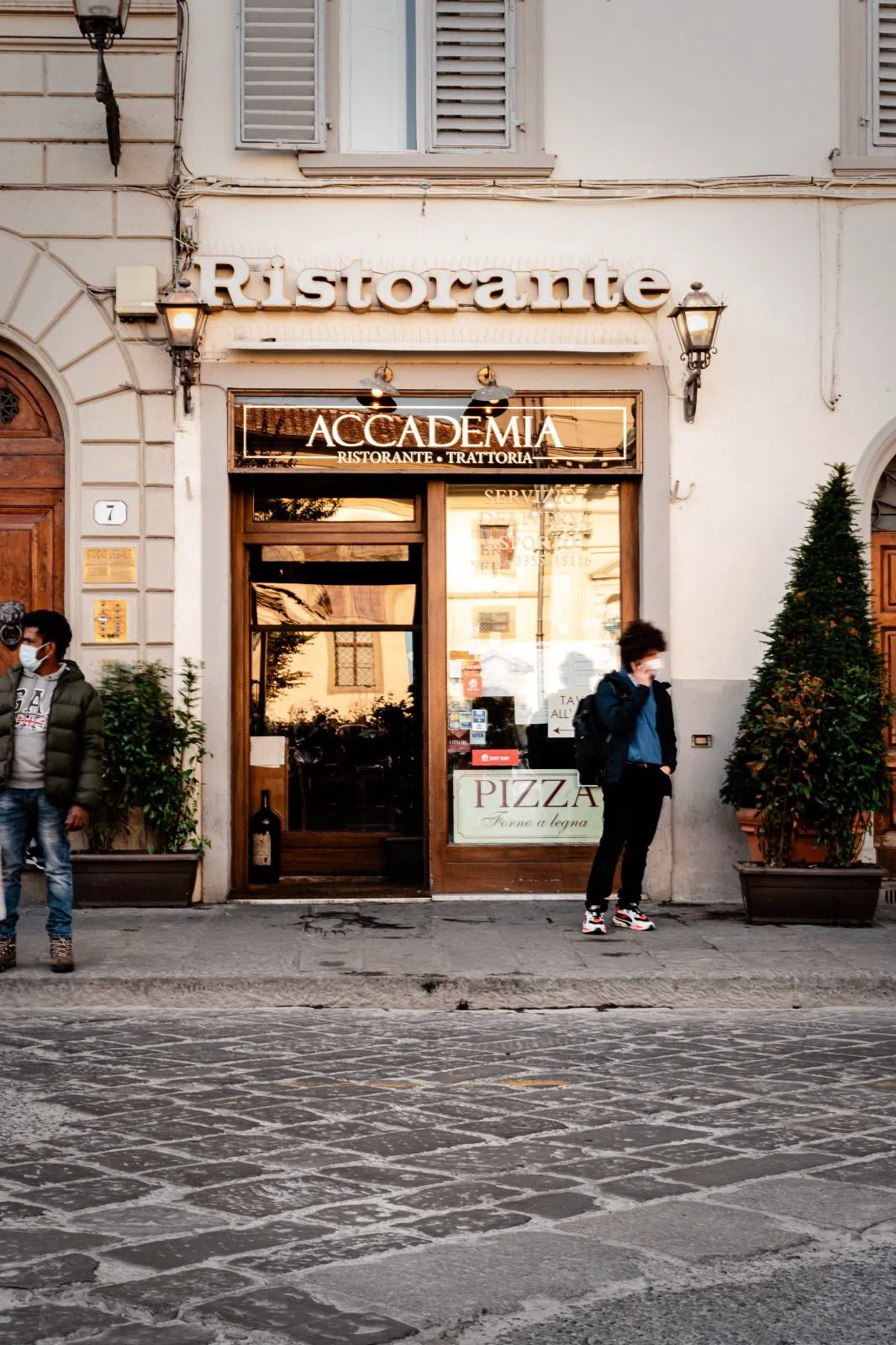
Ristorante Accademia has pavement tables directly on Piazza San Marco and a vaulted brick dining room behind them. The owner-brothers bring out hand-rolled pasta and trippa alla fiorentina, Tuscan standards with an Abruzzese accent. The fresh pasta is the reason to come. It serves lunch and dinner, takes reservations, and can seat a large table, which is rare this close to the piazza. €€€, with drinks priced for the square.
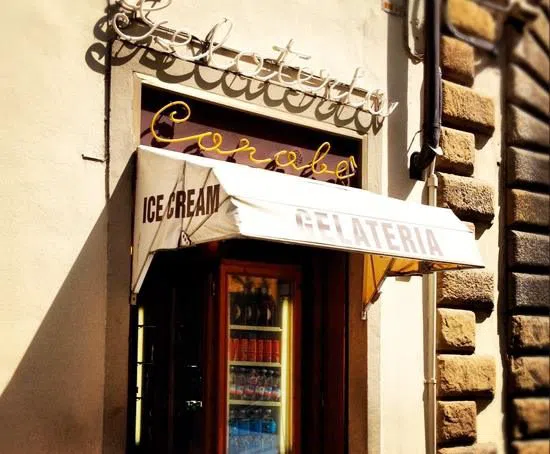
Gelateria Carabè is on Via Ricasoli, halfway between the Duomo and the Accademia. The family brings its ingredients up from Sicily, and the almond and lemon granita is the order, served in a glass with a brioche bun. Lemons and pistachios sit out on the counter. Counter service, no real seating, open until 23:30, €. Come here after the David queue.
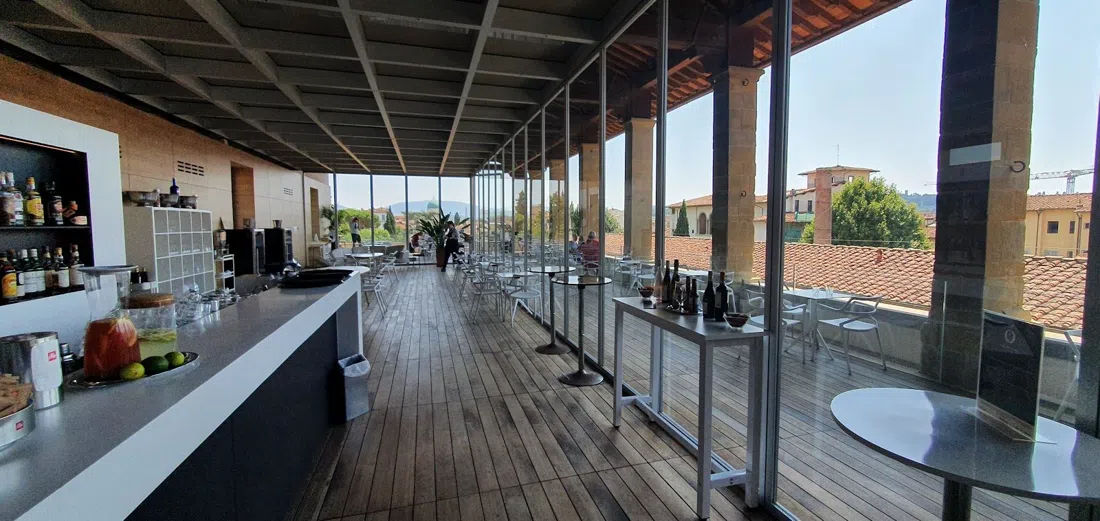
A Duomo view from the Innocenti loggia
Caffè del Verone runs along the top floor of the Innocenti, in a long open loggia built as a drying balcony for the foundlings' laundry. The terracotta-tiled rooftops lead straight out to Brunelleschi's dome and Giotto's campanile, and a coffee here costs a fraction of what the hotel rooftops charge for a worse angle. No museum ticket is needed to come up. €€. Book ahead for a window table at Friday aperitivo.
Where to stay on the piazza
Hotel Loggiato dei Serviti puts you inside one of the loggias that frame the square, so guests step out under Sangallo's 1520s arcade onto the paving itself. It was the Servite friars' guest house, and inside it keeps vaulted ceilings, antique four-posters and a barrel-vaulted breakfast room. It suits couples and families, €€€. Book direct well ahead. Large groups will not fit.
Opening days and booking
Mondays close the Museo di San Marco, the Galleria dell'Accademia and the botanical garden, San Marco closes again on the fifth Sunday of the month, and Pugi and the Opificio close on Sundays. Book the Accademia slot and the Pergola tour before you arrive, and check the Chiostro dello Scalzo's opening on the morning you plan to use it.
See the Florence guide and the Florence hotel search.
Questions
Is the Basilica della Santissima Annunziata free to enter?
Yes, entry is free and groups are fine. It is a working Marian shrine, so keep your voice down, cover your shoulders and take any guided commentary outside. The church shuts in the middle of the day, 12:45 to 16:00.
Do I need to book the Galleria dell'Accademia in advance?
Entry is by timed slot and same-day tickets routinely sell out, so book online. Tickets run €16 to €20, groups book their slot with headsets, and the gallery is shut on Mondays.
What is closed on Mondays around the piazza?
The Museo di San Marco, the Galleria dell'Accademia and the Orto Botanico are all shut on Mondays. San Marco opens mornings only, and also closes on the fifth Sunday of the month.
Where do I find a cheap lunch near Piazza San Marco?
Pugi, the corner bakery on the square, sells schiacciata by weight at € prices; there is nowhere to sit and it does not open on Sundays. Trattoria La Mescita on Via degli Alfani serves lunch only, 11:00 to 16:00, at €€.
Can I get a Duomo view without buying a museum ticket?
Caffè del Verone, on the top floor of the Innocenti, lets you in at €€ without a museum ticket. Book ahead if you want a window table at Friday aperitivo.
First published on florencecitybreaks.com, the Florence guide.