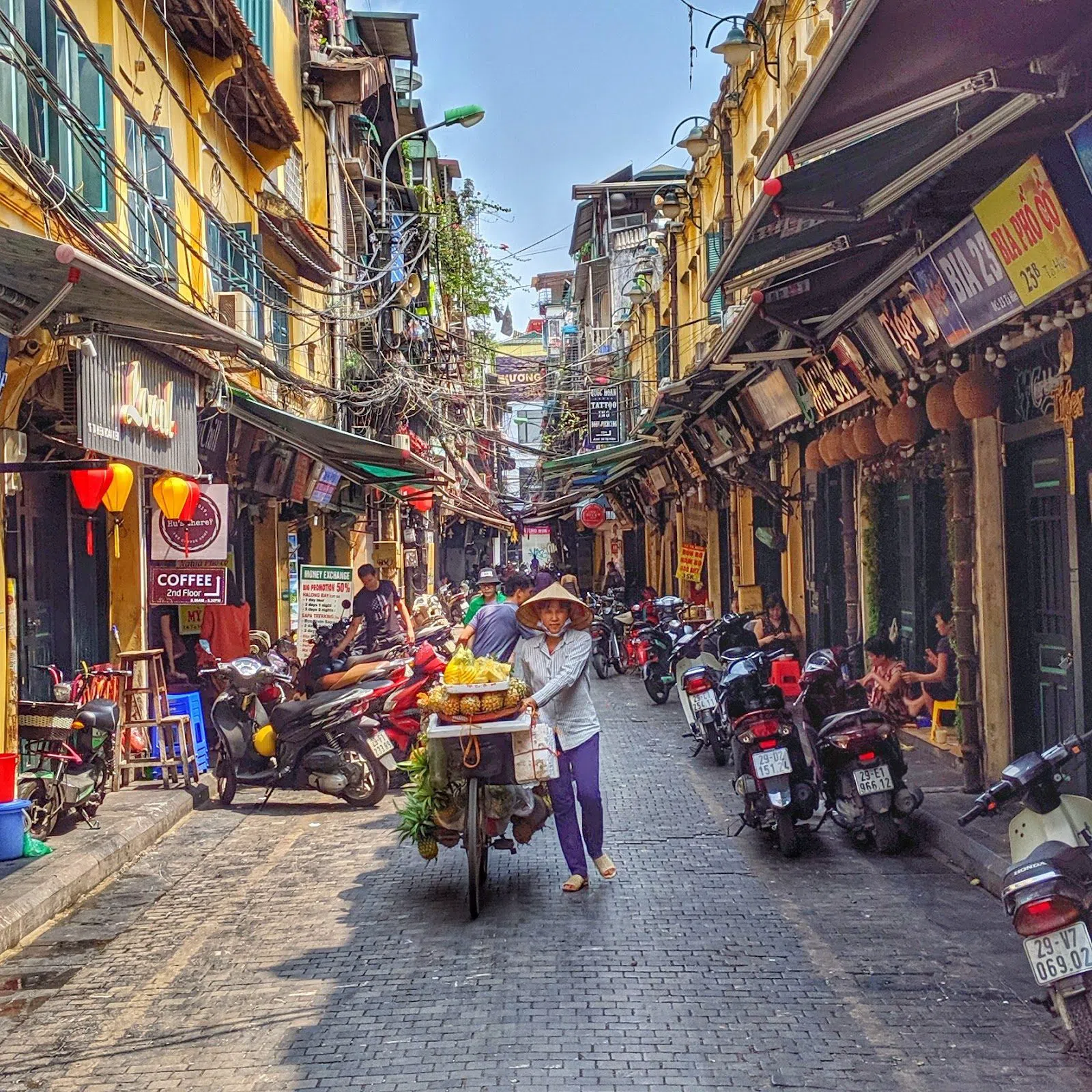
At six in the morning the lanes north of Hoan Kiem smell of charcoal smoke and wet pavement, and most shopfronts are still shuttered steel. By nine, the same hundred metres has become a moving wall of scooters, bamboo scaffolding and a man cycling past with forty kilos of paper votives stacked behind him. Learning to read that street, rather than just surviving it, is the whole reason people walk here.
What the thirty-six streets actually are
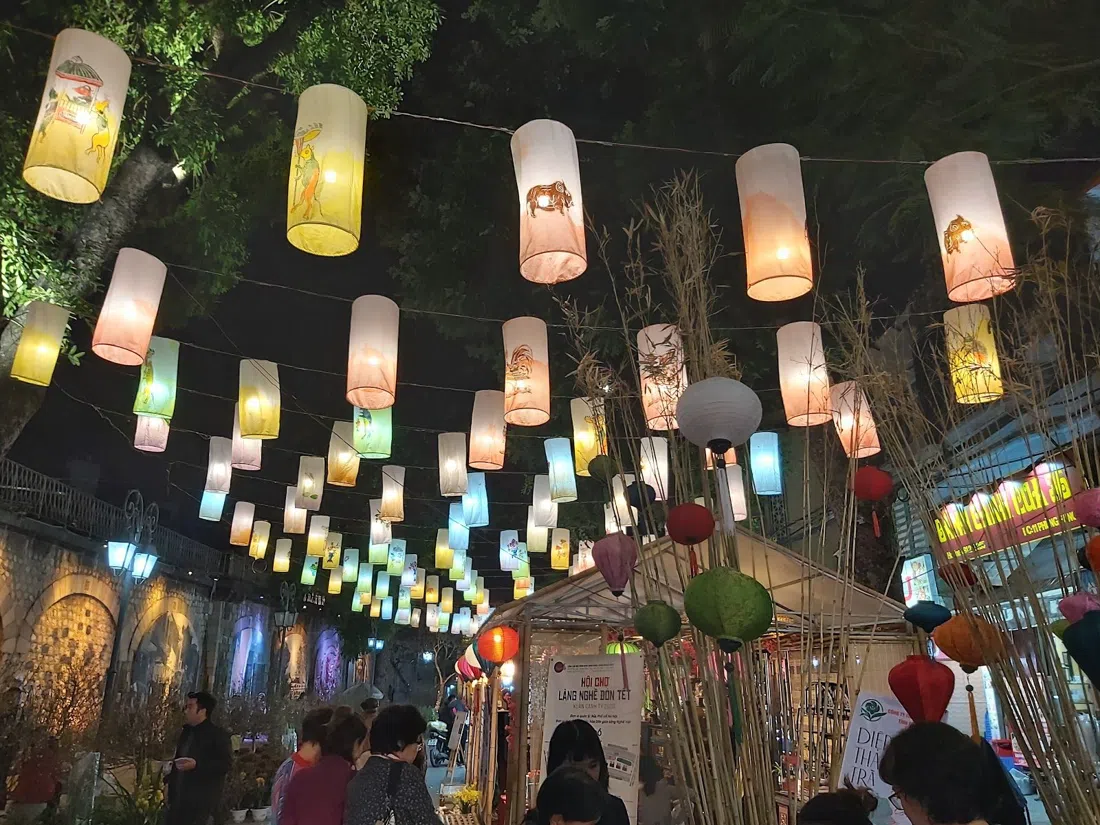
The Hanoi Old Quarter (the 36 Guild Streets, immediately north of Hoan Kiem Lake) is not a museum district and never was. It is a working commercial quarter that organised itself, centuries ago, by trade: each street given over to one craft guild, each guild drawn from a village that migrated into the city and kept its specialism. Hang Bac was silver. Hang Gai was silk. Hang Ma was paper votives, and still is. Walk it in the run-up to any festival and the whole street glows orange and gold with objects made to be burned.
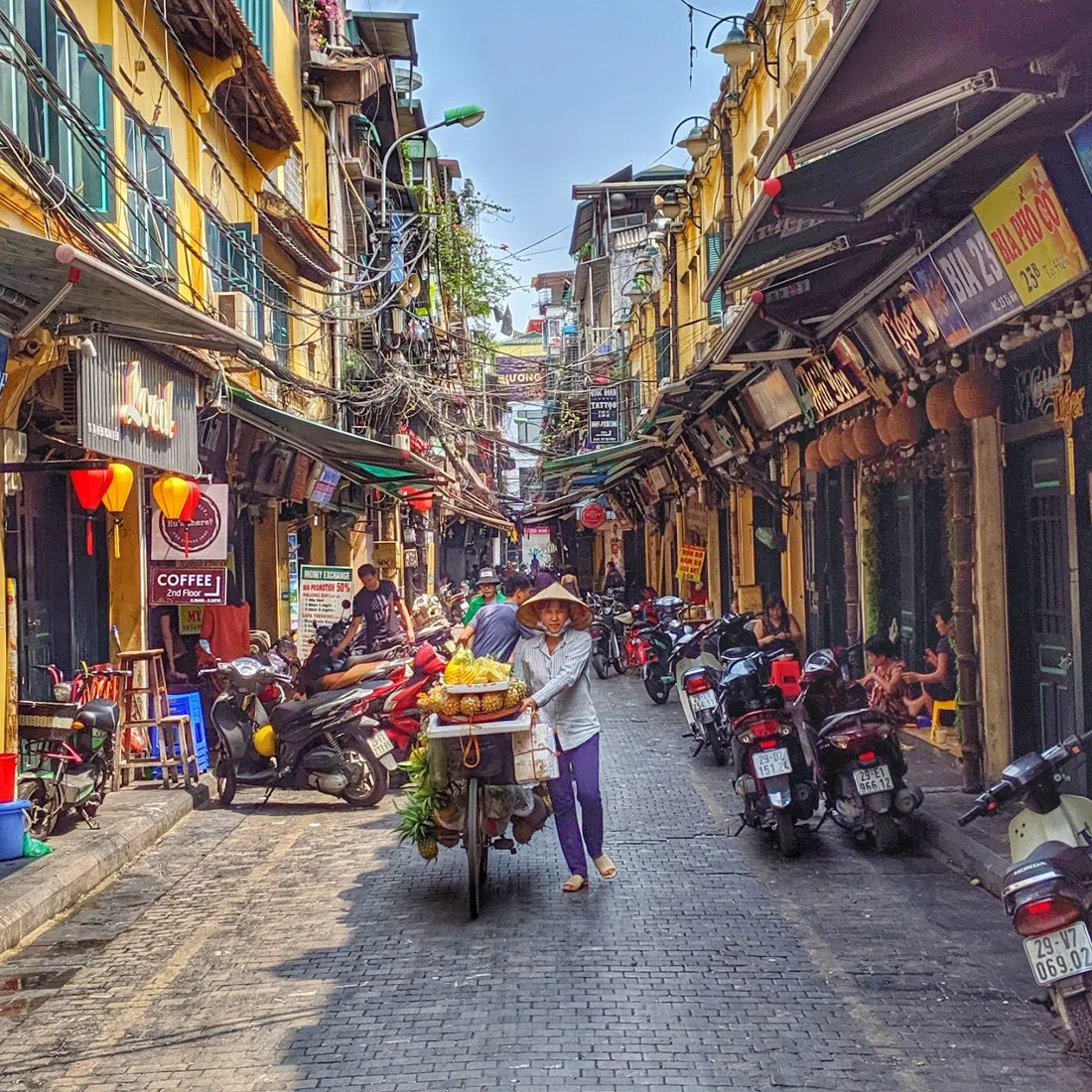
The symbolic thirty-six is a tidy number that stopped being accurate a long time ago; there are over seventy streets in the quarter now. The streets are free, open, and have no door policy of any kind. That is exactly the problem. Without someone naming the guild logic for you, the quarter reads as undifferentiated commerce, one more shoe shop, one more stall of tin buckets, and you will walk past the part that matters. What you are paying a guide for here is the explanation. Nobody is opening a door for you; someone is telling you why the door is two metres wide.
Guided walking groups of eight to fifteen are routine here, and the good guides use quieter lanes such as Lan Ong and Thuoc Bac to keep a group together and audible. If you are walking alone, borrow that habit: cross into the side lanes whenever the main street turns into a scooter channel.
A route that follows the guild logic
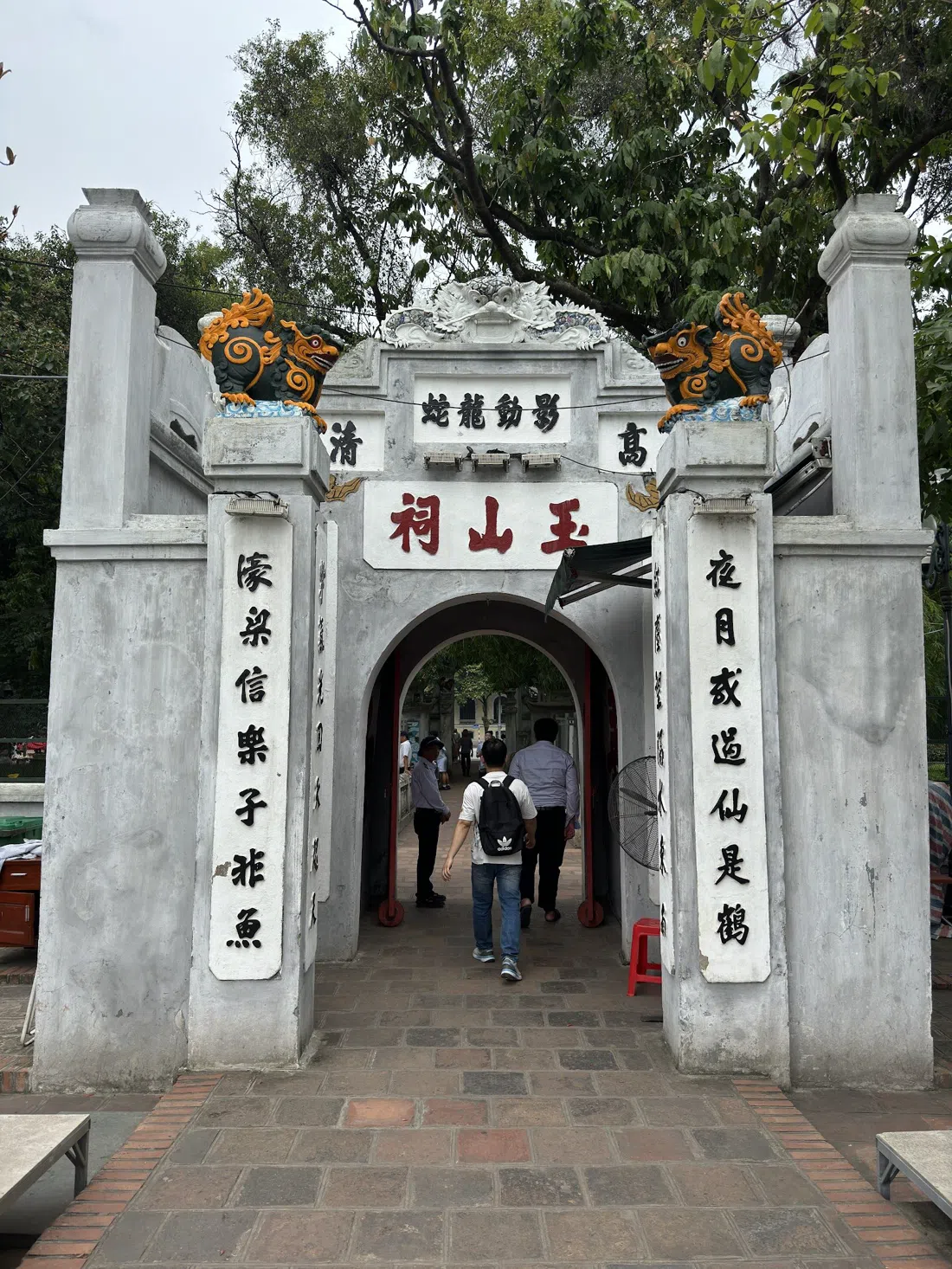
Start at Hoan Kiem Lake and Ngoc Son Temple (the southern edge of the quarter), and start early. Between six and seven in the morning the lakeside path belongs to people exercising rather than to visitors, and the shore is the one place in central Hanoi with genuine open air. The path itself is free. The temple islet, reached over the red bridge, costs 50,000 VND (about US$2) with under-16s free; it opens at 7am and closes at 7pm on weekdays, 10pm Friday to Sunday. The islet is narrow, which is why guided groups cross the bridge in twos and threes rather than as a block.
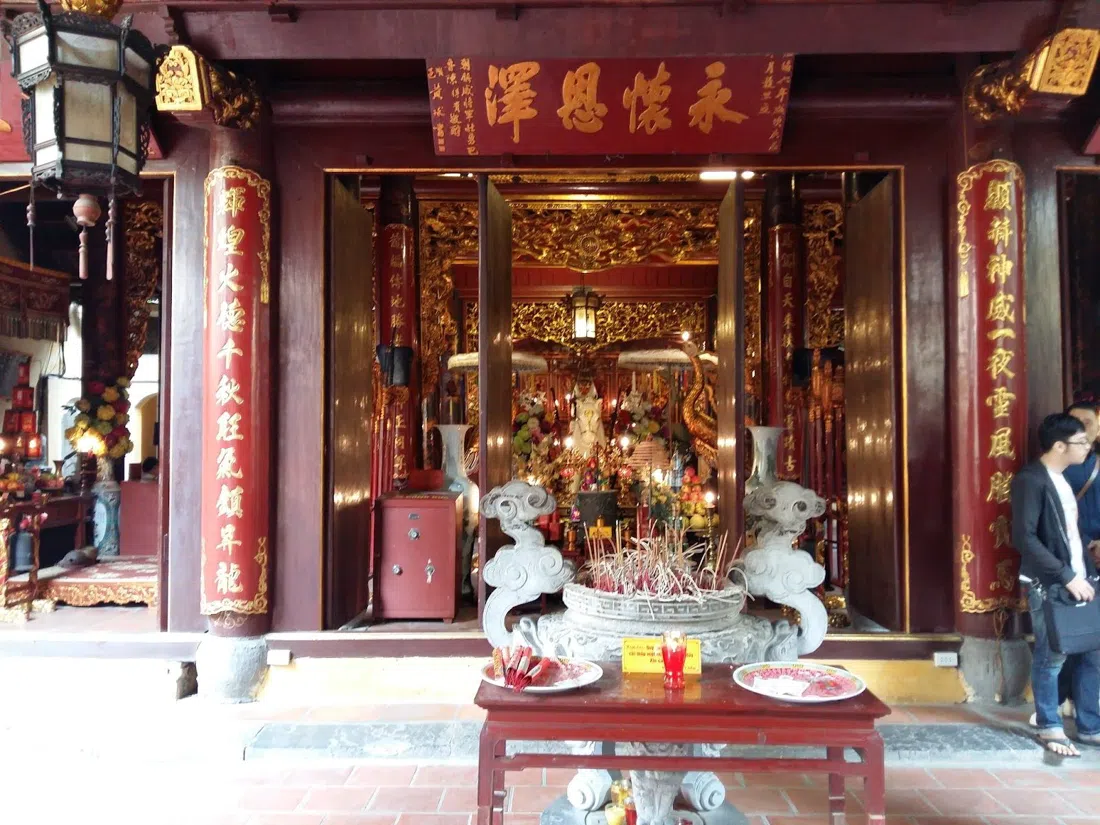
Walk north into the guild streets and stop at Bach Ma Temple (Hang Buom street, in the eastern half of the quarter). It is the oldest temple in the Old Quarter, eleventh century, and the eastern guardian of the original citadel. Entry is free, it opens 8am to 8pm, and it takes five minutes, worth spending precisely because almost everyone walks straight past the doorway. The hall is tight, so a large group has to filter through. Cover shoulders and knees, take your hat off, and leave shoes off the inner platform.
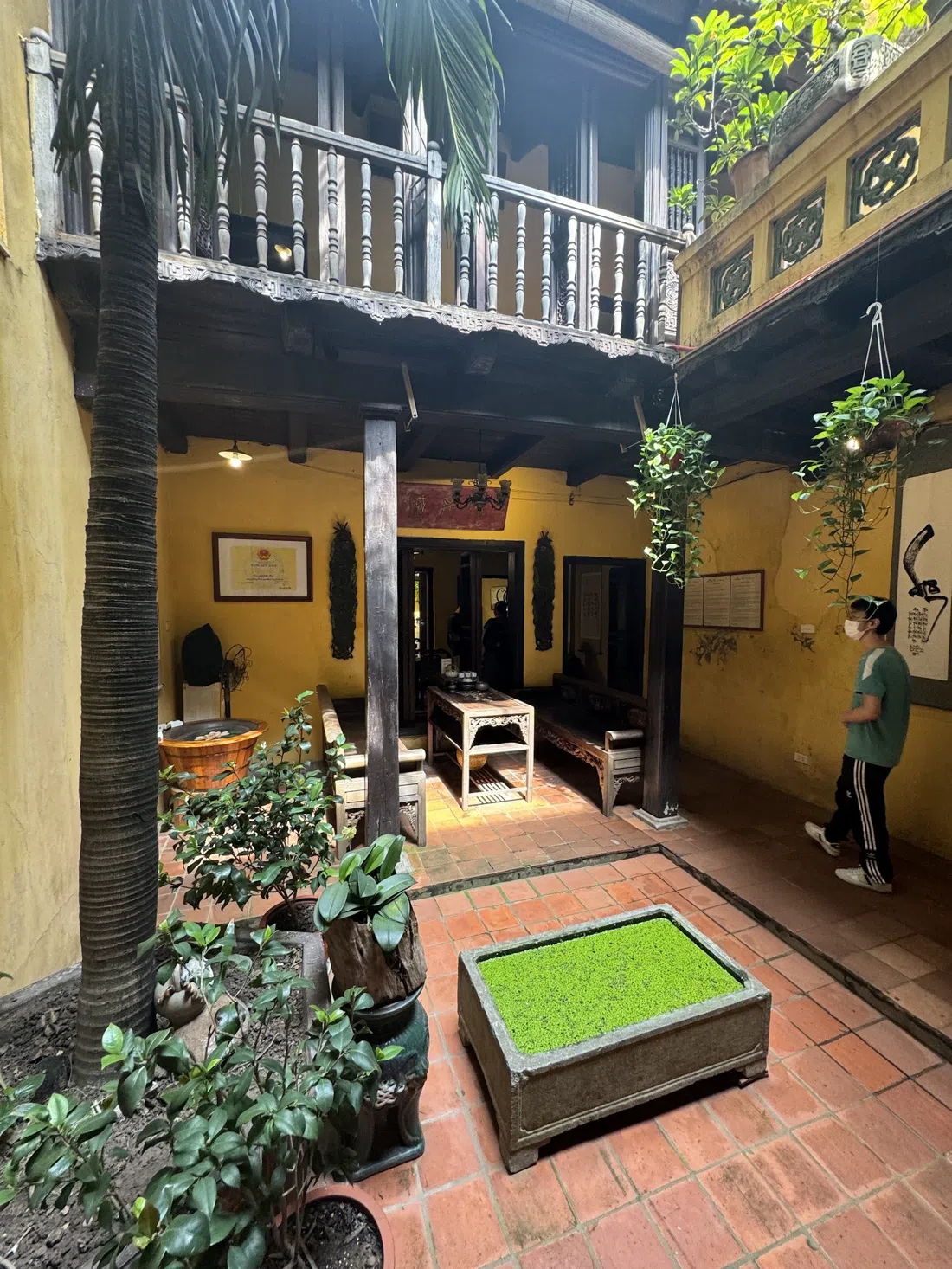
A few streets on is Heritage House, 87 Ma May (Ma May street), which is the clearest short explanation you will get of why these houses are two metres wide and thirty metres deep: a response to frontage tax that shaped the entire quarter's architecture. It reopened in January 2026 after restoration. Entry is 20,000 VND (around US$0.80), free for children and disabled visitors, half price for students and seniors. Hours are 8am to noon and 1.30 to 5.30pm, with evening opening 7 to 9.30pm Friday to Sunday. The staircase and courtyards are narrow; guides bring ten or twelve at a time and stagger the upper floor, and a couple will always have an easier time of it than a full group.
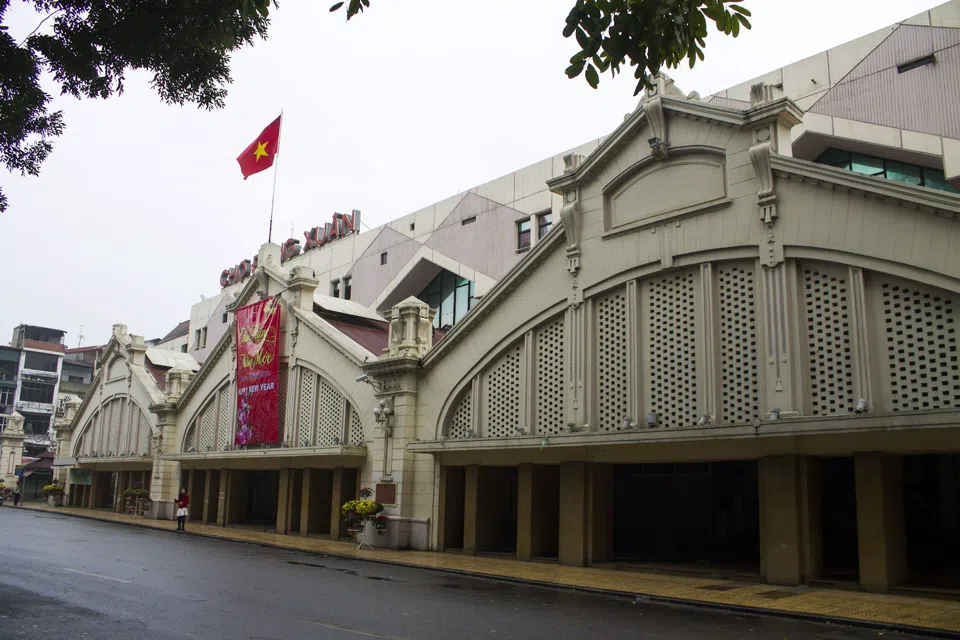
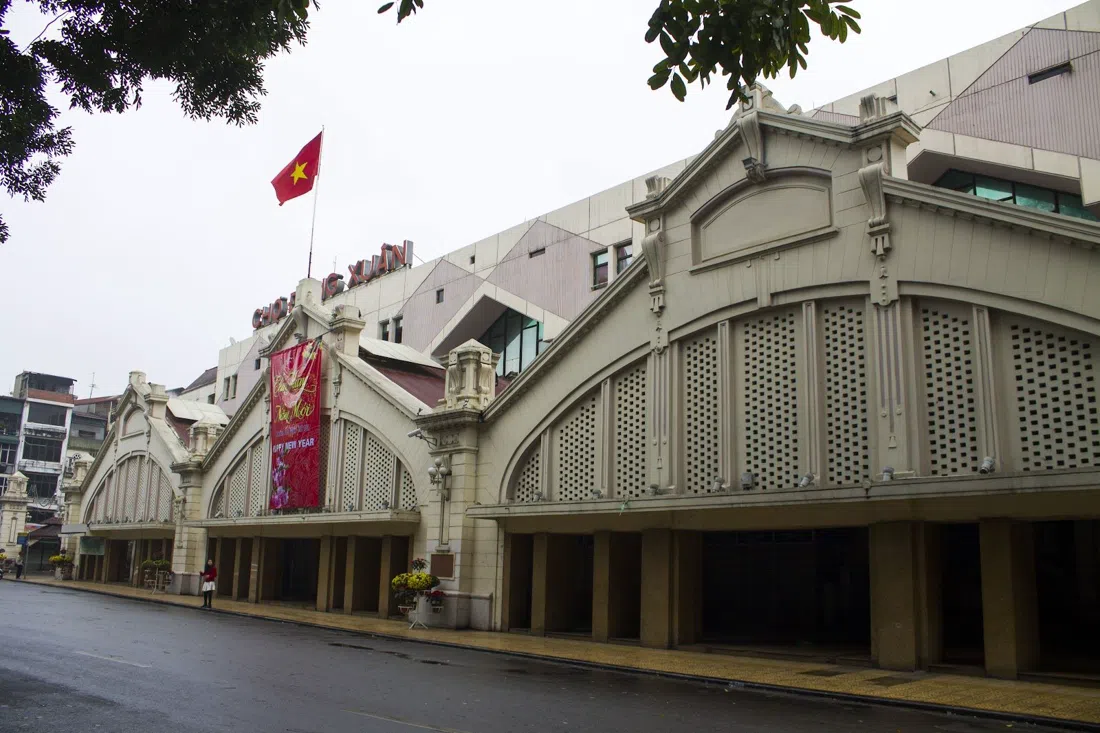
Carry on north to Dong Xuan Market (the northern end of the quarter), the wholesale engine the rest of the streets feed off. It is open 6am to 6pm daily and free to enter. Go before eleven if you want the working market rather than the version arranged for visitors. The aisles are genuinely tight (groups are usually briefed to go single file and regroup at a named gate), and the food alley behind the building is the local end of the whole experience.
When the heat or the rain wins, the Hanoi Old Quarter Cultural Exchange Centre (central Old Quarter) is the standard shelter on guided routes: free, air-conditioned, purpose-built for visitors, and large enough to absorb a full walking group. Its rotating exhibitions through 2026 have covered Vietnamese lacquerware and Old Quarter craft traditions. It is the one indoor stop that explains the quarter rather than selling to it.
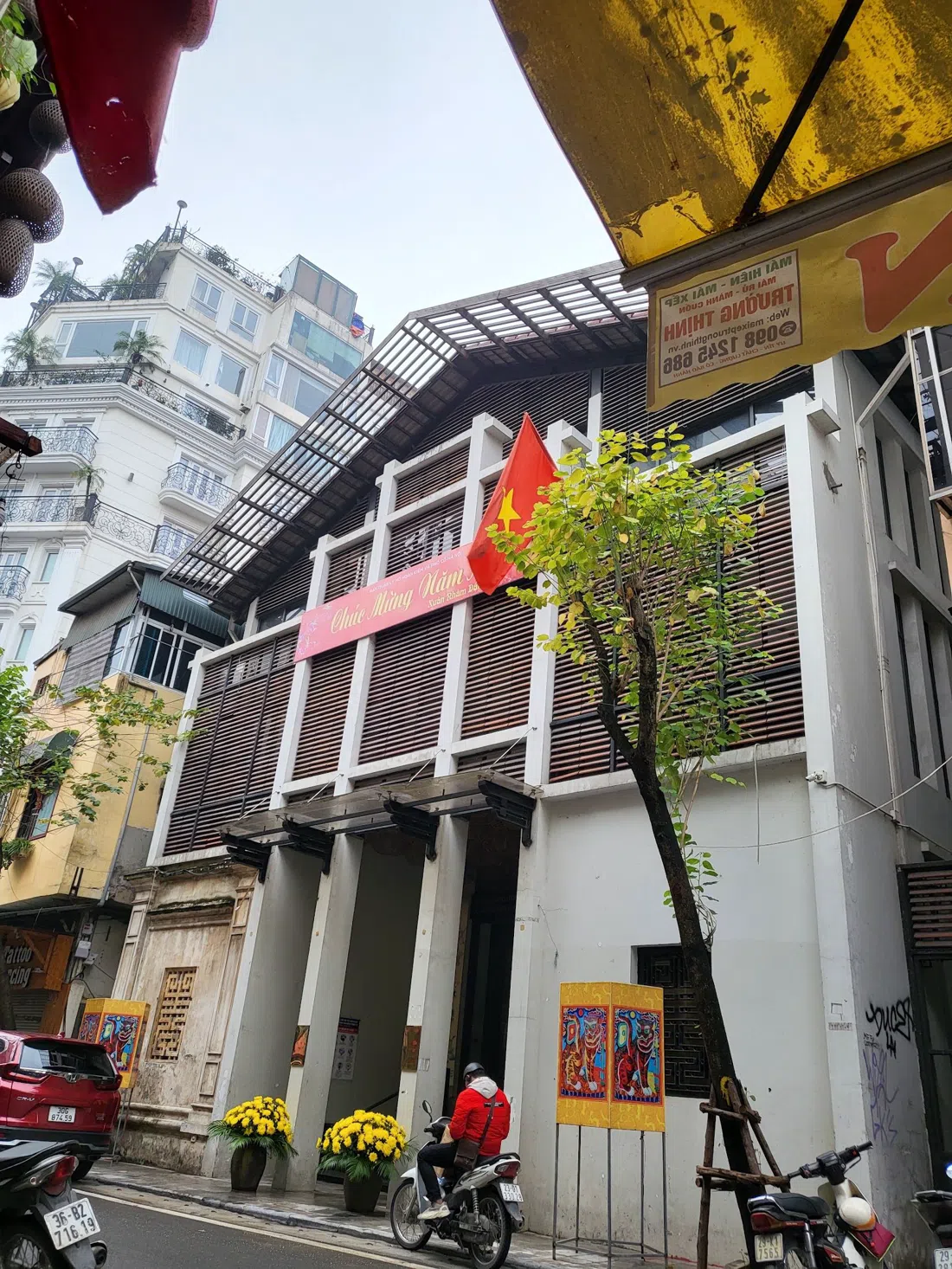
The western edge gives you two more stops. Phung Hung Mural Street (under the railway viaduct, western Old Quarter) is a free 200-metre run of Vietnamese-Korean murals painted into the viaduct arches; twenty to thirty minutes covers it, photo queues build at the popular arches, and it is calmer on weekdays. It also works as the natural bridge between the guild streets and the train line.
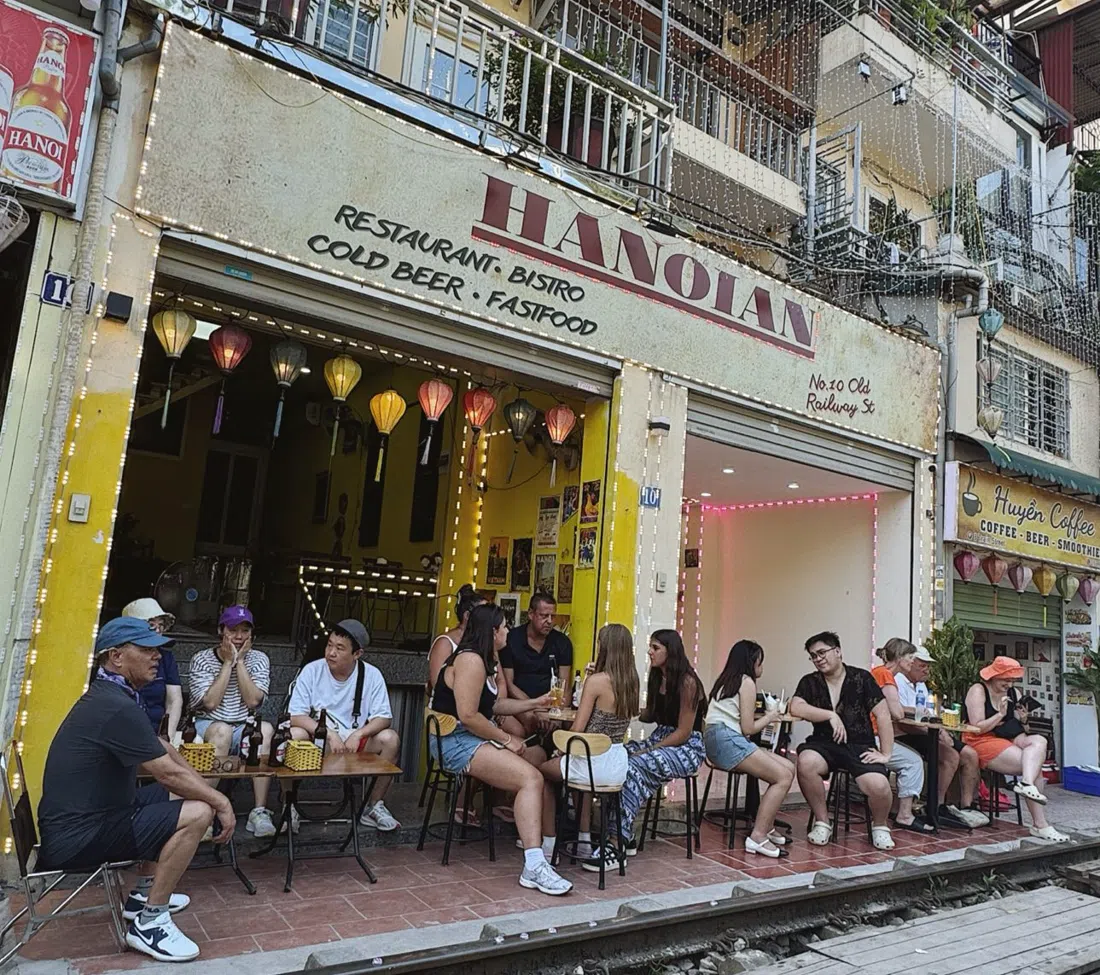
Hanoi Train Street (Phung Hung section) comes next. It has not closed in 2026, but it is not free-access either, and this is where most plans go wrong. Barriers are staffed roughly 8am to 11pm and independent walk-ins are turned away. Booking a trackside café is now the only legal way into the lane, and that booking has to be made with a specific café; a group cannot simply arrive and negotiate at the barrier. Expect a drink minimum of roughly 50,000 to 100,000 VND (about US$2-4) per person. Passenger train frequency through the section was cut in February 2026, so confirm a timetable with the café rather than assuming a train will pass while you are sitting there.
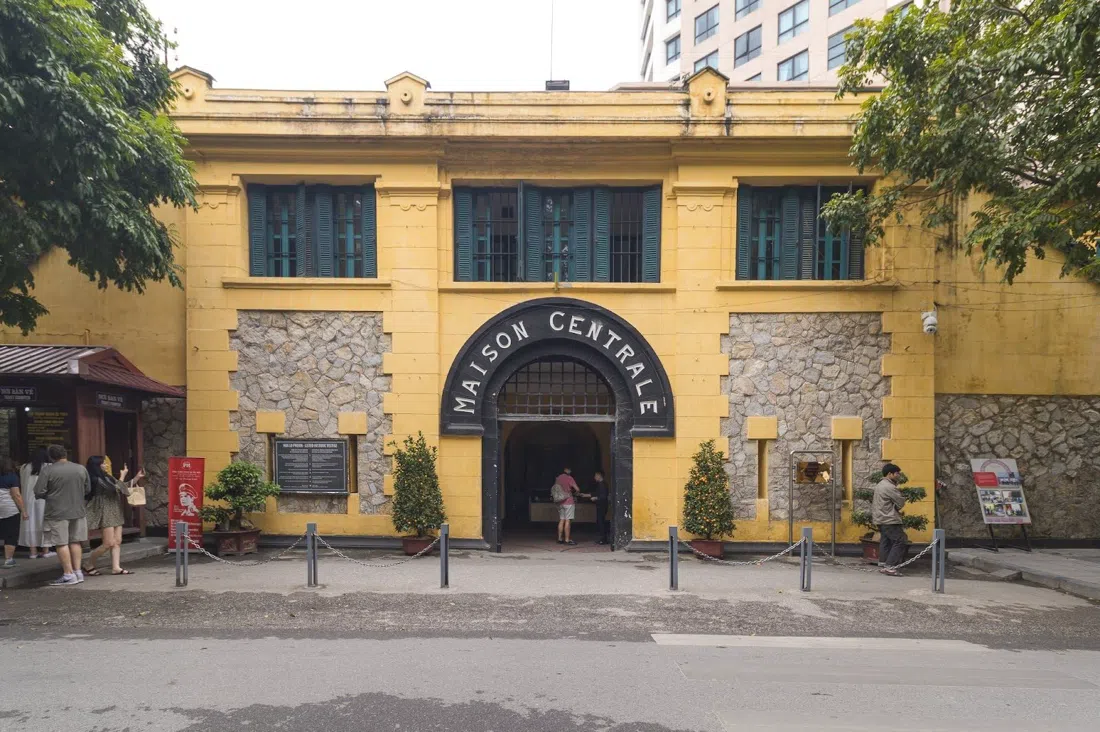
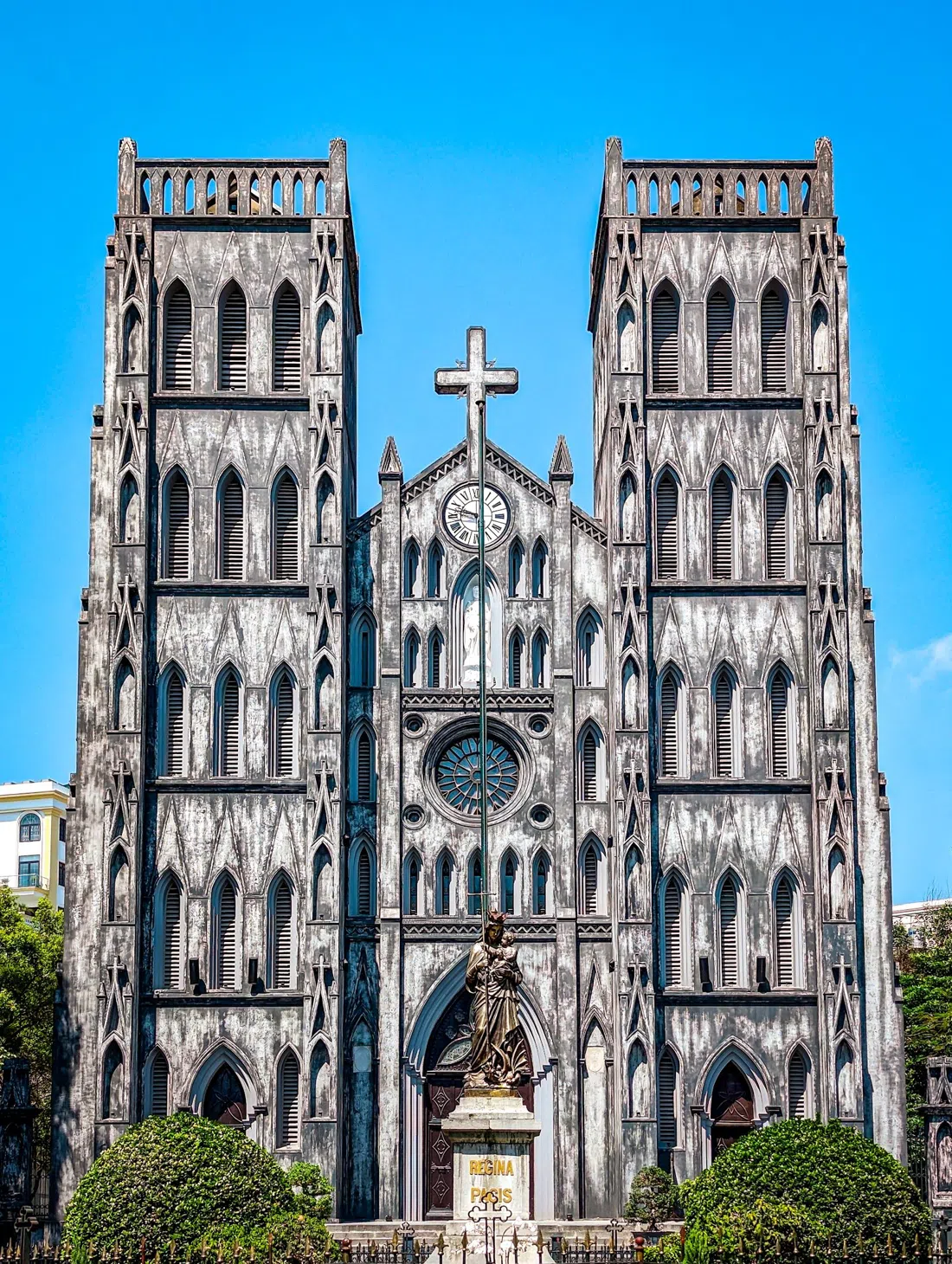
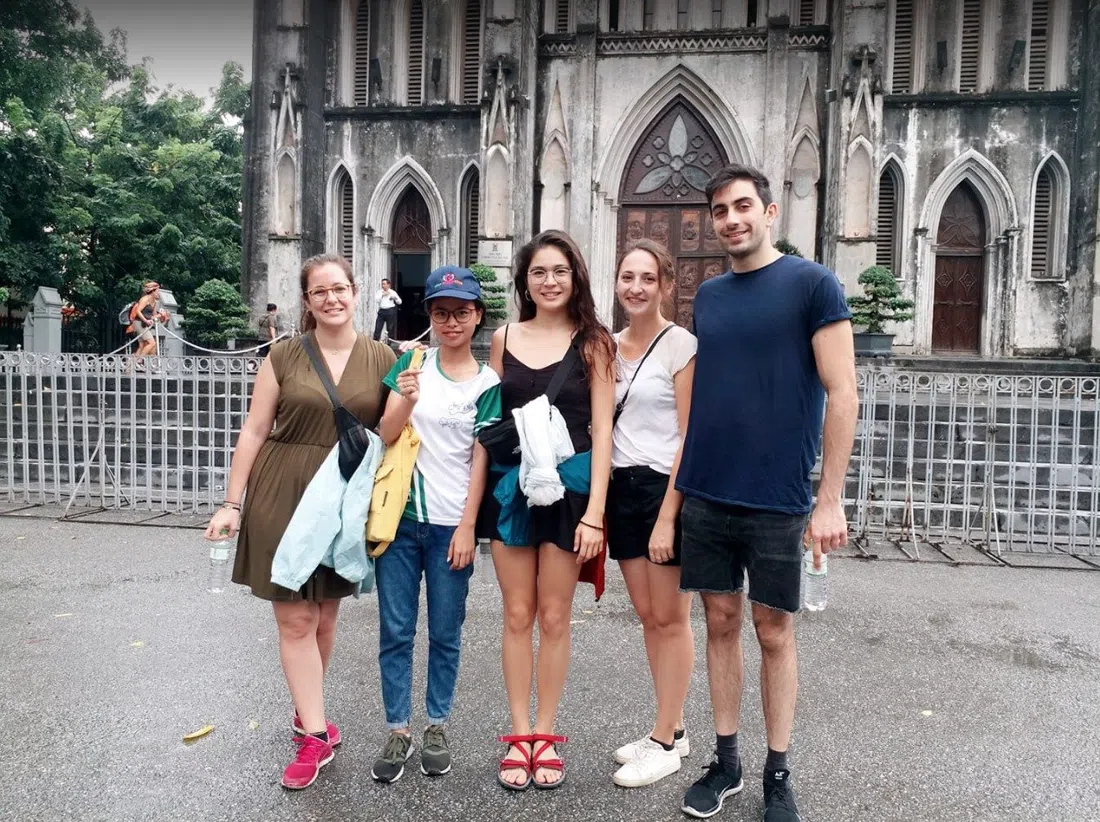
South-west of the quarter, two more anchors. St Joseph's Cathedral (Nha Tho street) is Hanoi's oldest church, built 1882-86, and the most photographed facade in the area. The interior is open 8-11am and 2-5pm daily, free, with Mass taking priority; groups are normally briefed outside and go in quietly in small numbers, shoulders and knees covered. The actual ritual here, though, is a lemon tea on a plastic stool on the square opposite, watching the towers turn orange at sunset. Hoa Lo Prison Relic (Hoa Lo street) anchors most Old Quarter walks: 50,000 VND (about US$2) daytime, open daily 8am to 5pm. The cell blocks are narrow and a headset or audio-guide system is the practical way to run a group through them. It is heavy going and strongly one-sided in its telling, which is worth knowing before you take children in. The Friday and Saturday 'Sacred Night' evening programme is 399,000-499,000 VND, small-capacity, and has to be booked well ahead.
Eating and drinking without leaving the route
Pho Gia Truyen Bat Dan (Bat Dan street) holds a Bib Gourmand in the 2026 Michelin Guide Vietnam and runs on a queue: no reservations, no table-holding, self-service, 60,000-90,000 VND (US$2.50-3.50) a bowl. Opening is roughly 6-10am and 6-8.30pm only. The line looks alarming and moves fast, because locals eat and leave. A group has to queue together and will still end up split across tables; expect that in advance and nobody sulks.
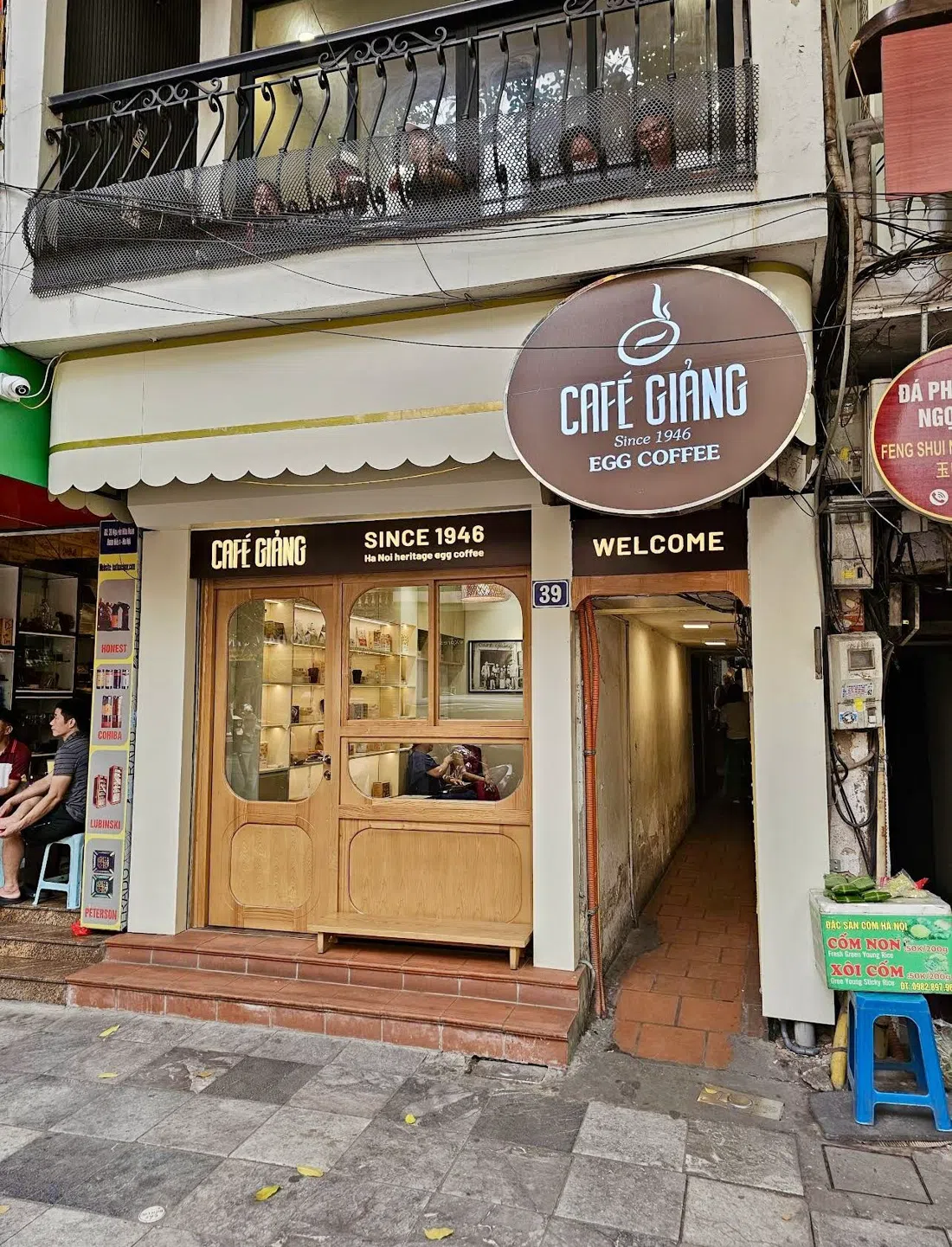
Cafe Giang (a short walk east of Hoan Kiem Lake) is where ca phe trung was invented: opened in 1946 by Nguyen Van Giang, still run by his son, the recipe essentially unchanged. Drinks run 25,000-60,000 VND (US$1-3) and it opens 7am to 10pm. The place is small and warren-like, so anything over about six people gets scattered across floors; guides send people in waves rather than as a block. Every other egg coffee in the city is judged against this one, which is the honest reason to start here rather than end here.
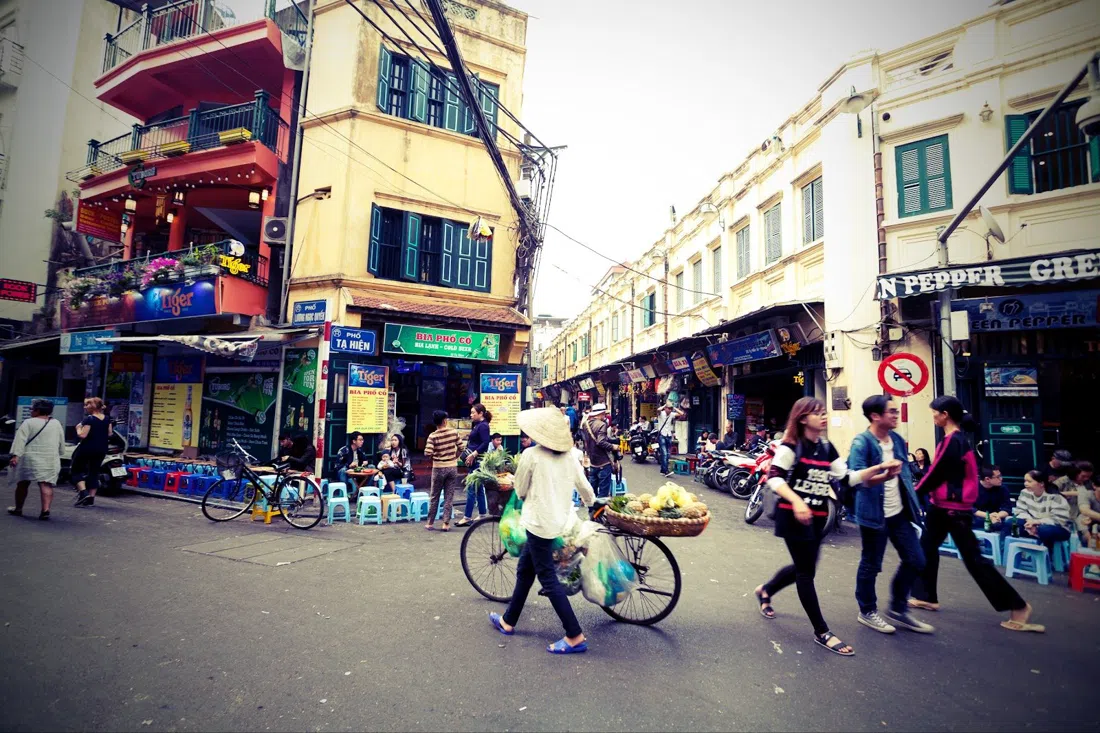
Ta Hien Beer Street (the Ta Hien-Luong Ngoc Quyen junction, eastern Old Quarter) is where the evening goes. Bia hoi runs about 11,000-22,000 VND (US$0.45-0.90) a glass, serving starts around 5pm and the junction peaks between 6.30 and 10.30pm. Bars take groups readily, simply adding stools, though at peak you will be split across two or three neighbouring places. Police clear the stools around midnight. That really is the end of the night, and planning around it saves an argument.
The rooftop question in the Old Quarter
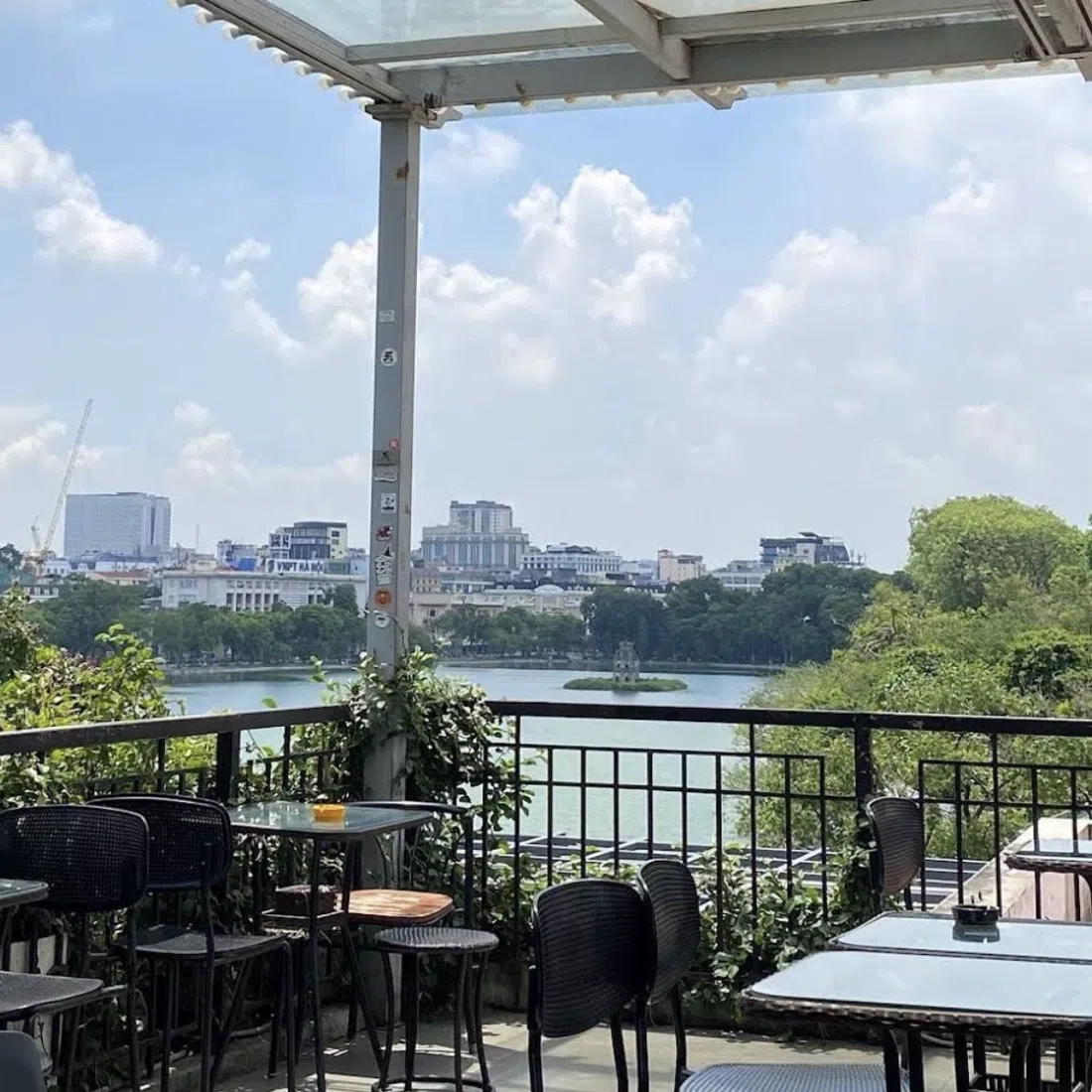
Searches for a sky bar or rooftop bar in the Old Quarter mostly point at hotel terraces outside the guild streets. Inside the quarter, the view worth climbing for is Cafe Pho Co (Hang Gai street), a rooftop café reached through what looks exactly like a silk shop, which is why people walk past the entrance without seeing it. Drinks run 40,000-80,000 VND (US$1.50-3.50) and it opens 8am to 10pm. The terrace holds maybe a dozen people, so treat it as a couples or split-party stop rather than somewhere to arrive fifteen-strong. Late afternoon puts the light on the lake. It serves coffee with a view and runs no bar programme, and expecting the first avoids disappointment.
Doing it alone or with a guide
Because the streets are free, the decision is about whether you pay for the commentary rather than about tickets. Hanoi Free Walking Tours (student-run, operating across the Old Quarter) has been running half-day walks since 2012 and is still taking bookings in 2026. It is tip-based and you cover your guide's entry tickets and drinks. Request a guide in advance rather than turning up. The honest caveat: the guides are language students, not professional historians, and the depth varies with who you get.
Paid guided walks sit at roughly US$20-30 for three hours, and bookable small-group walks here start from 28 USD per person and run seven days a week. Demand is steady rather than frantic: there are 17,674 traveller reviews across the bookable tours on this attraction. Nothing about the Old Quarter requires booking weeks out, though the trackside café and the Hoa Lo evening programme genuinely do, and a weekend walk fills faster than a Tuesday one.
Our wider Hanoi guide covers the districts beyond the guild streets if you want to build the walk into a longer stay.
Is it worth it
Yes, with one condition: the Old Quarter rewards structure. Wander it with no plan and you will get three hours of traffic, a coffee and a vague sense of having been somewhere busy. Walk it with the guild logic in hand, or with someone naming it as you go, and the same three hours turn into a legible piece of urban history that is still being used for its original purpose.
It suits anyone interested in how cities actually get built, and anyone who likes eating standing up. Couples and pairs do better than large groups, simply because four of the better stops are physically small. Families with older children are fine, with Hoa Lo the exception and worth a conversation first. Anyone who needs quiet, step-free routes or reliable pavements should look elsewhere: the pavements here are parking, kitchen and workshop before they are walkways.
Best time to go
Early morning is the strongest single window: between six and eight the lake is local, Bat Dan is serving, the market is working and the heat has not arrived. Late afternoon into sunset is the second window, the light on the water from a rooftop, then the cathedral square, then Ta Hien after five.
Midday, roughly eleven to three, is the part to plan around rather than push through. That is when the Cultural Exchange Centre earns its place on the route, and when an air-conditioned coffee stop is a strategy rather than a treat.
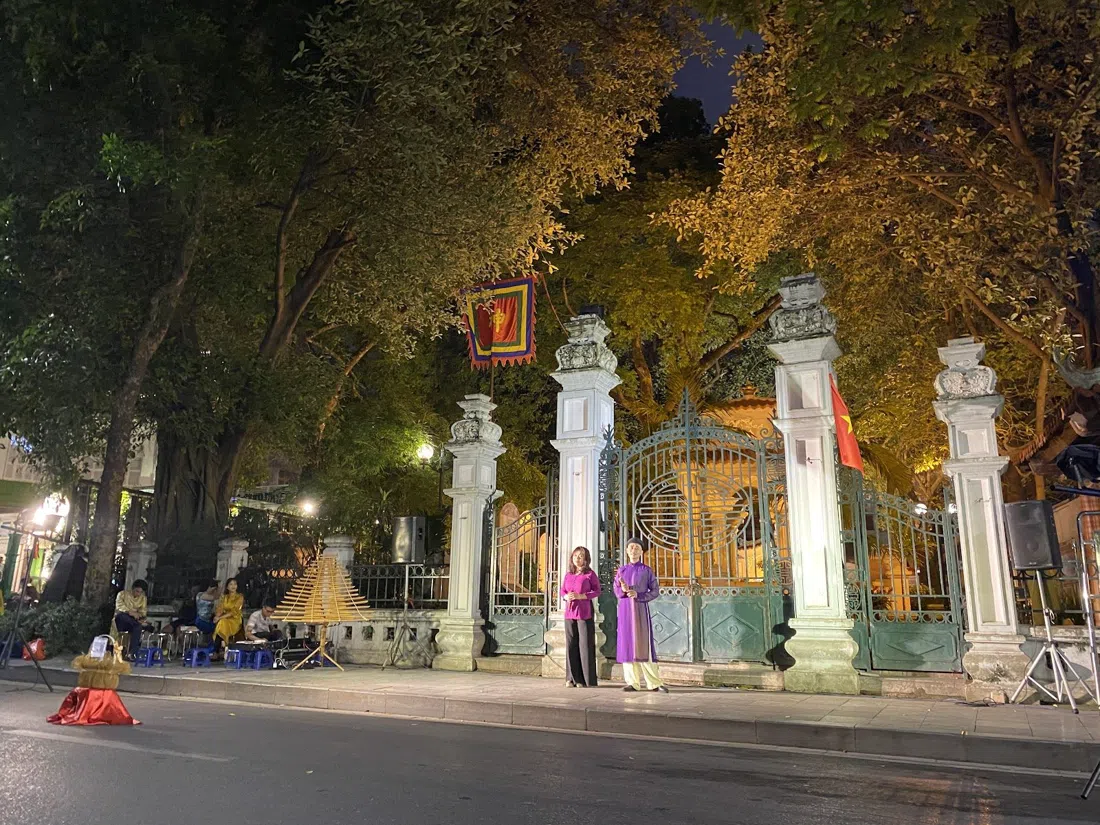
For day of the week, the Hoan Kiem Weekend Walking Street (the lake and around 7km of surrounding streets) changes the walk entirely. Streets close to vehicles from 7pm Friday and 6pm Saturday and Sunday, through to midnight. With no traffic to dodge it is the one time a large group can move comfortably, and the only time an Old Quarter walk is genuinely relaxing. If your dates are flexible, land on a weekend for that reason alone. Weekdays, conversely, are better for the mural arches and the market.
Seasonally, the middle of the year is hot and humid with heavy afternoon rain, and the cooler, drier months around the turn of the year make long walking far easier. Neither closes anything; both change how much you attempt in one go.
Practical notes
The quarter is walkable end to end in about twenty-five minutes if nothing distracts you, which nothing ever does. Ride-hailing on a motorbike is the fastest way in and out; cars struggle in the lanes. Crossing the road is a matter of walking at a constant, predictable speed and letting the scooters flow around you. Stopping mid-road is what causes problems.
Carry small VND notes. Entry fees here are 20,000 to 50,000 VND, bia hoi is a few thousand, and a bowl of pho is under 100,000; street vendors and small cafés are cash-first even where cards or QR payment exist.
Three hours is the minimum for a coherent walk, and half a day is realistic if you add the prison, the train-street café and a proper coffee stop. Build around the fixed hours: Bat Dan closes at 10am, the market thins after 11, Heritage House shuts for lunch, the cathedral interior closes at 11am and 5pm, Hoa Lo at 5pm.
A self-guided day with two temple entries, the heritage house, coffee, pho and a couple of glasses of bia hoi lands comfortably under 400,000 VND per person. Add a guide and you are at roughly US$20-30 on top. Add the trackside café and the evening prison programme and it climbs, but those are the two genuine reservations rather than the walking itself.
Sleeping inside the quarter means noise until midnight and being thirty seconds from breakfast; the streets immediately west and south are quieter and still walkable. Compare rates and locations with a Hanoi hotel search before fixing the dates, since weekend nights near the lake price differently from midweek.
Questions
Do you need a guide to walk the Old Quarter, or can you do it alone?
The streets are free and open, so you can walk it alone. A guide earns the fee by naming the guild logic, which is invisible otherwise: Hang Bac for silver, Hang Gai for silk, Hang Ma for paper votives. Without that, the quarter reads as generic commerce. Paid walks run roughly US$20-30 for three hours, and bookable small-group options start from 28 USD per person, seven days a week. Hanoi Free Walking Tours is the low-cost alternative: student-run and tip-based, you cover your guide's tickets and drinks, and you should request a guide in advance.
Can you still visit Hanoi Train Street in 2026?
Yes, but not as a walk-in. The Phung Hung section is not closed, but staff work the barriers roughly 8am to 11pm and turn independent visitors away. Booking a trackside café is the only legal way in, with a drink minimum of about 50,000-100,000 VND (US$2-4) per person, and groups must be pre-arranged with a specific café. Passenger train frequency through the section was cut in February 2026, so confirm a timetable with the café rather than assuming a train will pass.
How long does a walk through the Old Quarter take?
Three hours is the practical minimum for a route that covers the lake, two or three guild streets, a temple and the heritage house. Half a day is realistic once you add Dong Xuan Market, the mural arches, Hoa Lo Prison Relic and a proper coffee stop. The quarter itself is small, twenty-five minutes end to end, so the time goes on stops and on crossing streets rather than on distance.
What is the best time of day to walk Hanoi's Old Quarter?
Six to eight in the morning is the first window: the lakeside belongs to locals exercising, Pho Gia Truyen Bat Dan is serving (it closes at 10am), and Dong Xuan Market is still working as a wholesale market before eleven. Late afternoon into sunset is the second, ending at Ta Hien Beer Street, where serving starts around 5pm and the junction peaks between 6.30 and 10.30pm. Between roughly eleven and three, do not commit to a long stretch of walking.
Are there rooftop bars in the Old Quarter with a lake view?
Most sky-bar results point at hotel terraces outside the guild streets. Inside the Old Quarter, the rooftop worth the climb is Cafe Pho Co on Hang Gai, reached through what looks like a silk shop, open 8am to 10pm, with drinks at 40,000-80,000 VND (US$1.50-3.50). The terrace holds about a dozen people, so it suits a couple or a split party rather than a full group, and late afternoon gets the light on the water.
First published on hanoigetaways.com, the Hanoi guide.