Spaccanapoli runs dead straight through the old city, a canyon of a lane barely three metres wide, washing strung on lines between the tufa palazzi overhead. Fryers stand at the pavement edge, votive niches sit lit into the walls, and a thin ribbon of sky is all you get above. Walking it costs nothing.

What Spaccanapoli is
One ancient decumanus, ruler-straight, cutting the old city in two. The western half is Via Benedetto Croce and the eastern half is Via San Biagio dei Librai, with the friggitorie, the pastry windows and the churches strung along both. The paving is grey piperno slab and scooters thread between walkers.
The street is public and free, with no door policy. Guided food walks follow it from end to end.
The Gesù Nuovo end
Start at Chiesa del Gesù Nuovo, at the western end of Spaccanapoli. The facade is a vast flat wall of grey piperno studded with hundreds of pyramid-pointed ashlar blocks carrying mason's marks. Behind it the interior is blazing polychrome marble, with a side chapel walled in silver ex-voto plaques. Entry is free. Cover shoulders and knees, and expect sightseeing to pause during Mass.

Pan' e Muzzarell' (Via Domenico Capitelli 14) sits at the Gesù Nuovo end of the street and does the dairy half of the eating. Bowls of milky mozzarella di bufala sit in their whey in the window, salami hang overhead, and dense rounds of casatiello, the lard-and-pepper bread, are sliced to order in classic, vegetarian and sausage-and-friarielli versions. You eat it off paper on the street. Prices run €3 to €10 and the shop shuts at 20:00, which makes it a daytime stop.

For quiet, walk into Complesso Monumentale di Santa Chiara, the one place on this route where the scooter noise drops away. The majolica cloister does the work: octagonal pillars and long benches sheathed in 18th-century hand-painted yellow-and-blue tiles of vines, lemons and village scenes, pergola walkways between them, citrus trees in the beds. Cloister and museum cost €7, or €5 reduced, and the basilica entrance on Via Santa Chiara costs nothing. Opening is 09:30 to 17:30 Monday to Saturday and 10:00 to 14:30 on Sunday, with last entry 30 minutes before close.

Via Benedetto Croce
Gay-Odin (Via Benedetto Croce 61) has worked chocolate since 1894, and after a run of fried food the window is a relief. The shopfront is dark wood panelling under antique gilt lettering, with bark-textured Foresta logs stacked in the window and trays of pressed cocoa squares and chocolate-covered candied peel inside. Prices run €3 to €20. It opens 09:30 to 20:00, Monday to Saturday. This is the easiest thing on the street to carry home.

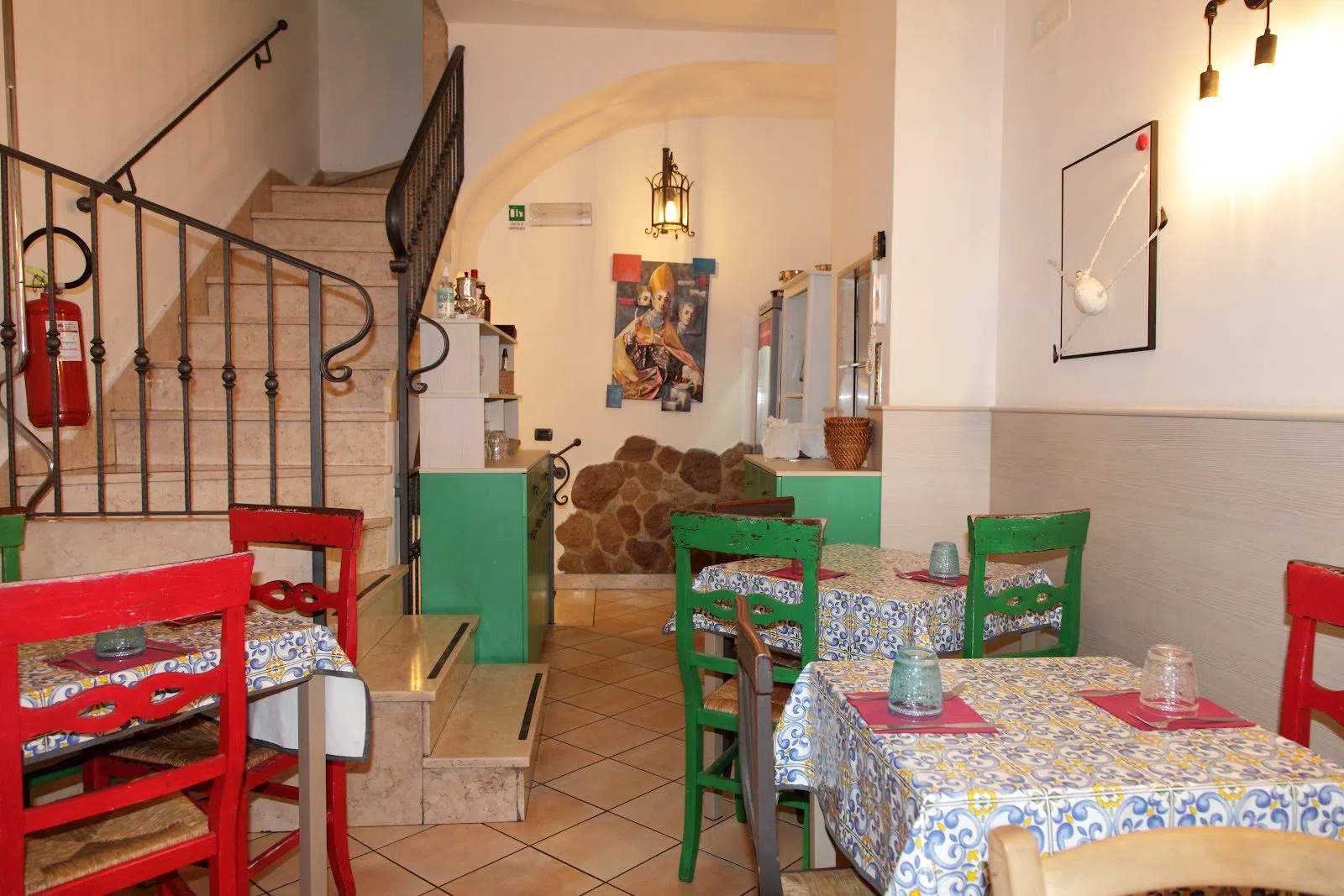
Tandem Ragù (Via Benedetto Croce 48) is the sit-down break in a standing-up day. The kitchen has done one thing since 2013: terracotta bowls of near-black slow-cooked ragù poured over ziti, with torn bread for the scarpetta, the mopping of the bowl. Tables are packed close and the cooking pots are visible at the back. It is €10 to €20 a head. The Spaccanapoli room is tight, so groups should reserve by phone or WhatsApp; the operator's other central branches take the overflow.

Taralleria Napoletana stands metres from the Spaccanapoli crossroads and bakes its taralli on site, ring-shaped, studded with almonds, heavy with lard and pepper. Baskets and tall glass jars of them line the counter, the baking lab is open to view behind, and bottles stand ready for a glass of white alongside. The shop keeps a counter and a handful of stools. Hours are 07:30 to 22:00, later at weekends, and a bag costs €1.50 to €3. It is the one snack here that survives a pocket.

Piazza San Domenico Maggiore
Antica Pasticceria Scaturchio sits on the corner facing the obelisk on Piazza San Domenico Maggiore and has baked here since 1903. Brass-and-glass cases hold shell-ridged sfogliatella riccia, babà, and the dark chocolate discs of Ministeriale, the chocolate-and-liqueur pastry invented here. Service is over the marble counter. Pastries are €2 to €3.50 and it opens daily 08:00 to 21:00. The few small tables spill onto the square beneath the Guglia di San Domenico and they fill, so most people eat standing.

Fried food on Via San Biagio dei Librai
Il Cuoppo Friggitori Napoletani (Via San Biagio dei Librai 23) has been frying since 2014 behind a glass-fronted fryer set right at the pavement edge. Steel trays of crocchè, arancini and pasta frittatine sit under heat lamps, and the cuoppo, the grease-spotted paper cone, is passed straight over the counter. Everything is fried to order, so there is a short wait. A cone costs €2 to €8. No seating; you eat standing in the lane.

Bar Nilo (Via San Biagio dei Librai 129) is a tiny corner bar with a zinc counter and standing room only. Its window holds a glass-cased altar to Diego Maradona, with a framed photo, a small lamp and a single certified hair. Espresso is €1.20 to €2 drunk standing at the counter, which is what the price assumes. Hours are 07:30 to 20:00. Go in two or three at a time, because any more of you blocks the lane.

The rooms off Via San Biagio dei Librai
Chiesa Museo di Santa Luciella ai Librai is down a side alley, two minutes from the cuoppo counter. It reopened in 2019 after 35 years shut and is run by a young local association. The restored nave is bare under new lighting, and in the crypt sits a brown 17th-century skull with twin bony flanges like ears, niched among the anime pezzentelle, the bones of the abandoned dead. Visits are guided only, departing every half hour from 10:15 to 18:30 in small groups, and you book by phone or email ahead. The ticket is €5.

Museo Cappella Sansevero is 30 seconds off Spaccanapoli and worth interrupting a day of eating for. One small high baroque chapel holds Sanmartino's Veiled Christ, white marble lying under a shroud carved thin enough to read the face through it, with a frescoed vault overhead and allegorical marble figures wrapped in a stone net. Timed online booking is compulsory and tickets release 60 days ahead. Entry is €12 full, €8 for ages 18 to 26, €6 for ages 10 to 17, and free under 10. Photography is not allowed inside.

Via San Gregorio Armeno and Via dei Tribunali
Via San Gregorio Armeno is the arm's-width alley linking Spaccanapoli to Via dei Tribunali, and it is why the two food streets join up. It is hung floor to ceiling with strings of terracotta shepherd figures, miniature pizzaioli, footballers and politicians, workshop windows lit on both sides, a bell-tower arch spanning the far end. The workshops build nativity figures year-round. Walking it is free and figurines start at €5. Shops open 09:30 to 19:30.

Antica Pizzeria Di Matteo (Via dei Tribunali 94) has been going since 1936, one block up from Spaccanapoli on the parallel decumanus. The stop is the street window beside the door, where a pizzaiolo folds a margherita into quarters and wraps it in paper, the pizza a portafoglio, eaten walking. The wood oven glows behind and fryer trays of crocchè and frittatine sit at the front. A portafoglio is €2 to €3; seated is €7 to €12, across five dining rooms and 120 seats upstairs. It closes Sundays and otherwise runs 10:00 to 23:30.

Antica Pizza Fritta da Zia Esterina Sorbillo (Via dei Tribunali 35) seals ricotta, provola and pepper in dough and drops it into a vat of oil behind glass. The half-moon balloons golden, then comes over the counter folded in paper, made on a recipe carrying Esterina Sorbillo's name since 1935. Takeaway only, daily 12:00 to 23:30, and the standing crowd eats on the kerb outside. One costs €5 to €8. One is a meal; split it if you are still walking.

Napoli Sotterranea (Piazza San Gaetano) is a short walk off Spaccanapoli and takes you the other way entirely, down. The descent is candle-lit, 40 metres into Greek tuff quarries that became Roman aqueduct cisterns, and one passage is narrow enough that visitors edge through sideways holding a candle. You reach a Greco-Roman theatre through a trapdoor in a private house. Visits are guided only, departing hourly from 10:00 to 18:00 with set English slots. Entry is €10 full, €8 students, €6 for ages 5 to 10, and free under five. Allow two hours including the theatre. The narrow passage rules it out if you are claustrophobic, and it is not wheelchair accessible. Heed their own warning that map apps mislocate the entrance.

Queues, tickets and booking ahead
Everything you eat here is walk-up at a counter, paid for where you stand, and the only wait is the one at the fryer. Nothing on the street charges admission; the ticketed places are the chapel, the cloister, the underground and the small church museum.
Four things need arranging before you walk. The chapel takes timed online booking only. Napoli Sotterranea and Santa Luciella run guided visits only, the second by phone or email. Tandem Ragù takes reservations by phone and WhatsApp. A guided food walk is the other way to do the street, and those run seven days a week.
Best time to go
Open the day at the church. Gesù Nuovo opens at 07:30 and closes at 13:00, reopening 16:00 to 19:30, so start west and walk east. At Scaturchio, ask for sfogliatelle warm from the morning batch.
Cappella Sansevero closes on Tuesday, which takes the chapel out of the plan. Sunday closes Di Matteo, and Gay-Odin keeps short Sunday hours of 10:00 to 14:00. Sunday is also the day Tandem Ragù cooks genovese.
The Christmas trade on Via San Gregorio Armeno runs 19 November 2026 to 7 January 2027 and the alley is brutally tight throughout. Go on a weekday morning. For a late finish, the taralli counter runs later at weekends and both Via dei Tribunali windows serve into the night.
Is it worth it
It suits a visitor who will eat standing on a lane three metres wide with scooters threading past, and who wants the rooms off it as much as the food on it. The whole line is one straight walk, and the only seats belong to one trattoria, a handful of stools and the floors above a pizzeria.
Practical details
Book the chapel, the underground tour and the small church museum before you arrive, and reserve the trattoria if you are eating as a group; check what Tuesday and Sunday close before you set the order of the walk. See the Naples guide and the Naples hotel search.
Questions
Can I walk Spaccanapoli on my own, or is a guided street food tour better?
Every food counter on the street is walk-up: you order and pay where you stand, so an unguided walk works. Guided walks run seven days a week, move in groups of 10 to 15 in single file, and take their tastings into the small piazzas off the lane. A guide mainly helps with sequencing, because the hours differ at every door.
What do I need to book before I arrive in Naples?
Museo Cappella Sansevero requires timed online booking and releases tickets 60 days ahead, so arrange it before you fly. Napoli Sotterranea and Chiesa Museo di Santa Luciella ai Librai are guided only, and Santa Luciella is booked by phone or email. Tandem Ragù takes reservations by phone and WhatsApp.
Is Spaccanapoli manageable with a wheelchair or if I am claustrophobic?
The food stops are open-fronted counters at street level, and you eat standing in the lane. Napoli Sotterranea is the exception: it is not wheelchair accessible, and one passage is narrow enough that visitors edge through sideways, so skip it if you have claustrophobia.
What should I wear for the churches along the walk?
Chiesa del Gesù Nuovo asks you to cover shoulders and knees, and sightseeing stops during Mass. Museo Cappella Sansevero does not allow photography inside.
Where does Spaccanapoli start and finish, and how do I reach the pizza street?
At the western end it is Via Benedetto Croce, at the eastern end Via San Biagio dei Librai, and you come in from the west at Chiesa del Gesù Nuovo. Via San Gregorio Armeno is the arm's-width alley that links it to Via dei Tribunali, the parallel decumanus one block up where the pizza windows are.
First published on naplescitybreaks.com, the Naples guide.