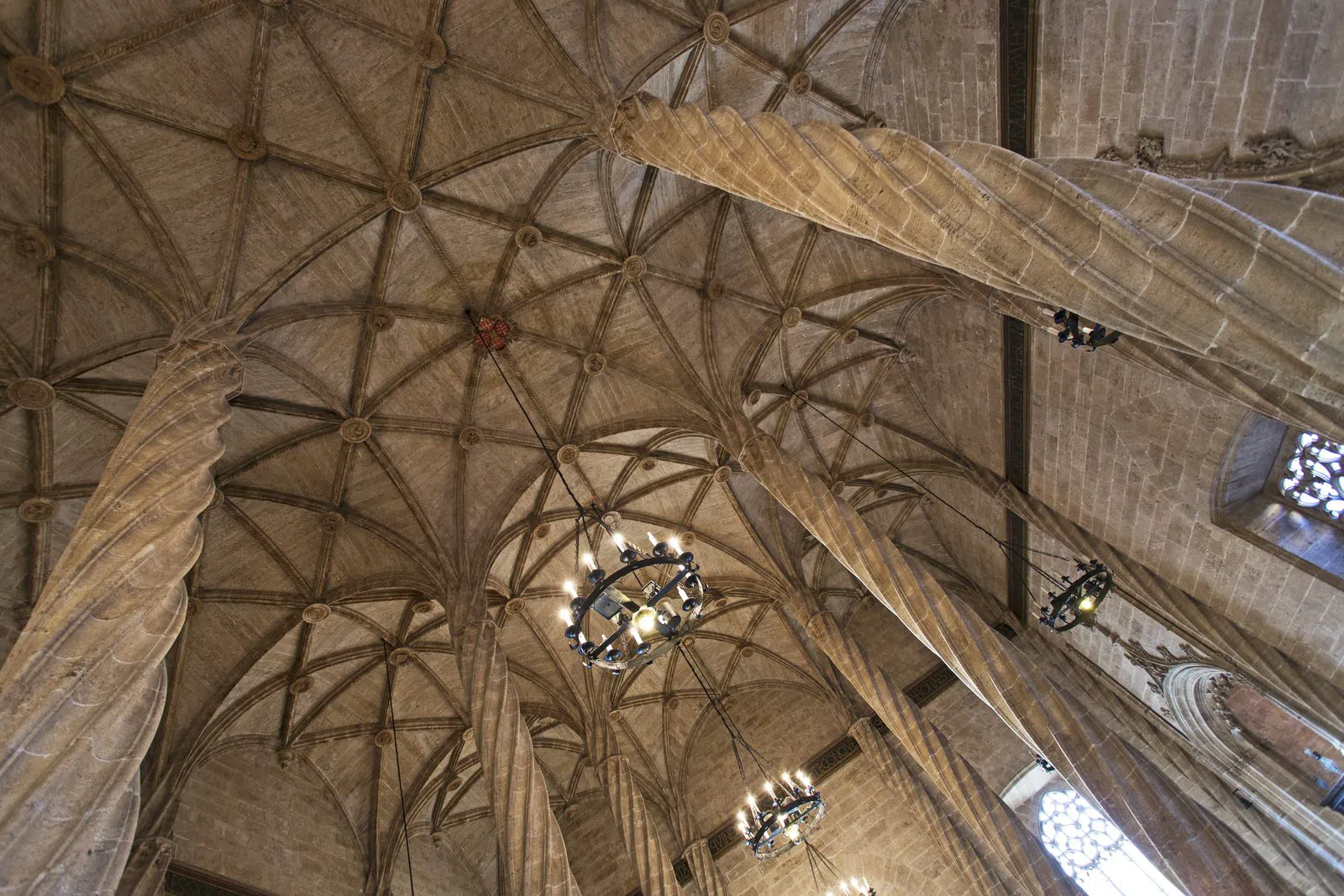
The columns inside Valencia's old silk exchange were cut to spiral like palm trunks, and on a clear October morning the light drops through the high windows and crawls across them until a room built for arguing about money looks like an orchard. Entry is €2. Across the square the central market is already roaring, and somebody nearby is pouring the first Valencian white of the day before the hall has even warmed up.
A trading floor carved like an orange grove
La Lonja de la Seda (Llotja de la Seda, on Plaça del Mercat in Ciutat Vella) is the best building in the city and one of the few civil Gothic halls in Europe to have come through five centuries more or less intact, which is why it carries a UNESCO listing rather than a plaque. Three spaces matter.
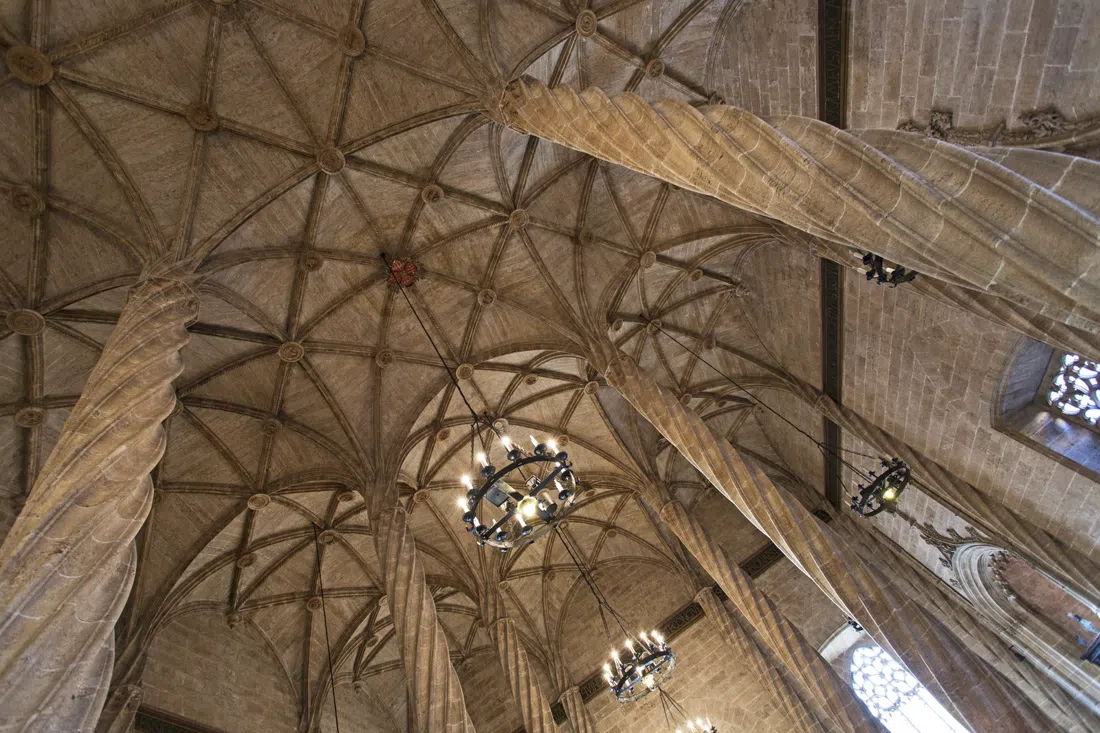
The Sala de Contratación is the trading floor and the reason you came: eight columns twisting up out of the flagstones and fanning into the ribs of the vault, a gilded inscription running the length of the walls promising prosperity to the merchant who deals honestly, and a floor where silk, oil and credit changed hands when Valencia was one of the richest ports on the Mediterranean. Up the stair, the Consulado del Mar room is darker and quieter, with a coffered timber ceiling brought in from another civic building; most visitors put their head round the door and leave, and they are wrong to. Between the two sits a small walled courtyard of orange trees, where everyone sits down for ten minutes whether they planned to or not.
What you do not get is much explanation. Labelling is light for a building of this rank, which is the honest case for reading something beforehand or going in with a guide. Otherwise you will spend an hour photographing columns and come out without knowing what the inscription says or what the Consulate of the Sea actually did.
Sixty to ninety minutes, and the hour that decides them
Allow 60 to 90 minutes. Ninety if you read the panels, go upstairs properly and sit in the courtyard; sixty if you are walking a square full of other stops, which most people are.
Opening hours are Monday to Saturday 10:00 to 19:00, and Sunday and public holidays 10:00 to 14:00 only. That short Sunday is the trap, because Sunday is also when the monument is free, so the cheapest slot in the week is the most crowded and the shortest.
The hall is at its best in the first hour. Get there for 10:00 on a weekday and you will have the trading floor to yourself for a few minutes before the first guided groups arrive, and the low October sun is still coming in at an angle that does something to the stone. By midday the courtyard is a waiting room. Late afternoon, around 17:00, is the second-best window: the groups have moved on, the light is warm again, and nobody is queuing.
Two euros at the door, or a guided morning around it
There is no reason to pre-book the monument itself. A standard ticket is €2 and a reduced ticket is €1, which covers groups, students, pensioners and large families. Sundays and public holidays are free, and it is also included with the Valencia Tourist Card. If you are bringing a school party or a block of twenty, book through the municipal museum service rather than arriving as a crowd at the door. The hall absorbs people; the ticket desk does not.
Queues, when they happen, are a minutes-long affair at the desk rather than a snaking line. A midweek 10:00 arrival removes the problem.
What you might book ahead is the experience wrapped around it. Guided old-town walks that take in the Lonja and finish with wine and tapas in a historic building run seven days a week and start from 86 USD per person, and the leading one holds a 5.0 out of 5 rating from 3,730 reviews. Be clear about what that money buys. Access is €2; the fee buys a guide who can explain the inscription, a tasting that is already arranged, and someone else holding the table. For two people who are happy to walk in cold and then book their own wine, the door ticket plus a €36 flight is the better-value morning. For a family, a mixed-language group, or anyone who does not want to spend the evening before ringing wine bars, the guided version earns its price.
Stairs, chairs and the tower nobody should promise you
The Lonja is wheelchair-adapted, which is rare for a fifteenth-century hall and worth knowing if you have been turned away from monuments before. One thing to be careful about: the tower's spiral stair opens only for special occasions. Do not plan around it and do not promise it to a child. Assume you are seeing the hall, the Consulate room and the courtyard, and treat the stair as a bonus if a sign says otherwise on the day.
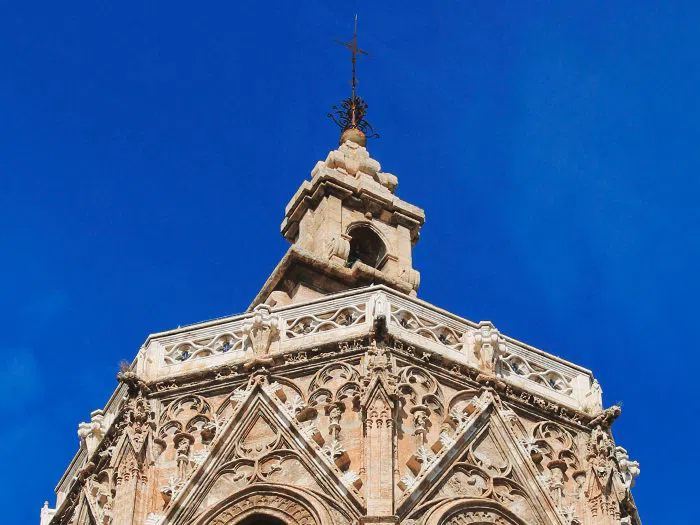
For height, walk seven minutes to El Micalet (the cathedral bell tower, Plaça de la Reina), where around €2 to €2.50 adult and roughly €1.50 reduced buys the cheapest way to see exactly where the Lonja sits in the old street grid. The platform caps at about 50 people and the stair is single-file, so a group should go up in waves rather than as a body. Last entry is 30 minutes before the 18:45 close. If anyone in your party has mobility problems or dislikes tight spaces, skip it without apology.
Wine within five minutes of the Lonja door
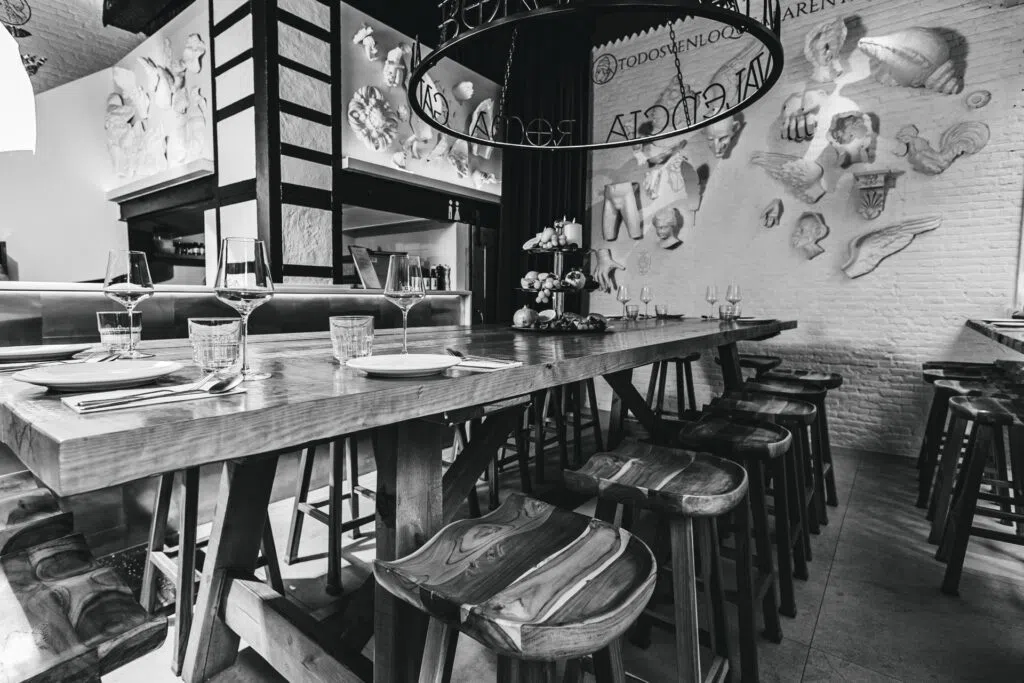
Borgia Winebar & Spirits (a short walk off Plaça del Mercat, Ciutat Vella) is the best single answer if you want a real tasting rather than a glass and a shrug. More than forty Spanish wines by the glass, and flights with a published price on them: €36 for four Spanish wines, €60 for three wines plus three gourmet bites. The ground floor is small, so reserve; the upstairs Cónclave room is bookable for private events, which makes it one of the few places near the Lonja that can actually seat a group of ten in comfort. It opened in September 2024, so this is a current recommendation rather than a recycled one.
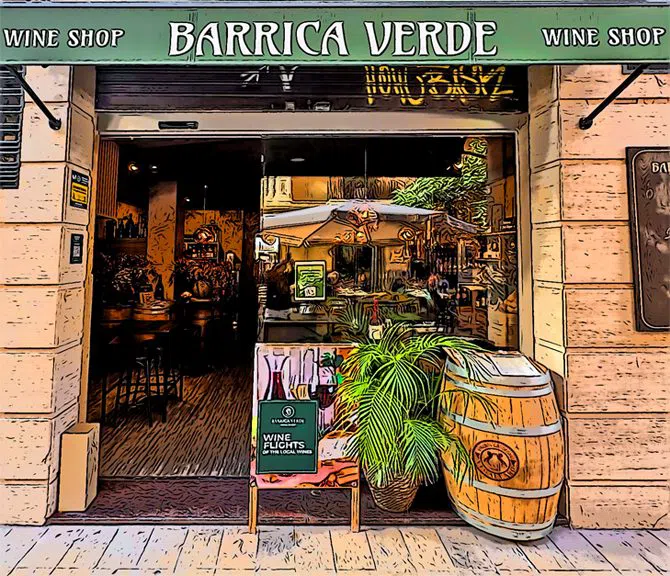
Barrica Verde Wine Bar (small room in the old town, open daily 12:00 to 23:00) is the easiest walk-in-and-learn option if you do not speak Spanish. Owner-led sessions in English run through Rioja, Syrah, Monastrell and Tempranillo, poured with cheese and bread; glasses start at a few euros and guided tasting experiences run from roughly €45 per person. It is a genuinely small room, and a party of twelve would fill it, so book the patio or go as four.
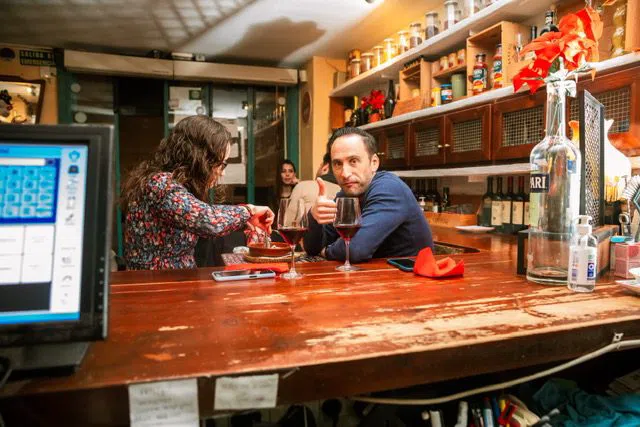
Vinostrum Bodega (a sommelier's wine shop inside a working neighbourhood market) is the most local-feeling tasting on this list: pairings at the counter, glasses from around €3, bottles at shop prices with a small corkage if you want to drink them there. It is strictly daytime, roughly 09:30 to 15:30 on weekdays and 09:30 to 16:00 on Saturday, closed Sunday, and there is no room for a coach party.
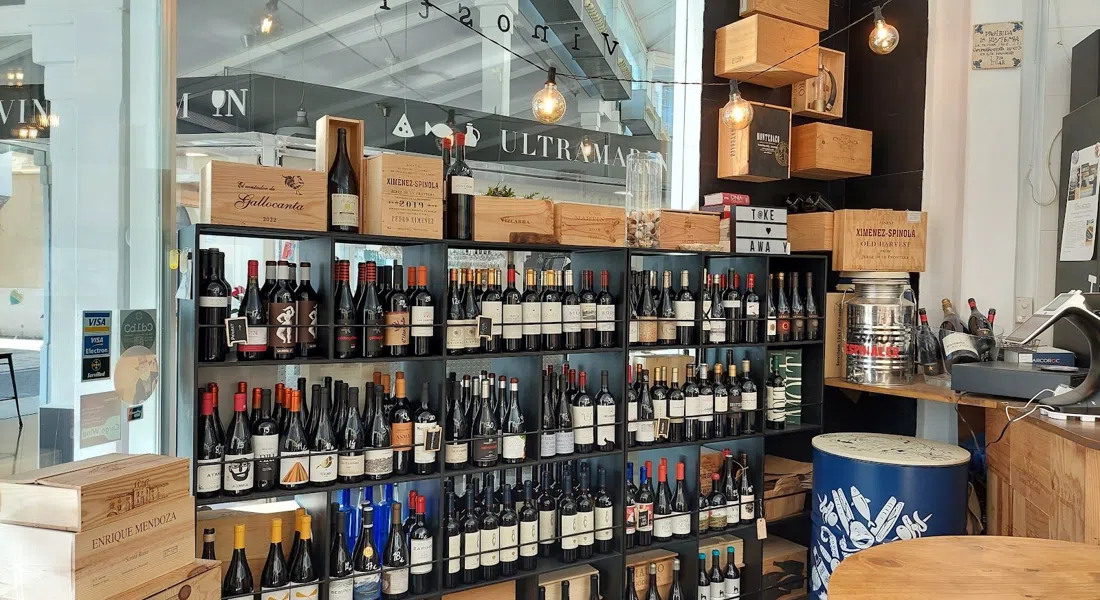
Tinto Fino Ultramarino (five minutes from the Lonja) pours Spanish and Italian bottles alongside properly good tapas, glasses at roughly €3 to €6 and plates at €8 to €18. Two warnings. Listed hours vary between sources and most of the week it is evenings only, so phone before you build a lunch around it. And while the adjoining restaurant can take a bigger table, it is not a walk-in for a crowd.
Cellars and sessions you reserve in advance
El Celler de Proava (El Carmen, a few minutes' walk north) is Valencia's oldest cellar, run by PROAVA, the regional quality-food body, so the glasses in front of you are Valencian DO rather than a generic national line-up. It is built for groups: celebrations, company events, private parties, with tastings bookable at least three days ahead and a mid-range per-head price quoted on request rather than published. Cars cannot enter El Carmen, so arrive on foot or step out of a taxi at the edge.

The Wine Place (a 15-minute walk or short metro hop out of the old town) is the most reliable scheduled, fixed-price, English-language tasting in the city: €38 per person for a themed session of four to five wines with artisan ham and cheese, hosted in English and Spanish, with deliberately limited places. The October 2026 calendar already lists a blind-tasting challenge, a white-wine session, a Cava-to-Champagne comparison and a France night. Book ahead, because small rooms sell their seats fast. It is not a Lonja-doorstep stop, so treat it as the evening half of the day.

The market side of the square
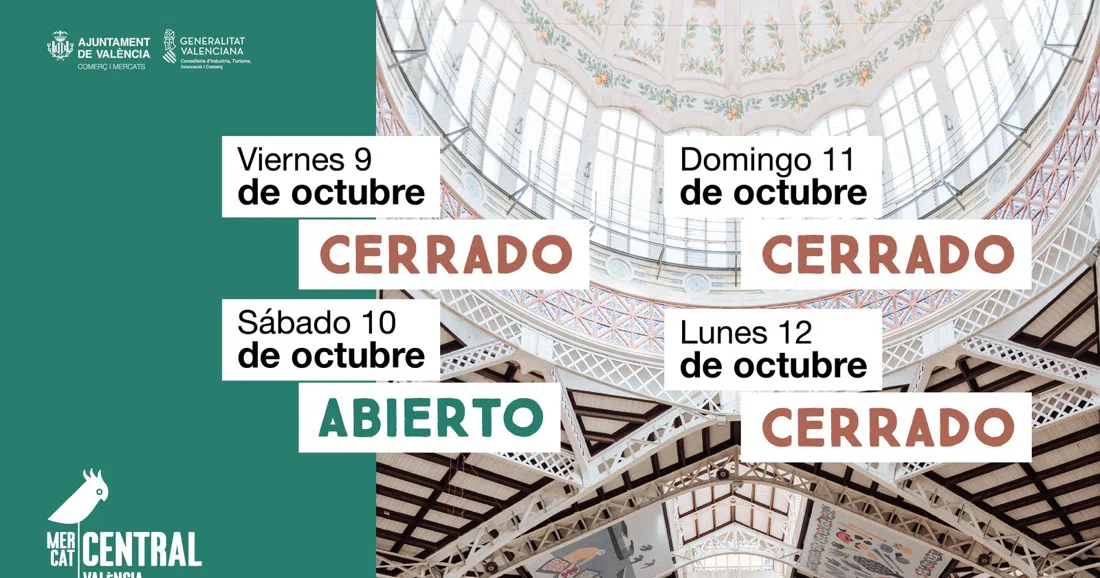
Mercat Central de València (Plaça de la Ciutat de Bruges, directly across from the Lonja) is free to walk into and the natural partner to a wine-and-stone morning: iron, tiles, glass, and stall bars pouring glasses and plating bites from a few euros. The catch is the clock. It shuts at 15:00 and all day Sunday, which kills a lot of afternoon plans. Food groups move through constantly and the aisles are tight, so go in small clusters rather than a column of twenty.
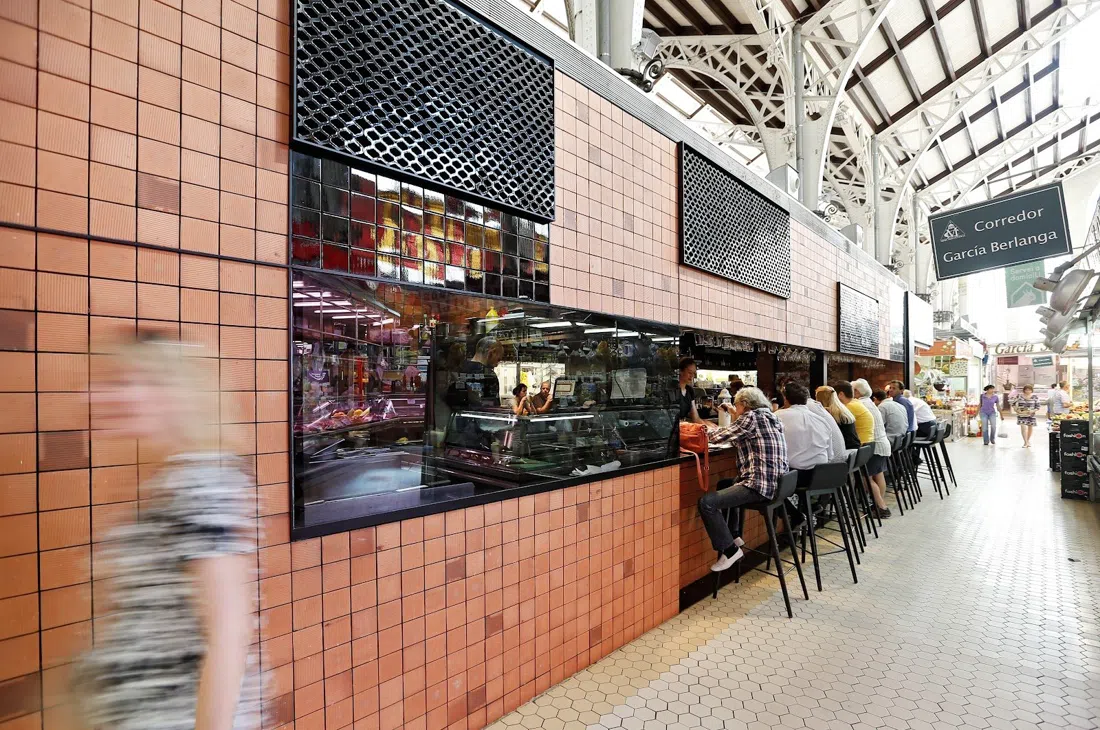
Central Bar by Ricard Camarena (inside the market) is a Michelin-starred chef's counter sixty seconds from the Lonja door, with small plates and bocadillos at roughly €4 to €14. Counter only, no reservations, and queues from midday: arrive before 11:00 on a weekday or accept the wait. It closes with the market, around 15:00 to 15:30, and it does not open on Sunday. Fine for two or three, hopeless for a group.
Boatella Tapas (on the market square, facing the Lonja) is the only substantial terrace that looks straight at the building, open 08:00 to 01:00 Monday to Saturday and closed Tuesdays, with a terrace big enough to absorb a group. Tapas run roughly €6 to €15 and a couple of drinks with a few plates can reach €40 to €50. Honest flag: 2026 feedback splits, with praise for the fresh seafood on one side and complaints about reheated fry-ups, shrinking portions and square-side prices on the other. Go for the seat and the view, order simply, and keep expectations level.
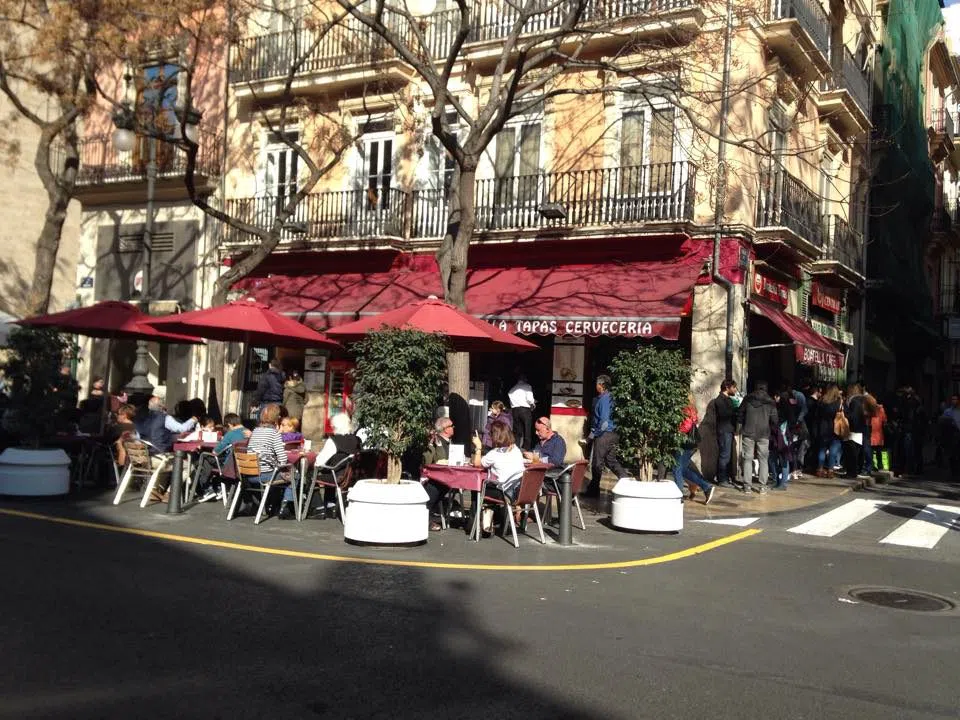
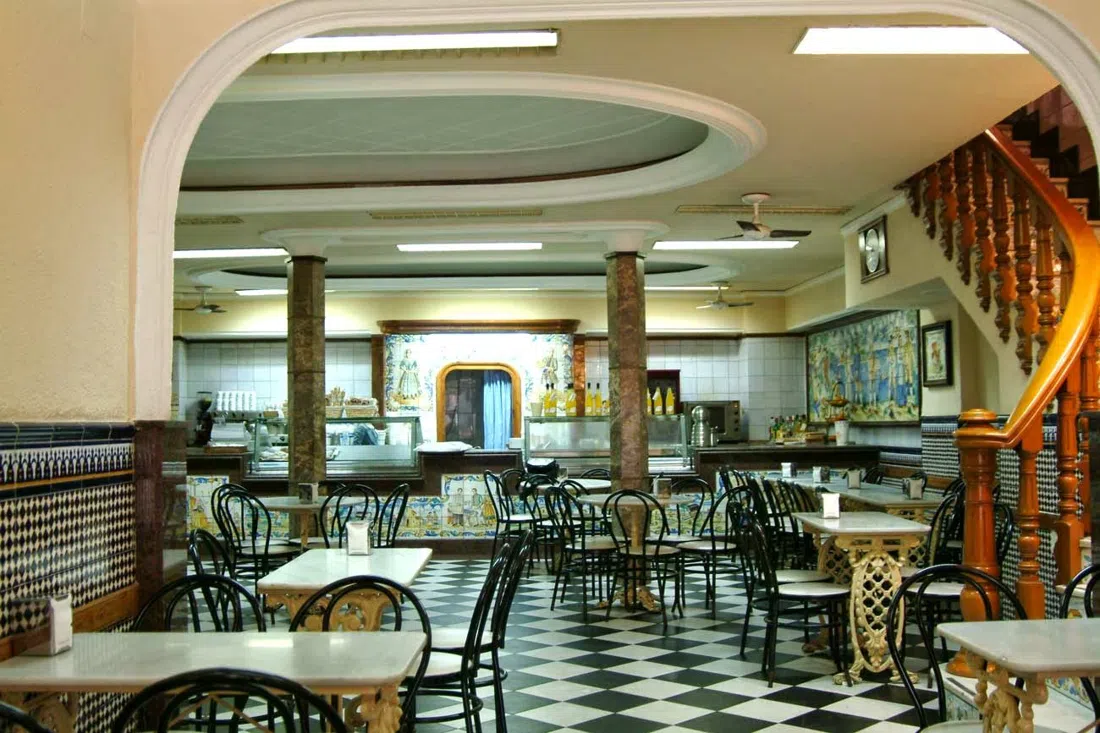
Horchatería de Santa Catalina (Plaça de Santa Caterina, four minutes away, daily 08:30 to 21:00) is the non-alcoholic counterpoint: horchata, thick chocolate and fartons for a few euros each under old tilework. It is busy all day with no real reservations, so a group gets split across tables, and it is firmly on the tourist trail. That is the trade-off for the tiles, and with children or anyone pacing themselves between tastings it is the right stop.
The expensive door on the same square
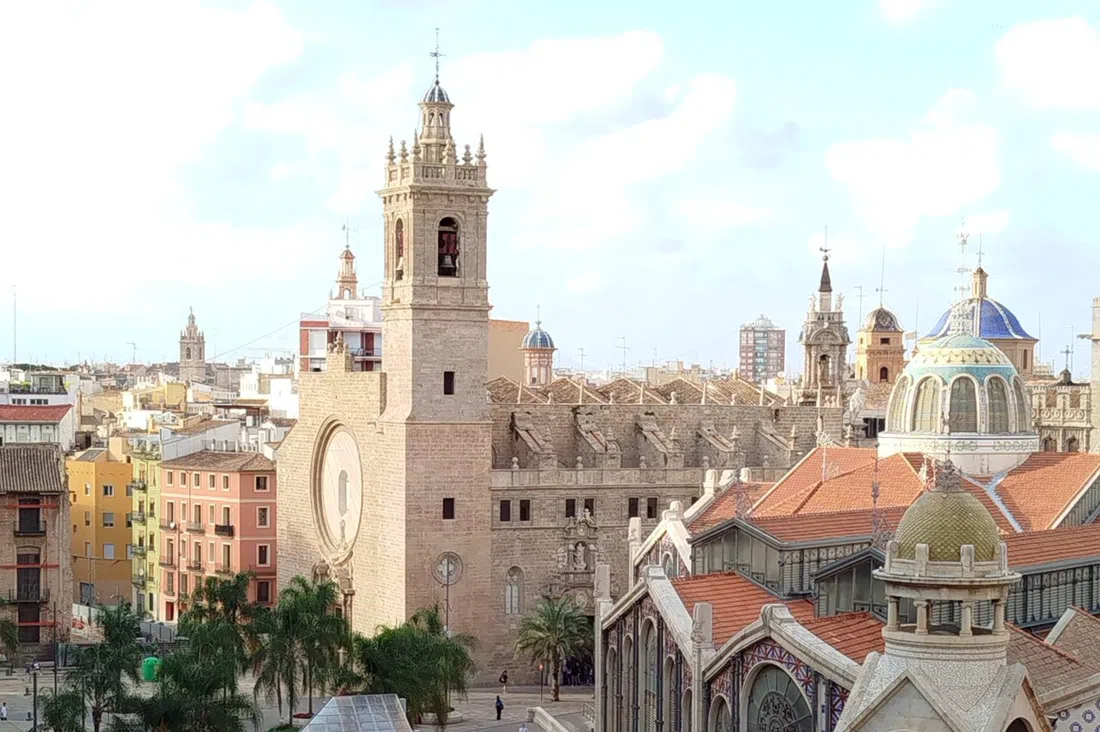
Església dels Sants Joans (Real Parroquia de los Santos Juanes, the third corner of the Lonja and market square) is the strongest paid art stop within a hundred metres of the Lonja, and the best wet-weather fallback in October. Entry is €15, or €12 reduced, including a multimedia audio guide in seven languages, which is why a mixed-nationality party works here without hiring a live guide. The Hortensia Herrero-funded restoration and the digital reconstruction of the vault are the point, and they are also why this costs seven times what the Lonja does. Say that out loud to your group before you buy, then decide.
A separate evening for the old wine houses
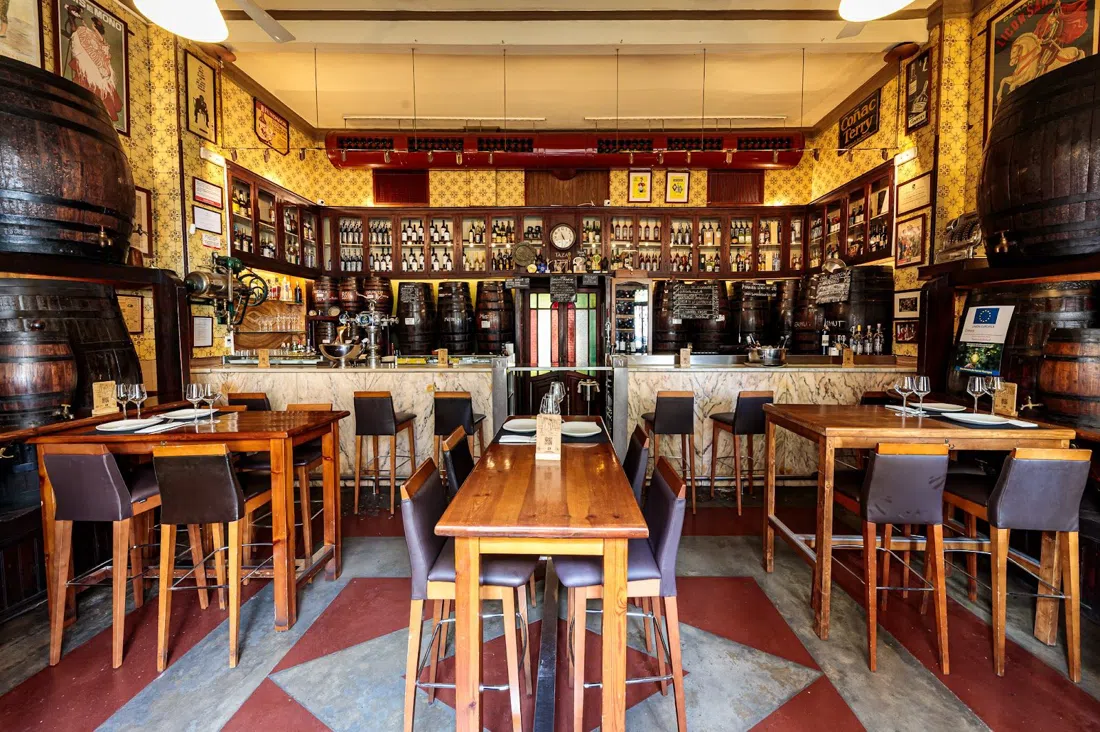
Casa Montaña (El Cabanyal, the old fishermen's quarter, by tram or taxi) is the city's benchmark old wine house and the right address for anyone serious about Valencian wine and vermouth. Tapas are à la carte with a set tasting menu around €36, drinks extra. Groups are taken by reservation and often need to book weeks ahead; a seated party does far better with the house vermouth and the tasting menu than standing at the counter. It is not a Lonja stop, so give it its own evening.
El Celler del Tossal (El Carmen, near Plaça del Tossal) is the sommelier's choice: deep Valencian terroir with no pretension, a strong by-the-glass list, mains around €15 to €25, and the sweet rices it is known for. It is tiny, strictly phone reservation, small tables only, and no use at all for a group booking. Hours have changed recently and the most current listing shows it closed at weekends, so call before you build a Saturday night around it.
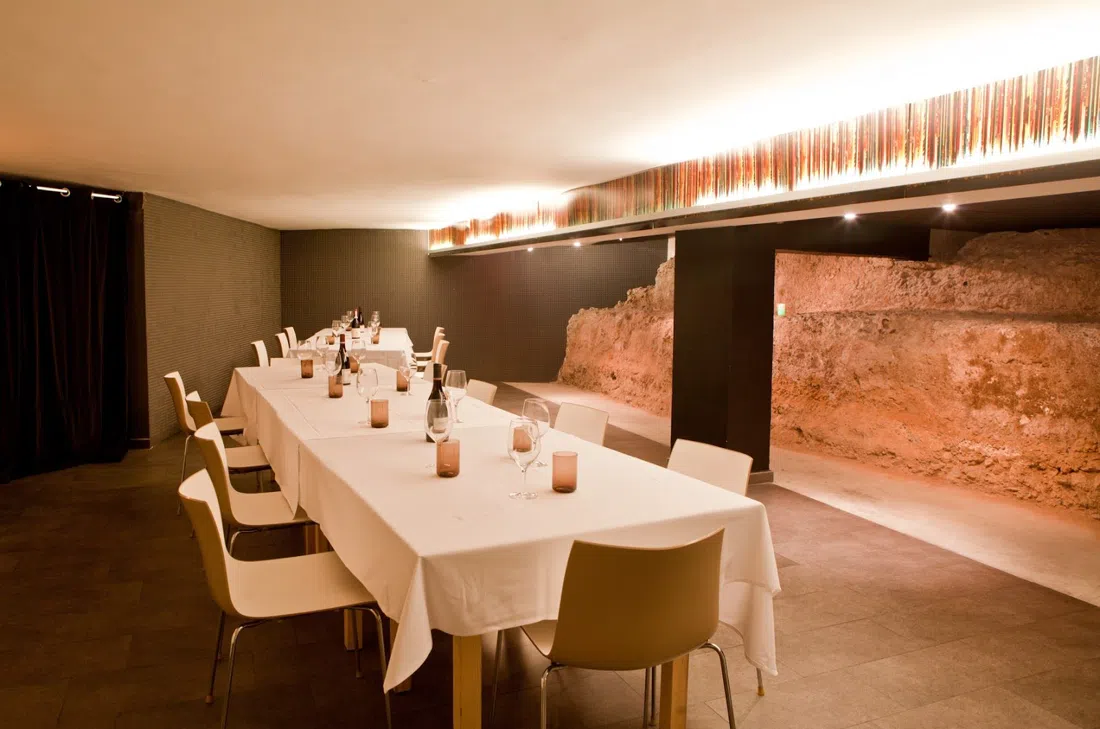
The best time to go in October 2026
October is the right month for this square. Mornings are cool enough to walk the old town without hunting shade, the afternoon light is long, and the summer crush has thinned without the winter short days.
The week shapes up like this. Tuesday to Saturday is the strong window: Lonja at 10:00, market and counter before 11:00, a flight or a counter tasting from midday, and the market gone by 15:00. Monday loses nothing at the Lonja but Boatella is your terrace and the Tuesday closure does not apply. Sunday is the awkward one: the Lonja is free but only open 10:00 to 14:00, the market is shut all day, Central Bar and Vinostrum are shut with it, and El Celler del Tossal's current listing has it closed at weekends too. A free Sunday ticket costs you most of the square.
One date to plan around: 9 October is the Valencian Community holiday, so assume holiday hours, with the Lonja on its 10:00 to 14:00 schedule and free, and the market and the market counters likely shut. Check the day before rather than walking down and finding out.
Is it worth it
Yes, and not conditionally. Two euros for a UNESCO-listed Gothic trading hall is the best-value ticket in Valencia and probably one of the best in Spain, and the room stops people mid-sentence. It suits almost everyone: architecture readers, families with an hour to fill, anyone with a wheelchair who is tired of being told about stairs, and people who want a short, cheap, undeniable thing between two long meals.
Where it needs honesty is depth. On your own with thin signage it is a beautiful forty-five minutes and little more. The paid version of this morning (a guide, a tasting with a price on it, a sit-down in a cellar) is what turns it into a half-day you remember. Couples should do that themselves: €2 at the door, then €36 at Borgia or €38 at The Wine Place. Groups, mixed-language parties and anyone short on planning time are better off booking a guided old-town-and-wine morning and letting somebody else hold the reservations. More detail on the rest of the city is in our Valencia guide.
Practical notes
Everything on the square is walkable. The Lonja, the market, Sants Joans and the horchatería sit within a hundred metres of each other, and El Micalet is seven minutes on foot, so this morning needs no transport at all. For El Carmen, remember cars cannot enter: walk in or take a taxi to the edge. Casa Montaña and The Wine Place are the two that need a tram, taxi or metro hop, so cluster them into an evening rather than threading them through the day.
Carry cash. The €2 ticket, the market stall bars and the horchatería are all easier with coins and small notes, even where cards work.
On timing: Lonja 10:00, Monday to Saturday. Market and Central Bar before 11:00. Everything market-side is finished by 15:00 and closed on Sunday. Tinto Fino and El Celler del Tossal are phone-first. Proava needs three days' notice, Casa Montaña can need weeks.
A good morning runs about €2 for the monument, €10 to €15 for market bites and a glass, and €36 to €45 for a structured tasting, so call it €50 to €65 per person including a sit-down lunch. Add €15 if you do Sants Joans. A guided old-town walk with wine and tapas starts from 86 USD per person and runs seven days a week, which is what the convenience costs. For somewhere to sleep within walking distance of the square, start with a Valencia hotel search and filter to Ciutat Vella or El Carmen. If you can walk to the Lonja for 10:00, the whole plan above works without a single journey.
Questions
How much does it cost to visit La Lonja de la Seda, and do I need to book?
A standard ticket is €2, a reduced one €1, which covers groups, students, pensioners and large families. Sundays and public holidays are free, and entry is included with the Valencia Tourist Card. Individuals and pairs can walk up without booking, since the queue at the desk takes a few minutes rather than wrapping round the block. School parties and other large blocks should book through the municipal museum service instead of all arriving at the door.
What are the opening hours and how long should I allow inside?
Monday to Saturday 10:00 to 19:00, Sunday and public holidays 10:00 to 14:00 only. Allow 60 to 90 minutes: ninety if you read the panels, go upstairs to the Consulado del Mar room and sit in the orange-tree courtyard, sixty if you are moving through a square full of other stops.
When is the quietest time to go in October 2026?
Walk in at 10:00 on a weekday, with Tuesday to Saturday the strong window, and the trading floor is nearly empty before the first guided groups arrive, the low October sun still hitting the columns at an angle. Around 17:00 is the second-best slot. Avoid midday, when the courtyard becomes a waiting room, and note that 9 October is the Valencian Community holiday, so assume the short 10:00 to 14:00 schedule.
Is it worth paying for a guided tour with a wine tasting instead of the €2 ticket?
It depends who you are. Access costs €2, so what the guided price buys is a guide who can explain the inscription and the Consulate of the Sea, a tasting already arranged and someone else holding the table. Guided old-town walks with wine and tapas run seven days a week from 86 USD per person, and the leading one holds 5.0 out of 5 from 3,730 reviews. A couple happy to walk in cold and then book their own flight gets better value from the €2 ticket plus a €36 tasting; groups, mixed-language parties and anyone short on planning time should book the guided morning.
Can I climb the tower, and is the building accessible?
The Lonja is wheelchair-adapted, which is unusual for a fifteenth-century hall. The tower's spiral stair opens only for special occasions, so do not plan or promise it; count on the trading hall, the Consulate room and the courtyard. For height, the cathedral bell tower El Micalet is seven minutes away at around €2 to €2.50 adult, though its stair is single file, the platform caps at about 50 people, and last entry is 30 minutes before the 18:45 close.
First published on valenciacitybreaks.com, the Valencia guide.