By seven in the evening the coach park at the northern end of town is full, engines running, and the temple behind the gate has turned from sandstone to a flat theatrical orange. Three kilometres south, the other great temple in Luxor is lit much the same way for nobody in particular, with no ticket, no script and nobody counting heads at the door. Which of the two gets your evening is the one decision worth making yourself, because the hotel desk will happily make it for you.
Luxor has exactly one sound and light show
The Karnak Temple Sound & Light Show (Karnak, at the northern end of the east bank) is the only production in the city, whatever the phrase "sound and light circuit" implies. Everything else you can do after dark is an alternative to it, so the question is whether to book a show at all, not which one.
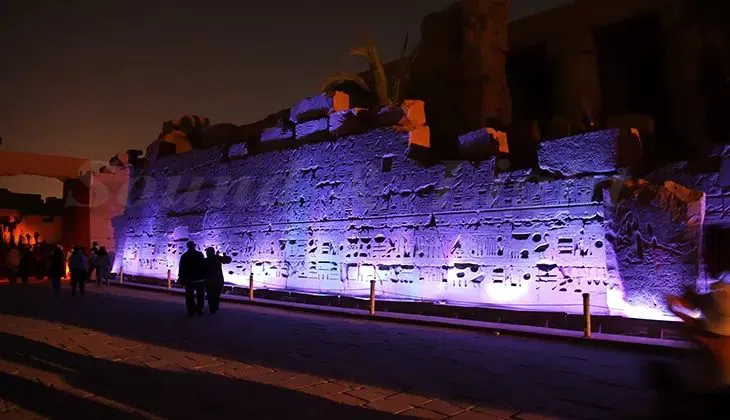
What Karnak has that almost no other production of its kind has is movement. The usual format elsewhere is a grandstand and an hour of coloured light thrown at a facade. Karnak walks its audience through the site across 75 minutes, so the pylons, the columns and the change of scale as you go deeper carry the evening, and the lighting rig only has to keep up. With Egypt's other flagship production closed for renovation, this is currently the headline show in the country, and the walking format is why it earns that billing.
Be clear-eyed about the rest of it. The script dates from the 1970s and is florid in the way that decade liked, with gods speaking in the first person and a great deal of "behold". The amplified narration distorts badly on the colonnade speakers, so whole passages arrive as noise if you are standing in the wrong place; hang back a few metres from the nearest speaker stack and it improves. It is also a group product. Coach parties and cruise groups are the core audience, which means several hundred people moving at the pace of the slowest, lit by phone torches. If you want a quiet hour alone with a temple, this is not it.
The timings matter more than any of that. The schedule rotates through languages, and the first English performance at 20:00 runs regardless of numbers. The 21:00 second show needs a minimum of five foreign visitors to go ahead and is pulled if they do not turn up, which is the trap independent travellers fall into: you arrive for a late show in a quiet week and get sent away at the gate. Take the 20:00 unless you have pre-booked and had it confirmed.
Gate price is $20 for adults and $11 for children aged 6 to 12. Hotel packages including transfers run $35 to $45 per person, which is fair value from the west bank or with small children in tow, and poor value if you are two people on the east bank who could take a taxi for a fraction of the difference.
The floodlights nobody charges extra for
The strongest argument against paying for a show is standing in the middle of town. Luxor Temple (Corniche, town centre) is Egypt's only major monument routinely open after dark on a standard ticket. You arrive when you like, there is no booking and no minimum numbers, and nothing starts or finishes without you. Entry is roughly EGP 200-400 for an adult and about half that for students, though Egyptian ticket prices move and you should verify at the gate rather than trust any printed figure, this one included.
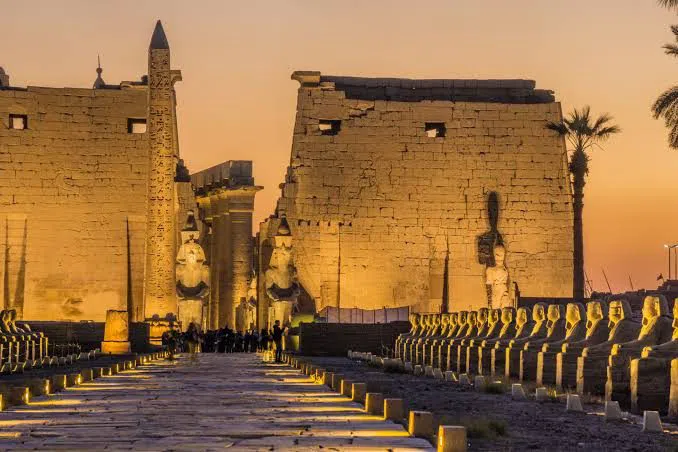
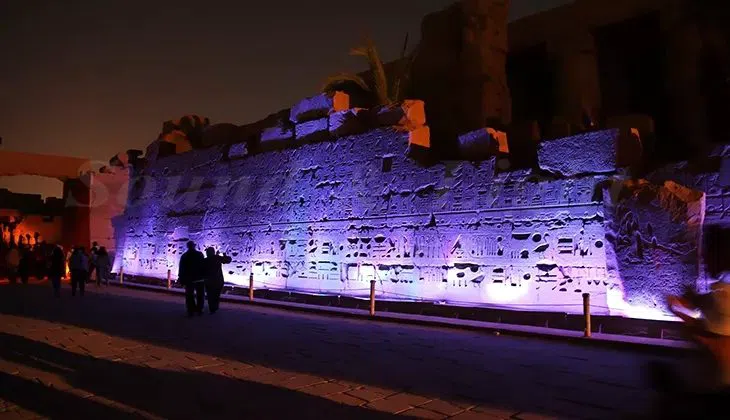
The case for it goes well beyond the price. Raking floodlight at a low angle picks out relief carving that is flat, washed out and effectively invisible at noon; the same surfaces you photographed badly at midday read properly at nine in the evening. The temple is also the clearest lesson in continuity in the city: a pharaonic sanctuary with a working mosque built high into the ruin, its door hanging well above the excavated floor because the ground level was that much higher when the mosque was founded. Three thousand years of use, legible in one glance, with nobody narrating it at you.
Timing decides how it feels. Guided groups arrive in waves from about 19:00 to 20:00 and the courtyards feel busy. Go after 20:30 and they largely empty out. If you have one evening and you want the monument more than the spectacle, this is the better use of it, and none of the show's door problems apply: nobody counts heads, no session gets cancelled, no coach sets the pace.
Walking the rams between the two temples
The Avenue of Sphinxes (Rams Road) (running between the two temples, east bank) is the cheapest spectacle in Luxor and, on a clear evening, the best way to understand how the two sites were ever meant to relate to each other: as the two ends of one processional route, not as ticketed attractions at opposite ends of a modern town. It is free to walk and included with either temple ticket.
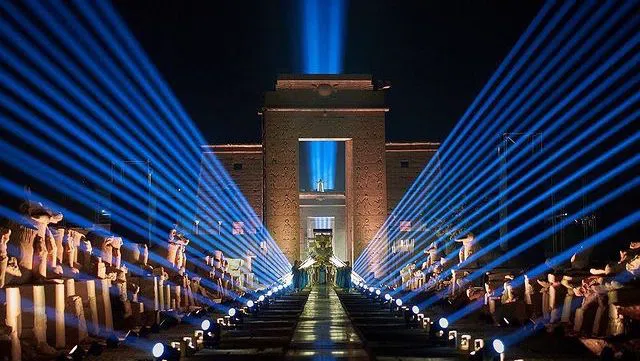
The practicalities catch people out. Allow 45 to 60 minutes each way at a real walking pace; it is longer than it looks on a map. The paving is uneven, so wear proper shoes and not sandals. Lighting is patchy along the middle third, which is fine in company and less appealing alone late at night. There are stewards at the Luxor Temple and Karnak ends but not much in between. The sensible version is to walk it in one direction in the last of the daylight and take a taxi back.
Two museums that stay open when everything else shuts
Luxor's two evening museums solve a specific problem: the dead hour between five o'clock, when the west bank has closed, and dinner.
Luxor Museum (Corniche, between the two temples) is the better of the pair and, oddly, has the most theatrical lighting in the city. The display design is deliberately dark, with objects lit and the room left black, which flatters a small and ruthlessly edited collection. It shows a modest number of things properly instead of a vast number badly. Open 17:00 to 21:00 with the ticket desk shutting at 20:30, roughly EGP 200-300 for an adult. Ninety minutes does it justice. It takes groups comfortably, though the galleries are compact enough that large parties get split at the door, which suits everybody.
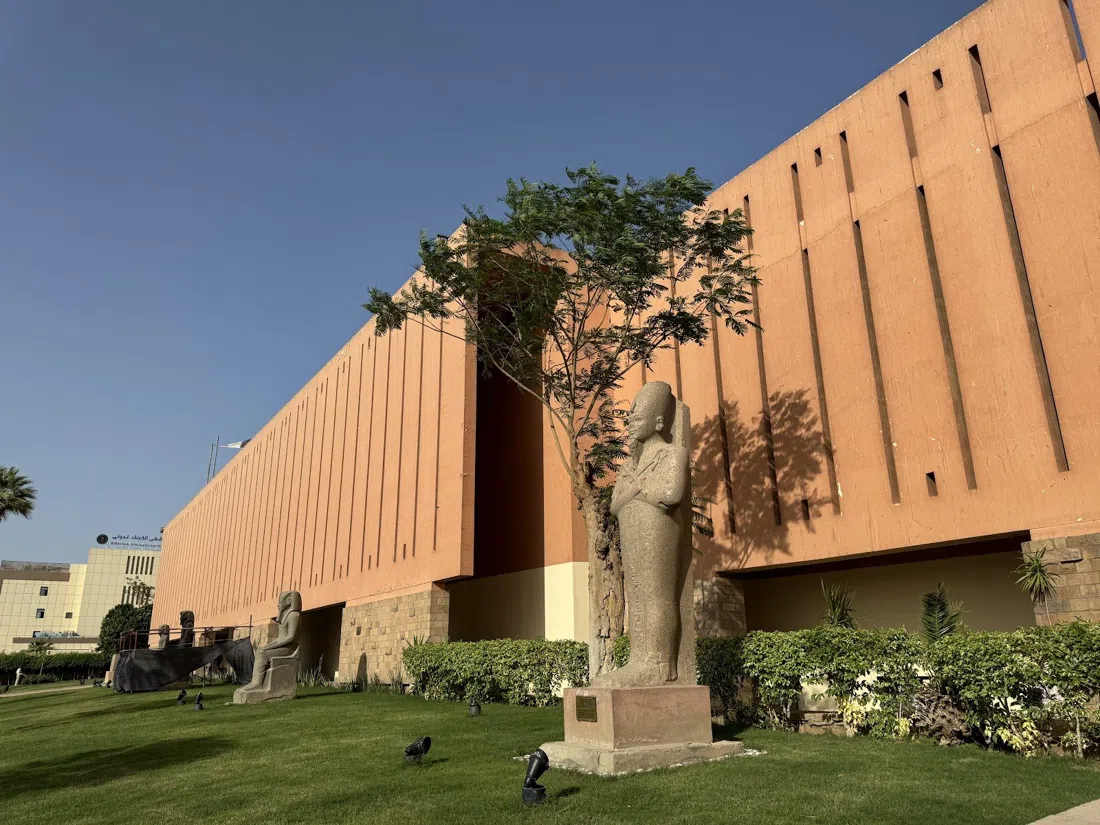
Mummification Museum (Corniche, on the riverfront) is smaller and takes well under an hour. It reopens 17:00 to 21:00 with the last ticket at 20:00, costs roughly EGP 100-200, and is grisly, specific and much better curated than its size suggests: the tools, the canopic apparatus, the practical mechanics of a belief system rather than its theology. It is a poor fit for a full coach, because the entrance ramp is one lane and forty people produce a queue immediately. For a couple or a family it is the natural filler between an early dinner on the Corniche and a late walk to Luxor Temple.
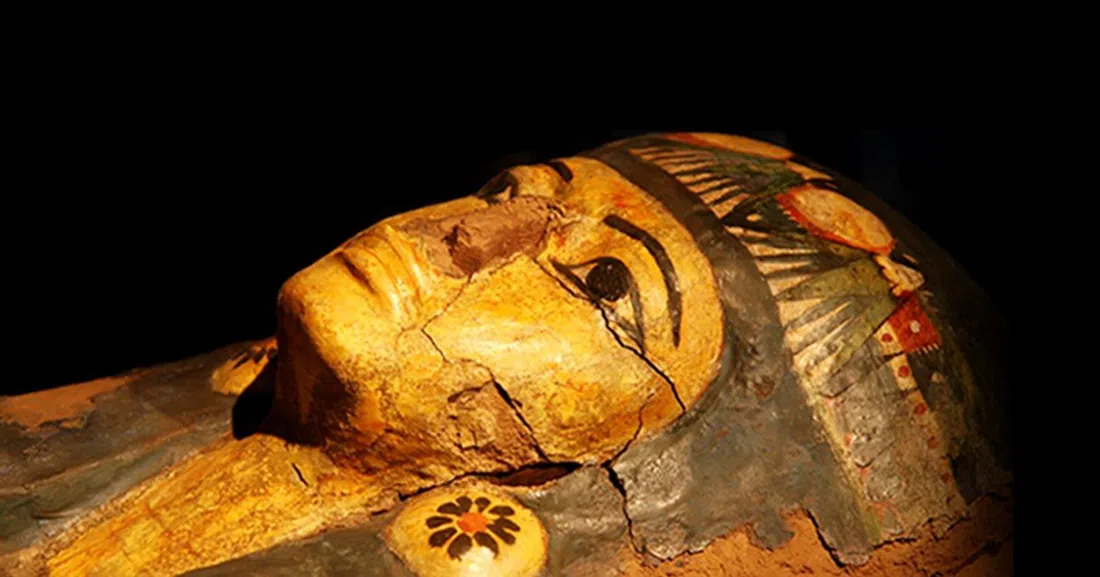
The sequencing is tight. Both museums close their desks before or around the time the Karnak show begins, so they belong ahead of 20:00 and not after it. Or they replace the show entirely, which for a lot of travellers is the better trade.
Where to eat before the show and after it
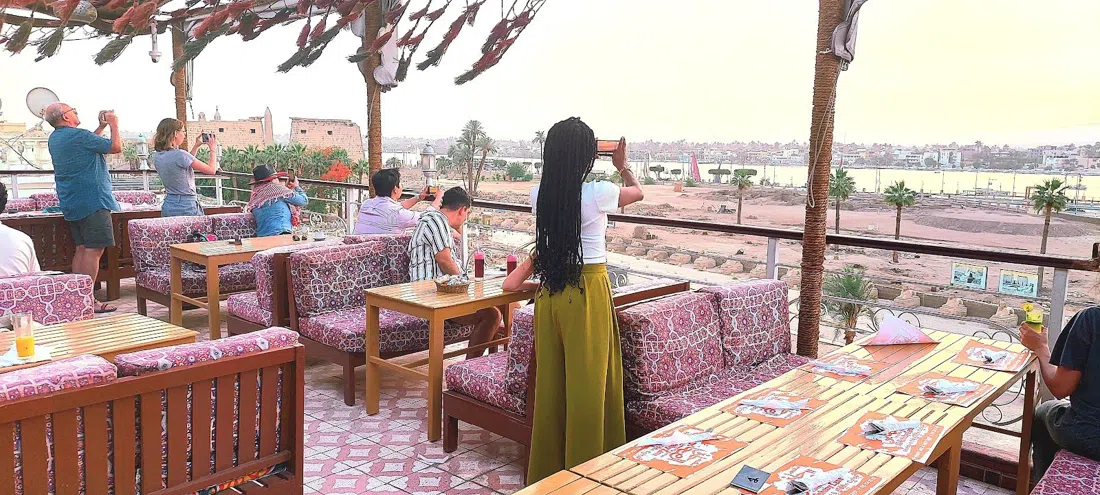
Al-Sahaby Lane Restaurant (off Sharia al-Souk, town centre) is the pre-show table to book if the view matters. A family restaurant on the same lane since the 1930s, it serves until about 23:30 from a modest rooftop where the floodlit temple really is the view and not a rumour glimpsed between buildings. Mains run roughly EGP 200-450 and beer is served, which narrows the field considerably in this town. Small parties can walk in; call ahead for anything over eight, because the roof is not large. Order early, because the kitchen slows to a crawl the moment a cruise group lands.
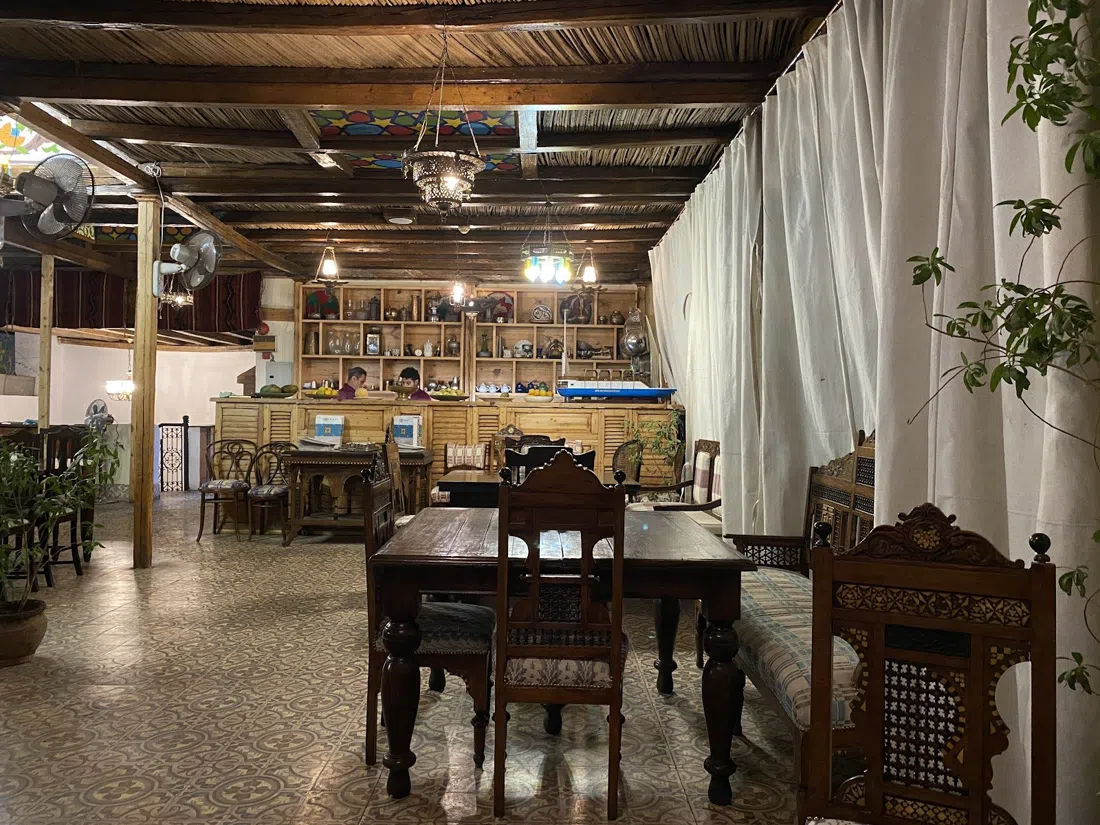
Sofra Restaurant & Café (east bank, a short taxi from the temples) is the trade in the other direction: better food, no temple view. It is the most reliable kitchen in Luxor for proper Egyptian home cooking instead of hotel-buffet approximations, and it has a 4.6 average across some 2,800 reviews behind that claim. Two floors and a roof mean it takes groups readily. Mezze and mains run roughly EGP 150-400 and no alcohol is served. Book ahead for larger parties. It sits about ten minutes by taxi from the Karnak show gate, which makes it a workable post-show dinner if you are happy eating late.
The hour after the temples close
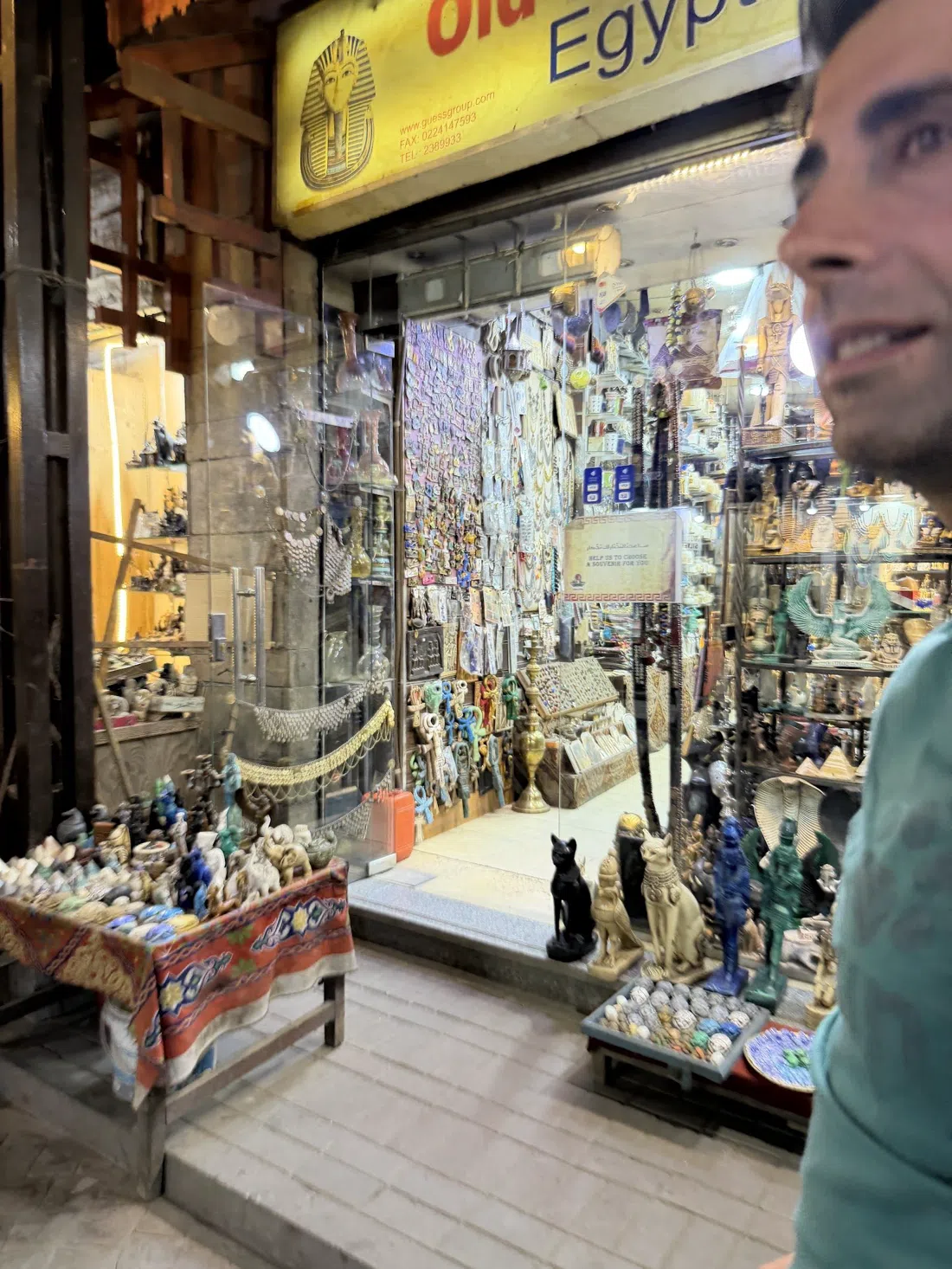
When the monuments shut, the Luxor Tourist Souk (Sharia al-Souk) (town centre, a block back from the Corniche) is what is left, trading until roughly 23:00 and free to walk. Under the lanterns it is atmospheric, and it is the default way to end an evening. It is a tourist bazaar and not a working market, and the hard sell is relentless if you slow down or catch a shopkeeper's eye. Haggling is expected, so open at about a third of the first asking price and be ready to walk away. Groups should stay tight; the hawking splits a party up within a minute.
Three evenings that actually work
For a couple with one night, skip the show. Luxor Museum at 17:30, dinner at Al-Sahaby Lane around 19:30, then Luxor Temple after 20:30 once the guided waves have gone. It needs no transfer and no booking, and it catches the best-lit hour of the day at both the museum and the temple.
For a family, or anyone who came for the production: Mummification Museum at 17:30, an early dinner, the 20:00 Karnak show, then a taxi back into town for the souk. Book the show with transfers if the children are small and take the gate price if they are not.
For walkers with two evenings: the Avenue of Sphinxes in the last hour of daylight and the Karnak show at 20:00 on the first night; Luxor Museum and a late Luxor Temple on the second. That order gets the crowded thing out of the way and leaves you the quiet one to finish on.
Practical notes for a Luxor evening
Getting around. Taxis on the east bank are cheap and plentiful; agree the fare in Egyptian pounds before you get in, and have small notes ready, because change is a recurring negotiation. A caleche is a pleasant way to cover the Corniche and a poor way to arrive anywhere on time. Every option in this piece is on the east bank, which is the practical argument for sleeping there; the Luxor hotel search will show what sits within walking distance of the temples rather than out along the airport road. West bank guests should budget for the crossing and expect a slower, pricier return after 22:00.
Cash. Carry Egyptian pounds in small denominations for museum tickets, taxis and the souk. The show is priced in US dollars, so bring clean, undamaged notes if you plan to pay that way, and do not count on a card terminal at the gate.
Timing. Everything after dark here runs in a narrow band: museums 17:00-21:00 with the desks closing earlier, the show at 20:00, restaurants until about 23:30, the souk until about 23:00. Luxor Temple is the only thing that really flexes.
Budget. A no-show evening (one museum, the temple, dinner and a walk) lands at roughly EGP 700-1,200 per person plus taxis. Adding the show at the gate is about $20 more; adding a hotel transfer package makes it $35-45. For the daytime half of the trip, the west bank tombs and the temples in daylight, start with the Luxor guide.
Questions
Is the Karnak sound and light show worth the money?
It is, if you want a production rather than a monument. The 75-minute walking format moves you through the site instead of parking you in a grandstand, and it is the best show of its kind in Egypt at the moment. The script is 1970s-florid and the narration distorts on the colonnade speakers, so for a quiet temple after dark, a standard-ticket night visit to Luxor Temple costs far less and gives you more.
Can the Karnak show be cancelled if there are not enough people?
The first English performance at 20:00 runs regardless of numbers. The 21:00 second show needs a minimum of five foreign visitors and is pulled if they do not turn up, so independent travellers should take the 20:00 unless they have pre-booked the later show and had it confirmed.
Can you visit Luxor Temple at night without booking a tour?
Yes. It is open after dark on a standard ticket, with no booking and no fixed start, and it does not need minimum numbers. Roughly EGP 200-400 for an adult and about half for students, though prices move, so check at the gate. Guided groups arrive between about 19:00 and 20:00; go after 20:30 and the courtyards largely empty out.
Is it safe to walk the Avenue of Sphinxes at night?
It is a free public space with stewards at the Luxor Temple and Karnak ends, and it is busy enough in the early evening. Lighting is patchy on the middle third and the paving is uneven, so wear proper shoes and take company if you are walking it late. Allow 45 to 60 minutes each way; many people walk one direction at dusk and taxi back.
What does an evening in Luxor cost in 2026?
A show-free evening of one museum, Luxor Temple, dinner and a walk runs roughly EGP 700-1,200 per person before taxis. The Karnak show adds $20 for an adult and $11 for a child aged 6 to 12 at the gate, or $35-45 per person for a hotel package with transfers. Museums are EGP 100-300, and the Avenue of Sphinxes is free with either temple ticket.
First published on theluxorguide.com, the Luxor guide.