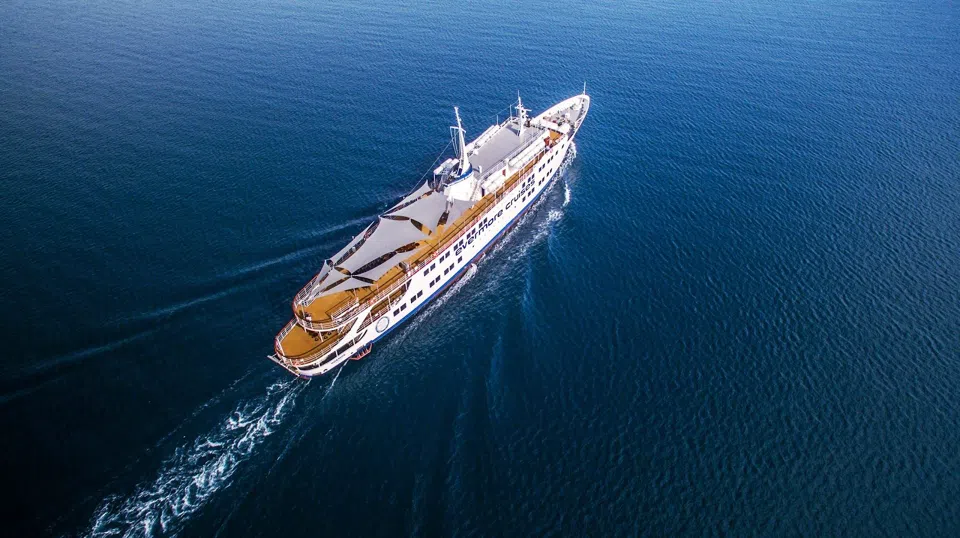
A three-night boat out of Luxor is not a cruise in the ocean-liner sense. It is roughly two hundred kilometres of drift south with the current, four temples standing on the bank more or less where they were built, one lock that swallows an afternoon, and long stretches where the entertainment is sugarcane, egrets and men mending nets from flat-bottomed boats. In November the sun deck stops being an endurance test and becomes the reason you came.
What three nights actually covers
The standard southbound itinerary boards in Luxor in the afternoon, sits at the mooring overnight, sails early, waits its turn at the Esna lock, reaches Edfu the following morning and Kom Ombo in the late afternoon or after dark, then ties up at Aswan for a morning disembarkation. Three nights, three temple stops on the river, and the Luxor sightseeing, which is the part people misread, front-loaded onto the afternoon you board or the day before. It is not spread across the sailing. Turn up at the gangway at two in the afternoon having landed that morning and you will do one temple in a heat haze and miss the west bank entirely.
So give yourself a night on land first. One extra night buys the balloon, the tombs and the mortuary temple without a single rushed start; a Luxor hotel search will show you what is within walking distance of the corniche moorings, and the wider Luxor guide covers the east-bank and west-bank split in more detail. Packages that bundle the boat with the guided shore visits are attached to this page as a card rather than named here; they start from 1,300 US dollars per person. Across the bookable options here there are 48 traveller reviews, with the top-rated one sitting at 4.7 out of 5.
The west-bank morning you should not compress
Valley of the Kings (west bank, in the dry gorge behind the Theban cliffs) is the one site where a guide cannot do the work for you. Licensed guides are not permitted to lecture inside the tombs, so the briefing happens outside at the visitor centre, and then you walk in alone with whatever you retained. The base ticket is around EGP 750 (about US$15.50) and covers any three of the tombs open that week. Tutankhamun is roughly EGP 700 on top, Seti I about EGP 2,000 on top, and the gate takes card only. The open list rotates deliberately, to spread footfall and protect the paint, so choose by what is actually open rather than by the famous names. Flash photography is banned outright and the ban is enforced by the inspectors inside each chamber.
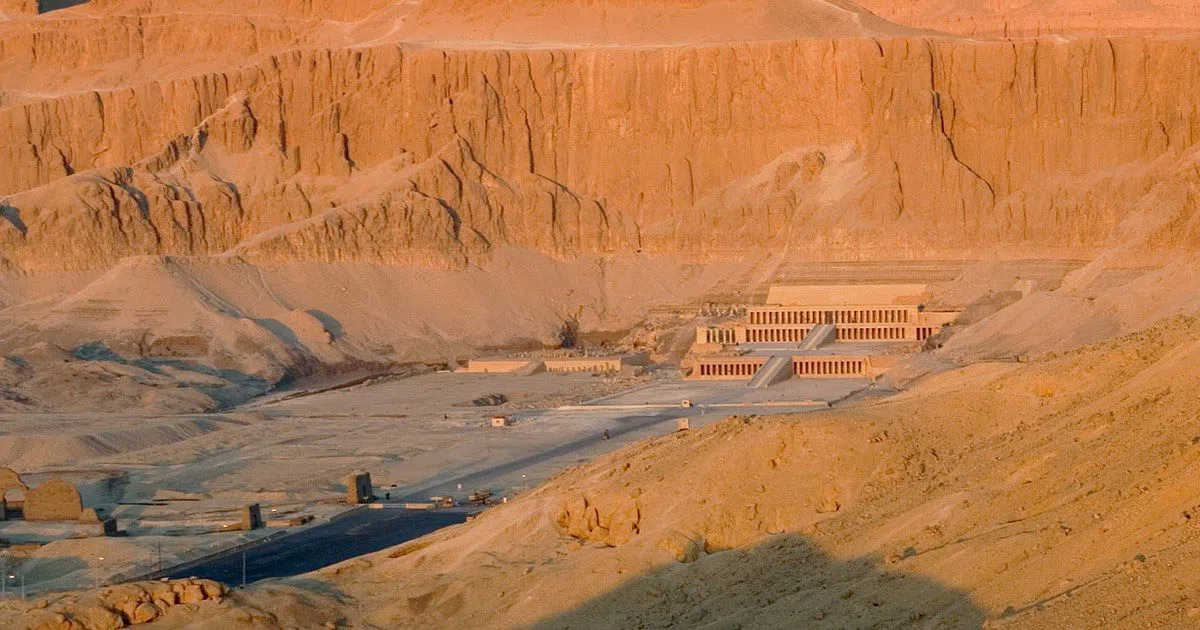
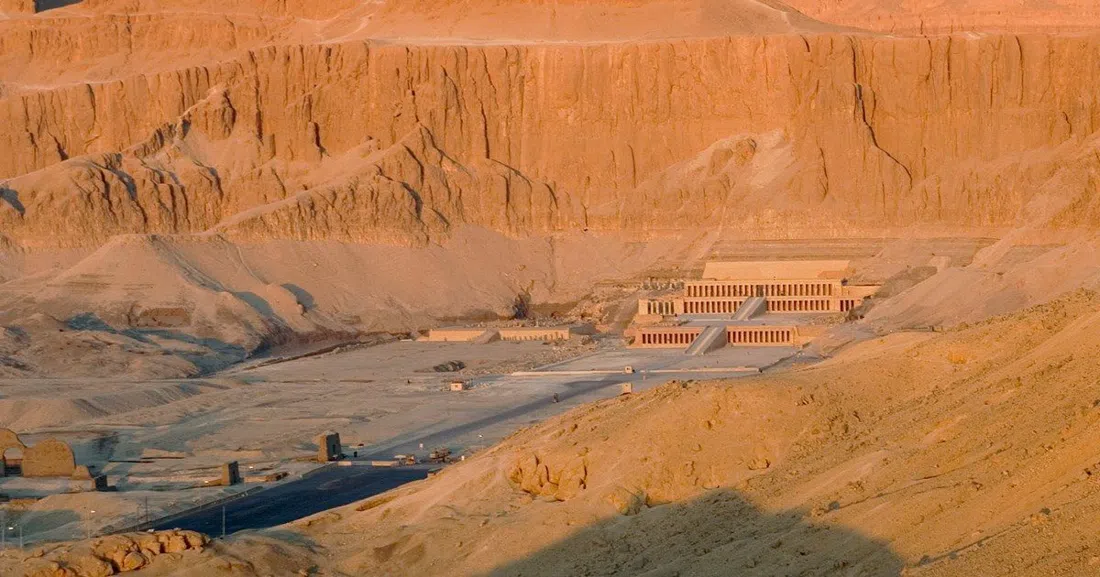
Temple of Hatshepsut, Deir el-Bahari (west bank, ten minutes further into the same bay) is the other half of that morning. Entry is around EGP 440 (about US$10), card only, and the ticket office sits some 400 metres from the ramp with a paid shuttle tram covering the walk. It was built for coach traffic and takes it without strain. Be finished by 09:30. The bay is a natural amphitheatre that traps heat, the terraces face east into the sun, and the forecourt offers nothing in the way of shade once the morning gets going.
Sindbad Balloons (launch fields on the west bank, with pickups from the Nile moorings and Luxor hotels) has been flying since 2005 with pilots certified by the Egyptian civil aviation authority. Shared baskets are the default and carry large parties comfortably; private balloons are bookable at a premium. Expect roughly US$90 to 150 per person for a shared flight. The authority grounds flights on windy mornings, which is a safety call rather than an operator's whim. Book the first morning of your stay and hold the next as your fallback: a boat that sails at dawn on day two leaves you none.

Karnak on the afternoon you board
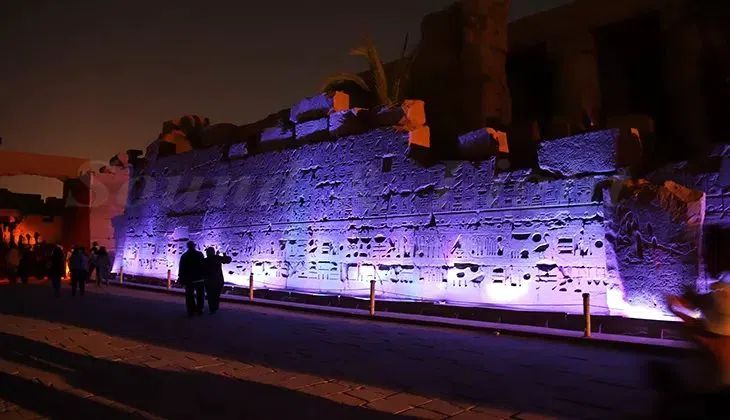
Karnak Temple Complex (north end of Luxor, about three kilometres from the corniche moorings) is the standard first afternoon of a Luxor to Aswan cruise, and it is where the timing advice matters most. The site runs to a hundred hectares, so groups really do spread out, coach parking is ample and licensed guides work throughout. But the hypostyle hall is a bottleneck by design, and between 09:00 and noon it is wall-to-wall parties. Go at opening, 06:00 to 06:30 in the winter schedule, or in the final hour before closing. Adult entry is around EGP 600 (about US$12 to 13), card only at the gate, with the Sound & Light show ticketed separately.

Luxor Temple (central corniche, walking distance from most moorings) is the one major site in the city that stays open into the evening, and it is considerably better lit than its daytime photographs suggest. Entry is around EGP 500 (about US$10), card only. If your boat boards in the afternoon, this is the natural thing to do after dinner on the first night: you walk off the gangway, up the corniche and into a colonnade that looks completely different under floodlight.
Esna, the lock and a ceiling worth the stop
Temple of Khnum at Esna (on the town corniche, sunk in a pit below modern street level) used to be a footnote, a soot-blackened hall you looked at while the boat queued for the lock. The joint Tübingen-Egyptian cleaning project has changed that completely, and the astronomical ceiling is now arguably the most colourful in Egypt. It is one hall and nothing else, so guides stagger their groups through in waves; boats moor on the corniche and walk guests in along a souvenir-lined street. The gate is low, roughly US$5 to 7, card only, and on most itineraries it is covered by the included shore visits. Your boat is stopping here anyway to wait for the lock, so there is no argument for skipping it.
Edfu by convoy and Kom Ombo after dark
Temple of Horus at Edfu (about three kilometres inland from the cruise dock) is the best-preserved major temple in the country, and the difference that makes is structural rather than decorative: you can read the whole thing as a building (pylon, court, hypostyle halls, sanctuary with the granite shrine still in it) instead of reconstructing it in your head from stumps. Entry is around EGP 550 (about US$11.50), card only, with the transfer from the dock extra. Boats send guests in convoy by horse carriage, tuk-tuk or minibus. If the carriage horses look worked out to you, say so and ask your guide for a tuk-tuk or a van instead; it is a normal request and the crews handle it without fuss.
Kom Ombo Temple and its Crocodile Museum (on the riverbank, a two-minute walk from the gangway) is usually reached in the late afternoon or after dark, which is the best possible time to see it. The temple is a double building: twin sanctuaries, twin axes, one for Sobek and one for Haroeris. At night it is lit in a way that makes the duplication obvious. Entry runs around EGP 360 to 450 (about US$8 to 10) with the museum included, card only. The museum itself needs twenty to thirty minutes; it holds mummified crocodiles recovered from the local cemeteries and is small enough that guides move parties through in waves.
The day and a half you get in Aswan
Philae Temple of Isis (on Agilkia Island, reached from the Marina/Shellal landing south of town) is where the three-night run finishes, and the crossing is half of it. The temple was cut into blocks and moved to Agilkia when the High Dam flooded its original island, and you arrive the way everybody always did, by water. Entry is around EGP 450 to 550 (about US$10 to 11.50), card only, plus roughly EGP 300 for the motorboat return, split across your boat. Larger parties get divided across several motorboats and rejoin for the briefing on the island. Go early: the water is glass before the wind gets up, and the morning light is on the facade. A Sound and Light show runs most evenings in rotating languages if you are staying on in town.
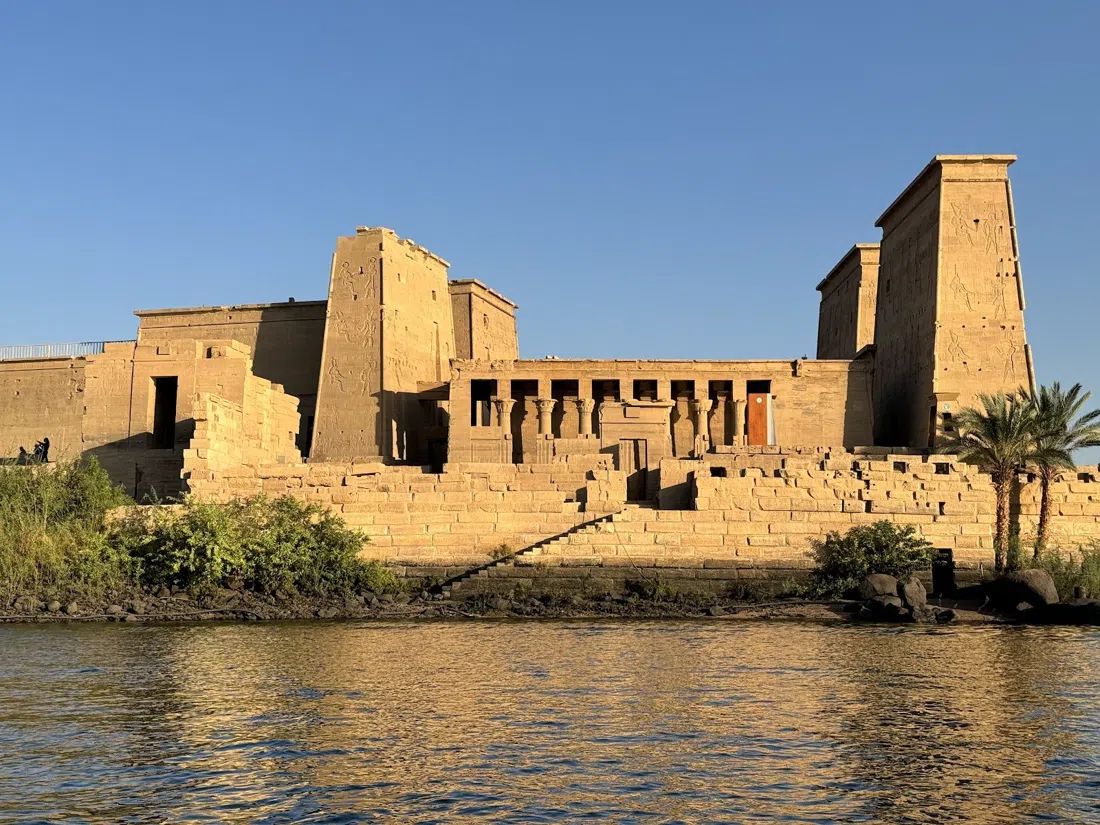
Aswan High Dam is a twenty to thirty minute stop rather than a sight, and it is worth doing because it explains everything else: why Philae is on the wrong island, why Abu Simbel sits above its original waterline, why half of Nubia is somewhere other than where it started. Entry is around EGP 200 (about US$4), card only. It is a controlled military area, so you visit with a guide and a vehicle, not independently. No telephoto lenses, no drones, and no photographs of the installations or the checkpoints.
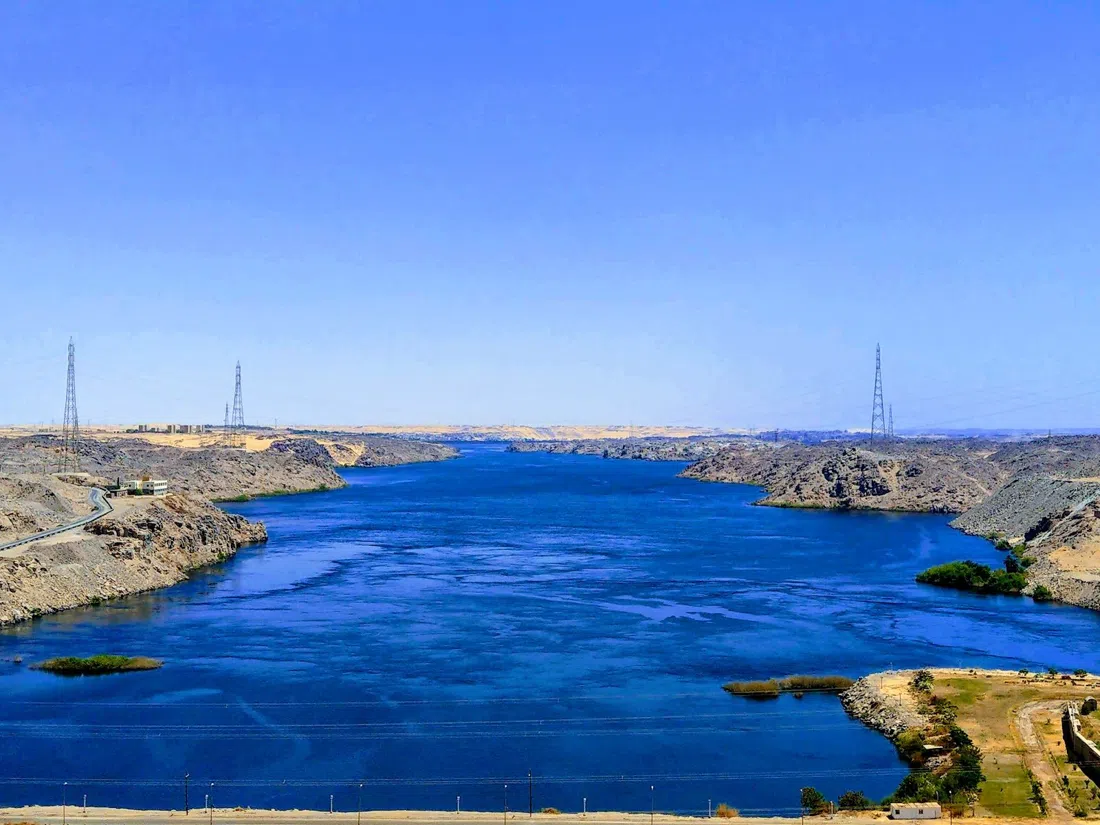
Nubian Museum (Aswan, up the hill above the town) is the counterweight to that stop, the one place that tells the Nubian side of the story, from prehistory through the resettlement. It is open daily 09:00 to 17:00 with an extra evening shift from 18:00 to 21:00 on Thursdays and Fridays, which is the coolest and quietest way to see it. Entry is around EGP 400 (about US$8). The galleries are wide and there is an open-air section, so it absorbs guided parties without feeling crowded.
Aswan Botanical Garden on El Nabatat (Kitchener's) Island is the best late-afternoon hour in the city. It can only be reached by boat, so your party size is set by the felucca or motorboat you charter, typically EGP 300 to 500 for the boat for an hour or two, split between you, with a nominal entry fee on the island. One unhurried loop of the alleys takes about an hour. The sail out past Elephantine is the point; the garden is the excuse.
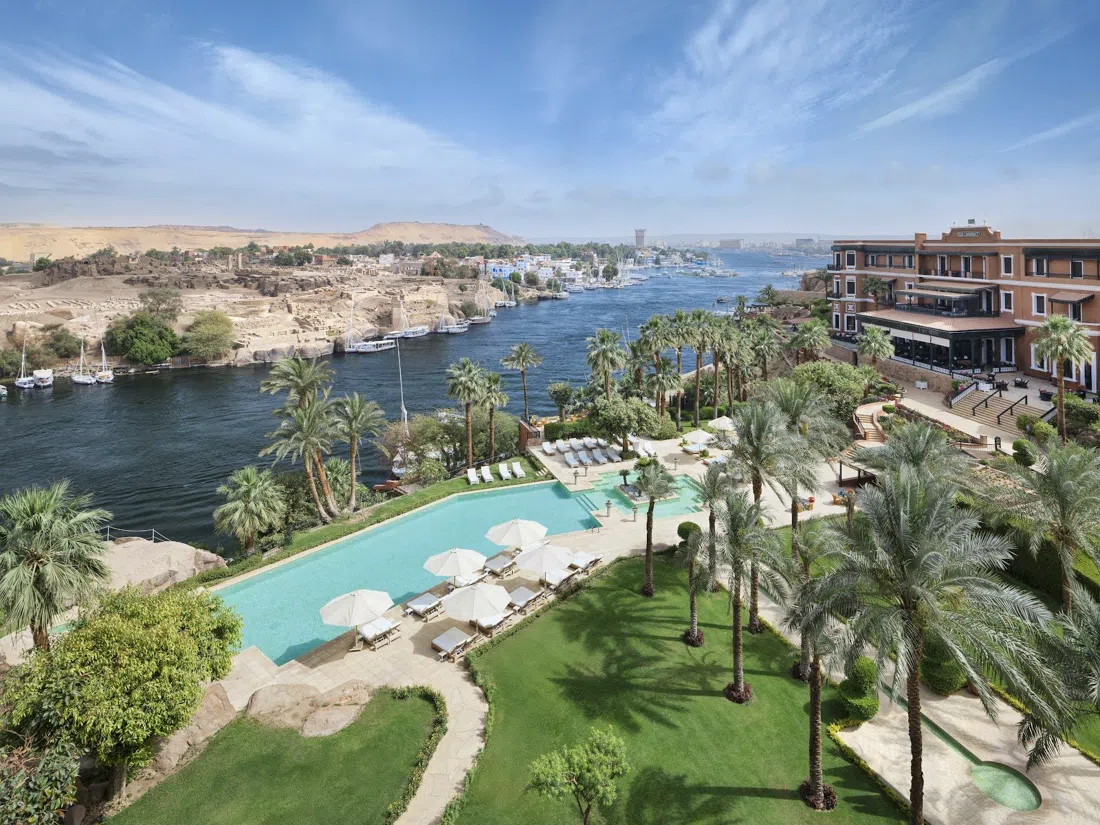
Sofitel Legend Old Cataract Aswan, for the Terrace and 1902, is the exception to everything above: it is not a group venue. Non-residents need a booking, 24 hours ahead for the Terrace, and there is an entry or minimum-spend charge. Afternoon tea is set-price and served daily from 15:00 to 18:00; 1902 is fine dining à la carte. It suits couples and pairs, not coach parties, and walk-ups are routinely turned away. It is also still the best sunset seat on the river, which is why it fills.
Abu Simbel and the day it costs
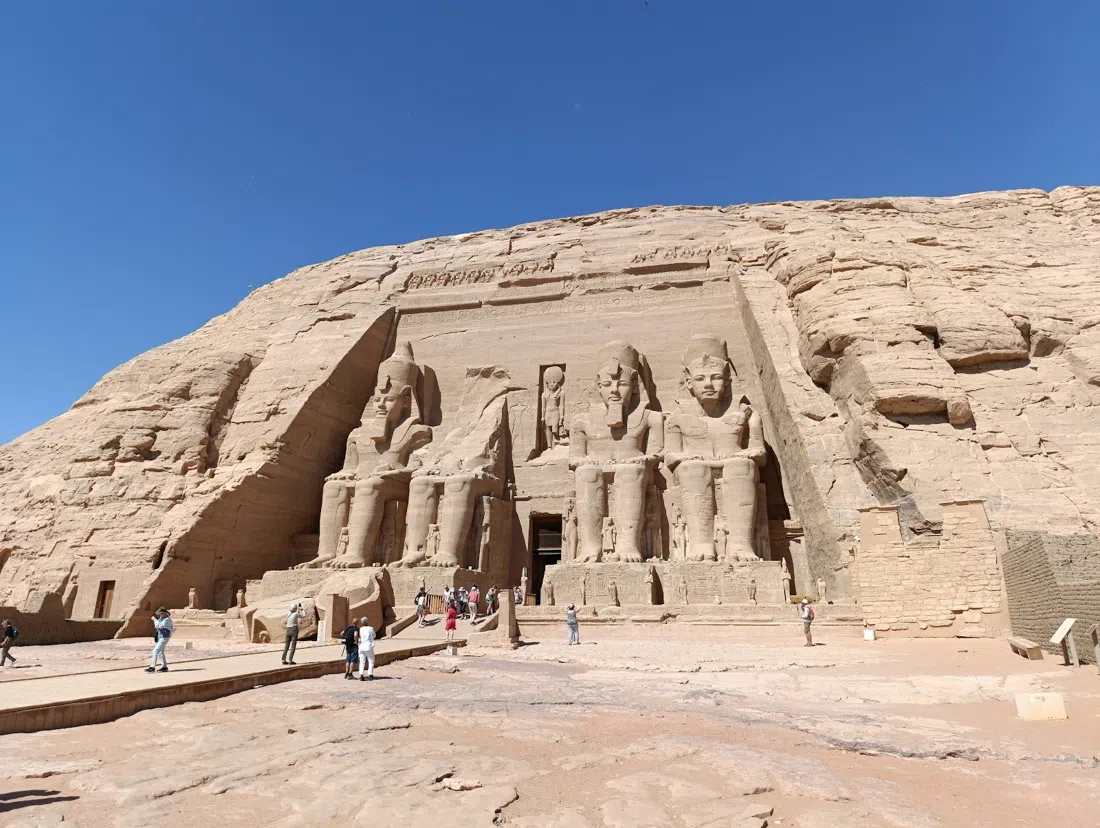
Abu Simbel Temples are the classic bolt-on, and they sit far enough south that they eat a whole day off the back of the cruise. Escorted road convoys leave Aswan around 03:30 and 11:00, the drive is 3.5 to 4 hours each way, and the site is open 06:00 to 17:00. Entry is around EGP 820 (about US$17). Flying from Aswan costs roughly US$200 to 300 return and turns a ten-hour day into about four, which is the better trade for most people once you price your own time. Guides brief outside and photography inside the sanctuary is restricted. The Sun Festival dates (22 February and 22 October, when the sun reaches the inner statues) carry a higher ticket, around EGP 1,200, and neither falls in your window.
Sailing instead of motoring
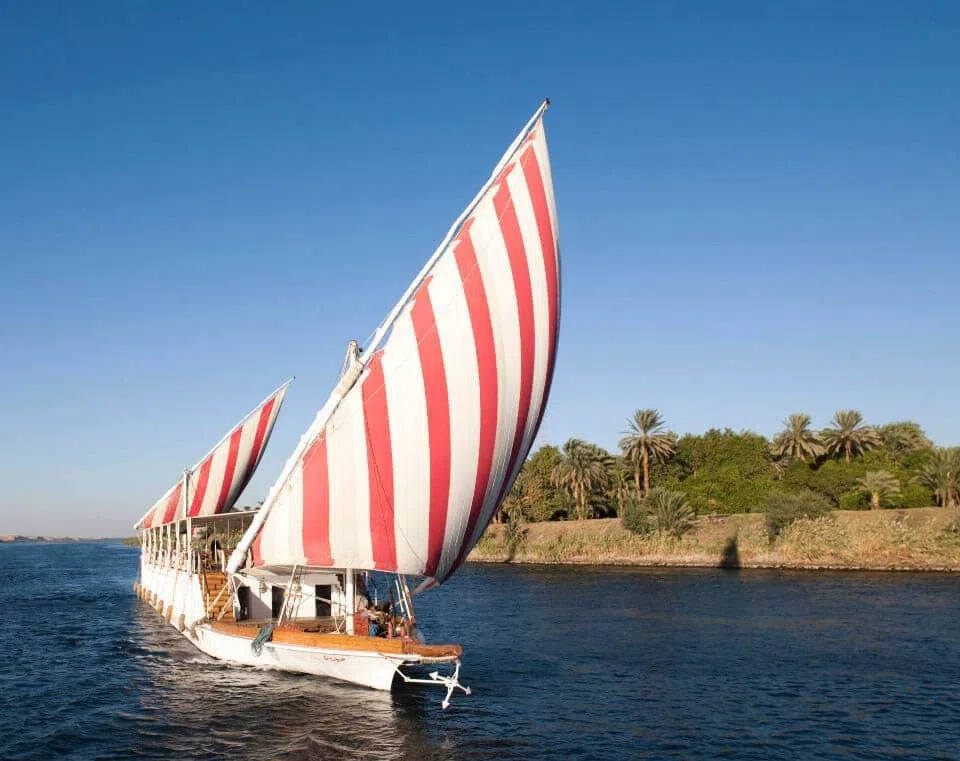
If you have a week rather than a long weekend, Nour El Nil runs dahabiyas, small sailing boats of roughly eight to twelve cabins, on a five-night route from Esna to Aswan under canvas. Whole-boat charters are the norm, and a party of six to twelve fits one vessel comfortably. The gain is access: a dahabiya stops at El Kab and Gebel el-Silsila, which motor cruisers cannot reach, and it moors on sandbanks rather than in a raft of six hulls. The cost is days and money, since it is premium all-inclusive, quoted on request, and well above a berth on a standard motor cruiser. Mentioned here so you can rule it in or out.
Booking ahead versus paying at the gate
Every temple gate listed here takes card only. That is how the ticket offices now work, not a soft preference. Carry Egyptian pounds anyway for the things the gates do not sell: carriage and tuk-tuk transfers at Edfu, the motorboat to Agilkia, felucca charter, tips for crew and drivers. Most boat fares include the shore visits and the entry tickets on the standard route, but they almost never cover the optional extras: the balloon, Abu Simbel, the Seti I and Tutankhamun supplements at the Valley of the Kings, and anything at the Old Cataract. Book the balloon, Abu Simbel and the Terrace before you arrive. Everything else you can settle on the day.
Why November is the window
November is the first month of the year when the middle of the day is pleasant on an open sun deck rather than something to be survived indoors. Mornings are cool enough that a 06:00 start at Karnak feels early rather than brutal, and the west-bank bay at Deir el-Bahari does not become an oven until well after you have left it. The sun sets early enough that Kom Ombo is lit when most boats arrive, which is the version of that temple you want. Balloon mornings are more often flyable than in the windier shoulder weeks, though the grounding rule still applies and you should still hold a spare morning. It is also the ramp into high season rather than the peak itself, since December and January draw more people to the same handful of gates, and the Nubian Museum's Thursday and Friday evening shift is a useful escape valve either way.
Is three nights worth it
Yes, with one condition: add a land night in Luxor at the front. Three nights afloat covers Esna, Edfu, Kom Ombo and gets you to Philae, and it does it with your bags unpacked once, which is the underrated part: no hotel changes, no internal transfers, no 05:00 lobby calls between cities. What three nights does not do is cover Luxor itself, and a traveller who arrives and boards the same afternoon will leave having seen the two great east-bank temples badly and the west bank not at all.
It suits couples, families with older children, and groups of six to twelve who want the temples without the logistics. It suits anyone who would rather read a building slowly than tick off a list. It does not suit travellers who need a gym, a nightlife scene or reliable high-speed internet between towns, and it does not suit anyone unwilling to walk 400 metres in sun or climb into a tomb shaft. If you want the sandbank moorings and the sites the motor boats skip, you are looking at five nights under sail and a different budget.
Practicalities
Transport. Fly into Luxor and take the cruise south; the same boats run the reverse leg northbound over four nights, which costs you a day but lets you arrive in Luxor with the west bank still ahead of you. Aswan's airport handles the onward flight or the Abu Simbel hop. Shore transfers at Edfu are arranged in convoy by the boat.
Cash. Card only at every temple gate. Egyptian pounds in small notes for carriages, tuk-tuks, feluccas, motorboats and tips. Do not count on an ATM at a mooring.
Timing. Temples at opening or in the last hour, never between 09:00 and noon. Deir el-Bahari finished by 09:30. Philae early for flat water. Kom Ombo late for the floodlights. The Nubian Museum on a Thursday or Friday evening if your schedule allows.
Budget. Gate entries across the full route come to roughly EGP 3,000 to 3,500 per person before the optional tomb supplements, and most of that is already inside a standard cruise fare. Add the balloon at roughly US$90 to 150 shared, Abu Simbel at EGP 820 plus transport, and a set-price afternoon tea at the Old Cataract if you want the sunset seat. Guided packages that bundle the boat and the shore visits start from 1,300 US dollars per person.
Questions
Is three nights long enough, or should I take the four-night route?
Three nights covers Esna, Edfu and Kom Ombo, and gets you to Philae at Aswan, which is the full southbound temple run. It does not cover Luxor itself: the sightseeing there is squeezed into the afternoon you board. Add one land night in Luxor before the cruise and three nights is plenty; skip that night and you will see Karnak badly and the west bank not at all.
Should I sail Luxor to Aswan or the other way round?
Southbound from Luxor is the three-night version and goes with the current; the same boats run the reverse leg northbound over four nights. Southbound is the better use of a short trip. Northbound suits you if you are flying into Aswan anyway or want an extra day on board, and it leaves the Luxor west bank at the end rather than the start.
What is included in the cruise fare and what do I pay at the temples?
Most fares include the standard shore visits and their entry tickets: Esna, Edfu, Kom Ombo and the Luxor temples. The usual extras are the hot-air balloon, Abu Simbel, and the Tutankhamun and Seti I supplements at the Valley of the Kings (about EGP 700 and EGP 2,000 on top of the base ticket). Every gate takes card only; carry Egyptian pounds for carriages, feluccas, motorboats and tips.
Can I add Abu Simbel to a three-night cruise from Luxor?
Yes, as a day trip off the back of the cruise in Aswan. Escorted road convoys leave around 03:30 and 11:00 and the drive is 3.5 to 4 hours each way, so the road version is a ten-hour day. Flying from Aswan costs roughly US$200 to 300 return and cuts it to about four hours. Entry is around EGP 820, the site opens 06:00 to 17:00, and photography inside the sanctuary is restricted.
Which things do I have to book before I arrive?
Three. The balloon, because the aviation authority grounds flights on windy mornings and you want your first morning booked with the next held as a fallback. Abu Simbel, because it runs on fixed convoys or a limited flight. The Old Cataract Terrace, which needs a booking 24 hours ahead for non-residents, carries an entry or minimum-spend charge, and turns walk-ups away. Everything else can be settled on the day.
First published on theluxorguide.com, the Luxor guide.